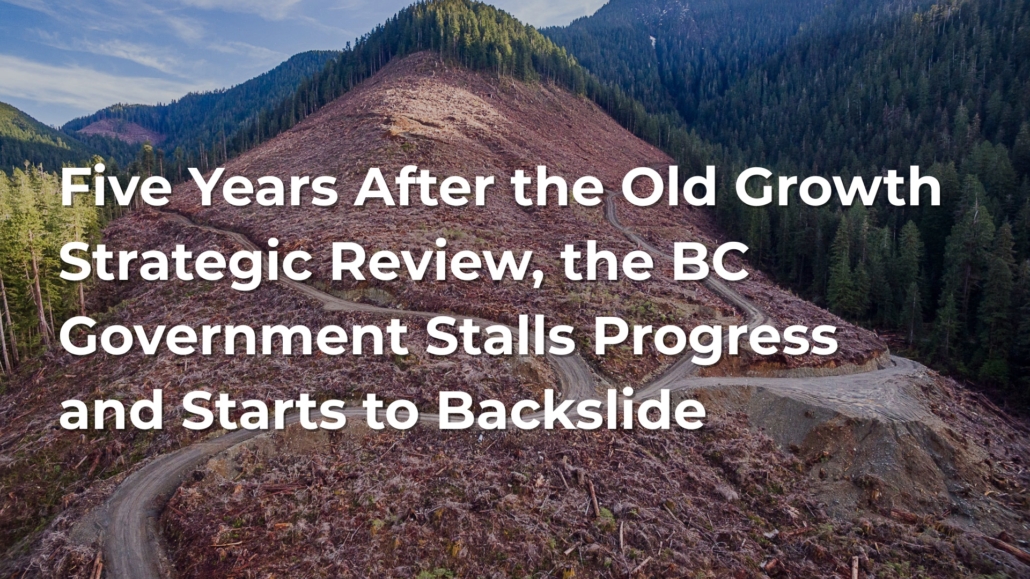
Infographic: 5 years after the Old Growth Strategic Review, the BC Government stalls progress and starts to backslide.
Five years after the Old Growth Strategic Review, the BC Government is stalling progress and starting to backslide.

In 2020, the BC NDP government promised a bold “paradigm shift” in how old-growth forests are managed in the province. Today, progress has largely stalled, leaving the remaining old-growth forests in BC at imminent risk.

To mark the anniversary, we’re calling on the BC NDP Government to urgently deliver:

  • A BC Protected Areas Strategy: Proactively pursue the protection of candidate areas of the highest conservation value through shared decision-making with First Nations.
  • “Solutions space” funding for First Nations: Help secure the remaining 1.3 million hectares of priority old-growth deferrals by offsetting lost forestry revenues.
  • Ecosystem-Based Protection Targets: Ensure endangered ecosystems and big-tree old-growth forests are fully protected in both legislated protected areas and conservation reserves.

Browse through the infographics to learn more, and Take Action here to help protect these endangered ecosystems for good!

Vancouver Sun: Languishing ‘in the doldrums’: Conservation groups demand action on B.C.’s old-growth logging review
September 13, 2025
By Tiffany Crawford

See original article here.

It’s been five years since an independent panel, convened by the B.C. government, made 14 recommendations to protect old growth forests.

Conservation groups and First Nations are calling on the B.C. government to act on five-year-old promises to overhaul the logging industry to protect old-growth forests.

In 2019, the NDP government convened an independent panel to travel the province and gather input on old-growth forests. A year later the old-growth strategic review provided 14 recommendations.

Critics say although the government has made a few strides such as including talks with First Nations and stepping up logging deferrals, it’s dragging its heels on some of the key points that protect biodiversity, for example the conservation of endangered caribou herds.

The 88 groups released a letter that was sent earlier this year to Randene Neill, B.C.’s minister of water, land and resource stewardship. It sounds the alarm about the province’s lack of progress on recommendation No. 2: enacting a new law for biodiversity and ecosystem health.

Lawyers with West Coast Environmental Law say B.C.’s recent decision to fast track resource projects goes against this recommendation.

TJ Watt, campaign director with the Ancient Forest Alliance who is also known for taking before and after photos of ancient trees that have been chopped down in B.C., said the government needs to treat old-growth protection like other provincial emergencies and channel the resources needed to secure a sustainable future for ecosystems and forest industry.

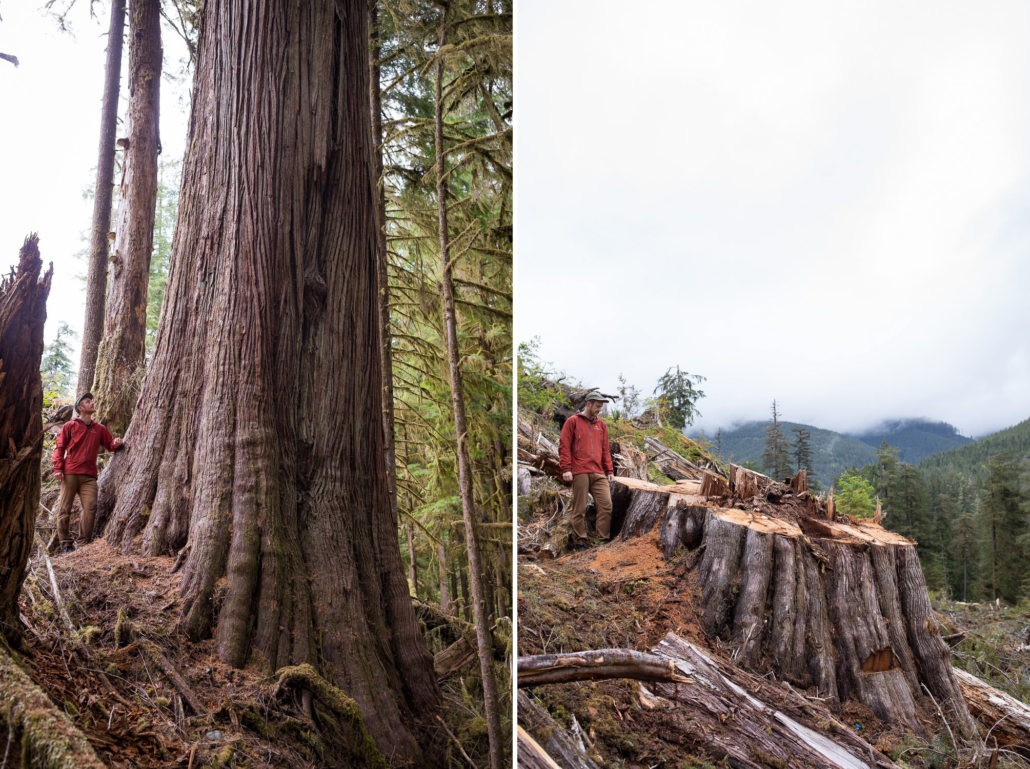
Ancient Forest Alliance photographer and campaign director TJ Watt stands beside the fallen remains of an ancient western redcedar approximately 9 feet (3 metres) wide, cut down by BC Timber Sales in the Nahmint Valley near Port Alberni in Hupačasath, Tseshaht, and Yuułuʔiłʔatḥ First Nation territory. (2024)

Ancient Forest Alliance photographer and campaign director TJ Watt stands beside the fallen remains of an ancient western redcedar approximately 9 feet (3 metres) wide, cut down by BC Timber Sales in the Nahmint Valley near Port Alberni in Hupačasath, Tseshaht, and Yuułuʔiłʔatḥ First Nation territory. (2024)

Jessica Clogg, executive director and senior counsel at West Coast Environmental Law, said a law to protect biodiversity in B.C.’s forests would provide an essential environmental guardrail for projects to proceed in a way everyone can support.

Instead, she said B.C. rammed through the bills “raising concerns that environmental safeguards will be circumvented to fast-track projects, while their promise to develop a biodiversity and ecosystem health law languishes in the doldrums.”

Grand Chief Stewart Phillip, president of the Union of B.C. Indian Chiefs, said fast-tracking resource projects without delivering on its commitment to co-develop a biodiversity and ecosystem health law with First Nations was unacceptable.

“This approach is not consistent with the government’s stated commitment to align B.C.’s laws with the United Nations Declaration on the Rights of Indigenous Peoples,” he said in a statement.

The groups are calling on B.C. to draft a biodiversity and ecosystem health law as soon as possible to ensure projects are built while also protecting sensitive forest ecosystems.

Neill was not available for comment. Forests Minister Ravi Parmar told Postmedia earlier this summer that the government is performing a balancing act between conservation and forestry.

He said decisions related to harvesting trees and road building are informed by experts, including professional foresters, hydrologists, biologists, and geotechnical engineers.

The B.C. government says co-ordination between First Nations and forests companies has resulted in about logging has been deferred or banned on 24,000 square kilometres of old-growth forests since November 2021. The government says there’s more than 110,000 square kilometres of old-growth forest on B.C.

According to Sierra Club B.C., the area of old-growth forest logged annually across the province is more than 1,400 square kilometres — an area twice the size of Greater Victoria.

Ken Wu, executive director of Endangered Ecosystems Alliance, says B.C. shouldn’t be logging any trees that are hundreds of years old.

Wu said the government promised an ecological paradigm shift in its system of old-growth forest management, but five years later, it has stalled policy.

“Logging the last stands of forest giants today is like coming across groups of elephants or great whales and slaughtering them all. It’s both unethical and unnecessary, given the second-growth alternative.”

Old-growth forests have locked up huge amounts of carbon and clearcutting them releases massive amounts of carbon back into the atmosphere, contributing to climate change, according to Sierra.

A sprawling old-growth clearcut, nearly 40 hectares in size, logged by Teal-Jones in the Caycuse Valley in Ditidaht territory on Vancouver Island, BC. Hundreds of ancient cedars, some measuring more than 10 feet (3 metres) wide, were logged here

A sprawling old-growth clearcut, nearly 40 hectares in size, logged by Teal-Jones in the Caycuse Valley in Ditidaht territory on Vancouver Island, BC. Hundreds of ancient cedars, some measuring more than 10 feet (3 metres) wide, were logged here

Ancient Forest Alliance photographer and campaign director TJ Watt stands beside the fallen remains of an ancient western redcedar approximately 9 feet (3 metres) wide, cut down by BC Timber Sales in the Nahmint Valley near Port Alberni in Hupačasath, Tseshaht, and Yuułuʔiłʔatḥ First Nation territory. (2024)

Victoria Buzz: Images expose ongoing old-growth logging as BC government misses key deadline
September 12, 2025
By Curtis Blandy

See original article

Conservation groups and environmental advocates are urgently calling on the BC government to take action in protecting old-growth forests.

This call to action comes on the five year anniversary of the Old Growth Strategic Review (OGSR) which offered the Province recommendations that would need to be acted upon in order to properly protect BC’s old-growth.

The Ancient Forest Alliance (AFA) and the Endangered Ecosystem Alliance (EEA) say they believe the BC government is stalling on putting these recommendations into action and are backsliding on promised policy.

Back in 2020, the OGSR was completed and issued to the Province with 14 recommendations to protect the most at-risk old growth, ensure Indigenous involvement, enhance forest management transparency and shift the forestry sector towards sustainability.

When this occurred, the BC NDP committed to implementing all of the recommendations within three years, and are now two years overdue, according to the AFA.

“The BC government promised an ecological paradigm shift in its system of old-growth forest management, but five years later, they have resumed their heel-dragging on policy progress to buy time for the destructive status quo of old-growth liquidation,” stated Ken Wu, executive director of Endangered Ecosystems Alliance (EEA).

Logging the last stands of forest giants today is like coming across groups of elephants or great whales and slaughtering them all. It’s both unethical and unnecessary, given the second-growth alternative.”

Second-growth logging refers to harvesting trees from forests that have regrown after a previous logging operation, fire or other major disturbance.

“The BC NDP government can and must create a vibrant, sustainable, value-added second-growth forest industry while protecting the last old-growth stands: we can log 80 year old trees, instead of 800 year old trees, like the rest of the industrialized world, and we can and must do it sustainably while creating more BC jobs,” continued Wu.

The AFA says that one of the most urgent steps the Province should take is to provide funding to secure logging deferrals for all 2.6 million hectares of the most at-risk old-growth forests identified by its own independent science panel.

As of this publication, less than half (about 1.2 million hectares) have been issued deferrals.

Additionally, the AFA says that another unfulfilled commitment from the OGSR is making ecosystem health and biodiversity conservation a top priority in all land-use decisions.

In order to support the implementation of the OGSR, the AFA and EEA have created their own list of recommendations to protect endangered old-growth forests and transition toward sustainability:

  • Establish a BC Protected Areas Strategy to proactively pursue the protection of old-growth through shared decision-making with First Nations
  • Develop Ecosystem-Based Protection Targets to ensure endangered ecosystems and old-growth forests are fully protected
  • Provide “solutions space” funding to First Nations to help secure the remaining 1.3 million hectares of priority old-growth deferrals
  • Ensure a transition to sustainable logging of second-growth forests, which now constitute the vast majority of forest lands in BC
  • Close logging loopholes and ensuring commercial logging within parks or conservation reserves remains prohibited
  • Expand a smart forest industry by incentivizing value-added second-growth manufacturing, ending raw log export, and promoting eco-forestry
  • Create a BC Conservation Economy Strategy to support eco-tourism, clean tech, and sustainable industries in protected areas

As a way to highlight their position, the AFA have shared a number of photos which show old-growth logging that has taken place over the past five years.

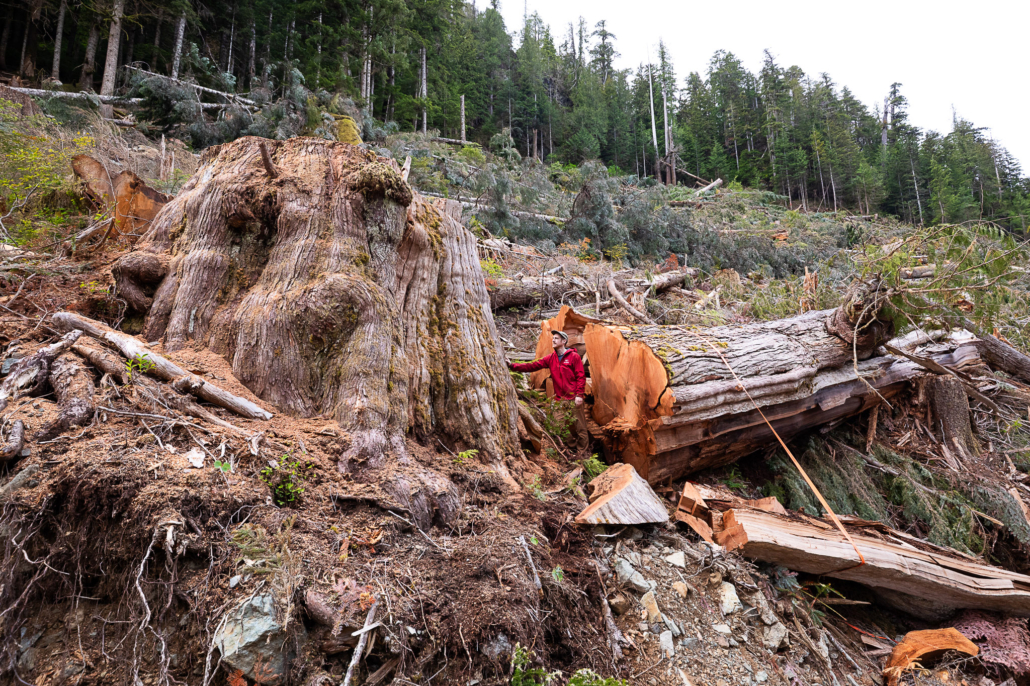
Ancient Forest Alliance photographer and campaign director TJ Watt stands beside the fallen remains of an ancient western redcedar approximately 9 feet (3 metres) wide, cut down by BC Timber Sales in the Nahmint Valley near Port Alberni in Hupačasath, Tseshaht, and Yuułuʔiłʔatḥ First Nation territory. (2024)

Ancient Forest Alliance photographer and campaign director TJ Watt stands beside the fallen remains of an ancient western redcedar approximately 9 feet (3 metres) wide, cut down by BC Timber Sales in the Nahmint Valley near Port Alberni in Hupačasath, Tseshaht, and Yuułuʔiłʔatḥ First Nation territory. (2024)


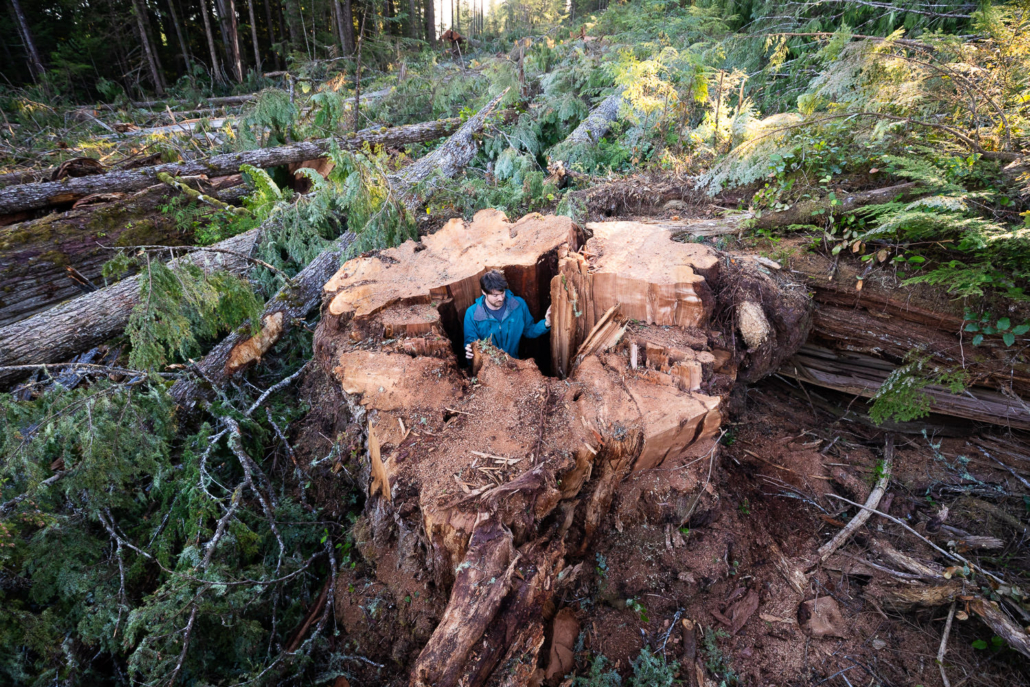
Ancient Forest Alliance's Ian Thomas stands inside the giant stump of an old-growth redcedar tree measuring nearly 10 feet (3 metres) wide, cut down in Quatsino Sound on northwestern Vancouver Island, Quatsino territory. (2022)

Ancient Forest Alliance’s Ian Thomas stands inside the giant stump of an old-growth redcedar tree measuring nearly 10 feet (3 metres) wide, cut down in Quatsino Sound on northwestern Vancouver Island, Quatsino territory. (2022)

“The devastating images released today expose the cost of government inaction on protecting old-growth forests,” said TJ Watt, campaign director of AFA.

“If the Province carries on down the same road for another five years, the chance to safeguard these incredible ecosystems for biodiversity, species-at-risk, wildlife habitat, First Nations cultures, and future generations may be gone forever.”

The BC Green Party has also spoken out about the 14 OGSR recommendations not being implemented.

“It has been five years since the release of the Old Growth Strategic Review, and while this should be a moment to celebrate bold action to protect old growth, instead we are marking half a decade of delay, indecision, and government inaction,” said Rob Botterell, MLA for Saanich North and the Islands.

“When the government waffles instead of acting, communities are left with division, uncertainty, confrontation and now, the risk of a more escalated and militarized police presence.”

Botterell specifically pointed to the Upper Walbran area, near Fairy Creek, where blockades have been set up recently to try to stop old-growth logging.

In an email statement to Victoria Buzz, Forests Minister Ravi Parmar said, “In the Walbran, 85% of old growth is already protected. Throughout all of BC, we have taken action to defer over 2.4 million hectares since November 2021, on top of the nearly 3.7 million hectares that were already protected.”

He stated the BC government has working with First Nations on stewarding BC’s lands in a way that advances reconciliation while balancing ecological protection and economic prosperity.

“Recommendations from the Old Growth Strategic Review are embedded in our current work throughout the province. We have 15 Forest Landscape Tables developing plans to guide forest stewardship in local communities, reflecting their values, including the protection of old growth.”

“The future of forestry is one that is respectful, puts reconciliation into action, and is sustainable for generations to come.”

Old-growth cedar stump - Quatsino

Five Years After Old Growth Strategic Review, BC Government Stalls Progress and Starts to Backslide
Conservation groups highlight five of the most shocking images of old-growth logging from the past five years, marking OGSR’s fifth anniversary with an urgent call for immediate government action to protect ancient forests

Victoria, BC — On the fifth anniversary of the Old Growth Strategic Review (OGSR), the Ancient Forest Alliance (AFA) and the Endangered Ecosystem Alliance (EEA) are highlighting five of the most shocking images of old-growth logging in British Columbia in the past five years since the BC NDP pledged a “new future for old forests”. The groups warn that provincial stalling and backsliding on policy progress is accelerating the loss of irreplaceable ecosystems and call for immediate, proactive action by the province to protect the remaining endangered old-growth forests and to transition towards a sustainable, value-added, second-growth forest industry.

Aerial view of a sprawling old-growth clearcut nearly 40 hectares in size logged by Teal Jones in the Cayuse watershed on Vancouver Island, BC.

An old-growth clearcut nearly 40 ha in size logged by Teal-Jones in the Caycuse watershed.

In 2020, the OGSR issued 14 recommendations to protect the most at-risk old-growth forests, ensure Indigenous involvement, enhance forest management transparency, and shift the forestry sector toward sustainability. The BC NDP committed to implementing all recommendations within three years. Yet five years on, progress has stalled, whilst logging of the most endangered old-growth forests in BC continues.

“The BC government promised an ecological paradigm shift in its system of old-growth forest management, but five years later, they have resumed their heel-dragging on policy progress to buy time for the destructive status quo of old-growth liquidation. Logging the last stands of forest giants today is like coming across groups of elephants or great whales and slaughtering them all. It’s both unethical and unnecessary, given the second-growth alternative. The BC NDP government can and must create a vibrant, sustainable, value-added second-growth forest industry while protecting the last old-growth stands: we can log 80 year old trees, instead of 800 year old trees, like the rest of the industrialized world, and we can and must do it sustainably while creating more BC jobs,” stated Ken Wu, executive director of Endangered Ecosystems Alliance (EEA).

“Instead of coming from a place of fear and insecurity about the rise of far-right, radical anti-environmentalists in the Opposition – and then starting to mimic their backwards, nature-destroying policies, though somewhat less intensively – the Eby and Carney governments need to have the inspiration, vision and backbone to implement an alternative reality that protects the last old-growth forests while quickly scaling up a modernized, sustainable second-growth forest industry. And they need to work proactively with First Nations, and engage working-class British Columbians in particular, to make it happen. Otherwise, they will eventually backslide into political oblivion by becoming a ‘Con lite’ version of their opponents, while the endangered ecosystems that support so much life, culture, and the health, well-being and economy of British Columbians go down,” Wu continued.

Photographer TJ Watt stands beside a giant old-growth redcedar tree before and after it was cut down in the Caycuse Valley on Vancouver Island, BC.

Before and after old-growth logging by Teal-Jones in the Caycuse Valley.

One of the most urgent gaps is the province’s failure to provide funding to secure logging deferrals for all 2.6 million hectares of the most at-risk old-growth forests identified by its own independent science panel. So far, less than half — about 1.2 million hectares — have been paused, while another 1.2 million hectares of more marginal stands are also under deferral. That leaves 1.36 million hectares of the best remaining old growth still on the chopping block.

“The BC government says it wants to protect old-growth forests but has left First Nations to make the hard choices without the ‘solutions space’ or interim funding for logging deferrals needed to make conservation economically viable. After decades of being excluded from land-use decisions and forestry revenues, many Nations now depend on logging – including old-growth logging – to support their communities. While the province has made billions from the logging of ancient forests, it has failed to address this barrier and has often supported initiatives that deepen economic reliance on old-growth logging. Until funding is provided for deferrals, the fight to protect BC’s biggest and most endangered old-growth forests will only intensify,” notes TJ Watt, campaign director of AFA. “We urgently need the government to treat old-growth protection like other provincial emergencies and channel the resources needed to secure a sustainable future for the ecosystems and forest industry in BC.”

The most critical, unfulfilled commitment from the OGSR is to embed ecosystem health and biodiversity conservation as a top priority in all land-use decisions. The framework to deliver this — the Biodiversity and Ecosystem Health Framework (BEHF) — remains unfinished, with no public timeline for completion. “Ecosystem-based targets”, that is, science-based protection targets for all ecosystems (that include protection for the biggest trees in the most productive sites) that guide both the establishment of regulatory conservation reserves and the larger, legislated protected areas, is the most critical component of an effective BEHF. Meanwhile, new Forest Landscape Plans are moving ahead without a legal mechanism to prioritize ecosystem health, leaving endangered ecosystems at risk of being logged.

“While we recognize the important steps the BC NDP has taken — including deferring logging on 1.2 million hectares of the most at-risk old growth, securing over $1 billion in federal-provincial conservation financing, and beginning the transition to value-added, second-growth forestry– action in the past year has largely stalled, leaving the remaining old-growth forests in BC at imminent risk,” said Watt. “We’ve been crystal clear with the BC government on what’s needed: funding for deferrals, protection targets for the most endangered ecosystems, and the development of a BC Protected Areas Strategy where the BC government develops a list of candidate protected areas in the highest conservation value areas and then proactively approaches local First Nations to discuss their potential protection with the adequate resourcing needed by the First Nations. By avoiding these critical steps, the results are devastating – giant, thousand-year-old trees continue to fall, and public frustration is reaching a breaking point.”

AFA photographer TJ Watt stands beside an immense stump of a redcedar tree measuring roughly 9 feet (3 metres) wide felled in a BC Timber Sales cutblock in the Nahmint Valley near Port Alberni.

An immense redcedar measuring roughly 9 ft (3 m) wide felled in a BC Timber Sales cutblock in the Nahmint Valley.

AFA and EEA’s full list of recommendations to protect the remaining endangered old-growth forests and transition toward sustainable, value-added, second-growth forestry is as follows:

  • Establish a BC Protected Areas Strategy to proactively pursue the protection of candidate protected areas of highest conservation value through shared decision-making with First Nations.
  • Develop Ecosystem-Based Protection Targets to ensure endangered ecosystems and big-tree old-growth forests are fully protected in both legislated protected areas and in conservation reserves (forest reserves). The forthcoming Biodiversity and Ecosystem Health Framework offers the greatest opportunity to implement these targets.
  • Provide “solutions space” funding to First Nations to help secure the remaining 1.3 million hectares of priority old-growth deferrals by offsetting lost forestry revenues.
  • Ensure a transition to sustainable logging of second-growth forests, which now constitute the vast majority of forest lands in British Columbia.
  • Close logging loopholes by ending logging in forest reserves such as Old-Growth Management Areas and Wildlife Habitat Areas, and ensuring commercial logging within parks or conservation reserves remains prohibited.
  • Expand a smart forest industry by incentivizing value-added second-growth manufacturing, ending raw log exports, and promoting eco-forestry.
  • Create a BC Conservation Economy Strategy to support eco-tourism, clean tech, and sustainable industries in protected areas.

“The devastating images released today expose the cost of government inaction on protecting old-growth forests,” said Watt. “If the Province carries on down the same road for another five years, the chance to safeguard these incredible ecosystems for biodiversity, species-at-risk, wildlife habitat, First Nations cultures, and future generations may be gone forever. Premier Eby now faces a choice: preside over the destruction of irreplaceable forests – or lead BC toward a lasting legacy of conservation. Which path will he take?”

AFA photographer TJ Watt lies atop a giant felled cedar for scale in a Western Forest Products clearcut in Quatsino Sound on northern Vancouver Island, BC.

AFA photographer TJ Watt lies atop a giant felled cedar for scale in a Western Forest Products clearcut in Quatsino Sound.

NOW HIRING: Vancouver Canvass Director

Employment Opportunity: Vancouver Canvass Director for the Ancient Forest Alliance

Duration: Full-time (approximately 32 hrs/week), permanent staff position
Location: Greater Vancouver (home office); in the community
Hours: Flexible with canvass hours Mon to Thurs from ~ 4–10pm. Occasional Fridays and weekend hours
Compensation: $45,000 per annum plus performance-based income
Estimated application deadline: Posting will remain open until the right candidate is found. Early applications are encouraged.
Anticipated start date: Open

The Ancient Forest Alliance (AFA) is seeking a dedicated Canvass Director to drive our fundraising and awareness-raising efforts in the Greater Vancouver Region. This natural leader and confident communicator will manage a stellar team of door-to-door canvassers and coordinate various outreach activities.

AFA is BC’s foremost charitable organization focused solely on old-growth forest protection. Built on grassroots outreach and fundraising, we rely on our teams of passionate fundraisers to sustain our campaigns and have a strong track record of success over our thirteen-year history as a result. We have successfully campaigned to protect outstanding old-growth forests like Avatar Grove near Port Renfrew and Echo Lake near Mission and have reached tens of thousands of British Columbians through our outreach efforts. We campaign for province-wide legislation to protect endangered old-growth forests while also ensuring a sustainable, second-growth forestry industry.

Key Duties and Responsibilities
• Advertise, recruit, train, and manage a canvass crew of 5–10 individuals who recruit new donors and supporters door-to-door.
• Oversee canvass shifts Mondays – Thursdays and some Fridays and weekends
• Lead by example and canvass at least two days per week
• Facilitate canvass team meetings and skills trainings before each canvass shift
• Evaluate canvasser and program success and give ongoing, constructive feedback
• Coordinate additional fundraising initiatives such as setting up information booths at community events and assisting with occasional fundraising events
• Manage administrative duties (e.g. create canvass turf maps, organize materials, review and reconcile donation transactions)
• Represent the organization in a professional manner
• Reports to the Executive Team and the Administrative Director

Qualifications
• Dedication to protecting old-growth forests and nature in general
• Supports the Ancient Forest Alliance and its mandate
• Excellent interpersonal skills and a team player
• Excellent communication and leadership skills
• Strong task management, organization, and time management skills; proficiency in excel and MS Word.
• Consistently strong work ethic
• Self-motivated but also able to take direction
• Good judge of character; experience recruiting, hiring, and training an asset.
• Good basic math and accounting skills
• Former canvassing or sales experience an asset
• Have valid BC Drivers Licence and good driving record.

If you are passionate about protecting BC’s ancient forests, enjoy self-directed work, and are committed to educating others about critical environmental issues, then we want to hear from you!

To apply:
• Please email your resume and cover letter to Joan Varley at: info@ancientforestalliance.org. Please include “Vancouver Canvass Director” in the subject line.
• We thank all applicants for the diversity, skill, and experience they offer; only those candidates selected for an interview will be contacted

A man in a yellow jacket stands beside a massive Douglas-fir tree in an ancient Douglas-fir grove.

Old-growth Douglas-fir forest in the Burman River valley. Proposed Salmon Park, Mowachaht/Muchalaht territory.

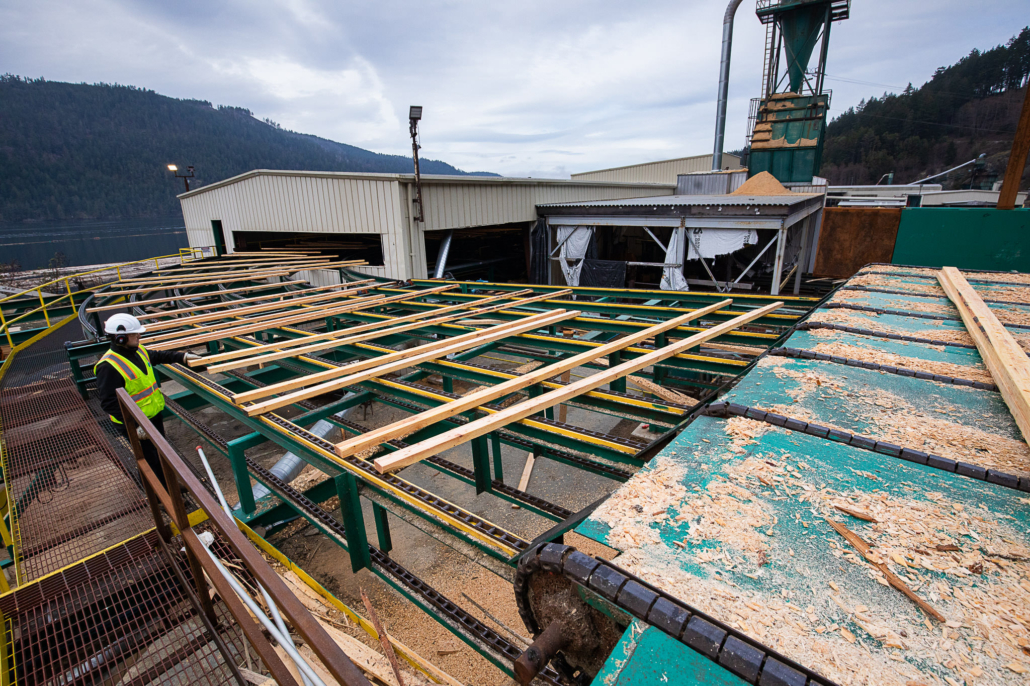
Lumber made from second-growth wood rolls through the former San Group Mill in Port Alberni. Facilities processing smaller diameter logs would have benefited from a fund with the stipulations that we are proposing.

$1.2B Federal Forestry Funding Is BC’s Chance to Future-Proof Economy With Smart, Modern Forest Industry

Victoria, BC — The Ancient Forest Alliance (AFA) and Endangered Ecosystems Alliance (EEA) are calling on the BC and federal governments to tie the federal government’s $1.25 billion softwood lumber industry support package, announced by Prime Minister Carney in August and reaffirmed at his “strategic response fund” announcement to US tariffs last week, to help transition BC’s forest industry into a sustainable, value-added second-growth industry and away from old-growth logging. This shift is urgently needed to modernize and future-proof BC’s forest economy, supporting forest industry jobs while safeguarding the remaining endangered old-growth forests. Access to the funds should be conditional on industry applicants meeting stipulations that ensure this sustainable transition.

Under the federal package, $700 million will be available in loan guarantees to help forestry companies restructure and reduce reliance on U.S. exports. Another $500 million will support market diversification and the development of new products, such as low-carbon, wood-fibre-based insulation, while $50 million will retrain forestry workers affected by industry transformation. Given BC’s share of the Canadian timber industry, the province is expecting to receive 40–50% of this funding. The announcement comes as U.S. duties on Canadian softwood lumber imports reach 35.19%.

“This is an unprecedented economic opportunity for British Columbia to build a modernized, value-added, second-growth forest industry, while ending old-growth logging. We need to immediately shift the dependency of BC’s timber industry away from old-growth and log exports towards value-added, second-growth forestry, and here’s a first-rate opportunity to do so if the right stipulations are attached for companies to access the $1.2 billion federal fund. Conversely, failure to attach the right conditions to the funding can help reinforce BC’s economic path-dependency on logging its last old-growth stands into extinction,” said Ken Wu, Executive Director of the Endangered Ecosystems Alliance.

A sprawling old-growth clearcut nearly 40 hectares in size by Teal-Jones in the Caycuse Valley in Ditidaht territory on Vancouver Island, BC.

BC’s forest industry is in long-term decline, driven by decades of massive overcutting by the timber industry and compounded by climate impacts like pine beetle outbreaks and expanding wildfires. As old-growth stands are depleted and harvesting shifts to second-growth, BC has failed to retool its old-growth mills to handle the smaller logs. As a result, coastal second-growth logs are largely exported to foreign mills, and along with them, BC jobs.

In addition, raw log exports have historically been exempt from U.S. duties in the softwood lumber dispute, creating a further incentive to send unprocessed logs to U.S. mills — leaving BC with both the environmental loss and missed economic opportunity for processing jobs within the province.

To keep BC’s forestry sector competitive and sustainable, AFA and EEA are urging the province to use its share of federal funding to launch a “Smart Forest Industry” incentive program that accelerates investment in value-added and engineered wood products made only from second-growth stands. This program should include rebates provided from the log export “fees in lieu”, PST and property tax relief for value-added manufacturers, and government support for research and development into market expansion of sustainable second-growth wood products.

Additional measures that require government regulations are also needed, including quickly ending or phasing out raw log exports, establishing regional log sorts, and promoting eco-forestry practices, such as longer logging rotations, selective commercial thinning, and pruning lower limbs to produce higher-value saw logs. These would further scale up the transition, improving wood fibre supply and creating more jobs per cubic metre logged.

“BC is one of the last jurisdictions on Earth still logging old-growth forests. It simply can’t continue,” said TJ Watt, Campaign Director of the Ancient Forest Alliance. “Around the world, forestry sectors are embracing cutting-edge technologies to produce durable, engineered wood products from smaller, second-growth logs. BC has lagged behind. With wood fibre supplies dwindling and regulatory uncertainty growing, the province must act now to invest in a modern, sustainable forestry sector that creates long-term jobs and keeps BC competitive in the global market.”

Lumber made from second-growth wood rolls through the former San Group Mill in Port Alberni. Facilities processing smaller diameter logs would have benefited from a fund with the stipulations that we are proposing.

AFA and EEA’s full list of policy recommendations for the provincial government to protect the remaining endangered old-growth forests and transition toward sustainable, value-added, second-growth forestry in BC is as follows:

  • Establish a BC Protected Areas Strategy to proactively pursue the protection of priority ecosystems through shared decision-making with First Nations.
  • Develop Ecosystem-Based Protection Targets to ensure endangered ecosystems and big-tree old-growth forests are fully protected in both legislated protected areas and in conservation reserves (forest reserves). The forthcoming Biodiversity and Ecosystem Health Framework offers the greatest opportunity to implement these targets.
  • Provide “solutions space” funding to First Nations to help secure the remaining 1.3 million hectares of priority old-growth deferrals by offsetting lost forestry revenues.
  • Ensure a transition to sustainable logging of second-growth forests, which now constitute the vast majority of forest lands in southern BC.
  • Close logging loopholes by ending logging in forest reserves such as Old-Growth Management Areas and Wildlife Habitat Areas, and ensuring commercial logging within parks or conservation reserves remains prohibited.
  • Expand a smart forest industry by incentivizing value-added second-growth manufacturing, ending raw log exports, and promoting eco-forestry.
  • Create a BC Conservation Economy Strategy to support eco-tourism, clean tech, and sustainable industries in protected areas.

“The province now faces a clear choice – keep funding destructive old-growth logging and raw log exports, or use this federal funding to transition to a value-added, second-growth forest industry that will build a resilient, sustainable economy for BC, while undertaking the vital and overdue protection of endangered ecosystems,” said Watt.

Endangered Ecosystems Alliance’s Executive Director Ken Wu beside a giant old-growth cedar tree in the unprotected Eden Grove near Port Renfrew in Pacheedaht territory on Vancouver Island, BC.