Canada’s $175 million investment in nature kicks off conservation projects in every province and territory

Parks Canada also releases progress update on 75 commitments to prioritize ecological integrity and improve commemoration of historical places

VICTORIA, Aug. 19, 2019 /CNW/ – Canadians cherish nature and depend on it for clean air and water, vibrant communities, and solutions to climate change. Home to the longest coastline in the world; one quarter of the earth’s wetlands and boreal forests; 20 percent of its fresh water; and precious habitat for birds, fish, and mammals, Canada has a special responsibility to protect nature today and for generations to come.

That’s why the Government of Canada launched Canada’s $1.35 billion Nature Legacy initiative, the single-largest investment in nature conservation by a government in Canada’s history. Canada’s Nature Legacy will help double the amount of nature protected on land and in our oceans, transform how government protects and recovers species at risk, and advance reconciliation with Indigenous Peoples. Conservation also contributes to Canada’s economy through tourism and jobs, and it can bring benefits 10 to 20 times greater than the original investment.

Today, the Minister of Environment and Climate Change, Catherine McKenna, announced the first in a series of 67 conservation initiatives launching in every province and territory, as part of Canada’s Nature Legacy initiative. These projects are supported by the $175 million federal Canada Nature Fund’s Target 1 Challenge, to expand a connected network of protected and conserved areas across Canada.

Minister McKenna announced $3.9 million in federal funding to help the Tahltan Central Government work with its members and other stakeholders on a land-use planning process that provides further clarity and certainty across their territory in northwestern British Columbia. The Tahltan Nation have been leaders in working with British Columbia to advance environmental stewardship and protection along with strong economic development focused on mining and its related business. The Tahltan Nation’s territory is home to various species at risk and culturally significant boreal forest watershed and wetland habitat. Conservation efforts in the region would enhance connectivity with the Yellowstone to Yukon corridor, the Great Bear Rainforest, and other protected areas. 

Further details about other projects moving forward under the Canada Nature Fund’s Target 1 Challenge will be released as agreements with local partners are finalized.

Minister McKenna also announced that the Government of Canada intends to invest through Canada’s $100 million Natural Heritage Conservation Program, in advancing the protection of additional hectares of land and water in Clayoquot Sound, in partnership with the Ahousaht and Tla-o-qui-aht First Nations and non-profit organizations. This support will help to connect Strathcona Provincial Park with the outer coastal provincial parks and Pacific Rim National Park Reserve. The investment will also protect important habitat for over 15 federally listed species at risk, support the land-use visions of the Ahousaht and Tla-o-qui-aht First Nations, and enhance their capacity to fully participate in the process.

While making the announcement on conservation initiatives, Minister McKenna took the opportunity to release a report card on the progress Parks Canada is making on implementing the 75 recommendations arising from the 2017 Minister’s Round Table Let’s Talk Parks, Canada!, the largest public engagement in Parks Canada’s history. One of the key recommendations was the establishment of an independent working group focused on ensuring that the principles of ecological and commemorative integrity are the first priority when making decisions at Parks Canada. Dr. Peter Robinson, previously the CEO of Mountain Equipment Co-op and the David Suzuki Foundation, led the independent working group and will continue to advise Parks Canada on the ongoing implementation of the commitments. The independent working group’s report released today will help to ensure that national parks can continue to be diverse and healthy ecosystems for the future, and national historic sites can continue to tell the many stories that have shaped our country and our shared heritage. 

Quotes

“Nature is one of Canada’s most precious resources. The conservation projects we are announcing today, including a commitment to pursuing expanded protection for the iconic Clayoquot Sound, are significant steps toward doubling the amount of nature we are protecting in Canada’s lands and oceans. By working to protect nature with Indigenous Peoples and other partners across the country, we can support vibrant communities, reverse the alarming decline of plants and animals, and address the impacts of climate change—ensuring our kids and grandkids can also experience the incredible natural landscapes and wilderness we cherish today.”
– Catherine McKenna, Minister of Environment and Climate Change, Government of Canada

“British Columbians are creating an impressive natural legacy through promoting sustainability and protecting our rich biodiversity. This investment by the federal government in coordination with Indigenous nations and local communities creates a better future for our children and grandchildren. As we move forward, we will continue to work with our partners to make sure these investments and projects enhance British Columbia’s efforts to protect our natural heritage.”
– George Heyman, Minister of Environment and Climate Change Strategy, Province of British Columbia

Quick facts

  • Budget 2018 announced $1.35 billion for Canada’s Nature Legacy initiative—the single-largest investment in nature conservation in Canadian history. 
  • The $175 million Canada Nature Fund will support ongoing progress toward achieving its Target 1 Challenge of conserving 17 percent of our land and fresh water by the end of 2020. 
  • The Natural Heritage Conservation Program is led by the Nature Conservancy of Canada, under the Canada Nature Fund. The four-year, $100 million program aims to acquire at least 200,000 hectares of private lands and private interests in land to protect habitat and species at risk. 
  • Canada’s network of protected and conserved areas is important to mitigate the impacts of climate change by protecting and restoring healthy, resilient ecosystems and contributing to the recovery of species at risk. Intact forests and wetlands also capture and store carbon dioxide and can help protect communities from the impacts of climate change. 
  • Canada is making Indigenous leadership an important part of conservation efforts. Up to 27 Indigenous protected and conserved areas are expected to be established under the Canada Nature Fund’s Target 1 Challenge. Further, Budget 2017 announced support for Indigenous guardians’ programs, which support Indigenous conservation through on-the-ground, Nation-based stewardship initiatives. 
  • In 2017, Parks Canada launched Let’s Talk Parks, Canada! More than 8,000 Canadians participated in online discussions, public outreach events, and face-to-face workshops, and some 5,000 more contributed their thoughts and ideas over social media.

See the original article here.

‘The start of a broader conservation’: 54 big trees are now protected, but old-growth continues to be a major part of logging on the coast

Ha-Shilth-Sa
July 30th, 2019

Some of the largest trees in B.C. have gained protection, thanks to an announcement from the provincial government in mid-July, including at least eight giants in Nuu-chah-nulth territory on Vancouver Island.

On July 17 B.C.’s Ministry of Forests, Lands, Natural Resource Operations and Rural Development listed 54 trees that were previously unprotected will not be preserved from logging. These trees are on Crown land and among the largest in the province, as they are listed in the Big Tree Registry compiled by the University of British Columbia.

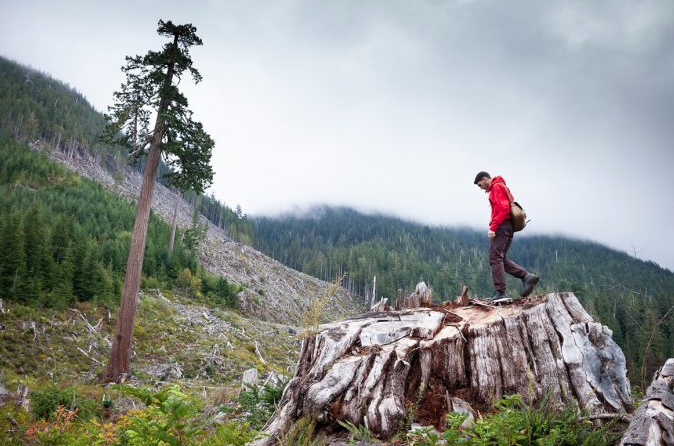
Some of these trees are in Nuu-chah-nulth territory on western Vancouver Island, including a Sitka Spruce near Port Renfrew that measures 62.5 metres in height with a diameter of 3.71 metres, another 49-metre Sitka spruce on the south portion of Meares Island and a western red cedar on the north part of Meares measuring 46.9 metres in height and 5.64 metres in diameter. Also listed among those to be protected is the iconic Big Lonely Doug, a 70.2 metre Douglas fir that was left to be the only tree standing in a clearcut near Port Renfrew.

In a measure to prevent similar scenarios in the future, each of the 54 trees will be surrounded by a one-hectare buffer zone that will also be protected, according to the province.

“These trees represent an important part of B.C.’s natural heritage, and British Columbians have said they want them preserved,” stated Minister of Forests Doug Donaldson. “What we are announcing today is the start of a broader conservation about the future of old-growth management in this province.”

The announcement follows growing concern last year over accelerated old-growth logging in the Nahmint Valley south of Sproat Lake. In May 2018 the Ancient Forest Alliance discovered a Douglas fir measuring over three metres in diameter that was logged in the area, dimensions that would rank the tree among the largest of its species in Canada. Over the last three years BC Timber Sales has auctioned over 300 hectares of old-growth in the Nahmint Valley for harvest, including five timber licences that were sold without the consent of the local Tseshaht First Nation.

In November the Nuu-chah-nulth Tribal Council called on the provincial government “to work with them in slowing down, or even stopping, the rapid disappearance of old-growth forests within Nuu-chah-nulth territories.”

“Old growth forests are valuable ecosystems than can never be reproduced,” stated NTC Vice-President Andy Callicum in a media release. “The forests play an important role in protecting wildlife throughout the winter, and for providing Nuu-chah-nulth peoples the medicines and roots contained in them.”

In Victoria last April the Tla-o-qui-aht First Nation and their supporters celebrated the 35-year anniversary of Meares Island being declared a tribal park. During the event Tla-o-qui-aht carver Joe Martin spoke of the importance of using only what one needs from the forest.

“We’re not allowed to just go and take a tree,” he said. “There’s a protocol with it: you have to go visit that site several times.”

“Sit with it for a long time to make sure there’s no eagle’s nest, wolf dens or bear dens around,” added Martin. “Mother nature will provide for our need, but not our greed.”

But this might not align with the economic aims of BC Timber Sales, which declares its vision as “to be an effective timber marketer generating wealth through sustainable resource management.” BCTS operates in 33 communities across the province and supports over 8,000 jobs through its sales and management of Crown forest land. The logging of old growth continues to be a big part of these operations.

“As with previous years, the amount of harvest being auctioned by BC Timber Sales on the coast this year is approximately 50 per cent old growth and will continue to be for the foreseeable future,” stated a BCTS spokesperson in an email to Ha-Shilth-Sa. “This is what the timber supply, economic base and community employment across the coast is based on.”

see the original article

COLUMN: Can’t see the forest for the trees

Victoria News
July 22, 2019

Adam Olsen is the BC Green Party MLA for Saanich North and the Islands

Ever heard the saying “can’t see the forest for the trees?”

It’s when you are standing too close to something and lack the broader perspective and are not able to see the big picture. Or, if you are looking at things one at a time, you might not see their connection with all the others.

You can use this saying as an analogy for literally any situation, so it’s deeply ironic that it arises in the recent announcement by the BC NDP provincial government that they are going to protect 54 individual old-growth trees plus the hectare immediately in their vicinity, or their “friends.”

I won’t complain about the 54 trees they are protecting. It’s a big victory that the province is not allowing the entire forest to be logged right up to the ancient creature’s stem, like we see with “Big Lonely Doug.” However, it’s disturbing that there is so little willingness to step up and do what actually needs to be done. Chiefly, we need to protect the integrity and function of ecosystems, not trees.

As we heard consistently throughout the Spring legislative session, the Minister of Forests, and his government, see only the value of the fibre. The value of a standing old-growth forest seems to be only in its economic potential for it to become a clearcut. That’s it. The government’s message box is an attempt to have it both ways, maintain the status quo and change. The direct quote from Minister Doug Donaldson from Question Period is,

“We’re committed to protecting old-growth forests as well as continuing with a vibrant forestry sector — the 24,000 jobs that rely on old-growth forests in this province. And we’re undertaking an old-growth management plan, and we’ll be conducting public engagement soon on that plan.”

It appears this is the first step in the development of the management plan. The public consultation is coming soon.

READ ALSO: Big Lonely Doug among largest old-growth trees now on protection list

Unfortunately, forestry “management plans” are actually a euphemism for tree cutting plans.

It’s simply not good enough to protect individual trees. What we need is watershed management plans or ecosystem management plans. As our world changes around the last remaining old-growth forests, they are quickly becoming far more valuable than just the amount we can make by turning them into two by fours. It’s the oxygen we breathe and the water supply of our communities. One ministry logs and another has to swoop in and fix the mess with a $150 million engineered solution; there is seemingly no connection between the two — except, for the future of your community and your tax dollars.

What hasn’t changed is the government’s message box. Even with a change in Minister and a change in government, the message box does not change. Perhaps it’s time to step back and take a look at the forest for the trees.

Adam Olsen is the BC Green Party MLA for Saanich North and the Islands

Read the original article

New Old Growth Protections More Symbolic than Symbiotic, Environmentalists Say

The Tyee
July 19, 2019

Province vows to protect 54 trees, describing it as a ‘first step.’

Environmentalists say the provincial government’s commitment to protect 54 more old-growth trees is a good first step, but its effect will likely be more symbolic than ecological.

B.C. Forests Minister Doug Donaldson said at a press conference Wednesday that the designated trees would be protected by placing a one-hectare buffer zone around each of them.

He described the action as a “first step in a broader old-growth plan” that also includes an independent, two-person panel to “engage with First Nations, industry, stakeholders and communities on old-growth management” starting this fall.

The panel will provide recommendations to the government in spring 2020.

“This is good, but it’s not nearly enough, and it’s not happening anywhere close to the pace we need change for endangered old-growth forests,” said Jens Wieting, senior forest and climate campaigner with the Sierra Club BC. “We are in the midst of extinction and climate crisis, and this step is more symbolic than anything else.”

Old-growth forests, he said, help mitigate the effects of climate change — particularly when it comes to forest fires. Wieting said he’s worried about any delay in implementing a long-term strategy for such forests.

“While the plan sounds good, it’s actually a huge concern that the government is proposing more talks,” he said, noting that the government has also invited feedback on its Forest and Range Practices Act until Monday.

Forest ecologist Andy MacKinnon said the announcement made him hopeful that the government is “listening to what people have to say about old-growth forests in B.C.,” but he also finds the current lack of a long-term plan troubling.

“What they’re announcing is protection for some very large trees,” he said. “It’s not any kind of plan for old-growth forests.”

Wieting and MacKinnon are doubtful that protecting 54 trees, even with a one-hectare buffer zone, will have significant effect on their ecosystems.

“It’s a very modest step,” said Wieting. “The buffer zones would add up to 54 hectares. On Vancouver Island alone, we are destroying about 10,000 hectares of old growth every year.”

MacKinnon compares the total area protected to a little more than 13 per cent of Stanley Park, which comprises around 400 hectares.

Ancient Forest Alliance campaigner Andrea Inness is optimistic that the buffer zones will be a good first step to avoiding more “Big, Lonely Doug” scenarios on the coast, referencing Canada’s second-largest Douglas fir tree that stands alone amid a clearcut. It is now one of the 54 protected trees.

But Innes also said a more comprehensive strategy based on ecosystem science is needed.

“Standing and fallen dead wood plays an incredibly important role in old-growth forest ecosystems as wildlife trees, for example,” she said. “Bears will still use dead and rotting western red cedar trees for habitat.”

Currently, only living trees are eligible for provincial protection, and advocates want protection for dead trees, too.

Dead trees continue to store carbon for decades, Wieting said. “It takes that long for a truly old tree to completely decompose and much of the carbon will then remain stored in the soil, slowly absorbed by other growing trees.”

Inness, Wieting and MacKinnon also said the size threshold is a concern.

To be eligible for provincial protection, Douglas fir, Sitka spruce, western red cedar and yellow cedar trees must have a diameter at least half the size of the largest tree on record for their species. All other species of trees must be 75 per cent of the largest tree on record.

“It sounds like that would capture a lot, but it actually doesn’t. The very largest trees on the Big Tree Registry are exceptional giants,” said Inness. “So to protect only those that are 50 per cent as wide only captures exceptionally rare and large trees.”

The BC Big Tree Registry is a record of large tree specimens native to B.C. housed at the University of British Columbia. All 54 of the newly protected trees are from the registry.

MacKinnon, who was the committee chair of the registry from the mid-1990s until last year, said that any old-growth forest strategy needs to extend far beyond trees on the registry.

“Much more important than protecting individual, large, old trees is protecting watersheds,” said MacKinnon. “One-hectare patches won’t help anything except perhaps protect individual, very large trees.”

Donaldson noted Wednesday that the 54 newly protected trees would be in addition to the 55 per cent of old-growth forests on Crown land already protected on Vancouver Island and the coast, citing 500,000 hectares of protected old growth on Vancouver Island.

But Inness, Wieting, and MacKinnon said those numbers are misleading.

“Not only does that [55 per cent] include low productivity forests in subalpine areas and bogs — forests that have very little to no commercial value and aren’t endangered — it excludes private lands which have largely been cut over,” said Inness.

The ministry has previously said that it has “very limited jurisdiction over private land harvesting” in response as to why it’s not included.

Inness also said that the 55 per cent of protected old growth only describes the remaining forests, not the original amount before industrial logging began.

According to her, more than 80 per cent of original productive old-growth forests and more than 90 per cent of very rare, monumental old-growth stands have already been logged on the south coast.

“They’re just talking about a fraction protected of the fraction remaining,” she said. “By that logic, the more you log outside of the protected areas, the more is protected until finally, the government can say ‘100 percent of old growth on the coast is protected’ because everything else is logged.”

Wieting and MacKinnon said they have been unable to map 500,000 hectares of protected old growth on Vancouver Island.

“It’s been really frustrating to see the different numbers that have been thrown about,” said MacKinnon. “When an environmental NGO says there’s only this amount [of old growth] left on Vancouver Island, the government and industry together will always respond that there’s this amount protected on the coast of British Columbia.”

MacKinnon said the coast of B.C. has very different conservation statuses depending on the location, with 75 per cent of the north and central coast already protected under the Great Bear Rainforest agreement and 52 per cent of Haida Gwaii in protected areas.

Lumping the amount of protected old growth on Vancouver Island with these regions distorts the image of how much is at risk from logging, he said.

“If you’re wondering who to believe about Vancouver Island, I would encourage people to either look at satellite imagery, air photos,” said MacKinnon. “Or simply drive the back roads and decide for yourself.”

The province’s office of Land Use Planning was reached out to for data on Vancouver Island’s protected old growth but did not respond. 

See the original article

NDP announces plan to protect old-growth trees

Global News
July 17, 2019

Watch this Global News piece featuring interviews with Endangered Ecosystems Alliance’s Ken Wu, the AFA’s Andrea Inness, and Sierra Club BC’s Jens Wieting about the BC government’s plan to protect 54 of BC’s biggest trees and develop an old-growth management strategy.

While the conversation often comes down to jobs vs. the environment and the need to ‘strike a balance’, this is a tired argument that must be left in the past. Healthy forest ecosystems form the basis of a strong economy and healthy communities. Many jobs, not to mention our climate, clean water, endangered species, and First Nations’ cultures depend on healthy, intact old-growth forests.

With 80% of Vancouver Island’s productive old-growth forests already logged, it’s time for bold action from the BC government. We need to keep the pressure up to ensure the Province’s old-growth strategy isn’t a piecemeal approach that protects big trees but allows entire old-growth ecosystems to be mowed down.


See the original clip 

B.C. announces protection for old-growth trees


CTV News
July 17, 2019


Forests minister says 54 of the province’s largest trees will be protected

Times Colonist
July 17, 2019

The B.C. government moved Wednesday to protect 54 of the province’s largest trees in a first step toward a broader old-growth strategy.

In a change criticized as “inadequate” by the B.C. Green Party, Forests Minister Doug Donaldson said the “exceptionally large and old trees” were selected from 347 on the University of B.C.’s Big Tree Registry.

The 54 old-growth giants will be surrounded by groves about the size of a “soccer pitch” to provide additional protection, especially from windstorms, Donaldson said.

“I don’t want to leave the impression that it’s one tree standing in the forest,” he said. “It’s a one-hectare buffer around that tree. So it’s other trees included in that.”

The 54 trees include seven in the Capital Regional District — one Arbutus, two Douglas firs, three Sitka spruce and a western red cedar, documents show.

More trees could be added as they are identified, said Donaldson, who made the announcement at Francis/King Regional Park, standing in front of an ancient Douglas fir tree that is already protected within the park boundaries.

“British Columbians want to know that trees like this and the ones you’re seeing today — even in an area they might not ever visit — will never be cut down,” he said.

B.C. Green Party MLA Adam Olsen said the decision to protect 54 trees falls far short of what is needed to save endangered old-growth ecosystems, particularly those on Vancouver Island.

“It’s the least possible thing that the government could do when it comes to protecting old growth,” he said. “It’s frustrating and a distraction, I think, from what actually needs to be done.

“It’s not good enough, not far enough.”

The Greens have called for a moratorium on logging in Vancouver Island’s old-growth “hot spots,” described as pristine areas of conservation significance, such as the Central Walbran or Schmidt Creek, north of Sayward.

Donaldson said the move to protect big trees marks the start of a “broader conversation” about managing old-growth forests.

He noted that Gary Merkel, a forester and member of the Tahltan Nation, and Al Gorley, former chair of the Forest Practices Board, will hear from British Columbians beginning this fall on how to manage old-growth forests. The two-man panel will deliver its recommendations to the government next spring.

“The recommendations are expected to inform a new approach to old-growth management for British Columbia,” Donaldson said. “It’s always a question of how to strike a balance between protecting old-growth trees and protecting jobs and the economy.”

Andrea Innes, a forest campaigner with the Ancient Forest Alliance, welcomed the appointment of an independent panel. “The NDP have been talking about an old-growth strategy for almost a year now, with very little to show for it,” she said.

“What we need is a much more comprehensive, legislated plan that’s based on science and protects entire endangered old-growth forest ecosystems.”

The government said the 54 trees selected for protection had to meet certain criteria, including being on Crown land outside parks or other protected areas. In addition, each tree was required to meet a minimum size threshold determined by the tree’s diameter.

For Douglas fir, Sitka spruce, western red cedar and yellow cedar, the minimum threshold was set at 50 per cent of the largest tree on record for those species. The minimum for other species was set at 75 per cent.

For example, the largest coastal Douglas fir on record has a diameter at breast height of 4.23 metres. The protection threshold was set at 2.12 metres.
lkines@timescolonist.com

See the original article

Big Lonely Doug among largest old-growth trees now on protection list


Sooke News Mirror
July 17, 2019

B.C. to protect 54 old-growth trees, but critics say it’s not enough


A tree climber scales Big Lonely Doug, Canada’s second largest Douglas-fir tree. Doug stands alone in an old-growth clearcut in the Gordon River Valley near Port Renfrew, BC. Height: 216 ft (66 m) (broken top) Diameter: 12 ft (4 m)

Big Lonely Doug won’t be so lonely anymore.

The Coastal Douglas-fir is among 54 of the province’s largest and oldest trees to be protected by the province along with a one-hectare buffer zone surrounding each of the giants, says Forest Minister Doug Donaldson.

Big Lonely Doug is the second largest Douglas-fir in Canada. The tree, located near Port Renfrew, stands at 70.2 metres, or 230 feet.

Two other trees in the Port Renfrew region – Sitka spruce – are also protected.

The trees are on the University of B.C.’s Big Tree Registry that has identified 347 of the largest of each species in the province.

The 54 trees were at risk of being harvested.

The trees are in more than two dozen locations, including central B.C., the East Kootenays, Haida Gwaii, Vancouver Island and the Fraser Valley.

The species include arbutus, coastal Douglas-fir, Pacific yew, ponderosa pine, Sitka spruce, western red cedar and western white pine.

Donaldson says the announcement is also the start of a broader conversation about the future of old-growth management in the province.

The government says starting this fall, an independent two-person panel will meet with First Nations, industry and communities on how to manage old growth in the province.

Local environmental groups welcomed the decision to protect the 54 trees, but say much more needs to be done.

“It’s a small step, but it may signal there’s more comprehensive action to come,” said Andrea Inness, forest campaigner for the Ancient Forest Alliance.

“A more comprehensive, legislated plan is still desperately needed to protect the province’s old-growth ecosystems on a larger scale in order to sustain biodiversity, clean water, and the climate.”

Ken Wu, the executive director of the Endangered Ecosystems Alliance, says the government announcement protects the most charismatic fraction of B.C.’s endangered old-growth forests, but at the same time thousands of others remain endangered, including their ecosystems.

“The fact that the B.C. government says that they plan more comprehensive big tree protections and also old-growth forest ecosystem protections gives us some hope – but let’s see where they go with it,” Wu said.

See the original article

UBC scientists find high mutation rates generating genetic diversity within huge, old-growth trees

UBC News
July 8th, 2019

Study provides clues on how trees evolve to survive

The towering, hundreds of years old Sitka spruce trees growing in the heart of Vancouver Island’s Carmanah Valley appear placid and unchanging.

In reality, each one is packed to the rafters with evolutionary potential.

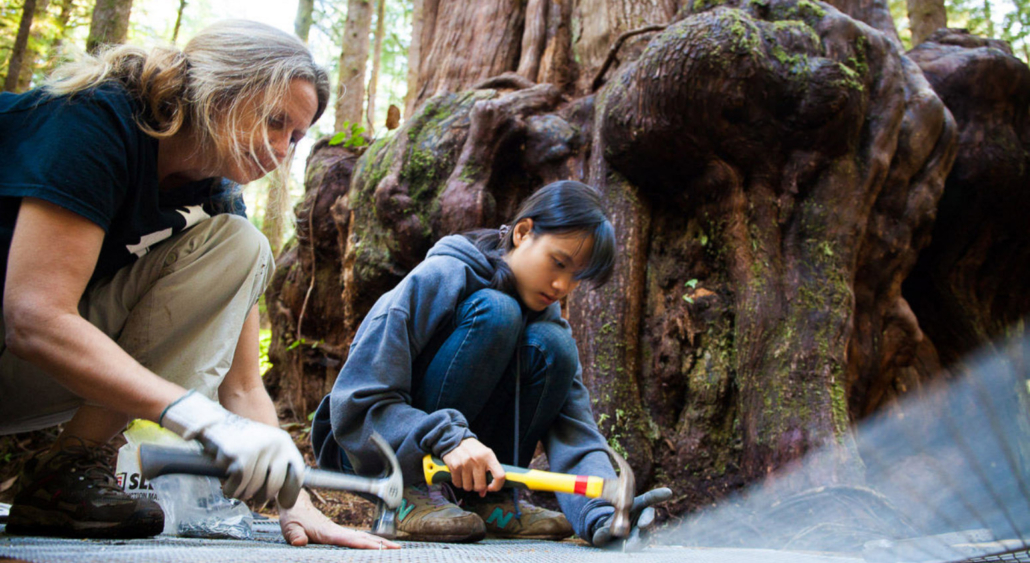
UBC researchers scraped bark and collected needles from 20 of these trees last summer, sending the samples to a lab for DNA sequencing. Results, published recently in Evolution Letters, showed that a single old-growth tree could have up to 100,000 genetic differences in DNA sequence between the base of the tree, where the bark was collected, and the tip of the crown.

Each difference represents a somatic mutation, or a mutation that occurs during the natural course of growth rather than during reproduction.

“This is the first evidence of the tremendous genetic variation that can accumulate in some of our tallest trees. Scientists have known for decades about somatic mutations, but very little about how frequently they occur and whether they contribute significantly to genetic variation,” said Sally Aitken, the study’s lead researcher and a professor of forestry at UBC. “Now, thanks to advances in genomic sequencing, we know some of the answers.”

The researchers chose the Sitka spruce because it’s among the tallest trees growing in the Pacific Northwest, and sampled the exceptional trees in Carmanah Walbran Provincial Park.

“Because these trees live so long and grow so tall, they’re capable of accumulating tremendous genetic variation over time,” explained Vincent Hanlon, who did the research as part of his master of science in the faculty of forestry at UBC.

“On average, the trees we sampled for the study were 220 to 500 years old and 76 metres tall. There’s a redwood tree in California that’s 116 metres tall, but these Sitka spruce were pretty big.”

The researchers say more time and further studies will be needed to understand exactly how the different somatic mutations will affect the evolution of the tree as a species.

“Most of the mutations are probably harmless, and some will likely be bad,” explained Aitken. “But other mutations may result in genetic diversity and if they’re passed onto offspring they’ll contribute to evolution and adaptation over time.”

Studying somatic mutation rates in various tree species can shed light on how trees, which can’t evolve as rapidly as other organisms like animals due to their long lifespans, nonetheless survive and thrive, Aitken said.

“We often see tree populations that adapt well to local climates and develop effective responses to changing stresses such as pests and bugs,” she added. “Our study provides insights on one genetic mechanism that might help make this possible.”

See the original article

Province-wide rallies to protect old-growth forests

Global News
June 6, 2019

Environmental activists rallied across B.C. Thursday, demanding the government do more to protect B.C.’s old-growth forests. Kylie Stanton reports.

See the original clip