 Feb 2 2026
Provincial Forest Advisory Council Misses the Mark on the Problems and Solutions Regarding BC’s Forestry Crisis
Victoria, BC — Today, the Provincial Forest Advisory Council (PFAC), an independent Council tasked with providing recommendations to the BC government on advancing forest stewardship, released its report “From Conflict to Care: BC’s Forest Future”. The Ancient Forest Alliance (AFA) and the Endangered Ecosystems Alliance (EEA) strongly criticize the report for failing to put forward the essential recommendations needed to protect endangered old-growth forests and modernize BC’s forest industry.
Despite the urgency of the ecological crisis, PFAC’s recommendations fail to focus on what is required: clear policy incentives to rapidly transition BC away from its economic dependence on old-growth logging and instead towards value‑added, second‑growth forestry, alongside a protected areas plan with science‑based protection targets to proactively safeguard the most endangered ecosystems.
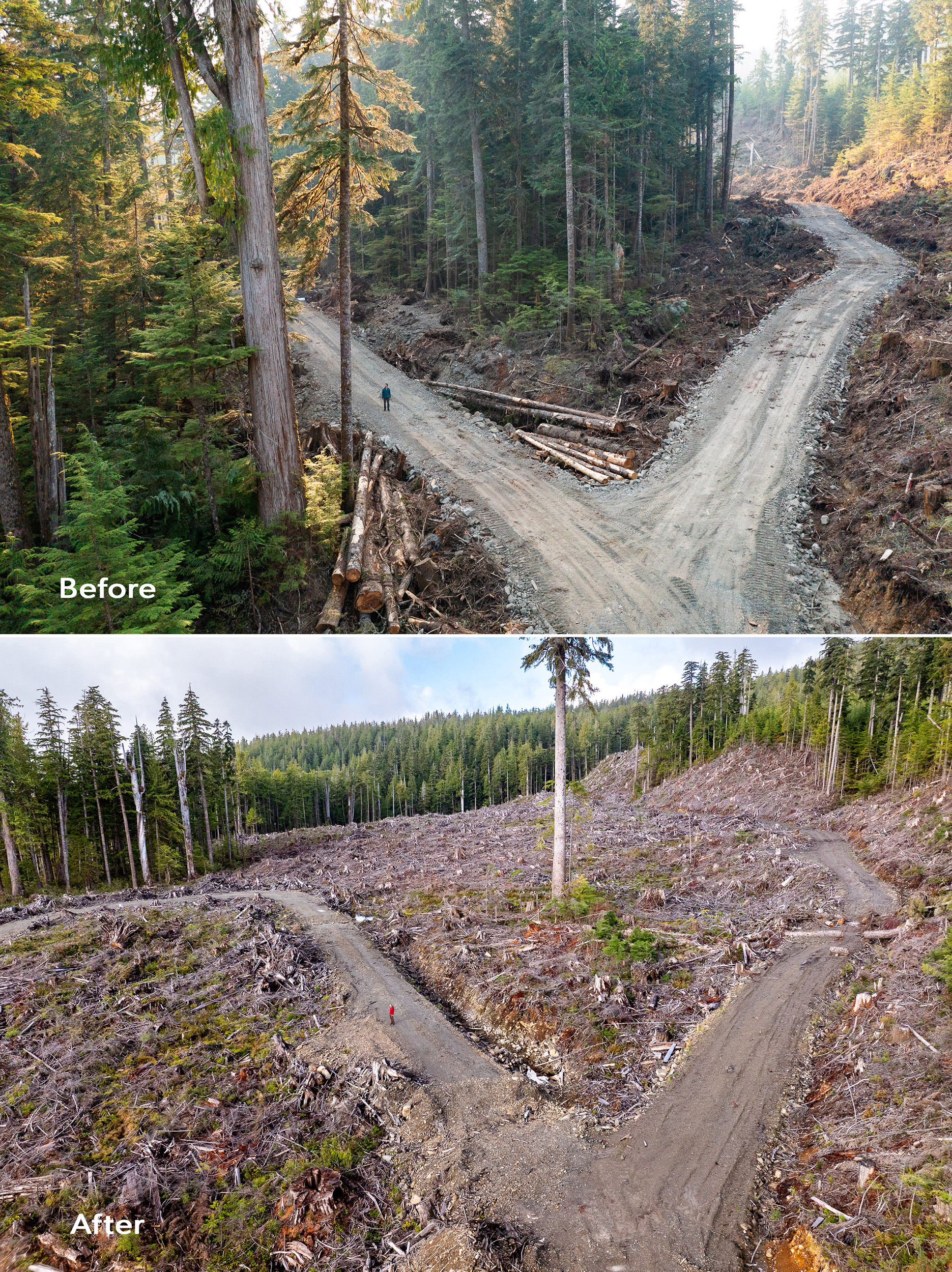
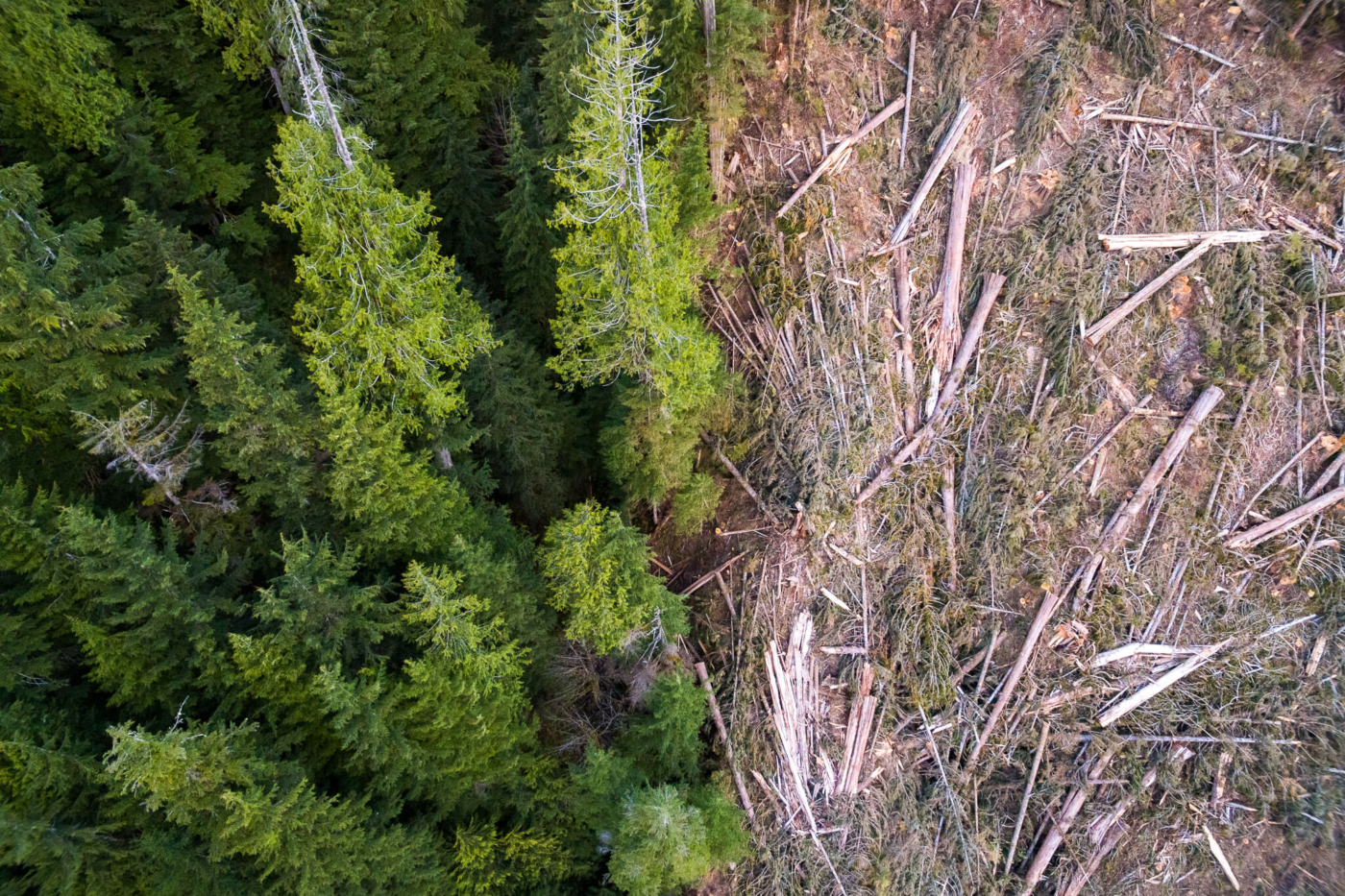
Before & after old-growth logging – northern Vancouver Island.
“We’re deeply disappointed in this report. The council, constituted overwhelmingly by associates of BC’s timber industry, heard nothing of what we said and missed a critical opportunity to confront the root causes of BC’s forestry and biodiversity crisis. There were some useful recommendations, such as improved maps and data, but they did not address the key issues. To end BC’s forestry crisis and the War in the Woods, the BC government needs to quickly transition the industry away from its dependence on old-growth logging toward a value-added, second-growth industry and to ensure a plan to protect the endangered old-growth forests and diverse ecosystems in BC. We need to get out of the business of old-growth logging and we need to protect endangered ecosystems, and provincial government leadership is vital here. The council somehow missed these points. The forestry council got the puck to take a shot into an open net — and they missed,” stated Ken Wu, Endangered Ecosystems Alliance (EEA) executive director.
“A major system of financial incentives and access to logs for manufacturers is needed to ensure a rapid industry transition away from old-growth to a modernized, value-added, second-growth forest industry, which will help pave the path for the critical conservation initiatives the BC government must undertake: Protecting the endangered old-growth and diverse ecosystems in BC with an actual protected areas plan – incredibly, they currently have none – that prioritizes saving the most endangered ecosystems based on science, all in conjunction with First Nations who need interim or ‘solutions space’ funding to implement logging deferrals. Instead, this weak PFAC report will largely provide cover for the status quo for the liquidation of the endangered old-growth forests in BC to continue and in some ways absolves the province of its responsibility to implement the critical solutions,” stated TJ Watt, Ancient Forest Alliance campaign director.
PFAC was established in May 2025 by the BC NDP government and the BC Green Caucus under the Cooperation and Responsible Government Accord (CARGA). Its mandate was to identify how to overhaul BC’s system of forestry to deliver the promised ecological paradigm shift and a sustainable future for forestry-dependent communities.
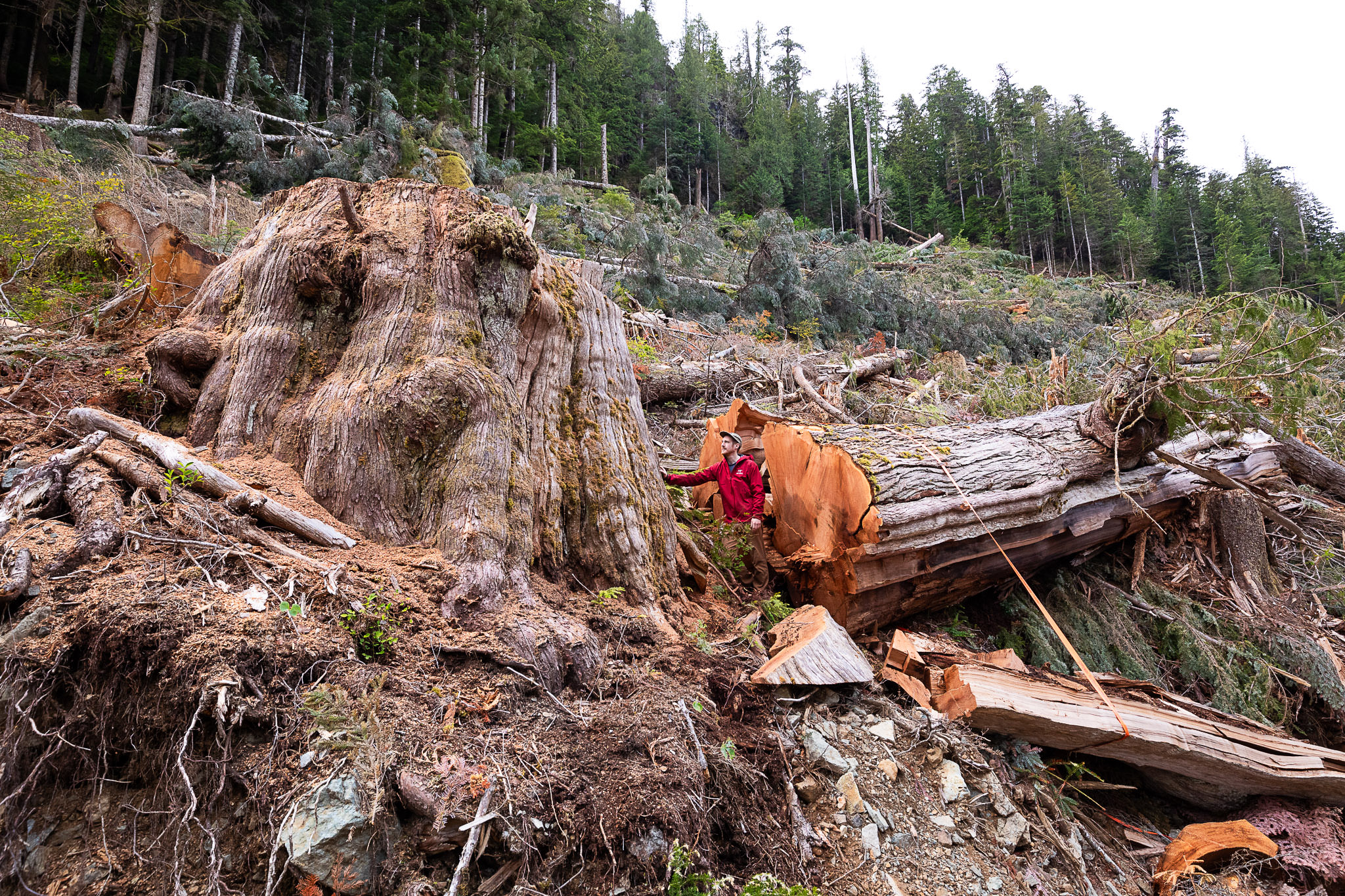
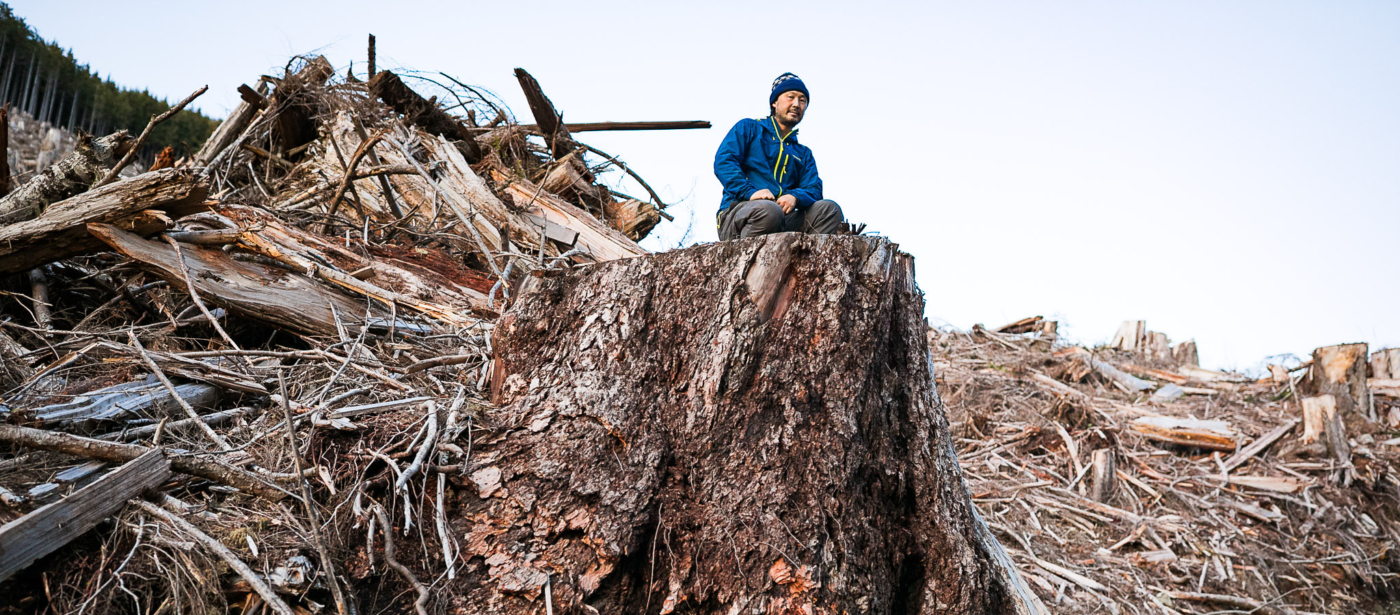
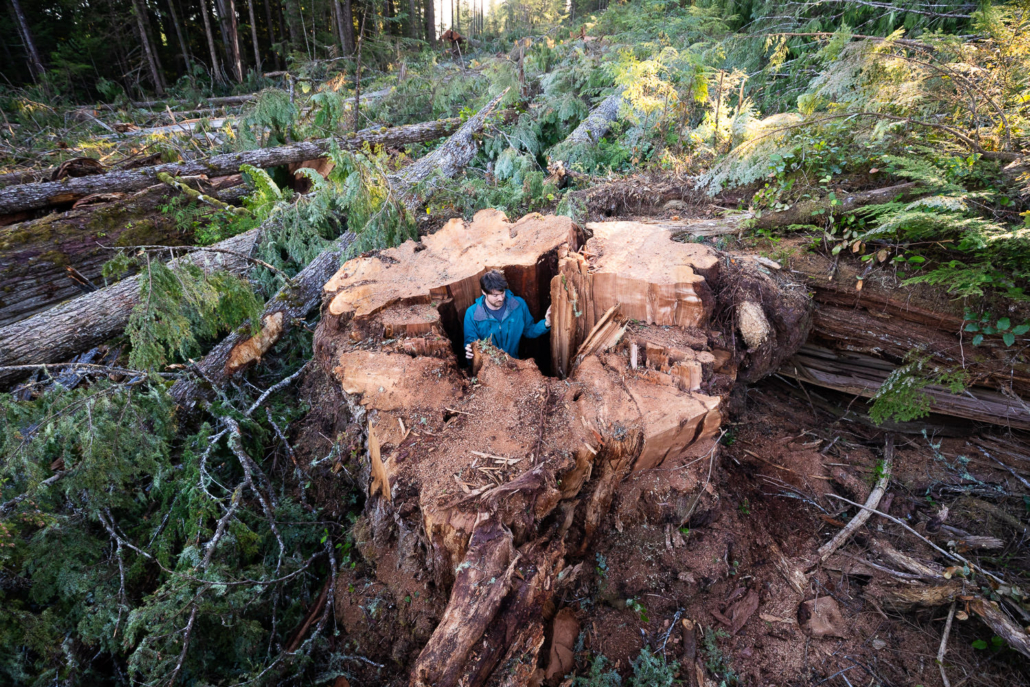
Ancient Forest Alliance photographer and campaign director TJ Watt stands beside the fallen remains of an ancient western redcedar approximately 9 feet (3 metres) wide, cut down by BC Timber Sales in 2024 the Nahmint Valley near Port Alberni in Hupačasath, Tseshaht, and Yuułuʔiłʔatḥ First Nation territory.
Instead, AFA and EEA say the report fails to both define and solve the issues facing forest ecosystems and communities in BC. PFAC frames the challenge primarily as one of “fibre access and utilization,” citing outdated systems, limited access to public data, and structural misalignment. Its proposed solutions include creating a transparent public forest and ecosystem inventory and shifting to area‑based land management with independent oversight.
While these challenges exist, AFA and EEA stress that they are secondary to the compounding negative impacts of over a century of old-growth logging in BC, including the current ecological crisis, which the report does not mention.
“The recommendation for regionalized forest management, with diminished provincial authority, risks jeopardizing the protection of ecosystems. This approach opens up the possibility of the timber industry, which deeply pervades much of rural BC, to undermine conservation objectives and widen logging loopholes within conservation reserves, like Old-Growth Management Areas and Wildlife Habitat Areas, under the guise of regional ‘community decision-making’ and ‘wildfire risk management’. This could be a Trojan horse to open up protected areas to commercial logging,” stated Issy Turnill, Ancient Forest Alliance campaigner.
AFA and EEA summarize the core policy measures that PFAC have failed to recommend as:
- A large-scale, transformative system of incentives and structural adjustments for the transition from old-growth logging to value-added, second-growth forestry. This includes financial relief or rebates for second-growth investments, potentially provided through PST, log experts’ fee-in-lieu, and TFL rents.
- The science-based protection of endangered ecosystems, including endangered old-growth forests. The province must establish a proactive Protected Areas Strategy that identifies candidate protected areas of the highest conservation value and proactively engages First Nations to pursue their protection through shared decision-making. This strategy must be guided by “Ecosystem-Based Protection Targets” for all ecosystems, developed through the promised Biodiversity & Ecosystem Health Framework (BEH).\
- Solutions-space funding to meet the interim funding needs of First Nations who forgo logging revenues due to implementing old-growth logging deferrals.
Read AFA and EEA’s summary briefing note to the Provincial Forestry Advisory Council:
Core Policy Measures for a Sustainable Forestry Paradigm Shift in BC
Also see our full list of policy recommendations.
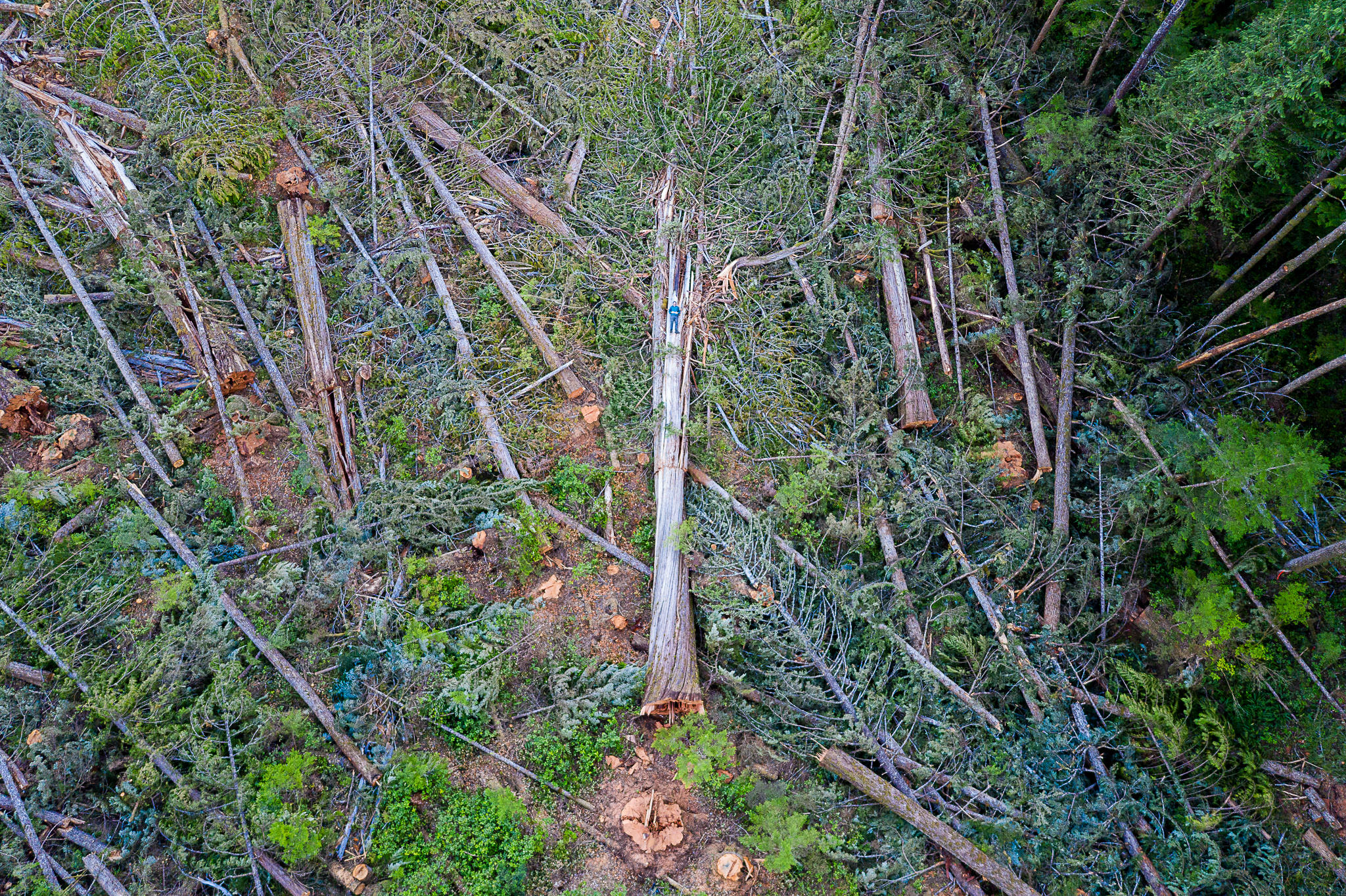
Researcher Ian Thomas lies down and provides scale to a massive old-growth redcedar tree logged by Western Forest Products on northern Vancouver Island in Quatsino territory.
 Donate
 Send a Message

