 Apr 17 2026
Western Coralroot
Meet one of the rainforest’s loveliest yet strangest flowers.
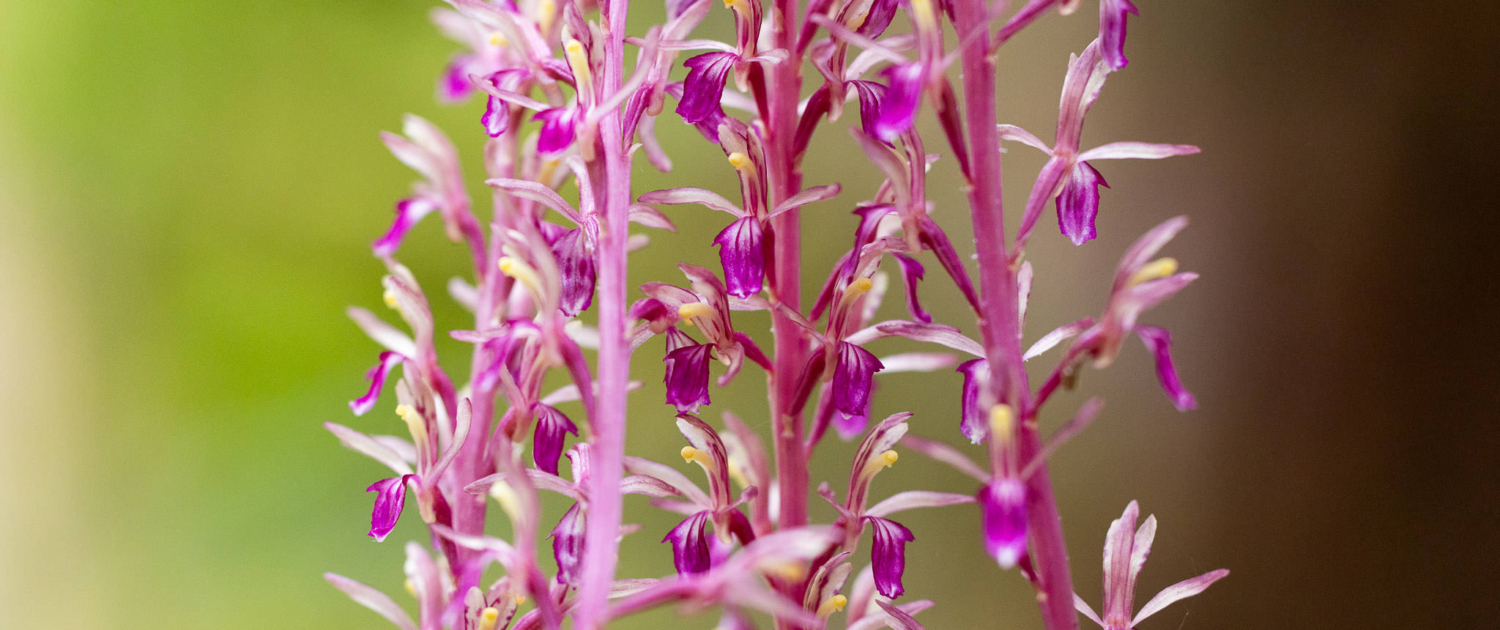
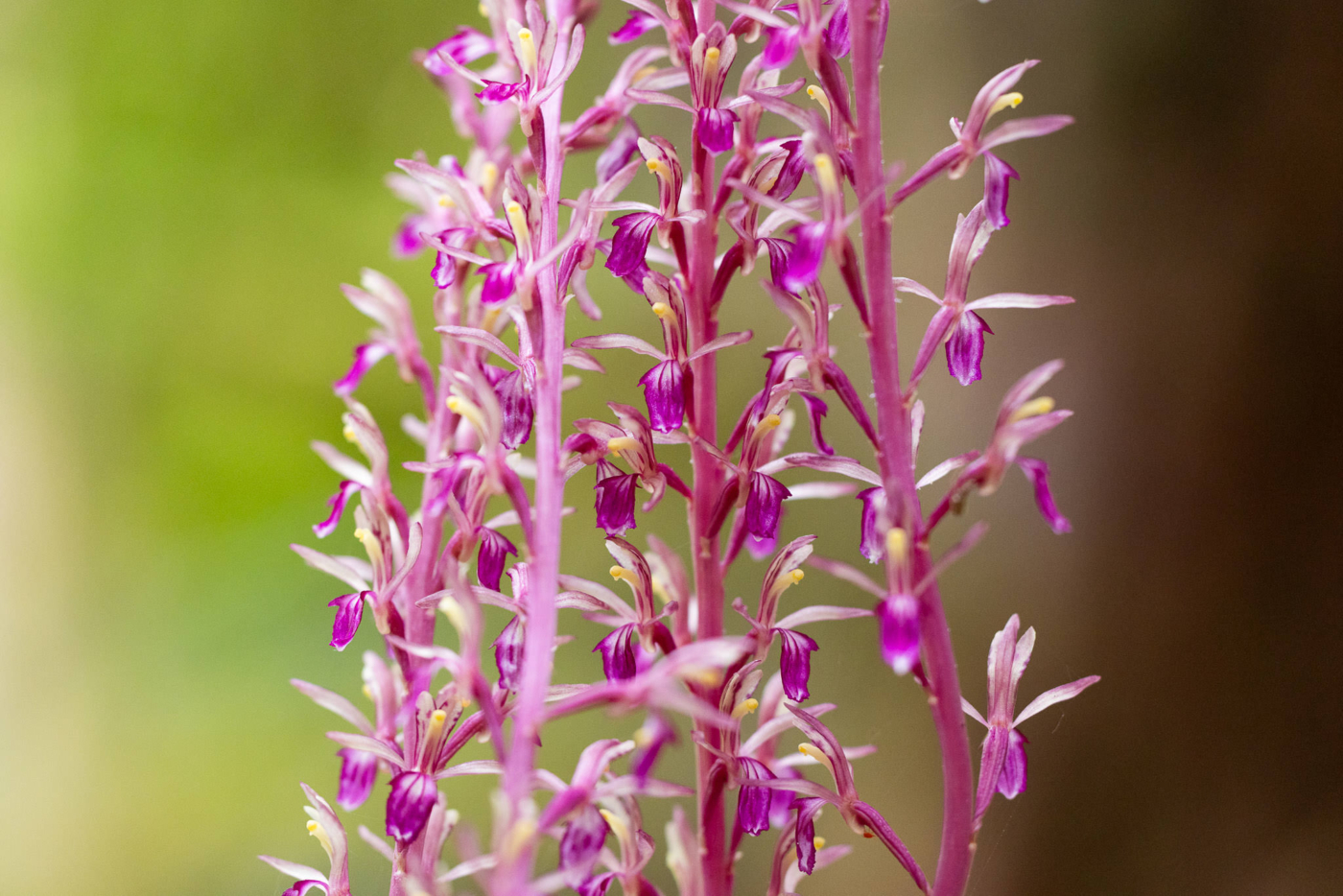
A bright fountain of pink flowers and flower-pink stems without a hint of green in the shady darkness of the forest floor marks the alien beauty of the western coralroot. A highly specialized orchid, it tells a fascinating story of life on the forest floor.
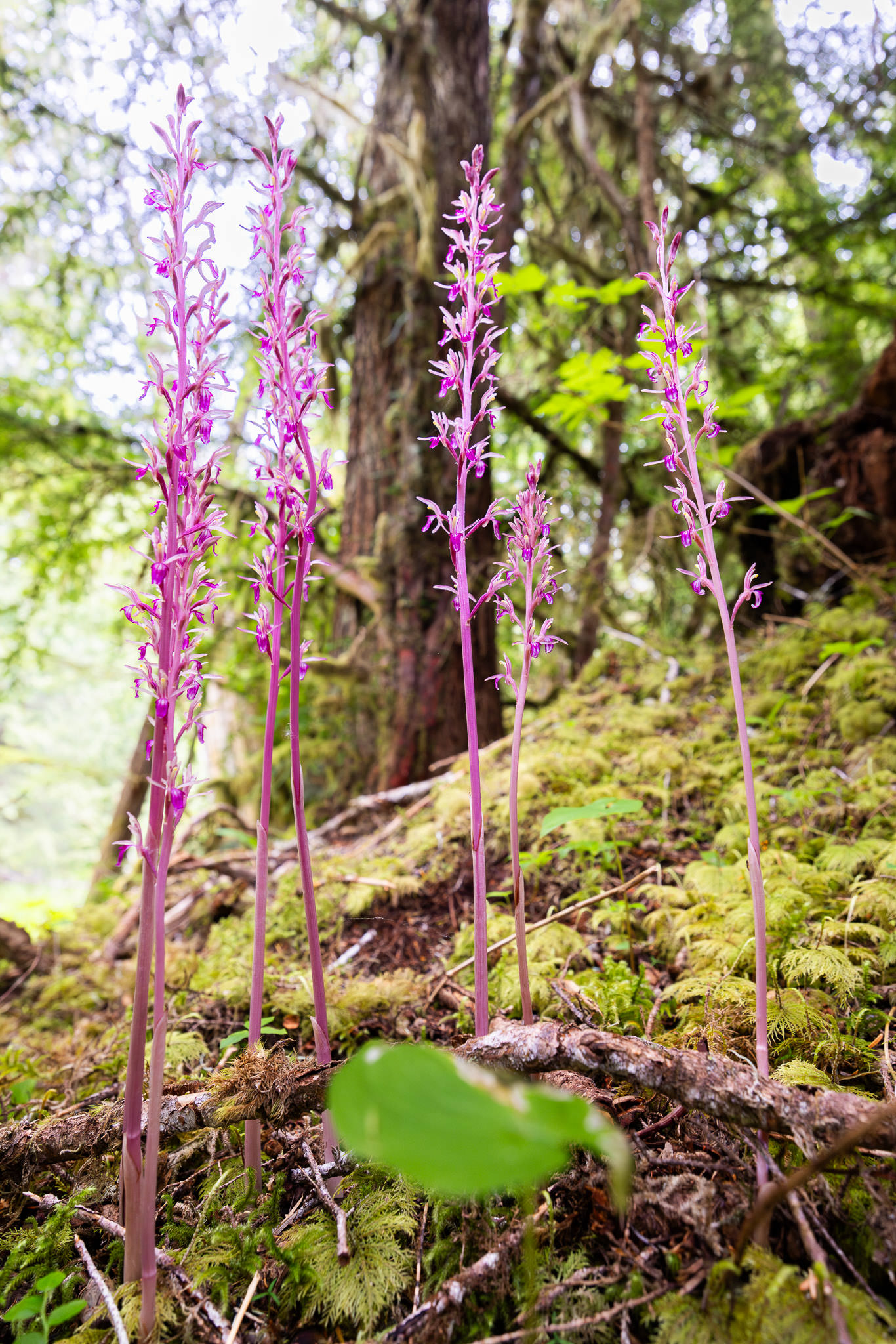
Its total lack of the green pigments that are the hallmark of most plants is a clue to this orchid’s unusual lifestyle. Coralroots have lost the ability to extract nutrients from sunlight through photosynthesis; instead, they tap into the complex web of mycorrhizal fungi that permeates the soil. Beneath the forest floor, these fungi are busily exchanging nutrients with trees in symbiotic partnerships that the coralroot can exploit. The orchid parasitically siphons off resources from this network for its own nourishment, without providing any known benefit to the hosts. These types of plants are known as saprophytes.
Coralroots are extremely choosy about their fungal hosts, with western coralroot specializing in a handful of species in the russula family. Even when western coralroot is found intermixed with the closely related spotted coralroot, the two species have been found to parasitize different kinds of fungi.
The fungal relationship starts early with coralroots; their seeds are among the tiniest of all plants, just grains of dust. Unlike other plant species that provide a “bag lunch” of rich nutrients to support the infant seed sent out into the world, coralroots provide no resources for their offspring, sending them out with nothing. Terrible parents! The tiny dust-like seeds must wait until they encounter fungi to mooch off before they can germinate; they are freeloaders from the start. Because of this tough beginning, coralroots may take years before they acquire the resources to flower.
Parasites stick to parasites. In an interesting twist, one of the documented pollinators of the spotted coralroot is the parasitic wasp Pimpla pedalis, which, unlike the more familiar bees that lovingly raise their young on pollen and honey, injects its eggs into the caterpillar of the pale-winged geometric moth (Iridopsis ephyraria) and leaves the growing larva to feed on its insect host. Wasp and coralroots are indeed thick as thieves.
If you encounter this gorgeous bloom in the shady depths of the forest, take a moment to consider the vast world it reveals below the earth and the huge marketplace of nutrient exchange that links the thriving forest and provides patronage to eccentric artists like the coralroot.
When freed from photosynthetic labour, it’s a wonder that they are able to dedicate themselves completely to sculpting such exquisite flowers.


 Donate
 Send a Message