 Apr 23 2026
The Tyee: BC Must Stop Blaming First Nations for Old-Growth Logging
April 23, 2026
The Tyee
By: Ben Parfitt
Instead of subsidizing logging, the province should follow experts’ advice and pay nations to conserve forests.
You would be forgiven for thinking that British Columba’s Ministry of Forests is really the Ministry of Logging.
A recent ministry news release boasts of a 30 per cent increase in timber auctioned, legislative amendments that will result in 17,700 more truckloads of logs coming out of the province’s forests each year, and a new streamlined permitting process that will add another 11,100 truckloads of logs to the mix.
Ravi Parmar, the man overseeing all of this as forests minister, is certainly working hard to meet the mandate given to him by Premier David Eby, one that instructs him to increase logging rates and that sets a numerical target.
But what of old-growth forest conservation, which is also part of Parmar’s mandate? There, Parmar has acted with decidedly less zeal.
‘A moral failure’
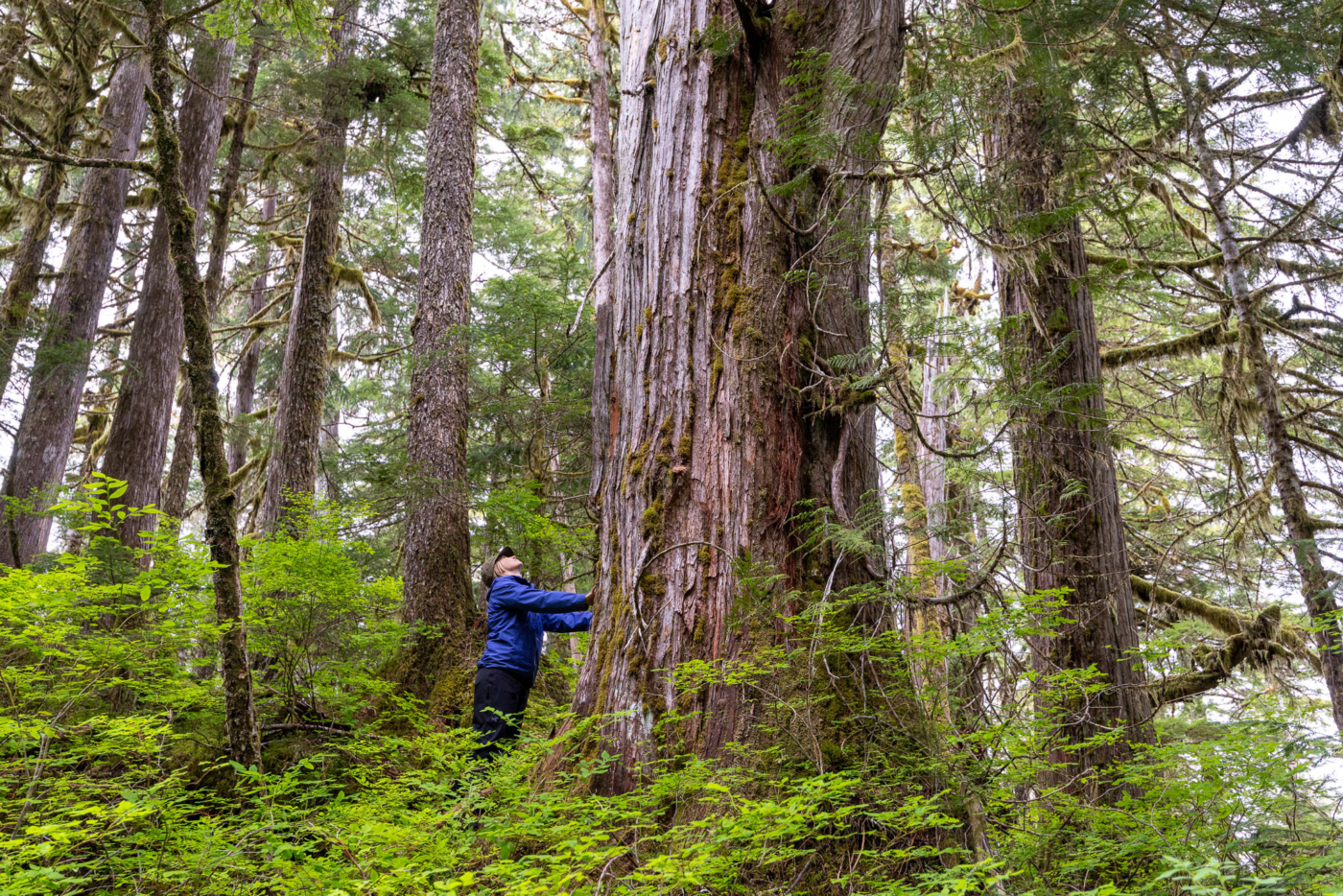
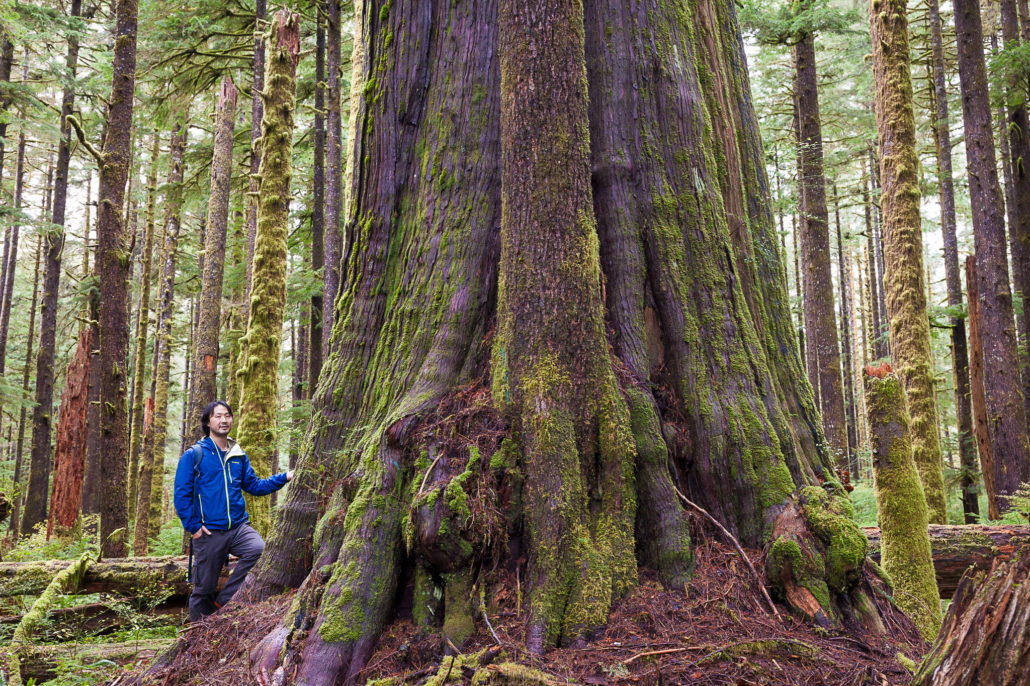
In 2021, the provincial government appointed a panel to guide it in protecting more of B.C.’s irreplaceable old-growth forests. The panel delivered a report that recommended 2.6 million hectares of old-growth forests be deferred from logging. But trees have continued to fall, and last month five members of that panel wrote the government, voicing alarm at the province’s lack of progress in conserving British Columbia’s old-growth forests.
The panel members — ecologists Rachel Holt and Karen Price, longtime forester and Tahltan Nation member Garry Merkel, landscape analyst Dave Daust and economist Lisa Matthaus — were blunt.
“Purposely causing extinction is not just a moral failure but also a high economic, ecological and social risk.”
Parmar’s disingenuous response was to say that the lack of progress is effectively beyond the government’s control. The province has referred the proposed deferrals to First Nations and First Nations have rejected half of them, he said.
In an interview with Canadian Press reporter Brenna Owen, Parmar said that the “core” of the province’s old-growth commitments was respecting First Nations’ rights and title and making sure that “they have a seat at the table.”
“We’ve done that,” Parmar said, as if that absolves the government of addressing a biodiversity crisis that it brought into being with its own destructive resource policies.
Parmar’s ministry did indeed refer the old-growth deferral recommendations to First Nations. But those referrals didn’t happen in a vacuum, and therein lies the problem.
Bankrolling logging
For decades, provincial governments have worked diligently to get First Nations more directly involved in logging old-growth and primary forests (forests that have never before been subject to industrial logging activities).
Efforts really took off during Gordon Campbell’s helm as premier in the early 2000s, with the issuance of a raft of new logging licences giving First Nations timber and cash. By 2006, 126 such licences had been awarded.
Since most First Nations — then and now — do not directly own or co-own mills, the trees cut down under those licences ended up being shipped to sawmills owned by a handful of lumber companies that had long ago monopolized the forest industry in B.C. But at least First Nations were being given some stake in profiting from the industrialization of their traditional lands, rather than standing on the sidelines as forests were depleted to the financial benefit of the province and lumber companies alike.
The current government has effectively continued what the BC Liberals started, with Parmar recently announcing that his ministry granted new logging rights to the Fort Nelson First Nation in the remote northeast corner of the province.
Some of the licences awarded under the NDP’s tenure have clearly given the First Nations involved better financial terms than their competitors. In 2022, the McLeod Lake Indian Band logged nearly 180,000 cubic metres of timber under a special permit awarded to the band by the ministry and known as an occupant licence to cut.
A Tyee review of records available on a ministry database shows that the ministry charged the band only 25 cents per cubic metre for the timber cut under the licence. That is the bare minimum “stumpage” fee that logging companies pay the province when they cut down trees on Crown or publicly owned land.
Had the band or the companies to which it sold the logs paid the same as everyone else in northern B.C. who held similar licences that year, the province would have collected over $1 million more in stumpage fees. Those savings meant increased profits for the band.
The provincial government has also entered into revenue-sharing agreements with many First Nations that have had the effect of bankrolling even bigger logging ventures.
In February 2022, the Tsay Keh Dene Nation and the McLeod Lake Indian Band announced that they intended to spend $70 million to buy a forest licence in the Mackenzie region held by Canfor Corp.
Shortly after that, money began pouring into the band and First Nation from the provincial government. A Tyee review of financial statements available on a searchable federal government website shows that provincial funding to Tsay Keh rose from just over $2 million in 2022 to $18 million in 2024. McLeod Lake’s revenues from the province rose from $11 million in 2022 to $55 million in 2024.
Flush with that infusion of cash from the province, the two Indigenous governments ultimately bought Canfor’s forest licence in September 2024, the same year that provincial government contributions to the two Indigenous governments were at their highest levels.
Taxpayers, it could be argued, effectively subsidized a purchase that financially benefited both the First Nation and a forest company that had put thousands of mill workers out of jobs as it shuttered one B.C. mill after another and plowed investment dollars into the U.S. South instead.
Bankrolling conservation?
Parmar and his predecessors have clearly encouraged more logging by First Nations on the grounds that it fosters a long-overdue new relationship with Indigenous Peoples and governments in the province.
But it prompts the question: What meaningful financial assistance has the province offered those First Nations who may wish to conserve forests in their territories or those First Nations who might be persuaded that that is the right and necessary thing to do?
If the provincial government genuinely believes in protecting more irreplaceable old-growth forests — it appointed the panel after all — then what is it doing to make that happen?
Parmar’s claim that more old growth could be protected if First Nations were of a different mind is an insult to all British Columbians, especially when the government is shovelling money out the door at the same time to facilitate the very logging of those forests.
In their letter, the five panel members pointed out that in lieu of logging, there must be adequate conservation financing or funding to assist First Nations who are affected both by the industrialization of their traditional lands and by conservation decisions.
Such funding “has not been part of the deferral conversation” and its absence “leaves First Nations with no real choice,” the panel’s members told the province. “We ask the province to take responsibility for maintaining these exceptional forests and not place the burden of harvesting decisions entirely on Nations.”
Financially compensating First Nations to conserve lands is not a new idea. In 2019, all provincial members of the legislative assembly voted unanimously in support of the Declaration on the Rights of Indigenous Peoples Act, which became law on Nov. 28, 2019.
Article 29 of the act states:
“Indigenous peoples have the right to the conservation and protection of the environment and the productive capacity of their lands or territories and resources. States shall establish and implement assistance programmes for indigenous peoples for such conservation and protection, without discrimination.”
Premier Eby has proposed suspending portions of the legislation in response to court rulings, but has backed away from immediate action.
Whether or not Article 29 is among those sections to be suspended remains to be seen. But regardless of what happens, it is clear that all those provincial MLAs who voted in favour of the legislation seven years ago — the current premier among them — believed that First Nations were owed financial compensation to assist in conservation efforts.
In the 155 years since B.C. entered Confederation, governments have collectively taken in hundreds of billions of dollars in “resource rents” from logging, oil and gas, and mining companies.
It’s time some of that money went back to financially compensate those who have paid, and continue to pay, the biggest price as irreplaceable old-growth forests disappear. And that money needs to flow at a rate that is commensurate with or better than the money the government is happily pushing out the door to get First Nations to log instead.
 Donate
 Send a Message