 Sep 10 2026
Media Release: Working Forest Proposal Revived from the Dead
For immediate release, Thursday, September 10, 2026
Working Forest Proposal Revived from the Dead: BC NDP government flip-flops and plans to introduce the anti-forest conservation designation of its former opponents, which they once fought
Victoria, BC – The BC NDP government elaborated last week on its plans to lock most of the richest forests in BC into guaranteed logging zones (anti-forest conservation zones), under a so-called “Working Forest” designation that would include old-growth logging. The designation would obstruct the public’s ability to protect and conserve forests unless other conservation areas are opened up to logging, under the so-called “No Net Loss” policy. Read the announcement here.
The designation was first proposed in 2001 by the BC Liberal government and was vociferously fought by conservationists and First Nations with the full support of the BC NDP opposition, until the BC Liberal government backed down in 2004.
Now, the BC NDP government is attempting to implement a similar policy to foreclose conservation options and to support its goal to unsustainably log 45 million cubic metres of wood each year, up from the roughly 30 million cubic metres currently logged annually (i.e., a 50% increase). This would include millions of old-growth trees, and would require that the vast majority of the province’s lower-elevation, most productive forest lands be set aside in its “Working Forest Zone”.
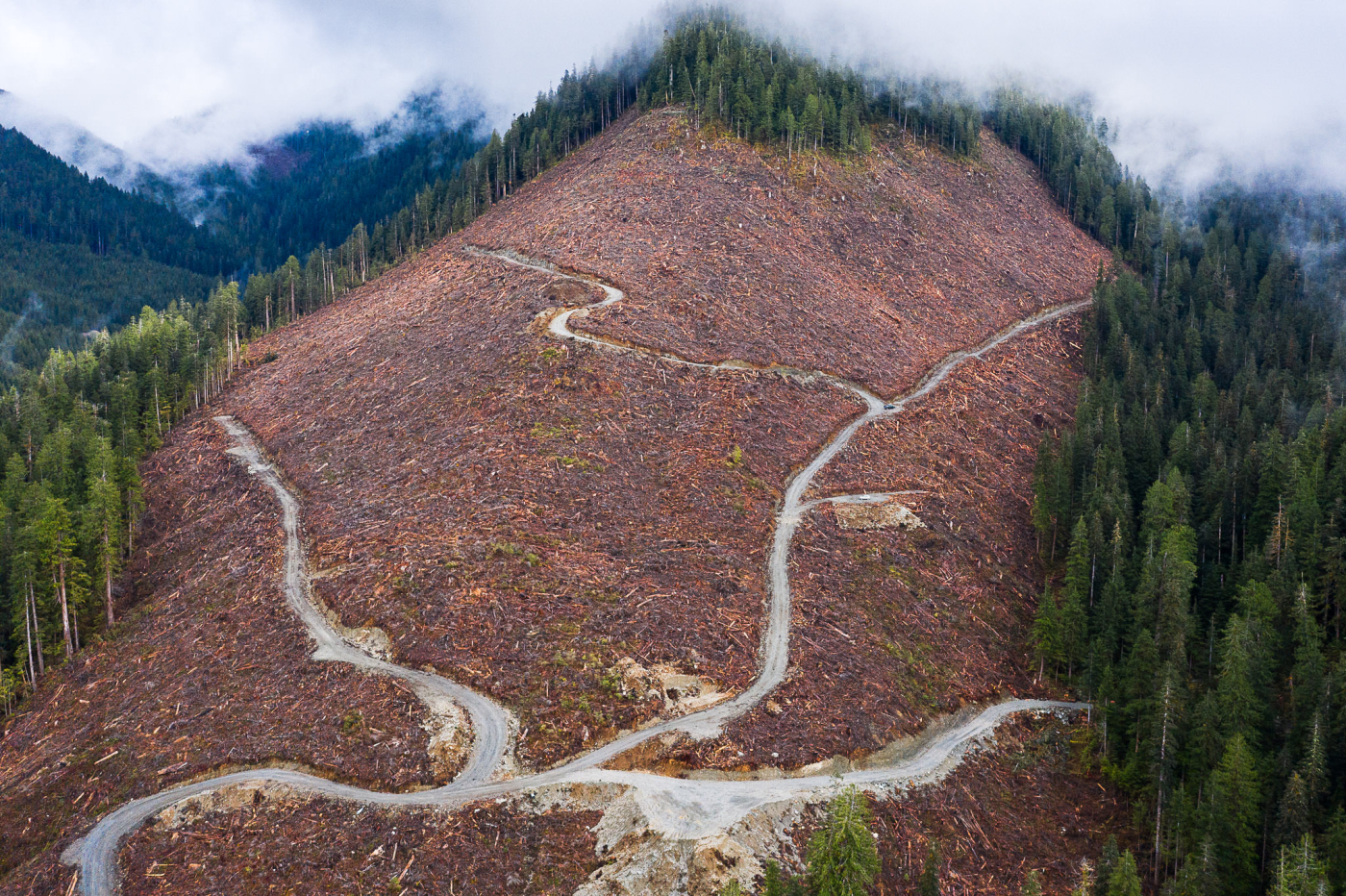
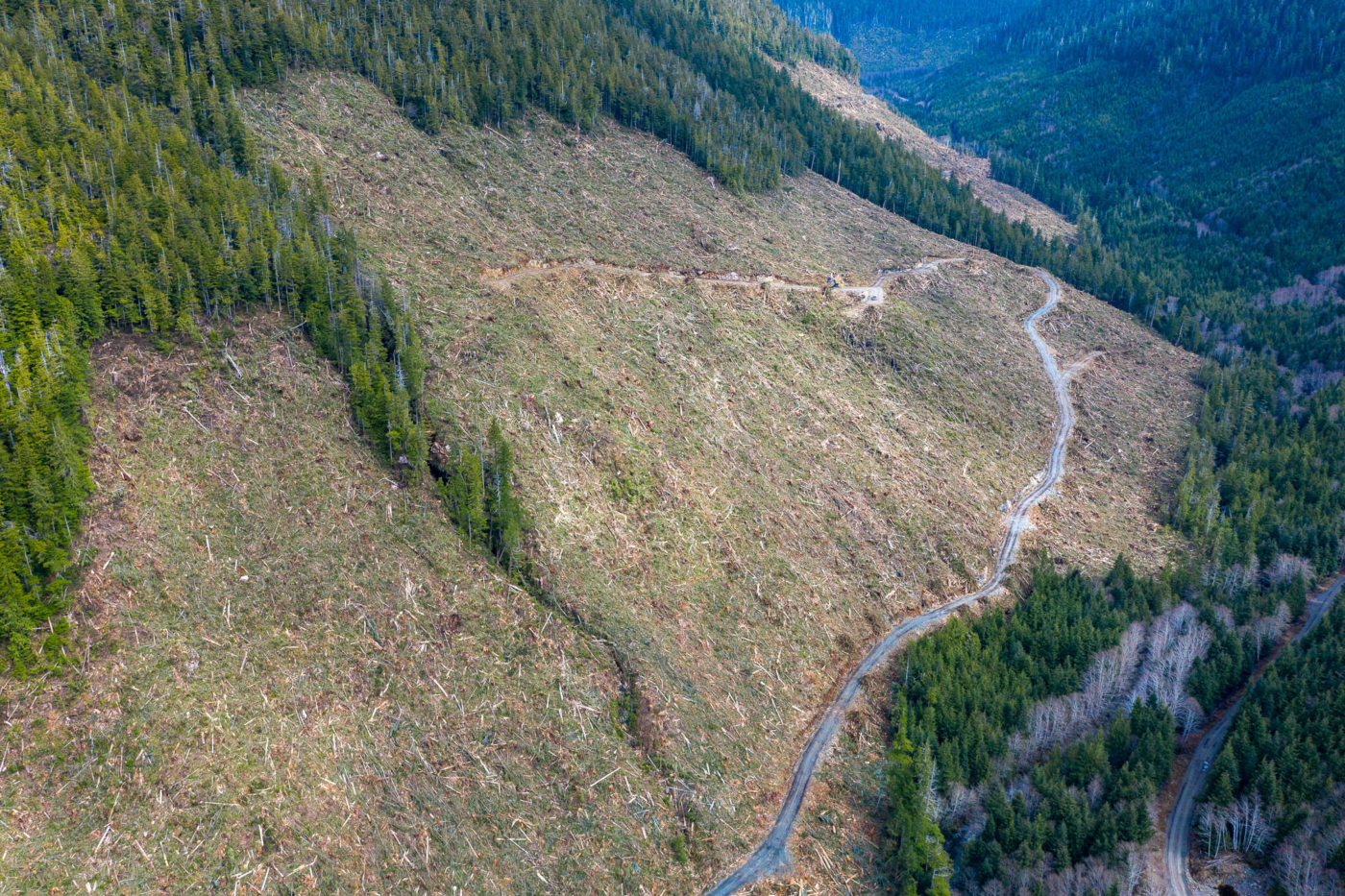
An old-growth clearcut in the Caycuse watershed on Vancouver Island, BC. The BC NDP government is looking to create guaranteed logging zones, including in old-growth forests.
The Working Forest Zone would be one of three zones that the province is proposing under the Working Forest Landscape Model, which they want to implement BC-wide by the spring of 2027. The other zones, a Multiple Use Zone and a Conservation and Protection Zone, will generally encompass higher elevation areas in the treeless alpine tundra and subalpine areas with smaller trees and lower species richness. This is due to the fact that the Working Forest, by necessity, will have to cover the majority of the most commercially and biologically productive forest lands at lower elevations to reach a 45 million cubic metres annual cut.
The BC NDP government intends to announce four candidate regions this month to gain a toehold for its Working Forest plans, which will inform the province-wide implementation by next spring.
“The BC government’s backwards ‘Working Forest’ plan is an absolute no-go for us, whether done in a sneaky, incremental way to try to curtail public opposition, as they are planning, or all at once across BC, as is their eventual goal by the spring of 2027. The Working Forest would obstruct the public’s ability to protect and conserve the biologically richest, productive forests and watersheds in BC for biodiversity, fish and wildlife habitat, recreation, scenery, and First Nations cultures, all to benefit the timber corporations. Meanwhile, the BC NDP government allows millions of raw, unprocessed logs to leave BC to foreign mills each year and has failed to adequately incentivize a modernized, more profitable, value-added, second-growth forest industry. Thus, by consistently fumbling and failing at undertaking the sustainable, long-term solutions, they’re instead desperately grasping to double-down on the worst, short-term, unsustainable ‘fix’ for industry woes – guaranteed overcutting of the already exhausted, fragmented forests – a dead end for all,” stated Ken Wu, executive director of the Endangered Ecosystems Alliance (EEA). “We killed the Working Forest proposal over 20 years ago with the NDP opposition’s help – and today the BC NDP government will absolutely regret trying to do the same, as turncoats lacking principles trying to lock in the expansion of industrial clearcuts, watershed degradation, fish and wildlife habitat destruction, and big stumps where big trees once stood.”
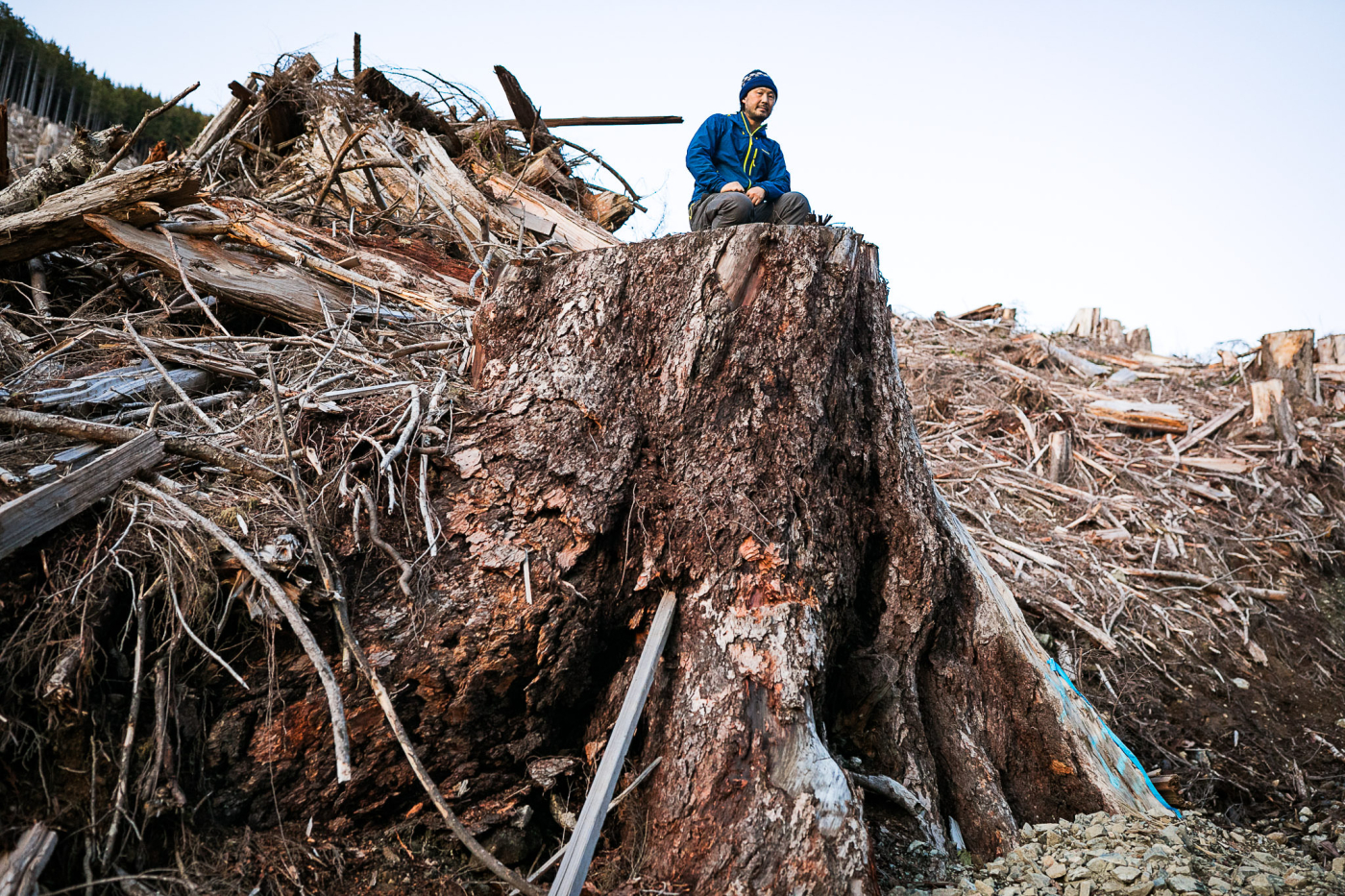
EEA’s Ken Wu sits atop an old-growth Douglas-fir stump logged by Teal-Jones near Port Renfrew.
In an attempt to confuse and dissipate opposition from conservationists, the province is attaching its Working Forest proposal to the three-zone system proposed by the BC Old-Growth Strategic Review (OGSR) panel (read their report) that they convened in 2019. The panel suggested a different three-zone system, to be implemented after the OGSR panel’s ecological “paradigm shift” took place, that would prioritize ecological integrity in all land-use decisions. However, nowhere did the OGSR panel recommend downgrading any area into a “Working Forest Zone” that legally forecloses conservation options with a “No Net Loss” anti-protected areas policy with old-growth logging, like the province is now planning. Thus far, the BC NDP government has failed to implement the panel’s ecological paradigm shift (supposedly through its long-awaited Biodiversity and Ecosystem Health Framework) and almost all of its recommendations, yet wants to lock in an extreme timber emphasis zone in advance of any paradigm shift.
“As long as a three-zone system is tied to a Working Forest plan, the zonation system will act as a Trojan horse to block future forest conservation efforts in the biologically richest, low elevations of BC, typically of greatest value for conservation, recreation, scenery, diverse businesses, and First Nations communities. There must be no three-zone system as long as a Working Forest is falsely attached to it,” stated TJ Watt, Ancient Forest Alliance (AFA) campaign director. “Successive BC governments and forest companies have driven this crisis through decades of overcutting the most valuable, accessible forests. Now they want to lock in the same timber-first approach that brought us here, with a ‘no-net loss’ provision that treats future conservation by the public as a threat.”
“Without ecosystem-based targets to protect the most endangered and least represented ecosystems, the Working Forest plan would entrench the industrial logging of these forests. This would foreclose any options to protect many of our low elevation forests, where the greatest biological richness, fish and wildlife habitat, recreational opportunities, and First Nations cultural values are typically found,” added Issy Turnill, Ancient Forest Alliance campaigner. “The long-promised Biodiversity and Ecosystem Health Framework was supposed to deliver the paradigm shift called for in the Old-Growth Strategic Review. But if the BC NDP government locks the core of our productive forest lands into guaranteed logging zones, the opportunity to deliver that paradigm shift will be gone. Putting ecosystem health first means making conservation needs the starting point for land-use decisions – asking what to leave first, not what to take first.”
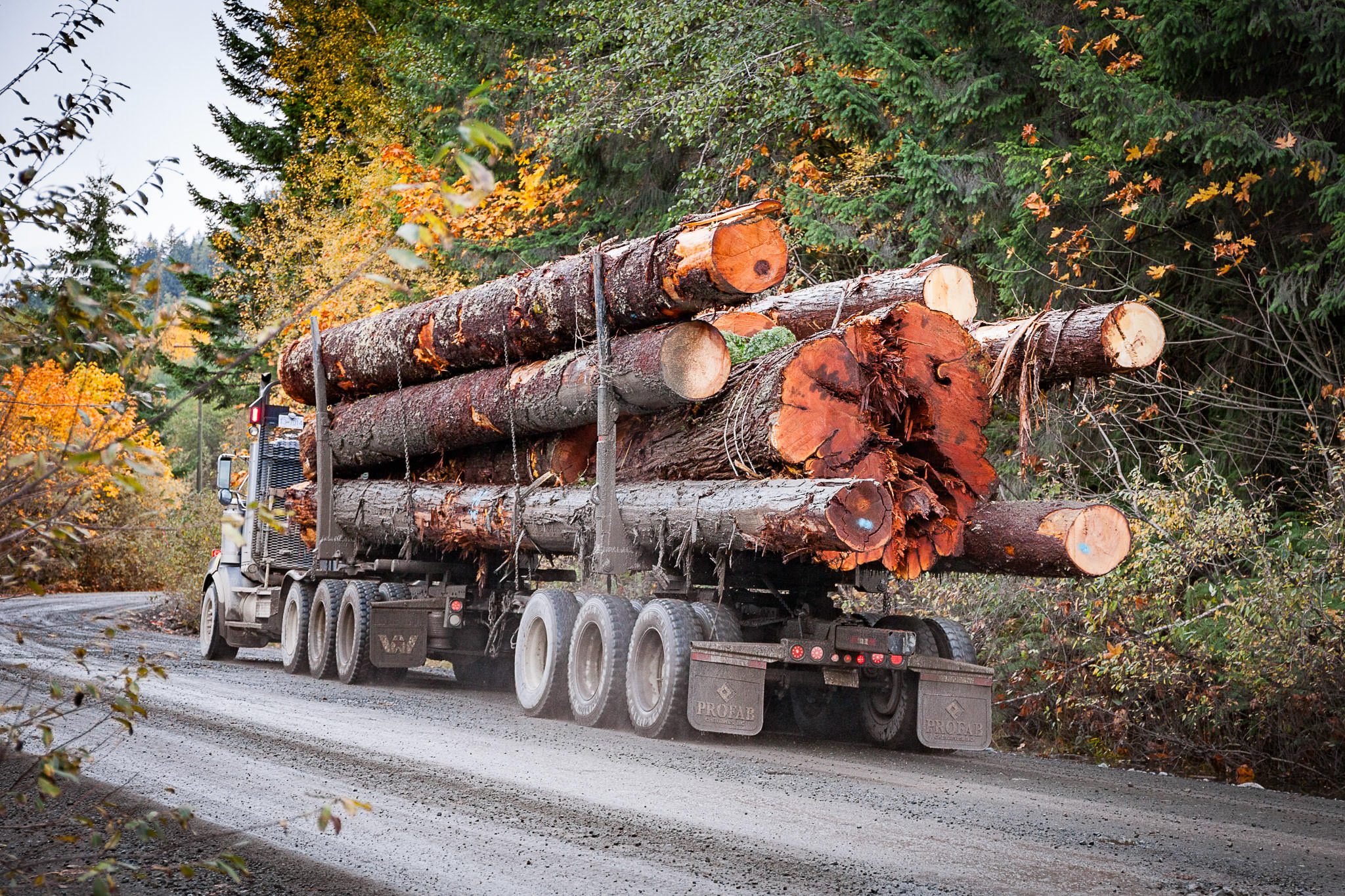
A logging truck loaded with an ancient redcedar tree on Vancouver Island, BC.
In 2001, the right-wing BC Liberal government (which later became the BC United Party, with many members ending up in the BC Conservative Party) proposed a Working Forest Initiative in a bid to block forest protection and conservation across most of BC’s productive forest lands. This included a “No Net Loss” clause that required the opening up of conservation areas to logging if areas in the Working Forest were protected.
The Endangered Ecosystems Alliance’s Ken Wu (working for the Wilderness Committee then) spearheaded a campaign with the Union of BC Indian Chiefs (including Grand Chief Stewart Phillip and his late wife, Joan Phillip) and the BC NDP Opposition at the time to kill the initiative. Increasing the certainty of private timber companies by legally locking in their single land use activity on Crown/unceded First Nations lands runs counter to Indigenous rights and title, making a more challenging and complicated legal and political landscape for First Nations efforts to regain management and governance authority over their territories. The opposition efforts against the original Working Forest succeeded in 2004, when the BC Liberal government backed down from the legal implementation of the initiative.
AFA and EEA are calling on the BC government to jettison its Working Forest proposal and to instead develop:
- A BC Value-Added, Second-Growth Strategy of incentives (eg. PST and log exports tax rebates for new investments in second-growth manufacturing) and regulations (eg. curtailing raw log exports, and making at least half of BC’s logs available to BC manufacturers via a system of log sorts) to help transition the forestry sector into a modernized, more profitable, second-growth industry with an emphasis on wood manufacturing, as well as greater support for sustainable markets development, innovation and skills training – including directing federal forestry support funds to this end.
- A BC Conservation-Based Economy Strategy of incentives and support for diverse new businesses in tourism, recreation, real estate, non-timber forest products, and high tech, among others, in regions where the protected areas system is expanding, and across BC.
- A provincial Protected Areas Strategy (PAS) to proactively work with First Nations to protect priority, high-conservation value areas based on ecosystem-based targets.
- Ecosystem-based protection targets by implementing the long-promised Biodiversity and Ecosystem Health Framework to prioritize the most endangered and least represented ecosystems, including the last big-tree old-growth forests in the province and underrepresented, low-elevation ecosystems.
- Solutions space funding to offset the costs for First Nations that would lose forestry revenues for undertaking old-growth logging deferrals.
- A commitment to uphold and strengthen the standards and permanency of BC’s protected areas system and conservation reserve system
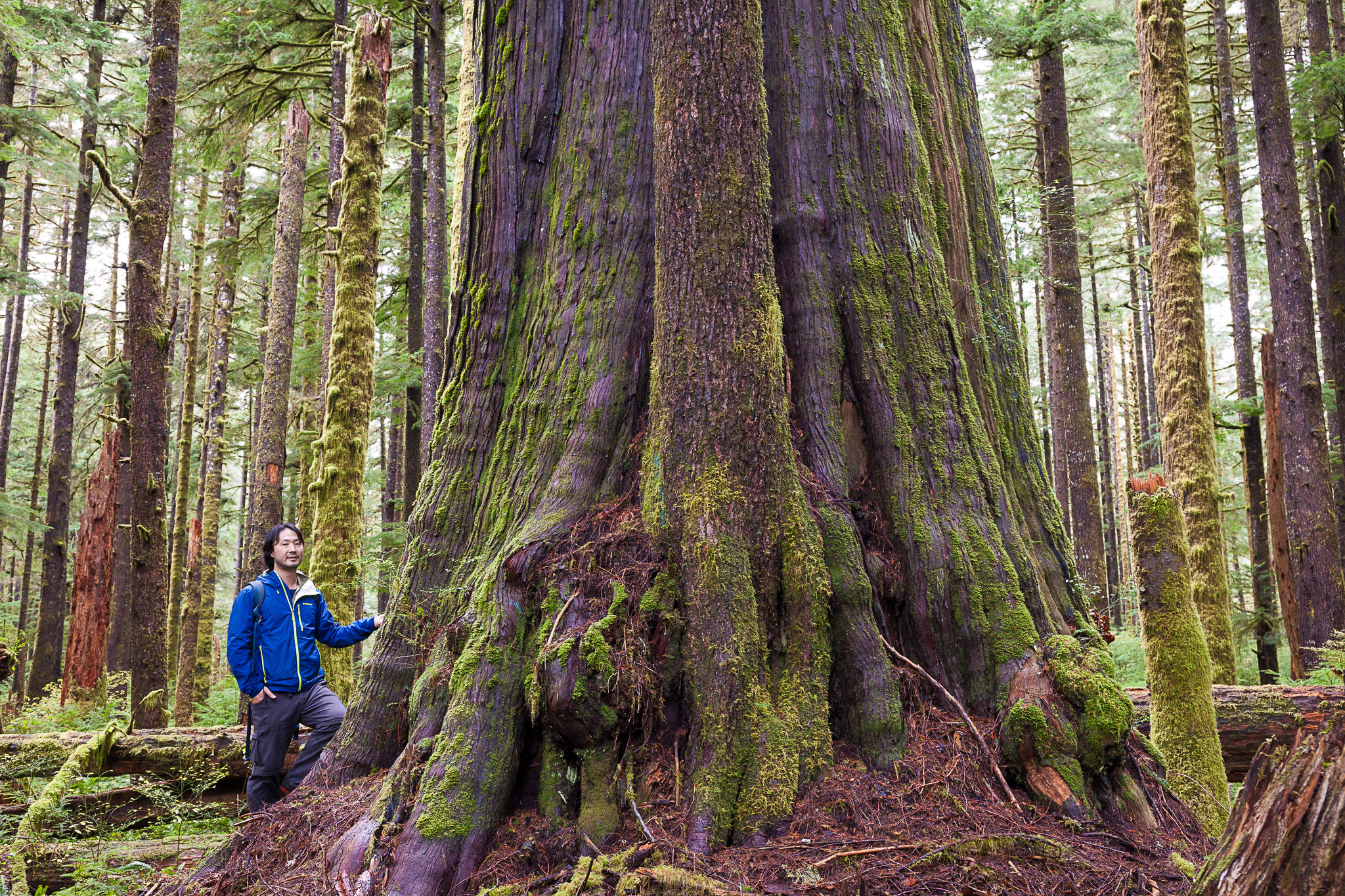
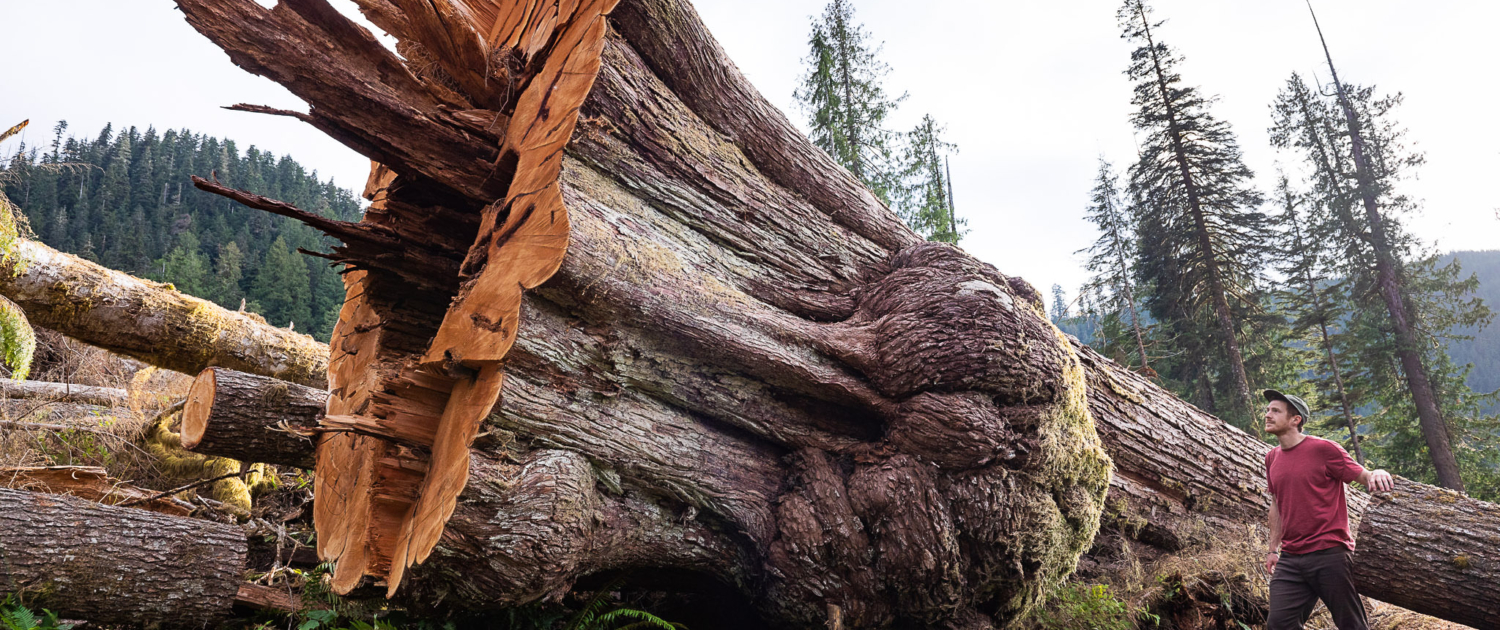
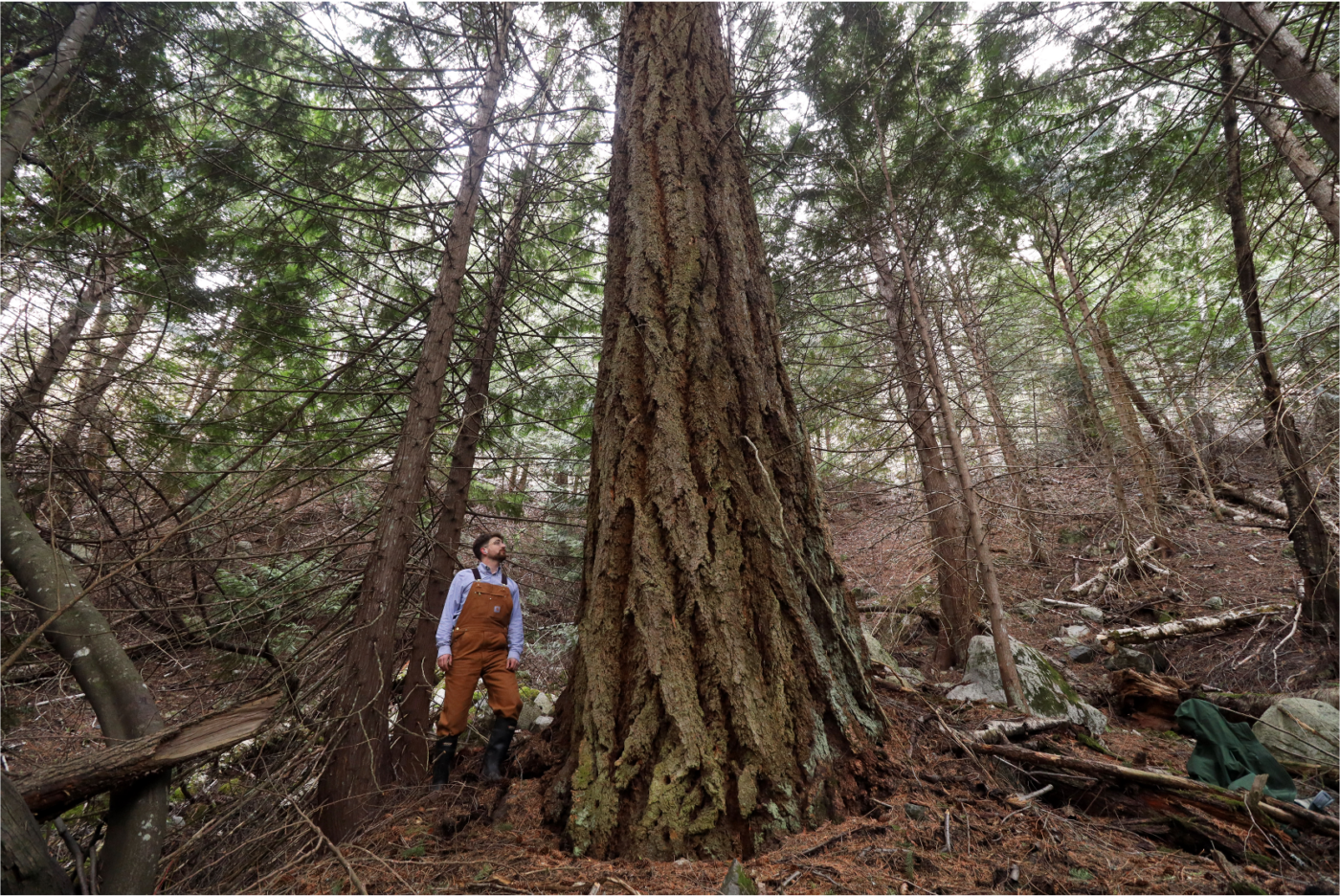
Endangered Ecosystems Alliance’s Executive Director Ken Wu beside a giant old-growth cedar tree in the unprotected Eden Grove near Port Renfrew in Pacheedaht territory on Vancouver Island, BC.
 Donate
 Send a Message