 Jul 15 2026
Nationally Significant Old-Growth Karst Rainforest at Risk in BC
Nationally Significant Old-Growth Karst Rainforest at Risk in BC
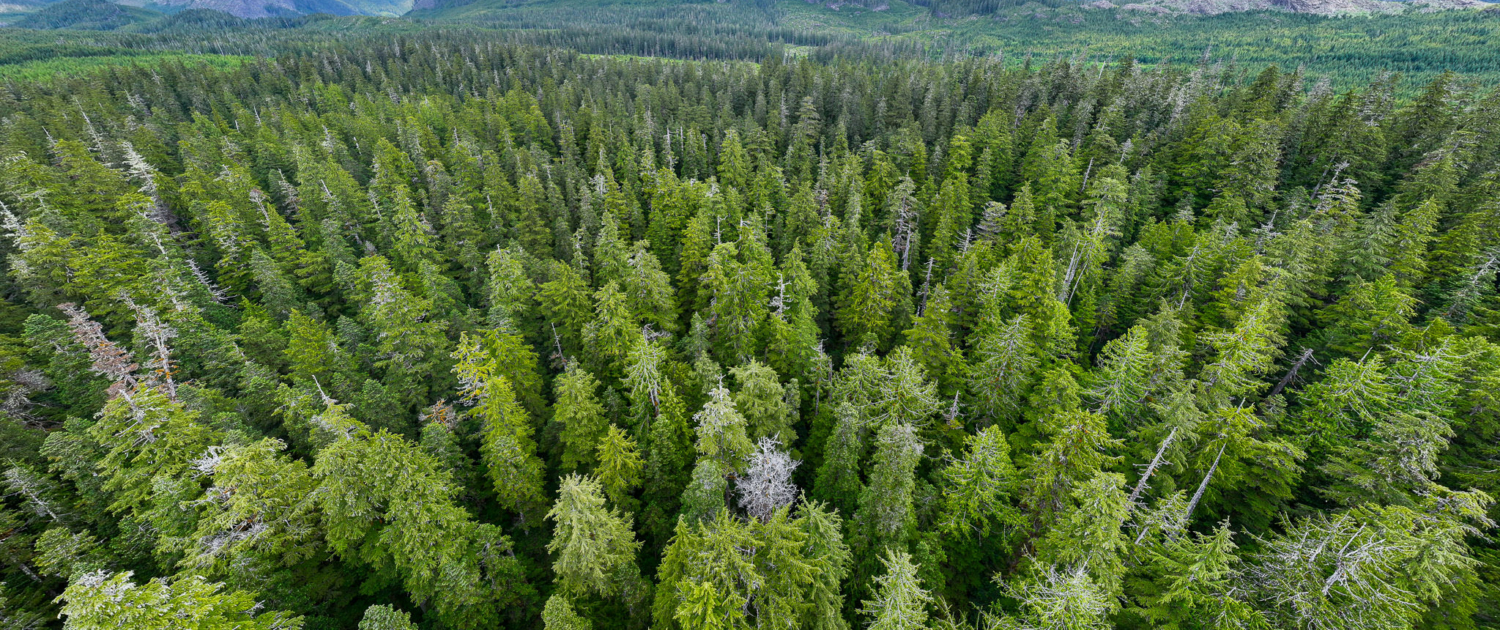
Victoria, BC — Images and videos released today from Vancouver Island by the Ancient Forest Alliance (AFA) showcase the “Jewel of the Tahsish”, one of the grandest remaining unprotected old-growth karst forests in BC, and an area of exceptional conservation value that deserves national conservation recognition. Karst forests, where trees grow atop limestone, are among the rarest, most productive and sensitive old-growth ecosystems in British Columbia and Canada. Despite being recommended by the BC government as a priority for old-growth logging deferrals, the grove remains unprotected and at risk of logging today.
Photo Gallery: https://
To defer logging in this old-growth karst forest — and across the other remaining 1.3 million+ hectares of priority at-risk old-growth forests in BC — AFA is calling on the province to deliver “solutions space” (or interim) funding for First Nations-led logging deferrals and a proactive BC Protected Areas Strategy to secure lasting protection.
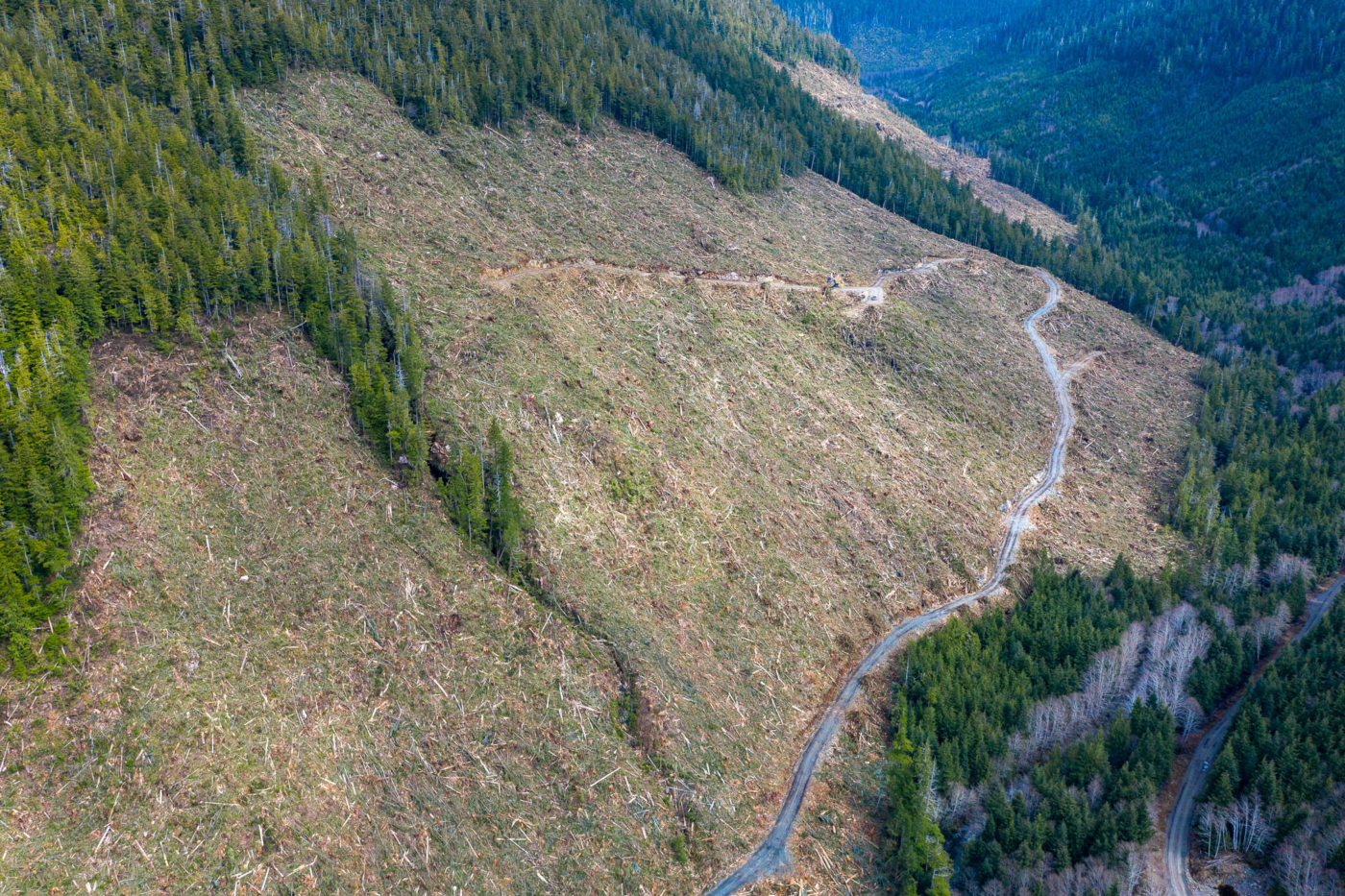
Historically, thousands of hectares of productive old-growth forest once grew on karst in the Tahsish River watershed on northwestern Vancouver Island, but after decades of logging, the vast majority have now been clearcut. Today, this grove represents the largest remaining contiguous tract of old-growth karst forest growing on flat, gentle terrain — where the biggest trees tend to grow — in the Tahsish Valley
“It’s hard to grasp how rare this old-growth karst forest is unless you’ve made the long journey there. It’s like an emerald oasis in a sea of clearcuts and tree plantations that now define much of the landscape on northern Vancouver Island,” said TJ Watt, campaign director at the AFA. “This forest itself is shaped by remarkable karst features, from sinkholes to caves, and is alive with towering ancient trees, vibrant plant understories, and abundant signs of wildlife. Protecting this incredible grove — as has been recommended by the BC government’s independent science panel — would safeguard the best of what remains of this fragile ecosystem in the Tahsish Valley.”
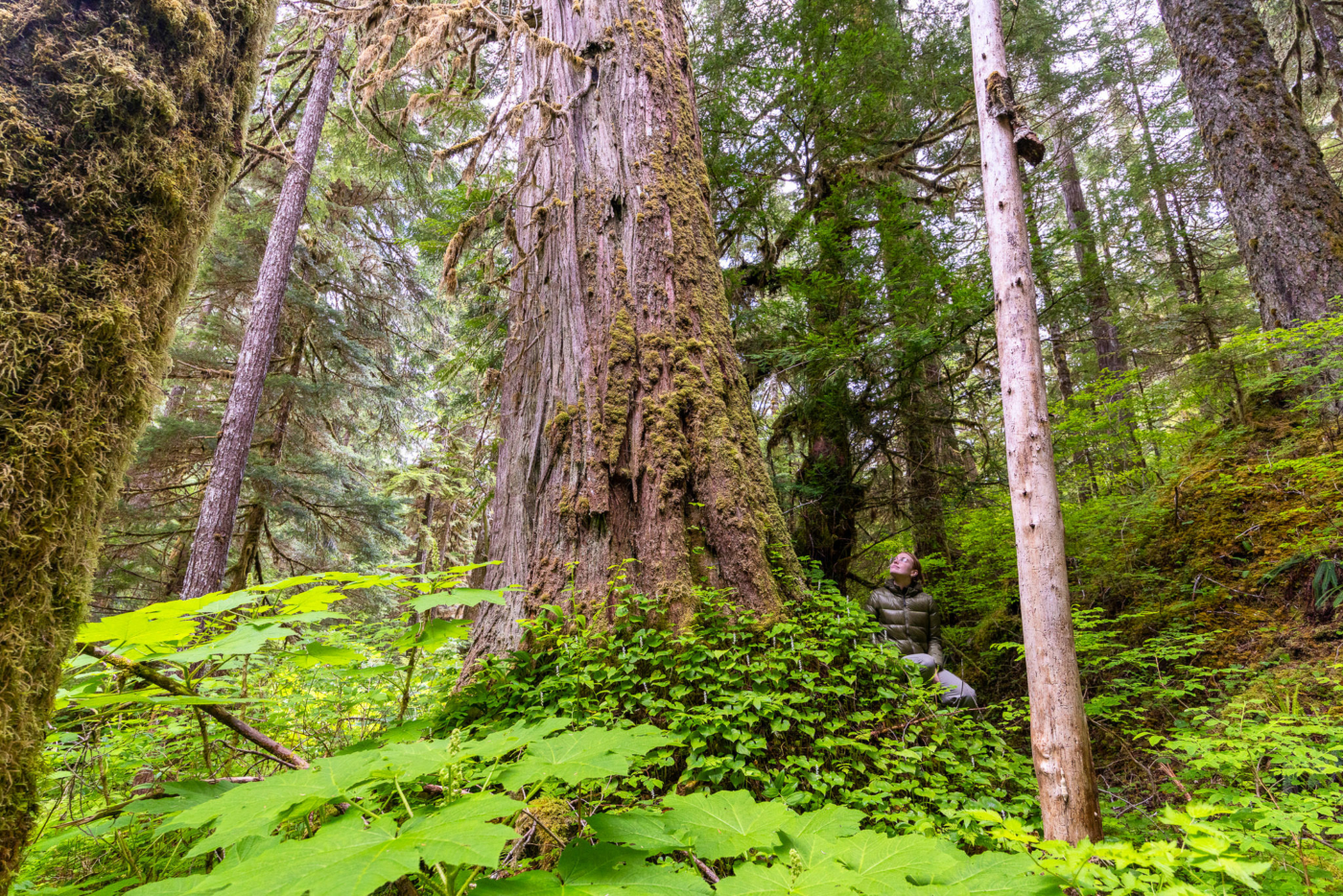
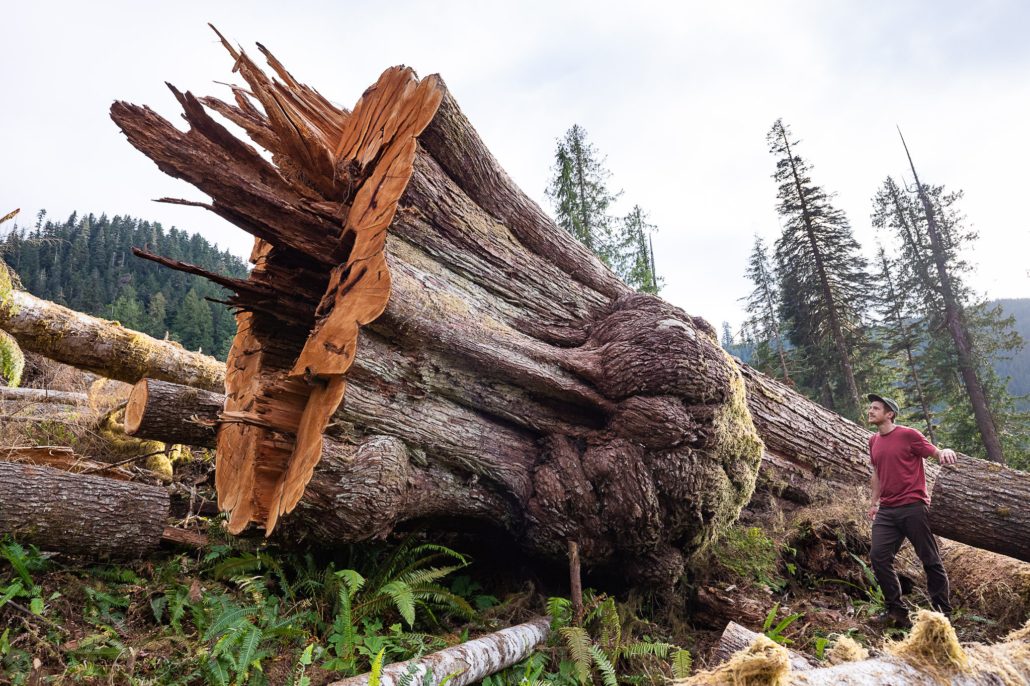
AFA campaigner Issy Turnill next to an ancient western redcedar tree in the Jewel of the Tahsish.
The roughly 235-hectare forest lies on Crown/unceded lands in the upper watershed of the Tahsish River near Cross Lake on northwestern Vancouver Island, within the territories of the Kyuquot/Checleseht and Quatsino First Nations. AFA’s images highlight the forest’s exceptional biodiversity, including lush ancient forests with remarkable stands of ancient western redcedar, yellow-cedar, Douglas-fir, hemlock, and Pacific yew; diverse plant communities of devil’s club, coralroot, wildflowers and ferns; important wildlife habitat features such as bear dens; and karst sinkholes that support unique ecological conditions.
Despite its rarity, no old-growth karst forest in the Tahsish Valley is found within a legislated protected area, and only a minuscule amount is currently included in weaker conservation reserves, such as Ungulate Winter Ranges and Wildlife Habitat Areas.
Approximately 6 hectares (more than 10 football fields) of a combined 57-hectare old-growth cutblock planned by BC Timber Sales (BCTS) — the government’s own logging agency — overlaps with the old-growth karst forest, placing portions of the grove and the surrounding old-growth ecosystem at imminent risk.
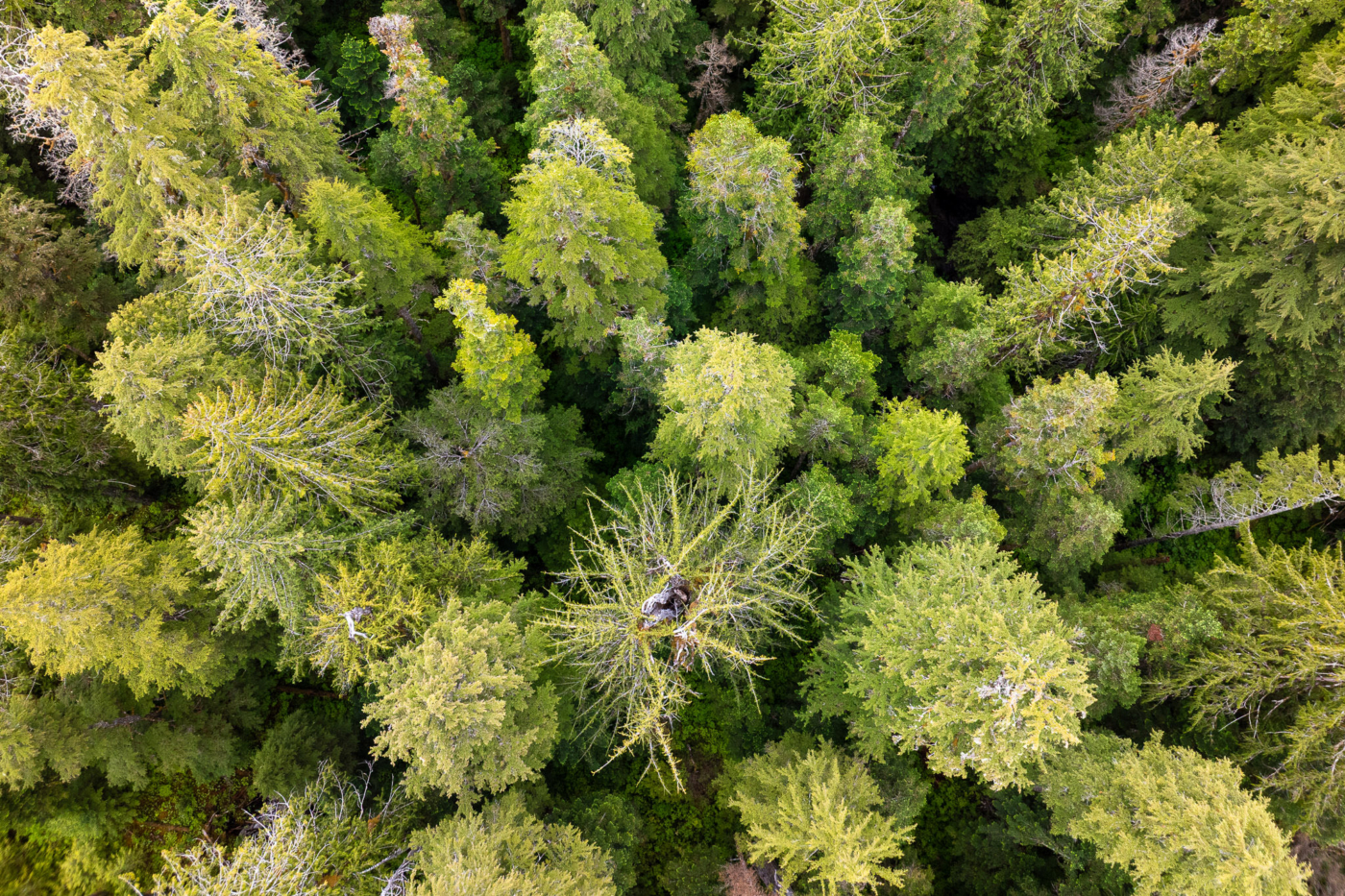
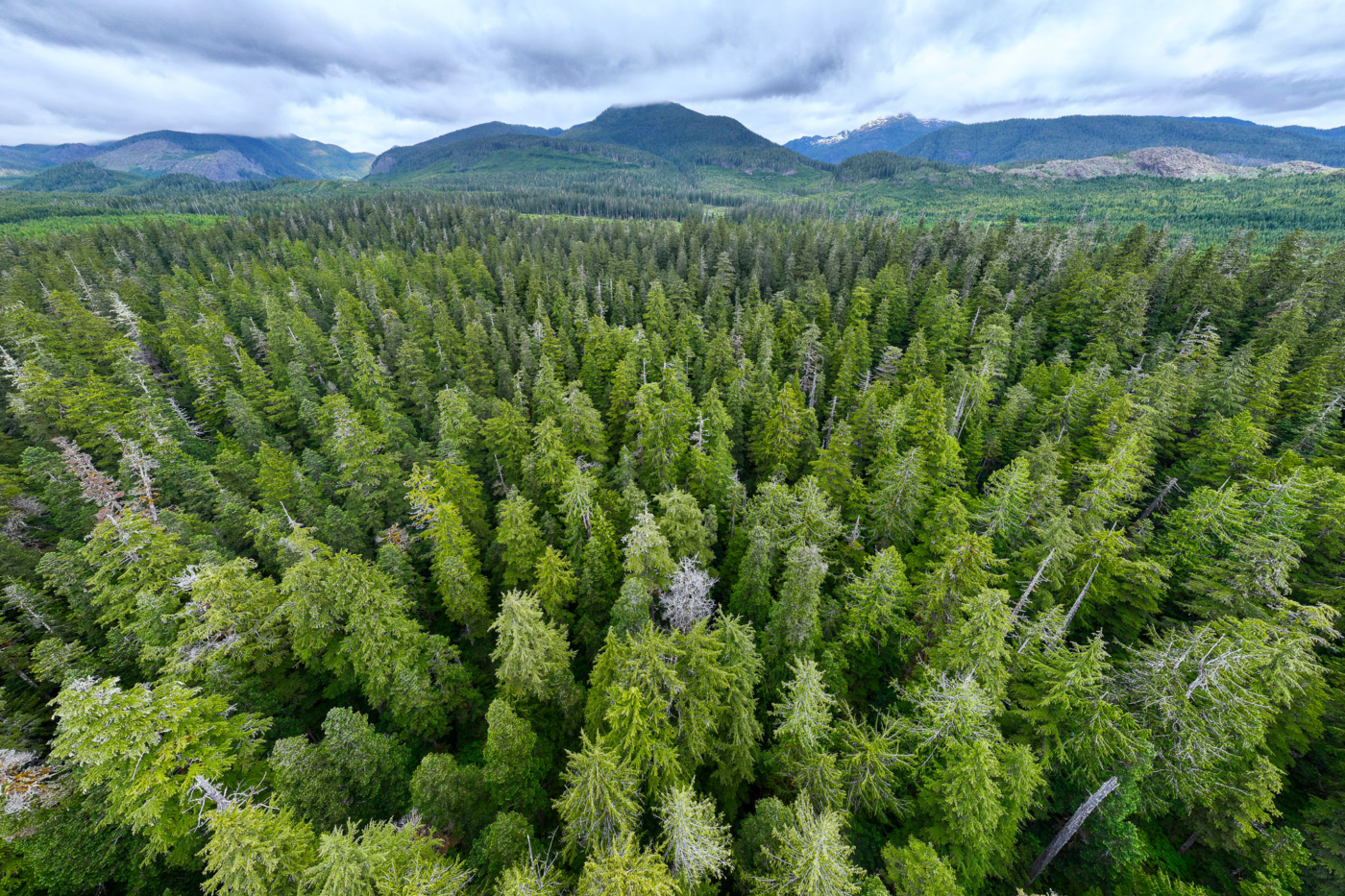
The ancient forest canopy from above. A unique crown of an old-growth yellow-cedar tree stands out in the bottom center.
“We urge the BC government to lead by example and work with local First Nations to defer logging and secure permanent protection for this extraordinary ecosystem. Any logging within one of the grandest old-growth karst forests, particularly following last year’s provincial review of BCTS practices, should be off the table,” said Watt. “These karst forests are extremely vulnerable to the impacts of logging. Just nearby, we witnessed firsthand the devastating impacts of logging on karst, where a clearcut later caught fire and resulted in burnt, desolate landscapes where diverse old-growth forests once thrived.”
BC’s coastline features some of the most striking karst terrain in North America, formed over millennia as mildly acidic water dissolved limestone bedrock, creating sinkholes, underground rivers, and extensive cave systems. Northern Vancouver Island is home to internationally significant karst features, including the Vanishing River, Devil’s Bath, Eternal Fountain, Little Huson Caves, and Artlish River Caves, the largest active river cave system in Canada.
Limestone, characterized by its common white or grey appearance, is porous, providing trees with optimal access to nutrient-rich groundwater and enabling them to reach exceptional sizes. This forest’s karst features also include numerous natural wells and sinking streams that enter a flooded cave system to form the headwater of the Tahsish River, a major salmon-bearing stream. These karst systems act like a natural sponge, storing and slowly releasing water to moderate flow and reduce the risk of downstream flooding. The collapse of a nearby cave chamber after logging underscores the importance of protecting this fragile landscape and the vulnerability of karst ecosystems to disturbance.
Once logged, karst ecosystems are extremely slow to recover, as soils can take centuries to rebuild on exposed limestone. Logged karst landscapes are also more vulnerable to wildfire, since air cavities in the bedrock can provide oxygen that feeds flames like a barbecue. These factors underscore the urgent need to significantly strengthen the laws governing logging on karst and secure permanent protection for the remaining old-growth karst forests in BC.
Concerns about the loss of old-growth karst forests in the Tahsish Valley have persisted for decades, with experts repeatedly advocating for their global significance and permanent protection.
Martin Davis, mayor of Tahsis, explained: “As a caver, conservationist, and Mayor of Tahsis, I’ve seen firsthand how vital karst ecosystems are, not only for biodiversity, but for the growing ecotourism opportunities built around their remarkable cave systems and rainforests. In the early 2000s, I raised awareness at an international Karst Management Symposium about the need to protect forests in this very area. The adjacent valley karst was logged, leading to the collapse of the largest cave chamber in the region, landslides in a huge sinkhole, and clogging the cave system with hundreds of tons of gravel. This debris is now working its way through the cave system and into the Tahsish River. I’ve witnessed the loss of the majority of the old-growth forests of this karst ecosystem, as clearcuts steadily encroach on this remnant forest that is a major recharge zone for the Tahsish. Today, very few places like this remain, and without protection, this grove could easily meet the same fate. Permanent protection is urgently needed before it’s too late.”
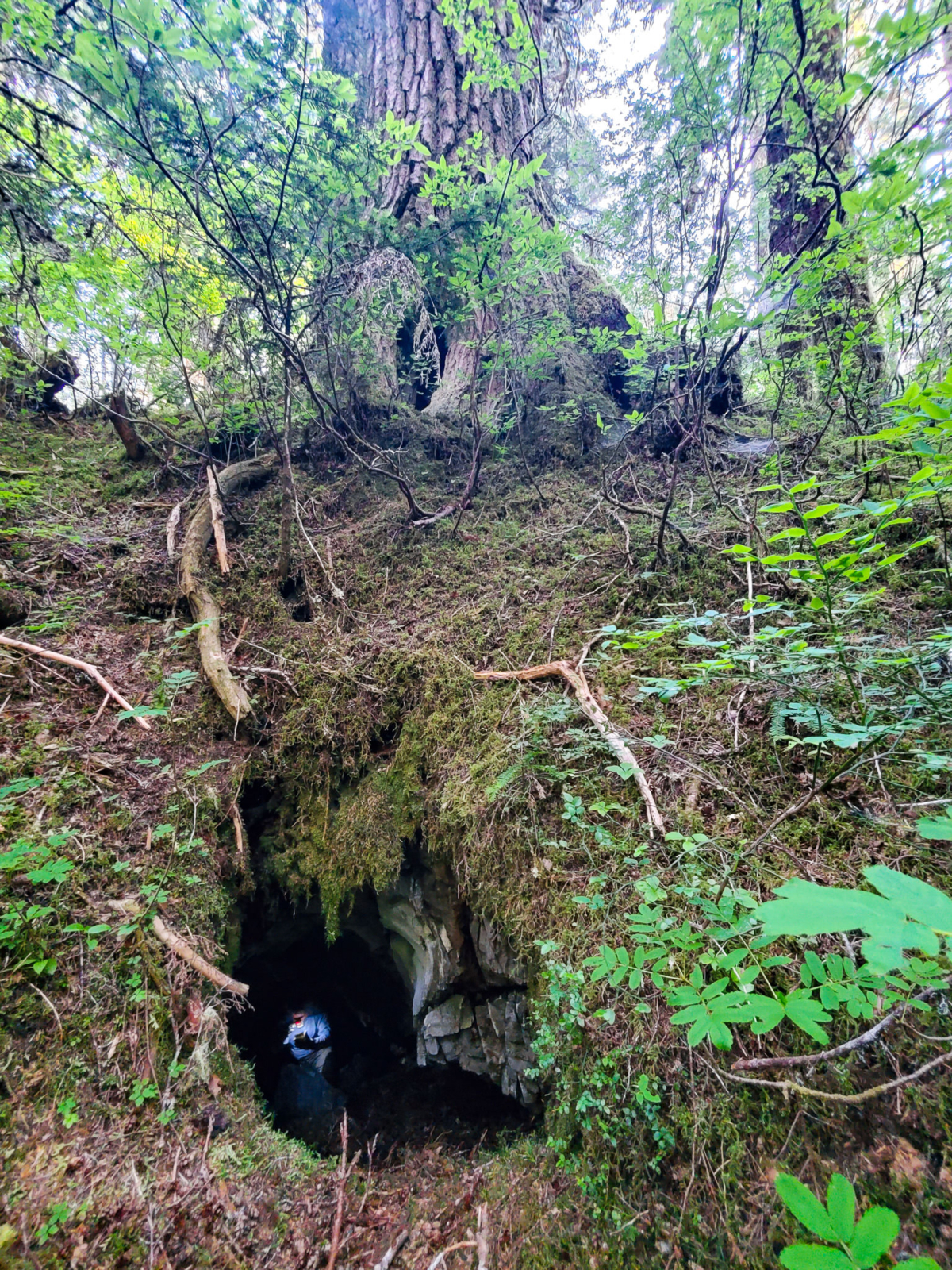
Caver Martin Davis explores underground below the “Holy Hemlock Hole”
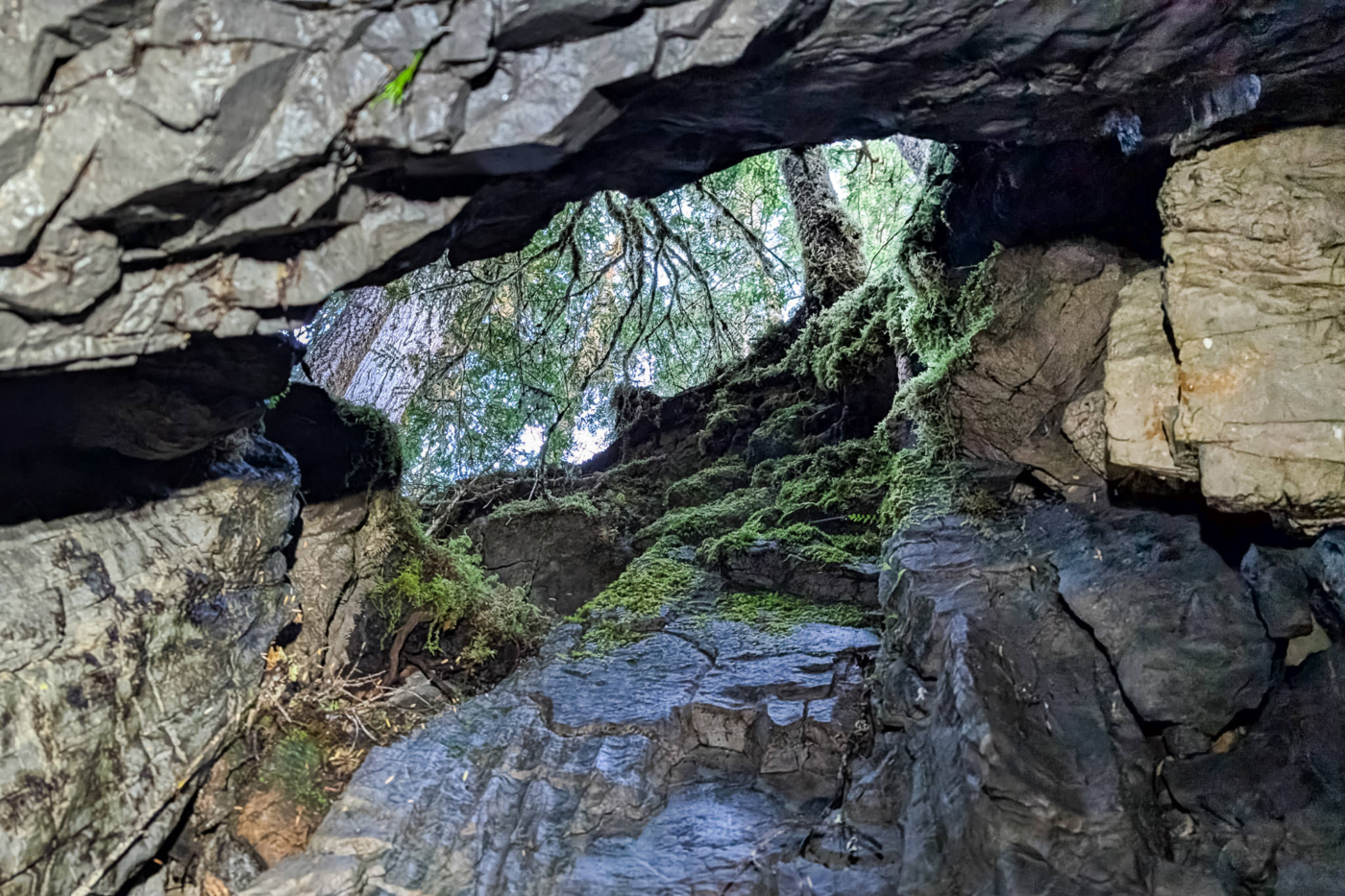
Looking out towards the old-growth from inside a cave in the unprotected forest. Photo: Charlene Forest
Paul Griffiths, PhD, karstologist, stated: “I advocated for the upper Tahsish River to become a national park in the late 1970s because of its extensive karst with intact primary old-growth forest vegetation. Instead, I’ve watched nearly all of the karst in this watershed be clearcut, leaving a few fragmented remnants of old-growth karst forest that now urgently need protection. I’ve also witnessed firsthand the impacts of logging on karst systems both above and below ground. This year marks the first UNESCO International Day of Caves and Karst, recognizing the global importance of caves and karst for water supply, biodiversity, climate records and cultural heritage. Yet, in BC, karst protection still lags far behind that of many other jurisdictions. The remaining old-growth karst forests require immediate protection, along with stronger oversight and enforcement to ensure that karst management standards and guidelines are rigorously applied at the operational level.”
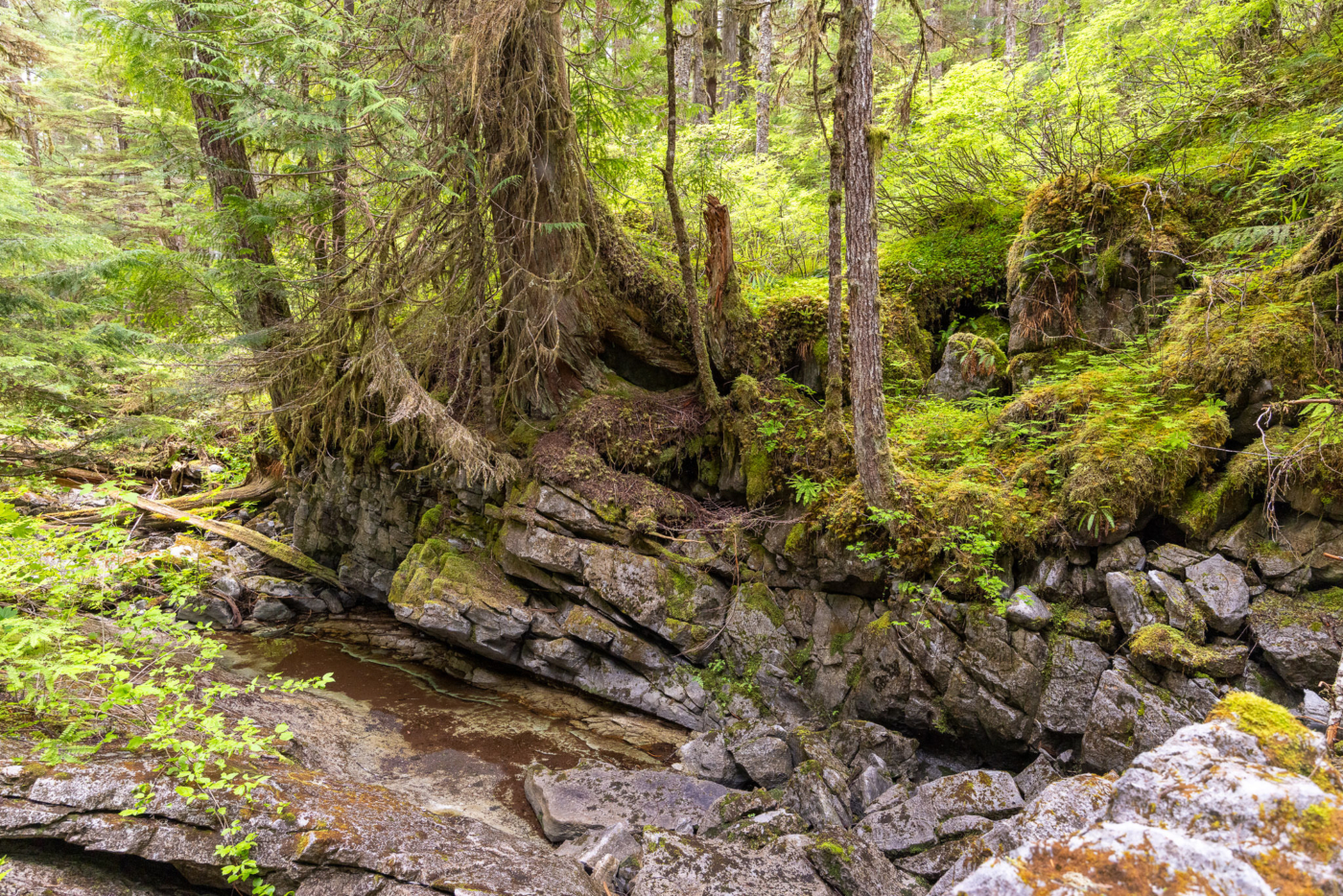
Limestone, characterized by its grayish-white appearance, can be seen along a creek, surrounded by lush vegetation.
To defer logging across the remaining 1.3 million+ hectares of priority at-risk old-growth forests in BC, including this grove, AFA is calling on the province to provide “solutions space” funding to compensate First Nations for any immediate loss of forestry revenues when deferring forests, giving time for longer-term land-use plans and legislated protected areas to be developed.
Once logging is deferred, lasting protection must follow. AFA is advocating for the development of a BC Protected Areas Strategy, similar to the BC government’s approach in the 1990s, to proactively identify and work with First Nations to protect the most endangered ecosystems in the province, including old-growth karst forests. This strategy must be guided by ecosystem-based protection targets, grounded in independent science and Traditional Ecological Knowledge, and implemented through shared decision-making with First Nations.
“With so few old-growth karst forests remaining in BC, the province urgently needs to address the economic barriers preventing their protection,” said Issy Turnill, campaigner with the Ancient Forest Alliance. “Solutions space funding to support First Nations-led logging deferrals, alongside a proactive Protected Areas Strategy, are essential to ensure the last of these extraordinary forests are not logged in our lifetime.”
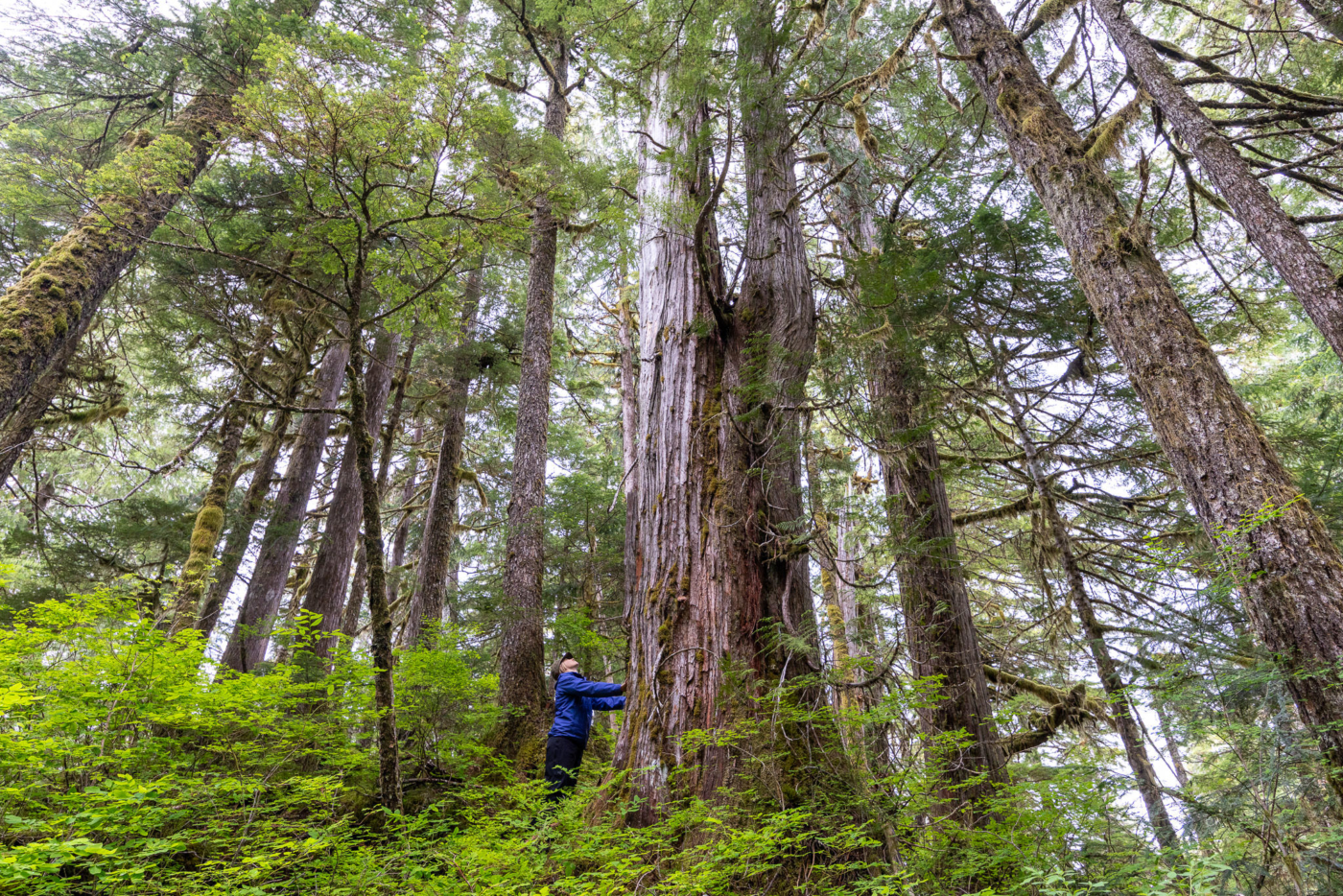
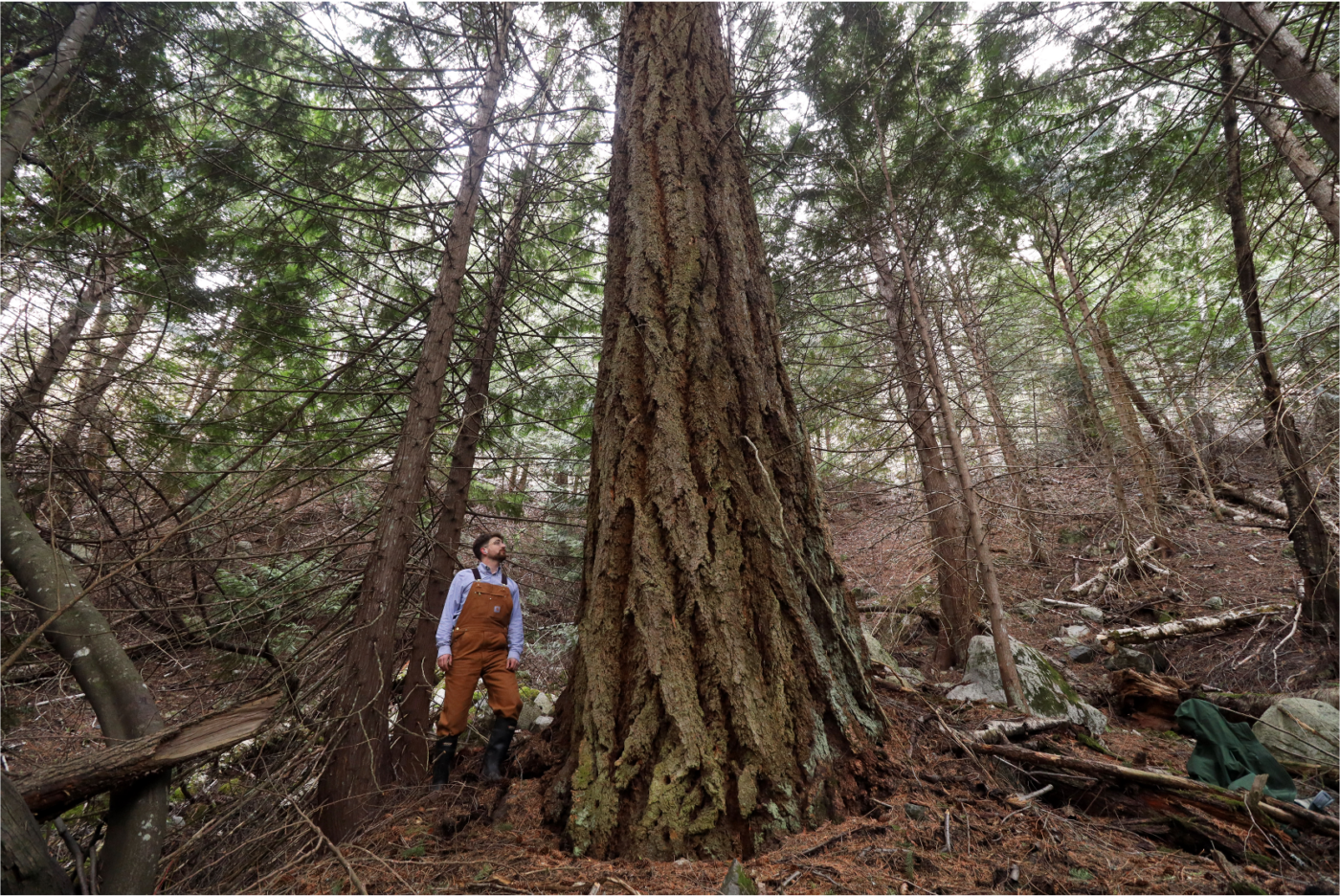
AFA’s Kristen Bounds gazing up the trunk of an old-growth redcedar tree growing unprotected in the Tahsish Valley.
Additional Information
This unprotected old-growth karst forest is on public/Crown land, with the majority falling within a Timber License held by Western Forest Products, while a smaller portion overlaps with BC Timber Sales (BCTS) tenure. Approximately 6 hectares (more than 10 football fields) of a larger 57-hectare planned BC Timber Sales old-growth cutblock overlaps karst terrain and recommended deferral.
In coastal British Columbia, legal mechanisms for limited karst system protection exist through district-level Government Action Regulation (GAR) orders established under the Forest and Range Practices Act. These orders designate selected categories of karst system elements, including caves, as resource features requiring protection during forestry operations.
The Karst Management Handbook for British Columbia, released by the province in 2003, was designed to provide a broad framework of karst protection and management at multiple scales, ranging from entire karst systems, including contributing non-karst catchments, down to individual karst system elements.
While the handbook sets out comprehensive best management practices, implementation has varied considerably in practice as reported by the BC Forest Practices Board in 2014. Inconsistent application of these measures has contributed in some cases to the damage or degradation of karst systems.
Here is a detailed list of AFA’s old-growth policy recommendations for the BC government.
 Donate
 Send a Message