 https://ancientforestalliance.org/wp-content/uploads/2026/09/Old-Growth-Clearcut-Caycuse-Vancouver-Island.jpg
1364
2048
TJ Watt
https://ancientforestalliance.org/wp-content/uploads/2026/05/Ancient-Forest-Alliance-logo.svg
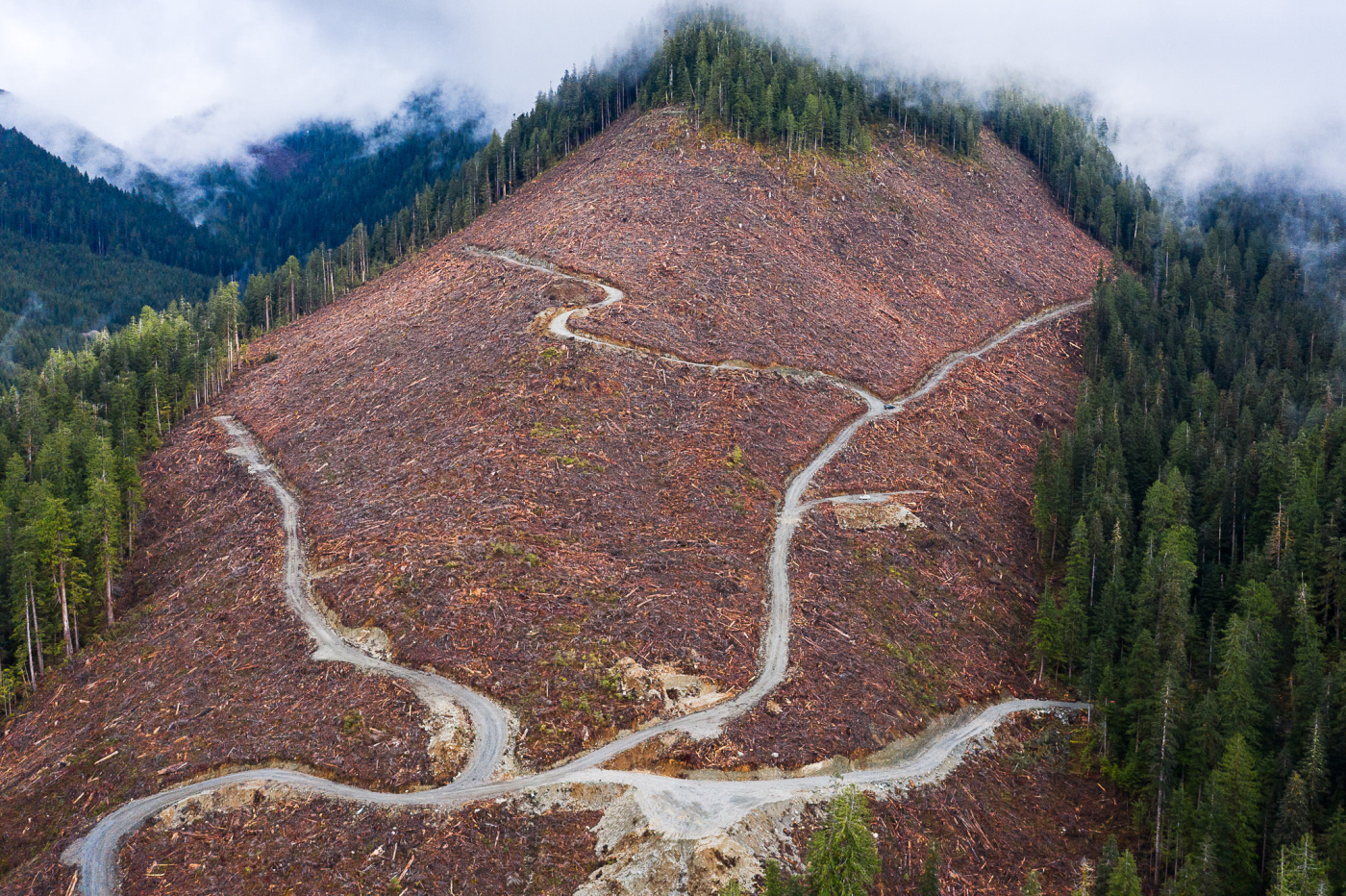
TJ Watt2026-10-26 15:06:162026-10-26 15:06:16Victoria Buzz: Environmental advocates concerned over results of BC election
Related Posts
https://ancientforestalliance.org/wp-content/uploads/2026/09/Old-Growth-Clearcut-Caycuse-Vancouver-Island.jpg
1364
2048
TJ Watt
https://ancientforestalliance.org/wp-content/uploads/2026/05/Ancient-Forest-Alliance-logo.svg
TJ Watt2026-10-26 15:06:162026-10-26 15:06:16Victoria Buzz: Environmental advocates concerned over results of BC election https://ancientforestalliance.org/wp-content/uploads/2026/10/Screenshot-2026-10-22-at-4.54.32-PM.png
952
1684
TJ Watt
https://ancientforestalliance.org/wp-content/uploads/2026/05/Ancient-Forest-Alliance-logo.svg
TJ Watt2026-10-22 16:54:062026-10-22 16:59:41NEW Video: BC Election 2026: Nature & Old-Growth Protection
 https://ancientforestalliance.org/wp-content/uploads/2026/10/Before-After-Caycuse-TJ-Watt-4-scaled.jpg
1915
2560
TJ Watt
https://ancientforestalliance.org/wp-content/uploads/2026/05/Ancient-Forest-Alliance-logo.svg
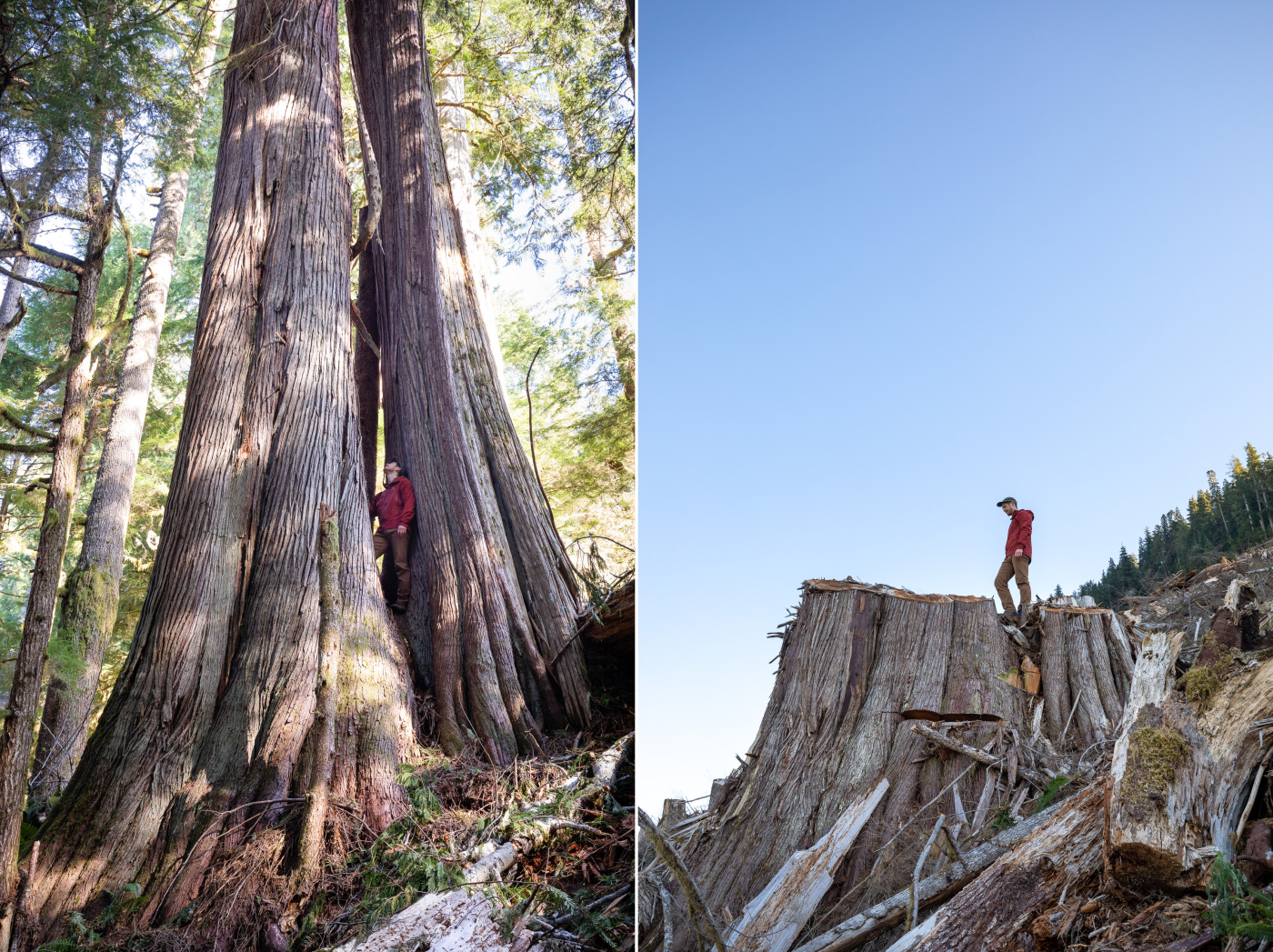
TJ Watt2026-10-16 17:36:002026-10-21 13:40:23BC Election 2026: Where do Parties Stand on Nature & Old-Growth?
 https://ancientforestalliance.org/wp-content/uploads/2026/10/BC-Election-2026-Banner-1-1-scaled.jpg
1439
2560
TJ Watt
https://ancientforestalliance.org/wp-content/uploads/2026/05/Ancient-Forest-Alliance-logo.svg
TJ Watt2026-10-09 18:16:372026-10-16 17:44:41Where do BC’s Major Political Parties Stand on Nature Protection?
Take Action
 Donate
Support the Ancient Forest Alliance with a one-time or monthly donation. Send a Message
Send an instant message to key provincial decision-makers.
Most of B.C.’s Great Bear Rainforest protected
/in News CoverageVANCOUVER – A jewel in the crown of British Columbia’s magnificent landscape — the Great Bear Rainforest — has been largely protected from logging in a landmark agreement between First Nations, forest companies, environmental groups and the government, Premier Christy Clark said Monday.
The land-sharing deal 20 years in the making will protect 85 per cent of the largest intact temperate rainforest in the world, located on B.C.’s central coast about 700 kilometres northwest of Vancouver.
The Great Bear Rainforest, stretching from the Discovery Islands northwards to Alaska, is 6.4 million hectares, and more than half the region is covered by ancient forests. The agreement ensures 85 per cent of the forests — 3.1 million hectares — are permanently off limits to logging.
“This is what Vancouver used to look like,” said Clark as images of vast forests were displayed on screens during a news conference at the University of B.C.
“It is proof of what we can do if we decide to find common purpose,” she said.
Clark’s government will introduce legislation this spring that enshrines the deal and includes benefits-sharing agreements with area First Nations.
Twenty six First Nations, environmental groups, coastal forest companies and the government reached the agreement after more than a decade of negotiations.
The agreement also ends the commercial grizzly bear hunt and protects habitat for the marbled murrelet, northern goshawk, mountain goat and tailed frog.
Coastal First Nations spokeswoman Chief Marilyn Slett said reaching the pact was not an easy task but the eco-based management pact is the “modern term to describe what we’ve always done. Our leaders understand our well-being is connected to the well-being of our lands and waters.”
Coast Forest Products Association chief executive officer Rick Jeffery said the deal involved complex talks between groups with opposing points of view, but compromise and success was achieved over time.
“It’s unprecedented in the history of our province,” said Jeffery. “It’s a unique solution for a unique area.”
Environmentalist Richard Brooks said 95 per cent of the area was open to logging 20 years ago, but protests, blockades and ensuing negotiations resulted in Monday’s agreement that ensures most of the forests will not be logged.
“Each of us took tremendous risks to step into the unknown and bridge the huge divide,” said Brooks, describing the collaboration. Three environmental groups, Greenpeace, Forest Ethics and Sierra Club of B.C., are part of the deal.
Jens Wieting of the Sierra Club said logging in the remaining part of the forest will be tightly controlled.
“There is certainty for forestry, 15 per cent of the region’s rainforest will remain open for forestry under very stringent logging rules, the most stringent that you can find in North America.”
The area was officially named the Great Bear Rainforest by then-premier Gordon Campbell in 2006. Environmentalists had given the area the name years before that in an effort to protect the central coast from logging.
The area is also home to the kermode or sprit bear and is where nine area First Nations declared bans on bear hunting in their traditional territories.
Wieting said those involved in the agreement realized the region is globally important because there are so few temperate rain forests left on the planet.
“It is larger than the Netherlands or Belgium or Switzerland and it is really a global responsibility to find solutions to protect the ecological integrity and support communities in this region.”
Read more: https://globalnews.ca/news/2489812/most-of-b-c-s-great-bear-rainforest-protected/
Avatar Grove Ecotourism
/in News CoverageHere's a new piece by Shaw TV about the importance of old-growth forests of Port Renfrew for the tourism economy, focused on the Avatar Grove and the Walbran Valley, and featuring Dan Hager, president of the local Chamber of Commerce, and the AFA's Ken Wu and TJ Watt.
See video at: https://www.youtube.com/watch?v=85ZbPbd0R2Q
Islands in the Sky: Chopping Ancient Walbran Valley Forest Spells Extinction for Treetop Species
/in News CoverageHigh in the trees that have been growing in the Walbran Valley on Vancouver Island for up to 1,000 years, unique colonies of insects and invertebrates are thriving.
Carpets of soil which develop in the massive branches of the old-growth trees contain a plethora of species not found anywhere else on Earth and, since 1995, University of Victoria entomologist Neville Winchester has climbed more than 2,000 trees to document and catalogue this life in the tree-tops.
“These ancient forests are a repository of biodiversity,” said Winchester, who has had more than a dozen beetle mites, aphids and flies named after him and who is giving a public talk this Friday at 6:30 p.m. at the University of Victoria.
Together with UVic graduate students, Winchester has conducted one of the most extensive canopy research projects in North America, using ropes to scale trees the equivalent of 18-storeys high in the Carmanah and Walbran valleys.
“Then I take my mom’s bulb planter and take a sample of the suspended soils, which can be up to 60 centimetres in depth,” he said.
Despite overwhelming scientific evidence of unique ecosystems, Winchester is fighting a battle he thought had been won two decades ago when massive protests and demonstrations — part of the ‘War in the Woods’ that marked the 1980s and 1990s in B.C. — erupted over plans to log Carmanah Walbran.
At that time, Winchester was already doing canopy research and, when the government of the day responded to overwhelming public opposition and created the Carmanah Walbran Provincial Park, taking in 16,450 hectares of the old growth forest, he believed the war was over.
But now, part of the Central Walbran, just outside the park boundary, is under threat.
“I have the feeling that ‘here we go again.’ The same issues that were present then have surfaced again. They have been simmering for 20 years,” said Winchester, who finds it difficult to believe that politicians cannot look at the evidence and ban old-growth logging in the area.
“It’s greed, ignorance and arrogance. The scientific evidence is out there and it shows that these areas and these species are essential to protect biodiversity,” he said.
“By taking these trees down or by causing disruption you are committing species to go extinct… . Who would feel good about species going extinct just because we have mismanaged a resource? That’s the bottom line.”
The province has granted Surrey-based Teal Jones Group a permit for a 3.2-hectare cutblock east of Carmanah Walbran Park.
The cutblock is in the 500-hectare Central Walbran where, unlike the valley further south which is tattered with cutblocks, there is contiguous old-growth.
“It’s where our forests reach their most magnificent proportions,” said Ken Wu of the Ancient Forest Alliance.
“These are the classic giants. The biggest and the best — and some of the largest remaining tracts and finest old growth western red cedars are in areas such as Castle Grove, together with old-growth dependent species such as the Queen Charlotte goshawk and marbled murrelet,” Wu said, emphasizing the importance of these areas for tourism as well as biodiversity.
Business leaders in Port Renfrew have called on the B.C. government to immediately ban logging in the unprotected part of the Walbran Valley, saying tall tree tourism is now a multi-million dollar business and the highest value would come from stopping further logging of old growth trees.
At the heart of the problem is the original configuration of the park, said Torrance Coste of the Wilderness Committee.
A large chunk, surrounded by park and known colloquially as “The Bite,” was left without protection.
“It was a big concession to logging interests. When the park was laid down, there was no consensus or agreement from the environmental side,” Coste said.
Logging has already degraded old-growth on the south side of Walbran Creek, and environmentalists are not happy about Teal Jones plans for seven more cutblocks in that area, but the line in the sand is the approved cutblock on the north side of the river, said Coste, who wants to see the 486-hectare northern section of The Bite protected.
Protests started in the area in November, but, three weeks later, a court injunction restricted access and stopped protesters from interfering with logging operations.
On January 4, in a B.C. Supreme Court ruling, the injunction was extended until the end of March.
Coste said that, although he and the Wilderness Committee are named in the injunction, the role of the group has been to record and advocate, not participate in blockades.
However, he believes the injunction is heavy-handed and designed to discourage people from going into the Walbran Valley.
There is a great need for eyes on the ground and for British Columbians to let the province know that it is not acceptable to log some of the last low-elevation old-growth on southern Vancouver Island, he said.
A spokesman for the Ministry of Forests, Lands and Natural Resource Operations said in an e-mail that the ministry facilitated a meeting between the company and environmental groups in December to discuss how concerns could be addressed and another meeting is scheduled for next month.
The 3.2-hectare area that Teal Jones plans to log is part of a special resource management zone, which limits cutblock size to five hectares, and the company will use helicopter harvesting, meaning there will be no trails, roads or use of heavy equipment, the province said.
Conserving old growth and biodiversity are important parts of the province’s long-term resource management plans, said the spokesman.
“Of the 1.9 million hectares of Crown forest on Vancouver Island, 840,125 hectares are considered old growth, but only 313,000 hectares are available for timber harvesting,” the e-mail reponse read.
Coste remains hopeful that the province will have a change of heart.
“Nowhere else on Vancouver Island do we have the opportunity to protect such a large tract of contiguous old-growth,” he said.
“It’s an opportunity we absolutely can’t afford to miss.”
Winchester is hoping science will convince the government of the need for protection and he will publicly share findings from his years of research at a lecture Friday Jan.29, 6.30 p.m. at the University of Victoria Student Union Building Upper Lounge.
Admission is by donation with proceeds going to the Friends of Carmanah/Walbran campaign to protect the Central Walbran Ancient Forest.
Read more: [Original article no longer available]