 https://ancientforestalliance.org/wp-content/uploads/2026/09/Old-Growth-Clearcut-Caycuse-Vancouver-Island.jpg
1364
2048
TJ Watt
https://ancientforestalliance.org/wp-content/uploads/2026/05/Ancient-Forest-Alliance-logo.svg
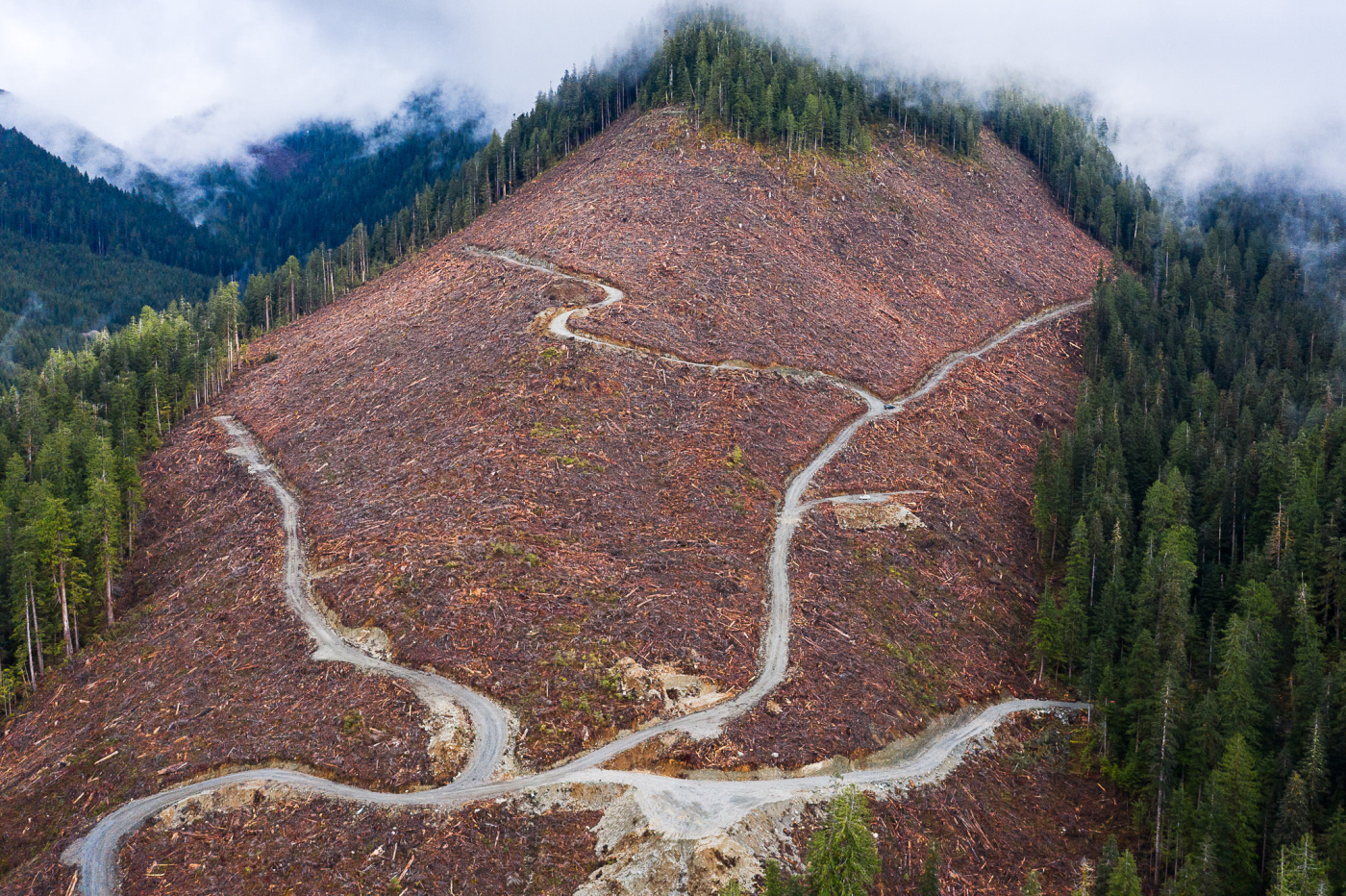
TJ Watt2026-10-26 15:06:162026-10-26 15:06:16Victoria Buzz: Environmental advocates concerned over results of BC election
Related Posts
https://ancientforestalliance.org/wp-content/uploads/2026/09/Old-Growth-Clearcut-Caycuse-Vancouver-Island.jpg
1364
2048
TJ Watt
https://ancientforestalliance.org/wp-content/uploads/2026/05/Ancient-Forest-Alliance-logo.svg
TJ Watt2026-10-26 15:06:162026-10-26 15:06:16Victoria Buzz: Environmental advocates concerned over results of BC election https://ancientforestalliance.org/wp-content/uploads/2026/10/Screenshot-2026-10-22-at-4.54.32-PM.png
952
1684
TJ Watt
https://ancientforestalliance.org/wp-content/uploads/2026/05/Ancient-Forest-Alliance-logo.svg
TJ Watt2026-10-22 16:54:062026-10-22 16:59:41NEW Video: BC Election 2026: Nature & Old-Growth Protection
 https://ancientforestalliance.org/wp-content/uploads/2026/10/Before-After-Caycuse-TJ-Watt-4-scaled.jpg
1915
2560
TJ Watt
https://ancientforestalliance.org/wp-content/uploads/2026/05/Ancient-Forest-Alliance-logo.svg
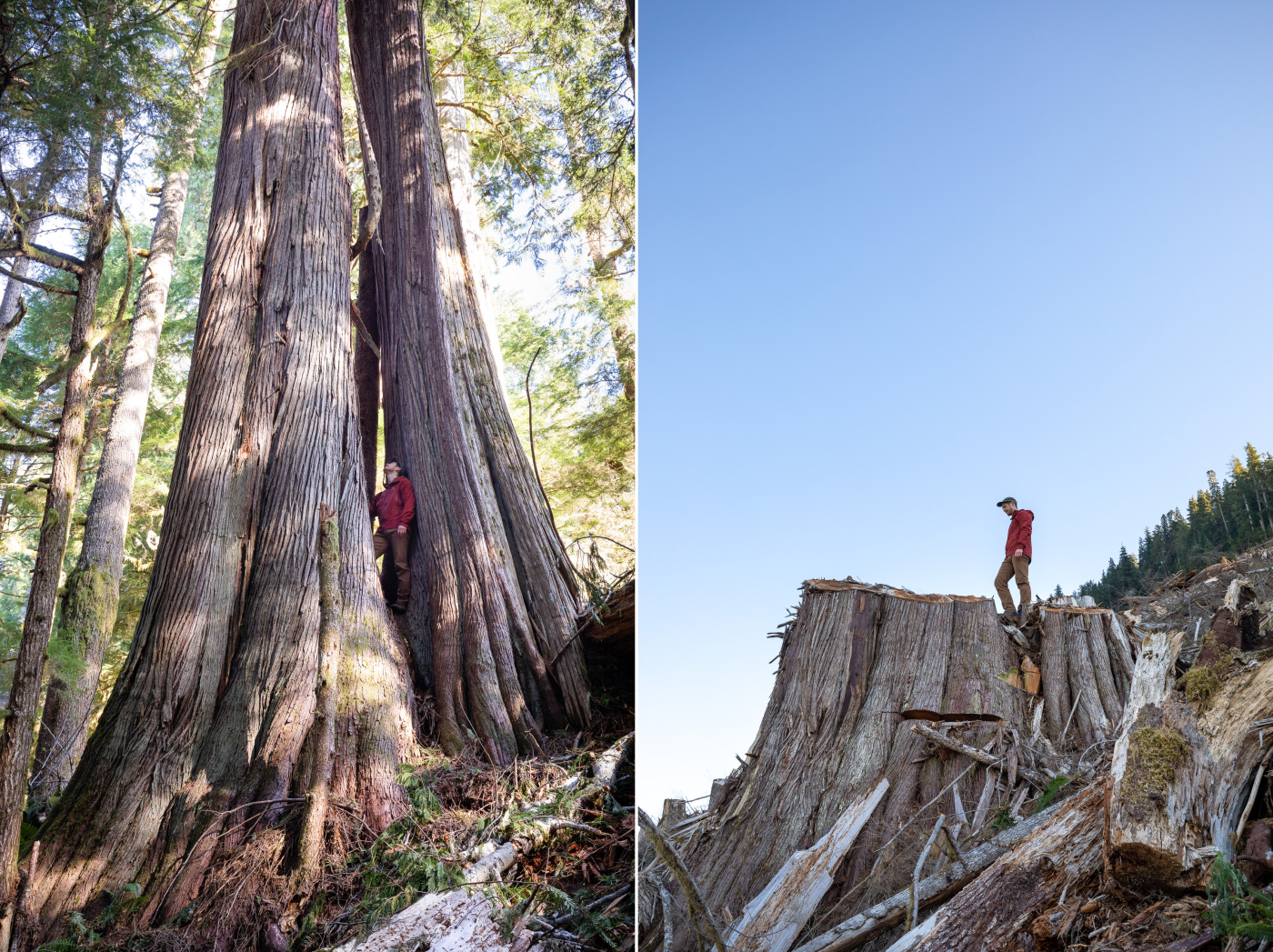
TJ Watt2026-10-16 17:36:002026-10-21 13:40:23BC Election 2026: Where do Parties Stand on Nature & Old-Growth?
 https://ancientforestalliance.org/wp-content/uploads/2026/10/BC-Election-2026-Banner-1-1-scaled.jpg
1439
2560
TJ Watt
https://ancientforestalliance.org/wp-content/uploads/2026/05/Ancient-Forest-Alliance-logo.svg
TJ Watt2026-10-09 18:16:372026-10-16 17:44:41Where do BC’s Major Political Parties Stand on Nature Protection?
Take Action
 Donate
Support the Ancient Forest Alliance with a one-time or monthly donation. Send a Message
Send an instant message to key provincial decision-makers.
Ground zero for Walbran
/in News CoverageThe Delica stops along a narrow, twisting section of the Walbran Main just a few miles from the Carmanah Walbran Provincial Park border. We scramble from the van for a view across a broad valley overlooking two strings of hills that lead into the distance. At the bottom of the valley is a confluence of rushing water, a distant waterfall visible as a thin twisting ribbon glistening white amid a landscape otherwise green.
It’s a deceiving green, as it hides the wealth within. A forest may seem just a forest, but TJ Watt, a campaigner for the Ancient Forest Alliance, points out the details.
“Second growth forest will look quite monotonous. The trees will typically be all the same height and generally the same shade of green, almost looking like a lawn, very uniform, whereas old-growth forests tend to look messy, to put it the simplest way.
“You have trees of varying heights so one will be sticking up higher than the other. Because of gaps in the canopy you’ll have these dark shadows that give the forest more of a 3D look to it. They often have more mosses or lichens so from a distance you can sometimes see those hanging off the tree branches. And also if there is a lot cedar there, then you often see the dead tops of the cedar trees sticking out; they look like white spires. That doesn’t necessarily mean the trees are dead, but sometimes the leader section of the tree has died off. Once you get used to seeing those, you can really tell the forests apart from a distance.”
What we’re looking at across this wide valley is a messy forest – the indication it is old-growth. In the valley bottom is Castle Grove, one of the finest remaining examples of ancient red cedar stands. It and the surrounding old growth on the lower slopes make up one of the largest intact chunks of endangered, unharvested forest remaining on Vancouver Island.
It’s a rare view. On Vancouver Island south of Barkley Sound, about 90 percent of the original forest has been logged, along with about 95 percent of the lowland old growth.
“What we’re really down to is the last remnants of the classic giants and it’s the best of the classic giants because it’s literally in the Carmanah-Walbran-San Juan-Gordon River, these four southern valleys where you get the very best growing conditions in the entire country. If you go north it gets colder, as you go east it gets drier,” says Ken Wu, a campaigner for the Ancient Forest Alliance.
What we’re looking at is a snapshot of what soon won’t exist. Eight cutblocks are proposed for the slopes surrounding Castle Grove, and one has been approved.
It’s what Ken and TJ are here to fight.
“It would turn that whole region into a Swiss cheese if they were approved and cut,” TJ says.
It’s a region already well sliced. Right behind us is a cleared slope of stumps, debris and encroaching scrub. That cutblock was logged in 1992, when Ken walked through the wreckage to come upon a 16-foot-wide stump.
“It was as wide as the Castle Giant, the biggest known tree in the Walbran. That area was really a gargantuan Jurassic Park kind of stand – it was really one of the most significant, grandest old-growth forests in the world, and now they’ve logged it.”
For TJ, as a new activist at the time, seeing that stump had a profound impact.
“It was one of the first moments I realized old-growth logging was not a thing of the past and these giant trees were still being cut down each and every day. To think this is still happening another 10 years later is disheartening, but makes me resolve to fight harder to keep it from happening any more.”
The fight in the Walbran is escalating and while Ken believes the first cutblock is almost certain to be logged, – unlike the others, it has received approval – he believes mounting public pressure could turn the tide in favour of preserving the remainder.
And the pressure is building.
The Ancient Forest Alliance spearheaded the drive to save nearby Avatar GroveÜ, an old-growth forest outside Port Renfrew. Ken credits the support of the Port Renfrew chamber in helping win that battle.
The support to save the Walbran is already much stronger – particularly as a host of conservation groups are now involved in the Walbran. But Ken believes it is the business support, not the environmental support, that will be tip the balance.
“The reason Avatar was protected was support from the Chamber of Commerce and the business community. That’s one of the key things we’ll be working on – the outreach to all the restaurants and B&Bs and lodges.”
If there’s a lesson learned from Avatar Grove, it is that conservation has a payback. The grove is widely accredited to a growth in tourism to the Port Renfrew region and is a key item of the region’s tourism menuÜ. Clearcuts, on the other hand, never make the must-see list.
A variety of petitions, protests and initiatives are planned by the various groups battling the logging, but another emerging element is a protest camp – at the Walbran Witness Camp, the same location for the camp in the early 1990s. That served as the base for the blockades that led in part to the inclusion of the Lower Walbran Valley into Carmanah Walbran Provincial Park. A spray-painted slogan, painted by a protestor while dangling over the river on a log, still clearly proclaims “Wilderness forever” on the bridge.
The park is populated full-time by only a small band of diehards, though the weekend population tends to swell. At the moment (November, 2015) no blockades are planned; the camp residents are only keeping an eye on the progress of the logging with one brief clash between protesters and policeÜ.
Trails criss-cross the area around the Witness Camp, many leading to the monster trees that can be found nearby. One is the Emerald Giant, and Ken offers a laugh as he sees the sign, proclaiming it “aka Mordor Tree.”
“I named it that back when Lord of the Rings was popular,” Wu says. “It seemed fitting because it looked like Mordor with the turrets for branches.”
He concedes the new name sounds nicer and is more applicable as the Giant is adjacent to the Emerald Pool, a stretch of river that almost glows its namesake colour (the pool is pictured on page 17). We stop to admire a thick patch of tiny mushrooms growing from an adjacent tree. It’s an area that possesses an unspeakable beauty, from the smallest detail to the largest giant spruce.
Previous ‘wars in the woods’ have garnered international attention, and many Canadians must wonder at the fuss. Yet’s it’s hard to believe those who would let the Walbran be logged would fail to be emotional at the bulldozing of the Serengeti or strip mining in the Grand Canyon. Wu sees no difference.
“If you think about where the natural wonders of the earth are, say the Grand Canyon in the U.S. or the Serengeti Plains of Tanzania, I’d argue that the coastal rainforests of Vancouver Island rank up among them. And the Carmanah Walbran is just too beautiful; I just can’t describe it in words.”
To help the war in the woods to save the Walbran, help with any of the initiatives by the supporting conservation groups: the Sierra Club of British Columbia, the Wilderness Committee, the Ancient Forest Alliance or the Friends of Carmanah/Walbran. For driving instructions, the Friends of Carmanah/Walbran website has detailed instructions.
Conservation groups plan a provincial fund to buy new parks
/in News CoverageIsland Tides, a great newspaper serving the Gulf Islands, has printed the full article on the 16 conservation and recreation groups in BC calling on the BC government to establish a $40 million/year land acquisition fund to purchase and protected endangered ecosystems on private lands. Places like McLaughlin Ridge in Port Alberni's drinking watershed, Horne Mountain above Cathedral Grove, the Cameron Valley Firebreak (similar to a 2nd Cathedral Grove but unprotected), the Koksilah, Muir Creek, Stillwater Bluffs, the Day Road Forest…and hundreds of other endangered areas on private lands could benefit from such a fund.
See the full article in the Island Tides at: https://islandtides.com/assets/reprint/environment_20160128.pdf
Push for provincial land-acquisition fund gathers steam
/in News CoverageA plan to establish an annual $40-million provincial fund to purchase private land now has 16 conservation and recreation groups behind it.
“That’s just going to continue to grow,” said Ken Wu of the Ancient Forest Alliance.
Wu said that the push to preserve more land takes in a variety of needs, including protecting watersheds that supply drinking water and helping tourism by keeping natural areas intact. He said he expects tourism businesses to start getting behind the fund.
The call for a provincial fund has picked up momentum with a report from the University of Victoria’s Environmental Law Centre that included a “menu” of funding options used by governments across North America.
“They don’t even have to raise taxes for a good chunk of this,” Wu said, noting one measure that has worked well in other places is using unredeemed deposits from beverage containers.
Dubbed “pops for parks,” it is estimated that the strategy could generate $10 million to $15 million a year.
“If you don’t return [the containers], then that money, in places like New York state and a lot of jurisdictions in the U.S., is used by the government to expand their protected-area system,” Wu said.
The report also suggested a special tax on non-renewable resources such as oil and gas and a tax on real-estate speculation.
Wu said an example of how such funds can work is the Capital Regional District’s park-acquisition fund, which is supported by a household levy.
“The places that people love in the Greater Victoria region — like the Sooke Hills, the Sooke Potholes, Jordan River for surfing — those were secured from development as a result of the CRD’s leadership,” he said.
Among the sites on Vancouver Island that could benefit from a provincial fund are the Koksilah area near Shawnigan Lake and the mountainside above Cathedral Grove, Wu said.
The provincial government had a land-acquisition budget until 2009, but Wu said it was significantly smaller than what is being proposed.
The government did not comment on the proposal.
Read more: https://www.timescolonist.com/news/local/push-for-provincial-land-acquisition-fund-gathers-steam-1.2156674