Ancient Forest Alliance
  • Home
  • About Us
        • Our Mission & Team
        • History & Successes
        • Work With Us
        • Contact Us
  • Our Work
    • Campaigns
    • Building Alliances
    • Activity Reports
  • Ancient Forests
    • Hiking Guides
    • Old-Growth 101
    • Old-Growth Forests in BC: FAQs
    • Before & After Old-Growth Maps
    • Myths & Facts
    • Directions to Avatar Grove
    • Port Renfrew Big Trees Map
  • Recent News
    • Recent News
    • Media Releases
    • Research & Reports
    • Publications
    • Educational
  • Photos & Media
        • Map of Gallery Locations
        • Themes
          • Biggest Trees
          • Biggest Stumps
          • Low Productivity Old-Growth
        • Videos
        • Vancouver Island North
          • East Creek Rainforest
          • Klaskish Inlet
          • Quatsino
            • Grove of Giant Cedars Clearcut in Quatsino Sound
            • Quatsino Old-Growth Under Threat 2023
            • Mahatta River Logging
          • Spruce Bay
          • Tsitika Valley
          • White River Provincial Park
        • Vancouver Island Central
          • Barkley Sound
            • Vernon Bay
          • Clayoquot Sound
            • Canada’s Most Impressive Tree – Flores Island
            • Flores Island
            • Meares Island
            • Sydney River Valley
          • Cortes Island
            • Children’s Forest
            • Squirrel Cove Ancient Forest
          • Nootka Island
          • Port Alberni
            • Cameron Valley Firebreak
            • Cathedral Grove Canyon
            • Juniper Ridge
            • Katlum Creek
            • Nahmint Valley
            • Nahmint Logging 2024
            • McLaughlin Ridge
            • Mount Horne
            • Taylor River Valley
          • Tahsis
            • McKelvie Valley
            • Tahsis: Endangered Old-Growth Above Town
        • Vancouver Island South
          • Carmanah
            • Climbing the Largest Spruce in Carmanah
            • Carmanah Research Climb
          • Caycuse Watershed
            • Before & After Logging – Caycuse Watershed
            • Before and After Logging Caycuse 2022
            • Caycuse Logging From Above
            • Lower Caycuse River
            • Massive Trees Cut Down
          • Klanawa Valley
          • Koksilah
          • Mossy Maples
            • Mossy Maple Gallery
            • Mossy Maple Grove
          • Port Renfrew
            • Avatar Boardwalk
            • Avatar Grove
            • Big Lonely Doug and Clearcut
            • Bugaboo Ridge Ancient Forest
            • Eden Grove
            • Exploring & Climbing Ancient Giants
            • Fairy Creek Headwaters
            • Granite Creek Logging
            • Jurassic Grove
            • Loup Creek
            • Mossome Grove
            • Mossome Grove Tree Climb
          • Walbran Valley
            • Castle Grove
            • Central Walbran Ancient Forest
            • Hadikin Lake
            • Walbran Headwaters At Risk
            • Walbran Overview
            • Walbran Logging
        • Haida Gwaii
          • Haida Gwaii 2013
          • Yakoun Lake Old-Growth
          • Yakoun River Old-Growth Forests
        • Sunshine Coast
          • Day Road Forest
          • Mt. Elphinstone Proposed Park Expansion
          • Powell River
            • Eldred River Valley
            • Mt. Freda Ancient Forests
          • Roberts Creek Headwaters
          • Stillwater Bluffs
        • Inland Rainforest
          • Ancient Forest/ Chun T’oh Whudujut Provincial Park
          • Parthenon Grove
        • Mainland
          • Echo Lake
          • Kanaka Bar IPCA Proposal
  • Take Action
    • Send A Message to the BC Government
    • Sign a Resolution
  • Store
  • Donate
  • Click to open the search input field Click to open the search input field Search
  • Menu Menu
  • Store
  • Donate

Blog Archive Layout

The Narwhal: Your BC election guide to old-growth forest and other key nature issues

Oct 11 2024/in News Coverage

Oct. 11, 2024 (Updated on Oct. 15, 2024)
The Narwhal
By Ainslie Cruickshank

Original article here.

The decisions of the next provincial government could determine the trajectory for almost 2,000 species at risk in BC.

A primitive rodent, with small eyes and ears and large front claws, makes its home in the Cascade mountains of southwestern BC Mountain beavers, which aren’t really beavers, spend most of their time underground — and their survival is at risk. Heavy forestry machinery compacts the deep soils where they burrow, presenting a key threat, along with urban development in the Fraser Valley.

Just this year, the mountain beaver was added to the provincial “blue list.” BC’s blue list includes species particularly vulnerable to human impacts. If known threats are not addressed, blue-listed species could one day become red-listed, meaning they are endangered, threatened or no longer found in the province.

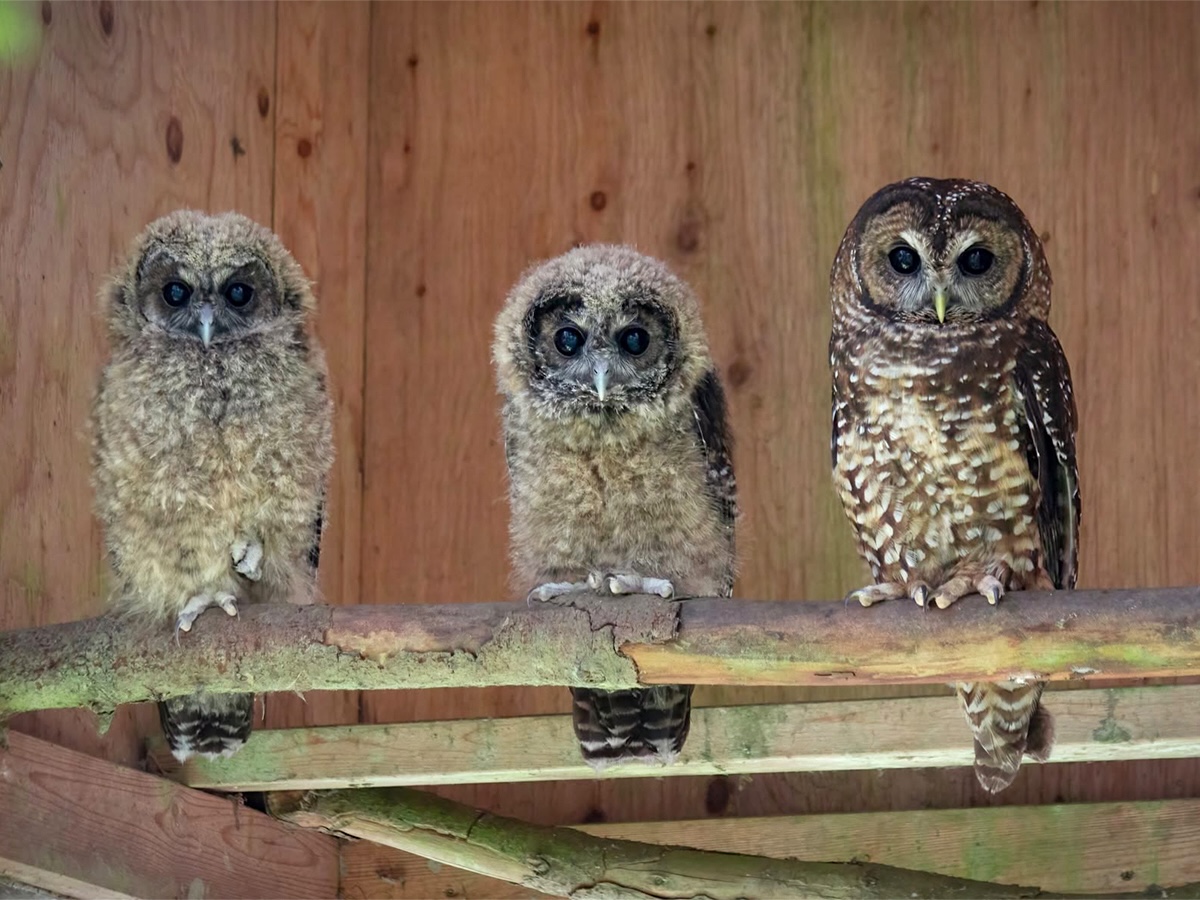
BC’s red list includes spotted owls, southern mountain caribou and southern resident killer whales.

Altogether, 1,952 species and ecosystems are officially at some risk of extinction in the province, according to the BC government’s conservation data centre.

The fates of each of these species are entwined with the outcome of BC’s Oct. 19 election.

Here’s what you need to know about what the parties vying to form BC’s next government are promising for nature and wildlife.

Have any BC parties promised a new stand-alone law to protect at-risk species?

For those keeping a close eye on BC’s wildlife conservation policies, the province’s lack of stand-alone legislation to protect species at risk of extinction remains a glaring gap.

“We have a beautiful province and it’s an epicentre for biodiversity,” Kai Chan, a professor at the University of British Columbia’s Institute for Resources, Environment and Sustainability, told The Narwhal. But, he added, “BC is one of the most obvious laggards in terms of legislative protections for wildlife.”

In its 2017 campaign platform, the BC NDP committed to bring in stand-alone endangered species legislation. But it quietly reneged on that promise after coming to power.

While legislation to protect at-risk species may not be perfect, Chris Johnson, a professor of landscape conservation and management at the University of Northern British Columbia, said legislation is an important tool that allows governments to react when a species is in trouble.

“Many of us, I think, had really high hopes for the NDP coming in initially, because they’d been very strong proponents in particular about species-at-risk legislation,” Johnson, who co-chairs a scientific committee that advises the federal government on at-risk land mammals, said. “And then it got canned. It just basically disappeared,” he said.

Both the BC Greens and the BC Conservatives have promised, if elected, to introduce legislation to protect at-risk species.

“We are in the midst of a biodiversity crisis and standing at a crossroads: either we take bold action to protect our ecosystems or we risk losing iconic species like caribou, spotted owls and orcas forever,” the Greens stated in its platform.

The BC Conservatives platform says the NDP government has underfunded and mismanaged wildlife in the province, leading to declines in “iconic ungulate species.” It says a Conservative government would introduce “made-in-BC species at risk legislation so wildlife protections are shaped by BC-based experts — not Ottawa — and are reflective of our unique ecosystems.”

The NDP’s platform makes no mention of legislation to protect at-risk species. Instead, the party has committed to working with First Nations and other partners on a “made-in-BC strategy” to protect biodiversity and watersheds, if re-elected.

Will the BC NDP’s ‘holistic’ plan for biodiversity be ready before election day?

Late last year, the NDP government released a draft biodiversity and ecosystem health framework. It said the framework would set the direction “for a more holistic approach to stewarding our land and water resources” and eventually lead to legislation to protect biodiversity.

However, the draft framework won’t be finalized before voting day, leaving its future in limbo pending the outcome of the election.

“I can’t disagree with some of the ideas in there — that you need, for example, a whole-of- government approach for addressing biodiversity,” Johnson said of the framework. “It’s very proactive and very progressive, but it’s also super high level.”

And, “it’s a long way to go before it makes any difference at all to biodiversity on the ground,” he warned.

In an emailed statement to The Narwhal, Hunter Lampreau, co-chair of the First Nations-BC Wildlife and Habitat Conservation Forum, which provides technical advice to the province, said he commends the NDP government for taking steps to enhance biodiversity conservation. But he said there’s more to do to achieve the needed balance between access and sustainable use of land and wildlife with conservation on the ground.

Alongside working toward its “made-in-BC strategy” to protect biodiversity and watersheds, the NDP said it will continue work to conserve 30 per cent of land in BC by 2030.

Are BC parties committed to conserving 30 per cent of land by 2030?

At the United Nations biodiversity conference in December 2022, Canada and 195 other countries committed to conserve at least 30 per cent of land and water globally by 2030 as part of international efforts to reverse the unprecedented decline of biodiversity.

In 2022, BC NDP Leader David Eby tasked Nathan Cullen, in his role as minister of water, land and resource stewardship, with working to protect 30 per cent of land in BC by 2030.

“[The NDP government] set a lot of really bold commitments, and I think it took a lot of time to get the gears turning to get working towards them and we didn’t really see the deliverables that we had wanted to see,” Tori Ball, the conservation director with the BC chapter of the Canadian Parks and Wilderness Society, said in an interview.

Over the past several years, the BC government and First Nations have announced major new conservation initiatives, including new conservancies in Clayoquot Sound, the Incomappleux Valley and the expansion of the Klinse-za / Twin Sisters Park.

But overall, protected areas increased by less than half a percent during the NDP’s past term in government, Ball said, noting “that’s not a lot of progress.”

The NDP also backtracked from conservation and reconciliation initiatives after facing criticism from the BC Conservatives over measures such as the proposed Land Act amendments and the expansion of the Klinse-za / Twin Sisters Park.

As of last December, BC reported 19.7 per cent of land in the province had been conserved, either through protected areas, such as provincial or national parks, or through other measures, where some development activity may be allowed but biodiversity is still meant to be protected.

The Canadian Parks and Wilderness Society has previously raised concerns that some areas counted towards BC’s conservation targets don’t meet biodiversity goals.

“We are hoping that the next government will continue the commitment that is laid out in the tripartite nature framework agreement to protect 30 per cent by 2030,” Ball said.

Both the NDP and the Greens say they are committed to working with First Nations towards the 30-by-30 goal.

“I’m proud of the fact that the BC NDP has signed on to the 30-by-30 nature agreement. This is something that’s just essential,” Josie Osborne, the incumbent NDP candidate for Mid Island-Pacific Rim, said during the environmental issues debate.

Conservative Leader John Rustad earlier told The Narwhal he would abandon BC’s plans to conserve 30 per cent of land in the province by 2030, a move that could jeopardize Canada’s international commitments and the recovery of at-risk species in BC.

How are the BC Conservatives balancing boosting the forestry industry with protecting wildlife?

In its platform, the BC Conservatives outlined measures it would take to enhance biodiversity as part of its plans to “save BC forestry.”

The party said it will define which forest areas will be prioritized for logging and which will “be prioritized for meeting biodiversity goals, where sourcing forest products will be of secondary value.”

During an online election debate focused on the environment in early October, Peter Milobar, the Conservative candidate for Kamloops Centre, said his party’s plans for mining, forestry and conservation form an interconnected approach to managing land.

Asked about the party’s forestry plans, Milobar said, “It’s really about maximizing the value of all the fiber that can be pulled out, instead of having it go up in slash piles, instead of it just sitting on the forest floor.”

“You certainly want a certain amount left in terms of regenerative growth and for the critters and whatnot in the forest after you’ve done logging, but there’s a lot of waste there that we could be using and repurposing at a proper rate,” he said.

What will happen to BC’s remaining old-growth forests?

The Conservative Party said, if elected, it will ensure two-thirds of BC’s forested areas are set aside from industrial-scale forestry activity and remain in their “original forested state.”

“BC’s forests provide more than just wood products; we count on our forests for water quality, wildlife habitat, recreational opportunities, and more,” the party’s forestry platform says. “Conservation is a Conservative value, and we will never allow our forest ecology to be undermined,” it says.

But the party doesn’t specify whether it would protect disappearing old-growth forests, which are both rich in biodiversity and sought after by industry.

In an analysis of each party’s stand on environmental issues, the Endangered Ecosystems Alliance, a conservation charity, raised concerns the Conservatives would focus protections on “mainly subalpine, rocky and muskeg landscapes with small and stunted trees of low to no timber value,” while allowing “logging to continue in areas where biodiversity conservation is supposed to be prioritized.”

The party said it will manage the remaining 22 million hectares of forest landscape to “achieve supply chain stability in BC’s forest sector as well as to enhance biodiversity and ecological qualities.”

The Endangered Ecosystems Alliance worries that means the party will “obstruct new protected areas in the forests with the biggest trees and greatest biological richness” and effectively turn 22 million hectares of forest where valuable timber can be found into “guaranteed logging zones to create ‘certainty’ for timber companies.”

The BC NDP said it will protect more old-growth forests, if re-elected, by working with First Nations to finish implementing the landmark recommendations from a 2020 old-growth forest strategic review, which called for a major shift in how BC manages its forests to prioritize biodiversity and ecosystem health.

The party said it will create a fund to help mills re-tool so they can process smaller second-growth trees instead of old-growth trees.

The BC Greens have promised to defer logging in the most at-risk old-growth forests and fully fund their protection, compensating First Nations for any lost revenues due to logging deferrals. In an Oct. 4 press release, the party pledged to increase the number and size of community forests “to promote biodiversity, wildfire protection, rural development and ecosystem resilience.”

The Greens also promised to stop clearcut logging and “switch to practices like selective logging, commercial thinning and longer rotation cycles that mimic natural forest changes.”

“BC’s forests are part of our identity, but years of industrial logging, wildfires, insect infestations and other disturbances have left them in crisis,” BC Greens Leader Sonia Furstenau said in the release.

What are the parties promising this BC election to help wildlife and the places they call home?

Several months before the October 2020 election, the NDP government launched its together for wildlife strategy — what it described at the time as “a plan for the conservation and stewardship of BC’s wildlife.”

According to the BC government website, the province has made progress on some action items identified in the strategy. The government committed $10 million a year in additional wildlife funding, launched a review of the Wildlife Act and set up three regional wildlife advisory committees to bring people with different perspectives together. The government has also made significant funding announcements over the past year, including a $300-million conservation fund and $500 million for a nature agreement with the federal government and First Nations.

For Adam Ford, an associate biology professor at the University of British Columbia Okanagan, one of the “most concrete victories” was the creation of a series of scholarships to fund graduate student research.

“Those are the people that are doing the work on the ground with communities and learning about and providing evidence to restore wildlife,” Ford, who serves on the minister’s wildlife advisory council created to oversee implementation of the together for wildlife strategy, said. “But it is a bit of a drop in the bucket,” he added.

Ford said striving to improve the funding model for wildlife management was on the advisory council’s agenda from day one, but the ministry still doesn’t have the budget it needs.

Transparency was another major goal of the together for wildlife strategy. Yet only one director’s report outlining the progress made toward implementing the strategy is available online and it’s for the fiscal year ending in 2021.

Lists of projects funded in the first two years of the strategy are also available online. But “we don’t know what projects were approved for the current year,” Ford said. “I’m on council — I don’t know,” he added.

In recent weeks, the BC Wildlife Federation and others have raised concerns about a major funding shortfall for wildlife conservation and management.

The Greens have promised to allocate $120 million for fish and wildlife programs over the next three years.

The BC Conservatives platform says the party will dedicate revenue from hunting tags and fees to a “third party entity dedicated to wildlife management and enhancement. ” The party also says it will increase funding for conservation officers, ensure decisions are based on science and recognize “British Columbians deserve guaranteed access to public lands and wild areas, including hunting and fishing rights.”

“Our approach will balance resource development with habitat protection, ensuring that wildlife thrives alongside responsible human activities,” the platform says. “We will ensure Indigenous Peoples and stakeholders — hunters, fishers, recreationists, and conservationists — are not just ‘at the table,’ but actively shaping BC’s wildlife management practices.”

BC sprays herbicide on its forests. Will this stop after the election?

As part of its forestry platform, the BC Conservatives said it would increase the diversity of tree species in forests and stop the aerial spraying of glyphosate, steps that could improve wildlife habitat and improve resilience to wildfires.

Glyphosate — an ingredient in the commercial product Roundup — is a herbicide used in the forestry industry to kill deciduous trees and shrubs that can compete with crop trees, such as pine, that are valuable for forestry.

The Greens have outlined several measures that could benefit wildlife, including a $50-million investment in a youth climate corp to fund youth jobs to restore and protect natural systems. The party has also committed to ban the use of glyphosate and other chemical herbicides used in forestry and to end clearcutting. Instead, the party would ensure the forestry sector uses practices, such as selective logging, that emulate natural disturbance regimes.

“We need to focus on restoring ecosystem health and valuing more than economic values in the forest ecosystem,” Ross Reid, the BC Greens candidate for Mid Island-Pacific Rim, said during the environmental issues election debate.

The NDP has also said it will ban the use of glyphosate in forestry.

What will happen to provincial government commitments to Indigenous-led conservation after the BC election?

The BC Greens have committed to investing in Indigenous-led conservation and Indigenous Guardians programs, while the NDP said it will work with First Nations towards the 30-by-30 conservation goals.

Rustad, however, has said a Conservative government would repeal the Declaration on the Rights of Indigenous Peoples Act, a law he previously supported.

The Tŝilhqot’in National Government denounced the Conservative platform in a public statement.

“The path that the BC Conservatives has outlined for British Columbia is a path of conflict on the land and in the courts,” the government said. The declaration “is an essential framework to hold BC to international laws and standards, to implement the human rights of Indigenous peoples in BC, and to resolve long-standing conflicts in this province based on recognition and respect, in a manner that benefits all British Columbians.”

Lampreau, with the First Nations-BC Wildlife and Habitat Conservation Forum, also raised concerns about Rustad’s stated position on Indigenous Rights and reconciliation and pointed to legal repercussions when the provincial government fails to prioritize and respect Indigenous Rights and Title.

“Several court decisions costing and awarding a lot of money have been made in the last years,” he said in an email to The Narwhal.

“I’d encourage people to consider a full platform before sending your choice into the ballot box,” Lampreau said.

“While a partisan claim of increased funding or improved wildlife and habitat stewardship sounds appealing, consider if they’re also advertising their intent to continue to invest in industries that are impacting habitat, and seek to understand how they intend to balance the two,” he said.

Are there any other conservation plans in the works?

There are some other ideas in the mix to protect biodiversity.

In its platform, for example, the BC Greens said part of its prioritization of ecosystem health and biodiversity would include appointing a chief ecologist.

The party also committed to investing in watershed security, Indigenous-led conservation and nature-based climate solutions, as well as restoring and protecting salmon habitat.

“Our goal is clear: to halt and reverse biodiversity loss while building resilience for both ecosystems and communities,” the party says in its platform.

Meanwhile, the BC NDP has said it will expand investments in salmon restoration. It has also said it will plant 300 million trees every year with the goals of making forests more resilient to climate change and restoring wildlife habitat.

Updated on Oct. 15, 2024, at 4:32 p.m. PT: This story has been updated to include commitments outlined in the BC Conservatives’ platform, which was released on Oct. 15.

https://ancientforestalliance.org/wp-content/uploads/2024/10/BC-2024-Election2-McLeod.jpeg 943 1823 TJ Watt https://staging.ancientforestalliance.org/wp-content/uploads/2014/10/cropped-AFA-Logo-1000px.png TJ Watt2024-10-11 09:16:102024-10-22 10:14:09The Narwhal: Your BC election guide to old-growth forest and other key nature issues

Nature Protection: Where Do BC’s Major Political Parties Stand?

Oct 7 2024/in Announcements, Take Action

As we approach the BC election on Saturday, October 19th, 2024, here’s where BC’s major political parties stand on protecting nature. Safeguarding nature is vital for our health and well-being (even breathing in the air in nature is shown by science to boost our immune systems through plant compounds known as “phytoncides”), for the economy (protected areas attract and support a large diversity of industries and skilled labour to surrounding communities), for the climate, and for the diversity of life on Earth.

Visit Elections.bc.ca to find out where to vote and what you need for ID.

Watch and share this BC Election video!

Endangered Ecosystems Alliance Executive Director and AFA co-founder Ken Wu explains where each of BC’s major political parties stands on old-growth and nature protection.

🔵 The BC Conservative Party

The BC Conservatives take an extremist, anti-nature protection position.

1. They say they would “absolutely axe” BC’s goal to protect 30% of the province’s land area by 2030.

2. They would guarantee that all unprotected, productive forest lands in BC (22 million hectares) available for logging will be “managed to achieve supply chain stability in BC’s forestry sector”. That is, they will ensure that the forests at the centre of the conservation controversies, with the largest unprotected trees and richest biodiversity, will be turned into “guaranteed logging zones” that will obstruct new, fully protected areas.

3. Logging will continue even in areas prioritized for biodiversity conservation, where “sourcing forest products will be a secondary value”, ie. They will have a “log everywhere” policy.

4. They spread false and grossly misleading information and PR spin about the conservation and geographic extent of forests in BC — such as 30% protection would result in “30% less food production” (false: farming takes place on private lands, not on public lands where the protected areas expansion overwhelmingly occurs) and “two-thirds of BC’s forested landscape will remain in its original forested state” (deceptively failing to mention those ecosystems are mainly subalpine, rocky and muskeg landscapes with small and stunted trees of low to no timber value).

🟠 The BC NDP Party

The BC NDP is taking a strong, pro-protected areas stance and has moved protected areas policies forward on a historically unprecedented scale. However, several key policies are still missing.

1. They have committed to essentially double the protected areas system in BC over the next six years, from about 16% of the province now to 30% by 2030.

2. They have allocated and secured over $1 billion in federal-provincial funding to help make this happen, including for private land acquisition, conservation financing for First Nations, and resource licensee compensation.

3. They have established several hundred thousand hectares of new protected areas, including 76,000 hectares in Clayoquot Sound, 200,000 hectares at Klinze-sa/Twin Sisters, and 58,000 hectares at the Incomappleux Valley.

4. They are in discussion with dozens of First Nations about potential Indigenous Protected and Conserved Areas (IPCAs) spanning millions of hectares, including in productive old-growth forests and endangered grasslands.

5. They have thus far failed to implement ecosystem-based targets, that is, protection targets based on science and Traditional Ecological Knowledge for each ecosystem — the ‘GPS for new protected areas’ that would ensure that all ecosystems are adequately protected. This is the most important game-changer left to ensure the protection of endangered ecosystems. The BC NDP Party have stated that they will develop “science-based protection” policies and that this may occur via the Biodiversity and Ecosystem Health Framework.

6. They have thus far failed to close conservation loopholes in designations like Wildlife Habitat Areas where logging can still occur and Old-Growth Management Areas where boundaries can be readily moved around under timber industry pressure.

🟢 The BC Green Party

The BC Greens take a strong, pro-protected areas stance, lacking some specificity.

1. They support protecting 30% by 2030 of BC’s land area, including all old-growth forests, by working with Indigenous communities.

2. They advocate long-term, stable funding for nature-based solutions for environmental protection.

3. They believe in prioritizing ecosystem health, which includes appointing a Chief Ecologist as a counterbalance to the Chief Forester, although do not mention ecosystem-based targets for protection and conservation, which is the actual key to ecosystem health.

— 30 —

Authorized by Ancient Forest Alliance, registered sponsor under the Election Act, 250-896-4007.

https://ancientforestalliance.org/wp-content/uploads/2021/11/1341657734_TJinCaycusebeforeandafter.7.sized_.jpg.d55481bd88c3e32e46f48e9de21af6ef.jpg 1108 1500 TJ Watt https://staging.ancientforestalliance.org/wp-content/uploads/2014/10/cropped-AFA-Logo-1000px.png TJ Watt2024-10-07 21:59:132024-10-18 13:20:49Nature Protection: Where Do BC’s Major Political Parties Stand?

Thank you to this business supporter!

Sep 11 2024/in Thank You

This year, our summer matching campaign was our most successful matching fundraiser to date, with more than $82,000 raised! While many businesses and individuals were instrumental in contributing to this success, we wanted to give particular thanks to OneUp Components, who gave a substantial donation to the campaign.

OneUp has been a donor to the old-growth campaign for many years, and we’re very appreciative of their support.

If you own a business that cares about saving the endangered ancient forests of BC and would like to become a one-time or monthly donor, email info@ancientforestalliance.org or visit our donation page to learn more.

https://ancientforestalliance.org/wp-content/uploads/2024/09/meares-island-clayoquot-sound-bc-23.jpg 1000 1500 TJ Watt https://staging.ancientforestalliance.org/wp-content/uploads/2014/10/cropped-AFA-Logo-1000px.png TJ Watt2024-09-11 18:03:562024-09-11 18:03:56Thank you to this business supporter!
Page 32 of 539«‹3031323334›»

Pages

  • ACTION ALERT: Tell the NDP government FRPA amendments must protect old-growth forests
  • AFA Policy Recommendations – 2026
  • Ancient Forests
  • BC Protected Areas Strategy (PAS)
  • Before & After Logging – Caycuse Watershed
  • Before and After Logging Caycuse 2022
  • Biggest Trees
  • BLOG ARCHIVE TEMPLATE
  • Bugaboo Ridge Ancient Forest
  • Call Premier Horgan to demand funding for old-growth protection in Budget 2022
  • Call the BC government
  • Cameron Firebreak
  • Canada’s Most Impressive Tree – Flores Island
  • Cast Your Vote for Ancient Forest Protection!
  • Caycuse Logging From Above
  • Central Walbran Valley
  • Climbing the Largest Spruce in Carmanah
  • Conservation Financing
  • Contact
  • Donate Stocks, Securities, and Mutual Funds
  • Echo Lake
  • Economic Valuation of Old-Growth Forests on Vancouver Island
  • Ecosystem-Based Targets
  • Edinburgh Mountain Ancient Forest
  • Eldred River Valley
  • Exploring & Climbing Ancient Giants
  • Fairy Creek Headwaters
  • Granite Creek Logging
  • Grove of Giant Cedars Clearcut in Quatsino Sound
  • Have your say on the BC government’s Old-Growth Strategy
  • Hiking Guides
  • Home
  • Join the Growing Number of BC Businesses Calling for Old-Growth Forest Protection
  • Juniper Ridge
  • Kanaka Bar Indigenous Protected and Conserved Area
  • Kanaka Bar IPCA Proposal
  • Katlum Creek
  • Katlum Creek
  • Klaskish Inlet
  • Loup Creek
  • Lower Caycuse River
  • Mahatta River Logging
  • Massive Trees Cut Down
  • McKelvie Valley
  • McLaughlin Ridge
  • Mossy Maple Rainforest
  • Mount Horne
  • Mt. Freda Ancient Forests
  • Nahmint Logging 2024
  • Nahmint Valley
  • Nahmint Valley
  • Old Growth Strategic Review Questionnaire Guide
  • Old-Growth 101 – The Facts on Ancient Forests in BC
  • Old-Growth Campaigns
  • Old-Growth Forest Hikes Near Port Renfrew
  • Old-Growth Forest Hikes Near Victoria BC
  • Our Mission & Team
  • Our Work
  • Petition
  • Photographer TJ Watt
  • Photos & Media
  • Policy recommendations to support sustainable, value-added, second-growth forestry jobs in BC
  • Pop for Parks Report
  • Privacy Policy
  • Protect Old-Growth Forests & Endangered Ecosystems in BC
  • Provincial Biodiversity and Ecosystem Health Framework
  • Provincial Land Acquisition Fund
  • Quatsino Old-Growth Under Threat 2023
  • Recent News
  • Salmon Parks Initiative
  • Send a Message
  • Send a Message
  • Send a Message
  • Spruce Bay Old Growth Trail – Port Alice
  • Sydney River Valley
  • Taylor River Valley
  • Thank you for speaking up for ancient forests!
  • Thank you for speaking up for BC’s last remaining ancient forests!
  • Thank you for speaking up for BC’s last remaining ancient forests!
  • Thank you for speaking up for endangered ecosystems!
  • Thank You for Speaking Up for Old-Growth Forests!
  • Thank you for taking action for ancient forests, your call will begin shortly!
  • Thank you for taking action for old-growth
  • Thank you for taking action for old-growth
  • Vernon Bay
  • Videos
  • Walbran Headwaters At Risk
  • Ways to Take Action
  • White River Provincial Park
  • Work With Us
  • Yakoun Lake Old-Growth
  • Yakoun River Old-Growth Forests
  • z__Archive Footer – DO NOT EDIT
  • z__Pre-Footer – DO NOT EDIT
  • z__Single Post Footer – DO NOT EDIT
  • z__Take Action row – DO NOT EDIT
  • z_Send a Message – Call for Ecosystem Based Targets
  • Activity Reports
  • Ancient Forest / Chun T’oh Whudujut Provincial Park
  • Before & After Old-Growth Maps
  • 2018 Activity Report & Financials
  • History & Successes
  • Old-Growth Forests in BC: Frequently Asked Questions
  • Parthenon Grove
  • 2017 Activity Report & Financials
  • Directions to Avatar Grove
  • Upper Tsitika Valley
  • 2016 Activity Report & Financials
  • Avatar Boardwalk
  • Building Alliances
  • 2015 Activity Report & Financials
  • Avatar Grove
  • Myths & Facts
  • Big Lonely Doug and Clearcut
  • Policy Recommendations
  • Biggest Stumps
  • Port Renfrew Big Trees Map
  • Publications
  • Cameron Valley Firebreak
  • Research & Reports
  • Carmanah Research Climb
  • Castle Grove
  • Cathedral Grove Canyon
  • Central Walbran Ancient Forest
  • Children’s Forest
  • Day Road Forest
  • East Creek Rainforest
  • Echo Lake
  • Eden Grove
  • Flores Island
  • Hadikin Lake
  • Haida Gwaii
  • Jurassic Grove
  • Klanawa Valley
  • Koksilah
  • Low Productivity Old-Growth
  • McKelvie Valley
  • McLaughlin Ridge
  • Meares Island
  • Mossome Grove
  • Mossome Grove Tree Climb
  • Mossy Maple Gallery
  • Mossy Maple Grove
  • Mount Horne
  • Mt. Elphinstone Proposed Park Expansion
  • Nootka Island
  • Roberts Creek Headwaters
  • Squirrel Cove Ancient Forest
  • Stillwater Bluffs
  • Tahsis: Endangered Old-Growth Above Town
  • Tree Climb 2014
  • Tree Climb 2016
  • Walbran Logging
  • Walbran Overview

Categories

  • Announcements
  • Creature Feature
  • Educational
  • Employment
  • Events
  • Media Release
  • News Coverage
  • Notes From The Field
  • Photo Gallery
  • Take Action
  • Thank You
  • Video

Archive

  • April 2026
  • March 2026
  • February 2026
  • January 2026
  • December 2025
  • November 2025
  • October 2025
  • September 2025
  • August 2025
  • July 2025
  • June 2025
  • May 2025
  • April 2025
  • March 2025
  • February 2025
  • January 2025
  • December 2024
  • November 2024
  • October 2024
  • September 2024
  • August 2024
  • July 2024
  • June 2024
  • May 2024
  • April 2024
  • March 2024
  • February 2024
  • January 2024
  • December 2023
  • November 2023
  • October 2023
  • September 2023
  • August 2023
  • July 2023
  • June 2023
  • May 2023
  • April 2023
  • March 2023
  • February 2023
  • January 2023
  • December 2022
  • November 2022
  • October 2022
  • September 2022
  • August 2022
  • July 2022
  • June 2022
  • May 2022
  • April 2022
  • March 2022
  • February 2022
  • January 2022
  • December 2021
  • November 2021
  • October 2021
  • September 2021
  • August 2021
  • July 2021
  • June 2021
  • May 2021
  • April 2021
  • March 2021
  • February 2021
  • January 2021
  • December 2020
  • November 2020
  • October 2020
  • September 2020
  • August 2020
  • July 2020
  • June 2020
  • May 2020
  • April 2020
  • March 2020
  • February 2020
  • January 2020
  • December 2019
  • November 2019
  • October 2019
  • September 2019
  • August 2019
  • July 2019
  • June 2019
  • May 2019
  • April 2019
  • March 2019
  • February 2019
  • January 2019
  • December 2018
  • November 2018
  • October 2018
  • September 2018
  • August 2018
  • July 2018
  • June 2018
  • May 2018
  • February 2018
  • January 2018
  • December 2017
  • November 2017
  • October 2017
  • September 2017
  • August 2017
  • July 2017
  • May 2017
  • April 2017
  • March 2017
  • February 2017
  • December 2016
  • November 2016
  • October 2016
  • September 2016
  • August 2016
  • July 2016
  • June 2016
  • May 2016
  • April 2016
  • March 2016
  • February 2016
  • January 2016
  • December 2015
  • November 2015
  • October 2015
  • September 2015
  • August 2015
  • July 2015
  • June 2015
  • May 2015
  • April 2015
  • March 2015
  • February 2015
  • January 2015
  • December 2014
  • November 2014
  • October 2014
  • September 2014
  • August 2014
  • July 2014
  • June 2014
  • May 2014
  • April 2014
  • March 2014
  • February 2014
  • January 2014
  • December 2013
  • November 2013
  • October 2013
  • September 2013
  • August 2013
  • July 2013
  • June 2013
  • May 2013
  • April 2013
  • March 2013
  • February 2013
  • January 2013
  • December 2012
  • November 2012
  • October 2012
  • September 2012
  • August 2012
  • July 2012
  • June 2012
  • May 2012
  • April 2012
  • March 2012
  • February 2012
  • January 2012
  • December 2011
  • November 2011
  • October 2011
  • September 2011
  • August 2011
  • July 2011
  • June 2011
  • May 2011
  • April 2011
  • March 2011
  • February 2011
  • January 2011
  • December 2010
  • November 2010
  • October 2010
  • September 2010
  • August 2010
  • July 2010
  • June 2010
  • May 2010
  • April 2010
  • March 2010
  • February 2010
  • January 2010

Related Posts

2025 Activity Report & Financials

Apr 30 2026
2025 was a milestone year for the Ancient Forest Alliance and the old-growth campaign. Despite the BC government's backsliding on many of its old-growth commitments, there was still much work to be proud of, including celebrating our 15th year working to protect ancient forests.  Check out our 2025 Activity Report & Financials to see the impact YOU made on 2025, plus, find out what we have in store for 2026!
Read more
Announcements
https://ancientforestalliance.org/wp-content/uploads/2026/04/2025-Activity-Report-Financials-scaled.png 1440 2560 TJ Watt https://staging.ancientforestalliance.org/wp-content/uploads/2014/10/cropped-AFA-Logo-1000px.png TJ Watt2026-04-30 16:32:192026-04-30 16:32:192025 Activity Report & Financials

The Tyee: BC ‘Going Backwards’ on Ecosystem Protections

Apr 27 2026
Advocates, the BC Greens, and a former cabinet minister take aim at the NDP’s stalled efforts to protect ecosystems, such as old-growth forests.
Read more
News Coverage
https://ancientforestalliance.org/wp-content/uploads/2025/09/5-Eden-Grove-Ken-Wu.jpg 1365 2048 TJ Watt https://staging.ancientforestalliance.org/wp-content/uploads/2014/10/cropped-AFA-Logo-1000px.png TJ Watt2026-04-27 16:22:282026-04-27 16:23:15The Tyee: BC ‘Going Backwards’ on Ecosystem Protections

The Tyee: BC Must Stop Blaming First Nations for Old-Growth Logging

Apr 23 2026
BC is increasing logging while lagging on old-growth protection. Experts say the province should fund First Nations to conserve forests instead.
Read more
News Coverage
https://ancientforestalliance.org/wp-content/uploads/2026/04/4-BCTS-Old-Growth-Cutblock-Mahatta-River-scaled.jpg 1114 2560 TJ Watt https://staging.ancientforestalliance.org/wp-content/uploads/2014/10/cropped-AFA-Logo-1000px.png TJ Watt2026-04-23 15:49:152026-04-23 15:51:13The Tyee: BC Must Stop Blaming First Nations for Old-Growth Logging

Western Coralroot

Apr 17 2026
Meet one of the rainforest’s loveliest yet strangest flowers: the western coralroot!
Read more
Educational
https://ancientforestalliance.org/wp-content/uploads/2026/04/western-coralroot-226.jpg 1366 2048 TJ Watt https://staging.ancientforestalliance.org/wp-content/uploads/2014/10/cropped-AFA-Logo-1000px.png TJ Watt2026-04-17 14:37:512026-04-17 14:37:51Western Coralroot
See All Posts

Take Action

 Donate

Support the Ancient Forest Alliance with a one-time or monthly donation.
How to Give

 Send a Message

Send an instant message to key provincial decision-makers.
Take Action

Get in Touch

Phone

(250) 896-4007 (Mon-Fri 9am-5pm)

Address

205-620 View Street
Victoria, B.C. V8W 1J6

Privacy Policy

  • Link to Facebook
  • Link to Instagram
  • Link to Youtube
  • Link to TikTok
  • Link to Bluesky
  • Link to Reddit

Resources

  • Recent News
  • Old-Growth 101
  • Photos & Media
  • Videos
  • Hiking Guides
  • Research & Reports

Who We Are

  • Our Mission & Team
  • History & Successes
  • Activity Reports
  • Contact
Ancient Forest Alliance

The Ancient Forest Alliance (AFA) is a registered charitable organization working to protect BC’s endangered old-growth forests and to ensure a sustainable, value-added, second-growth forest industry.

AFA’s office is located on the territories of the Lekwungen Peoples, also known as the Songhees and Esquimalt Nations.
Copyright © 2026 Ancient Forest Alliance • All Rights Reserved
Earth-Friendly Web Design by Fairwind Creative
Scroll to top
Ancient Forest AllianceLogo Header Menu
  • Home
  • About Us
    • Our Mission & Team
    • History & Successes
    • Work With Us
    • Contact Us
  • Our Work
    • Our Work
    • Activity Reports
    • Building Alliances
    • Campaigns
  • Ancient Forests
    • Hiking Guides
    • Old-Growth 101
    • Old-Growth Forests in BC: FAQs
    • Before & After Old-Growth Maps
    • Myths & Facts
    • Directions to Avatar Grove
    • Port Renfrew Big Trees Map
  • Recent News
    • Recent News
    • Research & Reports
    • Media Releases
    • Publications
    • Educational
  • Photos & Media
    • Map of Gallery Regions
    • Themes
      • Biggest Trees
      • Biggest Stumps
      • Low Productivity Old-Growth
    • Videos
    • Inland Rainforest
      • Ancient Forest/ Chun T’oh Whudujut Provincial Park
      • Parthenon Grove
    • Mainland
      • Echo Lake
      • Kanaka Bar IPCA Proposal
    • Haida Gwaii
      • Yakoun River Old-Growth
    • Sunshine Coast
      • Day Road Forest
      • Mt. Elphinstone Proposed Park Expansion
      • Roberts Creek Headwaters
      • Stillwater Bluffs
    • Sunshine Coast: Powell River
      • Eldred River Valley
      • Mt. Freda Ancient Forests
    • Vancouver Island South
      • Climbing the Largest Spruce in Carmanah
      • Carmanah Research Climb
      • Klanawa Valley
      • Koksilah
    • VI South: Caycuse Watershed
      • Before & After Logging – Caycuse Watershed
      • Before and After Logging Caycuse 2022
      • Caycuse Logging From Above
      • Lower Caycuse River
      • Massive Trees Cut Down
    • VI South: Mossy Maples
      • Mossy Maple Gallery
      • Mossy Maple Grove
    • VI South: Port Renfrew
      • Avatar Boardwalk
      • Avatar Grove
      • Big Lonely Doug and Clearcut
      • Bugaboo Ridge Ancient Forest
      • Eden Grove
      • Exploring & Climbing Ancient Giants
      • Fairy Creek Headwaters
      • Granite Creek Logging
      • Jurassic Grove
      • Loup Creek
      • Mossome Grove
      • Mossome Grove Tree Climb
    • VI South: Port Alberni
      • Cameron Valley Firebreak
      • Cathedral Grove Canyon
      • Juniper Ridge
      • Katlum Creek
      • Nahmint Valley
      • Nahmint Logging 2024
      • McLaughlin Ridge
      • Mount Horne
      • Taylor River Valley
    • VI South: Walbran Valley
      • Castle Grove
      • Central Walbran Ancient Forest
      • Hadikin Lake
      • Walbran Headwaters At Risk
      • Walbran Overview
      • Walbran Logging
    • Vancouver Island Central
      • Barkley Sound: Vernon Bay
      • Nootka Island
    • VI Central: Clayoquot Sound
      • Canada’s Most Impressive Tree – Flores Island
      • Flores Island
      • Meares Island
      • Sydney River Valley
    • VI Central: Cortes Island
      • Children’s Forest
      • Squirrel Cove Ancient Forest
    • VI Central: Tahsis
      • McKelvie Valley
      • Tahsis: Endangered Old-Growth Above Town
    • Vancouver Island North
      • East Creek Rainforest
      • Klaskish Inlet
      • Mahatta River Logging
      • Quatsino
      • Spruce Bay
      • Tsitika Valley
      • White River Provincial Park
  • Take Action
    • Send a Message
    • Sign Petition
    • Sign a Resolution
  • Store
  • Donate