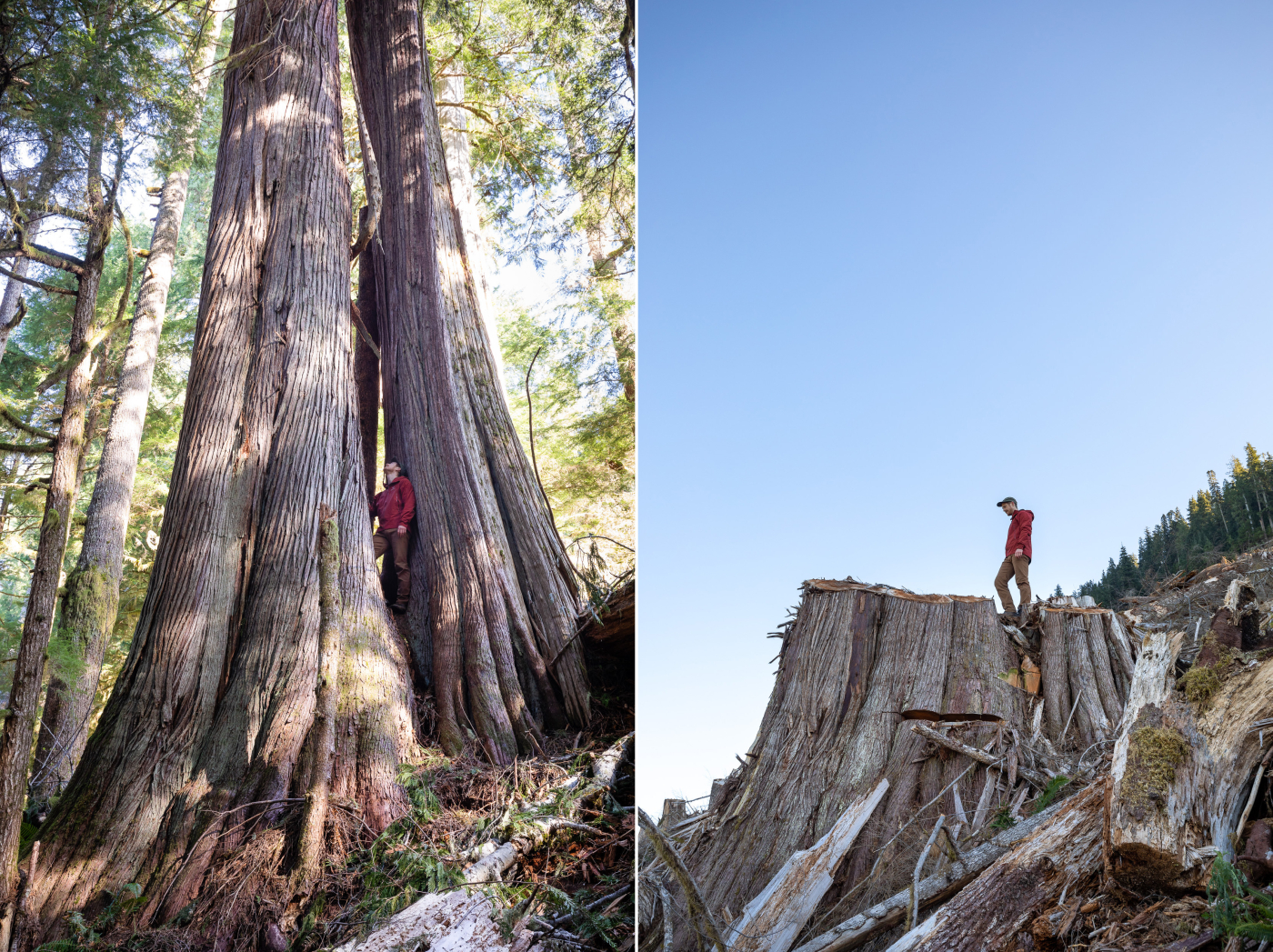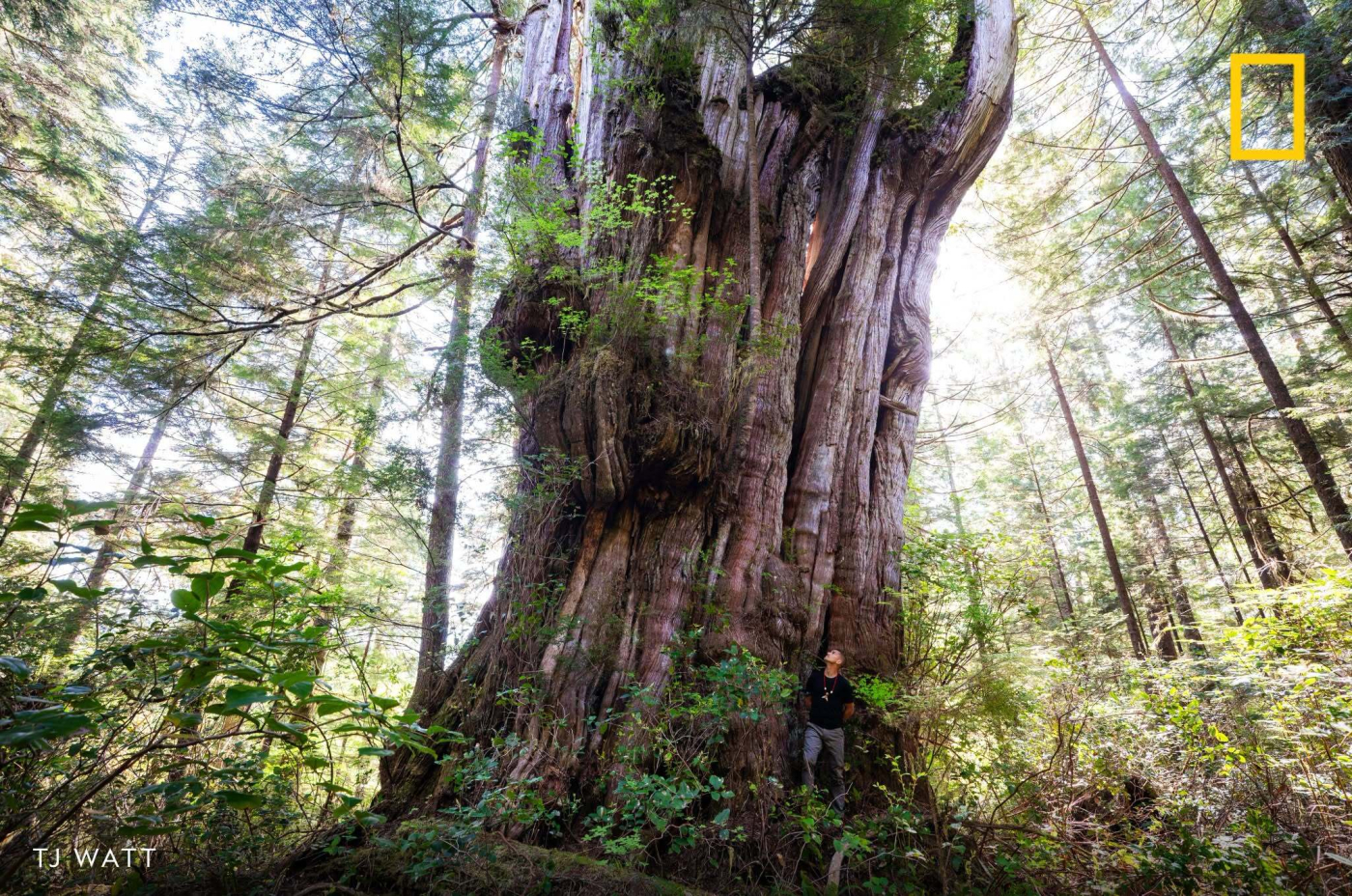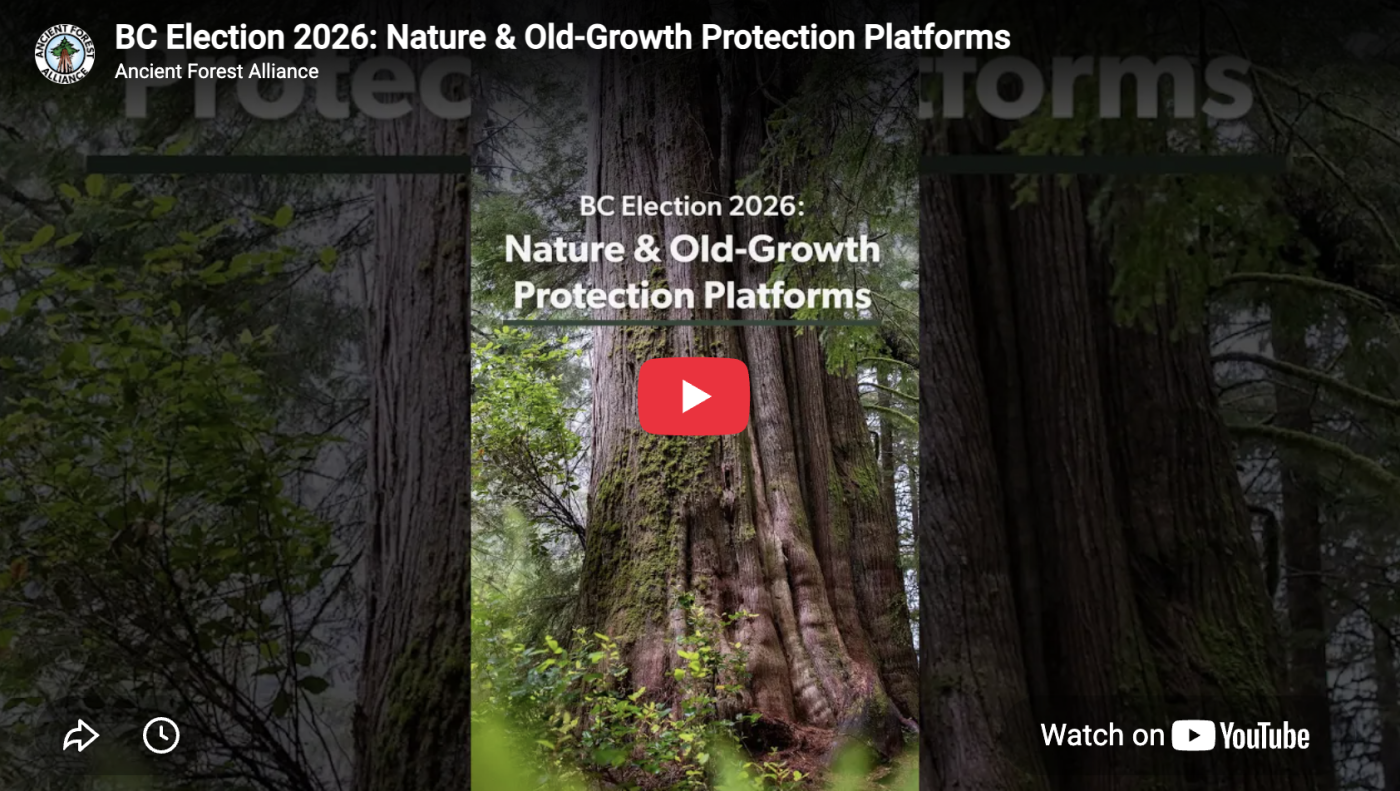
https://ancientforestalliance.org/wp-content/uploads/2026/04/2025-Activity-Report-Financials-scaled.png
1440
2560
TJ Watt
https://staging.ancientforestalliance.org/wp-content/uploads/2014/10/cropped-AFA-Logo-1000px.png
TJ Watt2026-04-30 16:32:192026-04-30 16:32:192025 Activity Report & FinancialsRelated Posts
https://ancientforestalliance.org/wp-content/uploads/2026/04/2025-Activity-Report-Financials-scaled.png
1440
2560
TJ Watt
https://staging.ancientforestalliance.org/wp-content/uploads/2014/10/cropped-AFA-Logo-1000px.png
TJ Watt2026-04-30 16:32:192026-04-30 16:32:192025 Activity Report & Financials
The Tyee: BC ‘Going Backwards’ on Ecosystem Protections
Advocates, the BC Greens, and a former cabinet minister take aim at the NDP’s stalled efforts to protect ecosystems, such as old-growth forests.

The Tyee: BC Must Stop Blaming First Nations for Old-Growth Logging
BC is increasing logging while lagging on old-growth protection. Experts say the province should fund First Nations to conserve forests instead.

Western Coralroot
Meet one of the rainforest’s loveliest yet strangest flowers: the western coralroot!
Take Action
Donate
Support the Ancient Forest Alliance with a one-time or monthly donation.
Send a Message
Send an instant message to key provincial decision-makers.Get in Touch
AFA’s office is located on the territories of the Lekwungen Peoples, also known as the Songhees and Esquimalt Nations.
Copyright © 2026 Ancient Forest Alliance • All Rights Reserved
Earth-Friendly Web Design by Fairwind Creative


B.C. Auditor-General faults government for failing to protect forests
/in News CoverageA Vancouver Island environmental organization is praising the B.C. government for protecting a unique old-growth forest known as Avatar Grove, but the Auditor-General has slammed the province for losing track of the forest resource.
Government management of B.C.’s timber supply is insufficient and has reached the point at the Forests, Lands and Natural Resource Operations Ministry where the province isn’t properly monitoring its programs, said John Doyle’s ministry audit.
Avatar Grove, so named by environmentalists inspired by the Hollywood eco-fable Avatar, has become a tourism attraction due to its fantastically shaped western red cedars, including one tree nicknamed “Canada’s Gnarliest Tree” for its massive burls.
The Victoria-based Ancient Forests Alliance applauded the government’s decision to protect from logging almost 60 hectares of the old-growth cedar forest near Port Renfrew on Vancouver Island.
“We commend the B.C. government for protecting this key tract of rare, valley-bottom, old-growth forest because virtually all the valley bottoms on southern Vancouver Island are gone now,” forests alliance spokesman Ken Wu said on Thursday. – College Grants For Minorities [Original article no longer available]
“But at the same time thousands of hectares of old-growth forests are logged every year on Vancouver Island and millions of hectares are endangered across B.C.”
Forests Minister Steve Thomson said the protected area covers just under 60 hectares. B.C. forest company Teal-Jones Group, which held the licence to cut trees in the grove, will be compensated for losing its cutting rights there, Thompson said.
He said the government was persuaded to protect the grove after a public consultation process last fall that received 236 comments, only four of them against saving the unique region.
He said businesses in the Port Renfrew area see the grove as a potential tourism draw.
But Mr. Doyle’s report found that elsewhere in B.C., the government hasn’t been as diligent in protecting the future for forests.
“Industry is legally obligated to reforest the areas it harvests, and it does so,” said Mr. Doyle in a statement after the release of his 23-page audit.
“But government, which is responsible for over 90 per cent of British Columbia’s forests, and whose reforestation decisions have a significant impact on our future forests, is not clear about its own commitments.”
Mr. Doyle’s audit found the ministry has not clearly defined its timber objectives and, as a result, cannot ensure that its management practices are effective.
The report said existing management practices are insufficient to offset a trend toward future forests having a lower timber supply, and the audit found the ministry is not properly monitoring and reporting its timber results against its timber objectives.
Mr. Doyle’s report makes six recommendations, including developing performance measures that can be used to evaluate progress in achieving long-term timber objectives.
The ministry responded with a statement saying it was already meeting Mr. Doyle’s recommendations and “will strive to develop a publicly reported performance measure that shows progress in achieving timber objectives.”
Mr. Thomson said he’s confident the ministry will have an updated inventory of lands that require reforestation within the next six months.
He said he disagreed with the Mr. Doyle’s assessment that the ministry is falling behind on its management of the timber resource.
Mr. Doyle’s audit said that of the 95 million hectares of forested land in British Columbia, 22 million hectares are available for harvesting.
Industry is legally obligated to reforest 10 per cent of that land – about 2.2 million hectares – while the government is responsible for the management of the rest.
Mr. Thomson said the ministry has identified 733,000 hectares of land that is “non-sufficiently stocked.”
He suggested that amount could change once the ministry completes a review.
“I’m confident we have the resources and the staff available, and the technology available, to do the analytical work that will identify and clarify the lands that need to be restocked,” Mr. Thomson said.
Opposition New Democrat forests critic Norm Macdonald said Mr. Doyle’s audit is a condemnation of the government’s management of its timber supply over the past 11 years.
“The first place you start is you get the inventory right,” he said.
“Seventy-five per cent of the inventory is decades out of date. They just do not know what’s going on on the land base.”
Click here to view the Globe and Mail article.
Island version of Avatar Grove given provincial protection
/in News CoverageA grove of giant, old-growth trees that has drawn thousands of tourists to Port Renfrew over the past two years will be protected by the province.
Avatar Grove, a unique stand of centuries-old Douglas firs and red cedars, will be at the heart of an expanded, 59-hectare old-growth management area, Forests Minister Steve Thomson said Thursday.
“A lot of the requests that came in recognized the importance of the grove to the community,” Thomson said in an interview.
“It’s very good news for Vancouver Island.”
Logging and mining are not permitted in old-growth management areas, but the designation is one step short of legislated protection given to parks.
The decision follows a public review period, with 232 out of 236 comments favouring protection.
The grove, with massive gnarled trees and an abundance of wildlife, gained public attention after being discovered by members of the Ancient Forest Alliance who gave it the Avatar nickname. Shortly after the initial visit in February 2010, the area was flagged for logging and a public campaign to save Avatar Grove gained steam. At that time only 24 per cent of the grove was in an old-growth management area.
To the amazement of many residents of Port Renfrew, a community formerly based on logging, the big trees drew a steady stream of sightseers.
“I was shocked at the amount of people,” said Rosie Betsworth, Port Renfrew Chamber of Commerce president.
Through last summer, at least a dozen people stopped daily at the Chamber of Commerce information booth asking about Avatar Grove. Tours run by the AFA drew up to 80 people each time. “We owe the Ancient Forest Alliance a big thank you for bringing Avatar into the public focus,” Betsworth said.
Ken Wu, AFA co-founder, said the success of Avatar Grove as a tourist attraction will be watched in communities across the province.
“It is important that environmentalism has a component on how people can make revenues and have jobs,” he said.
Wu and co-founder TJ Watt applauded the provincial protection, but would have preferred the stronger park designation. They want the government to stop all old-growth logging on Vancouver Island.
“Virtually all of the valley bottoms on southern Vancouver Island, where the biggest trees grow, have been logged,” Watt said. “Our main goal is to see a new provincial plan to protect all of B.C’s endangered old-growth forests and to ensure a sustainable second-growth industry instead.”
Surrey-based Teal-Jones Group, which holds logging rights for Avatar Grove, will be compensated with 57 hectares removed from other old-growth management areas. That is a legal obligation to license holders, Thomson said.
But the AFA questions why compensation should be paid on publicly-owned Crown forests.
“The company does not own the land or the trees, all they have are access rights to the resource through their licence,” Wu said.
View the Times Colonist article here: https://www.timescolonist.com/
B.C. earns kudos for protecting Avatar Grove; slammed by auditor general on forestry
/in News CoverageA Vancouver Island environmental organization praised the B.C. government Thursday for protecting a unique old-growth forest known as Avatar Grove, but the auditor general is slamming the province for losing track of the forest resource.
Government management of B.C.’s timber supply is insufficient and has reached the point at the Forests, Lands and Natural Resource Operations Ministry where the province isn’t properly monitoring its programs, said John Doyle’s ministry audit.
Avatar Grove, so named by environmentalists inspired by the Hollywood eco-fable Avatar, has become a tourism attraction due to its fantastically shaped western red cedars, including one tree nicknamed Canada’s Gnarliest Tree for its massive burls.
The Victoria-based Ancient Forests Alliance applauded the government’s decision to protect from logging almost 60-hectares of the old-growth cedar forest near Port Renfrew, located about 110 kilometres south of Victoria on Vancouver Island.
“We commend the B.C. government for protecting this key tract of rare, valley-bottom, old-growth forest because virtually all the valley bottoms on southern Vancouver Island are gone now,” said forests alliance spokesman Ken Wu.
“But at the same time thousands of hectares of old-growth forests are logged every year on Vancouver Island and millions of hectares are endangered across B.C.”
Forests Minister Steve Thomson said the protected area covers just under 60 hectares. B.C. forest company Teal-Jones Group, which held the licence to cut trees in the grove, will be compensated for losing its cutting rights there, Thompson said.
He said the government was convinced to protect the grove after a public consultation process last fall that received 236 comments, only four of them against saving the unique region.
He said businesses in the Port Renfrew area see the grove as a potential tourism draw.
But Doyle’s report found elsewhere in B.C. forests, the government hasn’t been as diligent in protecting the future for forests.
“Industry is legally obligated to reforest the areas it harvests, and it does so,” said Doyle in a statement following the release of his 23-page audit.
“But government, which is responsible for over 90 per cent of British Columbia’s forests, and whose reforestation decisions have a significant impact on our future forests, is not clear about its own commitments.”
Doyle’s audit found the ministry has not clearly defined its timber objectives and, as a result, cannot ensure that its management practices are effective.
The report said existing management practices are insufficient to offset a trend toward future forests having a lower timber supply, and the audit found the ministry is not properly monitoring and reporting its timber results against its timber objectives.
Doyle’s report makes six recommendations, including developing performance measures that can be used to evaluate progress in achieving long-term timber objectives.
The ministry responded with a statement saying it was already meeting Doyle’s recommendations and “will strive to develop a publicly reported performance measure that shows progress in achieving timber objectives.”
Thomson said he’s confident the ministry will have an updated inventory of lands that require reforestation within the next six months.
He said he disagreed with the Doyle’s assessment that the ministry is falling behind on its management of the timber resource.
Doyle’s audit said that of the 95 million hectares of forested land in British Columbia, 22 million hectares are available for harvesting.
Industry is legally obligated to reforest 10 per cent of that land — about 2.2 million hectares — while the government is responsible for the management of the rest.
Thomson said the ministry has identified 733,000 hectares of land that is “non-sufficiently stocked.”
He suggested that amount could change once the ministry completes a review.
“I’m confident we have the resources and the staff available, and the technology available, to do the analytical work that will identify and clarify the lands that need to be restocked,” Thomson said.
Opposition New Democrat forests critic Norm Macdonald said Doyle’s audit is a condemnation of the government’s management of its timber supply over the past 11 years.
“The first place you start is you get the inventory right,” he said.
“Seventy-five per cent of the inventory is decades out of date. They just do not know what’s going on on the land base.”
Read it on Global News: Global BC: https://www.globaltvbc.com/protecting+unique+old-growth+stand+on+vancouver+island+dooms+other+ancient+trees/6442582501/story.html