 https://ancientforestalliance.org/wp-content/uploads/2026/09/Old-Growth-Clearcut-Caycuse-Vancouver-Island.jpg
1364
2048
TJ Watt
https://ancientforestalliance.org/wp-content/uploads/2026/05/Ancient-Forest-Alliance-logo.svg
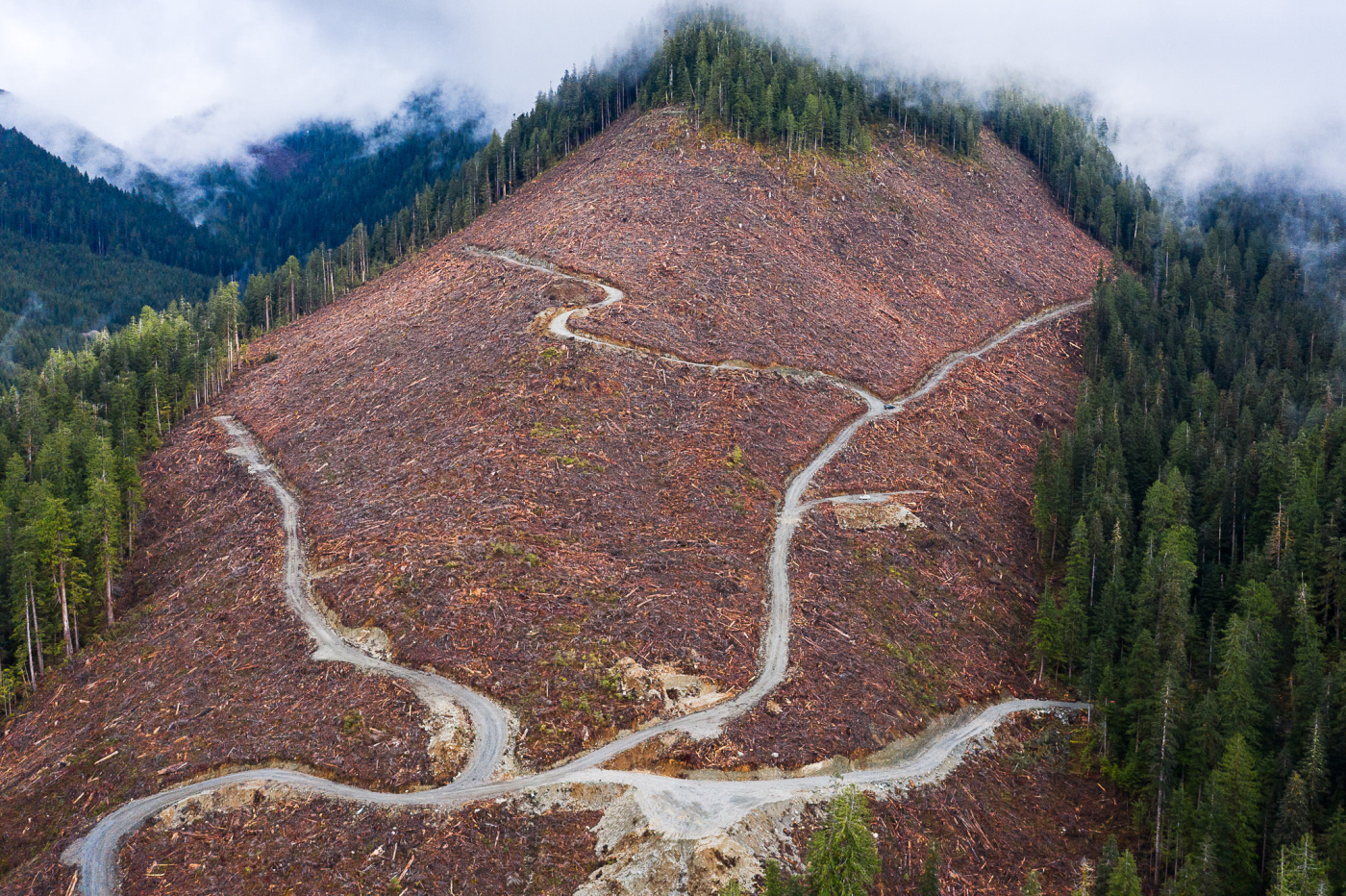
TJ Watt2026-10-26 15:06:162026-10-26 15:06:16Victoria Buzz: Environmental advocates concerned over results of BC election
Related Posts
https://ancientforestalliance.org/wp-content/uploads/2026/09/Old-Growth-Clearcut-Caycuse-Vancouver-Island.jpg
1364
2048
TJ Watt
https://ancientforestalliance.org/wp-content/uploads/2026/05/Ancient-Forest-Alliance-logo.svg
TJ Watt2026-10-26 15:06:162026-10-26 15:06:16Victoria Buzz: Environmental advocates concerned over results of BC election https://ancientforestalliance.org/wp-content/uploads/2026/10/Screenshot-2026-10-22-at-4.54.32-PM.png
952
1684
TJ Watt
https://ancientforestalliance.org/wp-content/uploads/2026/05/Ancient-Forest-Alliance-logo.svg
TJ Watt2026-10-22 16:54:062026-10-22 16:59:41NEW Video: BC Election 2026: Nature & Old-Growth Protection
 https://ancientforestalliance.org/wp-content/uploads/2026/10/Before-After-Caycuse-TJ-Watt-4-scaled.jpg
1915
2560
TJ Watt
https://ancientforestalliance.org/wp-content/uploads/2026/05/Ancient-Forest-Alliance-logo.svg
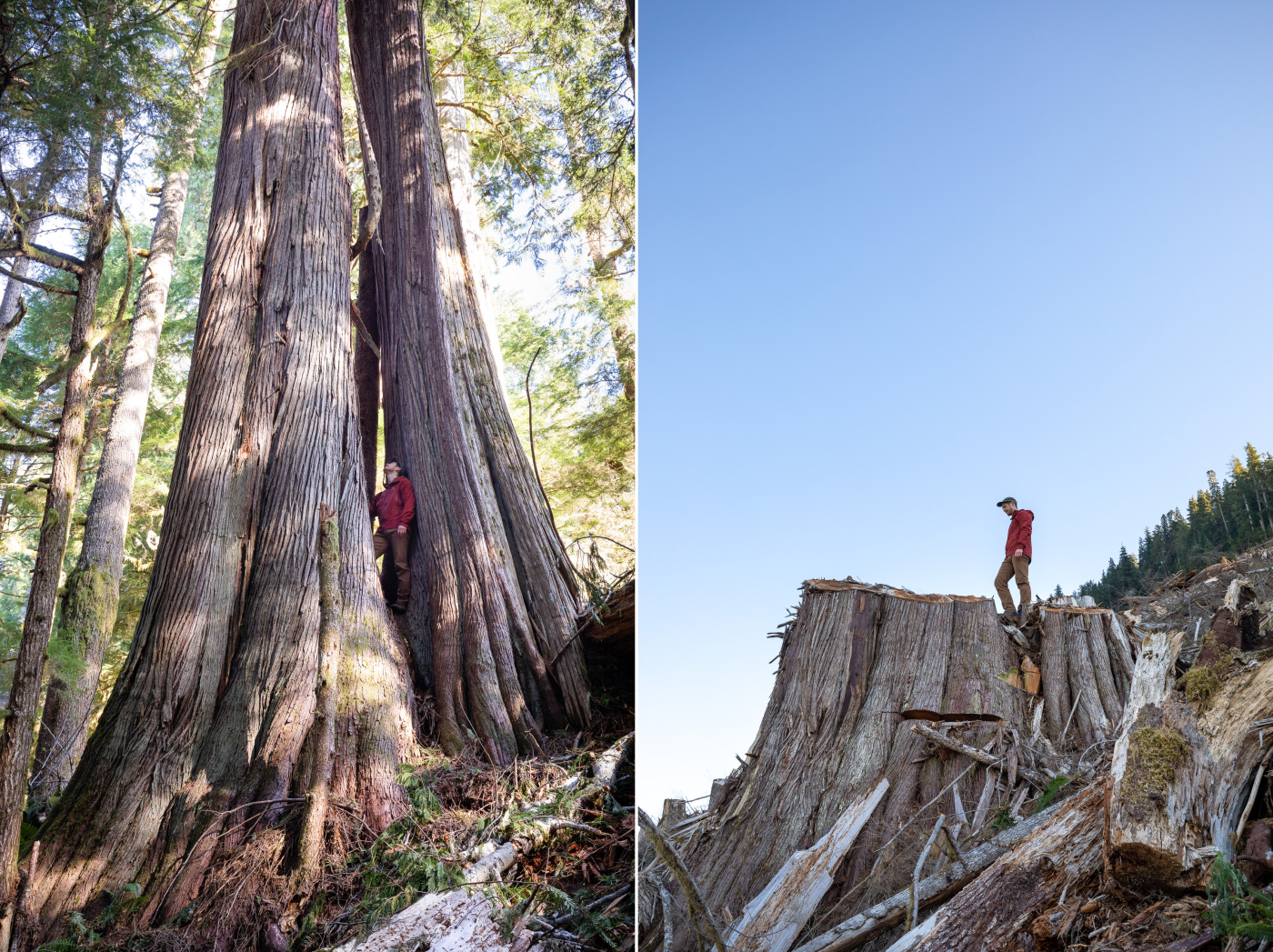
TJ Watt2026-10-16 17:36:002026-10-21 13:40:23BC Election 2026: Where do Parties Stand on Nature & Old-Growth?
 https://ancientforestalliance.org/wp-content/uploads/2026/10/BC-Election-2026-Banner-1-1-scaled.jpg
1439
2560
TJ Watt
https://ancientforestalliance.org/wp-content/uploads/2026/05/Ancient-Forest-Alliance-logo.svg
TJ Watt2026-10-09 18:16:372026-10-16 17:44:41Where do BC’s Major Political Parties Stand on Nature Protection?
Take Action
 Donate
Support the Ancient Forest Alliance with a one-time or monthly donation. Send a Message
Send an instant message to key provincial decision-makers.
East Creek Investigation Finds Clearcutting Rare Intact Old-Growth on Vancouver Island in Compliance with Laws, Highlighting BC Government Failure to Protect Endangered Rainforest
/in News CoverageVICTORIA—The BC government’s Forest Practices Board (FPB) released its findings today regarding Sierra Club BC’s May 2016 complaint about Lemare Lake Logging Ltd.’s logging practices in the East Creek area. East Creek is located adjacent to the Mquqᵂin – Brooks Peninsula Provincial Park, in Kwakwaka’wakw territory and forms part of the largest remaining contiguous ancient rainforest on northern Vancouver Island.
Sierra Club BC visited East Creek in the fall of 2015 and documented the devastation of ancient rainforest, including the use of blasting charges, in an area known as important habitat for salmon, marbled murrelet and northern goshawk and important First Nations cultural values, leading to the complaint and investigation.
“The scope and scale of the ancient rainforest destruction in this incredible watershed is unimaginable. They were logging more than one Cathedral Grove in the last two years alone,” said Mark Worthing, Sierra Club BC’s Forests & Biodiversity Campaigner. “The liquidation of East Creek’s ancient rainforest is being permitted for government revenue in form of stumpage fees between $0.33 and $1.33 per cubic metre. This is a terribly short-sighted decision.”
The FPB investigation considered two questions: whether the licensee complied with the Forest Range Practices Act (FRPA) and the Vancouver Island Land Use Plan (VILUP) and whether the licensee provided the complainant with reasonable access to site plans (SPs). The Board concluded that the licensee complied with FRPA and VILUP while conducting its operations. On the second question, the licensee was found to be in non-compliance in not providing the the complainant with reasonable access to SPs “on request at any reasonable time” as required by FRPA.
“British Columbians have the right to know what’s happening in the forests around us, yet it took us six months to access the information the public is legally entitled to. This makes it impossible for the public to document ecological and cultural values that could be at risk as a result of proposed logging. We’ll be waiting to see what action the government takes to respond to this violation of FRPA,” said Worthing.
Sierra Club BC is very concerned but not surprised about the conclusion of the FPB that East Creek logging is in compliance with FRPA and VILUP. “The East Creek investigation confirms what we feared: while blasting roads and clearcutting approximately 1,000 hectares of the last intact old-growth rainforest on Northern Vancouver Island in the last 10 years is inconsistent with good forest management practices, it is consistent with BC’s Forest Range Practices Act and the Vancouver Island Land Use Plan,” said Jens Wieting, Sierra Club BC’s Forest and Climate Campaigner. “Provincial laws and the Vancouver Island land use plan are failing to protect forest integrity and we urgently need additional protection and improved forest management to safeguard the web of life as we know it.”
There is growing support for protecting the remaining endangered old-growth rainforest and shifting to sustainable second-growth forestry on Vancouver Island, including from municipalities, chambers of commerce and a number of First Nations and unions. Sierra Club BC warned in 2016 that a 12 per cent increase in the annual old-growth logging rate on the island (recently at 9,000 hectares per year) will lead to an ecological and economic collapse.
The most productive types of rainforest ecosystems, with the biggest trees, unique habitat and tourism values are now in their single digits of remaining old-growth. At the same time second-growth forests are being clearcut at a young age, often at less than sixty or eighty years, allowing no recovery of old-growth characteristics across vast areas on Vancouver Island.
“The East Creek investigation shows everything that is wrong with rainforest conservation and management on Vancouver Island – BC’s forestry regulation has no consideration of how little intact rainforest is left on the island and there is no legal impediment to logging the last old-growth trees outside of protected areas,” said Wieting.
“The East Creek investigation makes clear that we have no regulatory framework to protect the last of the last remaining intact coastal temperate rainforest,” said Wieting. “Whoever forms the next government has their work cut out to prevent the unfolding ecological and economic catastrophe on the island. We need a moratorium to safeguard biodiversity hotspots as new protected areas and new conservation tools to set aside critical endangered rainforest stands and habitat aside across the landscape.”
Solutions for healthy forests and healthy communities similar to those developed in the Great Bear Rainforest are needed along the entire BC coast, not just one part of it. East Creek and the Central Walbran are among the most important examples of intact, unprotected, productive coastal old-growth on Vancouver Island that need immediate action or will be lost forever.
Sierra Club BC supports sustainable second growth harvesting and local, value-added processing that creates a higher number of jobs per cubic metre, such that we can sustain healthy forest-based communities and local forestry jobs into the future.
To read more, visit https://sierraclub.bc.ca/east-creek-investigation-highlighting-bc-government-failure-to-protect-endangered-rainforest/
April 12: Rally for Sustainable Forestry in Victoria (12 noon, Legislature)
/in AnnouncementsHey Vancouver Island friends! Come join the Ancient Forest Alliance, as we support the Public and Private Workers of Canada (PPWC – formerly the Pulp, Paper, and Woodworkers of Canada) who are organizing a sustainable forestry rally in Victoria on Wednesday, April 12 (Legislature, noon) to protect old-growth forests, ensure a value-added sustainable second-growth forest industry, and to end the export of raw logs from BC! Thanks to PPWC forestry officer Cam Shiell, president Arnold Bercov and their PPWC team for organizing this! See more details: https://bit.ly/2nJPPEi
Old Growth Forests – Logging Versus Tourism on Vancouver Island
/in News CoverageThe passing of resolutions at the Union of British Columbia Municipalities (UBCM) convention last fall had been quite routine until Councillor Andy MacKinnon from Metchosin stood up. He asked that his resolution – calling for a ban on the logging of old growth forests on Vancouver Island – be moved up in priority to ensure it was discussed and voted on. From then on, things got really interesting. It quickly became apparent that a profound shift in perspective on this issue was taking place among the municipalities gathered in the room.
The logging of old growth forests in British Columbia has been a highly-charged issue, emotionally and politically, since at least the 1970s. This is particularly true on Vancouver Island, home to outstanding old growth stands of the Pacific temperate rainforest. The most well-known example is Cathedral Grove, which the highway to Port Alberni, Ucluelet, and Tofino bisects. If you’ve never experienced this remnant of an ancient Douglas-fir forest, picture walking among trees hundreds of years old, some even reaching to 800 years in age, and towering 80 metres above your head.
Vancouver Island is approximately 32,134 square kilometres (3.2 million hectares) in area. Of this, 1.9 million hectares are publicly-owned forest lands, of which the provincial government has classified approximately 840,000 hectares as old growth forests – that is, having trees over 250 years old. Hence, their estimations of the amount of remaining old growth includes high alpine and low swampy sites where the trees have little or no commercial value.
The magnificent and massive giants found on the richest growing sites have been the mainstay of the coastal forest industry from its earliest beginnings back in the late 1800s. In turn, their liquidation has brought considerable prosperity to island communities. But, decades of logging have left fewer and fewer stands intact.
With environmental groups warning that Vancouver Island’s old growth forests are on the brink of ecological and economic collapse, it’s not surprising that municipalities have begun to pay more attention to what has become an increasingly rare and valuable resource. Many are beginning to realize that they are not getting the most benefit from cutting down the last of the great stands; and, instead, are starting to see greater value in protecting them.
An Important Shift in Thinking
This represents a very significant shift in thinking among the municipalities, as historically they have been strong allies of the forest industry. According to a survey conducted by UBCM in 2015, perhaps as many as 80 percent of their membership considered their communities to be forestry dependent. But, the survey also revealed something much more important and telling. Nearly 85 percent of the respondents expressed deep frustration and anger with the lack of adequate consultation and engagement with their communities by forest companies operating around them. There were simply too many cases where forest companies cut down surrounding stands with no consultation whatsoever, leaving communities to deal with the social, economic, and ecological impacts.
Not surprisingly, forestry was a hot topic at the convention. In fact, an entire session was devoted to forest policy decision making and the need for greater community consultation. More than half of all the convention delegates crowded into the room to hear what was said and to voice their concerns. Additionally, eight of the 55 resolutions in support of existing policy dealt with the impacts of logging on local watersheds and airsheds. As might be expected, all urged the provincial government to involve local government directly in the forestry decision making – and all passed handily.
For its part, the forest industry has been caught off guard by the sudden shift in attitude toward it. The Ahousaht First Nation in Clayoquot Sound may have been the first to lead the shift. In October 2015, their chiefs called for an end to industrial scale logging in its traditional territory. Then, in April of this year, the Association of Vancouver Island and Coastal Communities (AVICC) passed a resolution at their AGM asking the provincial government to amend the Vancouver Island Land Use Plan to protect all of Vancouver Island’s remaining old growth forests found on publicly-owned land. Next came the BC Chamber of Commerce, which passed a resolution at their May convention calling for a ban on old growth logging throughout the province, wherever these trees would have greater net economic value left standing.
“It just boils down to basic math,” said Dan Hager, president of the Port Renfrew Chamber of Commerce, who sponsored the resolution. “This is not a comment about logging. It’s about economics and marketing.”
Hager’s resolution arose from personal experience and from that of other business people in the small isolated village on the outer coast of southern Vancouver Island. He and they saw a near instant and large jump in tourism in 2012 with the protection of Avatar Grove – a stunning array of massive red cedars displaying strange twisted and contorted burls. For a town that was largely established on the coat- tails of logging, but had seen the end of the glory days, the steady, year-round flow of tourists keen on seeing big trees is a huge shot in the arm for the community.
Hager figures that the demand for accommodation alone has grown by as much as 75 to 100 percent over the past three to four years.
A Larger Scale
With this kind of traction, it was probably inevitable for a similar resolution to be presented at the UBCM convention and that it was sponsored by the Municipality of Metchosin’s Councillor Andy MacKinnon, who had put forward the initial resolution to the AVICC a few months earlier.
It was after voting on the first block of resolutions when Councillor MacKinnon stepped to a floor microphone and asked that his resolution calling for a ban on the logging of old growth forests on Vancouver Island be moved up in priority to ensure it would be debated and voted on.
At the moment, it had been listed as the very last resolution with many others stacked in front of it.
At first, he was told that this wasn’t possible; but then, the chair changed his mind and said this was only possible if the members voted 60 percent in favour of doing so. A vote was quickly held, demonstrating that a large majority supported the escalation in priority. When it came to his turn to speak his resolution, MacKinnon lost no time in calling into question the facts and figures provided by the provincial government and used by the UBCM’s resolution committee to support its recommendation that his resolution be viewed as strictly a regional issue and dealt with at that level.
Drawing on his near 30 years of experience within the Ministry of Forests, MacKinnon suggested that the figures were inflated and not based on any research that he knew of. The reality, he said, was vastly different as any look at satellite photos of southern Vancouver Island makes so startlingly clear. There are no stands of old growth forests on productive sites left on the eastern side of the island, and only a few remain on the more rugged and sparsely populated western side.
During the following debate, three or four members spoke against the resolution. Councillor Charlie Corneld from Campbell River was among them. He reminded everyone that many communities on Vancouver Island were still dependent on the logging of old growth. But, the angriest was Councillor Al Siebring from North Cowichan who fumed: “We wonder why so many of the resolutions we send to senior levels of government get blown off. It’s because we’re not sticking to our knitting.” He made it abundantly clear that he felt that the issue of old growth logging was outside the municipal mandate and shouldn’t be endorsed by the UBCM.
Nevertheless, it was abundantly clear that an overwhelming majority of members supported the resolution, which was well demonstrated in the following vote.
An Ongoing Battle
The passing of this resolution (and the others like it) has delivered a hard gut punch to the forest industry on Vancouver Island. Historically and generally speaking, the members of the UBCM and B.C. Chamber of Commerce have been allies of the industry. From the industry’s point of view, the problem was simply that these people just didn’t have all the “real” facts and needed to be educated. The industry maintains that 55 percent of the B.C.’s coastal old growth forests are already protected, and that this percentage will only increase over time owing to good conservation practices outside of protected areas. MacKinnon disagrees, pointing out that much of what has been protected are high alpine forests of no interest to the forest industry and that less than six percent of Vancouver Island’s old growth forests found on productive growing sites remain. Even those are being cut down at a rate of about 9,000 hectares a year. He notes that it’s just a matter of time before the industry runs out of big trees and is forced to make the transition to harvesting and milling second growth stands of smaller trees. A ban on logging old growth forests on Vancouver Island would speed the transition along.
“Although it wasn’t specially mentioned in the resolution,” he points out, “the idea of natural capital and eco- system services is rejected in the ‘where as’ clauses. At the time, the Gibsons’s approach to natural capital wasn’t widely known. They had a workshop on it as part of the convention, which I attended, and I came away really admiring what they are doing. I think what was going through people’s minds, as they were overwhelmingly supporting the resolution, I’m sure they were thinking about their communities and there is a strong interest in the idea of natural capital among them. So, that discussion is going to continue.”
For the forest industry and provincial government, this discussion likely means more trouble with recalcitrant municipalities determined to protect and maintain natural ecosystems that provide so many benefits to their communities.