Ancient Forest Alliance
  • Home
  • About Us
        • The six AFA team members stand beside each other in front of an old-growth Douglas-fir tree.
        • Our Mission & Team
        • History & Successes
        • Work With Us
        • Contact Us
  • Our Work
    • Campaigns
    • Building Alliances
    • Activity Reports
  • Ancient Forests
    • Hiking Guides
    • Old-Growth 101
    • Old-Growth Forests in BC: FAQs
    • Before & After Old-Growth Maps
    • Myths & Facts
    • Directions to Avatar Grove
    • Port Renfrew Big Trees Map
  • Recent News
    • Recent News
    • Media Releases
    • Research & Reports
    • Publications
    • Educational
  • Photos & Media
        • Map of Gallery Locations
        • Themes
          • Biggest Trees
          • Biggest Stumps
          • Low Productivity Old-Growth
        • Videos
        • Vancouver Island North
          • East Creek Rainforest
          • Klaskish Inlet
          • Quatsino
            • Grove of Giant Cedars Clearcut in Quatsino Sound
            • Quatsino Old-Growth Under Threat 2023
            • Mahatta River Logging
          • Spruce Bay
          • Tsitika Valley
          • White River Provincial Park
        • Vancouver Island Central
          • Barkley Sound
            • Vernon Bay
          • Clayoquot Sound
            • Canada’s Most Impressive Tree – Flores Island
            • Flores Island
            • Meares Island
            • Sydney River Valley
          • Cortes Island
            • Children’s Forest
            • Squirrel Cove Ancient Forest
          • Nootka Island
          • Port Alberni
            • Cameron Valley Firebreak
            • Cathedral Grove Canyon
            • Juniper Ridge
            • Katlum Creek
            • Nahmint Valley
            • Nahmint Logging 2024
            • McLaughlin Ridge
            • Mount Horne
            • Taylor River Valley
          • Tahsis
            • McKelvie Valley
            • Tahsis: Endangered Old-Growth Above Town
        • Vancouver Island South
          • Carmanah
            • Climbing the Largest Spruce in Carmanah
            • Carmanah Research Climb
          • Caycuse Watershed
            • Before & After Logging – Caycuse Watershed
            • Before and After Logging Caycuse 2022
            • Caycuse Logging From Above
            • Lower Caycuse River
            • Massive Trees Cut Down
          • Klanawa Valley
          • Koksilah
          • Mossy Maples
            • Mossy Maple Gallery
            • Mossy Maple Grove
          • Port Renfrew
            • Avatar Boardwalk
            • Avatar Grove
            • Big Lonely Doug and Clearcut
            • Bugaboo Ridge Ancient Forest
            • Eden Grove
            • Exploring & Climbing Ancient Giants
            • Fairy Creek Headwaters
            • Granite Creek Logging
            • Jurassic Grove
            • Loup Creek
            • Mossome Grove
            • Mossome Grove Tree Climb
          • Walbran Valley
            • Castle Grove
            • Central Walbran Ancient Forest
            • Hadikin Lake
            • Walbran Headwaters At Risk
            • Walbran Overview
            • Walbran Logging
        • Haida Gwaii
          • Haida Gwaii 2013
          • Yakoun Lake Old-Growth
          • Yakoun River Old-Growth Forests
        • Sunshine Coast
          • Day Road Forest
          • Mt. Elphinstone Proposed Park Expansion
          • Powell River
            • Eldred River Valley
            • Mt. Freda Ancient Forests
          • Roberts Creek Headwaters
          • Stillwater Bluffs
        • Inland Rainforest
          • Ancient Forest/ Chun T’oh Whudujut Provincial Park
          • Parthenon Grove
        • Mainland
          • Echo Lake
          • Kanaka Bar IPCA Proposal
  • Take Action
    • Send A Message to the BC Government
    • Sign a Resolution
  • Store
  • Donate
  • Click to open the search input field Click to open the search input field Search
  • Menu Menu
  • Store
  • Donate

Blog Archive Layout

The Narwhal: BC election results: no clear winner. What could that mean for nature and climate?

Oct 20 2024/in News Coverage

Oct. 20, 2024
The Narwhal

By Shannon Waters

Original article here.

Results show the BC NDP and the BC Conservatives in a neck-and-neck battle. With some ridings too close to call, British Columbia may be looking at another minority government

After a nail-biting preliminary vote count that saw a tense tug-of-war between the BC NDP and BC Conservatives, there is still no definitive winner in British Columbia’s 2024 election. With a few ridings too close to call, the make-up of the next BC government is in limbo — and the BC Greens could once again end up holding the balance of power.

As of Sunday, David Eby’s NDP had won or were leading in 46 seats while the BC Conservatives, led by John Rustad, had 45, electing MLAs for the first time in almost 50 years. It’s a far cry from 2020, when the Conservatives ran 19 candidates, didn’t elect a single MLA and won less than two per cent of the provincial vote. The final BC election results won’t be known for about a week.

In his election night speech, Rustad reflected on his party’s historic result, telling the crowd, “we have now elected already the largest number of Conservatives in BC’s history.”

“If we’re in that situation of the NDP forming a minority government, we will look at every single opportunity from day one to bring them down at the very first opportunity and get back to the polls,” Rustad said.

While Rustad did not offer an olive branch to the majority of British Columbians who did not cast a ballot for his party, Eby emphasized the need to find common ground.

“We disagree on many things, John Rustad and I, there’s no question, but I will absolutely acknowledge that he spoke to the frustrations of a lot of British Columbians — frustrations about the cost of daily life, frustrations about crime and public safety — and we can agree on these things.”

Eby also said his party is committed to working with the BC Green caucus and that “our whole province deserves a premier that’s going to bring us together, not drive us apart.”

The BC Greens won two seats, the same number they held in the last government, but party leader Sonia Furstenau lost to incumbent NDP MLA Grace Lore in Victoria-Beacon Hill.

“It’s not the outcome that we hoped for in Victoria-Beacon Hill,” a visibly disappointed Furstenau told supporters. “It does appear that the Greens are still going to play a pivotal role in the BC legislature. It’s a strange time in politics when during an atmospheric river people come out and vote for a party that’s denying the reality of climate change. But hey, this is where we’re at.”

Despite the loss of their leader from the legislature, it could be déjà-vu for the Greens, who in 2017 brokered an agreement with the BC NDP to allow the NDP, which didn’t garner enough votes for a majority, to govern.

The two Greens who were elected, neophyte MLAs Jeremy Valeriote in West Vancouver-Sea to Sky and Rob Botterell in Saanich North and the Islands, may have to decide if they are going to support the BC NDP or the BC Conservatives, allowing one of the two parties to form government. Furstenau, who told supporters she plans to advise the new Green caucus, could play a key role in brokering such an agreement.

Regardless of how many seats the BC Conservatives end up with once the results are finalized, the outcome represents a stunning win for the upstart party, which will have a far more visible role for the next four years.

The BC Conservatives campaigned on a promise to restore “common sense” in BC and set a new course for the province, primarily by eliminating or changing policies implemented by the BC NDP government during its seven years in office. While gradually rolling out his party’s election platform, Rustad was frequently asked to respond to controversial and offensive statements made by his candidates — from racist, misogynistic and homophobic comments on social media to support for conspiracy theories and climate skepticism. (Rustad himself was booted out of the BC Liberal caucus in 2022 for questioning climate change science.)

Eby and his party spent much of the election campaign criticizing the BC Conservatives and casting doubt on their fitness for office, while campaigning primarily on housing, affordability and healthcare issues. Pressing environmental issues — including the logging of old-growth forests, the expansion of the province’s new LNG export sector and meeting a commitment to protect 30 per cent of the province by 2030 — took a distant backseat.

The three parties spent weeks presenting their visions for BC — visions that often offered competing views of what the province needs and where the government’s priorities should lie.

The difference between the BC NDP and the BC Conservatives is especially stark on climate action, protected areas and old-growth logging issues, although the parties’ platform promises are surprisingly similar on other issues like LNG development. The BC Greens, on the other hand, pledged to end new approvals for LNG projects, phase out fracking and “commission a comprehensive and independent health impact assessment to evaluate the health effects of LNG and fracking activities in BC.”

So what lies ahead for climate action and nature in BC? Will the province stay the course — or can we expect radical changes? Is it full-steam ahead for LNG? What will happen to old-growth forests, protected areas and at-risk species?

Read on for a breakdown of the key contrasts and similarities between the two parties in a neck and neck race to form BC’s next government — and what the Greens have to say as well.

Rustad says a Conservative government will repeal the Declaration on the Rights of Indigenous Peoples

Despite voting for the Declaration on the Rights of Indigenous Peoples Act when he was a BC Liberal MLA, Rustad has promised to repeal the legislation. The Conservative platform promised to replace it with a new law to advance “economic reconciliation and Indigenous autonomy” and claimed the NDP’s implementation of the act “has stalled Indigenous-led development in industries like mining, forestry, natural gas and other sectors.”

On the campaign trail, Rustad frequently referenced his experience as Aboriginal relations minister with the BC Liberal government and the hundreds of agreements the province secured with First Nations during those years.

The Tŝilhqot’in National Government and the First Nations Leadership Council denounced the Conservative position in public statements.

Two days before voting day, the leadership of five Dakelh Nations, whose territory covers four provincial ridings — including Rustad’s Nechako Lakes seat — released a statement urging members to vote for candidates who “understand the important roles and responsibilities First Nations people and our governments have in north-central BC.”

“We do not have confidence in the leader of the BC Conservative Party, who focuses on all the wrong things,” the leaders wrote, warning that under a BC Conservative government, “First Nations human rights will be challenged and violated.”

Eby and the NDP also criticized the Conservative pledge to repeal the declaration while promising to stay the course on commitments to Indigenous Rights, also pledging to work with First Nations on conservation goals and economic development.

During a televised leaders’ debate in early October, Eby said he would not re-introduce proposed changes to the Land Act. The changes were intended to better align the Land Act with the Declaration on the Rights of Indigenous Peoples by creating a pathway for the province to make joint decisions with First Nations about public land use.

Rustad described the potential changes as “an assault on your private property rights and our shared rights to use Crown land,” drawing condemnation from former Green Party MLA Adam Olsen and First Nations leaders.

In February, Nathan Cullen, the minister responsible for developing the proposed changes, announced the plan was being shelved, pending further consultation. (Cullen lost his Bulkley Valley-Stikine riding to the Conservatives.)

Following the furor, the NDP government took a more circumspect approach to reconciliation efforts in the natural resource and conservation spheres.

In June, the province announced a massive new protected area in Clayoquot Sound, covering 1,639 square kilometres, to be managed by the Ahousaht and Tla-o-qui-aht First Nations. The announcement came with little fanfare — just a news release and scant acknowledgement from the NDP caucus.

The former NDP government frustrated Gitanyow Hereditary Chiefs by backtracking on plans to temporarily pause new mineral claims in the Medizian watershed in northern BC, partly due to concerns about Indigenous Rights becoming a flashpoint ahead of the election.

“I have no interest in Rights and Title and reconciliation just being a political football in the midst of a provincial campaign like they were 20 years ago,” Cullen said on a June call between BC ministers and Gitanyow representatives. The recording was reviewed by The Narwhal and quoted in a press release from the Gitanyow Hereditary Chiefs.

The BC NDP committed to protecting 30 per cent of BC’s land base by 2030; Rustad called the effort ‘nonsense’

The BC NDP remains committed to achieving the global 30-by-30 conservation target, but has yet to make much progress on the pledge. The BC Conservatives plan to abandon the province’s commitment to protecting 30 per cent of BC’s land by 2030. In an interview with The Narwhal in May, Rustad called the commitment “nonsense.”

At the United Nations biodiversity conference in December 2022, Canada and 195 other countries committed to conserve at least 30 per cent of land and water globally by 2030 as part of international efforts to reverse the unprecedented decline of biodiversity.

In 2022, Eby tasked Cullen, in his former role as minister of water, land and resource stewardship, with working to achieve the 30-by-30 goal. As of the end of last year, the government claimed 19.7 per cent of BC is protected — although limited development and industrial activity is allowed in some areas, and critics say some areas in the tally fail to meet biodiversity goals.

BC Conservatives have promised a stand-alone law to protect at-risk species, something the NDP once promised but never delivered

The BC Conservatives platform said the NDP government had underfunded and mismanaged wildlife in the province, leading to declines in “iconic ungulate species.” The BC Conservatives promised to introduce “made-in-BC species at risk legislation so wildlife protections are shaped by BC-based experts — not Ottawa — and are reflective of our unique ecosystems.”

In its 2017 campaign platform, the BC NDP also committed to bring in a provincial law governing endangered species. But it quietly reneged on that promise after coming to power.

The party’s platform this time around made no mention of legislation to protect at-risk species — something both the BC Greens and BC Conservatives promised to introduce. Instead, the NDP committed to working with First Nations and other partners on a “made-in-BC strategy” to protect biodiversity and watersheds.

There are 1,952 species and ecosystems officially at some risk of extinction in the province, according to the BC government’s conservation data centre — and advocates say the province’s lack of stand-alone legislation to protect species at risk of extinction remains a glaring gap.

Late last year, the NDP government released a draft biodiversity and ecosystem health framework. It said the framework would set the direction “for a more holistic approach to stewarding our land and water resources” and eventually lead to legislation to protect biodiversity.

The party initially aimed to finalize the strategy by the spring, but it was still in limbo when the election campaign kicked off in September.

Both support LNG development — but BC Conservatives have pledged to go all in

Over the past seven years, the BC NDP government has championed the development of a liquid natural gas (LNG) export industry in BC. The party claimed stringent emission standards would allow the province to reap economic benefits while still meeting its carbon emission reduction targets — a goal critics say is impossible to achieve.

Like the BC Conservatives, the NDP maintains natural gas will displace more carbon-intensive coal-fired electricity in countries on the other side of the Pacific Ocean. But the claim LNG is a crucial transition fuel for the world is widely disputed by critics, who point out that countries like China are outpacing most nations in developing renewable energy projects despite their reliance on coal. The benefits of LNG are also disputed in a new peer-reviewed study, which found exported gas has a larger carbon footprint than coal.

Under Eby’s leadership, the government approved Cedar LNG — a Haisla Nation-led liquefaction and export facility that will receive gas from the Coastal GasLink pipeline owned by TC Energy. In Squamish, BC, Woodfibre LNG, a project majority owned by Indonesian billionaire Sukanto Tanoto’s Pacific Energy Corporation, is now under construction. Combined, the two facilities will produce about five million tonnes per year.

Four other LNG projects are undergoing environmental assessments, including the Ksi Lisims LNG project. If approved, they could produce another 30 million tonnes of LNG per year.

The Prince Rupert Gas Transmission pipeline — in the preliminary stages of construction — would ship mostly fracked gas from northeast BC to Ksi Lisims. Whichever party forms government will soon have to decide if the pipeline, the subject of a blockade, will require a new environmental assessment.

The BC Conservatives promised to double the province’s liquefied natural gas (LNG) production by approving proposed LNG projects while the NDP’s election platform only mentioned LNG once, saying some of the revenue raised from fossil fuel projects will be directed into a “clean economy transition fund” to help “attract even more global investment in renewable fuels, clean tech, manufacturing and critical mineral mines.”

Asked twice during a recent press conference whether his party would approve more LNG projects if re-elected, Eby avoided a direct answer.

“LNG or any other project, it needs to fit within our commitments around carbon pollution and for our energy action framework that means a realistic plan to be net zero by 2030, lifting up communities and creating opportunities for British Columbians,” Eby said in response to a question from The Narwhal.

Both parties have promised to eliminate the consumer carbon tax — but the BC NDP included a caveat

A key plank of the BC Conservative platform was to eliminate “any and all” carbon taxes for both consumers and industry. Rustad has called carbon pricing “an economic disaster and an environmental failure” that “drives up costs on everything from groceries to gas, hitting families and businesses hard while doing absolutely nothing to lower emissions.”

Getting rid of the provincial carbon tax means BC will be subject to the federal carbon pricing regime — but the consequences for the province are unclear. After Saskatchewan Premier Scott Moe announced his province would no longer collect the federal carbon tax on natural gas, Prime Minister Justin Trudeau said the Canada Revenue Agency would assess ways to collect the withheld funding from the province. (An impending federal election could also shift the fate of the federal carbon pricing program.)

The BC Conservatives estimated eliminating the carbon tax would cost the government $3 billion in lost revenue.

Most of BC’s carbon tax revenue is returned to residents through the provincial climate action tax credit, which is income-tested. The Finance Ministry estimated 65 per cent of BC households will receive the quarterly credit this year, while 80 per cent are expected to get the credit by 2030.

The BC NDP flip-flopped on BC’s consumer carbon tax last month when Eby — who publicly supported the tax earlier this year — told reporters his government would “end the consumer carbon tax in British Columbia.”

But the promise came with a caveat. Eby said an NDP government would eliminate the tax if the federal government removes a carbon pricing requirement. Federal Conservative Party Leader Pierre Poilievre has promised to “axe the tax” if his party forms government after the next federal election — a position now supported by the federal NDP.

Unlike the Conservatives, the BC NDP isn’t talking about removing the carbon tax for industry. “We will ensure that the big polluters pay a carbon price in our province to make sure that we’re taking action on climate change,” Eby said in September.

What happens next with BC election results?

Recounts will automatically take place in ridings where the top two candidates are separated by 100 votes or fewer. This year, automatic recounts will take place in Juan de Fuca-Malahat and Surrey City Centre.

The final count — which includes mail-in ballots received after advance voting closed, along with some absentee ballots — will take place on Oct. 26. Typically, the final count includes about two per cent of ballots in any election.

Even if the final result shifts the seat count in favour of the BC Conservatives, Eby will likely get a chance to try to retain the confidence of the house and his party’s position in government — something former BC Liberal premier Christy Clark tried and failed to do in 2017.

In order to win that confidence vote, the NDP may try to secure support from the two-person BC Green caucus, either through a formal confidence and supply agreement, as in 2017, or in an informal arrangement.

If the NDP and Greens align to shut the Conservatives out, the party may be unable to form government. But if the confidence vote goes against the NDP, the Conservatives could have the opportunity to form government.

https://ancientforestalliance.org/wp-content/uploads/2024/10/BC-2024-OCT2024-Election-McLeod.jpeg 1319 2550 TJ Watt https://staging.ancientforestalliance.org/wp-content/uploads/2014/10/cropped-AFA-Logo-1000px.png TJ Watt2024-10-20 10:29:262024-12-12 12:02:46The Narwhal: BC election results: no clear winner. What could that mean for nature and climate?

The Tyee: Why Both Parties Are Wrong about BC’s Forestry Crisis

Oct 17 2024/in News Coverage

October 17, 2024
Ben Parfitt
The Tyee 

Original article here.

The problem isn’t red tape; it’s a lack of trees. 

Conservative Party of BC Leader John Rustad has a long association with the forest industry in British Columbia. His family ran a sawmill in Prince George and Rustad headed his own forest consulting firm.

The Conservatives say the forest industry is central to the province’s economic well-being — and many rural communities in Rustad’s own riding of Nechako Lakes.

The huge riding west of Prince George includes Houston, Burns Lake, Vanderhoof and Fort St. James, mill towns where prodigious quantities of logs have for decades been turned into lumber in local sawmills.

On its website, the Conservative party calls the province’s forest industry “the envy of the world.” The party goes on to say that that industry “is 100 per cent sustainable and renewable and supports tens of thousands of high-paying jobs across the province.”

But the industry is in trouble because it can’t get enough trees to cut down.

Rustad blames government. Access to trees to log has become “a slow, complex and costly ordeal,” Rustad states on the BC Conservative website.

Rustad has hammered on the image of an industry crippled by bureaucratic red tape for some time.

“This BC NDP government’s inability to get forestry permits done is killing well-paid union jobs and independent jobs, all across British Columbia,” Rustad said more than a year ago. “They are just not issuing permits. BC Timber Sales is not putting wood out for tenure.”

It is a criticism that has caught the NDP’s attention.

The party says it intends to bring “efficiencies to the permitting process with a goal of granting faster access to timber processing.” The NDP singles out BC Timber Sales — a timber-auctioning program administered by the provincial Ministry of Forests where, on paper at least, about 20 per cent of the trees logged annually in B.C. originate — as the potential bottleneck. The NDP says it would address that by “completing a full review of BC Timber Sales to improve access to public timber.”

The boom

To unpack this, let’s start with the assertion that the province’s forest industry is the envy of the world. The actions of B.C.’s largest forest company, Canfor, suggest otherwise.

Twenty years ago, Canfor opened a refurbished sawmill in Houston, a manufacturing facility so technologically advanced that it could produce 25 per cent more lumber than the until-then world’s largest sawmill in Germany.

A two-hour drive to the southeast of Houston, the Plateau sawmill is also operated by Canfor and lies a short distance from the community of Vanderhoof.

Between them, the two mills in Rustad’s riding churned through millions of logs annually at a time when, throughout B.C.’s vast Interior, logging rates were soaring to levels never before seen.

The logging spike of 20 years ago was a response to an “eruptive” mountain pine beetle outbreak spurred on by climate change, with the provincial Ministry of Forests giving Canfor and other companies the green light to cut down as many of the beetle-attacked and now dead trees as they could before they lost their value as sources of high-quality wood fibre.

The ensuing logging would see tens of millions of additional trees logged, many of them attacked by beetles, many of them not.

The bust

It was well understood by both the forest companies and the Ministry of Forests that regulated them that the upswing in logging could not be sustained. A future course correction was inevitable and would see logging rates come down sharply.

That course correction is now well advanced, likely not over, and happening everywhere, including in Rustad’s backyard.

Logging rates are falling because there simply aren’t the good trees to cut down that there once were. What forests remain unlogged are far enough away from the mills that companies are reluctant to or refuse to log them because of the high costs.

A growing amount of forest is also undesirable to log because of the extensive wildfires in recent years and the inventory of older, beetle-attacked forests that companies simply aren’t logging.

It would take less than 20 years for Canfor’s super-mill in Houston to run so short of logs that the company’s executives decided to pull the plug, announcing in January 2023 that they would close the facility early that spring.

Then, last month, Canfor announced that its Plateau sawmill would soon join the burgeoning number of mills closed by the company in recent years, including pulp mills in Prince George and Taylor, wood pellet mills in Prince George, Chetwynd and Fort St. John, and sawmills in Fort St. John and Bear Lake.

BC drains as US gains

For the thousands of workers to lose their jobs in those mills in recent years, news that they work in an industry that is the envy of the world is a surprise at best and an insult at worst.

Yes, an impressive 40,000 or so workers are still employed in that industry. But when Canfor and other companies went into logging and milling overdrive 20 years ago, there were more than 90,000 direct jobs in the industry. It is no coincidence that roughly twice as much was logged then as now.

Since then, under BC Liberal and NDP governments alike, numerous mills have been shuttered with gut-wrenching consequences for workers, their families and suddenly cash-strapped municipal governments that face drastic declines in industrial property tax revenues.

In lockstep with the steady closure of mills here, Canfor and other B.C. companies have acquired one mill after another in the southeast United States, where intensively managed tree farms produce enough wood fibre in 20 years to make lumber, which is twice as fast as it takes in B.C.

A website devoted to job opportunities with Canfor includes a map of openings at Canfor’s North American mills. As of early October, the map showed a total of 15 job opportunities in B.C. versus 33 in operations in the southern U.S.

A lack of permits or a lack of wood?

As for Rustad’s assertion that the provincial government’s approval of logging permits has bogged down and that companies face unacceptably long waiting times between when they apply for such permits and when their applications are approved, The Tyee looked at how much logging rates have actually declined under the auspices of BC Timber Sales.

The Conservatives assert and the NDP acknowledge that there is a problem here. The program is a vital source of logs for some companies that don’t hold secure government licences granting them exclusive rights of access to publicly owned timber. (About 94 per cent of B.C. is “Crown” or publicly owned land that is overlaid by the territories of numerous First Nations.)

“A company like Nechako Lumber [in Vanderhoof] needs to have hundreds of thousands of metres of BC Timber Sales every year because they don’t have that licence themselves,” Rustad has said. “When government isn’t issuing any timber sales the company is in dire straits.”

Figures available through a publicly accessible database known as the Harvest Billing System show that the volume of timber logged under the BC Timber Sales program has dropped precipitously, falling from more than 11 million cubic metres logged in 2014 to just shy of four million cubic metres logged last year.

Since the Ministry of Forests directly issues allotments of timber for sale under the program, it is clear that far less of such timber is being put up for auction or that what is being advertised for sale is not being bid on.

Whether this is because there are no longer enough trees to cut down, or the costs of cutting those trees down is much higher due to their remoteness, or consultations with affected First Nations have bogged down, or there are more hoops that ministry personnel have to jump through before issuing cutting permits cannot be gleaned from the data.

And the ministry will not entertain questions on the decline during the election period.

Canfor’s logging plummets

Unlike Nechako Lumber, Canfor holds a great deal of its own logging licences, granted by the provincial government and giving the company exclusive rights of access to vast tracts of forest. The most secure of those licences are tree farm licences, or TFLs, that cover defined areas of publicly owned forest and grant the holder exclusive logging rights within them.

The other significant licence is a forest licence, which grants the holder a set volume of timber to log within a timber supply area where a number of other companies may also hold such licences.

Because a company like Canfor has both TFLs and forest licences, it effectively has its own timber to log. But it too must still get government approval to log tracts of forest covered by those licences.

The Tyee again used the Harvest Billing System to analyze what has happened with Canfor’s logging activities during the past decade and found that much the same pattern prevailed on its most secure TFLs and forest licences as was the case with BC Timber Sales.

The data reveals that in 2014 Canfor logged more than 7.8 million cubic metres of timber. By 2023, that number fell to 3.29 million cubic metres, marking a 57 per cent decline in 10 years.

The gap between what the government says was Canfor’s approved allowable annual cut — the maximum the company is legally entitled to log under those licences — and what it actually did log was enormous, with Canfor logging just 51 per cent of its entitlement last year.

The Tyee asked Canfor what its position was on government approvals of logging permit applications. In an emailed response to questions, the company said that the issuance of those permits has slowed dramatically, and that logging rates overall are now 60 per cent below the allowable annual cut set by the Ministry of Forests’ chief forester.

“While some of this decline is the result of natural disturbance, beetle infestations and wildfire particularly, it is also a result of the pace and scale of policy change and regulatory complexity that has been introduced over the last few years,” Canfor told The Tyee. “Today we find ourselves waiting 3.2 years in the Peace and over two years in the Prince George region to achieve harvesting permits, where in 2016 it would take about seven months.”

Last year, in response to concerns raised about the length of time it takes companies to obtain logging approvals in the Merritt area, the Merritt Herald reported that the Forests Ministry said “that a vast majority of local permits” were being granted in 45 days and that local logging companies believed those permits that were taking longer were the result of delays associated with government consultations with First Nations.

A good example of where the ground has shifted dramatically in relations between First Nations and the provincial government is in the Peace region that Canfor has now effectively abandoned. In 2021, a landmark decision by the Supreme Court of British Columbia found that the province had failed to consider how the cumulative effects of multiple resource industry operations would violate the treaty-protected rights of the Blueberry River First Nations.

Those industrial activities included, of course, industrial logging. The decision has had and will continue to have significant impacts not just in the traditional territories of the Blueberry River First Nations, but for all First Nations in BC.

Another example of where the government has committed to consult with First Nations is on the issue of further protection of lands, including forest lands, with a stated goal of protecting 30 per cent of the provincial land base by 2030 — something that Rustad said he is unequivocally opposed to and would axe should the Conservatives form government.

In Canfor’s backyard

Mike Morris, who is the outgoing MLA for Prince George-Mackenzie and was once Rustad’s caucus colleague before Rustad was dropped from the BC Liberal caucus for questioning climate change, told The Tyee that he thinks the lack of timely issuance of logging permits is a red herring.

Canfor and other companies aren’t getting the timber they once did “because it’s not there,” Morris said. He went on to say that when companies like Canfor tell him that a lack of permits, not a lack of forests, is the problem, he asks them to “take me to where all this wood is. They pooh-pooh me and never get back to me.”

What’s far more significant to Canfor and others, Morris believes, is that what forests remain to be logged are generally much farther away from the mill towns and therefore far more expensive to extract and transport.

This, probably more than anything else, explains the so-called “timber supply crisis” that Canfor and others find themselves in. They’ve run out of the cheapest to get and most profitable to log forests. When you add to that low commodity prices (lumber is currently selling far below the record levels of a few years ago) and a crushing near doubling in the duties B.C. lumber producers pay on the lumber they ship to the United States, mill closures are inevitable.

Recent decisions by the chief forester setting out new and much lower approved logging rates throughout the province bear this out. This includes the massive Prince George timber supply area.

Prince George is also the community where much of Canfor’s remaining mills in the north-central region of the province are located.

In 2017, B.C.’s then-chief forester, Diane Nicholls, set a new allowable annual cut for the TSA, dropping it from 12.3 million cubic metres per year to 8.4 million cubic metres. The 33 per cent drop would hold for five years before Nicholls imposed a further drop to 7.4 million cubic metres, meaning that in 2022 the maximum that companies like Canfor would be able to log in the TSA was 40 per cent below what was available in 2017.

Nicholls would go on to note in her decision that much of the historic logging in the Prince George area had occurred in the southern and central reaches of the TSA, meaning that the most economically desirable forests — those closest to the mills —had been hit unduly hard, leaving much of what remained a lot farther away and therefore more expensive to get.

Much the same situation of logging companies bleeding away the best and easiest to access timber and leaving what remains much farther away prevails in the Mackenzie area, as detailed in a recent report in The Tyee.

All of this, Morris says, underscores that it is not bureaucratic red tape that has dragged the industry down but an acute shortage of reasonably accessible forests that can be logged at profit.

“If it was a matter of policy preventing access to fibre, why would industry be selling assets and abandoning B.C. rather than wait for that stroke of the political pen to change policy. They know there’s nothing left,” Morris said in an email to The Tyee.

The bleeding isn’t over

Compounding problems, Nicholls noted, what commercially desirable forests remained in the TSA also contained some of the highest remaining concentrations of wildlife and biological diversity.

“Supply blocks A and B are areas of the TSA with low existing [logging] disturbance, and therefore are important to values such as caribou and biodiversity. Shifting too much of the harvest to those areas would overly increase risks to those values,” Nicholls warned.

To allow Canfor and others to now log those areas as intensely as they did elsewhere would be a mistake, Nicholls said then, recommending that a cap be put on how intensively the TSA’s remaining and remote forests should be logged.

All of this helps explains why Canfor, a once formidable presence in B.C., is now a shadow of its former self.

And the bleeding is likely not over.

As the company said in response to questions from The Tyee:

“Our operations in the central and Peace regions of B.C. are not currently profitable and have been contributing hundreds of millions of dollars in losses annually. In 2023, our annual report shows an operating loss of $532 million in 2023 as a result of the challenges in British Columbia. Over the same period, our U.S., European operations showed positive earnings.”

https://ancientforestalliance.org/wp-content/uploads/2024/05/6-Logging-Truck-Old-Growth.jpg 1365 2048 TJ Watt https://staging.ancientforestalliance.org/wp-content/uploads/2014/10/cropped-AFA-Logo-1000px.png TJ Watt2024-10-17 12:57:402024-10-22 14:02:14The Tyee: Why Both Parties Are Wrong about BC’s Forestry Crisis

The Narwhal: Your BC election guide to old-growth forest and other key nature issues

Oct 11 2024/in News Coverage

Oct. 11, 2024 (Updated on Oct. 15, 2024)
The Narwhal
By Ainslie Cruickshank

Original article here.

The decisions of the next provincial government could determine the trajectory for almost 2,000 species at risk in BC.

A primitive rodent, with small eyes and ears and large front claws, makes its home in the Cascade mountains of southwestern BC Mountain beavers, which aren’t really beavers, spend most of their time underground — and their survival is at risk. Heavy forestry machinery compacts the deep soils where they burrow, presenting a key threat, along with urban development in the Fraser Valley.

Just this year, the mountain beaver was added to the provincial “blue list.” BC’s blue list includes species particularly vulnerable to human impacts. If known threats are not addressed, blue-listed species could one day become red-listed, meaning they are endangered, threatened or no longer found in the province.

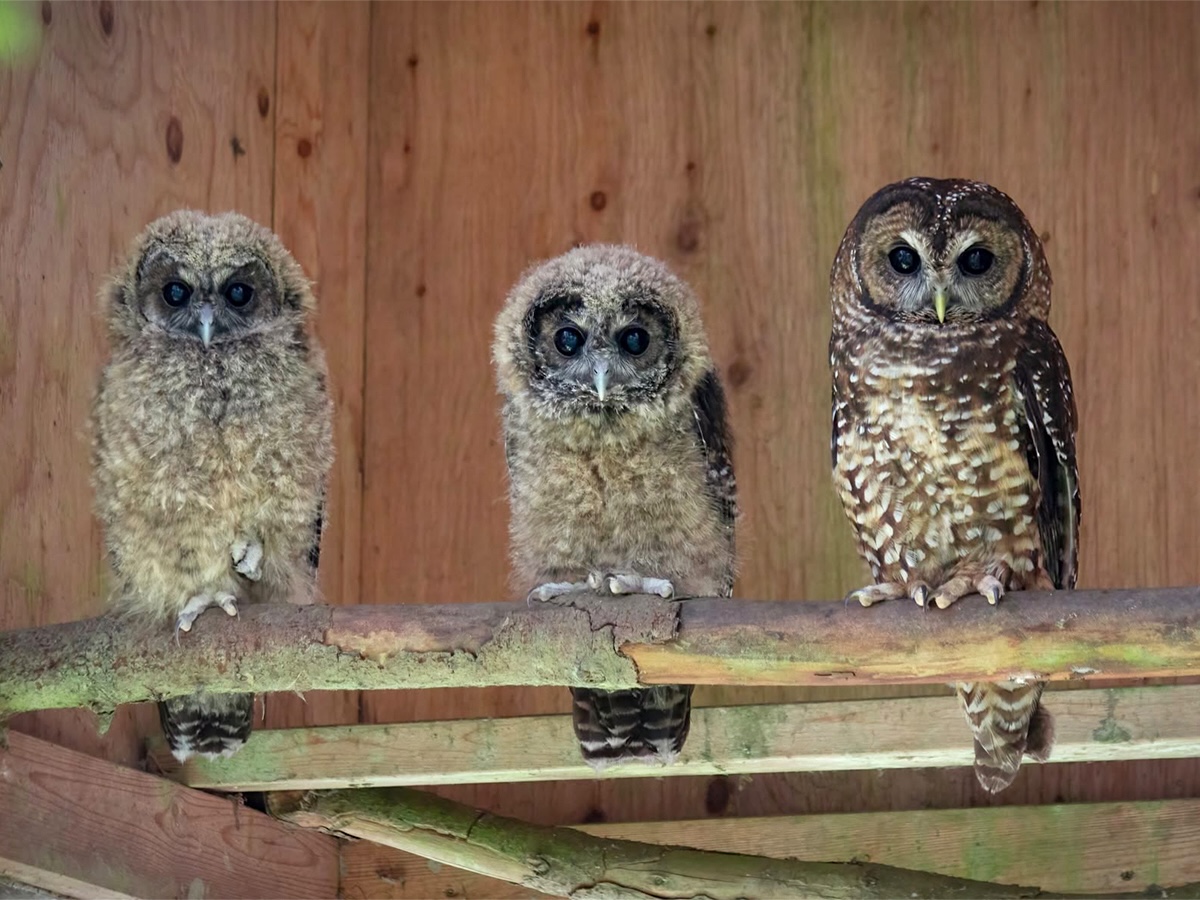
BC’s red list includes spotted owls, southern mountain caribou and southern resident killer whales.

Altogether, 1,952 species and ecosystems are officially at some risk of extinction in the province, according to the BC government’s conservation data centre.

The fates of each of these species are entwined with the outcome of BC’s Oct. 19 election.

Here’s what you need to know about what the parties vying to form BC’s next government are promising for nature and wildlife.

Have any BC parties promised a new stand-alone law to protect at-risk species?

For those keeping a close eye on BC’s wildlife conservation policies, the province’s lack of stand-alone legislation to protect species at risk of extinction remains a glaring gap.

“We have a beautiful province and it’s an epicentre for biodiversity,” Kai Chan, a professor at the University of British Columbia’s Institute for Resources, Environment and Sustainability, told The Narwhal. But, he added, “BC is one of the most obvious laggards in terms of legislative protections for wildlife.”

In its 2017 campaign platform, the BC NDP committed to bring in stand-alone endangered species legislation. But it quietly reneged on that promise after coming to power.

While legislation to protect at-risk species may not be perfect, Chris Johnson, a professor of landscape conservation and management at the University of Northern British Columbia, said legislation is an important tool that allows governments to react when a species is in trouble.

“Many of us, I think, had really high hopes for the NDP coming in initially, because they’d been very strong proponents in particular about species-at-risk legislation,” Johnson, who co-chairs a scientific committee that advises the federal government on at-risk land mammals, said. “And then it got canned. It just basically disappeared,” he said.

Both the BC Greens and the BC Conservatives have promised, if elected, to introduce legislation to protect at-risk species.

“We are in the midst of a biodiversity crisis and standing at a crossroads: either we take bold action to protect our ecosystems or we risk losing iconic species like caribou, spotted owls and orcas forever,” the Greens stated in its platform.

The BC Conservatives platform says the NDP government has underfunded and mismanaged wildlife in the province, leading to declines in “iconic ungulate species.” It says a Conservative government would introduce “made-in-BC species at risk legislation so wildlife protections are shaped by BC-based experts — not Ottawa — and are reflective of our unique ecosystems.”

The NDP’s platform makes no mention of legislation to protect at-risk species. Instead, the party has committed to working with First Nations and other partners on a “made-in-BC strategy” to protect biodiversity and watersheds, if re-elected.

Will the BC NDP’s ‘holistic’ plan for biodiversity be ready before election day?

Late last year, the NDP government released a draft biodiversity and ecosystem health framework. It said the framework would set the direction “for a more holistic approach to stewarding our land and water resources” and eventually lead to legislation to protect biodiversity.

However, the draft framework won’t be finalized before voting day, leaving its future in limbo pending the outcome of the election.

“I can’t disagree with some of the ideas in there — that you need, for example, a whole-of- government approach for addressing biodiversity,” Johnson said of the framework. “It’s very proactive and very progressive, but it’s also super high level.”

And, “it’s a long way to go before it makes any difference at all to biodiversity on the ground,” he warned.

In an emailed statement to The Narwhal, Hunter Lampreau, co-chair of the First Nations-BC Wildlife and Habitat Conservation Forum, which provides technical advice to the province, said he commends the NDP government for taking steps to enhance biodiversity conservation. But he said there’s more to do to achieve the needed balance between access and sustainable use of land and wildlife with conservation on the ground.

Alongside working toward its “made-in-BC strategy” to protect biodiversity and watersheds, the NDP said it will continue work to conserve 30 per cent of land in BC by 2030.

Are BC parties committed to conserving 30 per cent of land by 2030?

At the United Nations biodiversity conference in December 2022, Canada and 195 other countries committed to conserve at least 30 per cent of land and water globally by 2030 as part of international efforts to reverse the unprecedented decline of biodiversity.

In 2022, BC NDP Leader David Eby tasked Nathan Cullen, in his role as minister of water, land and resource stewardship, with working to protect 30 per cent of land in BC by 2030.

“[The NDP government] set a lot of really bold commitments, and I think it took a lot of time to get the gears turning to get working towards them and we didn’t really see the deliverables that we had wanted to see,” Tori Ball, the conservation director with the BC chapter of the Canadian Parks and Wilderness Society, said in an interview.

Over the past several years, the BC government and First Nations have announced major new conservation initiatives, including new conservancies in Clayoquot Sound, the Incomappleux Valley and the expansion of the Klinse-za / Twin Sisters Park.

But overall, protected areas increased by less than half a percent during the NDP’s past term in government, Ball said, noting “that’s not a lot of progress.”

The NDP also backtracked from conservation and reconciliation initiatives after facing criticism from the BC Conservatives over measures such as the proposed Land Act amendments and the expansion of the Klinse-za / Twin Sisters Park.

As of last December, BC reported 19.7 per cent of land in the province had been conserved, either through protected areas, such as provincial or national parks, or through other measures, where some development activity may be allowed but biodiversity is still meant to be protected.

The Canadian Parks and Wilderness Society has previously raised concerns that some areas counted towards BC’s conservation targets don’t meet biodiversity goals.

“We are hoping that the next government will continue the commitment that is laid out in the tripartite nature framework agreement to protect 30 per cent by 2030,” Ball said.

Both the NDP and the Greens say they are committed to working with First Nations towards the 30-by-30 goal.

“I’m proud of the fact that the BC NDP has signed on to the 30-by-30 nature agreement. This is something that’s just essential,” Josie Osborne, the incumbent NDP candidate for Mid Island-Pacific Rim, said during the environmental issues debate.

Conservative Leader John Rustad earlier told The Narwhal he would abandon BC’s plans to conserve 30 per cent of land in the province by 2030, a move that could jeopardize Canada’s international commitments and the recovery of at-risk species in BC.

How are the BC Conservatives balancing boosting the forestry industry with protecting wildlife?

In its platform, the BC Conservatives outlined measures it would take to enhance biodiversity as part of its plans to “save BC forestry.”

The party said it will define which forest areas will be prioritized for logging and which will “be prioritized for meeting biodiversity goals, where sourcing forest products will be of secondary value.”

During an online election debate focused on the environment in early October, Peter Milobar, the Conservative candidate for Kamloops Centre, said his party’s plans for mining, forestry and conservation form an interconnected approach to managing land.

Asked about the party’s forestry plans, Milobar said, “It’s really about maximizing the value of all the fiber that can be pulled out, instead of having it go up in slash piles, instead of it just sitting on the forest floor.”

“You certainly want a certain amount left in terms of regenerative growth and for the critters and whatnot in the forest after you’ve done logging, but there’s a lot of waste there that we could be using and repurposing at a proper rate,” he said.

What will happen to BC’s remaining old-growth forests?

The Conservative Party said, if elected, it will ensure two-thirds of BC’s forested areas are set aside from industrial-scale forestry activity and remain in their “original forested state.”

“BC’s forests provide more than just wood products; we count on our forests for water quality, wildlife habitat, recreational opportunities, and more,” the party’s forestry platform says. “Conservation is a Conservative value, and we will never allow our forest ecology to be undermined,” it says.

But the party doesn’t specify whether it would protect disappearing old-growth forests, which are both rich in biodiversity and sought after by industry.

In an analysis of each party’s stand on environmental issues, the Endangered Ecosystems Alliance, a conservation charity, raised concerns the Conservatives would focus protections on “mainly subalpine, rocky and muskeg landscapes with small and stunted trees of low to no timber value,” while allowing “logging to continue in areas where biodiversity conservation is supposed to be prioritized.”

The party said it will manage the remaining 22 million hectares of forest landscape to “achieve supply chain stability in BC’s forest sector as well as to enhance biodiversity and ecological qualities.”

The Endangered Ecosystems Alliance worries that means the party will “obstruct new protected areas in the forests with the biggest trees and greatest biological richness” and effectively turn 22 million hectares of forest where valuable timber can be found into “guaranteed logging zones to create ‘certainty’ for timber companies.”

The BC NDP said it will protect more old-growth forests, if re-elected, by working with First Nations to finish implementing the landmark recommendations from a 2020 old-growth forest strategic review, which called for a major shift in how BC manages its forests to prioritize biodiversity and ecosystem health.

The party said it will create a fund to help mills re-tool so they can process smaller second-growth trees instead of old-growth trees.

The BC Greens have promised to defer logging in the most at-risk old-growth forests and fully fund their protection, compensating First Nations for any lost revenues due to logging deferrals. In an Oct. 4 press release, the party pledged to increase the number and size of community forests “to promote biodiversity, wildfire protection, rural development and ecosystem resilience.”

The Greens also promised to stop clearcut logging and “switch to practices like selective logging, commercial thinning and longer rotation cycles that mimic natural forest changes.”

“BC’s forests are part of our identity, but years of industrial logging, wildfires, insect infestations and other disturbances have left them in crisis,” BC Greens Leader Sonia Furstenau said in the release.

What are the parties promising this BC election to help wildlife and the places they call home?

Several months before the October 2020 election, the NDP government launched its together for wildlife strategy — what it described at the time as “a plan for the conservation and stewardship of BC’s wildlife.”

According to the BC government website, the province has made progress on some action items identified in the strategy. The government committed $10 million a year in additional wildlife funding, launched a review of the Wildlife Act and set up three regional wildlife advisory committees to bring people with different perspectives together. The government has also made significant funding announcements over the past year, including a $300-million conservation fund and $500 million for a nature agreement with the federal government and First Nations.

For Adam Ford, an associate biology professor at the University of British Columbia Okanagan, one of the “most concrete victories” was the creation of a series of scholarships to fund graduate student research.

“Those are the people that are doing the work on the ground with communities and learning about and providing evidence to restore wildlife,” Ford, who serves on the minister’s wildlife advisory council created to oversee implementation of the together for wildlife strategy, said. “But it is a bit of a drop in the bucket,” he added.

Ford said striving to improve the funding model for wildlife management was on the advisory council’s agenda from day one, but the ministry still doesn’t have the budget it needs.

Transparency was another major goal of the together for wildlife strategy. Yet only one director’s report outlining the progress made toward implementing the strategy is available online and it’s for the fiscal year ending in 2021.

Lists of projects funded in the first two years of the strategy are also available online. But “we don’t know what projects were approved for the current year,” Ford said. “I’m on council — I don’t know,” he added.

In recent weeks, the BC Wildlife Federation and others have raised concerns about a major funding shortfall for wildlife conservation and management.

The Greens have promised to allocate $120 million for fish and wildlife programs over the next three years.

The BC Conservatives platform says the party will dedicate revenue from hunting tags and fees to a “third party entity dedicated to wildlife management and enhancement. ” The party also says it will increase funding for conservation officers, ensure decisions are based on science and recognize “British Columbians deserve guaranteed access to public lands and wild areas, including hunting and fishing rights.”

“Our approach will balance resource development with habitat protection, ensuring that wildlife thrives alongside responsible human activities,” the platform says. “We will ensure Indigenous Peoples and stakeholders — hunters, fishers, recreationists, and conservationists — are not just ‘at the table,’ but actively shaping BC’s wildlife management practices.”

BC sprays herbicide on its forests. Will this stop after the election?

As part of its forestry platform, the BC Conservatives said it would increase the diversity of tree species in forests and stop the aerial spraying of glyphosate, steps that could improve wildlife habitat and improve resilience to wildfires.

Glyphosate — an ingredient in the commercial product Roundup — is a herbicide used in the forestry industry to kill deciduous trees and shrubs that can compete with crop trees, such as pine, that are valuable for forestry.

The Greens have outlined several measures that could benefit wildlife, including a $50-million investment in a youth climate corp to fund youth jobs to restore and protect natural systems. The party has also committed to ban the use of glyphosate and other chemical herbicides used in forestry and to end clearcutting. Instead, the party would ensure the forestry sector uses practices, such as selective logging, that emulate natural disturbance regimes.

“We need to focus on restoring ecosystem health and valuing more than economic values in the forest ecosystem,” Ross Reid, the BC Greens candidate for Mid Island-Pacific Rim, said during the environmental issues election debate.

The NDP has also said it will ban the use of glyphosate in forestry.

What will happen to provincial government commitments to Indigenous-led conservation after the BC election?

The BC Greens have committed to investing in Indigenous-led conservation and Indigenous Guardians programs, while the NDP said it will work with First Nations towards the 30-by-30 conservation goals.

Rustad, however, has said a Conservative government would repeal the Declaration on the Rights of Indigenous Peoples Act, a law he previously supported.

The Tŝilhqot’in National Government denounced the Conservative platform in a public statement.

“The path that the BC Conservatives has outlined for British Columbia is a path of conflict on the land and in the courts,” the government said. The declaration “is an essential framework to hold BC to international laws and standards, to implement the human rights of Indigenous peoples in BC, and to resolve long-standing conflicts in this province based on recognition and respect, in a manner that benefits all British Columbians.”

Lampreau, with the First Nations-BC Wildlife and Habitat Conservation Forum, also raised concerns about Rustad’s stated position on Indigenous Rights and reconciliation and pointed to legal repercussions when the provincial government fails to prioritize and respect Indigenous Rights and Title.

“Several court decisions costing and awarding a lot of money have been made in the last years,” he said in an email to The Narwhal.

“I’d encourage people to consider a full platform before sending your choice into the ballot box,” Lampreau said.

“While a partisan claim of increased funding or improved wildlife and habitat stewardship sounds appealing, consider if they’re also advertising their intent to continue to invest in industries that are impacting habitat, and seek to understand how they intend to balance the two,” he said.

Are there any other conservation plans in the works?

There are some other ideas in the mix to protect biodiversity.

In its platform, for example, the BC Greens said part of its prioritization of ecosystem health and biodiversity would include appointing a chief ecologist.

The party also committed to investing in watershed security, Indigenous-led conservation and nature-based climate solutions, as well as restoring and protecting salmon habitat.

“Our goal is clear: to halt and reverse biodiversity loss while building resilience for both ecosystems and communities,” the party says in its platform.

Meanwhile, the BC NDP has said it will expand investments in salmon restoration. It has also said it will plant 300 million trees every year with the goals of making forests more resilient to climate change and restoring wildlife habitat.

Updated on Oct. 15, 2024, at 4:32 p.m. PT: This story has been updated to include commitments outlined in the BC Conservatives’ platform, which was released on Oct. 15.

https://ancientforestalliance.org/wp-content/uploads/2024/10/BC-2024-Election2-McLeod.jpeg 943 1823 TJ Watt https://staging.ancientforestalliance.org/wp-content/uploads/2014/10/cropped-AFA-Logo-1000px.png TJ Watt2024-10-11 09:16:102024-10-22 10:14:09The Narwhal: Your BC election guide to old-growth forest and other key nature issues
Page 27 of 534«‹2526272829›»

Pages

  • ACTION ALERT: Tell the NDP government FRPA amendments must protect old-growth forests
  • AFA Policy Recommendations – 2026
  • Ancient Forests
  • BC Protected Areas Strategy (PAS)
  • Before & After Logging – Caycuse Watershed
  • Before and After Logging Caycuse 2022
  • Biggest Trees
  • BLOG ARCHIVE TEMPLATE
  • Bugaboo Ridge Ancient Forest
  • Call Premier Horgan to demand funding for old-growth protection in Budget 2022
  • Call the BC government
  • Cameron Firebreak
  • Canada’s Most Impressive Tree – Flores Island
  • Cast Your Vote for Ancient Forest Protection!
  • Caycuse Logging From Above
  • Central Walbran Valley
  • Climbing the Largest Spruce in Carmanah
  • Conservation Financing
  • Contact
  • Donate Stocks, Securities, and Mutual Funds
  • Echo Lake
  • Economic Valuation of Old-Growth Forests on Vancouver Island
  • Ecosystem-Based Targets
  • Edinburgh Mountain Ancient Forest
  • Eldred River Valley
  • Exploring & Climbing Ancient Giants
  • Fairy Creek Headwaters
  • Granite Creek Logging
  • Grove of Giant Cedars Clearcut in Quatsino Sound
  • Have your say on the BC government’s Old-Growth Strategy
  • Hiking Guides
  • Home
  • Join the Growing Number of BC Businesses Calling for Old-Growth Forest Protection
  • Juniper Ridge
  • Kanaka Bar Indigenous Protected and Conserved Area
  • Kanaka Bar IPCA Proposal
  • Katlum Creek
  • Katlum Creek
  • Klaskish Inlet
  • Loup Creek
  • Lower Caycuse River
  • Mahatta River Logging
  • Massive Trees Cut Down
  • McKelvie Valley
  • McLaughlin Ridge
  • Mossy Maple Rainforest
  • Mount Horne
  • Mt. Freda Ancient Forests
  • Nahmint Logging 2024
  • Nahmint Valley
  • Nahmint Valley
  • Old Growth Strategic Review Questionnaire Guide
  • Old-Growth 101 – The Facts on Ancient Forests in BC
  • Old-Growth Campaigns
  • Old-Growth Forest Hikes Near Port Renfrew
  • Old-Growth Forest Hikes Near Victoria BC
  • Our Mission & Team
  • Our Work
  • Petition
  • Photographer TJ Watt
  • Photos & Media
  • Policy recommendations to support sustainable, value-added, second-growth forestry jobs in BC
  • Pop for Parks Report
  • Privacy Policy
  • Protect Old-Growth Forests & Endangered Ecosystems in BC
  • Provincial Biodiversity and Ecosystem Health Framework
  • Provincial Land Acquisition Fund
  • Quatsino Old-Growth Under Threat 2023
  • Recent News
  • Salmon Parks Initiative
  • Send a Message
  • Send a Message
  • Send a Message
  • Spruce Bay Old Growth Trail – Port Alice
  • Sydney River Valley
  • Taylor River Valley
  • Thank you for speaking up for ancient forests!
  • Thank you for speaking up for BC’s last remaining ancient forests!
  • Thank you for speaking up for BC’s last remaining ancient forests!
  • Thank you for speaking up for endangered ecosystems!
  • Thank You for Speaking Up for Old-Growth Forests!
  • Thank you for taking action for ancient forests, your call will begin shortly!
  • Thank you for taking action for old-growth
  • Thank you for taking action for old-growth
  • Vernon Bay
  • Videos
  • Walbran Headwaters At Risk
  • Ways to Take Action
  • White River Provincial Park
  • Work With Us
  • Yakoun Lake Old-Growth
  • Yakoun River Old-Growth Forests
  • z__Archive Footer – DO NOT EDIT
  • z__Pre-Footer – DO NOT EDIT
  • z__Single Post Footer – DO NOT EDIT
  • z__Take Action row – DO NOT EDIT
  • z_Send a Message – Call for Ecosystem Based Targets
  • Activity Reports
  • Ancient Forest / Chun T’oh Whudujut Provincial Park
  • Before & After Old-Growth Maps
  • 2018 Activity Report & Financials
  • History & Successes
  • Old-Growth Forests in BC: Frequently Asked Questions
  • Parthenon Grove
  • 2017 Activity Report & Financials
  • Directions to Avatar Grove
  • Upper Tsitika Valley
  • 2016 Activity Report & Financials
  • Avatar Boardwalk
  • Building Alliances
  • 2015 Activity Report & Financials
  • Avatar Grove
  • Myths & Facts
  • Big Lonely Doug and Clearcut
  • Policy Recommendations
  • Biggest Stumps
  • Port Renfrew Big Trees Map
  • Publications
  • Cameron Valley Firebreak
  • Research & Reports
  • Carmanah Research Climb
  • Castle Grove
  • Cathedral Grove Canyon
  • Central Walbran Ancient Forest
  • Children’s Forest
  • Day Road Forest
  • East Creek Rainforest
  • Echo Lake
  • Eden Grove
  • Flores Island
  • Hadikin Lake
  • Haida Gwaii
  • Jurassic Grove
  • Klanawa Valley
  • Koksilah
  • Low Productivity Old-Growth
  • McKelvie Valley
  • McLaughlin Ridge
  • Meares Island
  • Mossome Grove
  • Mossome Grove Tree Climb
  • Mossy Maple Gallery
  • Mossy Maple Grove
  • Mount Horne
  • Mt. Elphinstone Proposed Park Expansion
  • Nootka Island
  • Roberts Creek Headwaters
  • Squirrel Cove Ancient Forest
  • Stillwater Bluffs
  • Tahsis: Endangered Old-Growth Above Town
  • Tree Climb 2014
  • Tree Climb 2016
  • Walbran Logging
  • Walbran Overview

Categories

  • Announcements
  • Creature Feature
  • Educational
  • Employment
  • Events
  • Media Release
  • News Coverage
  • Notes From The Field
  • Photo Gallery
  • Take Action
  • Thank You
  • Video

Archive

  • March 2026
  • February 2026
  • January 2026
  • December 2025
  • November 2025
  • October 2025
  • September 2025
  • August 2025
  • July 2025
  • June 2025
  • May 2025
  • April 2025
  • March 2025
  • February 2025
  • January 2025
  • December 2024
  • November 2024
  • October 2024
  • September 2024
  • August 2024
  • July 2024
  • June 2024
  • May 2024
  • April 2024
  • March 2024
  • February 2024
  • January 2024
  • December 2023
  • November 2023
  • October 2023
  • September 2023
  • August 2023
  • July 2023
  • June 2023
  • May 2023
  • April 2023
  • March 2023
  • February 2023
  • January 2023
  • December 2022
  • November 2022
  • October 2022
  • September 2022
  • August 2022
  • July 2022
  • June 2022
  • May 2022
  • April 2022
  • March 2022
  • February 2022
  • January 2022
  • December 2021
  • November 2021
  • October 2021
  • September 2021
  • August 2021
  • July 2021
  • June 2021
  • May 2021
  • April 2021
  • March 2021
  • February 2021
  • January 2021
  • December 2020
  • November 2020
  • October 2020
  • September 2020
  • August 2020
  • July 2020
  • June 2020
  • May 2020
  • April 2020
  • March 2020
  • February 2020
  • January 2020
  • December 2019
  • November 2019
  • October 2019
  • September 2019
  • August 2019
  • July 2019
  • June 2019
  • May 2019
  • April 2019
  • March 2019
  • February 2019
  • January 2019
  • December 2018
  • November 2018
  • October 2018
  • September 2018
  • August 2018
  • July 2018
  • June 2018
  • May 2018
  • February 2018
  • January 2018
  • December 2017
  • November 2017
  • October 2017
  • September 2017
  • August 2017
  • July 2017
  • May 2017
  • April 2017
  • March 2017
  • February 2017
  • December 2016
  • November 2016
  • October 2016
  • September 2016
  • August 2016
  • July 2016
  • June 2016
  • May 2016
  • April 2016
  • March 2016
  • February 2016
  • January 2016
  • December 2015
  • November 2015
  • October 2015
  • September 2015
  • August 2015
  • July 2015
  • June 2015
  • May 2015
  • April 2015
  • March 2015
  • February 2015
  • January 2015
  • December 2014
  • November 2014
  • October 2014
  • September 2014
  • August 2014
  • July 2014
  • June 2014
  • May 2014
  • April 2014
  • March 2014
  • February 2014
  • January 2014
  • December 2013
  • November 2013
  • October 2013
  • September 2013
  • August 2013
  • July 2013
  • June 2013
  • May 2013
  • April 2013
  • March 2013
  • February 2013
  • January 2013
  • December 2012
  • November 2012
  • October 2012
  • September 2012
  • August 2012
  • July 2012
  • June 2012
  • May 2012
  • April 2012
  • March 2012
  • February 2012
  • January 2012
  • December 2011
  • November 2011
  • October 2011
  • September 2011
  • August 2011
  • July 2011
  • June 2011
  • May 2011
  • April 2011
  • March 2011
  • February 2011
  • January 2011
  • December 2010
  • November 2010
  • October 2010
  • September 2010
  • August 2010
  • July 2010
  • June 2010
  • May 2010
  • April 2010
  • March 2010
  • February 2010
  • January 2010

Related Posts

NOW HIRING: Forest Campaigner

Mar 3 2026
The Ancient Forest Alliance (AFA) is hiring a passionate Forest Campaigner to join our team and help protect old-growth forests in BC!
Read more
Employment
https://ancientforestalliance.org/wp-content/uploads/2026/02/Keith-River-Old-Growth-BC-333.jpg 1365 2048 TJ Watt https://staging.ancientforestalliance.org/wp-content/uploads/2014/10/cropped-AFA-Logo-1000px.png TJ Watt2026-03-03 09:07:112026-03-04 14:36:34NOW HIRING: Forest Campaigner

It’s AFA’s 16th Birthday!

Feb 26 2026
On Tuesday, February 24th, we’re celebrating 16 years of working together with you, our community, to ensure the permanent protection of old-growth forests in BC. To mark the date, will you chip in $16 or more to support our work?
Read more
Announcements
https://ancientforestalliance.org/wp-content/uploads/2026/02/2026-02-AFA-16-Birthday.jpg 1080 1920 TJ Watt https://staging.ancientforestalliance.org/wp-content/uploads/2014/10/cropped-AFA-Logo-1000px.png TJ Watt2026-02-26 11:49:362026-02-26 11:49:36It’s AFA’s 16th Birthday!

Budget 2026 Shortchanges Nature Protection and Sustainable Forestry Transition At a Critical Time for British Columbia

Feb 20 2026
BC’s Budget 2026 fails to provide the funding needed to secure lasting protection for endangered ecosystems and at-risk old-growth forests in the province.
Read more
Media Release
https://ancientforestalliance.org/wp-content/uploads/2026/02/Caycuse-Logging-Split-View.jpg 1365 2048 TJ Watt https://staging.ancientforestalliance.org/wp-content/uploads/2014/10/cropped-AFA-Logo-1000px.png TJ Watt2026-02-20 16:43:192026-02-20 16:45:09Budget 2026 Shortchanges Nature Protection and Sustainable Forestry Transition At a Critical Time for British Columbia

Welcome, Zeinab, our new Vancouver Canvass Director!

Feb 20 2026
We're excited to welcome Zeinab Salenhiankia, our new Vancouver Canvass Director, to the Ancient Forest Alliance team!
Read more
Announcements
https://ancientforestalliance.org/wp-content/uploads/2026/02/Zeinab-Horizontal-Web.jpg 1000 1500 TJ Watt https://staging.ancientforestalliance.org/wp-content/uploads/2014/10/cropped-AFA-Logo-1000px.png TJ Watt2026-02-20 11:35:152026-02-20 13:08:24Welcome, Zeinab, our new Vancouver Canvass Director!
See All Posts

Take Action

 Donate

Support the Ancient Forest Alliance with a one-time or monthly donation.
How to Give

 Send a Message

Send an instant message to key provincial decision-makers.
Take Action

Get in Touch

Phone

(250) 896-4007 (Mon-Fri 9am-5pm)

Address

205-620 View Street
Victoria, B.C. V8W 1J6

Privacy Policy

  • Link to Facebook
  • Link to Instagram
  • Link to Youtube
  • Link to TikTok
  • Link to Bluesky
  • Link to Reddit

Resources

  • Recent News
  • Old-Growth 101
  • Photos & Media
  • Videos
  • Hiking Guides
  • Research & Reports

Who We Are

  • Our Mission & Team
  • History & Successes
  • Activity Reports
  • Contact
Ancient Forest Alliance

The Ancient Forest Alliance (AFA) is a registered charitable organization working to protect BC’s endangered old-growth forests and to ensure a sustainable, value-added, second-growth forest industry.

AFA’s office is located on the territories of the Lekwungen Peoples, also known as the Songhees and Esquimalt Nations.
Copyright © 2026 Ancient Forest Alliance • All Rights Reserved
Earth-Friendly Web Design by Fairwind Creative
Scroll to top
Ancient Forest AllianceLogo Header Menu
  • Home
  • About Us
    • Our Mission & Team
    • History & Successes
    • Work With Us
    • Contact Us
  • Our Work
    • Our Work
    • Activity Reports
    • Building Alliances
    • Campaigns
  • Ancient Forests
    • Hiking Guides
    • Old-Growth 101
    • Old-Growth Forests in BC: FAQs
    • Before & After Old-Growth Maps
    • Myths & Facts
    • Directions to Avatar Grove
    • Port Renfrew Big Trees Map
  • Recent News
    • Recent News
    • Research & Reports
    • Media Releases
    • Publications
    • Educational
  • Photos & Media
    • Map of Gallery Regions
    • Themes
      • Biggest Trees
      • Biggest Stumps
      • Low Productivity Old-Growth
    • Videos
    • Inland Rainforest
      • Ancient Forest/ Chun T’oh Whudujut Provincial Park
      • Parthenon Grove
    • Mainland
      • Echo Lake
      • Kanaka Bar IPCA Proposal
    • Haida Gwaii
      • Yakoun River Old-Growth
    • Sunshine Coast
      • Day Road Forest
      • Mt. Elphinstone Proposed Park Expansion
      • Roberts Creek Headwaters
      • Stillwater Bluffs
    • Sunshine Coast: Powell River
      • Eldred River Valley
      • Mt. Freda Ancient Forests
    • Vancouver Island South
      • Climbing the Largest Spruce in Carmanah
      • Carmanah Research Climb
      • Klanawa Valley
      • Koksilah
    • VI South: Caycuse Watershed
      • Before & After Logging – Caycuse Watershed
      • Before and After Logging Caycuse 2022
      • Caycuse Logging From Above
      • Lower Caycuse River
      • Massive Trees Cut Down
    • VI South: Mossy Maples
      • Mossy Maple Gallery
      • Mossy Maple Grove
    • VI South: Port Renfrew
      • Avatar Boardwalk
      • Avatar Grove
      • Big Lonely Doug and Clearcut
      • Bugaboo Ridge Ancient Forest
      • Eden Grove
      • Exploring & Climbing Ancient Giants
      • Fairy Creek Headwaters
      • Granite Creek Logging
      • Jurassic Grove
      • Loup Creek
      • Mossome Grove
      • Mossome Grove Tree Climb
    • VI South: Port Alberni
      • Cameron Valley Firebreak
      • Cathedral Grove Canyon
      • Juniper Ridge
      • Katlum Creek
      • Nahmint Valley
      • Nahmint Logging 2024
      • McLaughlin Ridge
      • Mount Horne
      • Taylor River Valley
    • VI South: Walbran Valley
      • Castle Grove
      • Central Walbran Ancient Forest
      • Hadikin Lake
      • Walbran Headwaters At Risk
      • Walbran Overview
      • Walbran Logging
    • Vancouver Island Central
      • Barkley Sound: Vernon Bay
      • Nootka Island
    • VI Central: Clayoquot Sound
      • Canada’s Most Impressive Tree – Flores Island
      • Flores Island
      • Meares Island
      • Sydney River Valley
    • VI Central: Cortes Island
      • Children’s Forest
      • Squirrel Cove Ancient Forest
    • VI Central: Tahsis
      • McKelvie Valley
      • Tahsis: Endangered Old-Growth Above Town
    • Vancouver Island North
      • East Creek Rainforest
      • Klaskish Inlet
      • Mahatta River Logging
      • Quatsino
      • Spruce Bay
      • Tsitika Valley
      • White River Provincial Park
  • Take Action
    • Send a Message
    • Sign Petition
    • Sign a Resolution
  • Store
  • Donate