 https://ancientforestalliance.org/wp-content/uploads/2026/09/Old-Growth-Clearcut-Caycuse-Vancouver-Island.jpg
1364
2048
TJ Watt
https://ancientforestalliance.org/wp-content/uploads/2026/05/Ancient-Forest-Alliance-logo.svg
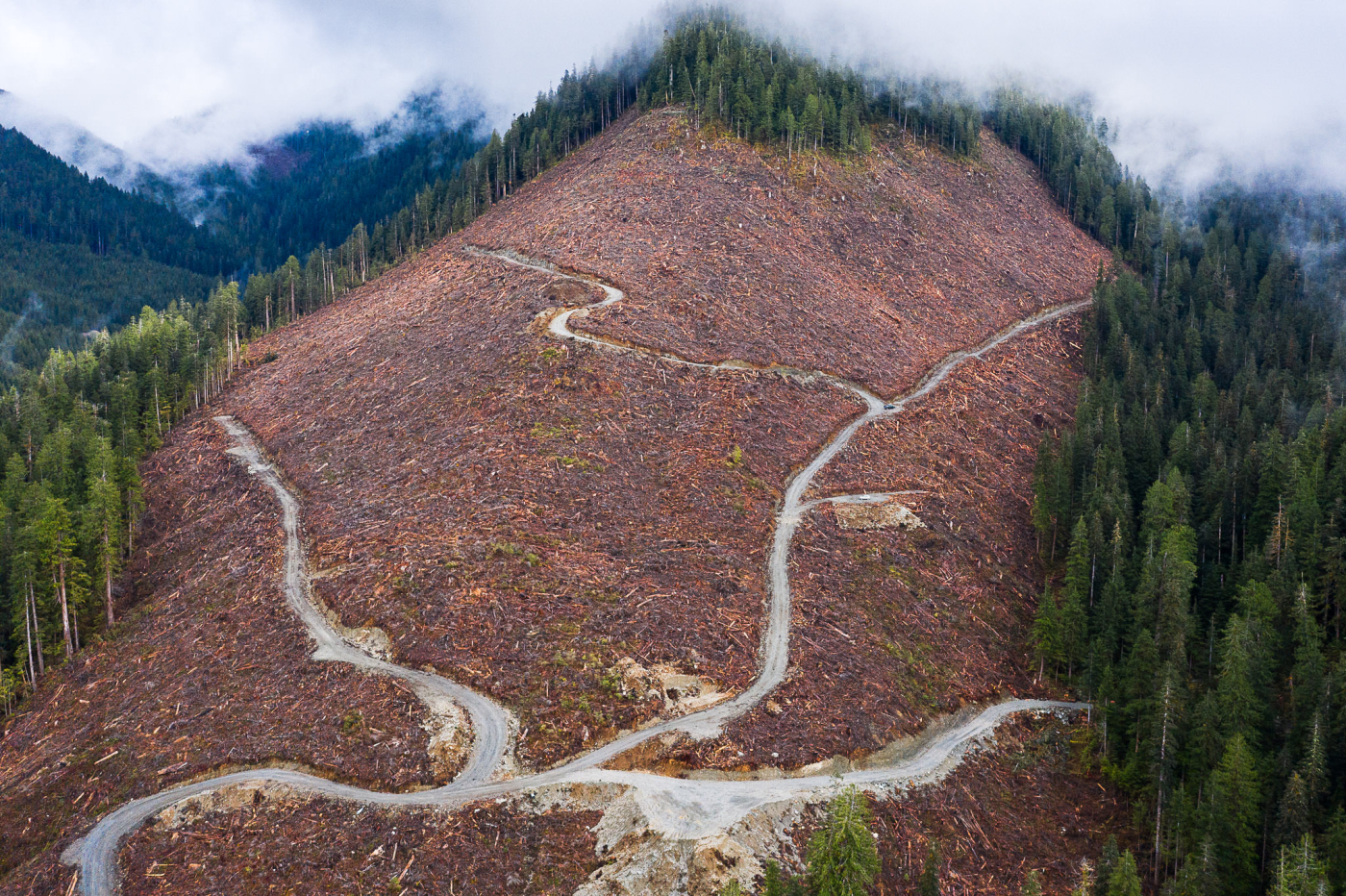
TJ Watt2026-10-26 15:06:162026-10-26 15:06:16Victoria Buzz: Environmental advocates concerned over results of BC election
https://ancientforestalliance.org/wp-content/uploads/2026/09/Old-Growth-Clearcut-Caycuse-Vancouver-Island.jpg
1364
2048
TJ Watt
https://ancientforestalliance.org/wp-content/uploads/2026/05/Ancient-Forest-Alliance-logo.svg
TJ Watt2026-10-26 15:06:162026-10-26 15:06:16Victoria Buzz: Environmental advocates concerned over results of BC electionRelated Posts
https://ancientforestalliance.org/wp-content/uploads/2026/09/Old-Growth-Clearcut-Caycuse-Vancouver-Island.jpg
1364
2048
TJ Watt
https://ancientforestalliance.org/wp-content/uploads/2026/05/Ancient-Forest-Alliance-logo.svg
TJ Watt2026-10-26 15:06:162026-10-26 15:06:16Victoria Buzz: Environmental advocates concerned over results of BC election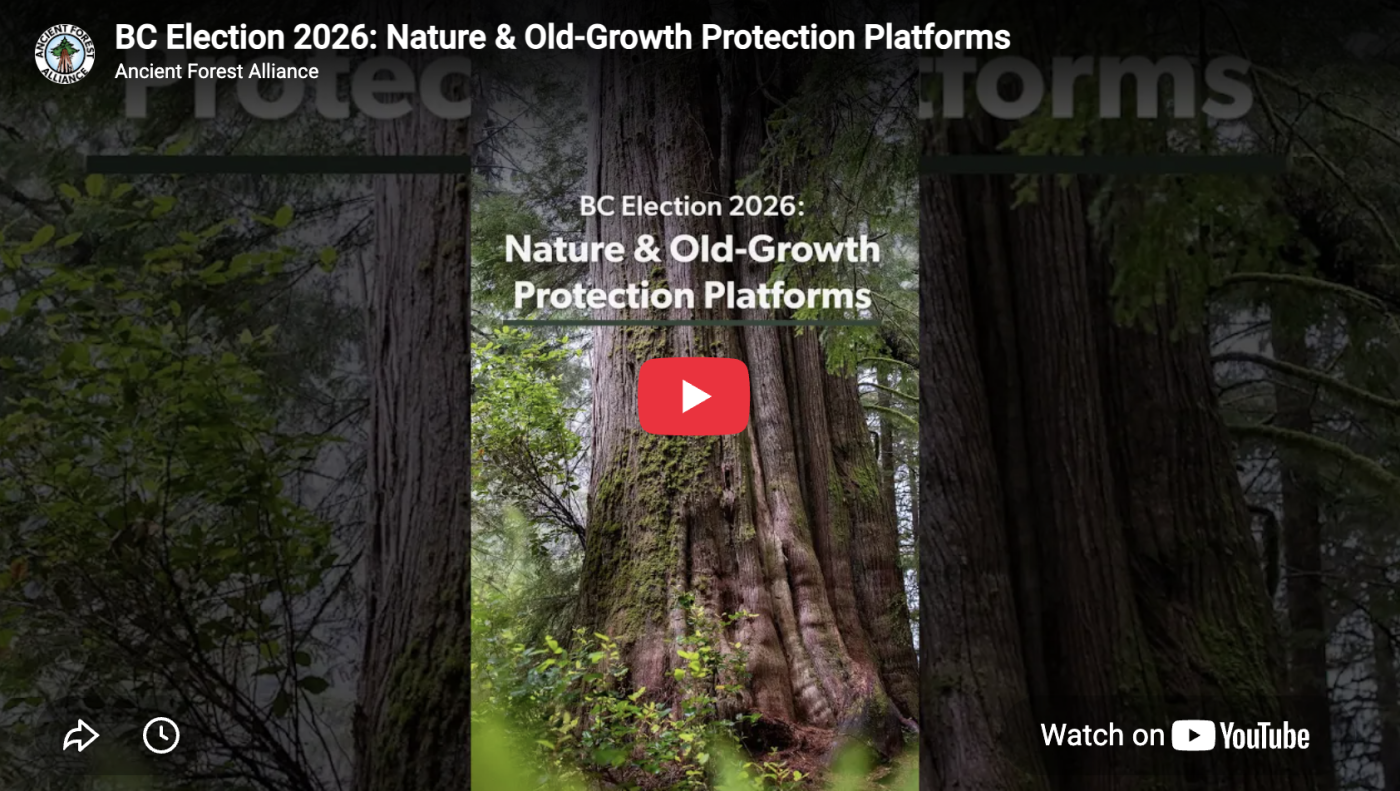 https://ancientforestalliance.org/wp-content/uploads/2026/10/Screenshot-2026-10-22-at-4.54.32-PM.png
952
1684
TJ Watt
https://ancientforestalliance.org/wp-content/uploads/2026/05/Ancient-Forest-Alliance-logo.svg
TJ Watt2026-10-22 16:54:062026-10-22 16:59:41NEW Video: BC Election 2026: Nature & Old-Growth Protection
https://ancientforestalliance.org/wp-content/uploads/2026/10/Screenshot-2026-10-22-at-4.54.32-PM.png
952
1684
TJ Watt
https://ancientforestalliance.org/wp-content/uploads/2026/05/Ancient-Forest-Alliance-logo.svg
TJ Watt2026-10-22 16:54:062026-10-22 16:59:41NEW Video: BC Election 2026: Nature & Old-Growth Protection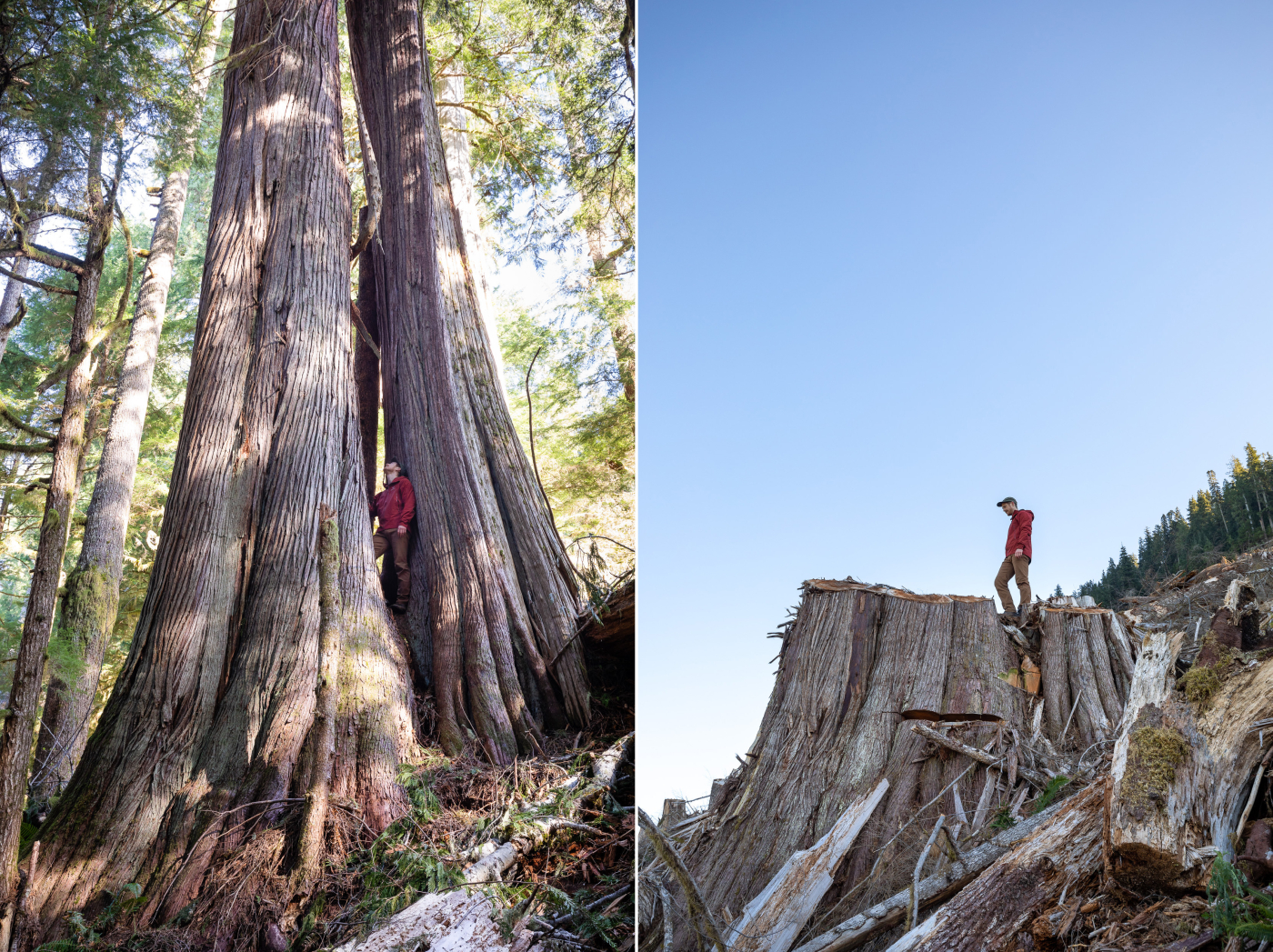 https://ancientforestalliance.org/wp-content/uploads/2026/10/Before-After-Caycuse-TJ-Watt-4-scaled.jpg
1915
2560
TJ Watt
https://ancientforestalliance.org/wp-content/uploads/2026/05/Ancient-Forest-Alliance-logo.svg
TJ Watt2026-10-16 17:36:002026-10-21 13:40:23BC Election 2026: Where do Parties Stand on Nature & Old-Growth?
https://ancientforestalliance.org/wp-content/uploads/2026/10/Before-After-Caycuse-TJ-Watt-4-scaled.jpg
1915
2560
TJ Watt
https://ancientforestalliance.org/wp-content/uploads/2026/05/Ancient-Forest-Alliance-logo.svg
TJ Watt2026-10-16 17:36:002026-10-21 13:40:23BC Election 2026: Where do Parties Stand on Nature & Old-Growth? https://ancientforestalliance.org/wp-content/uploads/2026/10/BC-Election-2026-Banner-1-1-scaled.jpg
1439
2560
TJ Watt
https://ancientforestalliance.org/wp-content/uploads/2026/05/Ancient-Forest-Alliance-logo.svg
TJ Watt2026-10-09 18:16:372026-10-16 17:44:41Where do BC’s Major Political Parties Stand on Nature Protection?
https://ancientforestalliance.org/wp-content/uploads/2026/10/BC-Election-2026-Banner-1-1-scaled.jpg
1439
2560
TJ Watt
https://ancientforestalliance.org/wp-content/uploads/2026/05/Ancient-Forest-Alliance-logo.svg
TJ Watt2026-10-09 18:16:372026-10-16 17:44:41Where do BC’s Major Political Parties Stand on Nature Protection?Take Action
 Donate
Support the Ancient Forest Alliance with a one-time or monthly donation. Send a Message
Send an instant message to key provincial decision-makers.
Avatar Grove Boardwalk: Let’s Get it Done! Special Event and Fundraiser Monday, June 16th
/in Announcements*** If you support the completion of the boardwalk this summer in the legendary Avatar Grove near Port Renfrew, please join the Ancient Forest Alliance (AFA), local tourism and green businesses, renowned forest ecologist Dr. Andy MacKinnon, and other supporters for the “Avatar Grove Boardwalk – Let’s Get it Done! Special Event and Fundraiser” in Sooke. Help us complete this important eco-tourism project this summer!
Date: Monday, June 16th
Time: 7:30-9:00 pm
Location: Stickleback West Coast Eatery, 5449 Sooke Rd, Sooke, BC.
Drinks! Appetizers! Slideshow! Socializing!
Some words by:
If possible, please RSVP so we get a sense of our numbers at: Info@AncientForestAlliance.org
If you’re interested in contributing right now to the Avatar Grove boardwalk’s construction for 2014, please go to: https://ancientforestalliance.org/avatar-grove-boardwalk-now-completed-and-open/
The Avatar Grove near Port Renfrew is a majestic old-growth forest of enormous redcedar trees. It has become a major tourism draw, akin to a “second Cathedral Grove”. The now-popular hiking area was saved in 2012 through a campaign led by the Ancient Forest Alliance (AFA), with the help of thousands of our supporters and local tourism businesses with the Port Renfrew Chamber of Commerce and the Sooke Region Tourism Association. Its protection has bolstered the economy of southern Vancouver Island and helped promote the case to protect old-growth forests throughout Vancouver Island. See photos here: https://ancientforestalliance.org/photos-media/
Last year, the AFA began construction of a new boardwalk to help protect the forest’s understory vegetation and tree roots from excessive trampling, to improve visitor access and safety, and to support local eco-tourism. About half of the necessary boardwalk has now been completed, but more still needs to be built. This includes sections of the spectacular new loop trail in the Lower Grove, as well as the steep slippery path up to “Canada’s Gnarliest Tree”. See photos of the work we’ve completed so far at: https://on.fb.me/1nyR7Mt
Help us to finish the boardwalk this summer!
Please JOIN US to learn more about the project, have a free drink and snacks, meet and mingle with other members of the local business community, and consider supporting the boardwalk during this fundraising night.
See a spectacular slideshow by Ken Wu and TJ Watt of the Ancient Forest Alliance, featuring TJ’s photos of the boardwalk work so far, along with award-winning images of the Avatar Grove, Big Lonely Doug, Red Creek Fir, San Juan Spruce, and the largest trees in Canada – all close to Port Renfrew!
If possible, please RSVP so we get a sense of our numbers at: Info@AncientForestAlliance.org Friends and family welcome.
Big Lonely Doug: Canada’s loneliest tree still waiting on help
/in News CoverageBig Lonely Doug, perhaps the loneliest tree in Canada, stands in the middle of a clear-cut on the west coast of Vancouver Island, surrounded by a field of huge stumps.
The giant red cedars and Douglas firs that once surrounded it were cut down and hauled away by loggers two years ago.
Big Lonely Doug was left standing alone, Ken Wu of the Forest Alliance says, because it was either designated as a wildlife tree, or it was left to provide cones for the reseeding of the forest.
Either way, it makes a rather sad sight sticking up out of a raw landscape of logging debris – and it serves as a reminder of just how inadequate British Columbia’s forest regulations are at protecting old, giant trees.
Recently, Mr. Wu’s group, which for years has been campaigning to save old trees like this, teamed up on a climbing expedition with Matthew Beatty of the Arboreal Collective, another organization that works to save trees.
They wanted to get to the top of Big Lonely Doug to see how tall it really was. It had been estimated at 70 metres. And they wanted to get some photographs to highlight the need to protect B.C.’s rapidly disappearing old growth.
Mr. Wu says 99 per cent of the old-growth Douglas fir trees in B.C. have been logged and 75 per cent of the original old growth forests on B.C.’s southern coast have been cut down.
Mr. Wu’s group has been frantically searching out the biggest trees and lobbying to protect them. A few years ago, they found the Avatar Grove near Port Renfrew, which the government did set aside, and which is now a tourism attraction. In the same area, they also identified what they named Lower Christy Clark Grove, in the hope the Premier would set it aside. Parts of that area were later protected, not to honour Ms. Clark, but as wildlife habitat because of the presence of endangered Queen Charlotte goshawks.
But Mr. Wu and his colleague, T.J. Watt, didn’t see Big Lonely Doug when they were hiking through the thick forest in the area, and the grove of giants it stood in didn’t get flagged for protection. When they returned in March, it was impossible to miss, however, sticking up all alone like that.
Members of the Arboreal Collective put climbing ropes up the tree and Mr. Watt, a photographer clambered up. Way up. From the top, they dropped a line – Big Lonely Doug is 66 metres tall, not quite as big as first estimated, but still the second largest Douglas fir in Canada.
“It was incredibly humbling,” said Mr. Watt of what it felt like up there in the tree. “It’s like climbing a living skyscraper. You only get a true sense of its mass once you are up there in the canopy and you see the trunk is still 6-, 7-, 8-feet wide. It’s almost unfathomable how large it is.”
From near the top, swaying in the wind, Mr. Watt looked out over the valley and felt a sense of wonder at how long the tree has been there. Ring counts of nearby stumps showed many of the neighbouring trees were 500 years old. Big Lonely Doug is estimated to be 1,000 years old.
From his vantage point atop the tree, Mr. Watt’s colleagues seemed tiny on the ground below. Across the valley, he could hear chainsaws and see trees falling as logging continued in the area.
“It was odd to be standing in this giant, record-size tree in the middle of a clear-cut and watching stuff fall not too far away,” he said.
Mr. Watt said it was “kind of sad” too, because he suspected there were more trees like Big Lonely Doug that might be stumps by the time his crew finds them.
“It shows the need to have legislation in place as quickly as possible to protect remaining old-growth forest so we don’t have to keep coming across these things too late,” said Mr. Watt.
Three years ago, the provincial government promised it would bring in regulations to protect the best and biggest groves of B.C.’s dwindling stock of giant old-growth trees.
Mr. Watt, Mr. Wu, and Big Lonely Doug are still waiting.
Read more: https://www.theglobeandmail.com/news/british-columbia/canadas-loneliest-tree-around-1000-years-old-still-waiting-on-help/article19064507/
Tree-Climbers Scale to the top of “Big Lonely Doug,” Canada’s 2nd Largest Douglas-fir Tree, to highlight BC’s Endangered Old-Growth Forests
/in Media ReleaseFor Immediate Release
June 6, 2014
Tree-Climbers Scale to the top of “Big Lonely Doug”, Canada’s 2nd Largest Douglas-fir Tree, to highlight BC’s Endangered Old-Growth Forests
Conservationists with the Ancient Forest Alliance are collaborating with the Arboreal Collective, a group of professional tree-climbers working to raise awareness, facilitate research, and help protect British Columbia’s biggest trees and endangered old-growth forests.
Port Renfrew, Vancouver Island – “Big Lonely Doug”, the recently found, second-largest Douglas-fir tree in Canada, has been scaled by a team of professional tree-climbers. The climbers with the Arboreal Collective are collaborating with the Ancient Forest Alliance, a BC-based conservation organization, to highlight, research, and document the largest old-growth trees and grandest groves in British Columbia. Big Lonely Doug stands alone in a 2012 clearcut, hence its name.
See spectacular photos at: https://ancientforestalliance.org/new-photo-gallery-climbing-big-lonely-doug-round-2/ (News media are free to reprint photos. Credit to “TJ Watt” if possible)
Watch On YouTube here (News media are free to reuse.)
“We hope that our work to help highlight, research, and document the biggest trees and grandest groves in British Columbia will aid in their legal protection,” stated Matthew Beatty, spokesman with the Arboreal Collective. “Colossal trees like Big Lonely Doug are like the ‘redwoods of Canada’ that inspire awe in people around the world due to their unbelievable size and age. BC’s endangered old-growth forests urgently need protection before they become giant stumps and tree plantations.”
The Arboreal Collective’s Matthew Beatty, Tiger Devine, Dan Holliday, and the Ancient Forest Alliance’s TJ Watt, were also joined by Will Koomjian from Ascending the Giants, a similar research and awareness-raising organization of tree-climbers based in Portland, and by photographer James Frystak. The Arboreal Collective also collaborates on research with the BC Big Tree Registry, run by the University of British Columbia, a register of the largest measured trees in the province. See: https://bigtrees.forestry.ubc.ca/
“The Arboreal Collective have provided us with the unique ability to photograph and document these giant trees and their surroundings from a birds-eye view, 200 feet up in the canopy!” stated Ancient Forest Alliance photographer TJ Watt. “It’s a humbling experience exploring the tops of centuries-old trees and in a place no human has been before. I hope the novel images that come from this initiative to climb and document the largest trees and grandest groves in BC will help to ignite the interest and raise awareness of people around the world about these highly endangered ecosystems. The BC government must act to save our last unprotected ancient forests, which are a global treasure.”
The group recently climbed to the top of Big Lonely Doug in order to directly measure its height by dropping a line from the top of the tree down to its base. Big Lonely Doug was found to be 66 metres (216 feet) in height, slightly shorter than its previously measured height of 70 meters (230 feet) using a clinometer (a tree-height measuring device taken from the ground using trigonometry – less accurate than direct measurements, of course). However, Big Lonely Doug still remains as the second largest Douglas-fir tree in Canada in total size. Big Lonely Doug’s width has been officially measured to be 12 meters (39 feet) in circumference or 4 meters (12 feet) in diameter by BC Big Tree Registry coordinator Dr. Andy MacKinnon. See: https://ancientforestalliance.org/news-item.php?ID=782
The climbers also collected samples of moss and canopy soil accumulated on the massive limbs of Big Lonely Doug, which have been given to entomologists (bug biologists) who will examine the sample for new species of spiders, insects, and mites (arthropods). Many unique species of arthropods have been found only in the old-growth forest canopies of Vancouver Island, where thick matts of mosses, ferns, and other plants form layers of soil on the branches high up in the forest canopies.
Ancient Forest Alliance photographer, TJ Watt, also climbed the giant tree once the ropes were set-up, and has taken phenomenal, birds-eye view photos of the tree, the tree-climbers, and the surrounding clearcut landscape.
The Ancient Forest Alliance is calling on the BC government to protect our endangered old-growth forests, ensure the development of a sustainable, value-added second-growth forest industry (second-growth forest now constitutes the vast majority of productive forest lands in BC), and to end the vast export of raw, unprocessed logs to foreign mills.
“The days of colossal trees like Big Lonely Doug are quickly coming to an end as the timber industry cherry-picks the last stands of unprotected, lowland ancient forests left in southern BC where giants like this grow. Today the vast majority of BC’s remaining old-growth forests are at higher elevations, on rocky sites, and in bogs where the trees are much smaller and in many cases have low to no commercial value”, stated Ken Wu, Ancient Forest Alliance executive director. “We’re really encouraging the BC government to move forward with its proposed legal protection of the biggest trees and grandest groves in BC, as well as to ultimately protect old-growth ecosystems across the province on a more comprehensive scale to support endangered species, the climate, clean water, tourism, and many First Nations cultures.”
BACKGROUND INFO
Big Lonely Doug grows in the Gordon River Valley near the coastal town of Port Renfrew on southern Vancouver Island, known as the “Tall Trees Capital” of Canada. It stands on Crown lands in Tree Farm Licence 46 held by the logging company Teal-Jones, in the unceded traditional territory of the Pacheedaht First Nation band. It was first measured and recognized as exceptionally large by Ancient Forest Alliance campaigners in March of this year.
Big Lonely Doug stands alone among dozens of giant stumps – some 3 meters wide – of old-growth western redcedars and Douglas-firs, in a roughly 20 hectare clearcut that was logged in 2012. One of its largest branches was recently torn off in a fierce wind/snow storm in February, with a 50 centimeter wide base (the size of most second-growth trees) and still fresh needles lying on the ground adjacent to the tree.
The world’s largest Douglas-fir tree is the Red Creek Fir, located just 20 kilometers to the east of Big Lonely Doug in the San Juan River Valley. The Red Creek Fir has been measured to be 13.28 meters (44 feet) in circumference or 4.3 meters (14 feet) in diameter, and 73.8 meters (242 feet) tall.
Big Lonely Doug was likely left behind as a seed tree or as a wildlife tree, and was also used by the loggers as a cable anchor to yard other trees across the clearcut, judging by the long horizontal lines scarred into its bark. Judging by the growth rings on nearby stumps, Big Lonely Doug may be 1000 years in age.
The BC Ministry of Forests, Lands, and Natural Resource Operations is currently working on following up on a 2011 promise by then-Forests Minister Pat Bell to develop a new “legal tool” to protect the province’s biggest old-growth trees and grandest groves. Such a legal mechanism, if effective and if implemented, would be a greatly welcome step forward towards protecting BC’s finest stands. More comprehensive legislation would still be needed to protect the province’s old-growth ecosystems on a larger scale, to sustain biodiversity, clean water, and the climate, as the biggest trees and monumental groves are today a tiny fraction of the remaining old-growth forests.
The stand of ancient trees in which Big Lonely Doug grew was part of a 1000 hectare tract of provincially-significant, largely intact old-growth forest on Edinburgh Mountain, home to species at risk including the red-listed or endangered Queen Charlotte Goshawk. While some of the area has been reserved as a core Wildlife Habitat Area for the goshawk and as an Old-Growth Management Area, more than half of the forests there – including the finest, valley-bottom stands with the largest trees, such as the stand where Big Lonely Doug once grew in – are open to clearcut logging. This area was nicknamed the “Christy Clark Grove” in 2012 after BC’s premier to put her on the spot and in the spotlight to have to take responsibility for the fate of this spectacular ancient forest. So far, the premier has failed to ensure the area’s full protection.
Government data from 2012 show that about 75% of the original, productive old-growth forests on BC’s southern coast (Vancouver Island and Southwest Mainland) have been logged, including over 90% of the highest productivity, valley bottom ancient stands where the largest trees grow. 99% of the old-growth Douglas-fir trees on BC’s coast have also been logged. The BC government often grossly overinflates the amount of remaining ancient forests in BC by releasing statistics that include vast tracts of bog and subalpine forests consisting of small, stunted old-growth trees of little to no commercial value, combined with the less extensive tracts of the large, old-growth trees growing on more productive sites at risk of being logged. See recent “before and after” maps and stats at: https://ancientforestalliance.org/photos-media/
BC’s old-growth forests are important to sustain numerous species at risk that can’t live or flourish in second-growth stands; to mitigate climate change by storing two to three times more atmospheric carbon than the ensuing second-growth tree plantations that they are being replaced with; as fundamental pillars for BC’s multi-billion dollar tourism industry; to support clean water and wild salmon; and for many First Nations cultures who use ancient cedar trees for canoes, totems, long-houses, and numerous other items.