 https://ancientforestalliance.org/wp-content/uploads/2026/09/Old-Growth-Clearcut-Caycuse-Vancouver-Island.jpg
1364
2048
TJ Watt
https://ancientforestalliance.org/wp-content/uploads/2026/05/Ancient-Forest-Alliance-logo.svg
TJ Watt2026-10-26 15:06:162026-10-26 15:06:16Victoria Buzz: Environmental advocates concerned over results of BC election
https://ancientforestalliance.org/wp-content/uploads/2026/09/Old-Growth-Clearcut-Caycuse-Vancouver-Island.jpg
1364
2048
TJ Watt
https://ancientforestalliance.org/wp-content/uploads/2026/05/Ancient-Forest-Alliance-logo.svg
TJ Watt2026-10-26 15:06:162026-10-26 15:06:16Victoria Buzz: Environmental advocates concerned over results of BC electionRelated Posts
https://ancientforestalliance.org/wp-content/uploads/2026/09/Old-Growth-Clearcut-Caycuse-Vancouver-Island.jpg
1364
2048
TJ Watt
https://ancientforestalliance.org/wp-content/uploads/2026/05/Ancient-Forest-Alliance-logo.svg
TJ Watt2026-10-26 15:06:162026-10-26 15:06:16Victoria Buzz: Environmental advocates concerned over results of BC election https://ancientforestalliance.org/wp-content/uploads/2026/10/Screenshot-2026-10-22-at-4.54.32-PM.png
952
1684
TJ Watt
https://ancientforestalliance.org/wp-content/uploads/2026/05/Ancient-Forest-Alliance-logo.svg
TJ Watt2026-10-22 16:54:062026-10-22 16:59:41NEW Video: BC Election 2026: Nature & Old-Growth Protection
https://ancientforestalliance.org/wp-content/uploads/2026/10/Screenshot-2026-10-22-at-4.54.32-PM.png
952
1684
TJ Watt
https://ancientforestalliance.org/wp-content/uploads/2026/05/Ancient-Forest-Alliance-logo.svg
TJ Watt2026-10-22 16:54:062026-10-22 16:59:41NEW Video: BC Election 2026: Nature & Old-Growth Protection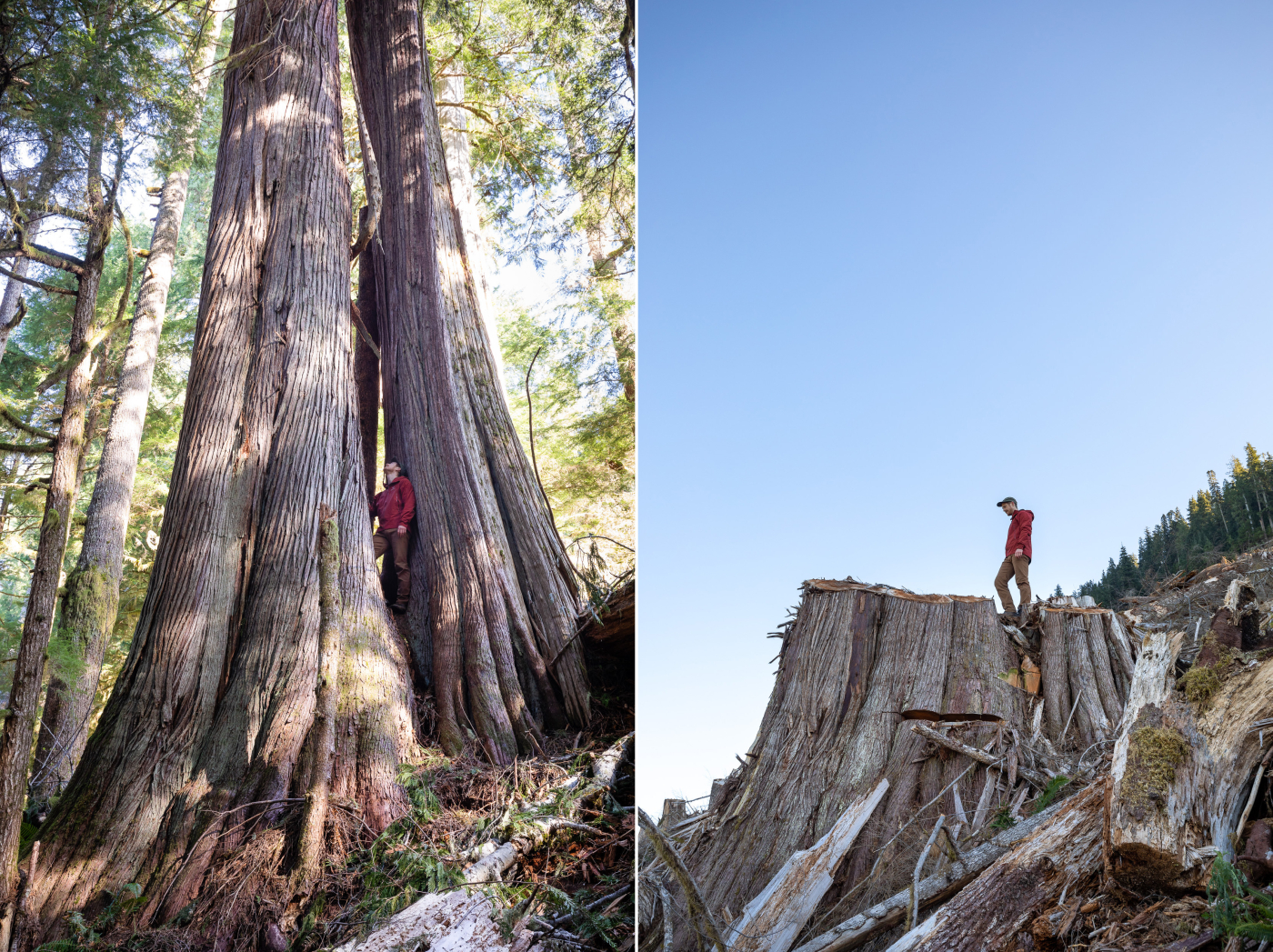 https://ancientforestalliance.org/wp-content/uploads/2026/10/Before-After-Caycuse-TJ-Watt-4-scaled.jpg
1915
2560
TJ Watt
https://ancientforestalliance.org/wp-content/uploads/2026/05/Ancient-Forest-Alliance-logo.svg
TJ Watt2026-10-16 17:36:002026-10-21 13:40:23BC Election 2026: Where do Parties Stand on Nature & Old-Growth?
https://ancientforestalliance.org/wp-content/uploads/2026/10/Before-After-Caycuse-TJ-Watt-4-scaled.jpg
1915
2560
TJ Watt
https://ancientforestalliance.org/wp-content/uploads/2026/05/Ancient-Forest-Alliance-logo.svg
TJ Watt2026-10-16 17:36:002026-10-21 13:40:23BC Election 2026: Where do Parties Stand on Nature & Old-Growth? https://ancientforestalliance.org/wp-content/uploads/2026/10/BC-Election-2026-Banner-1-1-scaled.jpg
1439
2560
TJ Watt
https://ancientforestalliance.org/wp-content/uploads/2026/05/Ancient-Forest-Alliance-logo.svg
TJ Watt2026-10-09 18:16:372026-10-16 17:44:41Where do BC’s Major Political Parties Stand on Nature Protection?
https://ancientforestalliance.org/wp-content/uploads/2026/10/BC-Election-2026-Banner-1-1-scaled.jpg
1439
2560
TJ Watt
https://ancientforestalliance.org/wp-content/uploads/2026/05/Ancient-Forest-Alliance-logo.svg
TJ Watt2026-10-09 18:16:372026-10-16 17:44:41Where do BC’s Major Political Parties Stand on Nature Protection?Take Action
 Donate
Support the Ancient Forest Alliance with a one-time or monthly donation. Send a Message
Send an instant message to key provincial decision-makers.
Playing with words regarding Tree Farm Licences
/in News CoverageWhen Alice met Humpty Dumpty, in Lewis Carroll’s famous book “Alice in Wonderland,” Humpty informed her rather scornfully that “When I use a word, it means just what I choose it to mean.” And so goes the Ministry of Forests with its repeated use of the term “Area-based Forest Tenures” in its Discussion Paper and on its public consultation website.
Again and again, it is highlighted on the Ministry website that the issue is all about converting volume-based tenure into area-based tenure to address the timber supply problem in the province. Now, there are a number of types of area-based tenure in British Columbia, including Community Forest Agreements, Woodlot Licences, and First Nations Woodland Licences, all of which have some popular support throughout the province. But it is a mistake to think the Ministry is actually referring to these when it is talking about rolling over existing forest licences into Area-based Forest Tenures.
When you drill down past all the headings and references to Area-based Forest Tenures on the Ministry’s website and in its Discussion Paper, it becomes clear that what the Ministry is proposing is a rollover of volume-based licences into one particular – and highly controversial – type of area-based tenure, i.e. Tree Farm Licences (TFLs).
So, rather than a Discussion Paper on Area-based Forest Tenures, the Discussion Paper could be more accurately described as a Discussion Paper promoting the benefits of Tree Farm Licences and defining the criteria for rollover to these TFLs. However, in this case, the Ministry appears to have followed Humpty Dumpty’s lead by claiming that words only mean whatever it chooses them to mean.
Why go to all this trouble? Why confound the terms and cause confusion? Why not make it crystal clear, with no ambiguity, that this whole exercise is about TFLs alone? Well, Tree Farm Licences have always been controversial in BC. Just last year, the Minister of Forests tried to push through legislation allowing for large-scale conversion of existing timber licenses into TFLs. Many in the province felt that this move would be a giveaway to the investors and shareholders of a few big companies at the expense of other sectors of the forest industry, First Nations and the population as a whole. In the face of widespread opposition, the Forest Minister was forced to withdraw the legislation.
But what you can’t push through under one label, try another. Thus we have the phrase “area-based forest tenures” peppered throughout the Ministry press release, website and Discussion Paper. In so doing, it appears to want to shift the debate away from a focus on TFLs to the more general (and less controversial) topic of volume-based tenures versus area-based tenures.
But, as revealed in a leaked confidential cabinet document in April of 2013 (after the initial TFL legislation was withdrawn), the Ministry’s intentions have remained the same – convert at least some of the existing forest licences in the province into TFLs. The only thing that has changed from last year has been the method of selling that conversion and the terminology.
The Ministry also wants to shift the debate away from the much more pressing issue of public oversight and proper forest management. No matter whether it is volume-based or area-based tenures, we need rigorous and professional public oversight of our forests. Yet the provincial government has slashed hundreds of jobs in forestry inspection and science. As a result, our forests are in terrible shape with lack of reforestation, overharvesting, incomplete inventory and environmental degradation rampant.
These are facts that all the Humpty Dumpty wordplay in the world cannot hide. And more TFLs will not provide a remedy.
[250 News article no longer available]
BC Liberal Government Revives Proposed “Forest Giveaway Scheme” for Major Logging Companies on Public Forest Lands
/in Media ReleaseFor Immediate Release
April 2, 2014
BC Liberal Government Revives Proposed “Forest Giveaway Scheme” for Major Logging Companies on Public Forest Lands
Revived proposal would entrench the status quo of unsustainable overcutting by granting exclusive logging rights to major timber companies over vast areas of public forest lands by expanding Tree Farm Licences.
“Despite being killed by widespread public opposition just a year ago, the BC Liberals never stop trying to revive their ‘Corporate Timber Zombie’ that is always reaching out to grab our public forests. But this time they’re strengthening and boosting it with a massive injection of PR. No doubt this will make it harder to kill. But kill it we must, as this forest giveaway scheme will further entrench the unsustainable status quo of massive overcutting on public lands, ultimately resulting in the collapse of human communities and ecosystems,” stated Ken Wu, Ancient Forest Alliance executive director. “We’ve seen this familiar pattern of resource depletion, ecosystem collapse, and massive job loss played out time and time again throughout history, and forestry in BC is no exception – the process is well advanced on BC’s coast, and is now underway in BC’s Interior.”
Yesterday, the BC Liberal government revived their proposal to allow major logging companies to gain exclusive logging rights over vast areas of public forest lands through the expansion of Tree Farm Licences. See the BC government’s media release at: https://www.newsroom.gov.bc.ca/2014/04/public-input-invited-on-expansion-of-area-based-tenures.html and their “Discussion Paper: Area-Based Forest Tenures”: https://engage.gov.bc.ca/foresttenures/files/2014/03/Forest_Tenure_Discuss_Paper.pdf
A massive public outcry a year ago resulted in the BC Liberal government rescinding the same proposal prior to the provincial election. See: https://www.cbc.ca/news/canada/british-columbia/b-c-backs-off-forest-land-volume-area-trade-plan-1.1386946
A Tree Farm Licence (TFL) is a defined geographic area that is tens or hundreds of thousands of hectares in size that confers exclusive logging rights to one logging company on public (Crown) land. TFL’s currently constitute a small fraction of BC, about 15% of the province’s cut. Most of the province’s forests are found in Timber Supply Areas (TSA’s) where no specific geographic area is granted to companies for exclusive logging rights – instead they are given a volume of wood (in cubic meters) through a Forest Licence (FL) that they are allowed to cut within each TSA.
While now gently billed as a “consultation process” regarding “area-based tenures” – which evokes images of Community Forests and family-run Woodlots – in reality the government’s proposal aims to allow companies that already have a guaranteed cut through replaceable, “volume-based licences” – that is, mainly Forest Licences held by the major logging companies – to convert them into Tree Farm Licences: “The Province is looking at options to convert some or a portion of some volume-based forest licences to new or expanded area-based tree farm licences (page 11, Discussion Paper: Area-Based Forest Tenures). In BC, five major companies have been allocated two-thirds of the allowable cut under replaceable Forest Licences: [Original article no longer available]
The scope of the new consultation is a rigged process that doesn’t ask “whether” or not Tree Farm Licences should be expanded, but instead asks “how” they should be implemented. The BC government’s Discussion Paper only lists “Potential Benefits” (page 9) but no “Potential Problems”. Its starting assumption is that companies with volume-based licences should and will be allowed to convert them into Tree Farm Licences in areas of the province. Their media release states:
“The scope of the public consultation will focus on how best to achieve government’s objectives within any conversion process on volume-based to area-based tenures, and specifically on the following:
-the social, economic and environmental benefits that should be sought from proponents through conversions, and
– the criteria for evaluating applications and the process for implementing conversions, including specific application requirements and target locations for conversion opportunities.”
In addition, despite the government’s press release that attempts to downplay the extent of the proposal as if it will be limited to pine-beetle affected regions (which is still an enormous part of the province), that “Conversions are not being considered on a province wide basis. They are one ‘tool in the toolbox’ that may help with mid-term timber supply issues in parts of the Interior that have been impacted by the mountain pine beetle,” in contrast their comprehensive Discussion Paper states the government’s wider ambitions: “Initially, these opportunities would be limited in number and would only be available in areas impacted by the mountain pine beetle. Over time, they could be offered in other parts of the province. (page 11, Discussion Paper: Area-Based Forest Tenures)
Perhaps the main crux of the drive for Tree Farm Licence expansion is to enhance the major logging companies’ claims to compensation and to undermine potential forest conservation measures (for fish and wildlife habitat, recreation, old-growth forests, endangered species, scenery, tourism, etc.) and First Nations treaties, which pose the main sources of “uncertainty” to the companies’ unfettered access to the remaining timber supply. The BC government’s Discussion Paper states:
“The major benefit of such a change is the increased certainty of timber supply that an area-based tenure would apply to the licence holder.” (page 10, Discussion Paper: Area-Based Forest Tenures )
and
“The licence holder is compensated if the allowable annual cut of the licence is reduced by more than 5 per cent as a result of Crown land deletions.” (page 8, Discussion Paper: Area-Based Forest Tenures)
“This is a dangerous proposal that will give increased rights to the major logging corporations on public lands at the expense of the sustainability of local communities and ecosystems. Greater corporate certainty by granting them exclusive logging rights over huge areas of public lands will make it harder to protect forests for wildlife, recreation, scenery, and tourism, and could make First Nations treaties more expensive, lengthy and difficult to resolve. It will entrench the massive, short-sighted overcutting taking place that has already driven the crisis in BC’s woods this far,” stated TJ Watt, Ancient Forest Alliance campaigner.
The BC government propagates the myth that increased corporate control on public lands fosters better stewardship and greater sustainability in their Discussion Paper: “With area-based forest tenures, it is in the best interests of the licence holder to ensure the long-term sustainability of the area to secure future harvests.” (page 8, Discussion Paper: Area-Based Forest Tenures). In reality, BC’s Tree Farm Licences are bought and sold frequently by highly mobile companies that themselves frequently change ownership – these major companies are not tied to the land like communities and living creatures are. Some of the province’s most notorious, internationally famous examples of massive clearcutting, overcutting, landslides, destruction of salmon streams, annihilation of old-growth forests, locked gates, and ruined scenery and recreational opportunities are in the province’s Tree Farm Licences.
See an opinion piece by former BC Forest Service forester Anthony Britneff regarding many of these issues at: https://www.vancouversun.com/news/Tree+licence+rollover+public+benefit/8059516/story.html#ixzz2MvKFwm3s
In the Globe and Mail, it was reported recently that two of the BC Interior’s major companies, Canfor and West Fraser, recently overcut almost a million cubic meters of live green timber where they were supposed to be only taking beetle-killed wood. Incredibly, the companies were let off the hook by Forest Minister Steve Thomson without penalties:
https://www.theglobeandmail.com/news/british-columbia/timber-companies-cant-see-the-consequences-for-the-trees/article17732435/
“Instead of penalizing companies that are overcutting our forests, this government is now looking to potentially reward them by further entrenching their unfettered access to vast tracts of public forest lands through new Tree Farm Licences,” stated Wu. “This is the BC Liberal government’s attempt to facilitate the last great timber grab by the major companies to log until the end of the resource – at the expense of communities and ecosystems.”
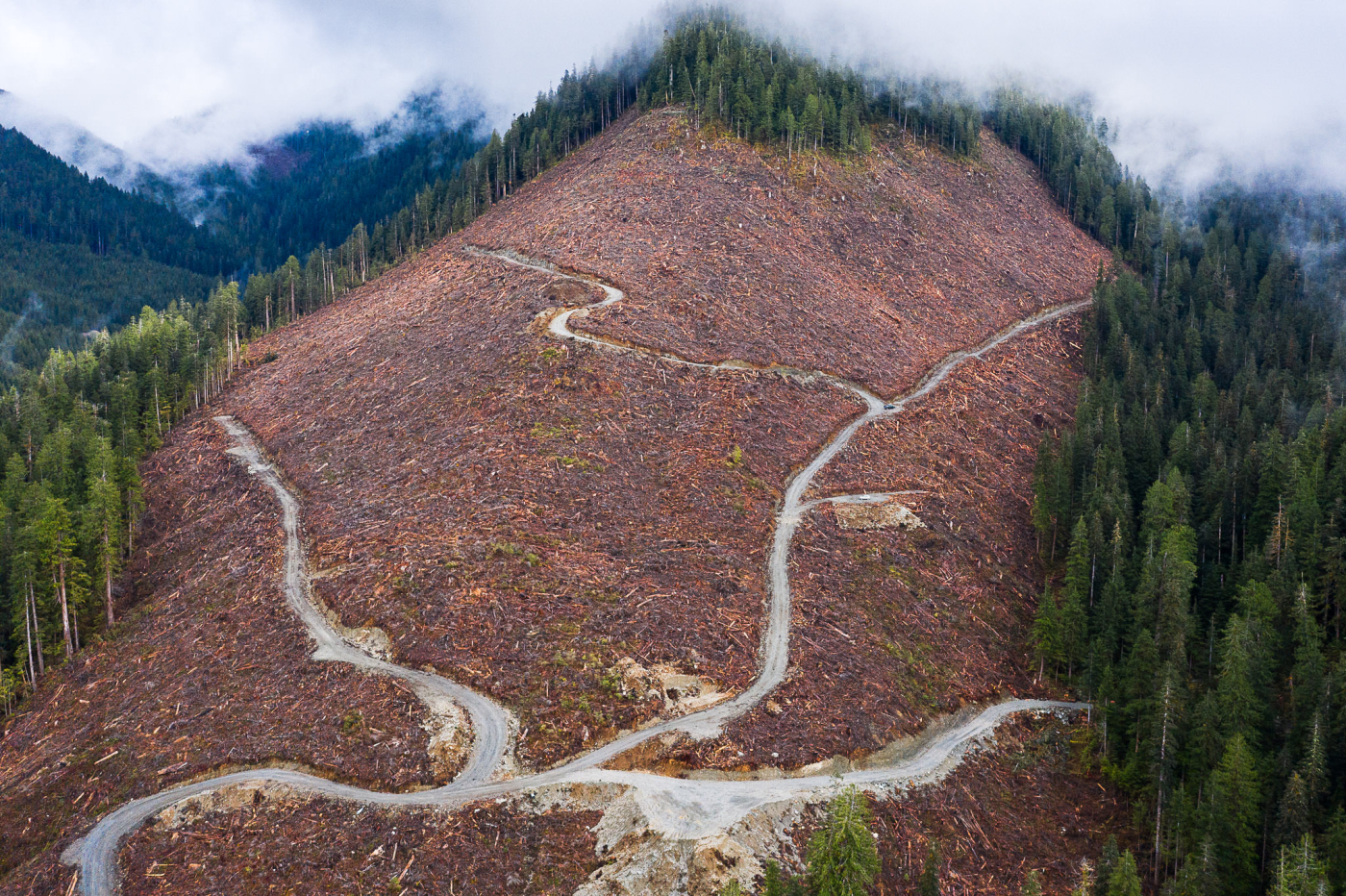
PHOTO CAPTION: Tree Farm Licence 44, Klanawa Valley, Vancouver Island, November 2013, south of Bamfield and Port Alberni. Large-scale clearcut logging in Tree Farm Licences has depleted and fragmented the once vast old-growth forests of Vancouver Island, causing the collapse of forestry employment in once-wealthy resource towns like Port Alberni and of whole ecosystems. The BC Liberal government stated yesterday that the creation of new Tree Farm Licences across BC will benefit the environment because “it is in the best interests of the licence holder to ensure the long-term sustainability of the area.”
B.C. government reopens timber rights talks
/in News CoverageForests Minister Steve Thomson has reopened talks on giving forest companies exclusive access to timber rights on some public lands.
A year ago, widespread opposition forced Thomson to withdraw related legislation after critics warned that it would give companies too much control.
This time, Thomson is launching a two-month consultation process led by retired civil servant and former chief forester Jim Snetsinger.
Thomson said the government wants to get the public’s input on its plan to convert some volume-based licences to new or expanded area-based licences.
Volume-based licences allow multiple companies to cut trees in a specific timber supply area. Area-based tenures, also known as tree farm licences, give companies exclusive access to the trees in an area.
The government argues that TFLs provide licence-holders with “increased certainty” of timber supply and encourage them to make long-term investments in sawmills and silviculture.
“This, in turn, can provide stability for workers and the community,” states a government discussion paper.
Thomson said the government is considering the change as way to deal with a declining timber supply in the Interior caused by the mountain pine beetle epidemic.
But critics argue that giving forest companies increased control over Crown land spells disaster for the environment and makes it more difficult to settle First Nations treaties.
“When companies say they want greater certainty over the land base, what they mean is greater certainty against conservation measures and treaty settlement,” said Ken Wu, executive director of the Ancient Forest Alliance. “There’s a lot of other users and a lot of other values on those lands besides large-scale logging.”
NDP forests critic Norm Macdonald said there is no evidence that allowing exclusive rights in a timber area benefits anyone other than the big forest companies, many of whom are major donors to the B.C. Liberal Party.
“I get why the private companies want it and I don’t begrudge them at all,” he said. “But why the public would buy into this is beyond me. They have not made the case that it’s for the public good.”
Macdonald said the public, in fact, will lose some of the control it has to protect wildlife and the environment on lands where companies have exclusive access to the timber. “It’s not a total privatization, that’s true,” he said. “But there’s no question you’ve given up greater property rights and, therefore, you’ve given up complete control of that land.”
Thomson said the government’s vision is that companies would be given exclusive access only in areas where there is support and a strong case for doing so. “We’re not contemplating conversions on a provincewide basis, but rather on a case-by-case basis,” he said.
Thomson said he wants to hear from the public what types of benefits the companies should provide in exchange, and what criteria should be used to evaluate applications.
“Before any company would be invited to an application, they would have to be able to demonstrate the public interest and the values under which they’re doing that,” he said.
The public consultation process concludes on May 30. Snetsinger will submit a final report at the end of June.
Thomson declined to provide a timeline for potential legislation.
“I think that would be pre-judging the outcome of the process and pre-judging the recommendations that [Snetsinger] will bring forward,” he said.
Read more: https://www.timescolonist.com/business/b-c-government-reopens-timber-rights-talks-1.939094