 https://ancientforestalliance.org/wp-content/uploads/2026/09/Old-Growth-Clearcut-Caycuse-Vancouver-Island.jpg
1364
2048
TJ Watt
https://ancientforestalliance.org/wp-content/uploads/2026/05/Ancient-Forest-Alliance-logo.svg
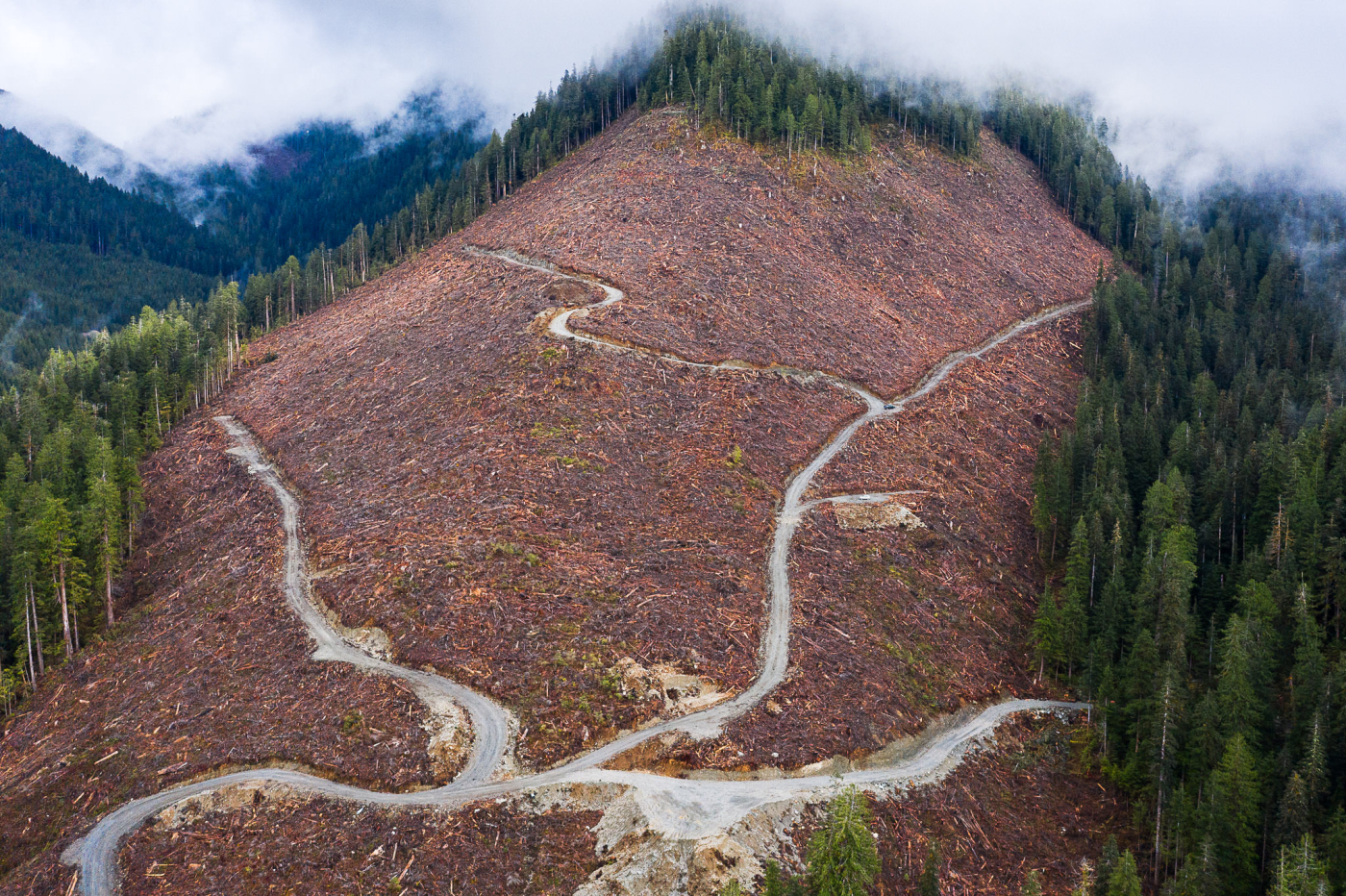
TJ Watt2026-10-26 15:06:162026-10-26 15:06:16Victoria Buzz: Environmental advocates concerned over results of BC election
https://ancientforestalliance.org/wp-content/uploads/2026/09/Old-Growth-Clearcut-Caycuse-Vancouver-Island.jpg
1364
2048
TJ Watt
https://ancientforestalliance.org/wp-content/uploads/2026/05/Ancient-Forest-Alliance-logo.svg
TJ Watt2026-10-26 15:06:162026-10-26 15:06:16Victoria Buzz: Environmental advocates concerned over results of BC electionRelated Posts
https://ancientforestalliance.org/wp-content/uploads/2026/09/Old-Growth-Clearcut-Caycuse-Vancouver-Island.jpg
1364
2048
TJ Watt
https://ancientforestalliance.org/wp-content/uploads/2026/05/Ancient-Forest-Alliance-logo.svg
TJ Watt2026-10-26 15:06:162026-10-26 15:06:16Victoria Buzz: Environmental advocates concerned over results of BC election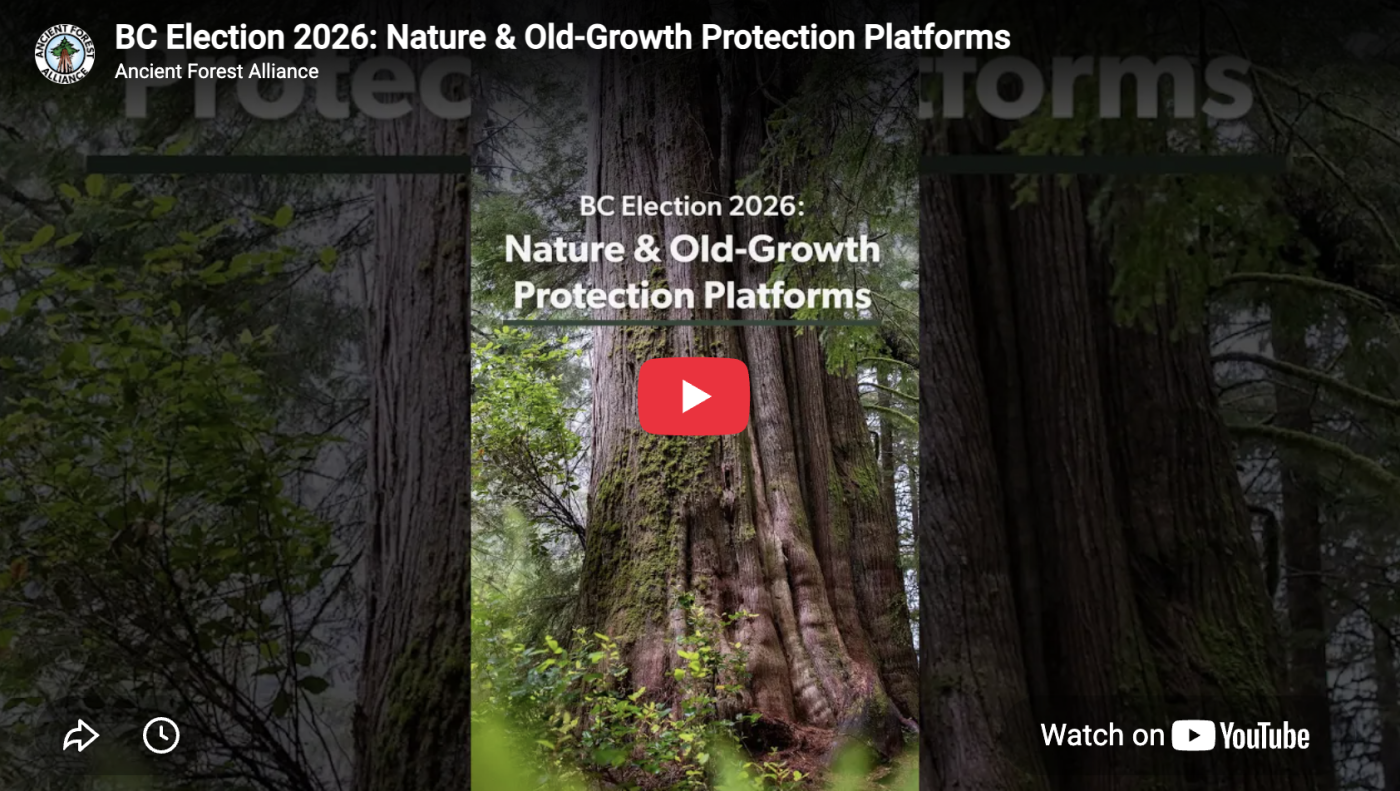 https://ancientforestalliance.org/wp-content/uploads/2026/10/Screenshot-2026-10-22-at-4.54.32-PM.png
952
1684
TJ Watt
https://ancientforestalliance.org/wp-content/uploads/2026/05/Ancient-Forest-Alliance-logo.svg
TJ Watt2026-10-22 16:54:062026-10-22 16:59:41NEW Video: BC Election 2026: Nature & Old-Growth Protection
https://ancientforestalliance.org/wp-content/uploads/2026/10/Screenshot-2026-10-22-at-4.54.32-PM.png
952
1684
TJ Watt
https://ancientforestalliance.org/wp-content/uploads/2026/05/Ancient-Forest-Alliance-logo.svg
TJ Watt2026-10-22 16:54:062026-10-22 16:59:41NEW Video: BC Election 2026: Nature & Old-Growth Protection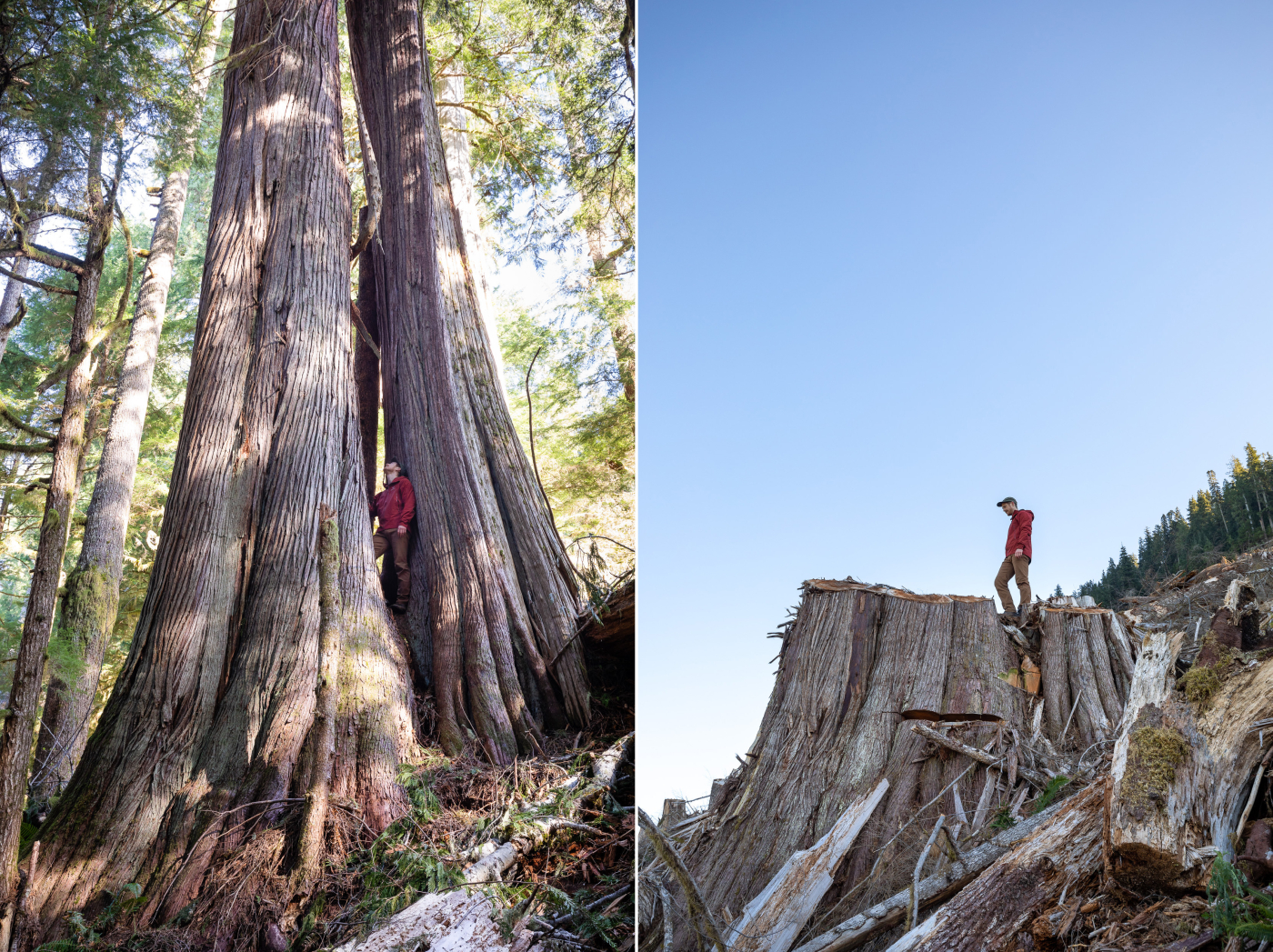 https://ancientforestalliance.org/wp-content/uploads/2026/10/Before-After-Caycuse-TJ-Watt-4-scaled.jpg
1915
2560
TJ Watt
https://ancientforestalliance.org/wp-content/uploads/2026/05/Ancient-Forest-Alliance-logo.svg
TJ Watt2026-10-16 17:36:002026-10-21 13:40:23BC Election 2026: Where do Parties Stand on Nature & Old-Growth?
https://ancientforestalliance.org/wp-content/uploads/2026/10/Before-After-Caycuse-TJ-Watt-4-scaled.jpg
1915
2560
TJ Watt
https://ancientforestalliance.org/wp-content/uploads/2026/05/Ancient-Forest-Alliance-logo.svg
TJ Watt2026-10-16 17:36:002026-10-21 13:40:23BC Election 2026: Where do Parties Stand on Nature & Old-Growth? https://ancientforestalliance.org/wp-content/uploads/2026/10/BC-Election-2026-Banner-1-1-scaled.jpg
1439
2560
TJ Watt
https://ancientforestalliance.org/wp-content/uploads/2026/05/Ancient-Forest-Alliance-logo.svg
TJ Watt2026-10-09 18:16:372026-10-16 17:44:41Where do BC’s Major Political Parties Stand on Nature Protection?
https://ancientforestalliance.org/wp-content/uploads/2026/10/BC-Election-2026-Banner-1-1-scaled.jpg
1439
2560
TJ Watt
https://ancientforestalliance.org/wp-content/uploads/2026/05/Ancient-Forest-Alliance-logo.svg
TJ Watt2026-10-09 18:16:372026-10-16 17:44:41Where do BC’s Major Political Parties Stand on Nature Protection?Take Action
 Donate
Support the Ancient Forest Alliance with a one-time or monthly donation. Send a Message
Send an instant message to key provincial decision-makers.
B.C. announces plans to revamp its timber supply system for forestry firms
/in News CoverageVICTORIA — Forests Minister Steve Thomson says the Liberal government is taking another shot at giving forest companies more rights to control British Columbia's public forest lands, but he rejects criticism that the plan would privatize provincial forests.
The move could dramatically change the way public forests are managed by granting lumber companies tenure rights, or logging rights, to large pieces of land. Companies are currently allotted timber harvest rights on a specified numbers of trees.
The proposed changes prompted immediate scorn from an environmental group and skepticism from the Opposition New Democrats.
“We're going to go totally to the wall over this one,” said Ancient Forest Alliance spokesman Ken Wu. “The large forest companies have too long been special interest groups over our public forest lands.”
Plans to amend the Forest Act last year to move towards area-based tenures were dumped after a public outcry.
Thomson announced a consultation program Tuesday that will consider public and industry opinion over converting forest land management to area-based tenures from its current volume-based tenure system.
The minister said area-based tenures will not be provincewide, moving only to areas where there is public approval.
He appointed Jim Snetsinger, a former B.C. chief forester, to oversee a two-month consultation process, with a report and recommendations due June 30. Snetsinger will hold public hearings in 10 communities.
Forest tenures or licences are agreements between the government and a person or company to provide logging rights on Crown land. Tenure holders must make payments to the government for timber harvested on Crown land.
Thomson said moving to area-based tenures will give forest companies more certainty over the land on which they harvest timber. He said the government still owns the land, but the companies would have long-term management rights.
“This only gives them timber-harvesting rights to the area as they currently have with volume-based licences,” he said. “This is not privatization and not transferring rights to that area to the land holder other than those harvesting rights.”
Thomson said last March when the Liberals shelved the changes that they require broader public consultation.
Wu said the only certainty British Columbians can expect from land-based tenures for forest companies is environmental destruction.
Opposition NDP forests critic Norm Macdonald said he understands why companies want to control forest land, but the government will have a tough time convincing the public to support the changes.
“Why the public would buy into this is beyond me,” he said. “They have not made the case that this is for the public good. If this is a sales job, that's a problem.”
Read more: https://www.theprovince.com/business/announces+plans+revamp+timber+supply+system+forestry+firms/9687518/story.html
Timber companies can’t see the consequences for the trees
/in News CoverageBritish Columbia is in the midst of an unprecedented and unsustainable salvage operation in its interior forests because of the attack of the mountain pine beetle.
And yet, when two of the province’s biggest forestry companies were caught going into those woods and cutting truckloads of healthy green timber meant for future harvests, Forests Minister Steve Thomson’s reaction was as mild as a milk-sated kitten.
After forestry-ministry staff raised alarms, Mr. Thomson signed an order that could have led to hefty penalties for Canfor and West Fraser for taking greenwood in an area where they were supposed to be targeting the dead and dying pine.
In defiance of the chief forester’s order, set down in February, 2008, the two companies overcut 928,000 cubic metres worth of healthy trees in the Morice Timber Supply Area, around the community of Houston, in B.C.’s northwest.
But the minister’s order was rescinded after the companies – both heavy contributors to the governing B.C. Liberal party – agreed to behave. The past is forgiven, no need for consequences.
“I had concerns about the trend we were starting to notice. We looked at the potential for the order. We got the commitments from the companies to operate within harvest management plans,” Mr. Thomson said in an interview.
“The plans are being closely monitored.”
It is because of the dwindling supply of timber that West Fraser is shutting down its Houston sawmill. Just weeks ago, Canfor permanently closed its Quesnel mill for the same reason.
Between the pine beetle and over-harvesting, the chief forester is expected to dramatically reduce the annual allowable cut in the region.
The provincial government has swept in and helped communities in the pine beetle zone, notably Mackenzie and Burns Lake, by securing exclusive timber supply in recent years. But it can’t do that everywhere – there simply won’t be enough trees to sustain even the region’s current, already curtailed, level of industry.
The alarm was raised last week in a special report from the Forest Practices Board, which has found that companies have shifted from harvesting dead pine trees to live non-pine trees that had been earmarked for the future.
“British Columbia is in the midst of a large-scale salvage program, the likes of which has never been seen,” the report says.
“There is nothing sustainable about this harvest; this is a one-time activity initiated by the province to recover value from the trees killed by the mountain pine beetle (MPB) epidemic and to speed regeneration of affected areas … The issue, simply put, is that the more live trees that are harvested now, the lower the sustainable harvest level will be after the salvage program is finished.”
In the same report, the board, B.C.’s independent watchdog for forest practices, also warns the government really doesn’t know how much timber is left to salvage. “There is a growing disparity between government’s estimate of the amount of salvageable timber and the actual economically viable timber available on the ground.”
And it is, clearly, just an estimate. The B.C. Government and Service Employees’ Union says the forest ministry’s compliance and enforcement program conducts a third of the number of inspections of forest operations compared with a decade ago. And a recent report from the Professional Employees Association also warns that the number of licensed science officers, including foresters, has dropped by 15 per cent in the past five years.
NDP forestry critic Norm Macdonald said those cuts make it hard to detect overcutting, and signal to industry that there is little intent to uphold the rules. “The government has to accept responsibility – they have consciously chosen not to collect proper data, which [are] essential to properly manage the public lands,” he said in an interview. “And it means a much bigger problem in the future for communities’ stability.”
The future may not be far off. The chief forester is required only to set the annual allowable cut once every decade for each timber supply area. In this case, however, Mr. Thomson says he wants an update by the end of this year in the Morice Timber Supply Area. “I expect the review is going to show there will need to be adjustments, downward adjustments, in the annual allowable cut in those regions.”
Canfor and West Fraser will have little grounds to complain.
Read more: https://www.theglobeandmail.com/news/british-columbia/timber-companies-cant-see-the-consequences-for-the-trees/article17732435/
Comment: Forest, parks bills should be open to debate
/in News CoverageBig changes are being discussed for the future of British Columbia’s parks and forests. Despite the impact of these changes, British Columbians are not being consulted.
On Feb. 25, two proposed bills, Bill 4 and Bill 5, entered their second reading and almost no one noticed. If passed, the two amendment bills — known as the Park Amendment Act and the Forests, Lands and Natural Resource Operations Statutes Amendment Act — would adversely affect forest-based jobs and our protected areas network, which are anchors for the motto “Super Natural B.C.”
Buried within a 36-page document, Bill 5 looks to make what is being called an administrative change to speed up the process for the export of wood chips. In reality, this change is anything but simple and could have undesirable impacts for communities and those who work in the forest sector.
Forest Lands and Natural Resources Operations Minister Steve Thomson proposes an increase to the maximum amount of wood residue (wood chips) that the minister can permit for export from 5,000 bone-dry units to 200,000 bone-dry units.
Put plainly, the minister can currently approve the export of 217 double truckloads of wood chips in a single application without the requirement of an additional level of approval from cabinet. This balance and check ensures that all wood chip exports are, in fact, surplus and in the public interest. If the bill is passed, the minister could approve the export of more than 8,500 double truckloads of wood chips and shavings without any additional review of the application. This is a 40-fold increase and would logically have a correlation to employment.
B.C. is currently a net importer of wood chips. If the province needs more than we are exporting, why is the minister rushing to move more of our forests out of B.C.? With mills around the province shutting down and an exhausted timber supply in the mountain pine beetle-affected areas, this ability to approve a massive increase in exports sounds like a lot less value for B.C.’s forest products.
It also sounds like fewer jobs for British Columbians at a time when our government should be trying to keep forest product processing and production at home.
It’s not looking good on the environmental side, either. If passed, this amendment could lead to the expansion of forestry for export in areas that already do not have sufficient ecological conservation with little or no net gain for communities. The government should increase levels of forest protection from its current 15 per cent to scientifically mandated levels, instead of adding pressure on our forests by eliminating steps that help ensure a healthy balance is maintained.
Add to the mix the minister’s current priority to roll over volume-based tenures to area-based tenures, and one wonders whose interest is being served by these changes.
Bill 4, the Park Amendment Act brought forth by Environment Minister Mary Polak, proposes to allow “research” in the province’s parks related to feasibility and environmental assessment for pipelines, highways and transmission lines. However, the term “research” is not defined, and could mean anything from taking a water sample to drilling a test well. If the bill is passed, the minister could approve a permit for this range of research even if it isn’t consistent with the purpose of the park.
As written, Bill 4 would make every protected area vulnerable to large industrial projects.
When changes of this sort are proposed by a government, it is expected that public consultation and collaboration with affected sectors be done. This public vetting of policy ideas ensures that the resulting bill reflects the will of the public and affected interests. Decisions that affect the well-being of communities and forests should be up for public debate. Up to today, there has been no consultation with the public, environmental or labour sector.
Forests and forest workers deserve sustainability, and this should start with the government working to protect forests and keep jobs and forest-product manufacturing in B.C.
Fortunately, these are only proposed changes. There is still time to pull them off the table before we chip further away at our forest sector and our protected areas.
Read more: https://www.timescolonist.com/opinion/op-ed/comment-forest-parks-bills-should-be-open-to-debate-1.898223