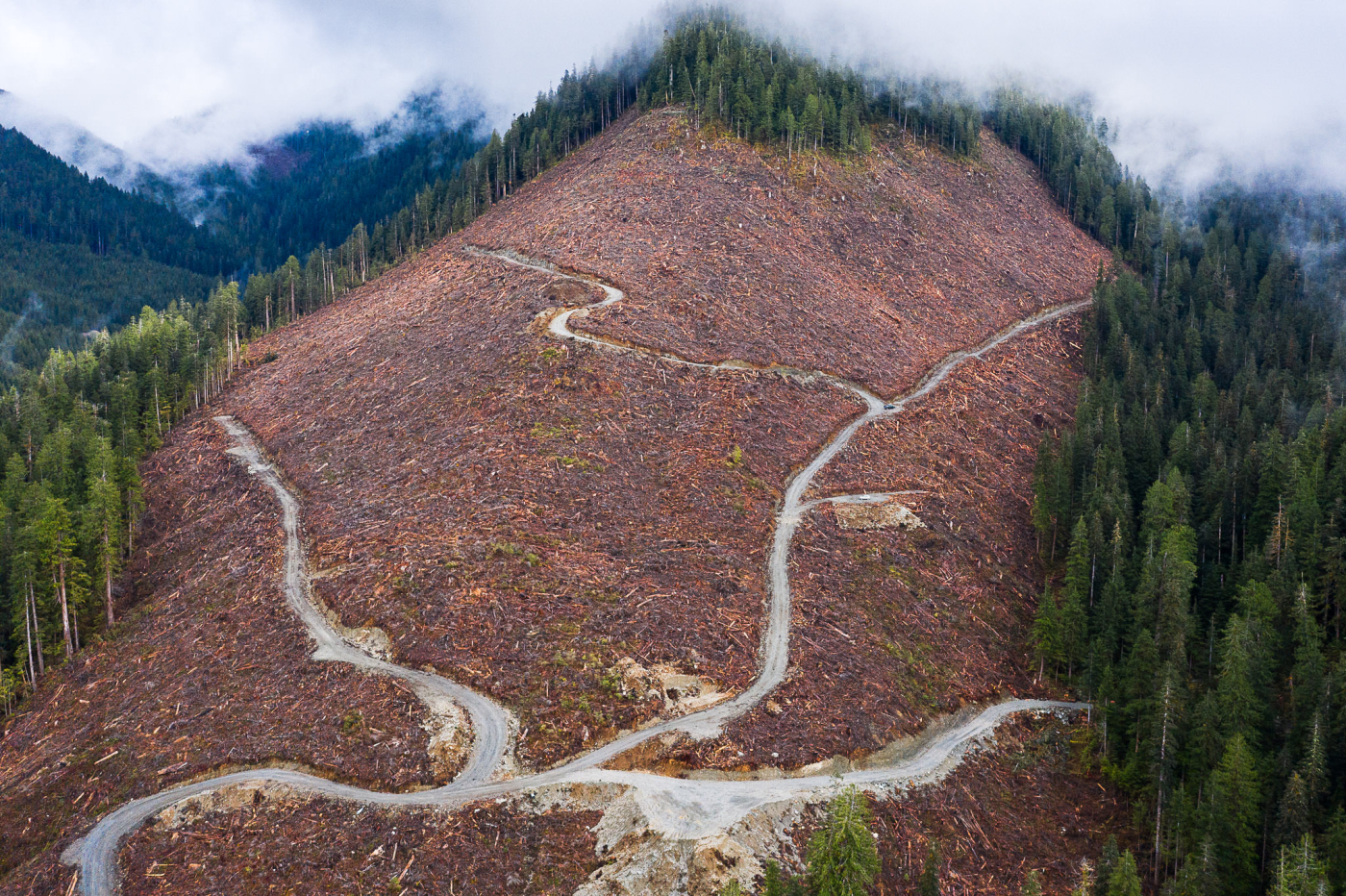
 https://ancientforestalliance.org/wp-content/uploads/2026/09/Old-Growth-Clearcut-Caycuse-Vancouver-Island.jpg
1364
2048
TJ Watt
https://ancientforestalliance.org/wp-content/uploads/2026/05/Ancient-Forest-Alliance-logo.svg
TJ Watt2026-10-26 15:06:162026-10-26 15:06:16Victoria Buzz: Environmental advocates concerned over results of BC election
https://ancientforestalliance.org/wp-content/uploads/2026/09/Old-Growth-Clearcut-Caycuse-Vancouver-Island.jpg
1364
2048
TJ Watt
https://ancientforestalliance.org/wp-content/uploads/2026/05/Ancient-Forest-Alliance-logo.svg
TJ Watt2026-10-26 15:06:162026-10-26 15:06:16Victoria Buzz: Environmental advocates concerned over results of BC electionRelated Posts
https://ancientforestalliance.org/wp-content/uploads/2026/09/Old-Growth-Clearcut-Caycuse-Vancouver-Island.jpg
1364
2048
TJ Watt
https://ancientforestalliance.org/wp-content/uploads/2026/05/Ancient-Forest-Alliance-logo.svg
TJ Watt2026-10-26 15:06:162026-10-26 15:06:16Victoria Buzz: Environmental advocates concerned over results of BC election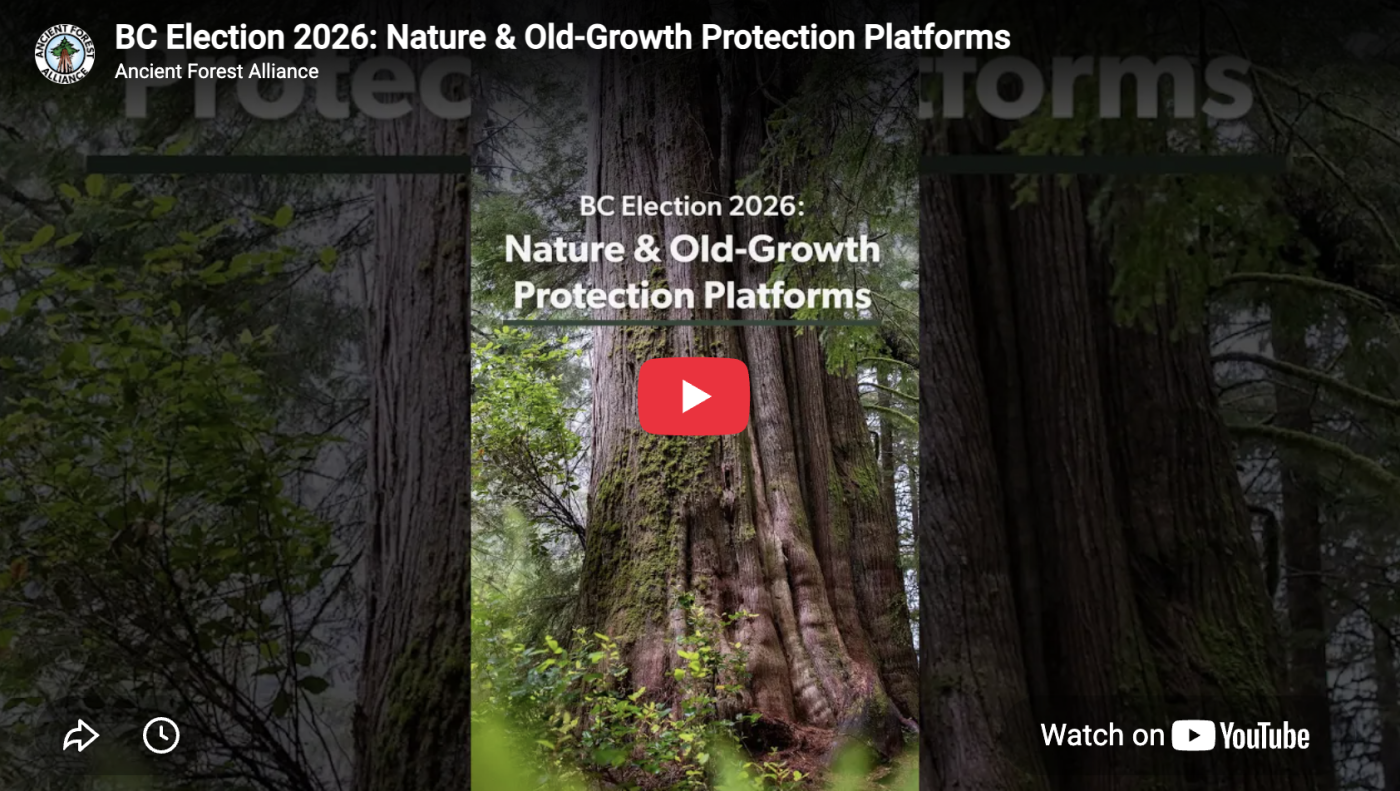 https://ancientforestalliance.org/wp-content/uploads/2026/10/Screenshot-2026-10-22-at-4.54.32-PM.png
952
1684
TJ Watt
https://ancientforestalliance.org/wp-content/uploads/2026/05/Ancient-Forest-Alliance-logo.svg
TJ Watt2026-10-22 16:54:062026-10-22 16:59:41NEW Video: BC Election 2026: Nature & Old-Growth Protection
https://ancientforestalliance.org/wp-content/uploads/2026/10/Screenshot-2026-10-22-at-4.54.32-PM.png
952
1684
TJ Watt
https://ancientforestalliance.org/wp-content/uploads/2026/05/Ancient-Forest-Alliance-logo.svg
TJ Watt2026-10-22 16:54:062026-10-22 16:59:41NEW Video: BC Election 2026: Nature & Old-Growth Protection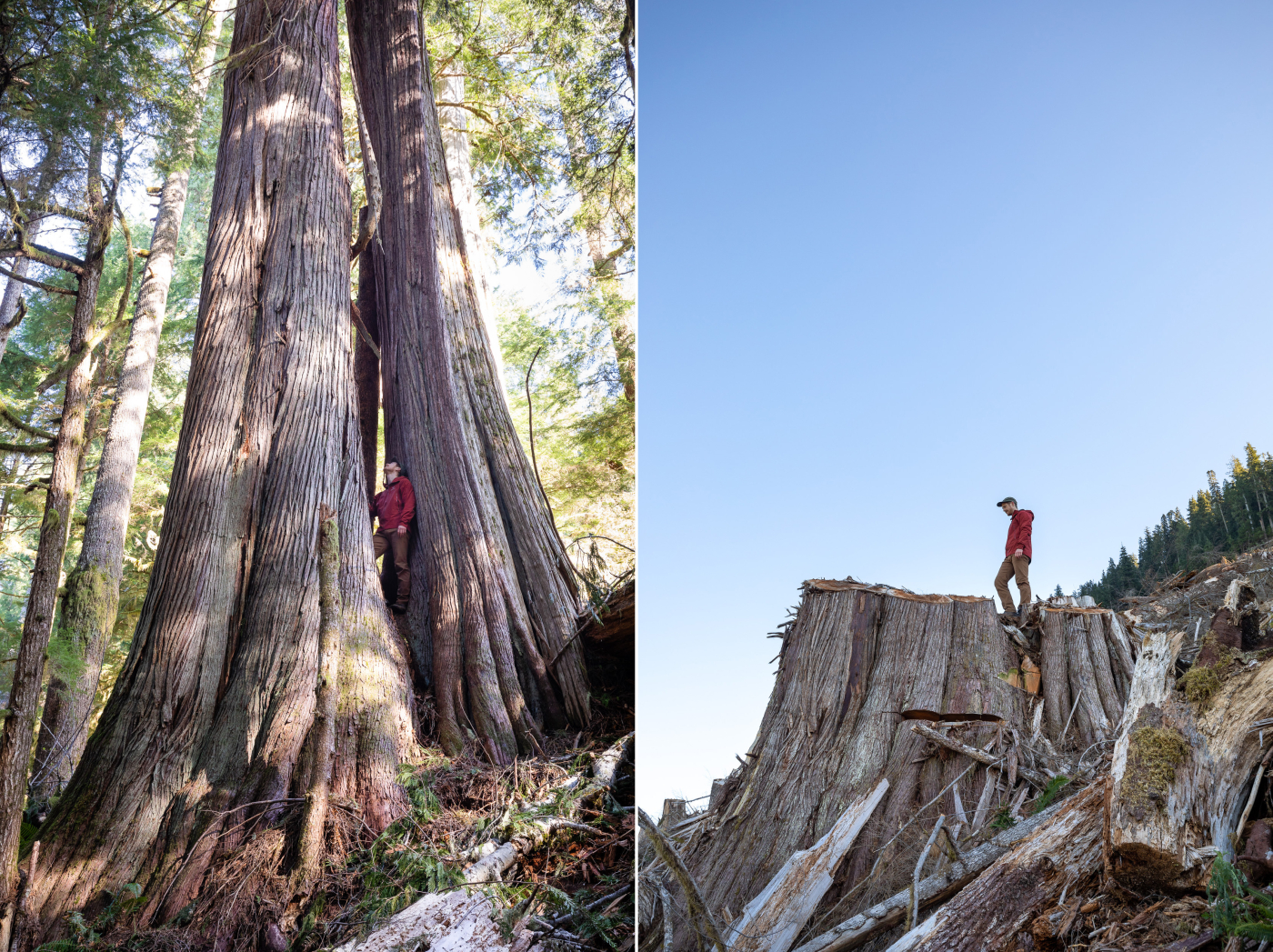 https://ancientforestalliance.org/wp-content/uploads/2026/10/Before-After-Caycuse-TJ-Watt-4-scaled.jpg
1915
2560
TJ Watt
https://ancientforestalliance.org/wp-content/uploads/2026/05/Ancient-Forest-Alliance-logo.svg
TJ Watt2026-10-16 17:36:002026-10-21 13:40:23BC Election 2026: Where do Parties Stand on Nature & Old-Growth?
https://ancientforestalliance.org/wp-content/uploads/2026/10/Before-After-Caycuse-TJ-Watt-4-scaled.jpg
1915
2560
TJ Watt
https://ancientforestalliance.org/wp-content/uploads/2026/05/Ancient-Forest-Alliance-logo.svg
TJ Watt2026-10-16 17:36:002026-10-21 13:40:23BC Election 2026: Where do Parties Stand on Nature & Old-Growth? https://ancientforestalliance.org/wp-content/uploads/2026/10/BC-Election-2026-Banner-1-1-scaled.jpg
1439
2560
TJ Watt
https://ancientforestalliance.org/wp-content/uploads/2026/05/Ancient-Forest-Alliance-logo.svg
TJ Watt2026-10-09 18:16:372026-10-16 17:44:41Where do BC’s Major Political Parties Stand on Nature Protection?
https://ancientforestalliance.org/wp-content/uploads/2026/10/BC-Election-2026-Banner-1-1-scaled.jpg
1439
2560
TJ Watt
https://ancientforestalliance.org/wp-content/uploads/2026/05/Ancient-Forest-Alliance-logo.svg
TJ Watt2026-10-09 18:16:372026-10-16 17:44:41Where do BC’s Major Political Parties Stand on Nature Protection?Take Action
 Donate
Support the Ancient Forest Alliance with a one-time or monthly donation. Send a Message
Send an instant message to key provincial decision-makers.
Kwakiutl First Nation protests BC government’s attempts to shirk responsibilities
/in News CoverageEight months after the Supreme Court of British Columbia declared that both the provincial and the federal governments have failed to honour the 1851 Douglas Treaty between the Crown and the Kwakiutl First Nation of Port Hardy, BC government has launched an appeal.
Last June, the nation went to court to seek a judicial review of decisions made by the Provincial Crown in granting land tenures to logging company Western Forest Products. Under the provisions of an 1851 treaty between the Crown and the Kwakiutl First Nation, the Kwakiutl argued the province should have consulted meaningfully with them before allowing Western Forest Products to remove more than 14,000 hectares of private land from the area covered by Tree Farm Licence 6. The licence also covers roughly half of traditional Kwakiutl territory.
The province filed its appeal several weeks ago, and members of the Kwakiutl have been protesting on their traditional territory ever since, and they have no plans to stop any time soon.
“It’s conducted peacefully, and it will go on indefinitely until we reach resolution on the implementation issue with the Crown,” said Norman Champagne, band manager and spokesperson for the Kwakiutl. He said the treaty grants the nation the right to maintain its livelihood “as formerly” and “for generations to follow.”
The treaty in question is one of a group of 14 pre-confederation treaties known as the Douglas Treaties that cover much of Vancouver Island. The treaties are a series of agreements between the colonial governor James Douglas and the nations of the island in which Douglas purchased the lands for settlement expansion and the nations retained use of existing villages and fields as well as hunting and gathering rights on all of the land.
But now, 163 years after the treaty was signed, the occupation of the land by settlers and developers has made it even more difficult to enforce the right to use traditional territory in traditional ways.
“Towns have built up around the First Nations, economies have developed, businesses have grown. The impact is on the land itself and it further diminishes even the Crown’s ability to set aside land for the Kwakiutl.”
According to counsel for the nation Louise Mandell, the provincial has been acting illegally since the signing of the 1851 treaty
“During all of this time, the position of the government has been that title has been extinguished through the treaties and now the court says that’s just wrong.”
Justice Weatherill made a declaration stating that the province of BC had an ongoing duty to consult with the nation “in good faith and endeavour to seek accommodations regarding their claim of unextinguished Aboriginal rights, titles and interests in respect of the KFN Traditional Territory.”
While the federal government has so far remained silent on the issue, the provincial government is appealing the declaration.
In an email statement, the BC Ministry of Aboriginal Relations and Reconciliation said the government consults with all Douglas Treaty nations on “any decision that may affect their treaty rights in their traditional territory.” Spokesperson Vivian Thomas said the province is appealing to clarify the scope of consultation the Supreme Court has deemed necessary, but refused to comment any further.
A spokesperson for Aboriginal Affairs said the federal arm is also declining to comment while the case is before the court.
There have been a handful of cases since the 1960s affirming the continued validity of Aboriginal rights and title alongside the Douglas treaties
While the Justice Weatherill urged the federal government to deal fairly and with the Kwakiutl to address land claim issues, Mandell believes the court should have gone further, by declaring that the provincial government doesn’t have the power to roll back rights granted through agreements with the Crown and demand that the federal government step in. The Kwakiutl plan to file a cross-appeal to ask that courts fully articulate the responsibilities of both levels of government and call them to the table with Indigenous governments to resolve the issue.
“The table has not been set properly for the implementation of this treaty,” she said.
“All of the pre-confederation treaties have not been properly implemented.”
Oldies but goodies: The oldest establishments in B.C., and a couple of people as well
/in News CoverageOldest Tree Ever
If you were expecting Canada’s longest-lived tree to be a towering monolith, you’re in for a disappointment. B.C.’s oldest tree is a 1,835-year-old yellow cedar stump in the Caren Range of the Sunshine Coast.
You might glance at the remains and think: “That’s no tree — it’s a tombstone.”
You’d be wrong. It’s no grave marker or monument to a butchered giant.
The Caren yellow cedar is as close as B.C. gets to the predictive power of the ancient Greek oracle of Delphi.
Like the oracle, it tells the future.
“You can learn a lot from studying the rings of older trees,” says botanist Andy MacKinnon, a research ecologist with B.C.’s forests ministry.
“You have a much better chance of appreciating how, and whether or not, today’s climate is different from the climate of the last couple of millenniums, and what you might expect for the future.”
The Caren cedar was 1,835 years old when it was felled in 1980. The Friends of Caren, a Sunshine Coast community group, discovered the huge stump in 1993.
How did it grow to such an age? Ken Wu, executive director of the Ancient Forest Alliance, says it would have been spared wind, fire and destructive insects.
MacKinnon says yellow cedars are naturally long-lived. Nor are the province’s oldest trees its biggest trees.
“We have discovered that a lot of the oldest trees are growing at higher elevations in more extreme environments and are growing very slowly,” MacKinnon says. “This yellow cedar is probably three times the age of the giant Western red cedar and Douglas fir in Cathedral Grove.”
Identifying the province’s oldest living tree is challenging because Western red cedars get hollow in the middle as they age, Wu says. Some reds may be older than the Caren yellow but because the rings are gone from their interior base, nobody knows, Wu says.
“It’s reasonable to assume that the oldest tree in British Columbia is still out there, unmeasured,” MacKinnon says.
Oldest Treehugger
B.C.’s oldest treehugger began to track down the province’s evergreen giants almost a century ago.
Victoria resident Al Carder, 103, has been working to identify and protect the province’s tallest trees for close to 97 years.
His devotion to big trees grew from a child’s sense of self-preservation in Cloverdale in 1917, when his father suggested he accompany him to measure a nearby Douglas fir felled by loggers. Carder did the sensible thing and went along.
“He was scared of his father’s wrath. He was rather a disciplinarian,” says Judith Carder, Al’s daughter.
As they measured the 104-metre behemoth, the seven-year-old boy caught the Big-Tree Bug. Carder has spent his working life as an agro-meteorologist — he was Canada’s first — but his fascination with big trees abided. Carder has written three books about trees. His most recent book, Reflections of a Big Tree Enthusiast, was published when he was 100.
Carder, who has lost most of his hearing but still lives independently, is an inspiration to young environmentalists.
Ken Wu, executive director of the Ancient Forest Alliance, points out that Carder has outlasted B.C.’s 80-year-old second-growth forests, which replaced its felled old-growth giants.
“I’ve heard of his work since I was a child as one of the early people who valued and promoted protection of the province’s monumental giant trees long before it was cool,” Wu says.
Judith says her father is fine with being called a treehugger but doesn’t consider himself an extremist.
“He says that at 103, he won’t be chaining himself to a tree.”
Read more: https://blogs.theprovince.com/2014/02/23/oldies-but-goodies-the-oldest-establishments-in-b-c-and-a-couple-of-people-as-well/
Arbutus RV Island Adventures Ep.1 – Avatar Grove
/in News CoverageShaw TV's Sucheta Singh takes us just north of Port Renfrew to Avatar Grove. A magical place full of old growth forest the size of skyscrapers.
Direct link to video: https://www.youtube.com/watch?v=7pMcveWnjK0