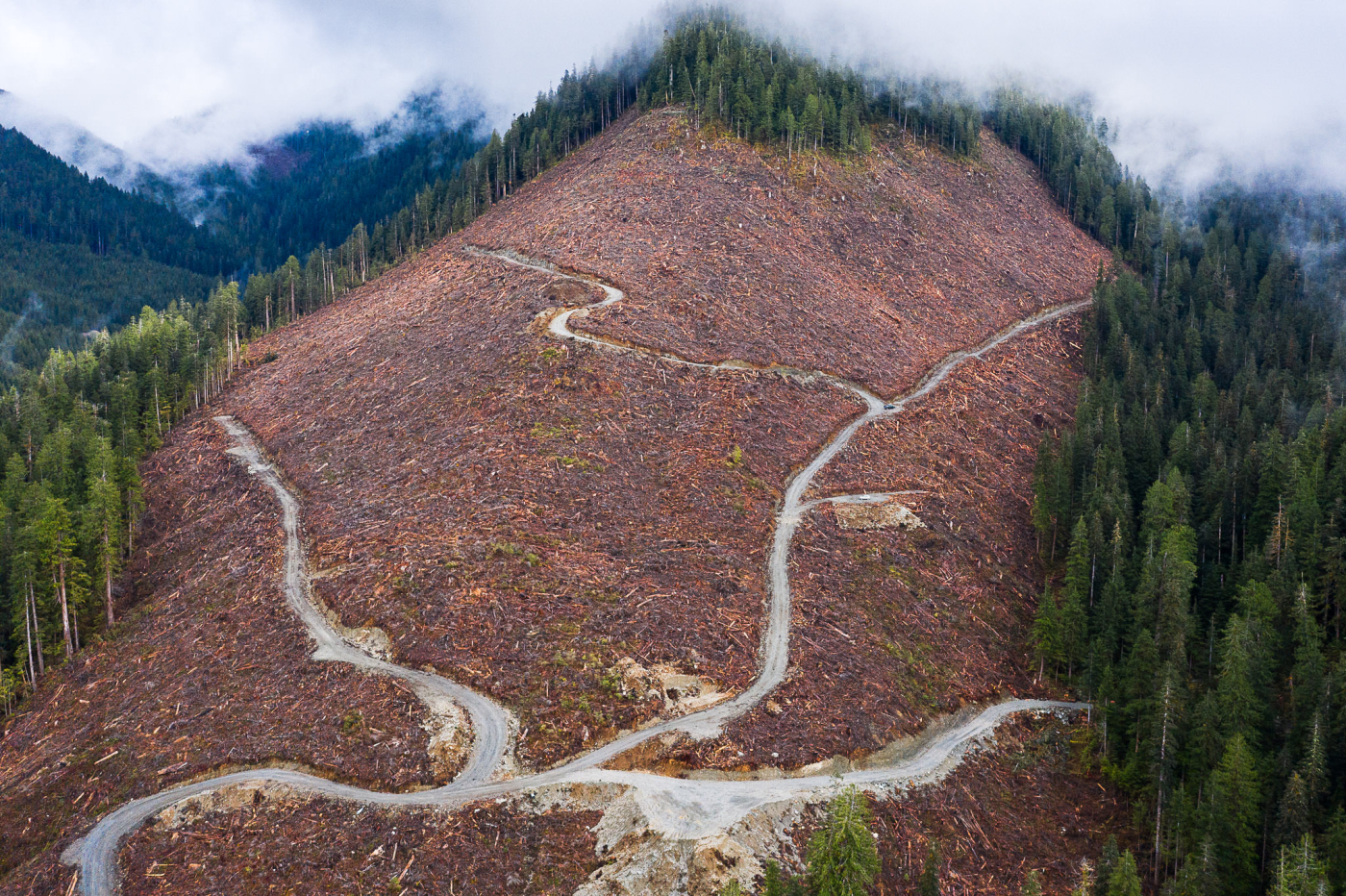
 https://ancientforestalliance.org/wp-content/uploads/2026/09/Old-Growth-Clearcut-Caycuse-Vancouver-Island.jpg
1364
2048
TJ Watt
https://ancientforestalliance.org/wp-content/uploads/2026/05/Ancient-Forest-Alliance-logo.svg
TJ Watt2026-10-26 15:06:162026-10-26 15:06:16Victoria Buzz: Environmental advocates concerned over results of BC election
https://ancientforestalliance.org/wp-content/uploads/2026/09/Old-Growth-Clearcut-Caycuse-Vancouver-Island.jpg
1364
2048
TJ Watt
https://ancientforestalliance.org/wp-content/uploads/2026/05/Ancient-Forest-Alliance-logo.svg
TJ Watt2026-10-26 15:06:162026-10-26 15:06:16Victoria Buzz: Environmental advocates concerned over results of BC electionRelated Posts
https://ancientforestalliance.org/wp-content/uploads/2026/09/Old-Growth-Clearcut-Caycuse-Vancouver-Island.jpg
1364
2048
TJ Watt
https://ancientforestalliance.org/wp-content/uploads/2026/05/Ancient-Forest-Alliance-logo.svg
TJ Watt2026-10-26 15:06:162026-10-26 15:06:16Victoria Buzz: Environmental advocates concerned over results of BC election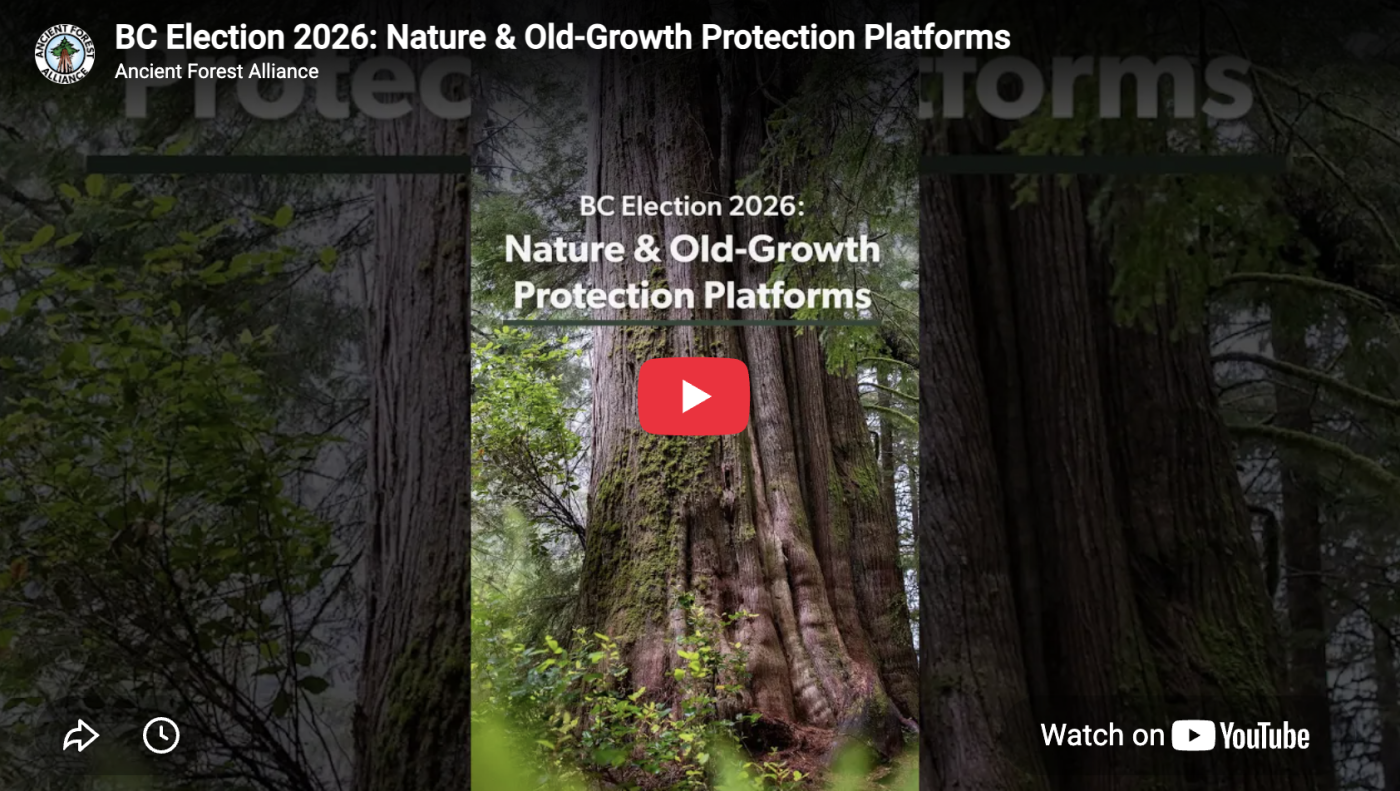 https://ancientforestalliance.org/wp-content/uploads/2026/10/Screenshot-2026-10-22-at-4.54.32-PM.png
952
1684
TJ Watt
https://ancientforestalliance.org/wp-content/uploads/2026/05/Ancient-Forest-Alliance-logo.svg
TJ Watt2026-10-22 16:54:062026-10-22 16:59:41NEW Video: BC Election 2026: Nature & Old-Growth Protection
https://ancientforestalliance.org/wp-content/uploads/2026/10/Screenshot-2026-10-22-at-4.54.32-PM.png
952
1684
TJ Watt
https://ancientforestalliance.org/wp-content/uploads/2026/05/Ancient-Forest-Alliance-logo.svg
TJ Watt2026-10-22 16:54:062026-10-22 16:59:41NEW Video: BC Election 2026: Nature & Old-Growth Protection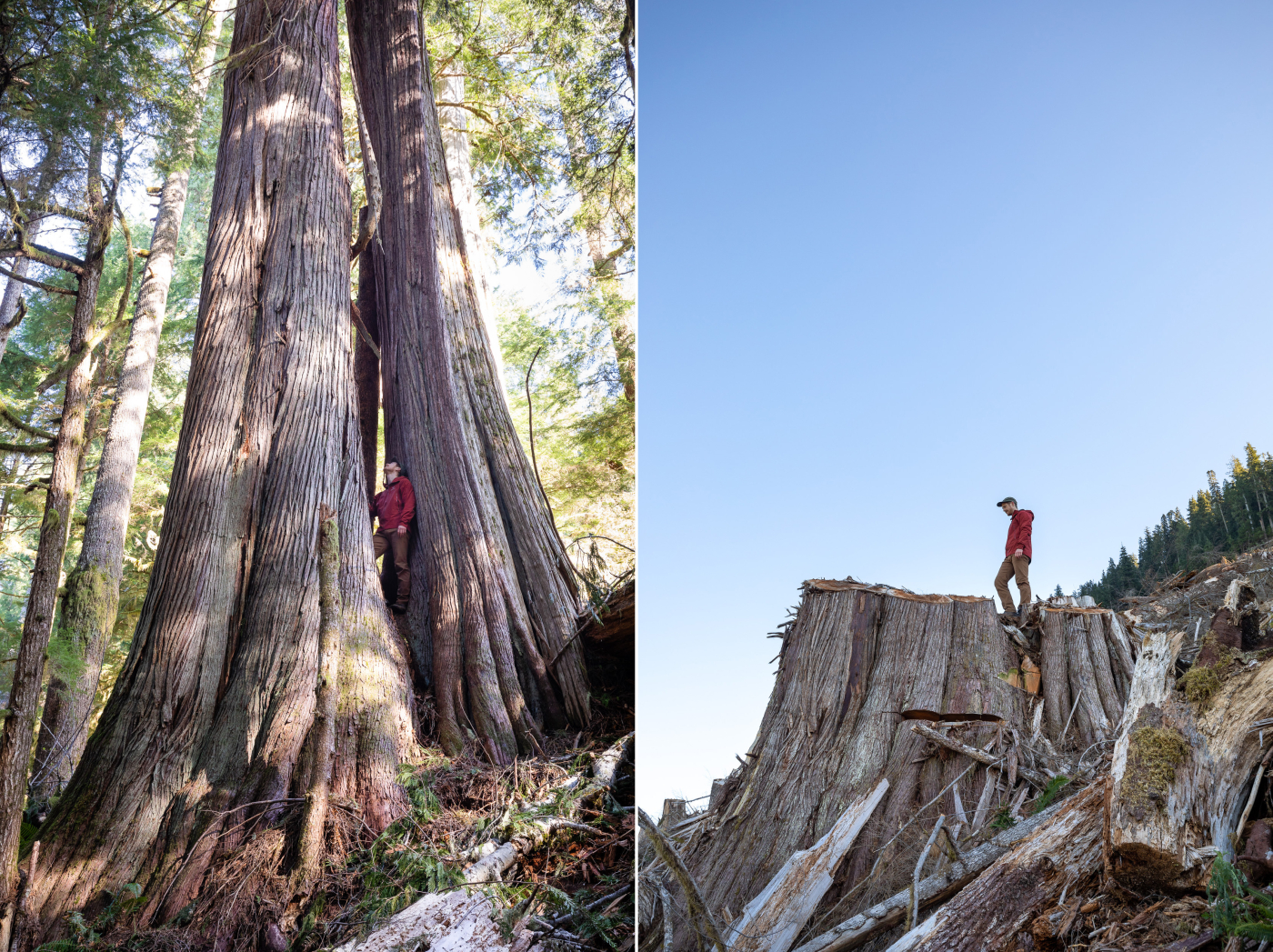 https://ancientforestalliance.org/wp-content/uploads/2026/10/Before-After-Caycuse-TJ-Watt-4-scaled.jpg
1915
2560
TJ Watt
https://ancientforestalliance.org/wp-content/uploads/2026/05/Ancient-Forest-Alliance-logo.svg
TJ Watt2026-10-16 17:36:002026-10-21 13:40:23BC Election 2026: Where do Parties Stand on Nature & Old-Growth?
https://ancientforestalliance.org/wp-content/uploads/2026/10/Before-After-Caycuse-TJ-Watt-4-scaled.jpg
1915
2560
TJ Watt
https://ancientforestalliance.org/wp-content/uploads/2026/05/Ancient-Forest-Alliance-logo.svg
TJ Watt2026-10-16 17:36:002026-10-21 13:40:23BC Election 2026: Where do Parties Stand on Nature & Old-Growth? https://ancientforestalliance.org/wp-content/uploads/2026/10/BC-Election-2026-Banner-1-1-scaled.jpg
1439
2560
TJ Watt
https://ancientforestalliance.org/wp-content/uploads/2026/05/Ancient-Forest-Alliance-logo.svg
TJ Watt2026-10-09 18:16:372026-10-16 17:44:41Where do BC’s Major Political Parties Stand on Nature Protection?
https://ancientforestalliance.org/wp-content/uploads/2026/10/BC-Election-2026-Banner-1-1-scaled.jpg
1439
2560
TJ Watt
https://ancientforestalliance.org/wp-content/uploads/2026/05/Ancient-Forest-Alliance-logo.svg
TJ Watt2026-10-09 18:16:372026-10-16 17:44:41Where do BC’s Major Political Parties Stand on Nature Protection?Take Action
 Donate
Support the Ancient Forest Alliance with a one-time or monthly donation. Send a Message
Send an instant message to key provincial decision-makers.
B.C. old-growth logging plan slammed by conservationists
/in News CoverageConservation groups are demanding forestry company Island Timberlands abandon plans to log old-growth forest on the perimeter of a Vancouver Island provincial park.
The company is building a logging road to a site that sits 300 metres from the border of MacMillan Provincial Park, best noted for a protected stand of old-growth trees within the park known as Cathedral Grove.
Ken Wu of the Ancient Forest Alliance, an environmental activism group, is asking the provincial government to step in and negotiate a deal with Island Timberlands that would prevent any old-growth logging near the site.
Wu says the road and subsequent logging operation will cause severe erosion, putting increasing pressure on the rare old-growth ecosystem preserved within the park's boundaries.
“The fear is that there will be irreversible damage to the most loved and famous and popular old-growth forest in the country,” he told CBC News.
The B.C. Ministry of Forests says the land is privately owned by Island Timberlands, and the company is entitled to log in the area.
The ministry added that the company has a wildlife management plan in place and meets all legislated requirements for forestry operations in B.C.
But Wu insists the plans will be too damaging, and is planning a broader international campaign to bring attention to the logging site outside MacMillan Provincial Park.
“We are not going to forever stand with picket signs in Cathedral Grove. We intend to educate consumers in the U.S. and beyond who buy from Island Timberlands about the dangers posed to these endangered ecosystems.”
Read more: https://www.cbc.ca/news/canada/british-columbia/b-c-old-growth-logging-plan-slammed-by-conservationists-1.2333182
Cathedral Grove, Canada’s Most Famous Old-Growth Forest, Under Threat as Island Timberlands Moves to Log Adjacent Old-Growth Mountainside
/in Media ReleasePort Alberni, Vancouver Island – Cathedral Grove, Canada’s most famous old-growth forest, is under threat as one of the province’s largest logging companies, Island Timberlands, began falling a new logging road right-of-way last week towards a stand of old-growth Douglas-fir trees on the mountainside above Cathedral Grove. Cathedral Grove is in the 300 hectare MacMillan Provincial Park, an area smaller than Vancouver’s Stanley Park, located along the Cameron River at the base of Mount Horne where the planned logging would occur.
Last week conservationists with the Port Alberni Watershed-Forest Alliance came across the new road construction activities. Fallers had cleared several hundred metres of a new logging road through a second-growth forest, heading towards a stand of old-growth Douglas firs where the planned logging will take place on Mount Horne. Earlier in March, survey tape marked “Falling Boundary” and “Road Location” was found in the planned cutblock that comes as close as 300 meters from the park boundary. An aerial overflight by Ancient Forest Alliance activists this past Tuesday confirmed the existence of new road construction activities headed towards the grove. See PHOTOS and a MAP of the flagged logging cutblock at: https://ancientforestalliance.org/photos-media/cathedral-grove-canyon/
The planned logging will have numerous detrimental effects, including: fragmenting the continuous forest cover and wildlife habitat on the slope above Cathedral Grove; destroying some of the last remaining 1% of BC’s old-growth coastal Douglas-fir trees; destroying the wintering habitat of black-tailed deer in an area previously planned to sustain them; increasing siltation of the Cameron River (which runs through Cathedral Grove) during the heavy winter rains as soil washes down from the new clearcut and logging road; and destroying part of the Mount Horne Loop Trail, a popular hiking and mushroom-picking trail that the cutblock overlaps – Island Timberlands has now closed access to the trail.
See the Times Colonist article on the original cutblock discovery, from March: https://www.timescolonist.com/news/local/old-growth-near-cathedral-grove-set-for-imminent-logging-activists-1.90194
See the CHEK TV clip from the original cutblock discovery, from March: https://www.youtube.com/watch?v=3exaYAqSrzw
The flagged cutblock by Island Timberlands is estimated to be about 40 hectares and lies on the southwest facing slope of Mt. Horne on the ridge above the park and highway that millions of tourists visit annually. The logging would take place in an area formerly intended as an Ungulate Winter Range to protect the old-growth winter habitat of black-tailed deer – a plan that was not followed through when the BC Liberal government deregulated the lands in 2004 by removing them from their Tree Farm Licence.
Island Timberlands’ resumption of logging activities adjacent to Cathedral Grove appears to perfectly coincide timing-wise – either by sheer coincidence or by callous intention – with last week’s solidarity rally in Cathedral Grove involving half a dozen community conservation groups. The increased cooperation between diverse conservation groups has been prompted by heightened concerns about Island Timberlands’ widespread escalation of old-growth logging in many areas around Port Alberni recently. See the media release about last week’s rally at: https://ancientforestalliance.org/news-item.php?ID=705
Island Timberlands is currently engaged in multiple logging incursions into other highly endangered old-growth forests besides Mount Horne. This includes recent logging and/or road-building at McLaughlin Ridge, Juniper Ridge, Labour Day Lake, and the Cameron Valley Firebreak in the Port Alberni area (see: https://ancientforestalliance.org/news-item.php?ID=678); plans to log the Stillwater Bluffs near Powell River and the Day Road Forest near Roberts Creek on the Sunshine Coast; and plans to log old-growth forests at Basil Creek and the Green Valley on Cortes Island. See spectacular PHOTOS of most of these forests at: https://ancientforestalliance.org/photos-media/
Until recently much of these lands under threat were regulated to the stronger standards found on public lands. However, in 2004, the BC Liberal government removed 88,000 hectares of Weyerhaeuser’s private forest lands, now owned by Island Timberlands, from their Tree Farm Licences, thereby removing the planned old-growth, scenic, wildlife, and endangered species habitat protections, as well as the riparian protections and the restrictions on raw log exports, on those lands. Alberni-Pacific Rim Member of the Legislative Assembly (MLA) Scott Fraser has repeatedly worked to hold the BC government to account to remedy the situation by getting Island Timberlands to hold-off from logging these hotspots until a political solution can be implemented.
Island Timberlands (IT) is the second largest private land owner in BC, owning 258,000 hectares of private land mainly on Vancouver Island, the Sunshine Coast, and Haida Gwaii. Conservationists are calling on Island Timberlands to immediately back-off from its logging plans in old-growth and high conservation value forests until these lands can be protected either through purchase or through regulation.
Conservationists are also calling for a provincial plan to protect the province’s old-growth forests, to ensure sustainable second-growth forestry, and to end the export of raw, unprocessed logs to foreign mills. For private lands, conservationists are calling on the BC Liberal government to re-establish and bolster the former BC park acquisition fund (eliminated after the 2008 provincial budget). A dedicated provincial fund of $40 million per year (about 0.1% of the $40 billion annual provincial budget), raising $400 million over 10 years, would go a long way towards purchasing and protecting old-growth forests and other endangered ecosystems on private lands across the province. The fund would be similar to the existing park acquisition funds of various regional districts in BC, such as the $3 million/year Land Acquisition Fund of the Capital Regional District around Greater Victoria, which are augmented by the fundraising efforts of private citizens and land trusts.
BC’s old-growth forests are vital to support endangered species, tourism, the climate, clean water, wild salmon, and many First Nations cultures whose unceded lands these are. About 75% of the original, productive old-growth forests have already been logged on BC’s southern coast, including over 90% of the valley-bottom ancient forests where the largest trees grow, and 99% of the old-growth coastal Douglas fir trees. See maps and stats at: https://ancientforestalliance.org/ancient-forests/before-after-old-growth-maps/
QUOTES:
“On October 19, MLA Scott Fraser and myself met with Island Timberlands’ CEO Darshan Sihota, and asked him if he was intending to save any old-growth Douglas-fir forests – his reply was that it was his legal right to log it ALL. So despite the BC government’s scientists formerly intending these vital wildlife habitats for protection when they were still within the Tree Farm Licence, Island Timberlands sees nothing wrong with harvesting the old growth forests across all their lands. This even includes the mountainside above Cathedral Grove, Canada’s most famous old-growth forest,” stated Jane Morden, coordinator of the Port Alberni Watershed-Forest Alliance.
“Cathedral Grove is BC’s iconic old-growth forest that people around the world love – it’s like the redwoods of Canada. The fact that a company can just move to log the mountainside above Canada’s most famous old-growth forest – assisted by the BC government’s previous deregulation of those lands and their current failure to take responsibility – underscores the brutal collusion between the BC Liberal government and the largest companies to liquidate our ancient forest heritage,” stated Ken Wu, executive director of the Ancient Forest Alliance. “Island Timberlands needs to back off from Cathedral Grove and other endangered old-growth forests, while the BC Liberal government must take responsibility for allowing this destruction to happen. They broke it, now they have to fix it, either by purchasing or re-regulating these lands.”
“This is not about a company just wanting the right to log its own private lands unfettered, as the government and industry PR-spin suggests. These corporate private lands were previously regulated to public land standards for over half a century in exchange for the BC government’s granting of free Crown land logging rights to the companies back then – what has happened is that the regulations on private lands were removed recently, while the companies were still allowed to keep their Crown land logging rights,” stated TJ Watt, Ancient Forest Alliance photographer and campaigner.
“Cathedral Grove is the mascot of old-growth forests in Canada. If we can’t ensure its ecological integrity because of the BC government’s inaction – or complicity – it really gives a black eye to BC’s environmental reputation in the international community,” stated Annette Tanner, chair of the Mid-Island Wilderness Committee, who has led the fight for the ecological integrity of Cathedral Grove for over a decade.
Groups protest logging in Qualicum Beach watershed
/in News Coverage“Cathedral Grove, Canada’s most famous old-growth forest, is under threat as one of the province’s largest logging companies, Island Timberlands, began falling a new logging road right-of-way last week towards a stand of old-growth Douglas-fir trees on the mountainside above Cathedral Grove… Last week conservationists with the Port Alberni Watershed-Forest Alliance came across the new road construction activities. Fallers had cleared several hundred metres of a new logging road through a second-growth forest, heading towards a stand of old-growth Douglas firs where the planned logging will take place on Mount Horne.”
– See more at: https://ancientforestalliance.org/news-item.php?ID=709
Vancouver Island conservation groups rallied in Cathedral Grove Tuesday against Island Timberlands’ expansion of logging operations.
Almost 60 protesters rallied in the parking lot of Cathedral Grove, unfurling banners and leafletting tourists.
The groups included the Wilderness Committee Mid-Island Chapter based in Qualicum Beach, Port Alberni Watershed-Forest Alliance, Save the Day
based in Roberts Creek, Wildstands Alliance based on Cortes Island, Friends of Stillwater Bluffs near Powell River, and Ancient Forest Alliance based in Victoria.
“Island Timberlands is logging Labour Day Lake, which is a community recreation area and is the headwaters of the Cathedral Grove, the official drinking watershed for the Town of Qualicum Beach, and the community of Dashwood,” said
Annette Tanner, Chair of the Mid-Island Wilderness Committee chapter based in Qualicum Beach. “We have been gathering petitions to stop the logging of the Cathedral Grove watershed since 2000.”
The groups say Island Timberlands is logging and/or roadbuilding at McLaughlin Ridge, Juniper Ridge, Labour Day Lake, and the Cameron Valley Firebreak in the Port Alberni area; flagging Mount Horne, the mountainside above Cathedral Grove, for potential logging; plans to log the Stillwater Bluffs near Powell River and the Day Road Forest near Roberts Creek on the Sunshine Coast; and plans to log old-growth forests at Basil Creek and the Green Valley on Cortes Island.
Extremely rare groves of oldgrowth Coastal Douglas-firs, of which only 1% remain, constitute much of these contentious forest lands, they say.
“These corporate private lands were previously regulated to public land standards for over half a century in exchange for the BC government’s granting of free Crown land logging rights to the companies,” said Ken Wu, executive director of the Ancient Forest Alliance. “What has happened is that the regulations on private lands were removed recently, while the companies were still allowed to keep their Crown land logging rights.”
See more at: [Original article no longer available]