 https://ancientforestalliance.org/wp-content/uploads/2026/09/Old-Growth-Clearcut-Caycuse-Vancouver-Island.jpg
1364
2048
TJ Watt
https://ancientforestalliance.org/wp-content/uploads/2026/05/Ancient-Forest-Alliance-logo.svg
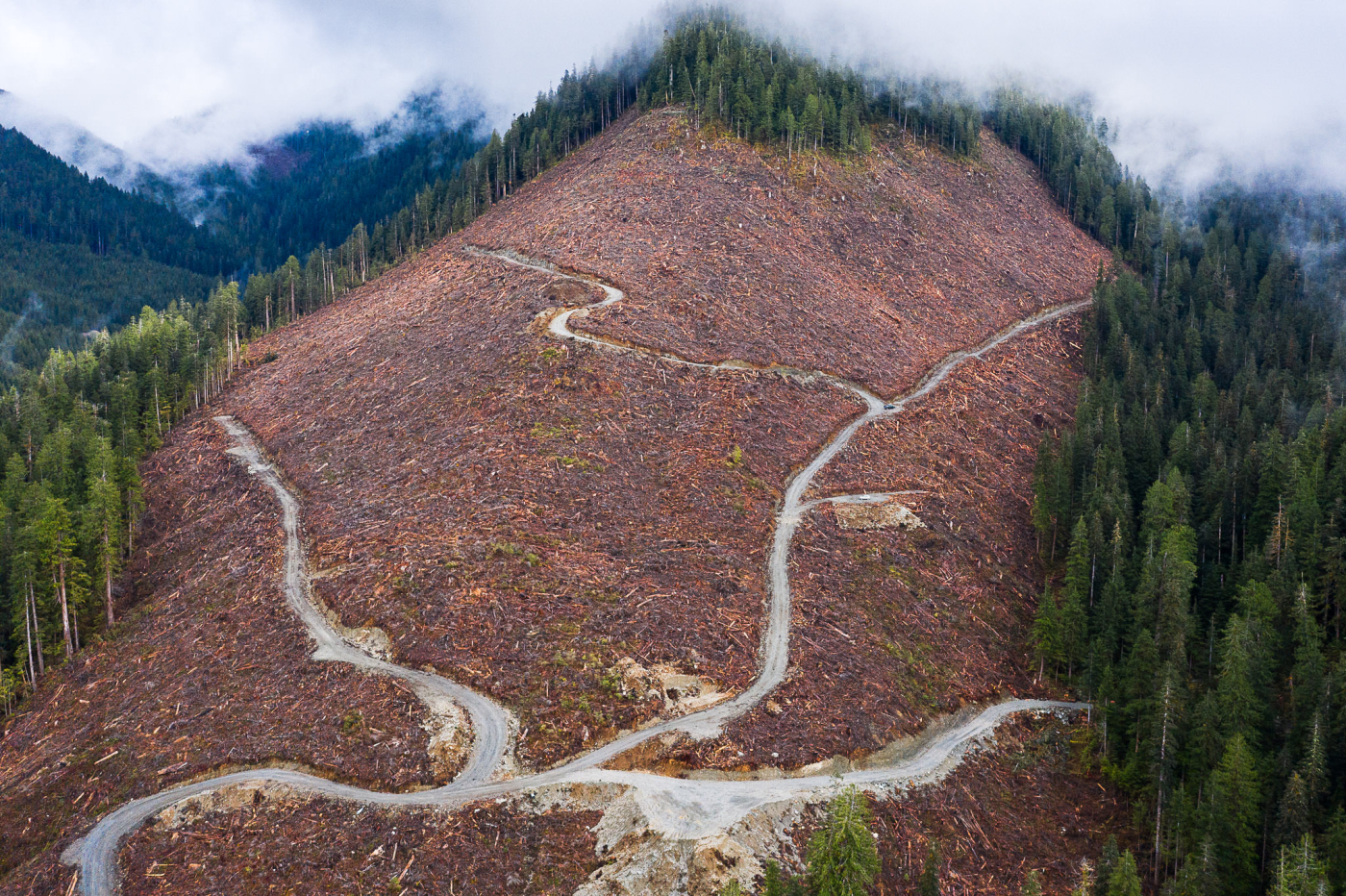
TJ Watt2026-10-26 15:06:162026-10-26 15:06:16Victoria Buzz: Environmental advocates concerned over results of BC election
https://ancientforestalliance.org/wp-content/uploads/2026/09/Old-Growth-Clearcut-Caycuse-Vancouver-Island.jpg
1364
2048
TJ Watt
https://ancientforestalliance.org/wp-content/uploads/2026/05/Ancient-Forest-Alliance-logo.svg
TJ Watt2026-10-26 15:06:162026-10-26 15:06:16Victoria Buzz: Environmental advocates concerned over results of BC electionRelated Posts
https://ancientforestalliance.org/wp-content/uploads/2026/09/Old-Growth-Clearcut-Caycuse-Vancouver-Island.jpg
1364
2048
TJ Watt
https://ancientforestalliance.org/wp-content/uploads/2026/05/Ancient-Forest-Alliance-logo.svg
TJ Watt2026-10-26 15:06:162026-10-26 15:06:16Victoria Buzz: Environmental advocates concerned over results of BC election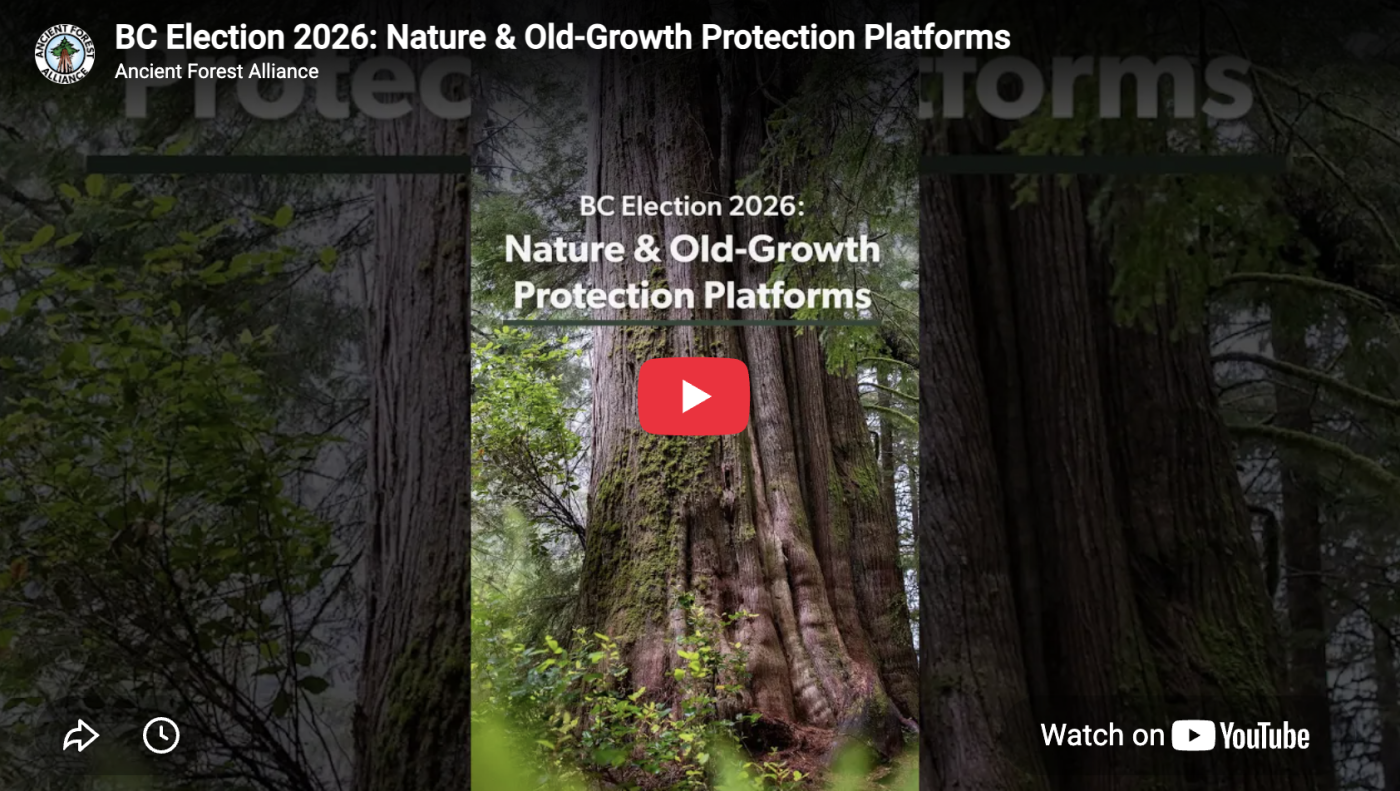 https://ancientforestalliance.org/wp-content/uploads/2026/10/Screenshot-2026-10-22-at-4.54.32-PM.png
952
1684
TJ Watt
https://ancientforestalliance.org/wp-content/uploads/2026/05/Ancient-Forest-Alliance-logo.svg
TJ Watt2026-10-22 16:54:062026-10-22 16:59:41NEW Video: BC Election 2026: Nature & Old-Growth Protection
https://ancientforestalliance.org/wp-content/uploads/2026/10/Screenshot-2026-10-22-at-4.54.32-PM.png
952
1684
TJ Watt
https://ancientforestalliance.org/wp-content/uploads/2026/05/Ancient-Forest-Alliance-logo.svg
TJ Watt2026-10-22 16:54:062026-10-22 16:59:41NEW Video: BC Election 2026: Nature & Old-Growth Protection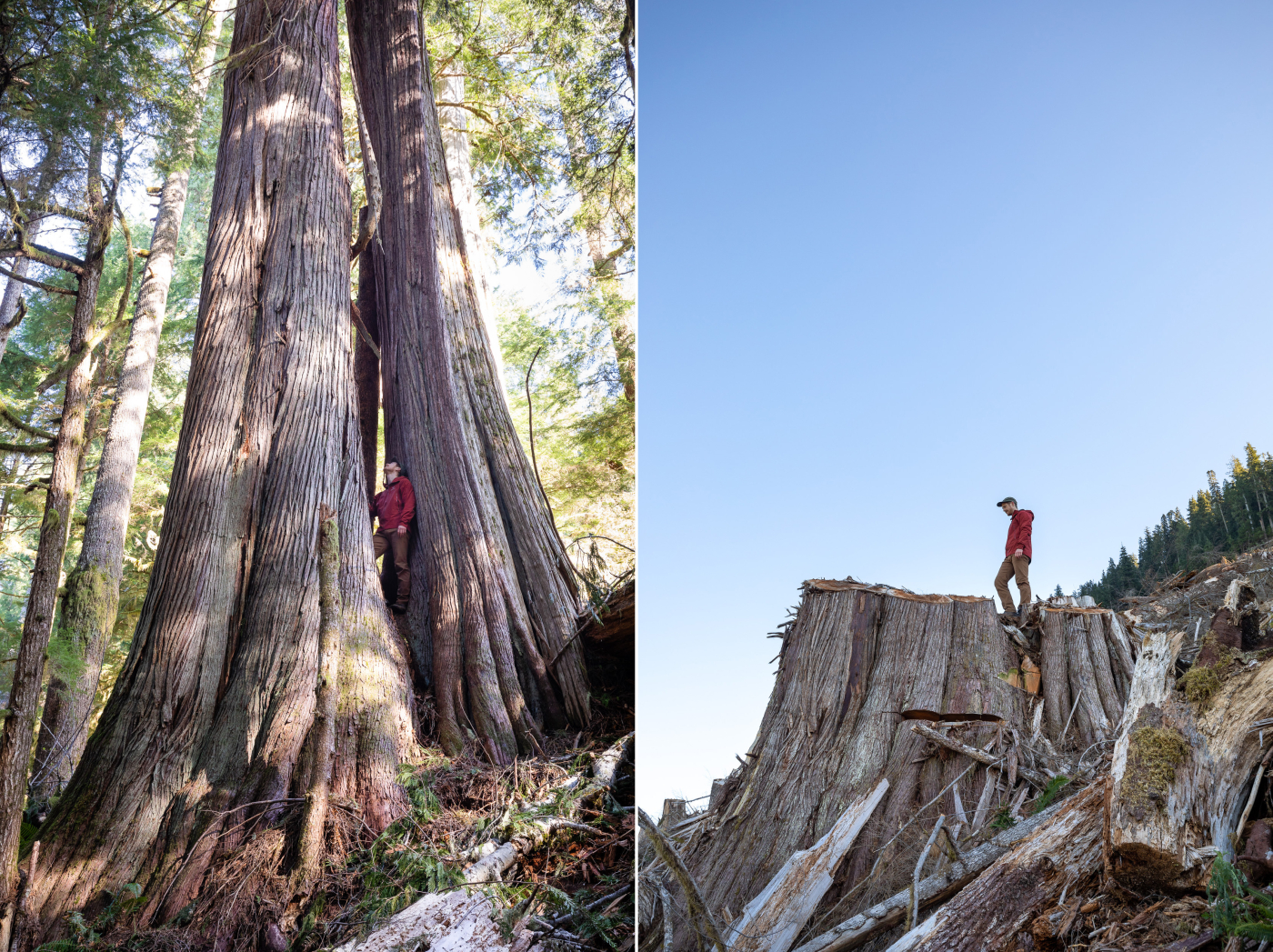 https://ancientforestalliance.org/wp-content/uploads/2026/10/Before-After-Caycuse-TJ-Watt-4-scaled.jpg
1915
2560
TJ Watt
https://ancientforestalliance.org/wp-content/uploads/2026/05/Ancient-Forest-Alliance-logo.svg
TJ Watt2026-10-16 17:36:002026-10-21 13:40:23BC Election 2026: Where do Parties Stand on Nature & Old-Growth?
https://ancientforestalliance.org/wp-content/uploads/2026/10/Before-After-Caycuse-TJ-Watt-4-scaled.jpg
1915
2560
TJ Watt
https://ancientforestalliance.org/wp-content/uploads/2026/05/Ancient-Forest-Alliance-logo.svg
TJ Watt2026-10-16 17:36:002026-10-21 13:40:23BC Election 2026: Where do Parties Stand on Nature & Old-Growth? https://ancientforestalliance.org/wp-content/uploads/2026/10/BC-Election-2026-Banner-1-1-scaled.jpg
1439
2560
TJ Watt
https://ancientforestalliance.org/wp-content/uploads/2026/05/Ancient-Forest-Alliance-logo.svg
TJ Watt2026-10-09 18:16:372026-10-16 17:44:41Where do BC’s Major Political Parties Stand on Nature Protection?
https://ancientforestalliance.org/wp-content/uploads/2026/10/BC-Election-2026-Banner-1-1-scaled.jpg
1439
2560
TJ Watt
https://ancientforestalliance.org/wp-content/uploads/2026/05/Ancient-Forest-Alliance-logo.svg
TJ Watt2026-10-09 18:16:372026-10-16 17:44:41Where do BC’s Major Political Parties Stand on Nature Protection?Take Action
 Donate
Support the Ancient Forest Alliance with a one-time or monthly donation. Send a Message
Send an instant message to key provincial decision-makers.
Province has until Thursday to buy Quadra Island park land with community-raised funds
/in News CoverageYears of planning and fundraising for a new Quadra Island provincial park could be lost Thursday if the B.C. government fails to hit a deadline to purchase the private land.
The government has until 3 p.m. Thursday to submit a bid to buy 395 hectares of waterfront property for sale by forest company Merrill & Ring, based in Washington state.
Quadra Island’s roughly 3,000 full-time residents have led a charge to raise more than $200,000, to try to push the province into action to save the property from logging or development.
The pristine land links Octopus Islands and Small Inlet provincial parks on the north end of Quadra Island, east of Campbell River. It’s a popular location for eco-tourism and has been targeted for a park for more than 16 years.
The government entered into a conditional agreement with Merrill & Ring in 2012, which involved $6.15 million in cash and land transfers. But after a series of missed deadlines, the forest company said it has moved on to numerous other bidders.
“We’ve had good negotiations and conversations with the government,” said Norm Schaaf, vice-president of Merrill & Ring’s Timberlands branch.
“It was disappointing that we were unable to reach the completion of this deal, after several years of working on it and feeling we were pretty close. We were all disappointed, government and us. We don’t hold any ill feelings, that way. It’s just one of those things.”
It’s still possible the province could step in with a bid before Thursday, Schaaf said. After that, the forest company will work on completing purchase and sale agreements with another bidder, he said
Environment Minister Mary Polak said that despite delays, the government is “absolutely committed to doing it.”
The province needs to find roughly $2 million to afford the purchase, Polak said.
“We don’t want to see the opportunity slip through our fingers,” she said.
“To be able to make that connection between the two existing parks would be fantastic. But at the end of the day, these things still cost money, and we need to find ways to do that.
“There aren’t any ministries walking around with $2 million to spare.”
Polak admitted it’s unlikely the government will meet Thursday’s deadline.
“Not all hope is lost because the deadline passes,” she said. The province is “exploring other means” to close the deal, and Polak said she’s been inspired by the “amazing” fundraising efforts of the community.
Local residents and politicians remain worried the land could be sold to someone else.
“We’ve been keeping our fingers crossed for months and months,” said Susan Westren, of the Quadra Island Conservancy and Stewardship Society, which has spearheaded the Save the Heart of Quadra Parks fundraising campaign.
The Strathcona Regional District, which has pledged an additional $100,000 toward the park purchase, wrote Merrill & Ring to ask for an extension.
“It’s getting kind of panicky,” said Jim Abram, the Quadra Island regional director.
“I think it’d be kind of silly for Merrill & Ring to throw the deal out at this point. We’re very close.”
North Island NDP MLA Claire Trevena said the government should restore its annual parks acquisition budget, so it could accommodate purchases like this in the future.
Trevena said she’s hopeful the government can work out a deal.
“There’s been so much work, for so long, it would be extraordinarily sad for the community and the province if we lost it.”
Read more: https://www.timescolonist.com/province-has-until-thursday-to-buy-quadra-island-park-land-with-community-raised-funds-1.565557
HAIRCUTS, NOT CLEARCUTS. Sunday, Aug. 4th
/in Announcements12185 Beecher Street Crescent Beach BC
www.seventhheavenbiosalon.com
778 292-0687
Mon. July 22, Greater Victoria’s Finest Ancient Forest Walk! Fundraiser
/in AnnouncementsNature Walk and Fundraiser for the Ancient Forest Alliance with Victoria Natural History Society president Darren Copley and Royal BC Museum collections manager Claudia Copley, and with the Ancient Forest Alliance’s Ken Wu and TJ Watt through the Spectacular ROYAL ROADS ANCIENT FOREST!
Dogs must be leashed at all times.
Did you know that one of the most spectacular old-growth forests around is at Royal Roads University by Victoria? We often seek grandeur far away from where we live – but the ancient forests of Royal Roads are among the most magnificent in existence, one of the largest tracts left within the extremely endangered Coastal Douglas Fir ecosystem (only 1% of this ecosystem remains as old-growth). Surprisingly, while many people have visited the Hatley Castle (where X-Men was filmed) few people have actually hiked through the incredible ancient forests around the university.
Join president of the Victoria Natural History Society Darren Copley (and former Goldstream Nature Centre chief interpreter) and Royal BC Museum entomology collections manager and naturalist Claudia Copley to learn about the tremendous diversity of plants, birds, trees, amphibians, reptiles, mammals, insects, and other creatures living in this incredible ancient forest. The Ancient Forest Alliance’s Ken Wu and TJ Watt will speak about the Ancient Forest Alliance’s campaign to protect the remaining endangered forests in BC.
We will walk through spectacular ancient redcedars, grand firs and Douglas firs, including visiting the 2nd largest Douglas fir tree in Greater Victoria (10 feet wide!), see some mind-blowing huge bigleaf maples and an enormous forked yew tree, and be done by 8:30 pm. You will not be disappointed!
***This event is a fundraiser for the Ancient Forest Alliance which is in need of funding to continue its vital campaigns to protect BC’s ancient forests and forestry jobs and to build a boardwalk in the Avatar Grove.
Bring friends and family!
If possible, please email us at info@ancientforestalliance.org so we can get a sense of our numbers.