 https://ancientforestalliance.org/wp-content/uploads/2026/10/Screenshot-2026-10-22-at-4.54.32-PM.png
952
1684
TJ Watt
https://ancientforestalliance.org/wp-content/uploads/2026/05/Ancient-Forest-Alliance-logo.svg
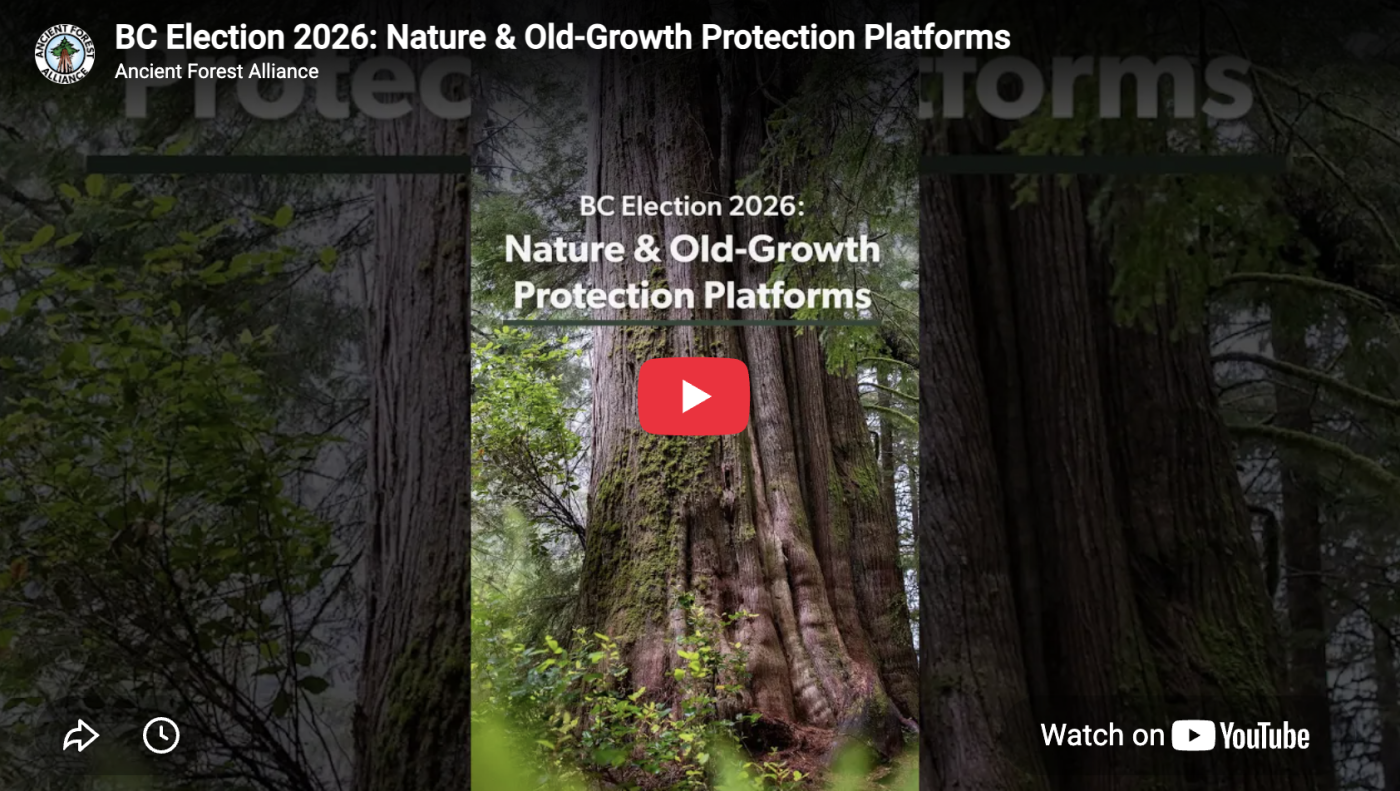
TJ Watt2026-10-22 16:54:062026-10-22 16:59:41NEW Video: BC Election 2026: Nature & Old-Growth Protection
https://ancientforestalliance.org/wp-content/uploads/2026/10/Screenshot-2026-10-22-at-4.54.32-PM.png
952
1684
TJ Watt
https://ancientforestalliance.org/wp-content/uploads/2026/05/Ancient-Forest-Alliance-logo.svg
TJ Watt2026-10-22 16:54:062026-10-22 16:59:41NEW Video: BC Election 2026: Nature & Old-Growth ProtectionRelated Posts
https://ancientforestalliance.org/wp-content/uploads/2026/10/Screenshot-2026-10-22-at-4.54.32-PM.png
952
1684
TJ Watt
https://ancientforestalliance.org/wp-content/uploads/2026/05/Ancient-Forest-Alliance-logo.svg
TJ Watt2026-10-22 16:54:062026-10-22 16:59:41NEW Video: BC Election 2026: Nature & Old-Growth Protection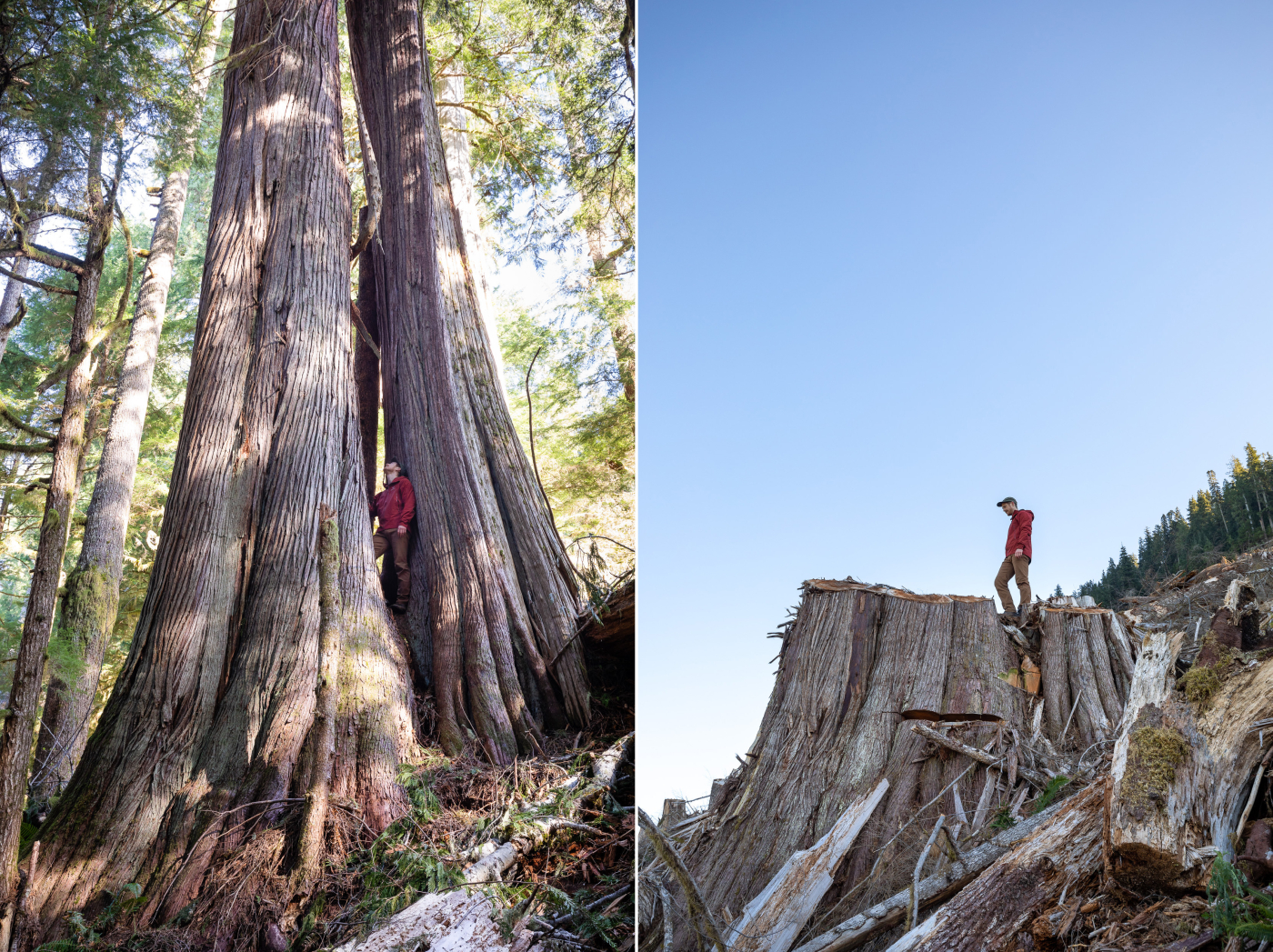 https://ancientforestalliance.org/wp-content/uploads/2026/10/Before-After-Caycuse-TJ-Watt-4-scaled.jpg
1915
2560
TJ Watt
https://ancientforestalliance.org/wp-content/uploads/2026/05/Ancient-Forest-Alliance-logo.svg
TJ Watt2026-10-16 17:36:002026-10-21 13:40:23BC Election 2026: Where do Parties Stand on Nature & Old-Growth?
https://ancientforestalliance.org/wp-content/uploads/2026/10/Before-After-Caycuse-TJ-Watt-4-scaled.jpg
1915
2560
TJ Watt
https://ancientforestalliance.org/wp-content/uploads/2026/05/Ancient-Forest-Alliance-logo.svg
TJ Watt2026-10-16 17:36:002026-10-21 13:40:23BC Election 2026: Where do Parties Stand on Nature & Old-Growth? https://ancientforestalliance.org/wp-content/uploads/2026/10/BC-Election-2026-Banner-1-1-scaled.jpg
1439
2560
TJ Watt
https://ancientforestalliance.org/wp-content/uploads/2026/05/Ancient-Forest-Alliance-logo.svg
TJ Watt2026-10-09 18:16:372026-10-16 17:44:41Where do BC’s Major Political Parties Stand on Nature Protection?
https://ancientforestalliance.org/wp-content/uploads/2026/10/BC-Election-2026-Banner-1-1-scaled.jpg
1439
2560
TJ Watt
https://ancientforestalliance.org/wp-content/uploads/2026/05/Ancient-Forest-Alliance-logo.svg
TJ Watt2026-10-09 18:16:372026-10-16 17:44:41Where do BC’s Major Political Parties Stand on Nature Protection?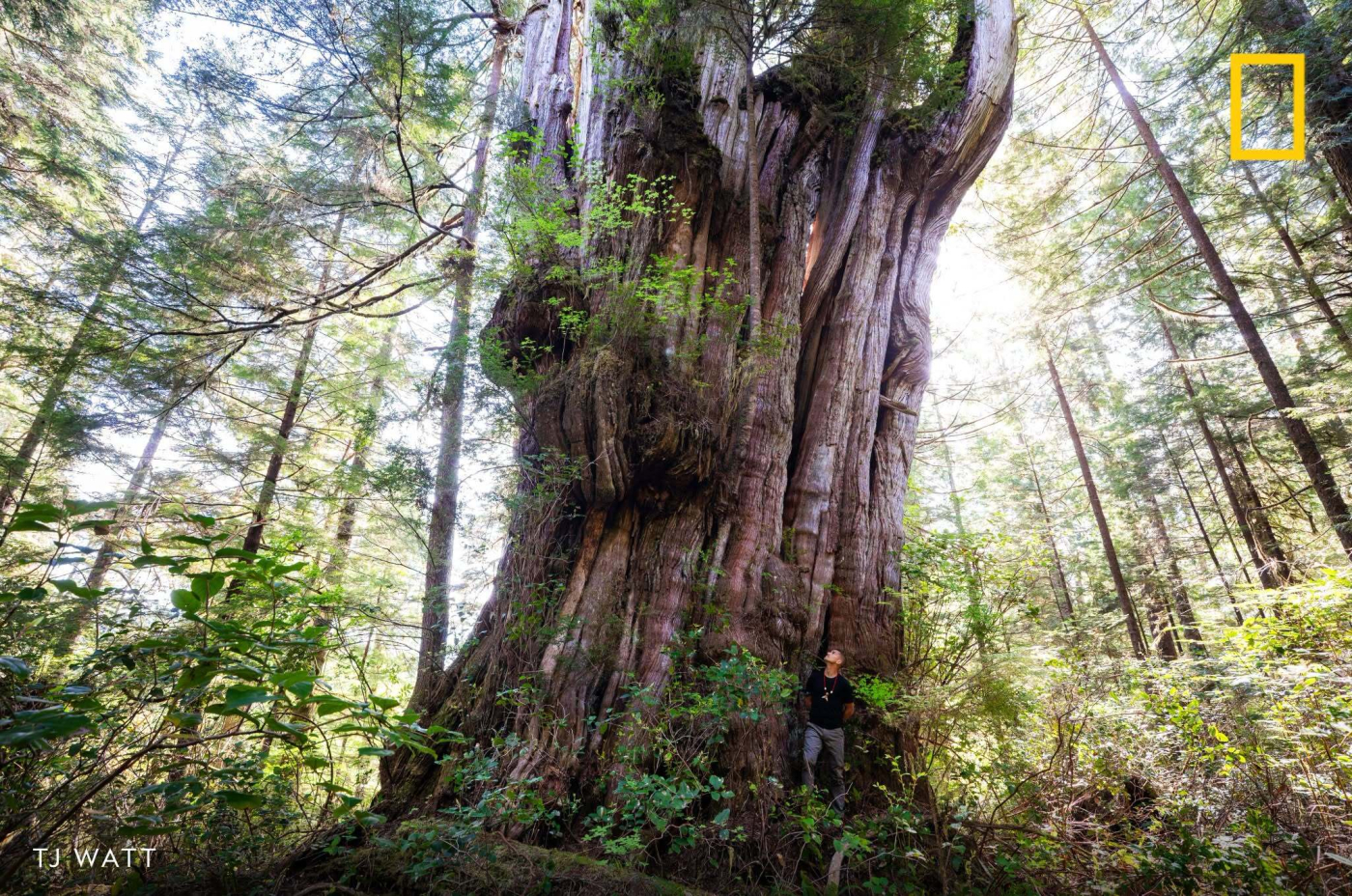 https://ancientforestalliance.org/wp-content/uploads/2026/10/Nat-Geo-Travel-Flores-Cedar.jpg
1357
2048
TJ Watt
https://ancientforestalliance.org/wp-content/uploads/2026/05/Ancient-Forest-Alliance-logo.svg
TJ Watt2026-10-02 13:38:152026-10-02 13:38:15Nat Geo Travel Features TJ Watt’s Photo of Flores Cedar
https://ancientforestalliance.org/wp-content/uploads/2026/10/Nat-Geo-Travel-Flores-Cedar.jpg
1357
2048
TJ Watt
https://ancientforestalliance.org/wp-content/uploads/2026/05/Ancient-Forest-Alliance-logo.svg
TJ Watt2026-10-02 13:38:152026-10-02 13:38:15Nat Geo Travel Features TJ Watt’s Photo of Flores CedarTake Action
 Donate
Support the Ancient Forest Alliance with a one-time or monthly donation. Send a Message
Send an instant message to key provincial decision-makers.
Tourism businesses slam forest policies
/in News CoverageThere’s a new confrontation brewing in British Columbia forests and it’s coming from an unlikely source. The latest battle to protect Vancouver Island’s forests isn’t being waged by an environmental organization—it’s being waged by business, in particular, the tourism industry. A group of tourism businesses in the Discovery Islands, near Campbell River, are charging the government with indifference to the needs of a major economic player in the region.
The Discovery Islands Marine Tourism Group is a coalition of businesses including the local Chamber of Commerce, which claims provincial forest policies designed by the BCLiberal government are encouraging the forest industry to clear-cut forests along marine corridors which are critical to the survival of a large wilderness based tourism industry.
The group went public with its concerns by publishing a full page ad in the Victoria Times Colonist criticizing the government for its inaction.
Spokesperson Ralph Keller says the group wanted to send a strong message to government that forest management polices aren’t working for Discovery Islands business, employees and their families. ‘We’ve spent a lot of time and money trying to convince the government there’s a serious problem here but they’re not listening.’
The Discovery Islands are home to over 120 tourism-dependent businesses: lodges, resorts, motels, campgrounds, marinas, tour companies, and related operations which employ over 1,200 people and generate $45 million in revenue every year. ‘The Discovery Islands have become a world class destination worthy of increased protection,’ Keller said. ‘We’ve become the second most important marine wilderness destination in BC, behind Tofino/Pacific Rim, yet the government is managing the forests here like its 1956. They’re treating us like bystanders instead of major revenue producers and employers.’
Keller went on to say that in the last 15 years, Vancouver Island has lost most of its pulp mills and saw mills and with them thousands of jobs—now out-sourced to Asia. ‘The once great forest industry is now just a logging industry acting with impunity, completely insensitive to our needs. They degrade our operating environment then send the timber not only out of the region, but out of the country. Is this supposed to be the BCLiberal commitment to jobs and families?’
‘We’re not against logging, but when the government revised the Forest Range & Practices Act in 2003, they gave all the power to the logging industry and left every one else out of the planning process.’
He went on to say that tourism operators are kept completely in the dark about cutting plans. “We find out about forest development plans when we start to see trees being felled. We’re being misled about forest industry intentions and have no meaningful way to influence cut block design. When we complain to government, they tell us to go talk to the licensees. Who’s writing the rules here? Whose forests are these? It’s pretty clear this government is about corporate
resource extraction and everybody else is just in the way”
Read More: https://www.islandtides.com/assets/IslandTides.pdf
Comment: Caribou plan little help to endangered herds
/in News CoverageThe outlook for most of B.C.’s 15 remaining mountain caribou herds is bleak.
In the south especially, it ranges from looming extinction to permanent life support in the form of periodic reintroductions, calving-assistance programs and, above all, predator culls without end.
It’s time the B.C. government faced the fact that its Mountain Caribou Recovery Implementation Plan, announced in 2007, is doing little to improve the situation for these animals and in some areas has made matters worse.
On paper the Mountain Caribou Plan looks good, promising to rebuild the population from 1,700 to 2,500 animals by 2027. This will be achieved, it claims, through a three-pronged approach comprising: first, 2.2 million hectares of mostly high-elevation forests set aside as winter habitat; second, intense predator control targeted at wolves and cougars; and third, management of mechanized backcountry winter recreation.
Actually, one of the recovery teams argued for inclusion of a fourth prong, what they called “matrix habitat.”
As originally defined, matrix habitat is low to mid-elevation forest not necessarily occupied by mountain caribou but capable, when logged, of supporting moose and deer and hence their predators in substantial numbers. Wolf and cougar populations bolstered by clearcuts in matrix habitat often spread out into neighbouring protected areas, and became predators on the resident caribou.
What the recovery team was urging was a commitment by government to refrain from creating ever more clearcuts in matrix habitat. Unfortunately, this did not happen.
Most of the set-asides are at high elevations where, granted, they provide critical winter habitat. The few places where set-asides extend to valley elevations are rarely more than small thumbs of old-growth forest protruding into landscapes already heavily logged. For the rest, the government’s plan has entrusted the mountain caribou’s future to a costly, ethically questionable regime of predator control.
The very idea that a workable recovery strategy could be founded on a war against predator populations largely of its own creation seems incredible. It is like hoping to raise chickens without building a chicken coop. You can blast away at predators as long as you like, but the problem never disappears. Sooner or later you lose your chickens.
Mountain caribou, of course, aren’t chickens. They’re a nationally and internationally threatened ungulate species, arguably the most iconic animal in the mountain region of Canada and, besides, an animal essentially endemic to B.C. They deserve better.
No doubt the architects of the caribou plan really believed that a combination of high-elevation set-asides and stringent predator control could return the mountain caribou to its former numbers. Unfortunately, they were wrong. In 2007 there were 1,900 mountain caribou in the world. Today, only about 1,500 remain.
What should be done? If you ask Steve Thompson, the minister responsible for caribou recovery, he will likely tell you the situation is dire and calls for “extreme measures.” Pressed further, he will go on to talk about his government’s commitment to transplant programs, birthing pens and still more predator carnage. What he almost certainly will not tell you is that actions of this kind amount to little more than life support, a rearranging of deck chairs as the great ship of Canada’s mountain icon goes down.
B.C.’s mountain caribou plan claims to be committed to adaptive management, which means learning from mistakes and doing better. The time has come for the government to bolster the plan by establishing new set-asides in lowland matrix habitat. This is what its own recovery team called for in the days before the planning process went political, and certainly it is the only action that can possibly begin to turn the situation around.
As to where these set-asides should be situated, that will take some thinking. One approach would be to place them in the two or three regions that according to best science are most likely to support mountain caribou in the long term. In order of viability these are the Hart Ranges, Wells Gray Park and, running a distant third, the Selkirk Mountains.
Trevor Goward is a lichenologist and naturalist who makes his home in the Clearwater Valley near Wells Gray Provincial Park.
Read More:https:// https://www.timescolonist.com/opinion/op-ed/comment-caribou-plan-little-help-to-endangered-herds-1.95843
UNBC Study Recommends Northern BC’s “Ancient Forest” be named a World Heritage Site
/in News CoverageNew research led by the University of Northern British Columbia is recommending that the area surrounding the “Ancient Forest Trail,” about 130 kilometers east of Prince George, be named a World Heritage Site by the United Nations Educational, Scientific and Cultural Organization (UNESCO). Citing the fact that these cedars have been reduced to less than four percent of the more than 130 thousand square hectare bioclimatic zone east of Prince George, the research indicates that these stands of ancient red cedars and surrounding biodiversity are “globally significant” and require the protection and status afforded other rich areas of scientific and cultural value deemed World Heritage Sites.
The comprehensive study, published in the BC Journal of Ecosystems and Management, went through extensive peer review, including by forest industry professionals. The article also points out the benefits such classification would bring, such as diversification of the regional economy by building upon a regional tourist attraction, which has already developed at the area.
“Having this published in a leading forestry journal sends a strong message of support, and should provide critical guidance to the provincial government,” says the article’s lead author, UNBC Ecosystem Science and Management Professor Darwyn Coxson. “There is much precedence to point to of ancient coastal rainforests being named World Heritage Sites, such as Haida Gwaii in BC, and Olympic National Park in Washington State, but in many scientific and cultural respects, the Ancient Forest is of even more value due to its extremely rare location so far north and so far inland.”
The Ancient Forest, accessible by trail from Highway 16, is a rainforest featuring massive western red cedars, some estimated to be over 1000 years old and home to an internationally significant diversity of lichen and fungi. The area, known for generations to First Nations and other local communities, was flagged for harvesting in 2006. UNBC students and researchers played a role in ensuring the public was notified of the cultural and scientific value of the area and the Forest was later declared off-limits to logging. Since then, multiple UNBC researchers and classes have visited the Ancient Forest Trail site to study the region’s biological systems, and their value for recreation, biodiversity, and economics.
“Many people in BC still do not realize the social and cultural value of this forest,” says Dr. Coxson, who co-wrote the study with UNBC Environmental Planning professor David Connell, and Trevor Goward of the University of British Columbia. “Becoming a Provincial Park and then a World Heritage Site will ensure the long-term protection of the ancient cedar stands, which to date, have been cared for by local community groups.”
To be named a UNESCO World Heritage Site, the site must first be named a provincial park. The Government of Canada must then recommend the site to UNESCO. The report recommends the BC Government extend the boundary of nearby Slim Creek Provincial Park to include the area surrounding the Ancient Forest Trail.
“UNESCO states that, for a site to be considered for World Heritage status, the area must ‘represent significant on-going ecological and biological processes in the evolution and development of terrestrial, fresh water, coastal and marine ecosystems and communities of plants and animals,’” says Dr. Coxson. “We suggest that the immense cultural and biological values represented by this area meet these criteria.”
Read More: https://unbc.ca/releases/7909/ancient-forest