 https://ancientforestalliance.org/wp-content/uploads/2026/09/NorthernSpottedOwls.jpg
900
1200
TJ Watt
https://ancientforestalliance.org/wp-content/uploads/2026/05/Ancient-Forest-Alliance-logo.svg
TJ Watt2026-09-03 09:47:312026-09-03 09:47:31BC Has an Extinction Problem. Scientists Say There’s a Fix
https://ancientforestalliance.org/wp-content/uploads/2026/09/NorthernSpottedOwls.jpg
900
1200
TJ Watt
https://ancientforestalliance.org/wp-content/uploads/2026/05/Ancient-Forest-Alliance-logo.svg
TJ Watt2026-09-03 09:47:312026-09-03 09:47:31BC Has an Extinction Problem. Scientists Say There’s a FixRelated Posts
https://ancientforestalliance.org/wp-content/uploads/2026/09/NorthernSpottedOwls.jpg
900
1200
TJ Watt
https://ancientforestalliance.org/wp-content/uploads/2026/05/Ancient-Forest-Alliance-logo.svg
TJ Watt2026-09-03 09:47:312026-09-03 09:47:31BC Has an Extinction Problem. Scientists Say There’s a Fix https://ancientforestalliance.org/wp-content/uploads/2026/08/Canoe-Creek-Cedar-Tree-262.jpg
800
1200
TJ Watt
https://ancientforestalliance.org/wp-content/uploads/2026/05/Ancient-Forest-Alliance-logo.svg
TJ Watt2026-08-04 17:15:512026-08-04 17:15:51Thank you to our monthly business donors!
https://ancientforestalliance.org/wp-content/uploads/2026/08/Canoe-Creek-Cedar-Tree-262.jpg
800
1200
TJ Watt
https://ancientforestalliance.org/wp-content/uploads/2026/05/Ancient-Forest-Alliance-logo.svg
TJ Watt2026-08-04 17:15:512026-08-04 17:15:51Thank you to our monthly business donors! https://ancientforestalliance.org/wp-content/uploads/2026/07/Kaska-Territory.-Credit-Johnny-Mikes-CPAWS-BC-scaled-1.jpg
1707
2560
TJ Watt
https://ancientforestalliance.org/wp-content/uploads/2026/05/Ancient-Forest-Alliance-logo.svg
TJ Watt2026-07-24 15:34:372026-07-28 11:05:22Speak up for Three Major New Protected Areas in Northern BC
https://ancientforestalliance.org/wp-content/uploads/2026/07/Kaska-Territory.-Credit-Johnny-Mikes-CPAWS-BC-scaled-1.jpg
1707
2560
TJ Watt
https://ancientforestalliance.org/wp-content/uploads/2026/05/Ancient-Forest-Alliance-logo.svg
TJ Watt2026-07-24 15:34:372026-07-28 11:05:22Speak up for Three Major New Protected Areas in Northern BC https://ancientforestalliance.org/wp-content/uploads/2026/06/tahsish-river-old-growth-karst-forest-285-1.jpg
1366
2048
TJ Watt
https://ancientforestalliance.org/wp-content/uploads/2026/05/Ancient-Forest-Alliance-logo.svg
TJ Watt2026-07-20 10:46:412026-07-20 12:16:45Victoria Buzz: Old growth advocates call for protection of at-risk Vancouver Island forest
https://ancientforestalliance.org/wp-content/uploads/2026/06/tahsish-river-old-growth-karst-forest-285-1.jpg
1366
2048
TJ Watt
https://ancientforestalliance.org/wp-content/uploads/2026/05/Ancient-Forest-Alliance-logo.svg
TJ Watt2026-07-20 10:46:412026-07-20 12:16:45Victoria Buzz: Old growth advocates call for protection of at-risk Vancouver Island forestTake Action
 Donate
Support the Ancient Forest Alliance with a one-time or monthly donation. Send a Message
Send an instant message to key provincial decision-makers.
The Tyee: Why Both Parties Are Wrong about BC’s Forestry Crisis
/in News CoverageOctober 17, 2024
Ben Parfitt
The Tyee
Original article here.
The problem isn’t red tape; it’s a lack of trees.
Conservative Party of BC Leader John Rustad has a long association with the forest industry in British Columbia. His family ran a sawmill in Prince George and Rustad headed his own forest consulting firm.
The Conservatives say the forest industry is central to the province’s economic well-being — and many rural communities in Rustad’s own riding of Nechako Lakes.
The huge riding west of Prince George includes Houston, Burns Lake, Vanderhoof and Fort St. James, mill towns where prodigious quantities of logs have for decades been turned into lumber in local sawmills.
On its website, the Conservative party calls the province’s forest industry “the envy of the world.” The party goes on to say that that industry “is 100 per cent sustainable and renewable and supports tens of thousands of high-paying jobs across the province.”
But the industry is in trouble because it can’t get enough trees to cut down.
Rustad blames government. Access to trees to log has become “a slow, complex and costly ordeal,” Rustad states on the BC Conservative website.
Rustad has hammered on the image of an industry crippled by bureaucratic red tape for some time.
“This BC NDP government’s inability to get forestry permits done is killing well-paid union jobs and independent jobs, all across British Columbia,” Rustad said more than a year ago. “They are just not issuing permits. BC Timber Sales is not putting wood out for tenure.”
It is a criticism that has caught the NDP’s attention.
The party says it intends to bring “efficiencies to the permitting process with a goal of granting faster access to timber processing.” The NDP singles out BC Timber Sales — a timber-auctioning program administered by the provincial Ministry of Forests where, on paper at least, about 20 per cent of the trees logged annually in B.C. originate — as the potential bottleneck. The NDP says it would address that by “completing a full review of BC Timber Sales to improve access to public timber.”
The boom
To unpack this, let’s start with the assertion that the province’s forest industry is the envy of the world. The actions of B.C.’s largest forest company, Canfor, suggest otherwise.
Twenty years ago, Canfor opened a refurbished sawmill in Houston, a manufacturing facility so technologically advanced that it could produce 25 per cent more lumber than the until-then world’s largest sawmill in Germany.
A two-hour drive to the southeast of Houston, the Plateau sawmill is also operated by Canfor and lies a short distance from the community of Vanderhoof.
Between them, the two mills in Rustad’s riding churned through millions of logs annually at a time when, throughout B.C.’s vast Interior, logging rates were soaring to levels never before seen.
The logging spike of 20 years ago was a response to an “eruptive” mountain pine beetle outbreak spurred on by climate change, with the provincial Ministry of Forests giving Canfor and other companies the green light to cut down as many of the beetle-attacked and now dead trees as they could before they lost their value as sources of high-quality wood fibre.
The ensuing logging would see tens of millions of additional trees logged, many of them attacked by beetles, many of them not.
The bust
It was well understood by both the forest companies and the Ministry of Forests that regulated them that the upswing in logging could not be sustained. A future course correction was inevitable and would see logging rates come down sharply.
That course correction is now well advanced, likely not over, and happening everywhere, including in Rustad’s backyard.
Logging rates are falling because there simply aren’t the good trees to cut down that there once were. What forests remain unlogged are far enough away from the mills that companies are reluctant to or refuse to log them because of the high costs.
A growing amount of forest is also undesirable to log because of the extensive wildfires in recent years and the inventory of older, beetle-attacked forests that companies simply aren’t logging.
It would take less than 20 years for Canfor’s super-mill in Houston to run so short of logs that the company’s executives decided to pull the plug, announcing in January 2023 that they would close the facility early that spring.
Then, last month, Canfor announced that its Plateau sawmill would soon join the burgeoning number of mills closed by the company in recent years, including pulp mills in Prince George and Taylor, wood pellet mills in Prince George, Chetwynd and Fort St. John, and sawmills in Fort St. John and Bear Lake.
BC drains as US gains
For the thousands of workers to lose their jobs in those mills in recent years, news that they work in an industry that is the envy of the world is a surprise at best and an insult at worst.
Yes, an impressive 40,000 or so workers are still employed in that industry. But when Canfor and other companies went into logging and milling overdrive 20 years ago, there were more than 90,000 direct jobs in the industry. It is no coincidence that roughly twice as much was logged then as now.
Since then, under BC Liberal and NDP governments alike, numerous mills have been shuttered with gut-wrenching consequences for workers, their families and suddenly cash-strapped municipal governments that face drastic declines in industrial property tax revenues.
In lockstep with the steady closure of mills here, Canfor and other B.C. companies have acquired one mill after another in the southeast United States, where intensively managed tree farms produce enough wood fibre in 20 years to make lumber, which is twice as fast as it takes in B.C.
A website devoted to job opportunities with Canfor includes a map of openings at Canfor’s North American mills. As of early October, the map showed a total of 15 job opportunities in B.C. versus 33 in operations in the southern U.S.
A lack of permits or a lack of wood?
As for Rustad’s assertion that the provincial government’s approval of logging permits has bogged down and that companies face unacceptably long waiting times between when they apply for such permits and when their applications are approved, The Tyee looked at how much logging rates have actually declined under the auspices of BC Timber Sales.
The Conservatives assert and the NDP acknowledge that there is a problem here. The program is a vital source of logs for some companies that don’t hold secure government licences granting them exclusive rights of access to publicly owned timber. (About 94 per cent of B.C. is “Crown” or publicly owned land that is overlaid by the territories of numerous First Nations.)
“A company like Nechako Lumber [in Vanderhoof] needs to have hundreds of thousands of metres of BC Timber Sales every year because they don’t have that licence themselves,” Rustad has said. “When government isn’t issuing any timber sales the company is in dire straits.”
Figures available through a publicly accessible database known as the Harvest Billing System show that the volume of timber logged under the BC Timber Sales program has dropped precipitously, falling from more than 11 million cubic metres logged in 2014 to just shy of four million cubic metres logged last year.
Since the Ministry of Forests directly issues allotments of timber for sale under the program, it is clear that far less of such timber is being put up for auction or that what is being advertised for sale is not being bid on.
Whether this is because there are no longer enough trees to cut down, or the costs of cutting those trees down is much higher due to their remoteness, or consultations with affected First Nations have bogged down, or there are more hoops that ministry personnel have to jump through before issuing cutting permits cannot be gleaned from the data.
And the ministry will not entertain questions on the decline during the election period.
Canfor’s logging plummets
Unlike Nechako Lumber, Canfor holds a great deal of its own logging licences, granted by the provincial government and giving the company exclusive rights of access to vast tracts of forest. The most secure of those licences are tree farm licences, or TFLs, that cover defined areas of publicly owned forest and grant the holder exclusive logging rights within them.
The other significant licence is a forest licence, which grants the holder a set volume of timber to log within a timber supply area where a number of other companies may also hold such licences.
Because a company like Canfor has both TFLs and forest licences, it effectively has its own timber to log. But it too must still get government approval to log tracts of forest covered by those licences.
The Tyee again used the Harvest Billing System to analyze what has happened with Canfor’s logging activities during the past decade and found that much the same pattern prevailed on its most secure TFLs and forest licences as was the case with BC Timber Sales.
The data reveals that in 2014 Canfor logged more than 7.8 million cubic metres of timber. By 2023, that number fell to 3.29 million cubic metres, marking a 57 per cent decline in 10 years.
The gap between what the government says was Canfor’s approved allowable annual cut — the maximum the company is legally entitled to log under those licences — and what it actually did log was enormous, with Canfor logging just 51 per cent of its entitlement last year.
The Tyee asked Canfor what its position was on government approvals of logging permit applications. In an emailed response to questions, the company said that the issuance of those permits has slowed dramatically, and that logging rates overall are now 60 per cent below the allowable annual cut set by the Ministry of Forests’ chief forester.
“While some of this decline is the result of natural disturbance, beetle infestations and wildfire particularly, it is also a result of the pace and scale of policy change and regulatory complexity that has been introduced over the last few years,” Canfor told The Tyee. “Today we find ourselves waiting 3.2 years in the Peace and over two years in the Prince George region to achieve harvesting permits, where in 2016 it would take about seven months.”
Last year, in response to concerns raised about the length of time it takes companies to obtain logging approvals in the Merritt area, the Merritt Herald reported that the Forests Ministry said “that a vast majority of local permits” were being granted in 45 days and that local logging companies believed those permits that were taking longer were the result of delays associated with government consultations with First Nations.
A good example of where the ground has shifted dramatically in relations between First Nations and the provincial government is in the Peace region that Canfor has now effectively abandoned. In 2021, a landmark decision by the Supreme Court of British Columbia found that the province had failed to consider how the cumulative effects of multiple resource industry operations would violate the treaty-protected rights of the Blueberry River First Nations.
Those industrial activities included, of course, industrial logging. The decision has had and will continue to have significant impacts not just in the traditional territories of the Blueberry River First Nations, but for all First Nations in BC.
Another example of where the government has committed to consult with First Nations is on the issue of further protection of lands, including forest lands, with a stated goal of protecting 30 per cent of the provincial land base by 2030 — something that Rustad said he is unequivocally opposed to and would axe should the Conservatives form government.
In Canfor’s backyard
Mike Morris, who is the outgoing MLA for Prince George-Mackenzie and was once Rustad’s caucus colleague before Rustad was dropped from the BC Liberal caucus for questioning climate change, told The Tyee that he thinks the lack of timely issuance of logging permits is a red herring.
Canfor and other companies aren’t getting the timber they once did “because it’s not there,” Morris said. He went on to say that when companies like Canfor tell him that a lack of permits, not a lack of forests, is the problem, he asks them to “take me to where all this wood is. They pooh-pooh me and never get back to me.”
What’s far more significant to Canfor and others, Morris believes, is that what forests remain to be logged are generally much farther away from the mill towns and therefore far more expensive to extract and transport.
This, probably more than anything else, explains the so-called “timber supply crisis” that Canfor and others find themselves in. They’ve run out of the cheapest to get and most profitable to log forests. When you add to that low commodity prices (lumber is currently selling far below the record levels of a few years ago) and a crushing near doubling in the duties B.C. lumber producers pay on the lumber they ship to the United States, mill closures are inevitable.
Recent decisions by the chief forester setting out new and much lower approved logging rates throughout the province bear this out. This includes the massive Prince George timber supply area.
Prince George is also the community where much of Canfor’s remaining mills in the north-central region of the province are located.
In 2017, B.C.’s then-chief forester, Diane Nicholls, set a new allowable annual cut for the TSA, dropping it from 12.3 million cubic metres per year to 8.4 million cubic metres. The 33 per cent drop would hold for five years before Nicholls imposed a further drop to 7.4 million cubic metres, meaning that in 2022 the maximum that companies like Canfor would be able to log in the TSA was 40 per cent below what was available in 2017.
Nicholls would go on to note in her decision that much of the historic logging in the Prince George area had occurred in the southern and central reaches of the TSA, meaning that the most economically desirable forests — those closest to the mills —had been hit unduly hard, leaving much of what remained a lot farther away and therefore more expensive to get.
Much the same situation of logging companies bleeding away the best and easiest to access timber and leaving what remains much farther away prevails in the Mackenzie area, as detailed in a recent report in The Tyee.
All of this, Morris says, underscores that it is not bureaucratic red tape that has dragged the industry down but an acute shortage of reasonably accessible forests that can be logged at profit.
“If it was a matter of policy preventing access to fibre, why would industry be selling assets and abandoning B.C. rather than wait for that stroke of the political pen to change policy. They know there’s nothing left,” Morris said in an email to The Tyee.
The bleeding isn’t over
Compounding problems, Nicholls noted, what commercially desirable forests remained in the TSA also contained some of the highest remaining concentrations of wildlife and biological diversity.
“Supply blocks A and B are areas of the TSA with low existing [logging] disturbance, and therefore are important to values such as caribou and biodiversity. Shifting too much of the harvest to those areas would overly increase risks to those values,” Nicholls warned.
To allow Canfor and others to now log those areas as intensely as they did elsewhere would be a mistake, Nicholls said then, recommending that a cap be put on how intensively the TSA’s remaining and remote forests should be logged.
All of this helps explains why Canfor, a once formidable presence in B.C., is now a shadow of its former self.
And the bleeding is likely not over.
As the company said in response to questions from The Tyee:
“Our operations in the central and Peace regions of B.C. are not currently profitable and have been contributing hundreds of millions of dollars in losses annually. In 2023, our annual report shows an operating loss of $532 million in 2023 as a result of the challenges in British Columbia. Over the same period, our U.S., European operations showed positive earnings.”
The Narwhal: Your BC election guide to old-growth forest and other key nature issues
/in News CoverageOct. 11, 2024 (Updated on Oct. 15, 2024)
The Narwhal
By Ainslie Cruickshank
Original article here.
The decisions of the next provincial government could determine the trajectory for almost 2,000 species at risk in BC.
A primitive rodent, with small eyes and ears and large front claws, makes its home in the Cascade mountains of southwestern BC Mountain beavers, which aren’t really beavers, spend most of their time underground — and their survival is at risk. Heavy forestry machinery compacts the deep soils where they burrow, presenting a key threat, along with urban development in the Fraser Valley.
Just this year, the mountain beaver was added to the provincial “blue list.” BC’s blue list includes species particularly vulnerable to human impacts. If known threats are not addressed, blue-listed species could one day become red-listed, meaning they are endangered, threatened or no longer found in the province.
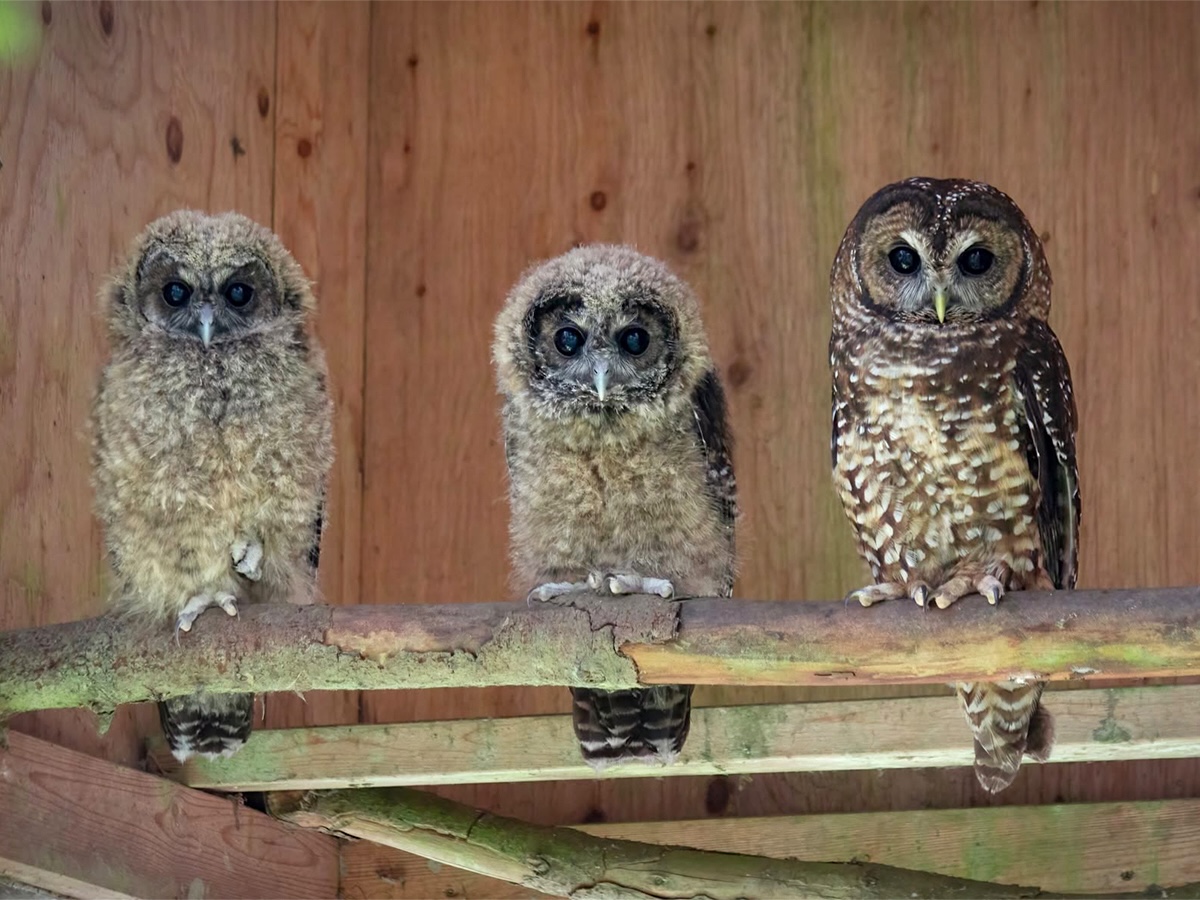
BC’s red list includes spotted owls, southern mountain caribou and southern resident killer whales.
Altogether, 1,952 species and ecosystems are officially at some risk of extinction in the province, according to the BC government’s conservation data centre.
The fates of each of these species are entwined with the outcome of BC’s Oct. 19 election.
Here’s what you need to know about what the parties vying to form BC’s next government are promising for nature and wildlife.
Have any BC parties promised a new stand-alone law to protect at-risk species?
For those keeping a close eye on BC’s wildlife conservation policies, the province’s lack of stand-alone legislation to protect species at risk of extinction remains a glaring gap.
“We have a beautiful province and it’s an epicentre for biodiversity,” Kai Chan, a professor at the University of British Columbia’s Institute for Resources, Environment and Sustainability, told The Narwhal. But, he added, “BC is one of the most obvious laggards in terms of legislative protections for wildlife.”
In its 2017 campaign platform, the BC NDP committed to bring in stand-alone endangered species legislation. But it quietly reneged on that promise after coming to power.
While legislation to protect at-risk species may not be perfect, Chris Johnson, a professor of landscape conservation and management at the University of Northern British Columbia, said legislation is an important tool that allows governments to react when a species is in trouble.
“Many of us, I think, had really high hopes for the NDP coming in initially, because they’d been very strong proponents in particular about species-at-risk legislation,” Johnson, who co-chairs a scientific committee that advises the federal government on at-risk land mammals, said. “And then it got canned. It just basically disappeared,” he said.
Both the BC Greens and the BC Conservatives have promised, if elected, to introduce legislation to protect at-risk species.
“We are in the midst of a biodiversity crisis and standing at a crossroads: either we take bold action to protect our ecosystems or we risk losing iconic species like caribou, spotted owls and orcas forever,” the Greens stated in its platform.
The BC Conservatives platform says the NDP government has underfunded and mismanaged wildlife in the province, leading to declines in “iconic ungulate species.” It says a Conservative government would introduce “made-in-BC species at risk legislation so wildlife protections are shaped by BC-based experts — not Ottawa — and are reflective of our unique ecosystems.”
The NDP’s platform makes no mention of legislation to protect at-risk species. Instead, the party has committed to working with First Nations and other partners on a “made-in-BC strategy” to protect biodiversity and watersheds, if re-elected.
Will the BC NDP’s ‘holistic’ plan for biodiversity be ready before election day?
Late last year, the NDP government released a draft biodiversity and ecosystem health framework. It said the framework would set the direction “for a more holistic approach to stewarding our land and water resources” and eventually lead to legislation to protect biodiversity.
However, the draft framework won’t be finalized before voting day, leaving its future in limbo pending the outcome of the election.
“I can’t disagree with some of the ideas in there — that you need, for example, a whole-of- government approach for addressing biodiversity,” Johnson said of the framework. “It’s very proactive and very progressive, but it’s also super high level.”
And, “it’s a long way to go before it makes any difference at all to biodiversity on the ground,” he warned.
In an emailed statement to The Narwhal, Hunter Lampreau, co-chair of the First Nations-BC Wildlife and Habitat Conservation Forum, which provides technical advice to the province, said he commends the NDP government for taking steps to enhance biodiversity conservation. But he said there’s more to do to achieve the needed balance between access and sustainable use of land and wildlife with conservation on the ground.
Alongside working toward its “made-in-BC strategy” to protect biodiversity and watersheds, the NDP said it will continue work to conserve 30 per cent of land in BC by 2030.
Are BC parties committed to conserving 30 per cent of land by 2030?
At the United Nations biodiversity conference in December 2022, Canada and 195 other countries committed to conserve at least 30 per cent of land and water globally by 2030 as part of international efforts to reverse the unprecedented decline of biodiversity.
In 2022, BC NDP Leader David Eby tasked Nathan Cullen, in his role as minister of water, land and resource stewardship, with working to protect 30 per cent of land in BC by 2030.
“[The NDP government] set a lot of really bold commitments, and I think it took a lot of time to get the gears turning to get working towards them and we didn’t really see the deliverables that we had wanted to see,” Tori Ball, the conservation director with the BC chapter of the Canadian Parks and Wilderness Society, said in an interview.
Over the past several years, the BC government and First Nations have announced major new conservation initiatives, including new conservancies in Clayoquot Sound, the Incomappleux Valley and the expansion of the Klinse-za / Twin Sisters Park.
But overall, protected areas increased by less than half a percent during the NDP’s past term in government, Ball said, noting “that’s not a lot of progress.”
The NDP also backtracked from conservation and reconciliation initiatives after facing criticism from the BC Conservatives over measures such as the proposed Land Act amendments and the expansion of the Klinse-za / Twin Sisters Park.
As of last December, BC reported 19.7 per cent of land in the province had been conserved, either through protected areas, such as provincial or national parks, or through other measures, where some development activity may be allowed but biodiversity is still meant to be protected.
The Canadian Parks and Wilderness Society has previously raised concerns that some areas counted towards BC’s conservation targets don’t meet biodiversity goals.
“We are hoping that the next government will continue the commitment that is laid out in the tripartite nature framework agreement to protect 30 per cent by 2030,” Ball said.
Both the NDP and the Greens say they are committed to working with First Nations towards the 30-by-30 goal.
“I’m proud of the fact that the BC NDP has signed on to the 30-by-30 nature agreement. This is something that’s just essential,” Josie Osborne, the incumbent NDP candidate for Mid Island-Pacific Rim, said during the environmental issues debate.
Conservative Leader John Rustad earlier told The Narwhal he would abandon BC’s plans to conserve 30 per cent of land in the province by 2030, a move that could jeopardize Canada’s international commitments and the recovery of at-risk species in BC.
How are the BC Conservatives balancing boosting the forestry industry with protecting wildlife?
In its platform, the BC Conservatives outlined measures it would take to enhance biodiversity as part of its plans to “save BC forestry.”
The party said it will define which forest areas will be prioritized for logging and which will “be prioritized for meeting biodiversity goals, where sourcing forest products will be of secondary value.”
During an online election debate focused on the environment in early October, Peter Milobar, the Conservative candidate for Kamloops Centre, said his party’s plans for mining, forestry and conservation form an interconnected approach to managing land.
Asked about the party’s forestry plans, Milobar said, “It’s really about maximizing the value of all the fiber that can be pulled out, instead of having it go up in slash piles, instead of it just sitting on the forest floor.”
“You certainly want a certain amount left in terms of regenerative growth and for the critters and whatnot in the forest after you’ve done logging, but there’s a lot of waste there that we could be using and repurposing at a proper rate,” he said.
What will happen to BC’s remaining old-growth forests?
The Conservative Party said, if elected, it will ensure two-thirds of BC’s forested areas are set aside from industrial-scale forestry activity and remain in their “original forested state.”
“BC’s forests provide more than just wood products; we count on our forests for water quality, wildlife habitat, recreational opportunities, and more,” the party’s forestry platform says. “Conservation is a Conservative value, and we will never allow our forest ecology to be undermined,” it says.
But the party doesn’t specify whether it would protect disappearing old-growth forests, which are both rich in biodiversity and sought after by industry.
In an analysis of each party’s stand on environmental issues, the Endangered Ecosystems Alliance, a conservation charity, raised concerns the Conservatives would focus protections on “mainly subalpine, rocky and muskeg landscapes with small and stunted trees of low to no timber value,” while allowing “logging to continue in areas where biodiversity conservation is supposed to be prioritized.”
The party said it will manage the remaining 22 million hectares of forest landscape to “achieve supply chain stability in BC’s forest sector as well as to enhance biodiversity and ecological qualities.”
The Endangered Ecosystems Alliance worries that means the party will “obstruct new protected areas in the forests with the biggest trees and greatest biological richness” and effectively turn 22 million hectares of forest where valuable timber can be found into “guaranteed logging zones to create ‘certainty’ for timber companies.”
The BC NDP said it will protect more old-growth forests, if re-elected, by working with First Nations to finish implementing the landmark recommendations from a 2020 old-growth forest strategic review, which called for a major shift in how BC manages its forests to prioritize biodiversity and ecosystem health.
The party said it will create a fund to help mills re-tool so they can process smaller second-growth trees instead of old-growth trees.
The BC Greens have promised to defer logging in the most at-risk old-growth forests and fully fund their protection, compensating First Nations for any lost revenues due to logging deferrals. In an Oct. 4 press release, the party pledged to increase the number and size of community forests “to promote biodiversity, wildfire protection, rural development and ecosystem resilience.”
The Greens also promised to stop clearcut logging and “switch to practices like selective logging, commercial thinning and longer rotation cycles that mimic natural forest changes.”
“BC’s forests are part of our identity, but years of industrial logging, wildfires, insect infestations and other disturbances have left them in crisis,” BC Greens Leader Sonia Furstenau said in the release.
What are the parties promising this BC election to help wildlife and the places they call home?
Several months before the October 2020 election, the NDP government launched its together for wildlife strategy — what it described at the time as “a plan for the conservation and stewardship of BC’s wildlife.”
According to the BC government website, the province has made progress on some action items identified in the strategy. The government committed $10 million a year in additional wildlife funding, launched a review of the Wildlife Act and set up three regional wildlife advisory committees to bring people with different perspectives together. The government has also made significant funding announcements over the past year, including a $300-million conservation fund and $500 million for a nature agreement with the federal government and First Nations.
For Adam Ford, an associate biology professor at the University of British Columbia Okanagan, one of the “most concrete victories” was the creation of a series of scholarships to fund graduate student research.
“Those are the people that are doing the work on the ground with communities and learning about and providing evidence to restore wildlife,” Ford, who serves on the minister’s wildlife advisory council created to oversee implementation of the together for wildlife strategy, said. “But it is a bit of a drop in the bucket,” he added.
Ford said striving to improve the funding model for wildlife management was on the advisory council’s agenda from day one, but the ministry still doesn’t have the budget it needs.
Transparency was another major goal of the together for wildlife strategy. Yet only one director’s report outlining the progress made toward implementing the strategy is available online and it’s for the fiscal year ending in 2021.
Lists of projects funded in the first two years of the strategy are also available online. But “we don’t know what projects were approved for the current year,” Ford said. “I’m on council — I don’t know,” he added.
In recent weeks, the BC Wildlife Federation and others have raised concerns about a major funding shortfall for wildlife conservation and management.
The Greens have promised to allocate $120 million for fish and wildlife programs over the next three years.
The BC Conservatives platform says the party will dedicate revenue from hunting tags and fees to a “third party entity dedicated to wildlife management and enhancement. ” The party also says it will increase funding for conservation officers, ensure decisions are based on science and recognize “British Columbians deserve guaranteed access to public lands and wild areas, including hunting and fishing rights.”
“Our approach will balance resource development with habitat protection, ensuring that wildlife thrives alongside responsible human activities,” the platform says. “We will ensure Indigenous Peoples and stakeholders — hunters, fishers, recreationists, and conservationists — are not just ‘at the table,’ but actively shaping BC’s wildlife management practices.”
BC sprays herbicide on its forests. Will this stop after the election?
As part of its forestry platform, the BC Conservatives said it would increase the diversity of tree species in forests and stop the aerial spraying of glyphosate, steps that could improve wildlife habitat and improve resilience to wildfires.
Glyphosate — an ingredient in the commercial product Roundup — is a herbicide used in the forestry industry to kill deciduous trees and shrubs that can compete with crop trees, such as pine, that are valuable for forestry.
The Greens have outlined several measures that could benefit wildlife, including a $50-million investment in a youth climate corp to fund youth jobs to restore and protect natural systems. The party has also committed to ban the use of glyphosate and other chemical herbicides used in forestry and to end clearcutting. Instead, the party would ensure the forestry sector uses practices, such as selective logging, that emulate natural disturbance regimes.
“We need to focus on restoring ecosystem health and valuing more than economic values in the forest ecosystem,” Ross Reid, the BC Greens candidate for Mid Island-Pacific Rim, said during the environmental issues election debate.
The NDP has also said it will ban the use of glyphosate in forestry.
What will happen to provincial government commitments to Indigenous-led conservation after the BC election?
The BC Greens have committed to investing in Indigenous-led conservation and Indigenous Guardians programs, while the NDP said it will work with First Nations towards the 30-by-30 conservation goals.
Rustad, however, has said a Conservative government would repeal the Declaration on the Rights of Indigenous Peoples Act, a law he previously supported.
The Tŝilhqot’in National Government denounced the Conservative platform in a public statement.
“The path that the BC Conservatives has outlined for British Columbia is a path of conflict on the land and in the courts,” the government said. The declaration “is an essential framework to hold BC to international laws and standards, to implement the human rights of Indigenous peoples in BC, and to resolve long-standing conflicts in this province based on recognition and respect, in a manner that benefits all British Columbians.”
Lampreau, with the First Nations-BC Wildlife and Habitat Conservation Forum, also raised concerns about Rustad’s stated position on Indigenous Rights and reconciliation and pointed to legal repercussions when the provincial government fails to prioritize and respect Indigenous Rights and Title.
“Several court decisions costing and awarding a lot of money have been made in the last years,” he said in an email to The Narwhal.
“I’d encourage people to consider a full platform before sending your choice into the ballot box,” Lampreau said.
“While a partisan claim of increased funding or improved wildlife and habitat stewardship sounds appealing, consider if they’re also advertising their intent to continue to invest in industries that are impacting habitat, and seek to understand how they intend to balance the two,” he said.
Are there any other conservation plans in the works?
There are some other ideas in the mix to protect biodiversity.
In its platform, for example, the BC Greens said part of its prioritization of ecosystem health and biodiversity would include appointing a chief ecologist.
The party also committed to investing in watershed security, Indigenous-led conservation and nature-based climate solutions, as well as restoring and protecting salmon habitat.
“Our goal is clear: to halt and reverse biodiversity loss while building resilience for both ecosystems and communities,” the party says in its platform.
Meanwhile, the BC NDP has said it will expand investments in salmon restoration. It has also said it will plant 300 million trees every year with the goals of making forests more resilient to climate change and restoring wildlife habitat.
Updated on Oct. 15, 2024, at 4:32 p.m. PT: This story has been updated to include commitments outlined in the BC Conservatives’ platform, which was released on Oct. 15.
Nature Protection: Where Do BC’s Major Political Parties Stand?
/in Announcements, Take ActionAs we approach the BC election on Saturday, October 19th, 2024, here’s where BC’s major political parties stand on protecting nature. Safeguarding nature is vital for our health and well-being (even breathing in the air in nature is shown by science to boost our immune systems through plant compounds known as “phytoncides”), for the economy (protected areas attract and support a large diversity of industries and skilled labour to surrounding communities), for the climate, and for the diversity of life on Earth.
Visit Elections.bc.ca to find out where to vote and what you need for ID.
Watch and share this BC Election video!
Endangered Ecosystems Alliance Executive Director and AFA co-founder Ken Wu explains where each of BC’s major political parties stands on old-growth and nature protection.
🔵 The BC Conservative Party
The BC Conservatives take an extremist, anti-nature protection position.
1. They say they would “absolutely axe” BC’s goal to protect 30% of the province’s land area by 2030.
2. They would guarantee that all unprotected, productive forest lands in BC (22 million hectares) available for logging will be “managed to achieve supply chain stability in BC’s forestry sector”. That is, they will ensure that the forests at the centre of the conservation controversies, with the largest unprotected trees and richest biodiversity, will be turned into “guaranteed logging zones” that will obstruct new, fully protected areas.
3. Logging will continue even in areas prioritized for biodiversity conservation, where “sourcing forest products will be a secondary value”, ie. They will have a “log everywhere” policy.
4. They spread false and grossly misleading information and PR spin about the conservation and geographic extent of forests in BC — such as 30% protection would result in “30% less food production” (false: farming takes place on private lands, not on public lands where the protected areas expansion overwhelmingly occurs) and “two-thirds of BC’s forested landscape will remain in its original forested state” (deceptively failing to mention those ecosystems are mainly subalpine, rocky and muskeg landscapes with small and stunted trees of low to no timber value).
🟠 The BC NDP Party
The BC NDP is taking a strong, pro-protected areas stance and has moved protected areas policies forward on a historically unprecedented scale. However, several key policies are still missing.
1. They have committed to essentially double the protected areas system in BC over the next six years, from about 16% of the province now to 30% by 2030.
2. They have allocated and secured over $1 billion in federal-provincial funding to help make this happen, including for private land acquisition, conservation financing for First Nations, and resource licensee compensation.
3. They have established several hundred thousand hectares of new protected areas, including 76,000 hectares in Clayoquot Sound, 200,000 hectares at Klinze-sa/Twin Sisters, and 58,000 hectares at the Incomappleux Valley.
4. They are in discussion with dozens of First Nations about potential Indigenous Protected and Conserved Areas (IPCAs) spanning millions of hectares, including in productive old-growth forests and endangered grasslands.
5. They have thus far failed to implement ecosystem-based targets, that is, protection targets based on science and Traditional Ecological Knowledge for each ecosystem — the ‘GPS for new protected areas’ that would ensure that all ecosystems are adequately protected. This is the most important game-changer left to ensure the protection of endangered ecosystems. The BC NDP Party have stated that they will develop “science-based protection” policies and that this may occur via the Biodiversity and Ecosystem Health Framework.
6. They have thus far failed to close conservation loopholes in designations like Wildlife Habitat Areas where logging can still occur and Old-Growth Management Areas where boundaries can be readily moved around under timber industry pressure.
🟢 The BC Green Party
The BC Greens take a strong, pro-protected areas stance, lacking some specificity.
1. They support protecting 30% by 2030 of BC’s land area, including all old-growth forests, by working with Indigenous communities.
2. They advocate long-term, stable funding for nature-based solutions for environmental protection.
3. They believe in prioritizing ecosystem health, which includes appointing a Chief Ecologist as a counterbalance to the Chief Forester, although do not mention ecosystem-based targets for protection and conservation, which is the actual key to ecosystem health.
— 30 —
Authorized by Ancient Forest Alliance, registered sponsor under the Election Act, 250-896-4007.