 https://ancientforestalliance.org/wp-content/uploads/2026/10/Screenshot-2026-10-22-at-4.54.32-PM.png
952
1684
TJ Watt
https://ancientforestalliance.org/wp-content/uploads/2026/05/Ancient-Forest-Alliance-logo.svg
TJ Watt2026-10-22 16:54:062026-10-22 16:59:41NEW Video: BC Election 2026: Nature & Old-Growth Protection
https://ancientforestalliance.org/wp-content/uploads/2026/10/Screenshot-2026-10-22-at-4.54.32-PM.png
952
1684
TJ Watt
https://ancientforestalliance.org/wp-content/uploads/2026/05/Ancient-Forest-Alliance-logo.svg
TJ Watt2026-10-22 16:54:062026-10-22 16:59:41NEW Video: BC Election 2026: Nature & Old-Growth ProtectionRelated Posts
https://ancientforestalliance.org/wp-content/uploads/2026/10/Screenshot-2026-10-22-at-4.54.32-PM.png
952
1684
TJ Watt
https://ancientforestalliance.org/wp-content/uploads/2026/05/Ancient-Forest-Alliance-logo.svg
TJ Watt2026-10-22 16:54:062026-10-22 16:59:41NEW Video: BC Election 2026: Nature & Old-Growth Protection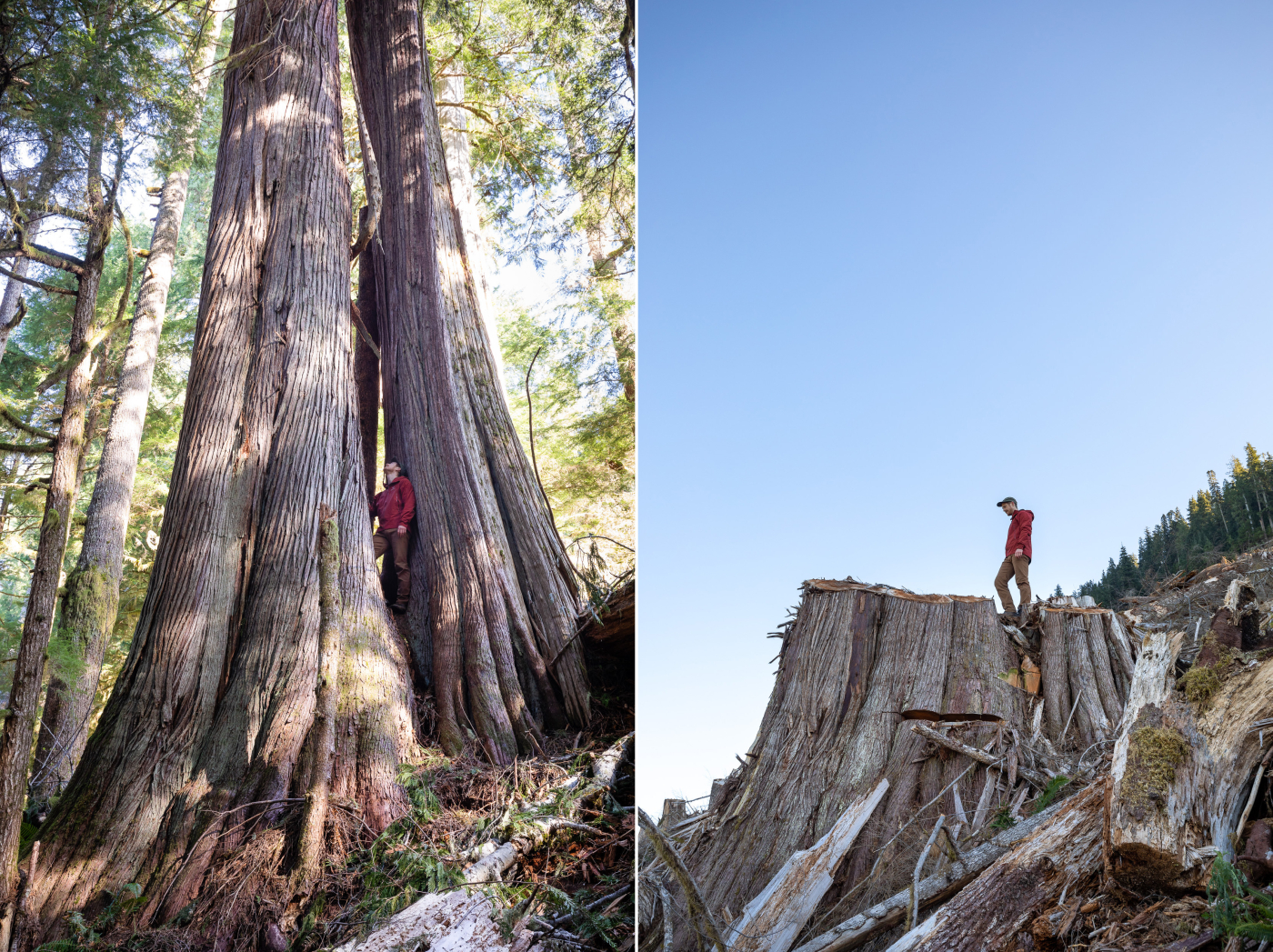 https://ancientforestalliance.org/wp-content/uploads/2026/10/Before-After-Caycuse-TJ-Watt-4-scaled.jpg
1915
2560
TJ Watt
https://ancientforestalliance.org/wp-content/uploads/2026/05/Ancient-Forest-Alliance-logo.svg
TJ Watt2026-10-16 17:36:002026-10-21 13:40:23BC Election 2026: Where do Parties Stand on Nature & Old-Growth?
https://ancientforestalliance.org/wp-content/uploads/2026/10/Before-After-Caycuse-TJ-Watt-4-scaled.jpg
1915
2560
TJ Watt
https://ancientforestalliance.org/wp-content/uploads/2026/05/Ancient-Forest-Alliance-logo.svg
TJ Watt2026-10-16 17:36:002026-10-21 13:40:23BC Election 2026: Where do Parties Stand on Nature & Old-Growth? https://ancientforestalliance.org/wp-content/uploads/2026/10/BC-Election-2026-Banner-1-1-scaled.jpg
1439
2560
TJ Watt
https://ancientforestalliance.org/wp-content/uploads/2026/05/Ancient-Forest-Alliance-logo.svg
TJ Watt2026-10-09 18:16:372026-10-16 17:44:41Where do BC’s Major Political Parties Stand on Nature Protection?
https://ancientforestalliance.org/wp-content/uploads/2026/10/BC-Election-2026-Banner-1-1-scaled.jpg
1439
2560
TJ Watt
https://ancientforestalliance.org/wp-content/uploads/2026/05/Ancient-Forest-Alliance-logo.svg
TJ Watt2026-10-09 18:16:372026-10-16 17:44:41Where do BC’s Major Political Parties Stand on Nature Protection?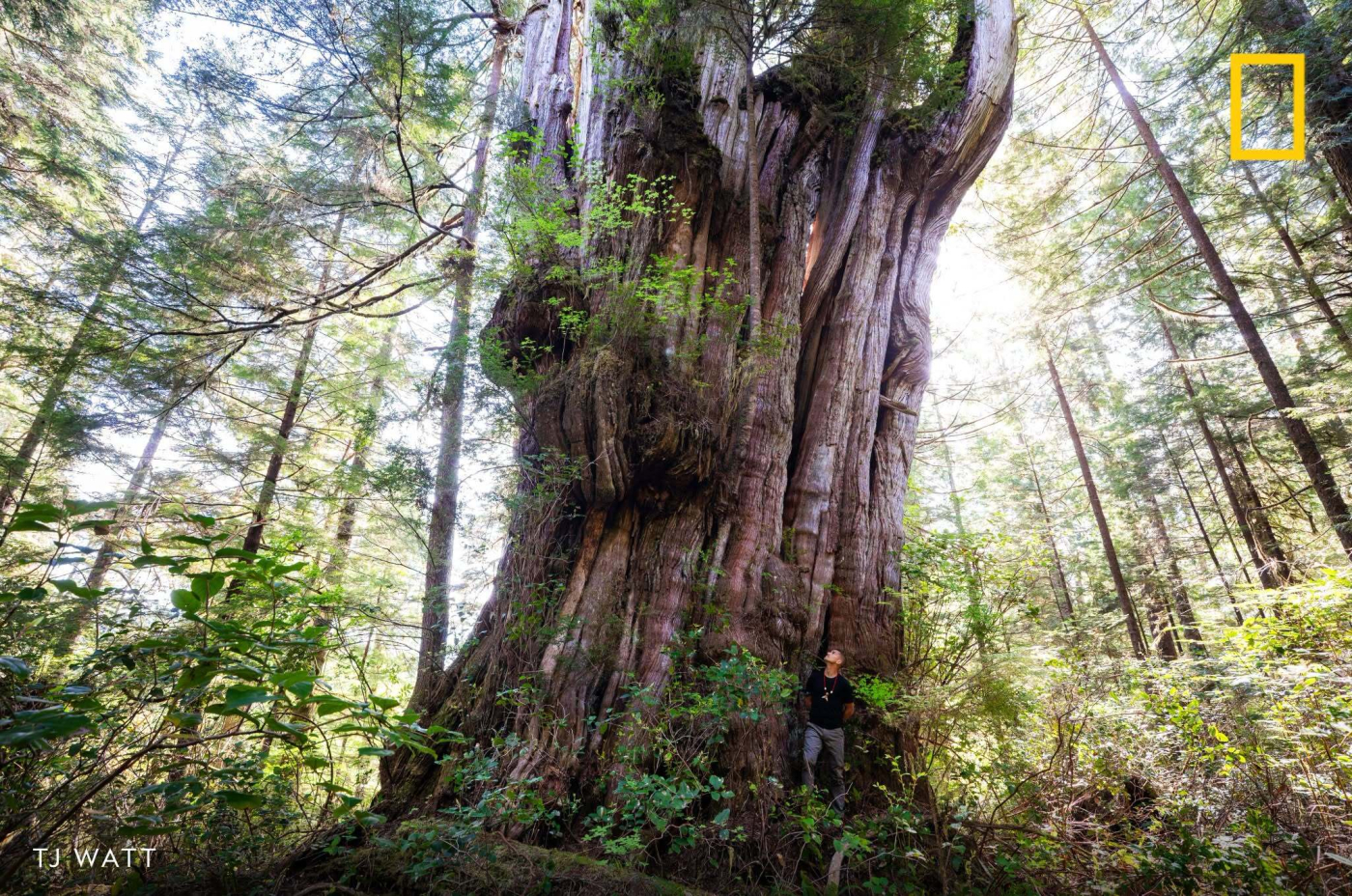 https://ancientforestalliance.org/wp-content/uploads/2026/10/Nat-Geo-Travel-Flores-Cedar.jpg
1357
2048
TJ Watt
https://ancientforestalliance.org/wp-content/uploads/2026/05/Ancient-Forest-Alliance-logo.svg
TJ Watt2026-10-02 13:38:152026-10-02 13:38:15Nat Geo Travel Features TJ Watt’s Photo of Flores Cedar
https://ancientforestalliance.org/wp-content/uploads/2026/10/Nat-Geo-Travel-Flores-Cedar.jpg
1357
2048
TJ Watt
https://ancientforestalliance.org/wp-content/uploads/2026/05/Ancient-Forest-Alliance-logo.svg
TJ Watt2026-10-02 13:38:152026-10-02 13:38:15Nat Geo Travel Features TJ Watt’s Photo of Flores CedarTake Action
 Donate
Support the Ancient Forest Alliance with a one-time or monthly donation. Send a Message
Send an instant message to key provincial decision-makers.
The fight to protect what’s left of old-growth forests
/in News CoverageLet’s forget about the end of oil for a moment and worry about something more immediate: the end of old-growth forests.
British Columbia is the last place in Canada where you can still find ancient, monumental trees standing outside parks. We are not talking here just about big, old trees, but about trees 250 to 1,000 years old, that tower 70 metres in height. If one grew on the steps of Parliament, its tip would block out the clock face on the Peace Tower. And set down in Vancouver, they would be as tall as many office towers.
Surprisingly, it is still legal in B.C. to cut down trees like that. And so many of these giants have been cut over the past 20 years, says Ken Wu of the Ancient Forest Alliance, that the end of old growth is near.
“We’ve just about hit it already in the coastal Douglas-fir zone,” he said. “On eastern Vancouver Island, we’ve got 1 per cent of old growth left. On the south Island, south of Alberni, we’ve got about 10 per cent left.”
Three years ago, Mr. Wu founded the Ancient Forest Alliance, a small group dedicated to just one task – saving old trees. Since then, he and his colleagues have spent a lot of time tramping around coastal forests, mapping groves of giant trees – and pleading with the government to protect them.
They have successfully saved some patches of forest, such as the now-famous Avatar Grove, which has become a tourist attraction near Port Renfrew. But Mr. Wu has lost a lot of fights, too, returning to find stumps where there had been a majestic cathedral of trees.
“The place that stands out for me is in the Walbran Valley [on the West Coast of Vancouver Island.] … It really is a Jurassic Park landscape. You’d think there would be Brontosauruses walking through there, with enormous trees, hanging mosses and ferns everywhere. … But in the last few years, we’ve seen the area logged. It looks like Swiss cheese now. Huge stumps as large as my living room where there used to be trees as tall as a downtown skyscraper.”
Mr. Wu doesn’t mince words when asked what he thinks of scenes like that.
“So when you are getting down to the last of an ecosystem and the government is not doing anything to stop that, not only is that criminal negligence, it’s being an accomplice to the crime,” he said.
Of course, it is perfectly legal in B.C. to take a chain saw and cut down a tree that is 200, 400 or even 1,000 years old. Loggers don’t have to get special permits just because a tree is exceptionally old, or remarkably big. If it is in an authorized cut block, it can be logged – and for a long time, it seemed only Mr. Wu and a handful of other environmentalists have heard those giants fall.
But slowly a public distracted by debates over tanker traffic, oil pipelines and coal ports, is turning its interest back to the fate of B.C.’s iconic old-growth forests.
When the Ancient Forest Alliance started a petition recently calling for the protection of B.C.’s endangered old growth, 22,000 people signed up. Another 1,800 confirmed on the group’s website and Facebook page that they would attend a protest rally at the legislature.
Mr. Wu is hopeful that this growing public awareness will encourage the government to make policy changes. “The main goal is to get a provincial old-growth strategy in place that would inventory old growth and protect it in regions where it is scarce,” he said. “At the same time, we recognize that there’s a lot of people working in the forest industry.” Mr. Wu believes B.C. could get more value out of logging second-growth timber. He also thinks the province should stop exporting whole logs.
He feels confident government can be persuaded to act before the last old growth is logged.
But on Sonora Island, near Campbell River, a group of residents went for a walk in the woods recently and this is what they found – towering, 600-year-old trees marked to be cut.
If that logging goes ahead, B.C. will have lost another piece of the 1 per cent of old growth that remains in the area. That puts us pretty close to the end of the game.
Link to online article: www.theglobeandmail.com/news/british-columbia/the-fight-to-protect-whats-left-of-old-growth-forests/article9868144/
The UVic AFA’s 3rd Annual Tree Huggers Ball Dance Party Extravaganza Fundraiser this SATURDAY March 23rd!
/in AnnouncementsThe UVic Ancient Forest Committee will be hosting their 3rd Annual Tree Huggers Ball this coming Saturday March 23rd from 7:30 pm to 1:00 am at Felicita’s Pub, 3800 Finnerty Rd., Victoria, BC. There will be a full night of bands and Djs and lots of awesome prizes, all for a great cause. All of the proceeds from this event will go directly to the Ancient Forest Alliance to assist in their fight to protect BC’s remaining old-growth forests. Please bring your friends and family as this promises to be a night to remember. Tickets will be $10 and will be available at the door and prior as announced!
Check out the facebook page for this event: https://www.facebook.com/events/140870222749121/
Here’s the music line up for the evening:
Warm Up Jam BROI (Bring Your Own Instrument)
Reveal your secret talents, any acoustic instrument you can find, bring.
Moonshine Gang Victoria Chapter
Cortesian Folk Rock
As The Crow Flies.
Psychedelic indie-folk country-rock
Redwood Green
Acoustic Rock Ska
Co-Captain (aka Dylan Gale)
Happy Go Lucky Electronic Beats
Rough Child (aka Alistar Stewart)
Move your Feet Dub-step
Diverse Crowd of 500 Environmentalists, First Nations, Forestry Workers and Business Owners call for Political Leadership to Protect Old-Growth Forests and Ensure Sustainable Forestry Jobs
/in Media ReleaseFor Immediate Release
March 16, 2013
About 500 people in a diverse crowd of conservationists, forestry workers, First Nations, business owners, and union members showed up today in the heavy rain in Victoria for a rally organized by the Ancient Forest Alliance. Despite the morning downpour, spirits were high, and the clouds parted as the protesters marched their way towards the BC Legislative buildings from Centennial Square.
The Ancient Forest Alliance is calling on the BC Liberal government and the NDP opposition commit to a Provincial Old-Growth Plan that will protect BC’s endangered old-growth forests and ensure sustainable, value-added second-growth forestry jobs – and finally bring an end to BC’s “War in the Woods”.
Over 3700 people have sent messages so far to the BC Liberal government and NDP Opposition to protect old-growth forests and ensure sustainable second-growth forestry through the organization’s website: www.BCForestMovement.com
“With an election coming up, now is the time for BC’s politicians to commit to protecting our endangered old-growth forests, to ensure sustainable second-growth forestry, to end the export of raw logs to foreign mills, and to implement First Nations land use plans,” stated Ken Wu, the AFA’s executive director. “The status quo of liquidating the biggest, best old-growth stands and exporting massive amounts of raw logs abroad is destroying ecosystems, jobs, and communities. Now, of all times, BC’s politicians must develop some wisdom, foresight, and a backbone for a sustainable forestry overhaul in this province. No politician or party will escape scrutiny on their forestry agenda this electoral season, we’ll see to that.”
Speakers included:
· Robert Morales – Chief Treaty Negotiator, Hul’qumi’num Treaty Group
· Joe Martin – Tla-o-qui-aht canoe carver, Band Councillor, original Meares Island protest organizer
· Gisele Martin – Tla-o-qui-aht business operator and cultural educator
· Jon Cash – Vice-President, Chamber of Commerce of Port Renfrew
· Arnold Bercov – President, Pulp, Paper, and Woodworkers of Canada (PPWC) union – Local 8
· Eric Hamilton-Smith – Campaigns Officer, BC Government Employees Union (BCGEU)
· Ken James – President, Youbou TimberLess Society
· Valerie Langer –BC Forest Campaign Director, ForestEthics
· Jens Wieting – Coastal Forest Campaigner, Sierra Club of BC
· Vicky Husband – BC Conservationist, Order of BC and Canada recipient
· TJ Watt – Forest Campaigner, Ancient Forest Alliance
· Ken Wu – Executive Director, Ancient Forest Alliance
The continued support of the BC governments for the status quo of unsustainable resource depletion and raw log exports has caused the increasing collapse of native ecosystems and rural communities. On Vancouver Island, 75% its original ancient forests have already been logged, including 90% of the valley bottoms where the largest trees grow. BC’s old-growth forests are vital to support endangered species, tourism, the climate, clean water, wild salmon, and many First Nations cultures.
The Ancient Forest Alliance is calling on BC’s politicians to commit to:
– A provincial Old-Growth Strategy that will protect the province’s endangered old-growth forests.
– Ensure the sustainable logging of second-growth forests, which now constitute most of BC’s productive forest lands.
– End the export of raw logs to foreign mills.
– Support the retooling of coastal old-growth mills and the development of value-added wood processing facilities to handle second-growth logs.
BC’s old-growth forests are vital to support endangered species, tourism, the climate, clean water, wild salmon, and many First Nations cultures. On Vancouver Island, satellite photos show that about 75% of the original, productive old-growth forests have already been logged, including 90% of the valley-bottom ancient forests where the largest trees grow and most biodiversity resides. Only about 10% of Vancouver Island’s original, productive old-growth forests are protected in parks and Old-Growth Management Areas (OGMA’s). See: www.ancientforestalliance.org/old-growth-maps.php
So far the BC Liberal government has been defending continued, large-scale old-growth logging and raw log exports in the province, often citing highly misleading statistics to convey the false message that old-growth forests are not endangered.
The NDP opposition has so far stayed silent on a previous commitment by leader Adrian Dix in 2011 during his bid to become NDP leader that if elected he would, “Develop a long term strategy for old growth forests in the Province, including protection of specific areas that are facing immediate logging plans” if elected. See:[Original article no longer available]
See spectacular old-growth forest photos at: https://ancientforestalliance.org/photos-media/
and videos at: https://ancientforestalliance.org/photos-media/videos/
and maps at: https:// https://ancientforestalliance.org/ancient-forests/before-after-old-growth-maps/