 https://ancientforestalliance.org/wp-content/uploads/2026/10/Screenshot-2026-10-22-at-4.54.32-PM.png
952
1684
TJ Watt
https://ancientforestalliance.org/wp-content/uploads/2026/05/Ancient-Forest-Alliance-logo.svg
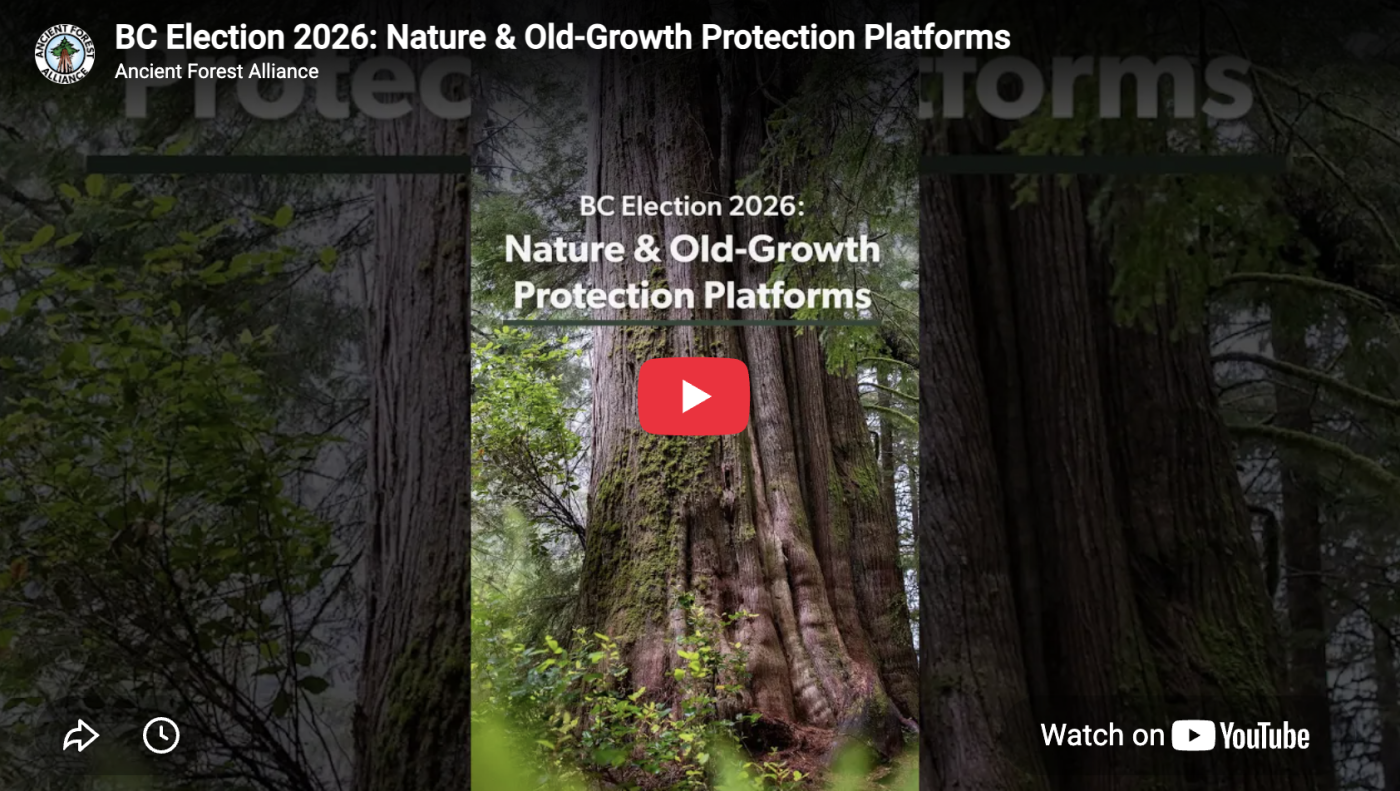
TJ Watt2026-10-22 16:54:062026-10-22 16:59:41NEW Video: BC Election 2026: Nature & Old-Growth Protection
https://ancientforestalliance.org/wp-content/uploads/2026/10/Screenshot-2026-10-22-at-4.54.32-PM.png
952
1684
TJ Watt
https://ancientforestalliance.org/wp-content/uploads/2026/05/Ancient-Forest-Alliance-logo.svg
TJ Watt2026-10-22 16:54:062026-10-22 16:59:41NEW Video: BC Election 2026: Nature & Old-Growth ProtectionRelated Posts
https://ancientforestalliance.org/wp-content/uploads/2026/10/Screenshot-2026-10-22-at-4.54.32-PM.png
952
1684
TJ Watt
https://ancientforestalliance.org/wp-content/uploads/2026/05/Ancient-Forest-Alliance-logo.svg
TJ Watt2026-10-22 16:54:062026-10-22 16:59:41NEW Video: BC Election 2026: Nature & Old-Growth Protection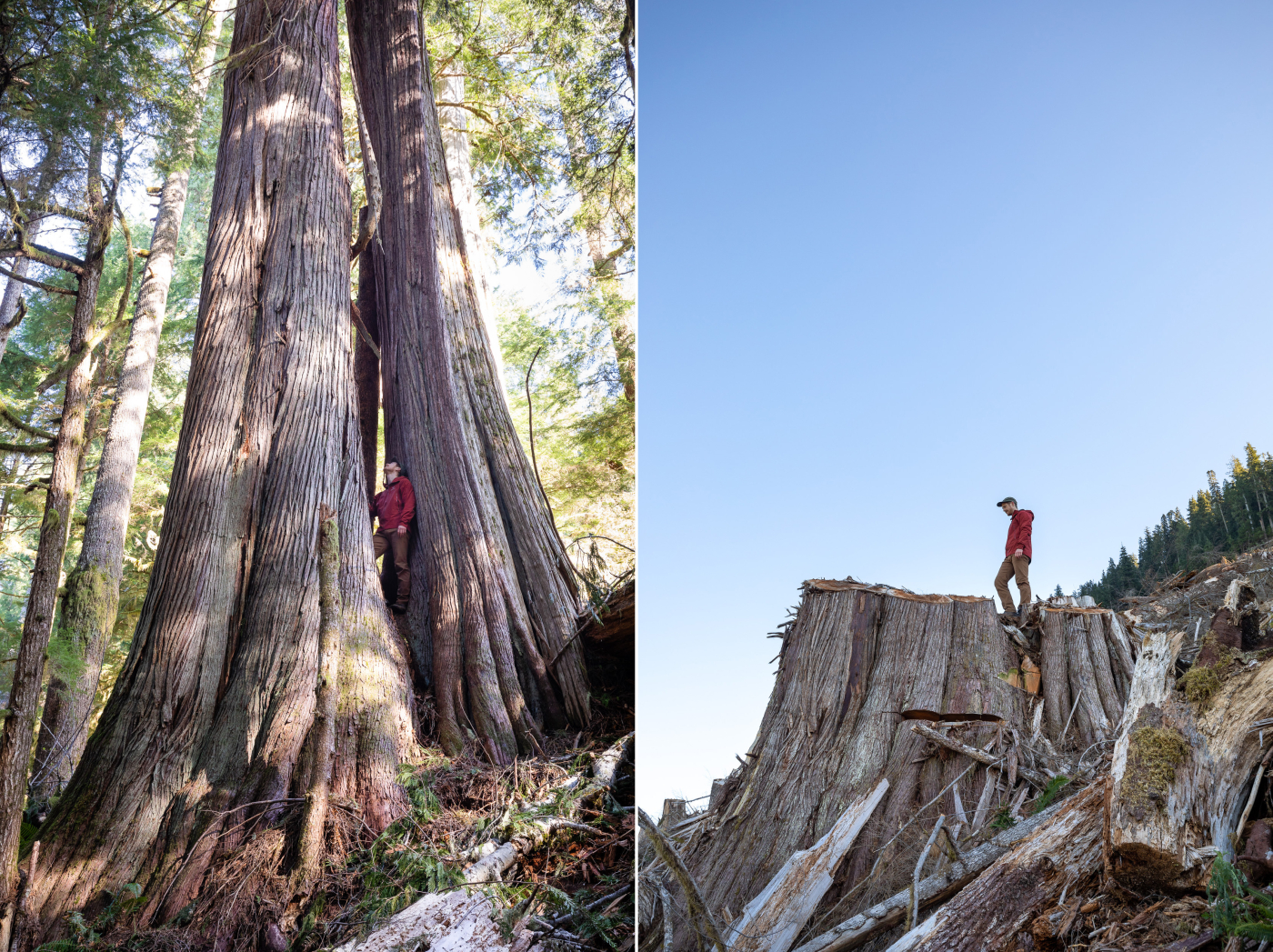 https://ancientforestalliance.org/wp-content/uploads/2026/10/Before-After-Caycuse-TJ-Watt-4-scaled.jpg
1915
2560
TJ Watt
https://ancientforestalliance.org/wp-content/uploads/2026/05/Ancient-Forest-Alliance-logo.svg
TJ Watt2026-10-16 17:36:002026-10-21 13:40:23BC Election 2026: Where do Parties Stand on Nature & Old-Growth?
https://ancientforestalliance.org/wp-content/uploads/2026/10/Before-After-Caycuse-TJ-Watt-4-scaled.jpg
1915
2560
TJ Watt
https://ancientforestalliance.org/wp-content/uploads/2026/05/Ancient-Forest-Alliance-logo.svg
TJ Watt2026-10-16 17:36:002026-10-21 13:40:23BC Election 2026: Where do Parties Stand on Nature & Old-Growth? https://ancientforestalliance.org/wp-content/uploads/2026/10/BC-Election-2026-Banner-1-1-scaled.jpg
1439
2560
TJ Watt
https://ancientforestalliance.org/wp-content/uploads/2026/05/Ancient-Forest-Alliance-logo.svg
TJ Watt2026-10-09 18:16:372026-10-16 17:44:41Where do BC’s Major Political Parties Stand on Nature Protection?
https://ancientforestalliance.org/wp-content/uploads/2026/10/BC-Election-2026-Banner-1-1-scaled.jpg
1439
2560
TJ Watt
https://ancientforestalliance.org/wp-content/uploads/2026/05/Ancient-Forest-Alliance-logo.svg
TJ Watt2026-10-09 18:16:372026-10-16 17:44:41Where do BC’s Major Political Parties Stand on Nature Protection?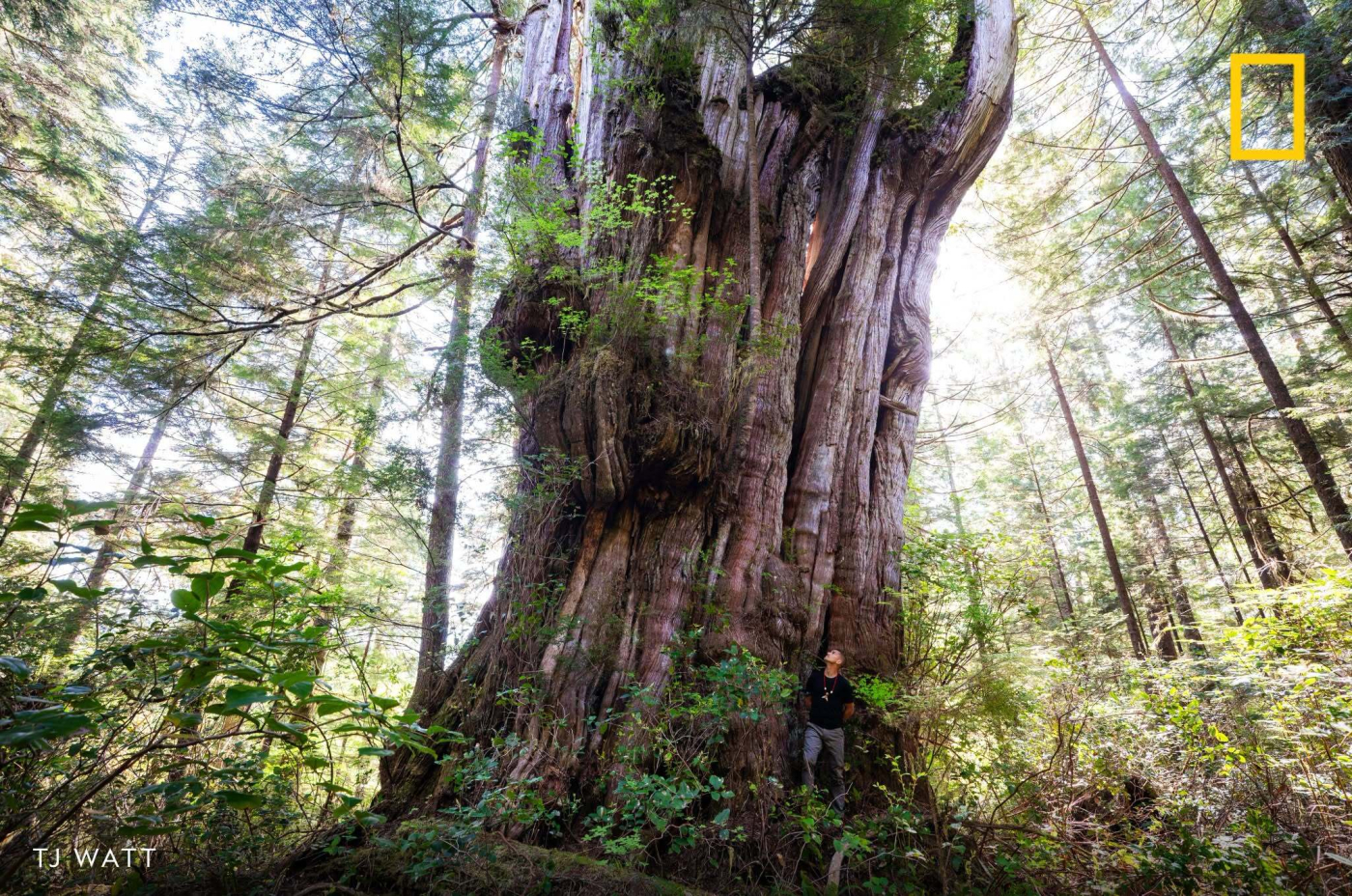 https://ancientforestalliance.org/wp-content/uploads/2026/10/Nat-Geo-Travel-Flores-Cedar.jpg
1357
2048
TJ Watt
https://ancientforestalliance.org/wp-content/uploads/2026/05/Ancient-Forest-Alliance-logo.svg
TJ Watt2026-10-02 13:38:152026-10-02 13:38:15Nat Geo Travel Features TJ Watt’s Photo of Flores Cedar
https://ancientforestalliance.org/wp-content/uploads/2026/10/Nat-Geo-Travel-Flores-Cedar.jpg
1357
2048
TJ Watt
https://ancientforestalliance.org/wp-content/uploads/2026/05/Ancient-Forest-Alliance-logo.svg
TJ Watt2026-10-02 13:38:152026-10-02 13:38:15Nat Geo Travel Features TJ Watt’s Photo of Flores CedarTake Action
 Donate
Support the Ancient Forest Alliance with a one-time or monthly donation. Send a Message
Send an instant message to key provincial decision-makers.
Planned Old-Growth Logging by World Famous Cathedral Grove Highlights Need for New Provincial Forest Policies
/in AnnouncementsPort Alberni – Conservationists are calling for much stronger, comprehensive old-growth protection policies in BC after having discovered a major logging threat to Canada’s most famous old-growth forest, Cathedral Grove in MacMillan Provincial Park on Vancouver Island. Conservationists came across survey tape marked “Falling Boundary” and “Road Location” in an old-growth Douglas fir and hemlock forest only 300 meters from the park boundary last week. See photos and a map (based on some GPS points) at: https://www.ancientforestalliance.org/photos.php?gID=24
“Cathedral Grove is BC’s iconic old-growth forest that people around the world know – it’s like the redwoods of Canada. The fact that a company can just log the mountainside above Canada’s most famous old-growth forest underscores the BC government’s deep failure to take action to protect our ancient forest heritage,” stated TJ Watt, campaigner and photographer with the Ancient Forest Alliance. “More than ever we need the BC Liberals and NDP to commit to comprehensive new legislation to protect our old-growth forests on Crown lands, and to create a fund to save endangered ecosystems on private lands.”
The lands are privately owned by Island Timberlands but until recently were regulated to the stronger standards found on public lands. However, in 2004, the BC Liberal government removed 88,000 hectares of Island Timberlands’ private forest lands from their Tree Farm Licences, thereby exempting the area from the intended old-growth, scenic, and wildlife habitat protections, and removing the existing restrictions on raw log exports and real estate development on those lands.
“The BC government removed the environmental protections on these lands a few years ago and exempted the area from other planned protections, putting these lands in jeopardy. Now they need to clean up this mess by protecting these lands, either by purchasing them or re-regulating them,” stated Jane Morden, coordinator of the Port Alberni Watershed-Forest Alliance.
“Cathedral Grove is the mascot of old-growth forests in Canada. If we can’t ensure its ecological integrity because of the BC government’s inaction – or complicity – it really gives a black eye to BC’s environmental reputation in the international community,” stated Annette Tanner, chair of the Mid-Island Wilderness Committee, who has led the fight for the ecological integrity of Cathedral Grove for over a decade.
The Ancient Forest Alliance is calling on the BC Liberals and NDP to commit to a provincial plan to protect the province’s old-growth forests, to ensure sustainable second-growth forestry, and to end the export of raw, unprocessed logs to foreign mills. For private lands, the organization is calling for a provincial “park acquisition fund” of $40 million/year to purchase endangered ecosystems on private land for protection, similar to the park acquisition funds of various regional districts, like the Capital Regional District around Victoria.
The Ancient Forest Alliance is planning a major “Pre-Election Rally for Ancient Forests and BC Forestry Jobs” this Saturday, March 16 at 12 noon at the Legislative Buildings. Already over 900 people have pre-confirmed their attendance for the rally on their website and almost 400 people via Facebook. See www.BCForestMovement.com
So far the BC Liberal government has been defending continued, large-scale old-growth logging and raw log exports in the province, often citing highly misleading statistics to convey the false message that old-growth forests are not endangered. They’ve also introduced a bill in the legislature, Bill 8, that would empower the Minister of Forests to give logging companies exclusive logging rights over massive areas of Crown forest lands by converting their “volume-based” logging rights (ie. in cubic metres) into “area-based” licences or Tree Farm Licences. Increasing private property rights for major timber companies on Crown lands is a central bone of contention for the province’s conservation organizations – and a massive fight is underway. See: https://www.ancientforestalliance.org/news-item.php?ID=564
The NDP opposition has so far stayed silent on a previous commitment by leader Adrian Dix in 2011 during his leadership bid that he would, “Develop a long term strategy for old growth forests in the Province, including protection of specific areas that are facing immediate logging plans” if elected.
See: https://conservationvoters.ca/past-endorsements/leadership-race-2011/ndp-candidates/adrian-dix
BC’s old-growth forests are vital to support endangered species, tourism, the climate, clean water, wild salmon, and many First Nations cultures. On Vancouver Island, satellite photos show that about 75% of the original, productive old-growth forests have already been logged, including 90% of the valley-bottom ancient forests where the largest trees grow and most biodiversity resides. Only about 10% of Vancouver Island’s original, productive old-growth forests are protected in parks and Old-Growth Management Areas (OGMA’s).
See: https://www.ancientforestalliance.org/old-growth-maps.php
URGENT: STOP the BC Liberal Government’s Proposed Forest Giveaway THIS WEEK!
/in Take ActionRecently, the BC Liberal government introduced a bill that, if passed into law, could be used to massively expand private property-like rights for major logging companies on BC’s public forest lands and on unceded First Nations lands. The proposed law, included within a larger omnibus bill, Bill 8, would empower BC’s Forest Minister to readily create new Tree Farm Licences (TFL’s) that give exclusive logging rights over large expanses of Crown lands to major companies who currently have “volume-based” logging rights (ie. in cubic metres of wood). This undemocratic, anti-environmental proposal could increase the claims to compensation – to be paid for by BC’s taxpayers – by major logging companies in light of future conservation designations and First Nations treaty settlements.
MLA Bob Simpson: Claim vs. Fact [Original article no longer available]
Privatizing our public forests (Bob Simpson, Independent MLA) [Original article no longer available]
Tree licence rollover has no public benefit
/in News CoverageAt first glance Bill 8 — the Miscellaneous Statutes Amendment Act — looks like housekeeping legislation. Read a little closer and one discovers one of the most pernicious pieces of forest legislation to be tabled in the legislature since a forests minister lost his job over the same issue in 1989.
Bill 8 includes an addition to the Forest Act that would allow the forests minister to invite corporations to roll over their forest licences into Tree Farm Licences (TFL), effectively transferring private ownership rights to the corporation without any reciprocal benefit in the public interest such as requirements to tie timber to local mills for local jobs; to upgrade existing mills; to invest in new mills; and to hand back more than five per cent of the allowable annual cut from existing forest licences, say 30 per cent, to deal with known timber supply shortages and to redistribute timber rights among communities and First Nations.
Imagine many large apartment complexes under a singe landlord. What sane landlord would invite selected tenants to roll over their month-to-month tenancies into a renewable 25-year lease with a token annual rent but without payment for the lease or any substantial reciprocity in kind other than five per cent loss of area? Well, that is precisely what your land agent, the government, is planning to do with your forest land. And matters get worse still.
Unfortunately, this offer realistically works for only corporate tenants of the larger apartments. If you happen to be a First Nations’ band or a forest-dependent community occupying smaller apartments, this offer is not for you because your rented areas are uneconomic in size to roll over into a renewable 25-year lease.
Under TFL tenure, private property rights transferable to corporations include rights to control access; to withhold information about public land (e.g., inventory statistics and maps); to sell and transfer the TFL tenure for which they did not pay in the first place; and to receive compensation if, for example, treaty negotiations should settle land title in favour of First Nations. In short, TFLs alienate public lands.
So how does the government justify provincewide forest tenure reform on the fly without public discussion?
First, in a recent news release, forests minister Steve Thomson declares, “the legislation fulfils recommendations made by the Special Committee on Timber Supply in their August, 2012 report …” This statement not only misrepresents the scope and object of the committee’s work but it is patently false. The committee’s final report does not contain one recommendation that the government enable TFL-rollover legislation provincewide.
Secondly, the forest minister claims, “area-based tenures [have] a number of benefits, such as creating an incentive for licence holders to make enhanced silviculture and infrastructure investments that will improve the midterm timber supply.”
Again, this assertion is not substantiated by fact. Government directly and indirectly subsidizes most forest management functions on TFLs.
For example, the taxpayer directly pays for insect and disease monitoring and for timber and non-timber inventories.
So what precisely is the incentive for the TFL holder to invest any more in public forests than the minimum required by law?
Thirdly, MLA John Rustad claims area-based tenures lead to “higher productivity and higher return on our land base.” Of timber and profits only. Because area-based management produces “normalized” forests designed to maximize timber growth at the expense of other forest values such as water, soil and biodiversity.
In British Columbia, we ostensibly, and badly, manage natural forests for ecosystem services and for many other cultural values other than timber such as recreation, big game hunting, and tourism.
In just about every country in which area-based forest management is practised, they have completely lost their natural biodiversity of ecosystems, species and genetic richness.
Ironically this government is trying to ram through Bill 8 just as the Auditor General releases a scathing report on the status of the province’s biodiversity.
We in British Columbia still have a chance to do it right for future generations by enacting a Sustainability Act for the protection of air, water, and soil and by implementing a provincewide conservation framework for biodiversity; all resource-use and tenure laws should be subordinate to both.
Further administrative fragmentation of landscapes and enclosure of the commons by TFLs will only make matters worse and infinitely more expensive for us to settle First Nations’ land claims and to assert the public interest in how our forest lands are best managed for the protection of air, water and soil and for the conservation of the biodiversity that bestows on us bountiful timber and non-timber benefits.
Anthony Britneff recently retired from a 40-year career with the B.C. Forest Service during which he held senior professional positions in inventory, silviculture and forest health.
Read more: https://www.vancouversun.com/news/Tree+licence+rollover+public+benefit/8059516/story.html#ixzz2MvKFwm3s