 https://ancientforestalliance.org/wp-content/uploads/2026/10/Screenshot-2026-10-22-at-4.54.32-PM.png
952
1684
TJ Watt
https://ancientforestalliance.org/wp-content/uploads/2026/05/Ancient-Forest-Alliance-logo.svg
TJ Watt2026-10-22 16:54:062026-10-22 16:59:41NEW Video: BC Election 2026: Nature & Old-Growth Protection
Related Posts
https://ancientforestalliance.org/wp-content/uploads/2026/10/Screenshot-2026-10-22-at-4.54.32-PM.png
952
1684
TJ Watt
https://ancientforestalliance.org/wp-content/uploads/2026/05/Ancient-Forest-Alliance-logo.svg
TJ Watt2026-10-22 16:54:062026-10-22 16:59:41NEW Video: BC Election 2026: Nature & Old-Growth Protection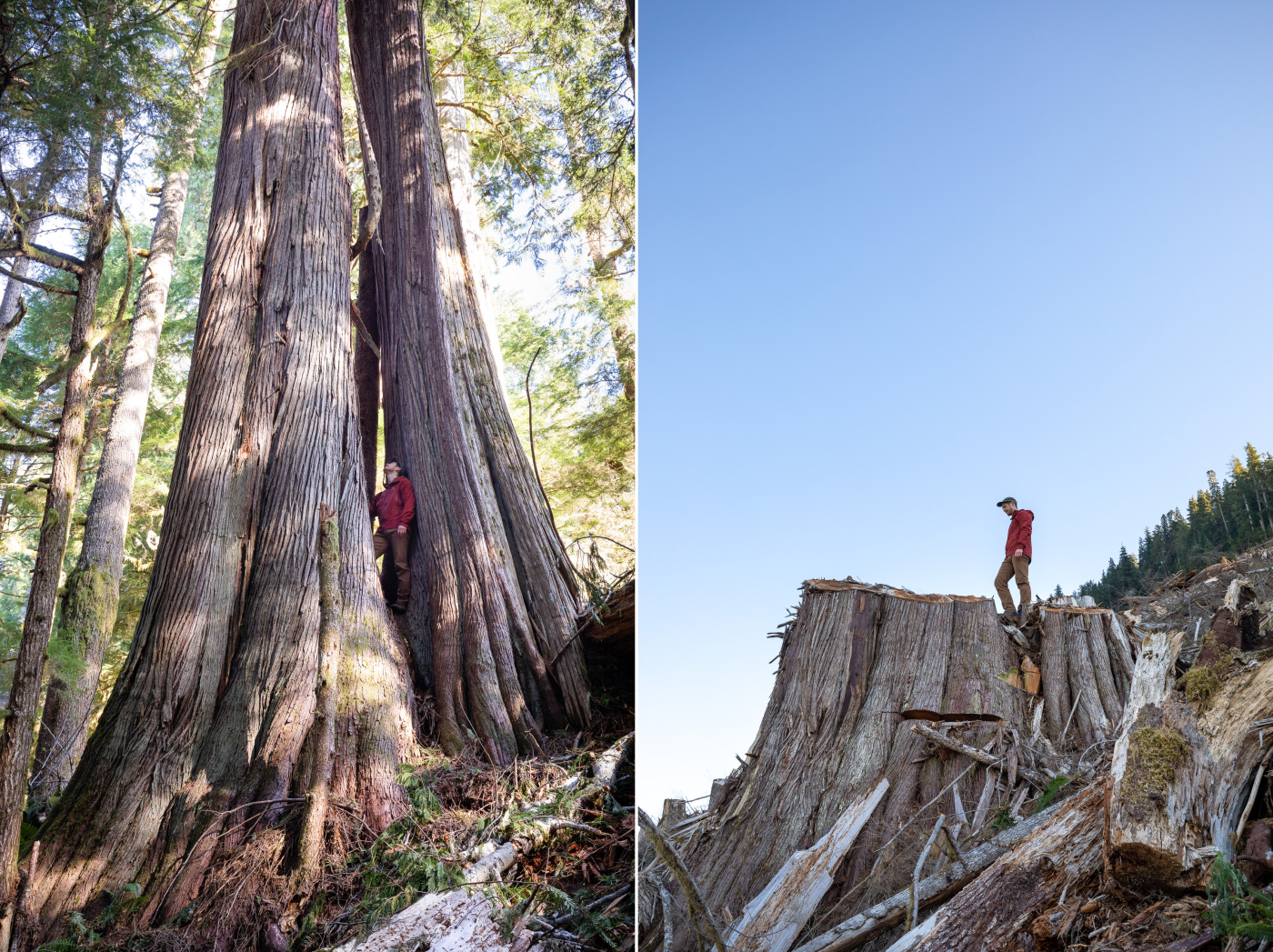 https://ancientforestalliance.org/wp-content/uploads/2026/10/Before-After-Caycuse-TJ-Watt-4-scaled.jpg
1915
2560
TJ Watt
https://ancientforestalliance.org/wp-content/uploads/2026/05/Ancient-Forest-Alliance-logo.svg
TJ Watt2026-10-16 17:36:002026-10-21 13:40:23BC Election 2026: Where do Parties Stand on Nature & Old-Growth?
 https://ancientforestalliance.org/wp-content/uploads/2026/10/BC-Election-2026-Banner-1-1-scaled.jpg
1439
2560
TJ Watt
https://ancientforestalliance.org/wp-content/uploads/2026/05/Ancient-Forest-Alliance-logo.svg
TJ Watt2026-10-09 18:16:372026-10-16 17:44:41Where do BC’s Major Political Parties Stand on Nature Protection?
 https://ancientforestalliance.org/wp-content/uploads/2026/10/Nat-Geo-Travel-Flores-Cedar.jpg
1357
2048
TJ Watt
https://ancientforestalliance.org/wp-content/uploads/2026/05/Ancient-Forest-Alliance-logo.svg
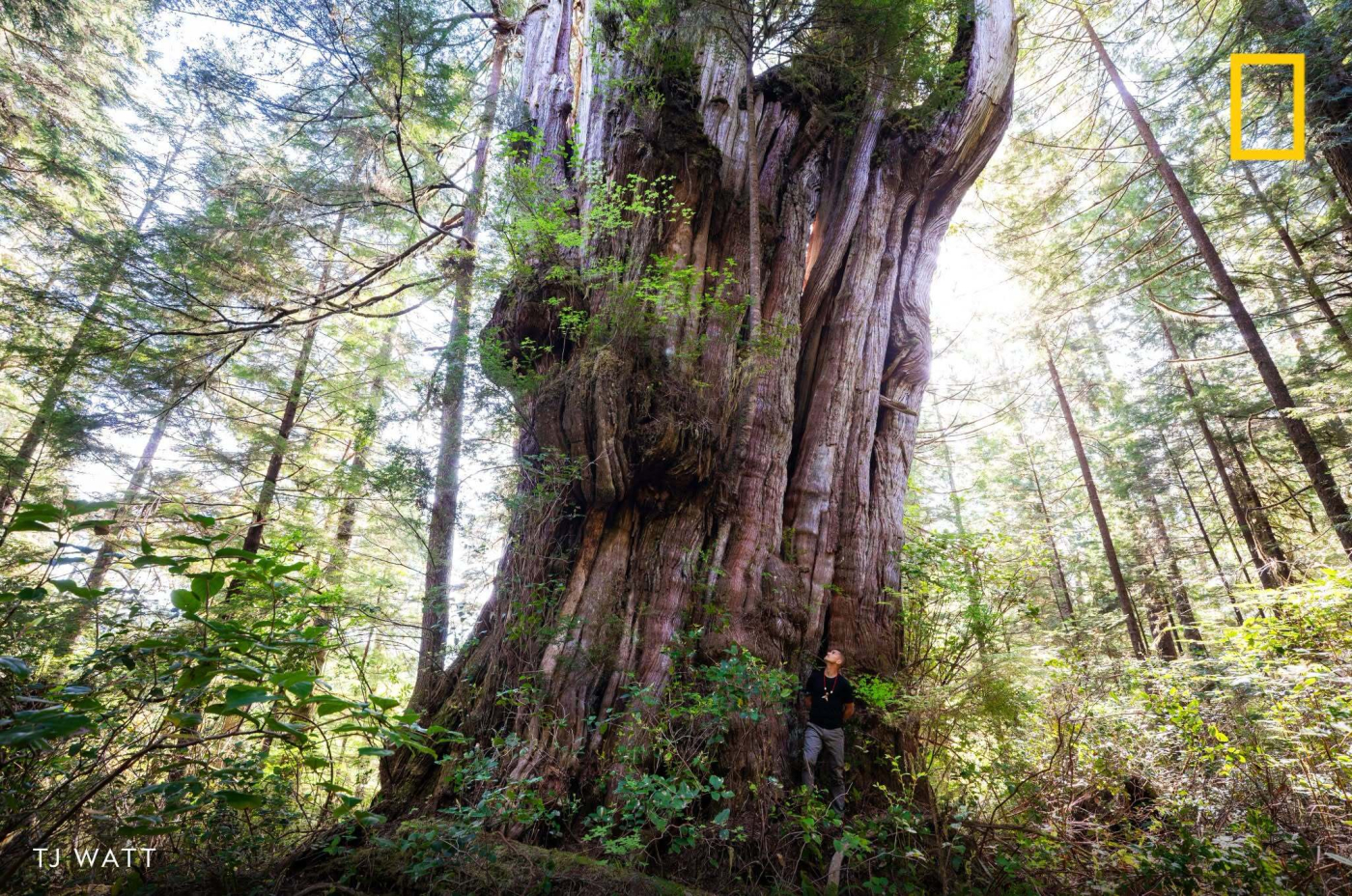
TJ Watt2026-10-02 13:38:152026-10-02 13:38:15Nat Geo Travel Features TJ Watt’s Photo of Flores Cedar
Take Action
 Donate
Support the Ancient Forest Alliance with a one-time or monthly donation. Send a Message
Send an instant message to key provincial decision-makers.
The Walbran Valley’s Castle Grove& – Canada’s Finest Old-Growth Cedar Forest
/in VideoDirect link to YouTube video: www.youtube.com/watch?v=lHnG_sC4oms
Please sign and share our petition at: ancientforestalliance.org/ways-to-take-action-for-forests/petition/
The endangered Castle Grove is the finest stand of unprotected monumental ancient redcedars in Canada – it is the largest, densest, and most intact of such remaining stands. The Lower Castle Grove includes the “Castle Giant”, an enormous, 16 foot (5 meter) diameter western redcedar that is one of the largest trees in Canada, and both the Lower and Upper Castle Grove are jam-packed with a high density of enormous trees. Marbled murrelets, screech owls, Queen Charlotte goshawks, red- legged frogs, cougars, black bears, and black-tailed deer all live in the Upper Castle Grove, while steelhead and coho salmon spawn in the Walbran River below. Most of western Vancouver Island including the Walbran Valley is within the territory of the Nuu-cha-nulth First Nations people.
In the summer of 2012 survey tape for logging was discovered in the Upper Castle Grove. However, after a large-scale public awareness and mobilization campaign led by the Ancient Forest Alliance, the BC government announced in November that the company, Teal-Jones, had rescinded its plans to log the grove. Now, follow-up legal protection is needed for this incredible forest.
The Castle Grove has been featured in numerous media reports on BC’s old-growth forests for over two decades, including the front pages of the Victoria “Times Colonist” and in the “Vancouver Sun”. The Walbran Valley was the focus of early protests against old-growth logging in 1991 and 1992, playing an important role in the build-up towards the massive Clayoquot Sound protests near Tofino on Vancouver Island in 1993.
In the spring of 2011, the BC Liberal government promised to implement a new “legal tool” to protect the province’s largest trees and monumental groves. Of all places where such a designation would make most sense, it would be in the Castle Grove. However, more importantly, more comprehensive “ecosystem-level protection” for our old-growth forests on a much larger scale is fundamentally needed. The Ancient Forest Alliance is calling on the BC Liberal government and the NDP Opposition to commit to implementing a BC Old-Growth Strategy that will inventory and protect old-growth forests wherever they are scarce (such as on Vancouver Island, in the Lower Mainland, in the BC Interior, etc.). The AFA is also calling on the BC Liberal government to ensure the sustainable logging of second-growth forests, which constitute most of the forests in southern BC, and to ensure a guaranteed log supply for BC mills and value-added wood manufacturers by ending the export of raw logs to foreign mills.
Filmed and edited by TJ Watt. Camera – Canon 5D MKII.
Music: “Solo Acoustic Guitar” by Jason Shaw (https://audionautix.com/index.html)
Province forsaken its role on Cortes
/in News CoverageThe War in the Woods has changed complexion since I first started covering hostilities more than 20 years ago as an environmental war correspondent in the Clayoquot Sound combat zone.
For me, the fight in those days was defined by brazen environmental opportunists like MP Svend (White Swan) Robinson who was most dangerous if you happened to be standing between him and a TV camera. This news just in — I was not a friend of the environment movement.
Jump ahead two decades and we find a much different contest being waged on the forest floor and in the boardrooms. While the spoils of war are still the remaining stands of old growth and the ecosystems that support them, the field of battle has shifted and the combatants’ tactics have evolved.
A good example of changing times is the current environment-versus-logging impasse on Cortes Island. It is more a war of words and diplomacy than the bitter blockade combat that defined the Clayoquot. The land in question is not public, it is private. And the gulf island ecosystem in question is not just sensitive, it is hyper-sensitive.
On Cortes, at least, the face of the environment movement has changed. The patchouli anarchy that defined it 20 years ago has mellowed and matured. The career enviros are still there, but their ranks have filled out with an eclectic gathering of regular folks — from kids to their grandparents to more than a few retired loggers.
Currently, an unofficial time out is being observed in the standoff between Cortes Island’s environmental activists and Island Timberlands, a subsidiary of Wall Street giant Brookfield Asset Management.
It should be noted that while this drama plays out on tiny Cortes, the Brookfield boardroom is in a state of high anxiety because of China Investment Corp. (CIC) is considering purchasing a sizeable chunk of Island Timberlands. CIC is the investment arm of the People’s Republic of China with $200 billion of China’s foreign exchange reserves to play with. No pressure there.
On Cortes, three things are remarkable. First, the resident environmentalists and Timberlands have been debating the company’s logging plans for about four years without coming to serious blows.
Second, the environmentalists are not trying to ban logging altogether. They are asking for Timberlands to adopt an ecosystem-based approach — eco-code for selective logging that spares old growth.
Third, Timberlands has exercised a measure of restraint and has not immediately sought an injunction. Efforts are being made to bring the two sides together for what the environmentalists call “an informed discussion about the best use of the resource.”
Back in the early 1990s, the provincial government was fully engaged attempting to referee such conflicts even though there was precious little common ground. Twenty years later, with dialogue increasingly in vogue, the question is: Where is the provincial government?
A big issue in the Cortes dispute is the extent to which our government regulates activity on private land. The private foresters claim they are governed by more than 30 acts and regulations. However, the environmentalists say companies like Timberlands are allowed to apply a model of “professional reliance” which means that there is little meaningful regulatory oversight.
It’s a pity the current administration has all but forsaken its role as steward and peacekeeper in the woods. A measure of leadership would go a long way right about now.
[Monday Mag article no longer available]
OUR VIEW: Provincial oversight missing in Cortes logging dispute
/in News CoverageThe current impasse over logging on private land on Cortes Island is unique by B.C. standards. In a province where wars in the woods have often been bitterly waged, the Cortes standoff stands apart.
Cortes environmentalists and Island Timberlands have been debating the company’s logging plans for about four years without coming to serious blows. The islanders are not trying to ban logging altogether, they are asking for Timberlands to adopt an ecosystem-based, selective logging harvesting plan that spares old growth.
And, Timberlands, which is owned by Wall Street giant Brookfield Asset Management, has exercised a measure of restraint and has not immediately sought an injunction to gain access to the property.
As encouraging as this is, there is something glaringly absent in the debate – provincial government stewardship. There can be no lasting resolution of the Cortes Island conflict unless it can be demonstrated that logging on the company’s private land is subject to diligent regulatory oversight. Private land logging companies claim they are subject to more than 30 provincial acts and regulations.
But, the environmentalists counter-claim that the industry uses a model of professional reliance which means that there is no real government oversight and private land foresters ultimately get to decide what constitutes compliance.
Further complicating the Cortes Island impasse are global investment forces over which Cortes has no control. China Investment Corp.(CIC), the state-owned investment arm of the People’s Republic of China, is interested in purchasing a significant percentage of Island Timberlands. CIC is an investment powerhouse with approximately $200 billion of China’s foreign exchange reserves to play with.
The notion that the fate of old growth stands on tiny Cortes Island will be debated and determined in part by faceless Communist Party plutocrats in Beijing is kind of scary. The scenario is made more scary by the fact that our provincial government seems to have abandoned all caring for commercial logging on private land.
Read article: https://www.campbellrivermirror.com/opinion/183084691.html