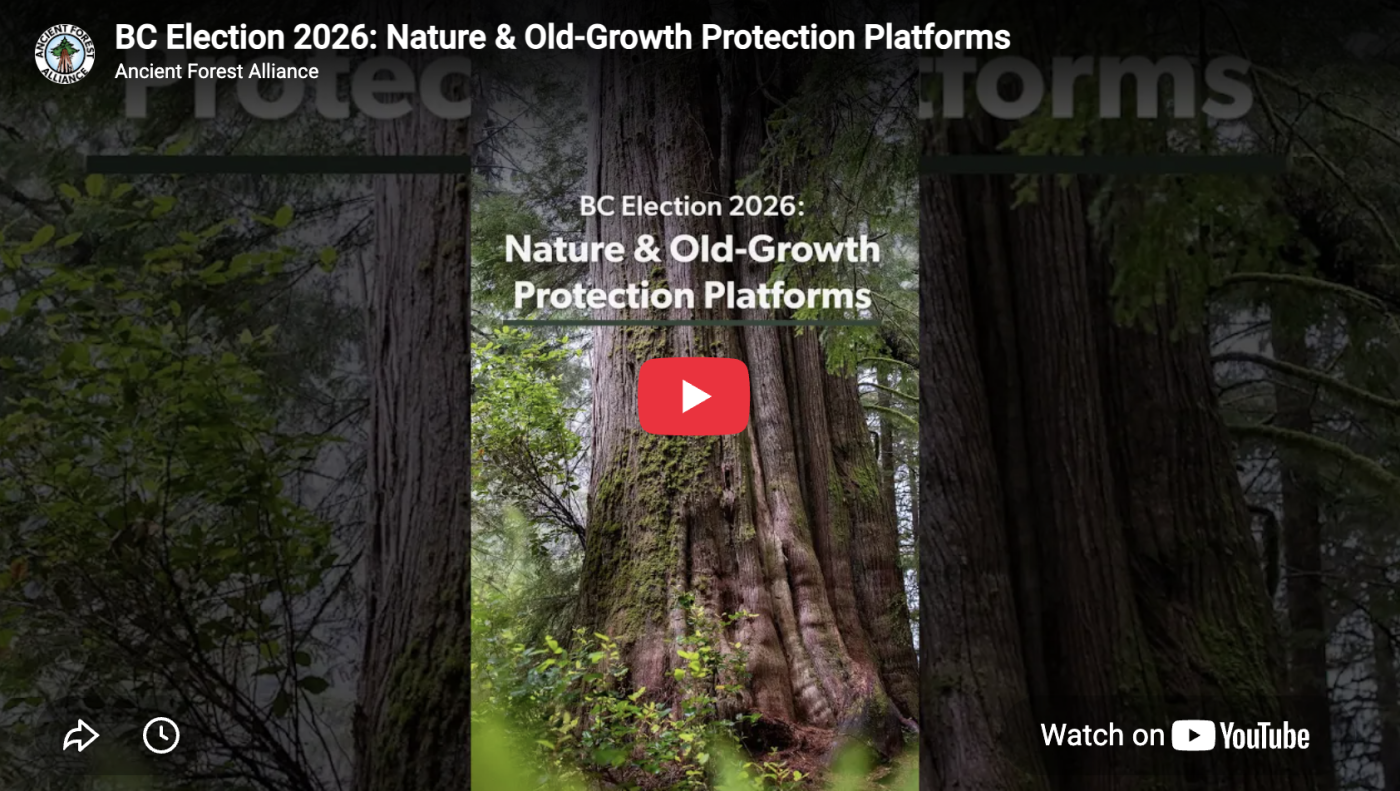
 https://ancientforestalliance.org/wp-content/uploads/2026/10/Screenshot-2026-10-22-at-4.54.32-PM.png
952
1684
TJ Watt
https://ancientforestalliance.org/wp-content/uploads/2026/05/Ancient-Forest-Alliance-logo.svg
TJ Watt2026-10-22 16:54:062026-10-22 16:59:41NEW Video: BC Election 2026: Nature & Old-Growth Protection
https://ancientforestalliance.org/wp-content/uploads/2026/10/Screenshot-2026-10-22-at-4.54.32-PM.png
952
1684
TJ Watt
https://ancientforestalliance.org/wp-content/uploads/2026/05/Ancient-Forest-Alliance-logo.svg
TJ Watt2026-10-22 16:54:062026-10-22 16:59:41NEW Video: BC Election 2026: Nature & Old-Growth ProtectionRelated Posts
https://ancientforestalliance.org/wp-content/uploads/2026/10/Screenshot-2026-10-22-at-4.54.32-PM.png
952
1684
TJ Watt
https://ancientforestalliance.org/wp-content/uploads/2026/05/Ancient-Forest-Alliance-logo.svg
TJ Watt2026-10-22 16:54:062026-10-22 16:59:41NEW Video: BC Election 2026: Nature & Old-Growth Protection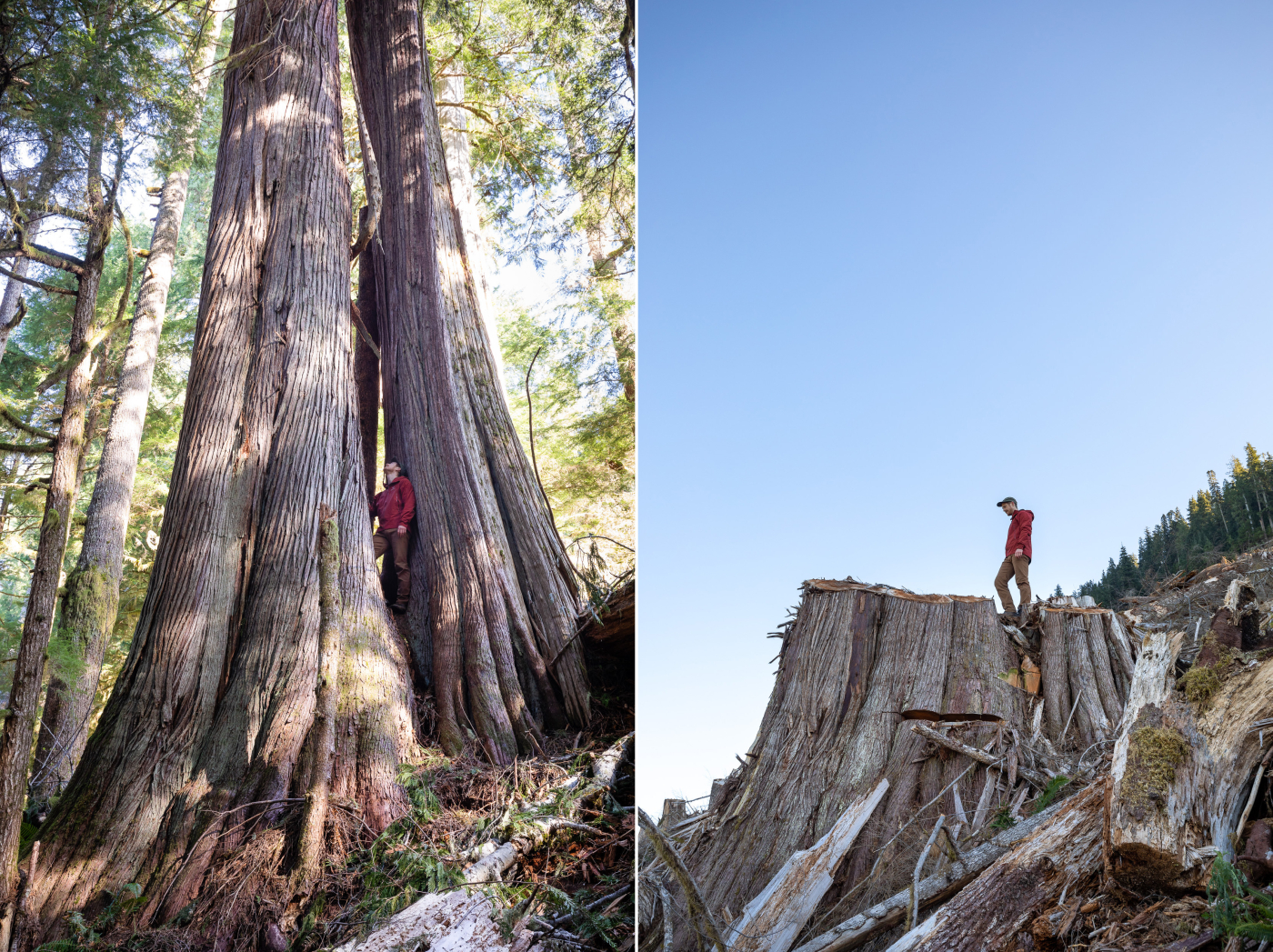 https://ancientforestalliance.org/wp-content/uploads/2026/10/Before-After-Caycuse-TJ-Watt-4-scaled.jpg
1915
2560
TJ Watt
https://ancientforestalliance.org/wp-content/uploads/2026/05/Ancient-Forest-Alliance-logo.svg
TJ Watt2026-10-16 17:36:002026-10-21 13:40:23BC Election 2026: Where do Parties Stand on Nature & Old-Growth?
https://ancientforestalliance.org/wp-content/uploads/2026/10/Before-After-Caycuse-TJ-Watt-4-scaled.jpg
1915
2560
TJ Watt
https://ancientforestalliance.org/wp-content/uploads/2026/05/Ancient-Forest-Alliance-logo.svg
TJ Watt2026-10-16 17:36:002026-10-21 13:40:23BC Election 2026: Where do Parties Stand on Nature & Old-Growth? https://ancientforestalliance.org/wp-content/uploads/2026/10/BC-Election-2026-Banner-1-1-scaled.jpg
1439
2560
TJ Watt
https://ancientforestalliance.org/wp-content/uploads/2026/05/Ancient-Forest-Alliance-logo.svg
TJ Watt2026-10-09 18:16:372026-10-16 17:44:41Where do BC’s Major Political Parties Stand on Nature Protection?
https://ancientforestalliance.org/wp-content/uploads/2026/10/BC-Election-2026-Banner-1-1-scaled.jpg
1439
2560
TJ Watt
https://ancientforestalliance.org/wp-content/uploads/2026/05/Ancient-Forest-Alliance-logo.svg
TJ Watt2026-10-09 18:16:372026-10-16 17:44:41Where do BC’s Major Political Parties Stand on Nature Protection?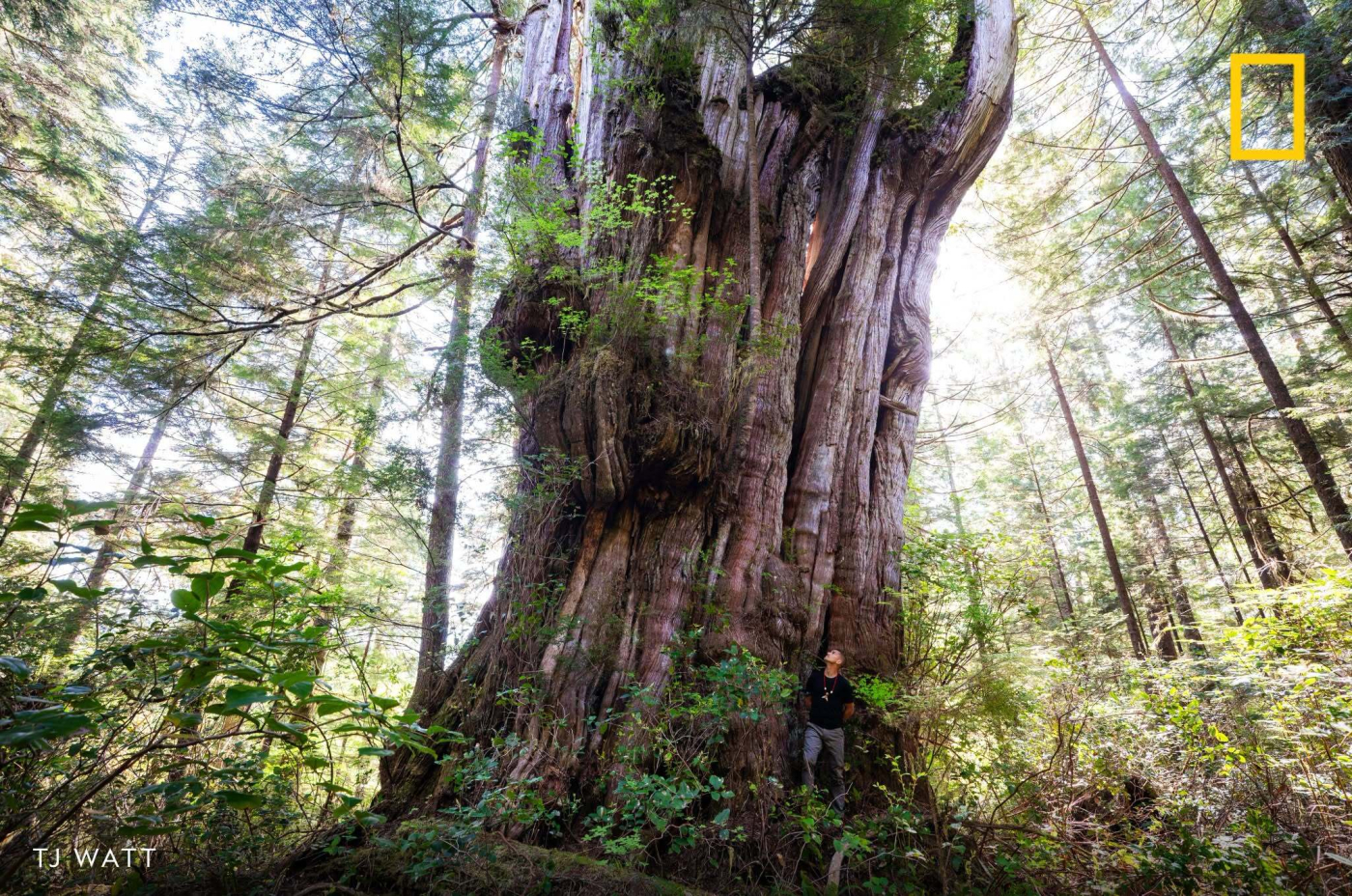 https://ancientforestalliance.org/wp-content/uploads/2026/10/Nat-Geo-Travel-Flores-Cedar.jpg
1357
2048
TJ Watt
https://ancientforestalliance.org/wp-content/uploads/2026/05/Ancient-Forest-Alliance-logo.svg
TJ Watt2026-10-02 13:38:152026-10-02 13:38:15Nat Geo Travel Features TJ Watt’s Photo of Flores Cedar
https://ancientforestalliance.org/wp-content/uploads/2026/10/Nat-Geo-Travel-Flores-Cedar.jpg
1357
2048
TJ Watt
https://ancientforestalliance.org/wp-content/uploads/2026/05/Ancient-Forest-Alliance-logo.svg
TJ Watt2026-10-02 13:38:152026-10-02 13:38:15Nat Geo Travel Features TJ Watt’s Photo of Flores CedarTake Action
 Donate
Support the Ancient Forest Alliance with a one-time or monthly donation. Send a Message
Send an instant message to key provincial decision-makers.
Echo Lake Ancient Forest – Follow-Up Letters Needed! Please WRITE!
/in Take ActionRecently, over a thousand of you wrote letters to the BC government asking for the full protection of the Echo Lake Ancient Forest near Mission (see www.ProtectEchoLake.com), an extremely rare, lowland old-growth rainforest that is also the world’s largest night-roosting site for bald eagles. The BC government is proposing to protect about 45 hectares, or about half, of the old-growth forests around Echo Lake as an Old-Growth Management Area (OGMA). Unfortunately, the government’s proposal excludes spectacular stands of old-growth redcedars and Douglas firs on the west and north sides of the lake.
These unprotected forests are within a Woodlot License, a smaller logging tenure on Crown lands, which the BC government states is not subject to the creation of new Old-Growth Management Areas. However, it is within the government’s power to shift the Woodlot License boundaries to another second-growth forest area among the thousands of hectares of Crown lands in the region.
PLEASE write a follow-up letter asking the BC Liberal government to:
*** Be sure to include your home mailing address so they know you are a real person.
Write to:
Steve Thomson, BC Minister of Forests, Lands, and Natural Resource Operations
FLNR.Minister@gov.bc.ca
And CC your letter to:
Enrique Sanchez, Chilliwack District Old-Growth Management Areas (OGMA’s) – Public Review Coordinator
Enrique.Sanchez@gov.bc.ca
Terry Lake, BC Minister of the Environment
ENV.Minister@gov.bc.ca
Christy Clark, Premier of BC
Premier@gov.bc.ca
Norm MacDonald, BC Opposition Forests Critic
Norm.MacDonald.mla@leg.bc.ca
Human shield stalls Cortes logging for third day
/in News Coverage[Campbell River Mirror article no longer available]
A Cortes Island blockade of Island Timberlands went into its third day Thursday as swelling ranks of environmentalists, residents and their children maintained a human shield against the logging company’s crews and equipment.
Zoe Miles, a member of Wildstands, says, “For more than four years, community members have attempted to work with the company to develop an ecosystem-based approach to forestry. As road-building equipment moves in, the community is now left with no choice but to stand in its path to defend these ecologically significant forests.”
On Tuesday Island Timberlands trucks were stopped at a logging road gate at Basil Creek by two protesters lying on the ground. Company personnel filmed the protesters, likely in preparation for an application for a civil injunction, Miles told the Mirror. On Wednesday, a number of children joined the cause waving placards.
Protester Leah Seltzer says the ranks of the blockaders are swelling daily with the arrival of off-islanders and offers of financial and legal support are coming in.
“People are here because they want to make it known that the industrial forestry model doesn’t work for local communities and it doesn’t work for the province. Island Timberlands will destroy ecologically-sensitive ecosystems and leave nothing beneficial in its wake. We will be left with devastated ecosystems, a contaminated water supply and no long-term jobs. All the benefit is going to people who live far away and who aren’t aware of the cost of their profits to our community and our province.”
Island Timberlands’ Director of Human Resources Mark Leitao says access to “our private property” has been blocked and the company is reviewing its options. He will not say whether those options include seeking an injunction.
“As a result of community feedback we have made significant changes to our logging plans,” Leitao says. “We will log outside the tourist season. We’ve reduced the size of the blocks and changed the configuration of the openings. We plan to retain the veteran old growth trees – which are by government definition 250 year old trees – where it is safe and operationally feasible to do so.”
Activist and Cortes Island land-owner Tzeporah Berman says, “The majority of their logging is traditional clear-cut logging with devastating ecological implications that result in either a change of land use or a dramatically weakened and simplified ecosystem. Cortes resident and Greenpeace co-founder Rex Weyler agrees: “There’s no excuse for industrial-scale logging in these times. Forward looking and economically viable alternatives exist that are based on community health and ecosystem health. Residents have sought Island Timberland’s participation in this kind of forestry model but have been met with disregard.”
Miles says the community protesters hope the blockade does not escalate.
Global TV video: Logging protests on Cortes Island
/in News CoverageDirect link to Global TV video.