 https://ancientforestalliance.org/wp-content/uploads/2026/10/Screenshot-2026-10-22-at-4.54.32-PM.png
952
1684
TJ Watt
https://ancientforestalliance.org/wp-content/uploads/2026/05/Ancient-Forest-Alliance-logo.svg
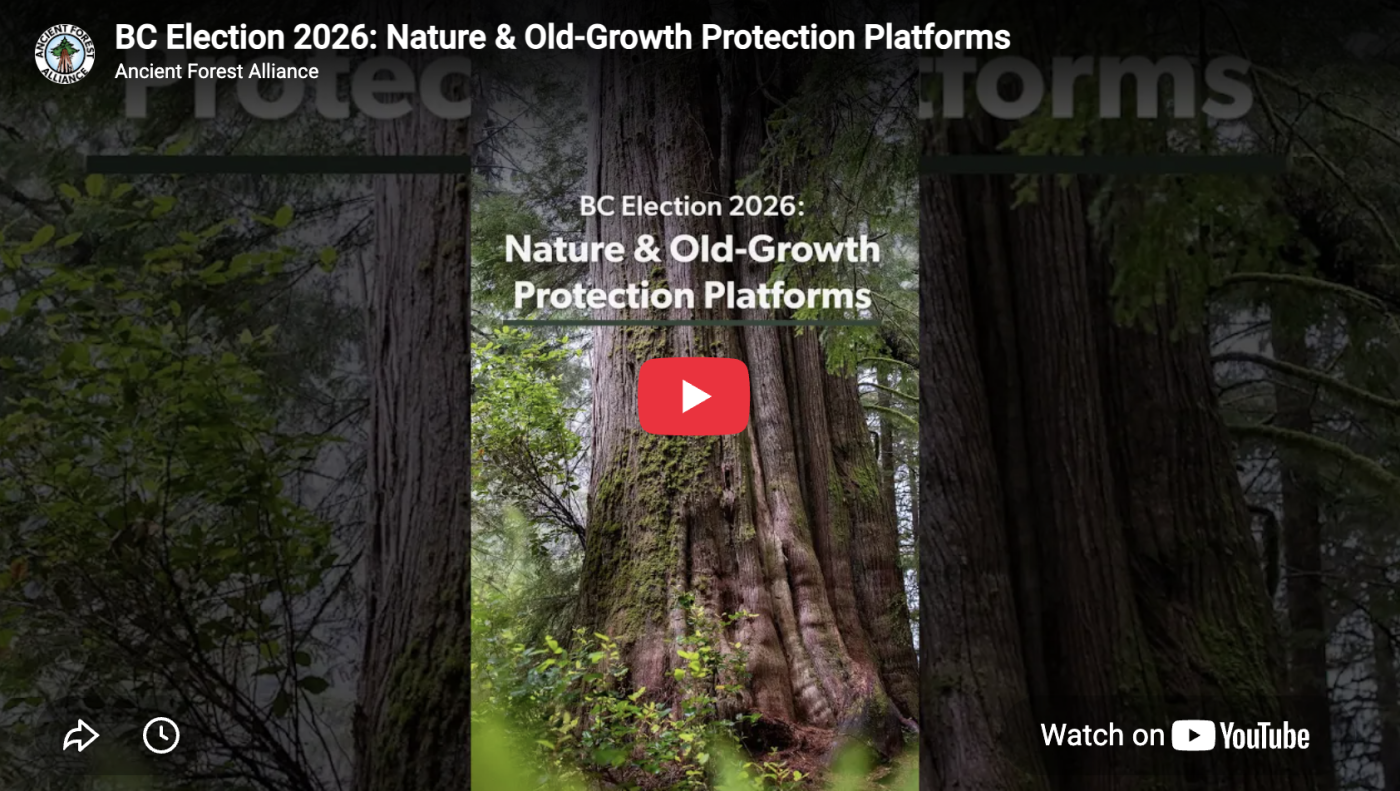
TJ Watt2026-10-22 16:54:062026-10-22 16:59:41NEW Video: BC Election 2026: Nature & Old-Growth Protection
https://ancientforestalliance.org/wp-content/uploads/2026/10/Screenshot-2026-10-22-at-4.54.32-PM.png
952
1684
TJ Watt
https://ancientforestalliance.org/wp-content/uploads/2026/05/Ancient-Forest-Alliance-logo.svg
TJ Watt2026-10-22 16:54:062026-10-22 16:59:41NEW Video: BC Election 2026: Nature & Old-Growth ProtectionRelated Posts
https://ancientforestalliance.org/wp-content/uploads/2026/10/Screenshot-2026-10-22-at-4.54.32-PM.png
952
1684
TJ Watt
https://ancientforestalliance.org/wp-content/uploads/2026/05/Ancient-Forest-Alliance-logo.svg
TJ Watt2026-10-22 16:54:062026-10-22 16:59:41NEW Video: BC Election 2026: Nature & Old-Growth Protection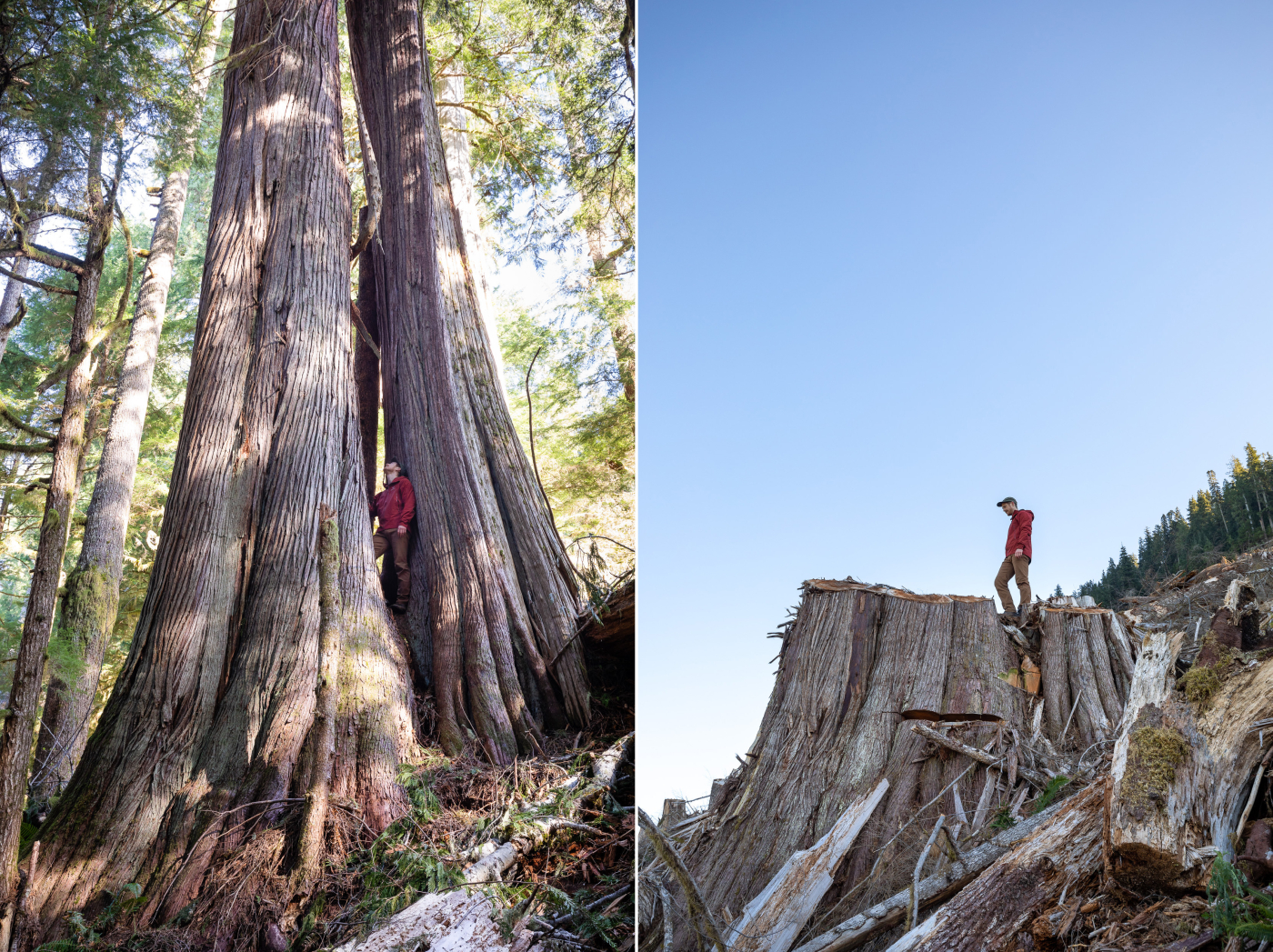 https://ancientforestalliance.org/wp-content/uploads/2026/10/Before-After-Caycuse-TJ-Watt-4-scaled.jpg
1915
2560
TJ Watt
https://ancientforestalliance.org/wp-content/uploads/2026/05/Ancient-Forest-Alliance-logo.svg
TJ Watt2026-10-16 17:36:002026-10-21 13:40:23BC Election 2026: Where do Parties Stand on Nature & Old-Growth?
https://ancientforestalliance.org/wp-content/uploads/2026/10/Before-After-Caycuse-TJ-Watt-4-scaled.jpg
1915
2560
TJ Watt
https://ancientforestalliance.org/wp-content/uploads/2026/05/Ancient-Forest-Alliance-logo.svg
TJ Watt2026-10-16 17:36:002026-10-21 13:40:23BC Election 2026: Where do Parties Stand on Nature & Old-Growth? https://ancientforestalliance.org/wp-content/uploads/2026/10/BC-Election-2026-Banner-1-1-scaled.jpg
1439
2560
TJ Watt
https://ancientforestalliance.org/wp-content/uploads/2026/05/Ancient-Forest-Alliance-logo.svg
TJ Watt2026-10-09 18:16:372026-10-16 17:44:41Where do BC’s Major Political Parties Stand on Nature Protection?
https://ancientforestalliance.org/wp-content/uploads/2026/10/BC-Election-2026-Banner-1-1-scaled.jpg
1439
2560
TJ Watt
https://ancientforestalliance.org/wp-content/uploads/2026/05/Ancient-Forest-Alliance-logo.svg
TJ Watt2026-10-09 18:16:372026-10-16 17:44:41Where do BC’s Major Political Parties Stand on Nature Protection?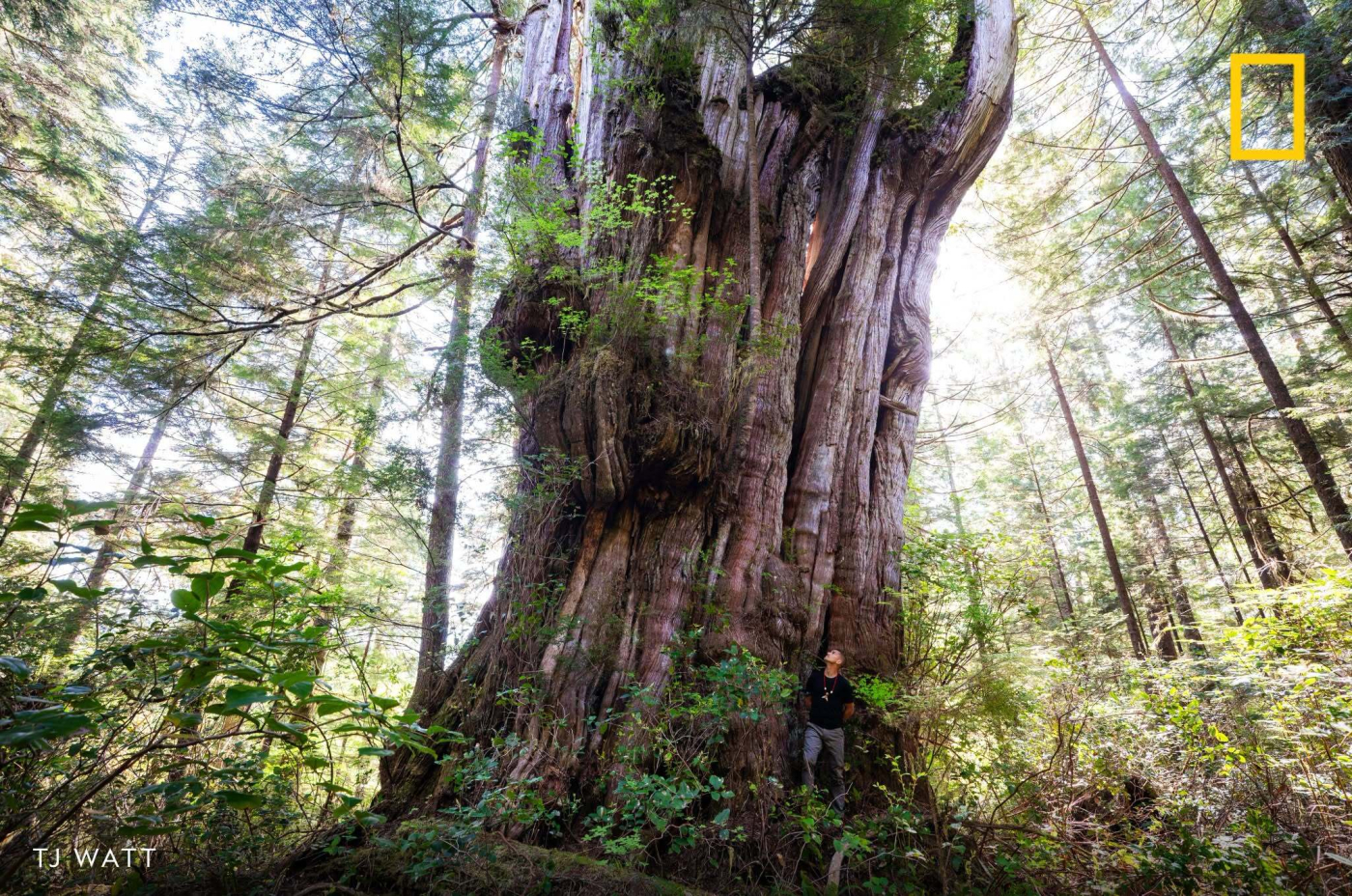 https://ancientforestalliance.org/wp-content/uploads/2026/10/Nat-Geo-Travel-Flores-Cedar.jpg
1357
2048
TJ Watt
https://ancientforestalliance.org/wp-content/uploads/2026/05/Ancient-Forest-Alliance-logo.svg
TJ Watt2026-10-02 13:38:152026-10-02 13:38:15Nat Geo Travel Features TJ Watt’s Photo of Flores Cedar
https://ancientforestalliance.org/wp-content/uploads/2026/10/Nat-Geo-Travel-Flores-Cedar.jpg
1357
2048
TJ Watt
https://ancientforestalliance.org/wp-content/uploads/2026/05/Ancient-Forest-Alliance-logo.svg
TJ Watt2026-10-02 13:38:152026-10-02 13:38:15Nat Geo Travel Features TJ Watt’s Photo of Flores CedarTake Action
 Donate
Support the Ancient Forest Alliance with a one-time or monthly donation. Send a Message
Send an instant message to key provincial decision-makers.
Elphinstone Logging Focus – Wilson Creek forest under threat
/in AnnouncementsCitizens on the Sunshine Coast in Roberts Creek are fighting against
imminent logging in the Wilson Creek Forest – please visit the website
of Elphinstone Logging Focus for more details at: https://www.loggingfocus.org/
The Wilson Creek Forest is a key forest area providing connectivity across the lower slopes of the Mt. Elphinstone area. This never-before-logged area is just a 10 minute drive from Roberts Creek and has a wonderful community trail that winds down to the pristine and untouched forest edges of Wilson Creek. It is the key western forest within the Elphinstone Park Expansion boundaries – NOW SCCA supported. Among its many important features, are a number of groves of the threatened Coastal Douglas-fir ecosystem which the government states are threatened province wide. THIS FOREST IS IN IMMINENT DANGER OF BEING LOGGED- WE NEED YOUR HELP.
Wildstands – A Cortes Community Alliance
/in AnnouncementsAs Island Timberlands’ incursions on to Cortes Island heats up the battle to protect its old-growth forests heat up, please follow their campaign by going to their website:com/
https://wildstands.wordpress.
Island Timberlands road crews were on the island today (Nov 27), with security and police presence. Cortes community members have begun to block the road. Peaceful protest is underway. Please stay tuned for more info, and hold off on making travel plans – we will let you know when your presence is needed.
Will logging of ancient forest be halted before it can begin?
/in News CoverageResidents of Cortes Island have formed a blockade to stop the BC based timber company, Island Timberlands (I.T.), from beginning logging operations in one of BC’s last stands of old growth coastal Douglas-fir forest. For over four years, community members have attempted to work with the company to develop an ecosystem-based approach to forestry. As road-building equipment moves in, the community is now left with no choice but to stand in it’s path to defend these ecologically significant forests.
Yesterday, Island Timberlands trucks were stopped at a logging road gate by two protesters lying on the ground. Company personnel filmed the protesters, likely in preparation for an application for a civil injunction. The protesters did not respond to their questions and community members remained on the site until the end of the day.
Adjacent landowners were among the community members present. One couple explained that they have a water license on Basil Creek which runs through Island Timberlands’ property. I.T. plans to log in the riparian area and within 30 feet of the wetland that feeds the salmon-bearing creek. They wrote to Morgan Kennah, Island Timberland’s Manager for Community Affairs, stating their concerns about water supply and contamination. “I thought I would get a letter from Morgan assuring me that my water supply would be safe,” the landowner stated, “but that never happened. I got no response.” Another community member showed up with Christmas decorations and a Christmas tree to lighten the protesters’ spirits.
Leah Seltzer explained the situation in this way, “People are here because they want to make it known that the industrial forestry model doesn’t work for local communities and it doesn’t work for the province. Island Timberlands will destroy ecologically sensitive ecosystems and leave nothing beneficial in its wake. We will be left with devastated ecosystems, a contaminated water supply and no long-term jobs. All the benefit is going to people who live far away and who aren’t aware of the cost of their profits to our community and our province.”
The threatened lands contain some of the last 1% of old-growth Coastal Douglas-fir forests, and, according to Ken Wu of the Ancient Forest Alliance (AFA), are some of the most extensive stands remaining in the endangered “Dry Maritime” forests along BC’s southern coast. The forests also contain a number of documented threatened species and sensitive ecosystems.
At this time, I.T. has contracted several local workers but these jobs will only provide short-term employment. More than 60% of I.T.’s raw logs are shipped out of the province to be processed overseas. Standing exclusively to profit are I.T.’s corporate shareholders, which include Brookfield Asset Management and the BC Investment Management Corporation, the pension fund for provincial employees.
While I.T. claims to use sustainable forestry practices, long-time forest activist and Cortes Island land-owner, Tzeporah Berman, warns us not to be fooled: “The majority of their logging is traditional clearcut logging with devastating ecological implications that result in either a change of land use or a dramatically weakened and simplified ecosystem. The Sustainable Forestry Initiative (SFI) that Island Timberlands touts does not ensure strong environmental standards and has little support from First Nations or environmental organizations.”
Cortes resident and Greenpeace co-founder Rex Weyler agrees. “There’s no excuse for industrial-scale logging in these times,” he says. “Forward-looking and economically-viable alternatives exist that are based on community health and ecosystem health. Island Timberlands’ plans are a step backwards. Cortes Island is moving forward.” Residents have sought Island Timberland’s participation in this kind of forestry model but have been met with disregard.
Community members hope that the situation will not escalate, and that I.T. will recognize that Cortes holds a rare opportunity to work with a willing community to create a forestry model that benefits everyone. Until then, islanders will be standing in the way of the equipment, and keeping a close eye on any further signs of I.T. activity on the island.
Read more: https://wildstands.wordpress.com/