 https://ancientforestalliance.org/wp-content/uploads/2026/10/Screenshot-2026-10-22-at-4.54.32-PM.png
952
1684
TJ Watt
https://ancientforestalliance.org/wp-content/uploads/2026/05/Ancient-Forest-Alliance-logo.svg
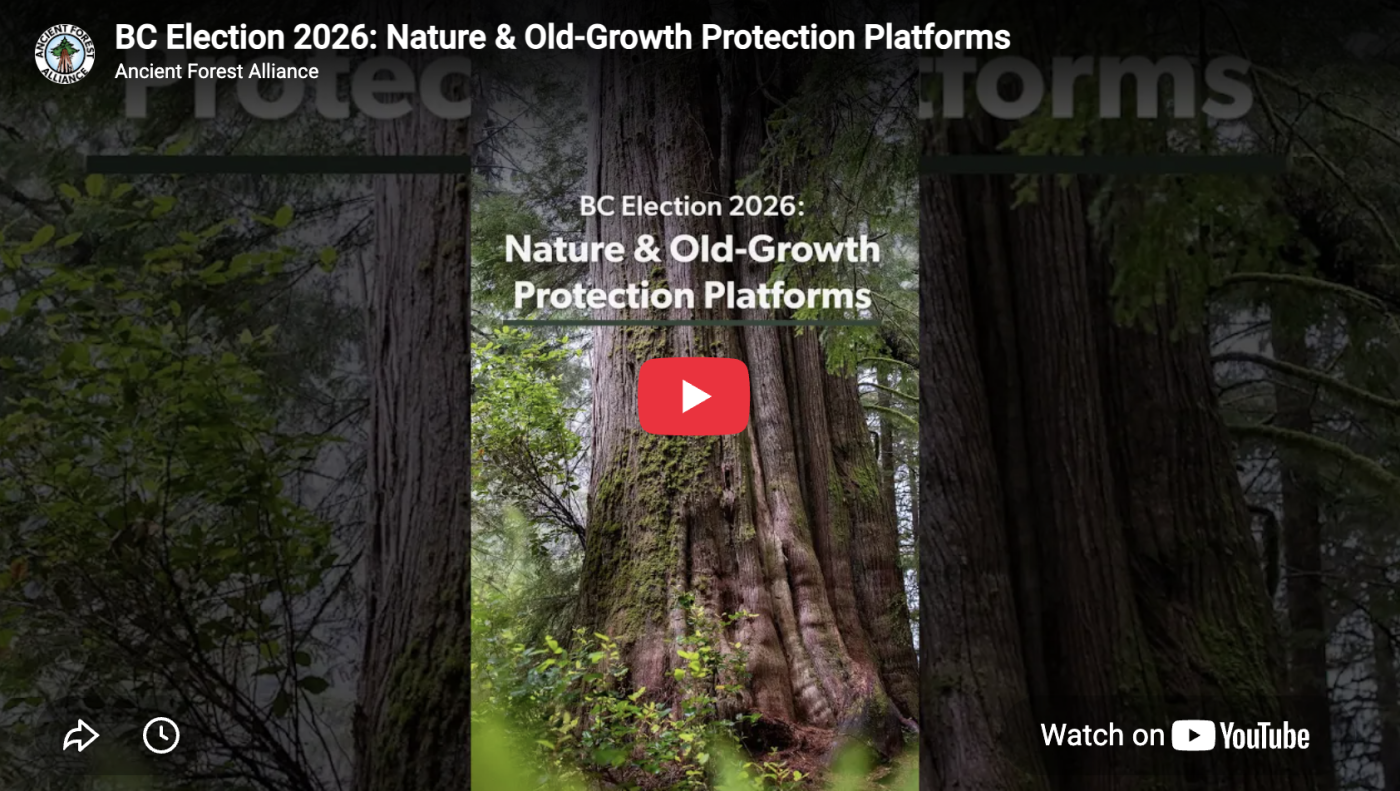
TJ Watt2026-10-22 16:54:062026-10-22 16:59:41NEW Video: BC Election 2026: Nature & Old-Growth Protection
https://ancientforestalliance.org/wp-content/uploads/2026/10/Screenshot-2026-10-22-at-4.54.32-PM.png
952
1684
TJ Watt
https://ancientforestalliance.org/wp-content/uploads/2026/05/Ancient-Forest-Alliance-logo.svg
TJ Watt2026-10-22 16:54:062026-10-22 16:59:41NEW Video: BC Election 2026: Nature & Old-Growth ProtectionRelated Posts
https://ancientforestalliance.org/wp-content/uploads/2026/10/Screenshot-2026-10-22-at-4.54.32-PM.png
952
1684
TJ Watt
https://ancientforestalliance.org/wp-content/uploads/2026/05/Ancient-Forest-Alliance-logo.svg
TJ Watt2026-10-22 16:54:062026-10-22 16:59:41NEW Video: BC Election 2026: Nature & Old-Growth Protection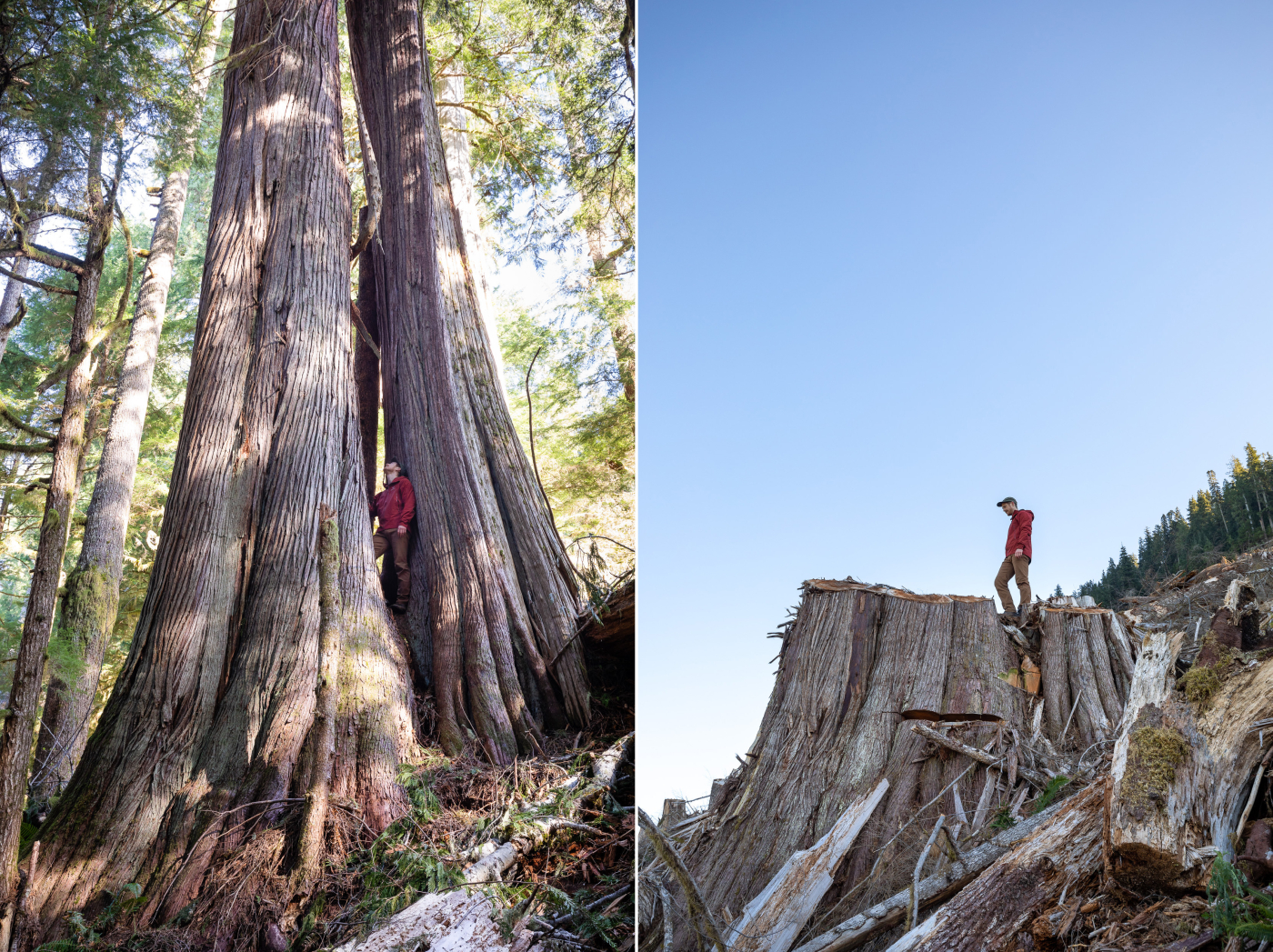 https://ancientforestalliance.org/wp-content/uploads/2026/10/Before-After-Caycuse-TJ-Watt-4-scaled.jpg
1915
2560
TJ Watt
https://ancientforestalliance.org/wp-content/uploads/2026/05/Ancient-Forest-Alliance-logo.svg
TJ Watt2026-10-16 17:36:002026-10-21 13:40:23BC Election 2026: Where do Parties Stand on Nature & Old-Growth?
https://ancientforestalliance.org/wp-content/uploads/2026/10/Before-After-Caycuse-TJ-Watt-4-scaled.jpg
1915
2560
TJ Watt
https://ancientforestalliance.org/wp-content/uploads/2026/05/Ancient-Forest-Alliance-logo.svg
TJ Watt2026-10-16 17:36:002026-10-21 13:40:23BC Election 2026: Where do Parties Stand on Nature & Old-Growth? https://ancientforestalliance.org/wp-content/uploads/2026/10/BC-Election-2026-Banner-1-1-scaled.jpg
1439
2560
TJ Watt
https://ancientforestalliance.org/wp-content/uploads/2026/05/Ancient-Forest-Alliance-logo.svg
TJ Watt2026-10-09 18:16:372026-10-16 17:44:41Where do BC’s Major Political Parties Stand on Nature Protection?
https://ancientforestalliance.org/wp-content/uploads/2026/10/BC-Election-2026-Banner-1-1-scaled.jpg
1439
2560
TJ Watt
https://ancientforestalliance.org/wp-content/uploads/2026/05/Ancient-Forest-Alliance-logo.svg
TJ Watt2026-10-09 18:16:372026-10-16 17:44:41Where do BC’s Major Political Parties Stand on Nature Protection?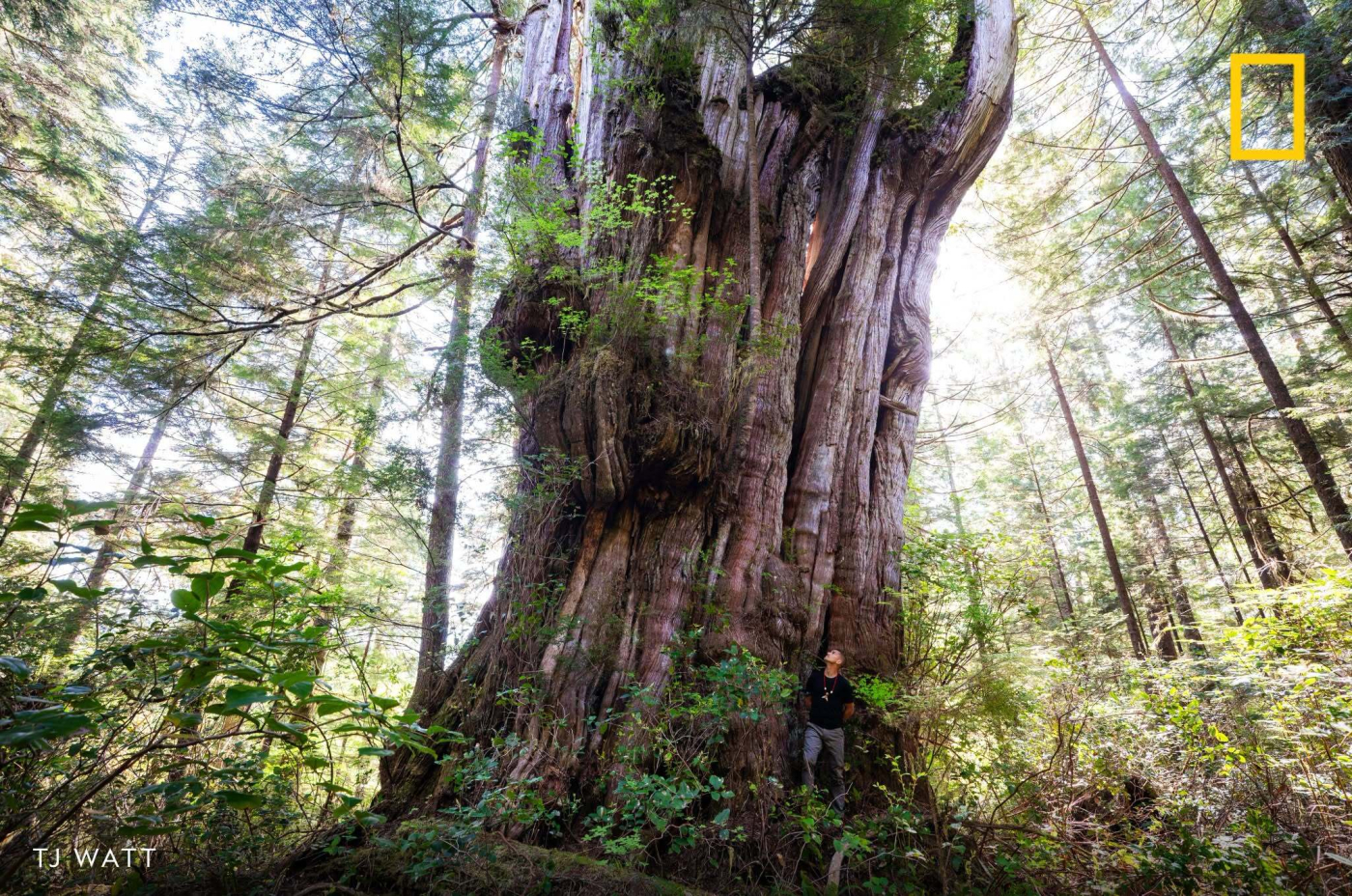 https://ancientforestalliance.org/wp-content/uploads/2026/10/Nat-Geo-Travel-Flores-Cedar.jpg
1357
2048
TJ Watt
https://ancientforestalliance.org/wp-content/uploads/2026/05/Ancient-Forest-Alliance-logo.svg
TJ Watt2026-10-02 13:38:152026-10-02 13:38:15Nat Geo Travel Features TJ Watt’s Photo of Flores Cedar
https://ancientforestalliance.org/wp-content/uploads/2026/10/Nat-Geo-Travel-Flores-Cedar.jpg
1357
2048
TJ Watt
https://ancientforestalliance.org/wp-content/uploads/2026/05/Ancient-Forest-Alliance-logo.svg
TJ Watt2026-10-02 13:38:152026-10-02 13:38:15Nat Geo Travel Features TJ Watt’s Photo of Flores CedarTake Action
 Donate
Support the Ancient Forest Alliance with a one-time or monthly donation. Send a Message
Send an instant message to key provincial decision-makers.
Campaign sprouts up to save Echo Lake old-growth forest
/in News CoverageMetro News online article
Echo Lake, between Mission and Agassiz, has become the focal point behind a new campaign aimed at protecting old-growth forests and eagle roosting areas around the province.
Conservationists with the Ancient Forest Alliance are calling for the provincial government to protect Echo Lake’s forest.
Areas containing some of the lake’s old-growth trees would be excluded from the province’s proposed Old-Growth Management Area.
“This is really an extremely rare gem of lowland ancient rainforest in a sea of second-growth forests, clearcuts and high altitude old-growth patches,” said Ken Wu, executive director of the Ancient Forest Alliance. “To still have an unprotected lowland ancient forest like this left near Vancouver is like finding a Sasquatch. How many jurisdictions on earth still have trees that grow as wide as living rooms and as tall as downtown skyscrapers. What we have here in B.C. is something exceptional.”
The government is currently in the midst of a 60-day public input process into their proposed management plan.
The alliance hopes enough public engagement would help protect the entire old-growth forest at Echo Lake.
Province urged to protect Harrison Eagles
/in News CoverageLink to Vancouver Sun online article
David Hancock says he has personally counted more than 7,000 bald eagles in one day on the Harrison and Chehalis rivers – a world record and almost twice the best tally of Brack-endale Eagles Provincial Park near Squamish.
Today, as the eagles arrive again to feast on the area’s annual salmon runs, Hancock is counting on the B.C. government to do the right thing and increase protection for one of the planet’s great avian spectacles.
“At the moment, we don’t really have any legally defined protection,” said Hancock, a trustee with the American Bald Eagle Foundation and chair of the Surrey-based Hancock Wildlife Foundation.
Ken Wu of the Ancient Forest Alliance is also calling for increased protection of the eagles by putting an end to clearcutting of their prime roosting habitat on Crown forest land.
He said the province has proposed an old-growth management area of about 45 hectares at Echo Lake – critical eagle habitat just west of Harrison River and north of Highway 7 – but has excluded another 25 hectares. “Lowland old-growth of this quality in the Lower Mainland is as rare as a sasquatch now,” he said. “It should be a no-brainer that the whole thing must be included.”
What protection that does exist at Harrison/Chehalis applies mainly to the wetlands and is non-governmental: the Chehalis River Conservancy (192 hectares) is owned by the Nature Trust of B.C. and leased to the federal fisheries department; the Martin Property (7.5 hectares) is owned by the Nature Trust and Ducks Unlimited Canada.
In comparison, the Squamish River Valley has 755-hectare Brackendale Eagles Provincial Park.
Hancock said the Harrison-Chehalis area should be declared a provincial wildlife management area – at a minimum – to protect the eagles from uncontrolled human activities on the Chehalis flats.
“It only takes one person to walk out there when there are 5,000 eagles and they are all gone,” he said. “That makes no sense at all. They need that feeding and resting area.”
Brennan Clarke, spokesman for the Ministry of Forests, Lands and Natural Resource Operations, said that the old-growth management area is “proposed specifically to overlap with the eagle roosting area” and that the ministry is “working on a more comprehensive wildlife plan for this general area. It’s currently in very preliminary stages.”
Hancock agreed that eagles are especially drawn to Echo Lake to roost in a “cirque of big old trees around that lake” and that the entire forest there should be fully protected, since much of the area has been “hammered” by clearcutting.
“It’s the last chunk of old-growth,” he said. “It’s just one of those old traditional social gathering sites. When you get hundreds and hundreds of eagles nesting in a few trees it’s obviously an important part of their being.”
Stephen Ben-Oliel, who owns a 16-hectare property bordering Echo Lake, also supports protection of the area. “They roost here because it’s one of the last places with old-growth trees,” he confirmed.
Brackendale Eagles Provincial Park was created to protect floodplain habitat, including “critical perching, roosting and feeding” areas for bald eagles arriving to forage on spawning salmon, says the BC Parks management plan for the site, noting it recorded a “world record” of 3,769 eagles during a 1994 count.
Hancock said he observed 7,362 eagles at Harrison-Chehalis on Dec. 11, 2010, along a two-kilometre distance.
“These are absolute counts, not estimates,” he noted.” It’s a small area. I stand there with the telescope and walk around in a circle and someone writes them down as I count them. These won’t be disputed.”
Dick Cannings, a noted birder, biologist, and author living in the Okanagan Valley, said that “if the 7,000-plus figure is accurate – and I have no reason to doubt that – the Harrison-Chehalis area can lay some claim to be the Bald Eagle capital of the world.”
Hancock estimated more than 10,000 eagles were present in a larger 10-square-kilometre wintering area.
Kyle Elliott, a bird biologist who has studied the lower Fraser River, said that in December 2010, the average temperature in Juneau, Alaska, was 22 degrees Fahrenheit – five degrees below the average of 27 degrees.
Those colder temperatures along with the collapse of the chum salmon run at Squamish and ” ideal water levels at Chehalis flats” made for the exceptional year for eagles, he said.
Hancock, who is known for putting live video webcams at eagle nesting and feeding sites, added that increased commercial fishing of chum salmon – a species traditionally of little value – in northern waters over the years is another factor in the eagles coming further south to feed, especially on late runs at Harrison-Chehalis.
Even in a non-record year, it is not unusual to see more than 1,000 eagles congregate at Harrison-Chehalis.
The Fraser Valley Bald Eagle Festival takes place Nov. 17-18 on the Harrison River.
Media Release: BC Liberals open the back door to log protected forests under the guise of "science" and "local communities"
/in Media ReleaseFor immediate release,
October 10, 2012.
BC Liberal Government opens back door to potentially log protected old-growth forests in BC’s Central Interior under the guise of “science” and “local communities”.
VICTORIA, BC – The BC Liberal Government announced yesterday a new forestry action plan for BC’s Central Interior that would open the “back door” for logging in currently protected forests. By the spring of 2013 the BC government plans to create frameworks for a “science-based review” and “community-engagement” process to potentially open up forest reserves that currently protect old-growth forests, scenery for tourism, species at risk, and wildlife in the Central Interior. Conservationists are calling the government’s invoking of “science” and “local community input” as Trojan horses for logging companies to access protected forests. The government’s action plan is detailed in a new report, “Beyond the Beetle: A Mid-Term Timber Supply Action Plan” at: https://www2.news.gov.bc.ca/news_releases_2009-2013/2012FOR0193-001516.htm
“The BC Liberals are using weasel-words and sneaky manoeuvres to open the back door for the logging industry to get into these currently protected forests under the guise of ‘science’ and the politically correct phrase of ‘local community input’ – despite the fact that a majority of people have already clearly said ‘no’ to logging in protected forest reserves during the public input process and that a true science-based review would show the need to protect more forests to slow the decline of endangered species and wildlife, not to log their few protected reserves,” stated Ken Wu, executive director of the Ancient Forest Alliance. “What I predict is that the BC government will set-up a ‘rigged-game’ for the science review with an overarching constraint that the existing unsustainable levels of timber harvest must be maintained – meaning that science will be used as a tool to determine which protected areas should be logged, not whether or not they should remain protected or be expanded as needed by endangered species, wildlife, tourism, and wild salmon. In addition, having local logging industry reps sit at local committees to decide whether to log these areas certainly won’t hinder the BC Liberals’ logging goals.”
The rationale for opening up protected forest reserves is that an impending shortfall in available timber supplies to support Central Interior sawmills will soon take effect, known as the “falldown effect”. This shortfall in timber supplies in relation to an overcapacity in the forest industry is the result of the loss of mature forests from the pine beetle infestation (caused by climate change and forest fire suppression) and a massive forest industry expansion in the Interior in recent years to take advantage of the infestation, as well as a decades-long history of overcutting the best stands at lower elevations resulting in diminishing returns as the standing timber declines in volume and value and becomes more expensive to access.
“Rewarding unsustainable behaviour with more unsustainable behaviour is wrong and foolish. The Interior timber industry’s unsustainable expansion and overcutting of beetle-affected wood and vast areas of living trees should not be rewarded with more of the same inside of our protected forest reserves now – that’s the worst, most myopic course of action possible and it’s precisely the type of mindset that has brought this planet to the ecological brink,” stated Wu. “Instead the BC Liberal government should diversify rural economies, reduce overcutting while supporting the creation of more higher-end value-added wood manufacturing jobs, ensure sustainable second-growth forestry, end wood waste in clearcuts, end raw log exports to foreign mills, retrain forestry workers, and expand forest protections for wildlife, tourism, recreation, and wild fisheries.
The move to log protected forest reserves and Old-Growth Management Areas is based on the false notion that because there are many beetle-killed trees, that the entire ecosystem is not ‘living’ and therefore clearcutting and punching roads into vast swaths of protected forests – which are a mix of living and dead trees that are part of very vibrant, alive, and continually growing ecosystems – does little environmental damage.
Pine beetle-affected forests include living, unaffected trees of various species, younger regenerating trees, and intact understory vegetation and soil structures, while the dead trees and woody debris provide homes for much wildlife. The extent of the pine beetle infestation is unnatural, caused by anthropogenic climate change and decades of wildfire suppression by the forest industry – however, further clearcutting of these living, dynamic forest ecosystems by removing all the living and dead trees and punching road networks throughout them, leading to soil erosion, vastly increases the environmental damage and removes vital wildlife habitat.
Forest reserve designations in the BC Interior include:
– Old-Growth Management Areas (that protect representative tracts of scarce old-growth forests)
– Riparian Management Areas (that protect fish habitat and water quality)
– Ungulate Winter Ranges (wintering habitat for mountain caribou, mountain goats, etc.)
– Wildlife Habitat Areas (that protect species at risk such as grizzlies and other wildlife)
– Visual Quality Objectives (that protect scenery for tourism)
– Recreation Areas (campsites, hiking areas, etc.)
The proposed environmental deregulation would take place in four Timber Supply Areas (TSA’s): the Prince George, Quesnel, Williams Lake, and Lakes (Burns Lake area) TSA’s.
A true science-based framework without the constraint of needing to maintain unsustainable harvest levels, and that focuses on what it will take to sustain species at risk, biodiversity, water quality and scenery (ie. that focuses on the original land-use plan goals without new, added logging goals) would almost certainly recommend the expansion of Old-Growth Management Areas and other forest reserves, given the advancement of landscape ecology and conservation biology over the past two decades in recognizing the destructiveness of habitat loss and fragmentation on species at risk and fish-bearing streams. A true science-based review without unsustainable timber constraints would almost certainly reveal the inadequacy of the existing land-use plans and their system of protected forest reserves to stem the decline of species at risk, to sustain old-growth ecosystems, to support scenery for tourism, and to protect fish habitat – it would lead to an expansion of forest protections.
“More overcutting and opening up protected forest reserves to try to prop-up an unsustainable industry a bit longer is like burning up parts of your house for firewood after depleting all your other wood sources. In the end, you’re a lot worse off,” stated Wu. “Logging protected forests in this province is a no-go in terms of public opinion. For the BC Liberals to hang this albatross around their neck in the months leading up to BC election is both wrong and unwise – they need to start correcting their course, fast.”