 https://ancientforestalliance.org/wp-content/uploads/2026/10/Screenshot-2026-10-22-at-4.54.32-PM.png
952
1684
TJ Watt
https://ancientforestalliance.org/wp-content/uploads/2026/05/Ancient-Forest-Alliance-logo.svg
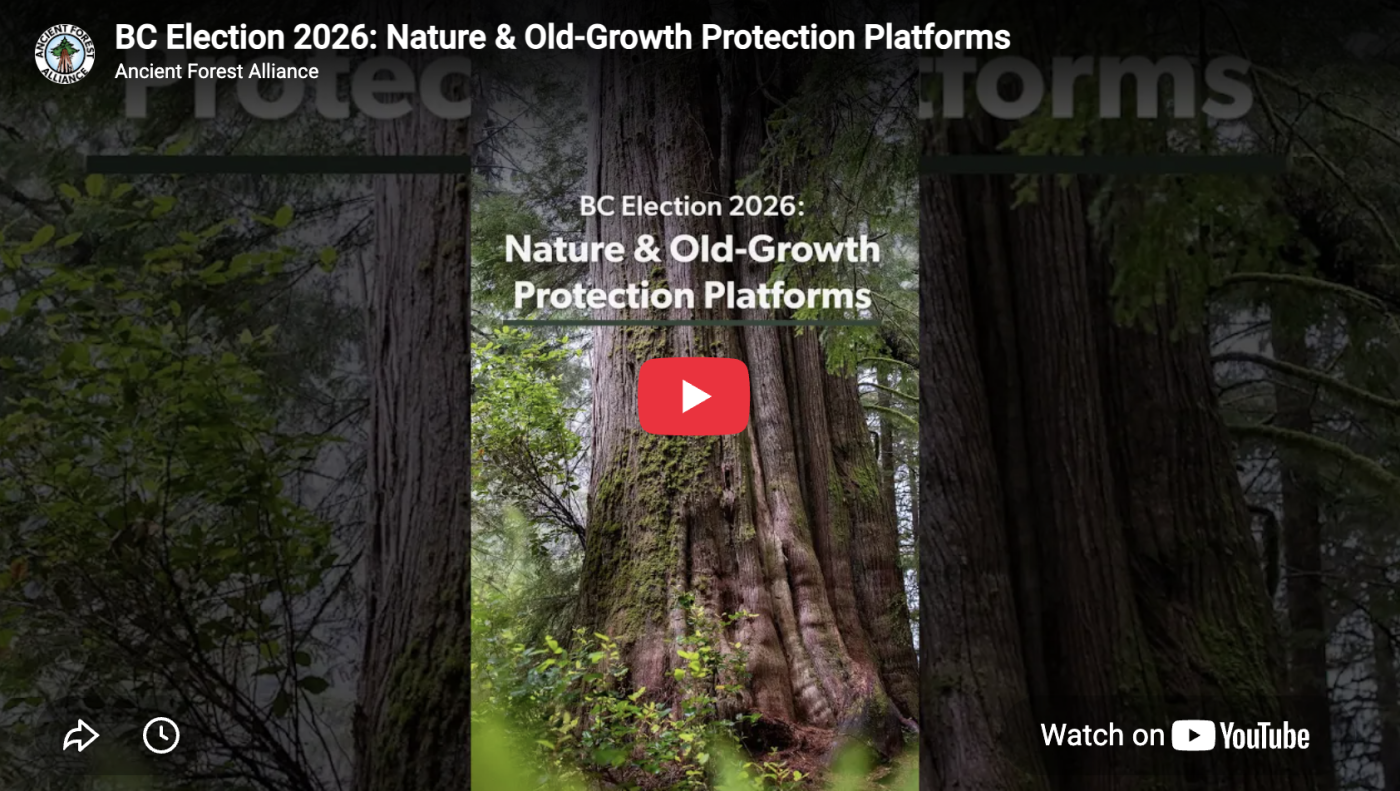
TJ Watt2026-10-22 16:54:062026-10-22 16:59:41NEW Video: BC Election 2026: Nature & Old-Growth Protection
https://ancientforestalliance.org/wp-content/uploads/2026/10/Screenshot-2026-10-22-at-4.54.32-PM.png
952
1684
TJ Watt
https://ancientforestalliance.org/wp-content/uploads/2026/05/Ancient-Forest-Alliance-logo.svg
TJ Watt2026-10-22 16:54:062026-10-22 16:59:41NEW Video: BC Election 2026: Nature & Old-Growth ProtectionRelated Posts
https://ancientforestalliance.org/wp-content/uploads/2026/10/Screenshot-2026-10-22-at-4.54.32-PM.png
952
1684
TJ Watt
https://ancientforestalliance.org/wp-content/uploads/2026/05/Ancient-Forest-Alliance-logo.svg
TJ Watt2026-10-22 16:54:062026-10-22 16:59:41NEW Video: BC Election 2026: Nature & Old-Growth Protection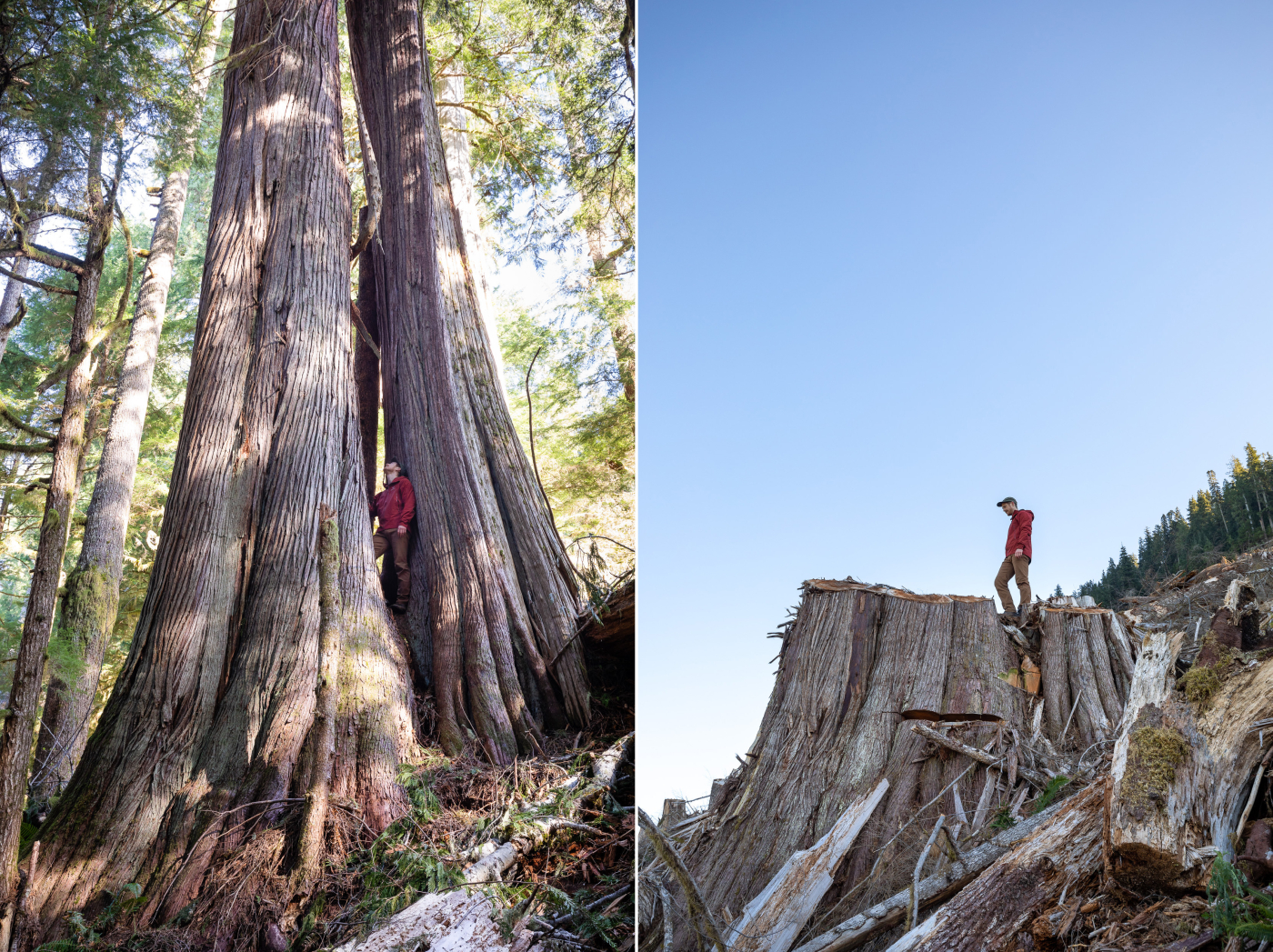 https://ancientforestalliance.org/wp-content/uploads/2026/10/Before-After-Caycuse-TJ-Watt-4-scaled.jpg
1915
2560
TJ Watt
https://ancientforestalliance.org/wp-content/uploads/2026/05/Ancient-Forest-Alliance-logo.svg
TJ Watt2026-10-16 17:36:002026-10-21 13:40:23BC Election 2026: Where do Parties Stand on Nature & Old-Growth?
https://ancientforestalliance.org/wp-content/uploads/2026/10/Before-After-Caycuse-TJ-Watt-4-scaled.jpg
1915
2560
TJ Watt
https://ancientforestalliance.org/wp-content/uploads/2026/05/Ancient-Forest-Alliance-logo.svg
TJ Watt2026-10-16 17:36:002026-10-21 13:40:23BC Election 2026: Where do Parties Stand on Nature & Old-Growth? https://ancientforestalliance.org/wp-content/uploads/2026/10/BC-Election-2026-Banner-1-1-scaled.jpg
1439
2560
TJ Watt
https://ancientforestalliance.org/wp-content/uploads/2026/05/Ancient-Forest-Alliance-logo.svg
TJ Watt2026-10-09 18:16:372026-10-16 17:44:41Where do BC’s Major Political Parties Stand on Nature Protection?
https://ancientforestalliance.org/wp-content/uploads/2026/10/BC-Election-2026-Banner-1-1-scaled.jpg
1439
2560
TJ Watt
https://ancientforestalliance.org/wp-content/uploads/2026/05/Ancient-Forest-Alliance-logo.svg
TJ Watt2026-10-09 18:16:372026-10-16 17:44:41Where do BC’s Major Political Parties Stand on Nature Protection?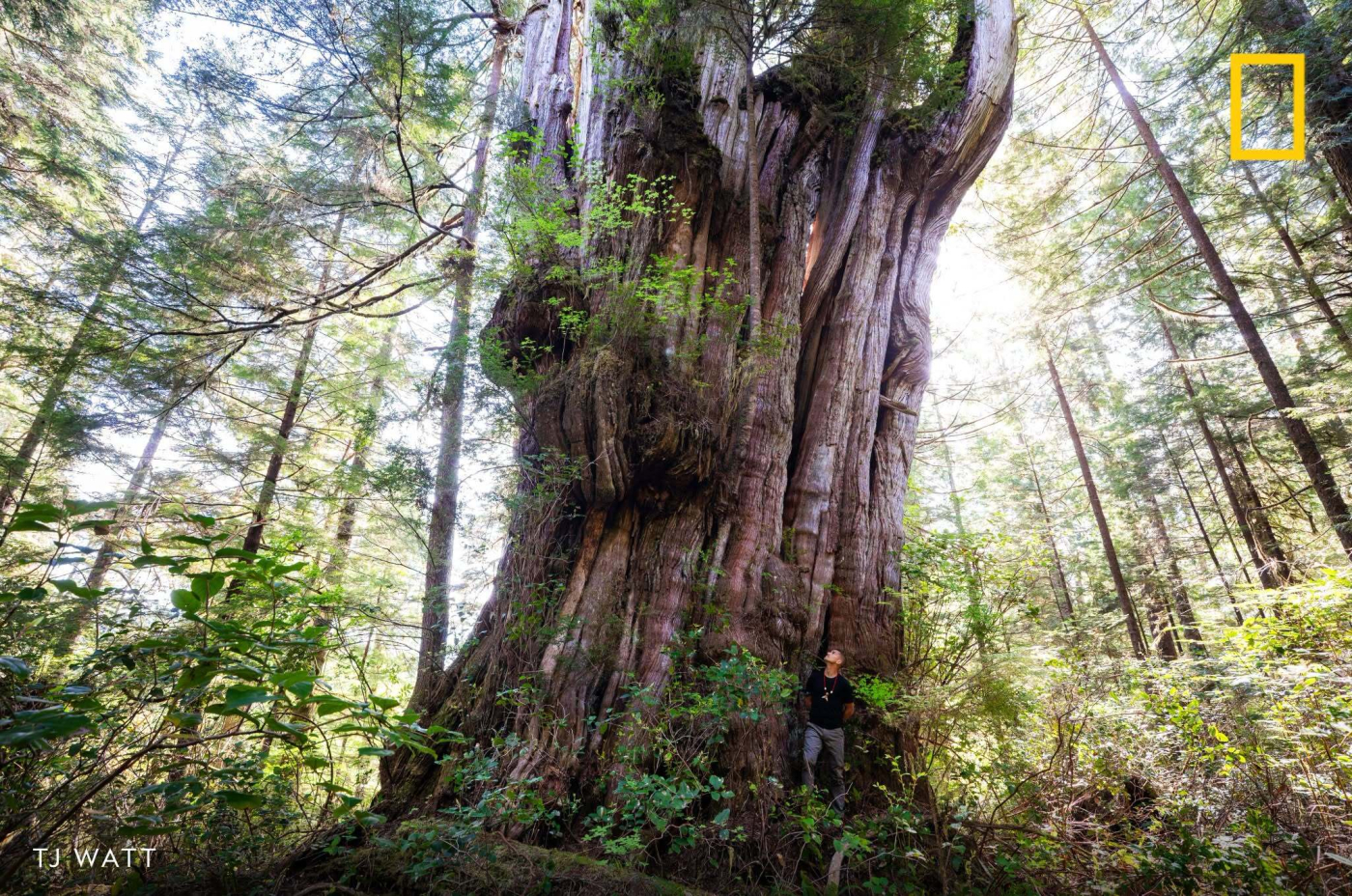 https://ancientforestalliance.org/wp-content/uploads/2026/10/Nat-Geo-Travel-Flores-Cedar.jpg
1357
2048
TJ Watt
https://ancientforestalliance.org/wp-content/uploads/2026/05/Ancient-Forest-Alliance-logo.svg
TJ Watt2026-10-02 13:38:152026-10-02 13:38:15Nat Geo Travel Features TJ Watt’s Photo of Flores Cedar
https://ancientforestalliance.org/wp-content/uploads/2026/10/Nat-Geo-Travel-Flores-Cedar.jpg
1357
2048
TJ Watt
https://ancientforestalliance.org/wp-content/uploads/2026/05/Ancient-Forest-Alliance-logo.svg
TJ Watt2026-10-02 13:38:152026-10-02 13:38:15Nat Geo Travel Features TJ Watt’s Photo of Flores CedarTake Action
 Donate
Support the Ancient Forest Alliance with a one-time or monthly donation. Send a Message
Send an instant message to key provincial decision-makers.
BC considers ‘limited logging’ of old-growth
/in News CoverageThe British Columbia government will examine the contentious possibility of opening old-growth forests to logging in parts of the province hardest hit by plummeting timber supplies.
It’s an idea that both proponents and opponents say would require chopping protective measures that took years to create.
The government is now constructing ground rules so that by early 2013 it can begin revisiting the designation of some sensitive areas, mainly in the north-central triangle between Burns Lake, Prince George and Quesnel.
But any decision to cut old-growth forests would be science-based and reached by consensus of all members of the community, said Forests Minister Steve Thomson.
“There may be limited opportunities to look at that, but only through a process,” he said in an interview on Tuesday.
“It’s important to recognize that this request came from the communities.”
The move comes as part of a larger strategy the government released on Tuesday aimed at boosting timber supply over the next five to 20 years. The list of actions comes in direct response to a special committee report that warned in August measures must be taken to stave off an impending, dramatic drop in wood supply.
The plan is the final phase in the provincial government’s decade-long response to the infestation of the mountain pine beetle, which has decimated forests across the province.
The August report predicted the beetle would chew up to 70 per cent of the central Interior’s marketable timber by 2021 if nothing changes.
But environmental advocates say opening protected forests to logging would roll back years of “hard fought” legislation.
“This is blood sweat and tears, multi-stakeholder processes, consensus building. They took years, these land-use plans, to establish,” said Valerie Langer, director of Forest Ethics Solutions.
“It’s very frightening to all those people who put years of their life as volunteers into this.”
Potential pilot projects could eventually take place in Burns Lake and Quesnel, with the highest priority areas being assessed this coming spring and summer, Thomson said.
[Times Colonist article no longer available]
Plan to maintain timber supply widens land base.
/in News CoverageLink to online Vancovuer Sun article
The B.C. government announced plans on Tuesday to meet timber supply shortages in the B.C. Interior by reviewing current prohibitions on logging in environmentally sensitive areas and giving forest companies more power to manage the land base.
In releasing a plan titled “Beyond the Beetle,” Forests Minister Steve Thomson said the provincial government was moving toward the “next phase in our decade-long battle with the mountain pine beetle.”
But no new money has been committed to critically needed inventory work now that the beetle epidemic is winding down. The plan is the government’s response to a special legislative committee on the timber supply that tabled a report last month.
Critics called the plan vague, saying it doesn’t adequately address how much timber is actually left in B.C. forests. An update of the timber inventory is to begin in 2013, but the plan commits no new money to do the work.
Independent MLA Bob Simpson, whose Cariboo North constituency is ground zero in the beetle-damaged forest epidemic, called the plan a recipe for disaster.
“We are going down the same path as we did with the East Coast cod fishery,” Simpson said. “We are going to play with the rules, the regulations and change the tenure and access, to go and bleed the forests dry in order to keep the status quo.”
NDP forests critic Norm Macdonald said the plan was too vague on the issue of investing in an updated timber inventory. “It was clear there had to be serious investments in inventory. Over 72 per cent of the land has base data over 30 years old. You can’t expect proper forestry to be done with that sort of data.” However, Thomson said the ongoing deteriorating condition of beetle-hit forests dictated that the province delay inventory work until the infestation is over. Federal Student Loan Consolidation
“Now we can proceed,” he said. But he also acknowledged that he is restricted by budgetary constraints and that needed money has yet to be committed. Besides beginning on inventory work, the key elements of the plan include: . A commitment to move from volume-based timber tenures to area-based tenures, where forest companies would assume more management control.
. Increasing the timber inventory by including marginally economic stands that up until this point have been excluded.
. Developing a review of so-called “sensitive areas” that have been exempted from logging because of their wildlife or scenic values, and possibly reopening land-use plans.
Jens Wieting, a forest campaigner for the Sierra Club of B.C., said the province has done exactly what environmentalists feared – sacrificed other forest values to ensure a timber supply for Interior sawmills. He said the government is putting at risk not only environmental values but the forest industry’s reputation.
“To put these at risk for a short-term win is unbelievable. It is a level of ignorance that is hard to digest.”
Thomson said logging communities have asked for the review of restrictions on forest reserves. “It will be done very carefully, and only where there is consensus and agreement from the community,” he said.
The forest industry said Tuesday that it supports the government initiatives.
“We see the potential for some tangible improvements in the short-term and midterm timber supply by following the various courses of action,” said Doug Routledge of the B.C. Council of Forest Industries. “It’s a positive action plan. It provides some definitive timelines. We are a little concerned that there will be sufficient human and financial resources to accomplish what is in the action plan, but that is something that can be worked on over time.”
He said key components for the industry are the commitment to update the timber inventory and a commitment to monitor land-use plans that predate the beetle infestation. Routledge said many values may have changed as a result of the beetle. Current land-use plans leave broad areas out of bounds to logging when it is possible for wildlife conservation to be accomplished in more specific areas, he said.
Routledge said a very rough estimate shows 40 per cent more timber could be found if land-use plans were updated to optimize the allocation of resources and land.
The greatest gains in timber supply are likely to come from the inclusion of marginally economic timber stands.
The beetle is expected to knock 10 million cubic metres a year out of the timber supply. But, in Burns Lake alone, including marginal economic stands added 60 per cent of the volume back into the supply. An economic stand is one with more than 140 cubic metres of saw-logs per hectare. The new standard lowers that to 100 cubic metres.
“They are logging stands below 100 cubic metres per hectare at the moment at Williams Lake,” Routledge said.
Logging of old-growth forest mulled by B.C. government
/in News CoverageLink to online article
The B.C. government will examine the contentious possibility of opening old-growth forests to logging in parts of the province hardest hit by plummeting timber supplies.
It’s an idea that both proponents and opponents say would require chopping protective measures that took years to create.
The government is now constructing ground rules so that by early 2013 it can begin revisiting the designation of some sensitive areas, mainly in the north-central triangle between Burns Lake, Prince George and Quesnel.
But any decision to cut old-growth forests would be science-based and reached by consensus of all members of the community, said Forests Minister Steve Thomson.
“There may be limited opportunities to look at that, but only through a process,” he said in an interview on Tuesday.
“It’s important to recognize that this request came from the communities.”
The move comes as part of a larger strategy the government released on Tuesday aimed at boosting timber supply over the next five to 20 years. The list of actions comes in direct response to a special committee report that warned in August that measures must be taken to stave off an impending, dramatic drop in wood supply.
Pine beetle devastation
The plan is the final phase in the provincial government’s decade-long response to the infestation of the mountain pine beetle, which has decimated forests across the province.
The August report predicted the beetle would chew up to 70 per cent of the central Interior’s marketable timber by 2021 if nothing changes.
But environmental advocates say opening protected forests to logging would roll back years of “hard fought” legislation.
“This is blood sweat and tears, multi-stakeholder processes, consensus building. They took years, these land-use plans, to establish,” said Valerie Langer, director of Forest Ethics Solutions.
“It’s very frightening to all those people who put years of their life as volunteers into this.”
Potential pilot projects could eventually take place in Burns Lake and Quesnel, with the highest priority areas being assessed this coming spring and summer, Thomson said.
Doug Routledge, vice-president forestry with the Council of Forest Industries, welcomed the government’s “tangible” plans.
“Cautiously and well-informed,” Routledge said of the proposed changes. “We’re not unhappy to see that the question about relaxing or deferring other constraints on the working forest land-base is still on the table.”
He explained the wood they’re looking to harvest would not include the most vulnerable areas, such as that protected as a critical habitat.
‘Crisis will be even worse’
Ben Parfitt, a resource policy analyst with the Canadian Centre for Policy Alternatives, has also followed the committee’s work closely.
He believes opening up an old-growth area is unrealistic, and suggested the biggest environmental threat was a part of the plan that will create new opportunities for logging by identifying marginally economic forests.
“We have a significant problem on our hands that is going to extend well beyond five to 20 years,” Parfitt said. “If the government chooses to try and address this problem by freeing up more trees to log today, I believe the crisis will be even worse than what it is now.”
But Thomson said the government believes the “greatest opportunity” to beef up timber supply lies in identifying those stands.