https://ancientforestalliance.org/wp-content/uploads/2026/04/2025-Activity-Report-Financials-scaled.png
1440
2560
TJ Watt
https://staging.ancientforestalliance.org/wp-content/uploads/2014/10/cropped-AFA-Logo-1000px.png
TJ Watt2026-04-30 16:32:192026-04-30 16:32:192025 Activity Report & FinancialsRelated Posts
https://ancientforestalliance.org/wp-content/uploads/2026/04/2025-Activity-Report-Financials-scaled.png
1440
2560
TJ Watt
https://staging.ancientforestalliance.org/wp-content/uploads/2014/10/cropped-AFA-Logo-1000px.png
TJ Watt2026-04-30 16:32:192026-04-30 16:32:192025 Activity Report & Financials
The Tyee: BC ‘Going Backwards’ on Ecosystem Protections
Advocates, the BC Greens, and a former cabinet minister take aim at the NDP’s stalled efforts to protect ecosystems, such as old-growth forests.

The Tyee: BC Must Stop Blaming First Nations for Old-Growth Logging
BC is increasing logging while lagging on old-growth protection. Experts say the province should fund First Nations to conserve forests instead.

Western Coralroot
Meet one of the rainforest’s loveliest yet strangest flowers: the western coralroot!
Take Action
Donate
Support the Ancient Forest Alliance with a one-time or monthly donation.
Send a Message
Send an instant message to key provincial decision-makers.Get in Touch
AFA’s office is located on the territories of the Lekwungen Peoples, also known as the Songhees and Esquimalt Nations.
Copyright © 2026 Ancient Forest Alliance • All Rights Reserved
Earth-Friendly Web Design by Fairwind Creative


AFA Partner Organization, NBSF, Acquires 55 Hectares of Land for Conservation in Kanaka Bar
/in Announcements, Media ReleaseWe’re excited to share that our partners at Nature-Based Solutions Foundation (NBSF) have successfully acquired two parcels of private land inholdings totalling just over 55 hectares within the territory of Kanaka Bar Band (ƛ̓əq̓ƛ̓áq̓tn̓mx) and inside the boundaries of Kanaka Bar’s 320km² proposed Indigenous Protected & Conserved Area (IPCA)!
Commonly known as the “Across the River” and “Jackass Mountain” properties, these acquisitions protect exceptionally diverse old-growth forests, including habitat that features the largest documented Rocky Mountain juniper in Canada. They also build on NBSF’s earlier purchase of the “Old Man Jack’s” property in 2022 — bringing the total to three private properties that will be returned to Kanaka Bar and protected through Indigenous-led conservation, title-registered legal protection, and long-term stewardship funding.
Read NBSF’s media release.
— Sean O’Rourke, Director of Lands & Culture, Kanaka Bar
Kwoiek Creek, Kanaka Bar territory
Important Natural Values
These acquisitions close key gaps in a high-priority conservation landscape contiguous with the Stein Valley Heritage Park, strengthening landscape connectivity and reinforcing the long-term integrity of the broader conservation area.
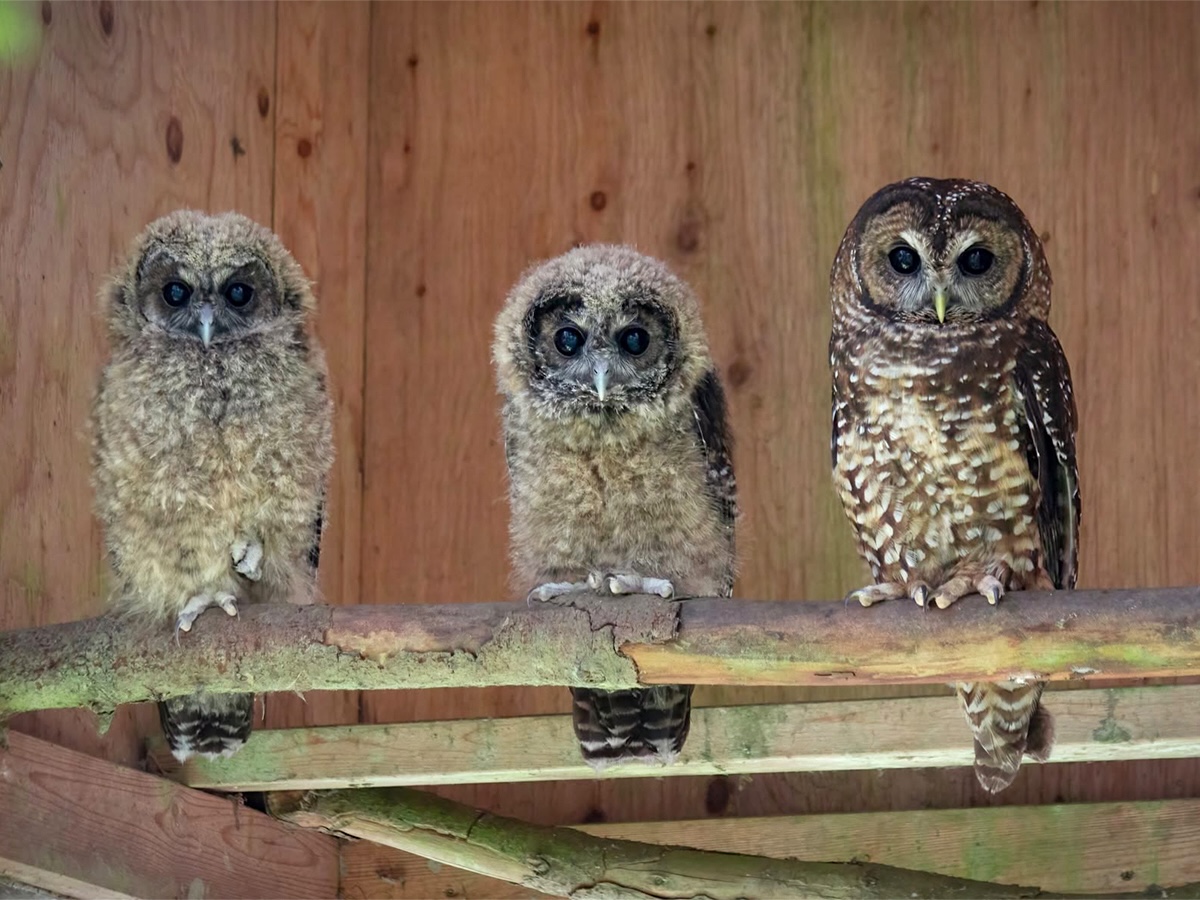
The lands contain endangered ecosystems and critical habitat for species at risk. The “Across the River” parcels form an essential low-elevation habitat along the Fraser River, within the range of the imperilled Stein-Nahatlatch grizzly bear population, and protect a rich mosaic of old-growth forests, wetlands, and riparian ecosystems. The “Jackass Mountain” parcels sit in a rare transition zone, protecting grassland patches and rare old-growth forests. These parcels also lie within federally identified/designated critical habitat for the Northern Spotted Owl, considered essential to the species’ recovery.
Pioneering Conservation Agreement
Each property will be re-gifted to Kanaka Bar and protected through a pioneering conservation agreement registered on title, designed to reflect Kanaka Bar’s vision for conservation and stewardship and to align with the IPCA framework. These agreements ensure Kanaka Bar owns and governs the lands, with uses guided by community priorities and cultural stewardship, while placing legally binding conservation protections on title. A dedicated stewardship endowment tied to each property will fund long-term care and monitoring to support stewardship for generations.
See coverage of this conservation milestone in Fraser Valley Today and Chilliwack Progress/Hope Standard.
WATCH: Kanaka IPCA Mini Doc
In this 5-minute video, Inside Kanaka Bar’s Conservation Plan: Protecting Rare Ecosystems & Indigenous Culture, hear from Kanaka community members as they discuss their vision and the ecological and cultural significance of this protected area initiative.
About Kanaka Bar’s IPCA
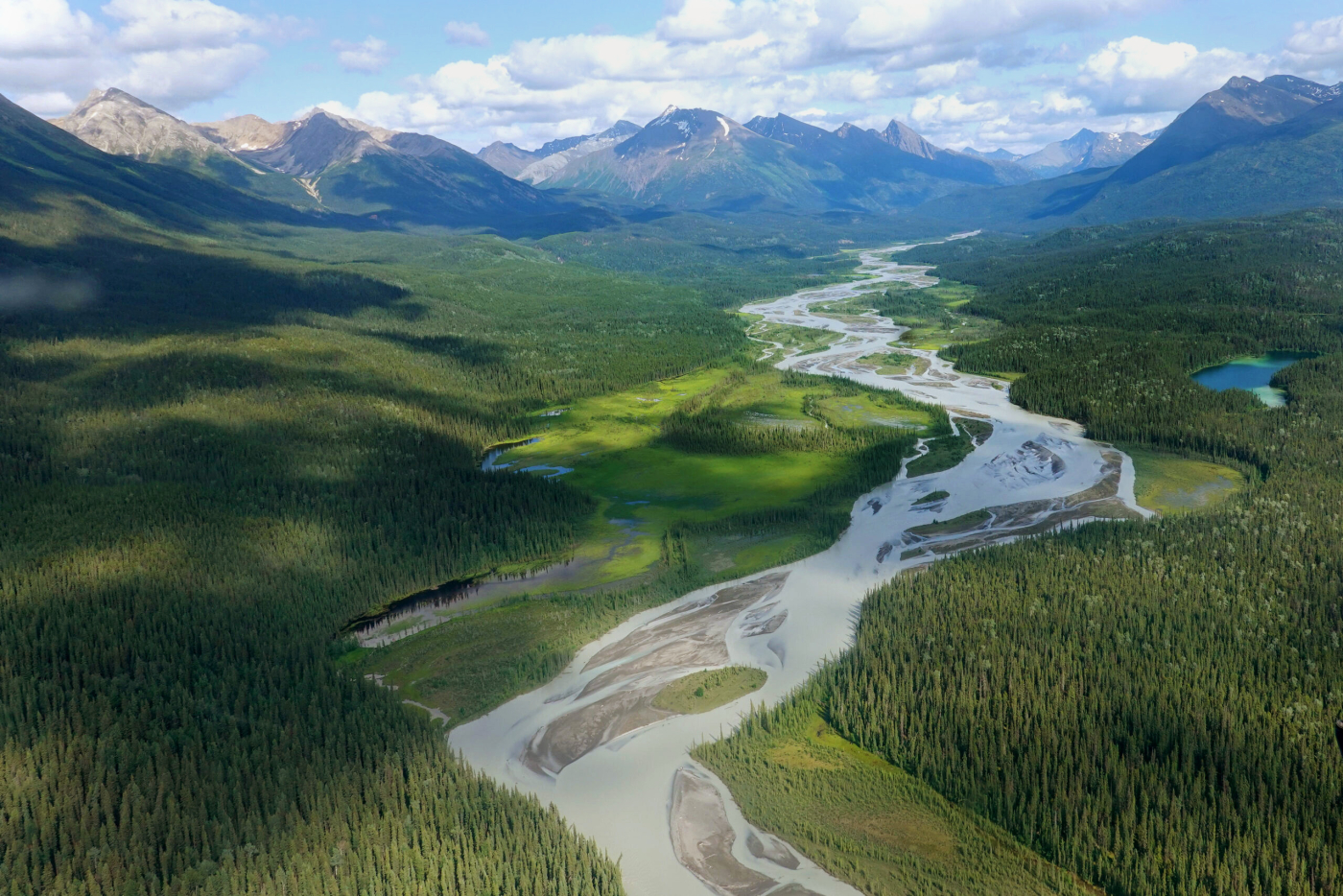
The T’eqt’aqtn Indigenous Protected and Conserved Area (IPCA) is one of the most advanced IPCA projects in BC and will safeguard some of the most endangered and ecologically diverse old-growth forests in the province, spanning the Kwoiek and Four Barrel watersheds and dramatic stretches of the Fraser River Canyon.
This remarkable region sits at the meeting point of coastal and interior ecosystems and is home to 42 species at risk, including some of the largest Interior Douglas-fir trees known in Canada, within the highly under-protected Interior Douglas-fir zone.
Through the Old-Growth Solutions Initiative (OGSI) — a partnership between Ancient Forest Alliance, the Endangered Ecosystem Alliance (EEA), and the Nature-Based Solutions Foundation (NBSF) — we are providing key support from start to finish to develop and establish the T’eqt’aqtn IPCA.
Learn more about this diverse region and Kanaka Bar’s plans to protect it.
Please also take a moment to send an instant message to the BC government today, calling on them to work proactively with First Nations to support the protection of endangered old-growth forests.
The Kwoiek Valley, Kanaka Bar territory
CBC: Panel Appointed to Map B.C.’s Old-Growth Forests Say Province Is Failing to Save Them
/in Announcements, News CoverageCBC
March 15, 2025
By: Brenna Owen
Original article here.
Minister says province working with First Nations, other stakeholders as it aims to strike balance
Every member of a former panel the British Columbia government appointed to identify old-growth for potential protection in 2021 now say they’re concerned about continued logging in those same rare and “irreplaceable” forests.
The five former panellists say in a document, sent to Premier David Eby and other officials this week, the proposed old-growth deferrals were meant to be an interim measure to reduce the risks of logging, allowing time for long-term planning.
But the process has not worked as intended, ecologists Rachel Holt and Karen Price, landscape analyst Dave Daust, veteran forester Garry Merkel and economist Lisa Matthaus say in the document provided to The Canadian Press.
Instead, the B.C. government continues to approve logging in forests the panel identified, while long-term plans have yet to be finalized, Holt said in an interview.
“Purposely causing extinction is not just a moral failure but also a high economic, ecological and social risk,” says the document sent to Eby, Forests Minister Ravi Parmar and Resource Stewardship Minister Randene Neill.
A scan of public B.C. government mapping shows about half a dozen proposed B.C. Timber Sales cut blocks overlapping with ancient and big-treed forests on the slopes around Nahmint Lake, southwest of Port Alberni, B.C., with more in the surrounding area.
Overlap between proposed cut blocks and old-growth mapped by the advisory panel can also be seen in the Tsitika area of northeastern Vancouver Island.
A message to users opening the mapping website says the proposed harvest areas may require additional planning activities and consultation with First Nations and other stakeholders, and may be subject to change.
The B.C. government had tasked the advisory panel with identifying old-growth ecosystems at very high and near-term risk of irreversible biodiversity loss in response to recommendations of an old-growth strategic review, released in 2020.
The result was the panel’s mapping of 2.6 million hectares of unprotected old-growth, released in November 2021.
Province aims to strike balance
Parmar said Friday that he hadn’t yet reviewed the panel’s document in detail, but he planned to in the coming days.
He said he’d recently spoken with Merkel about the panel’s concerns, which he asked “them to outline” to him.
Parmar said he had asked his deputy minister to meet the panel members “to better understand what those challenges are and whether their frustrations align.”
The minister said his mission as forests minister is to ensure B.C. is striking a balance.
“That we’re living up to our commitments around old-growth protection while at the same time making sure that we are building a strong economy built around forestry.”
Speaking to The Canadian Press at the B.C. legislature last month, Parmar had said that upon receiving the report from the old-growth strategic review, “one of the first things that we did as a government was defer 2.6 million hectares of old-growth.”
In fact, the province announced deferrals in just over 350,000 hectares of old-growth in nine areas when it released the report in September 2020. The next year, it released the panel’s mapping and asked more than 200 First Nations if they supported the logging deferrals for an initial two-year period.
Deferrals for about half the 2.6 million hectares are “not currently supported by First Nations,” the Forests Ministry said in an email this month.
First Nations have supported deferrals for about 1.1 million hectares from the panel’s mapping and identified an additional 0.9 million as “priorities,” it said.
Parmar said the “core” of the old-growth review was to respect First Nations’ rights and title “and make sure they have a seat at the table, and we’ve done that.”
The message from the advisory panel this week says conservation financing, or funding in lieu of foregone logging revenues, “has not been part of the deferral conversation,” and the lack of alternatives “leaves First Nations with no real choice.”
“We ask the province to take responsibility for maintaining these exceptional forests and not place the burden of harvesting decisions entirely on [First] Nations,” it says.
In his interview on Friday, Parmar said the province was working with First Nations on resource planning in their territories.
“It is really important that we don’t speak for First Nations,” he said.
The panel’s message says the public needs to understand that every decision to log a deferral area is a decision to further increase the risks of “ecosystem extinction.”
The stability of the forest and wood products industry is also at risk, it says.
The Forests Ministry has said the deferrals were meant to be a temporary, short-term measure, and its focus is now on long-term management approaches.
That includes forest landscape planning processes underway in just over a dozen regions involving First Nations, community and forest industry stakeholders.
The development of each plan will be informed by “meaningful engagement with local communities, forest licensees and other interested parties … ensuring diverse voices help shape the future of B.C.’s forests,” the ministry said in an email.
The plans are to establish clear directions for managing old-growth, biodiversity, climate resilience, watershed health, wildfire risk and economic opportunities, it said in response to questions about logging in proposed deferral areas.
Planning still underway
Holt is involved in one of the regional forest landscape planning processes and notes they’re still underway, with the results yet to be finalized.
Under the old-growth strategic review, which B.C. has committed to implementing, priority old-growth was meant to be retained in the meantime, she said.
Yet she points to the government mapping showing the province’s own logging agency has proposed harvesting in areas throughout Vancouver Island that are specifically identified as containing what she describes as the “best of the best” old-growth.
Holt said she was “shocked” to see the extent of the overlap, especially in areas such as the Nahmint Valley. The area is prized by environmentalists for what Holt describes as its “extreme high value” old-growth forests, some of which have already been logged.
Responding to questions, the Forests Ministry said it was “inaccurate and misleading” to suggest B.C. Timber Sales is targeting the “best of the best” old-growth.
It said the agency’s policies and activities are “guided by an overarching commitment to sustainable forest management” and align with the old-growth strategic review.
“Many professionals, including professional foresters, geotechnical engineers, hydrologists and biologists, provide recommendations and input into the harvest practices, composition and location of timber sale licences,” the email said.
Where First Nations do not support old-growth deferrals, it said B.C. Timber Sales operations follow the requirements of government-to-government agreements.
In the absence of any agreement with First Nations, the ministry said the agency continues to defer logging for “remnant” old-growth forests, referring to heavily logged ecosystems with less than 10 per cent old-growth remaining.
“B.C.’s approach is focused on the full value of ecosystems — including the protection of watersheds, wildlife habitat, and areas of cultural significance,” it said.
Minister says due diligence conducted
Parmar said Friday that B.C. Timber Sales “does its due diligence in preparing cut blocks to be able to meet all of the obligations that have been laid out,” including the old-growth strategic review.
The agency “has a social and environmental objective and a license it must meet, and it’s my expectation as the minister responsible for this organization that it’s doing its level best to be able to meet that,” he said, adding that starts with relationships with First Nations.
Parmar said he was “very proud” of the B.C. government’s record since the release of the old-growth strategic review.
In February, the Union of B.C. Indian Chiefs passed a resolution condemning the provincial government for its “ongoing failure” to follow through on its commitment to implement the recommendations of the old-growth strategic review.
The resolution says the province has “stalled or abandoned” the key recommendations and continues to “misrepresent the status of old-growth management to the public, to First Nations, and to the international community.”
Holt notes a review of B.C. Timber Sales initiated by the province concluded its forest stewardship should follow the guidance of the old-growth review.
“Clearly, that’s not happening,” she said.
Western Toad
/in Creature Feature, EducationalThe western toad is a widespread and adaptable inhabitant of diverse ecosystems across British Columbia, including the coastal rainforests. Remarkably, it’s the only amphibian native to the islands of Haida Gwaii. Western toads are easily recognizable by their waddling gait (unlike the dramatic leaps of frogs), their mottled, warty skin, and the two large “warts” behind each eye, which are actually poison-producing parotid glands.
Although they spend much of the year solitary and secretive, for just a week or two in spring, western toads turn sociable, gathering en masse to breed along lakeshores and ponds. They are astonishingly prolific — a single female can lay up to 16,000 eggs. Males can be identified by dark pads on their “thumbs” that help them grip females during mating. If an eager male mistakenly clasps another male in the confusion of the breeding frenzy, the captured male gives a distinctive “release call” that quickly corrects the error.
Later in summer, when the tadpoles transform into tiny toadlets, they begin their overland migration in massive numbers. In the community of Nakusp, an annual Toadfest celebrates this natural wonder and helps thousands of toadlets safely cross roads on their way to the forest. Like Mr. Toad from The Wind in the Willows, these small travellers need protection from motorcars! Once safely in their forest habitat, western toads may live for 10–12 years, though females usually don’t reach breeding age until around six.
Protecting the places they breed, migrate, and shelter is key to ensuring western toads remain part of BC’s ecosystems for generations to come.