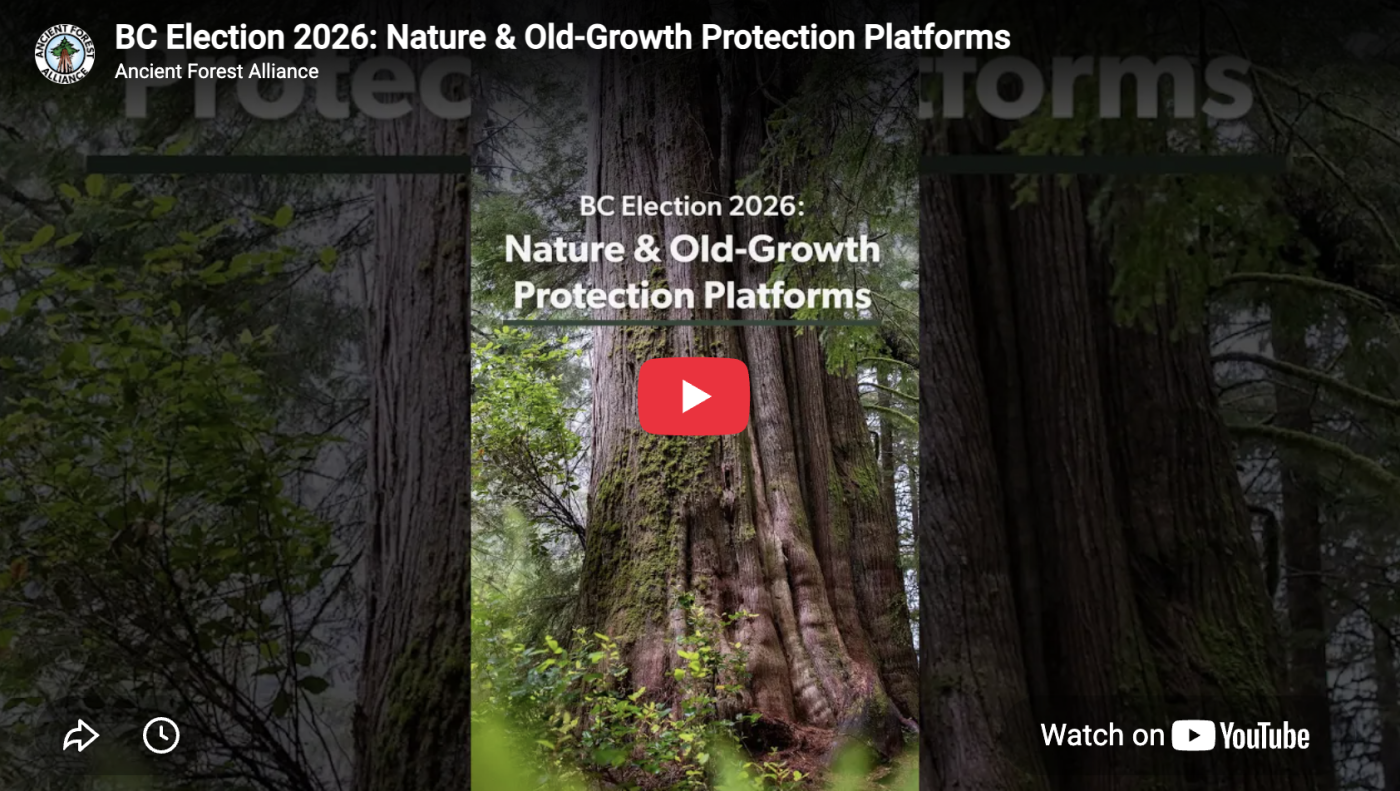
 https://ancientforestalliance.org/wp-content/uploads/2026/10/Screenshot-2026-10-22-at-4.54.32-PM.png
952
1684
TJ Watt
https://ancientforestalliance.org/wp-content/uploads/2026/05/Ancient-Forest-Alliance-logo.svg
TJ Watt2026-10-22 16:54:062026-10-22 16:59:41NEW Video: BC Election 2026: Nature & Old-Growth Protection
https://ancientforestalliance.org/wp-content/uploads/2026/10/Screenshot-2026-10-22-at-4.54.32-PM.png
952
1684
TJ Watt
https://ancientforestalliance.org/wp-content/uploads/2026/05/Ancient-Forest-Alliance-logo.svg
TJ Watt2026-10-22 16:54:062026-10-22 16:59:41NEW Video: BC Election 2026: Nature & Old-Growth ProtectionRelated Posts
https://ancientforestalliance.org/wp-content/uploads/2026/10/Screenshot-2026-10-22-at-4.54.32-PM.png
952
1684
TJ Watt
https://ancientforestalliance.org/wp-content/uploads/2026/05/Ancient-Forest-Alliance-logo.svg
TJ Watt2026-10-22 16:54:062026-10-22 16:59:41NEW Video: BC Election 2026: Nature & Old-Growth Protection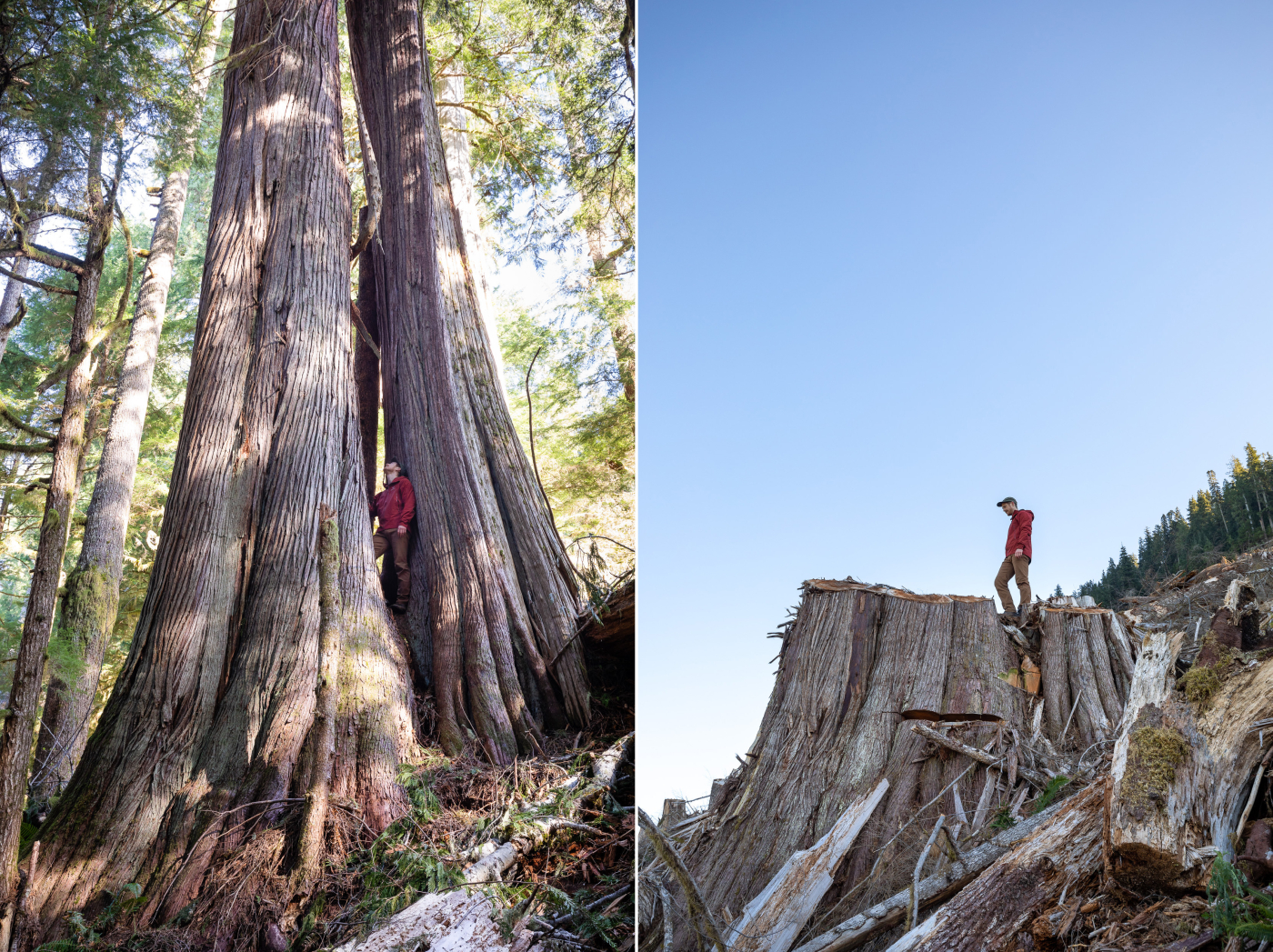 https://ancientforestalliance.org/wp-content/uploads/2026/10/Before-After-Caycuse-TJ-Watt-4-scaled.jpg
1915
2560
TJ Watt
https://ancientforestalliance.org/wp-content/uploads/2026/05/Ancient-Forest-Alliance-logo.svg
TJ Watt2026-10-16 17:36:002026-10-21 13:40:23BC Election 2026: Where do Parties Stand on Nature & Old-Growth?
https://ancientforestalliance.org/wp-content/uploads/2026/10/Before-After-Caycuse-TJ-Watt-4-scaled.jpg
1915
2560
TJ Watt
https://ancientforestalliance.org/wp-content/uploads/2026/05/Ancient-Forest-Alliance-logo.svg
TJ Watt2026-10-16 17:36:002026-10-21 13:40:23BC Election 2026: Where do Parties Stand on Nature & Old-Growth? https://ancientforestalliance.org/wp-content/uploads/2026/10/BC-Election-2026-Banner-1-1-scaled.jpg
1439
2560
TJ Watt
https://ancientforestalliance.org/wp-content/uploads/2026/05/Ancient-Forest-Alliance-logo.svg
TJ Watt2026-10-09 18:16:372026-10-16 17:44:41Where do BC’s Major Political Parties Stand on Nature Protection?
https://ancientforestalliance.org/wp-content/uploads/2026/10/BC-Election-2026-Banner-1-1-scaled.jpg
1439
2560
TJ Watt
https://ancientforestalliance.org/wp-content/uploads/2026/05/Ancient-Forest-Alliance-logo.svg
TJ Watt2026-10-09 18:16:372026-10-16 17:44:41Where do BC’s Major Political Parties Stand on Nature Protection?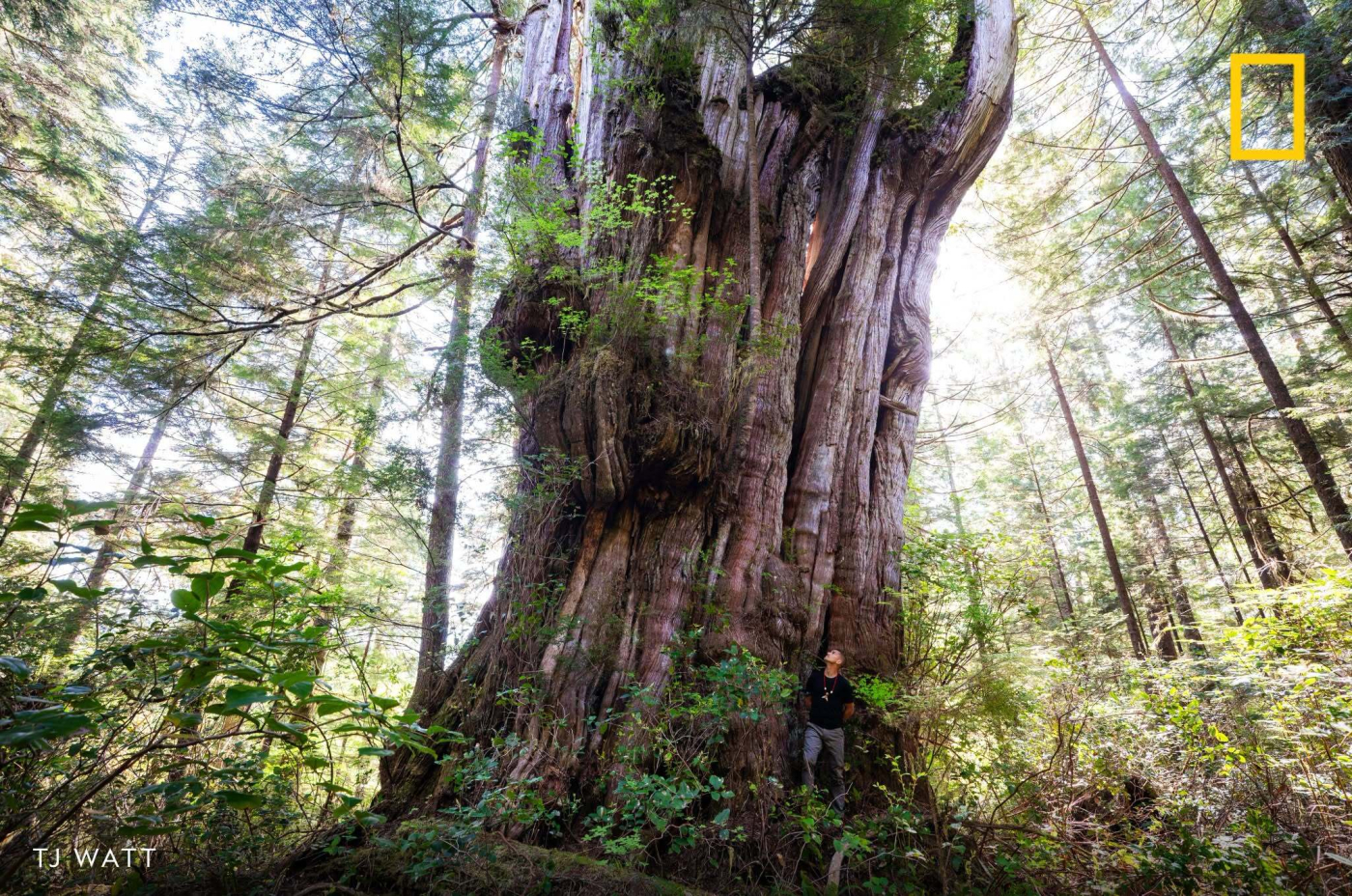 https://ancientforestalliance.org/wp-content/uploads/2026/10/Nat-Geo-Travel-Flores-Cedar.jpg
1357
2048
TJ Watt
https://ancientforestalliance.org/wp-content/uploads/2026/05/Ancient-Forest-Alliance-logo.svg
TJ Watt2026-10-02 13:38:152026-10-02 13:38:15Nat Geo Travel Features TJ Watt’s Photo of Flores Cedar
https://ancientforestalliance.org/wp-content/uploads/2026/10/Nat-Geo-Travel-Flores-Cedar.jpg
1357
2048
TJ Watt
https://ancientforestalliance.org/wp-content/uploads/2026/05/Ancient-Forest-Alliance-logo.svg
TJ Watt2026-10-02 13:38:152026-10-02 13:38:15Nat Geo Travel Features TJ Watt’s Photo of Flores CedarTake Action
 Donate
Support the Ancient Forest Alliance with a one-time or monthly donation. Send a Message
Send an instant message to key provincial decision-makers.
‘Big trees’ of Avatar Grove are pure magic
/in News CoverageThere are some places so precious that just standing there makes you proud to be a Canadian.
Avatar Grove is one of those.
Some of the oldest, biggest, and most gnarly trees in the country stand in these woods, found by hikers like T.J. Watt. He’s so passionate about ancient forests, the professional photographer calls himself a “big tree hunter.”
“I knew that only 4% of the old-growth forest was left in southern Vancouver Island,” he says, while hiking in the woods near Port Renfrew, at the far western edge of Canada. “For the most part, we just saw large stumps. Basically, I thought there was no hope of finding ancient trees.”
But Watt was determined, and his search along the Gordon River here led him through thick undergrowth to massive red cedars and Douglas firs.
He found enough giants in the forest in late 2009 to alert Victoria biologist Ken Wu, then with the Western Canada Wilderness Committee. By the time the pair returned in January 2010, trees in the grove already had been flagged for logging.
“We couldn’t leave them,” Watt says in a strangled voice. “Those logging flags were just unbelievable. We had a real sense of urgency about saving these trees.”
The men immediately founded the Ancient Forest Alliance, drawing such international attention they had 15,000 hits on their Facebook page in only a few days.
“We knew it could be gone in a month or so, and then we held a press conference in the forest. We didn’t have any bank account, but we got media attention around the world,” Watt recalls.
International students from Korea, Mexico, Japan, and Brazil, all studying at the University of Victoria, joined Canadian naturalists in visiting Avatar Grove, named for the fantasy landscape in James Cameron’s movie, Avatar.
Public pressure mounted for saving the trees, and in February, the BC government declared a 59-hectare chunk of forest off-limits to logging. Provincial tourism officials were so excited by new visitors arriving in Port Renfrew, they added Avatar Grove and other tree sites to “natural wonders” along the new Pacific Marine Circle Route.
In addition to the spectacular Avatar Grove, the 74-metre-tall “world’s largest Douglas fir” is also in Port Renfrew, along with the 68-metre San Juan Spruce, tallest in Canada and second tallest in the world. Together, these trees have made Port Renfew the “big trees capital of Canada.” Some are are estimated to be close to 1,000 years old.
Port Renfrew is known already as one of the best spots to get fresh food, hot shower, and a cosy bed for those starting or leaving the rugged 75-km West Coast trail. (Reservations must be made through Parks Canada. Peak hiking season is mid-June to mid-October.) Port Renfrew is also the terminus for the Juan de Fuca Marine Trail, a 47-km wilderness trek along the southwest coast of Vancouver Island.
“Port Renfrew has traditionally been a resource-based town, with logging and fishing,” says Watt, whose dad owns the Port Renfrew Marina. “What’s bringing people now are the trees.”
Jessica Hicks, co-owner with husband Tom Wyton, of the Coastal Kitchen Cafe, says the surge in international travellers has been “incredible.”
A couple of visitors a day would ask directions to ancient trees just last year, and now it’s 40 or more a day, she says. Local businesses had to produce more maps to keep up with demand.
“It’s a forever thing,” she says. “Hundreds, then thousands of people are coming from all over the world, from the Gulf Islands to Germany to see the trees. It’s not crowded, and we really like these people — they respect the environment.”
AVATAR MOVIE INSPIRES AN ECO-TRAVEL DESTINATION
Hicks says after 12 years in business in Port Renfrew, she’s been “amazed” by the extra business in the past two years. “T.J. and the others have really made a difference here,” she says. “It’s awesome — interest is growing, but it’s not so huge that anyone is producing Avatar Grove T-shirts yet.”
Brothers Jon and Tim Cash, chefs from Toronto, bought a large oceanfront property and added a luxury lodge with private cabin and three upscale yurts, all with Pacific or San Juan Inlet views. Their Soule Creek Lodge opened in 2001.
“More people are more interested in the trees than Botanical Beach, which used to be the big draw,” says Jon Cash, former Chamber of Commerce president here. “The beach would draw 60,000 people a year and now, it’s all about the trees. People will drive across the country to find the largest tree.”
Guests from the Netherlands, France, and England are drawn by eco-marketing of the “Jewel of the West Coast,” and Cash says he’s now handing out thousands of maps for self-guided tours of the big trees, compared to hundreds just a few years ago.
Visitors are drawn not only by the ancient giants, but wildlife, including Roosevelt elk, deer, wolves, bears, and cougars. Pileated woodpeckers, hawks, and bald eagles are common.
Hikers can roam the woods for hours without seeing anyone. Some hikes, like Avatar Grove, are more demanding, so the Ancient Forest Alliance assesses hiking difficulty on its website.
Watt is still searching for more ancient trees, figuring he just found the “eighth-largest Douglas fir in Canada,” estimated at more than three metres in width.
These giant trees can be found less than a half hour from the road in Port Renfrew. (TJ Watt photo)
It’s not recommended for novices, but Watt climbed the San Juan Spruce and found eagles near its top. Branches were so dense, they support a mat of “suspended soil in the mass a foot thick,” he says. “It really shows what we’ve got and what we could be losing.”
The Ancient Forest Alliance is campaigning to have Avatar Grove protected as a provincial park, and is raising money to build a boardwalk to make the giant trees there more accessible. (See its Facebook page.)
“We have an opportunity to leave behind a green legacy, of saving the last of the old-growth forests, or we could be the last liquidators of the ancient forest,” Watt cautions. “Most old growth is tucked away in valleys and so it’s hard to see.”
Avatar Grove and the other giants here are less than a half-hour from the road.
MORE ABOUT AVATAR GROVE
Location. The forest is about a two-hour drive west of Victoria along Highway 14, a paved road that is mostly two lanes. There’s no gas station, so be certain to fill up before heading to Port Renfrew.
Where to Stay: There’s camping, RV sites, cabins and two main hotels, Soule Creek Lodge ($145-$215/night, including breakfast; $36 dinner for guests only, BYOB) and Port Renfrew Resorts ($190 and up/night for waterfront, log cabins).
Dining Tips: Bison burgers and fish and chips are popular at Coastal Kitchen Cafe, but hardly anyone leaves without a platter-sized, chocolate pecan cookie. They’re $3 and homemade daily.
The pub at Port Renfrew Resorts has a pool table and big-screen TVs indoors and an outdoor deck overhanging the San Juan Inlet. It also features aboriginal art and carving throughout the grounds, and historical photos of area fishing and logging.
Soule Creek Lodge asks guests each morning about food allergies and preferences, then the chefs prepare a feast with local, seasonal ingredients. Fresh-from-the-dock fish includes sockeye salmon, tuna, and halibut, all wild and caught nearby.
URGENT: BC’s FOREST RESERVES in PERIL! PLEASE WRITE-IN and SPEAK UP!
/in Take ActionB.C. warned not to touch reserves for short-term supply
/in News CoverageWhen a special committee of the provincial legislature came to the Interior town of Valemount last week seeking views on how to maintain timber harvests in forests decimated by the pine beetle, it reopened some old wounds for Valemount Mayor Andru McCracken.
A decade ago, Valemount was a thriving forestry town with a large sawmill. There was a district forestry office at nearby McBride, employing 25 people, which oversaw the timber supply in the Robson Valley Forest District.
The district office closed in 2003 as part of a provincewide cutback of government services. The sawmill closed and was dismantled in 2006 after a legislative change removed the requirement that timber be processed locally. Most Robson Valley timber now goes to a mill 300 kilometres away in Prince George.
The Robson Valley’s largely hemlock and cedar forests have not been hit hard by the pine beetle. But timber in the dead forests to the west of Valemount is drying and cracking to the point it can no longer be turned into lumber.
To access more timber, the B.C. government is floating a plan that includes logging in areas that were previously off limits for environmental or “visual quality objectives” and changing the boundaries of forest districts to add timber to one district at the expense of another.
Victoria has already announced plans to ease logging restrictions in the Fraser timber supply area, including upper Stave Lake, upper Harrison Lake and Chehalis Lake.
McCracken is concerned that Valemount will lose control over what timber it has left.
The special committee, struck on May 16, is travelling across the Interior seeking public consultation until July 12 and is to submit a report with recommendations Aug. 15. Nechako Lakes MLA John Rustad is the chair.
Rustad said people speaking at the hearings have been passionate in their views.
“When we are in Burns Lake [which lost its mill in a fire Jan. 21] we are hearing, ‘We want to have our mill rebuilt,’ and in a lot of other communities we are hearing, ‘Whatever you do, don’t put our mills at risk.’ This is a very serious issue across the entire mountain pine beetleimpacted area,” he said.
The plan to take a second look at the remaining timber supply, came about shortly after it was discovered there is not enough timber in the Burns Lake area to warrant rebuilding the sawmill. The government wants to drum up enough timber through other means to save Burns Lake and, by extension, other resource towns also faced with dwindling timber supplies for their mills.
The beetle has destroyed 10 million cubic metres of timber.
“To put that in perspective that’s enough wood to feed eight fairly sizable sawmills. And eight sawmills represents about a third of the forest industry throughout that area,” said Rustad.
Besides logging in forest reserves and changing administrative boundaries, the committee is considering: . Increasing the harvest of marginally economic timber.
. Shifting to area-based tenures giving forest companies more management control over the land.
. More intensive forest management through fertilization and silviculture.
McCracken is flattered that the government wants his opinion but he thinks it’s a bit late to be asking. And he is concerned that the province may end up taking even more timber from the Robson Valley to feed beetleaffected mills to the West.
“We are in a colonial situation,” he said.
McCracken isn’t the only one concerned.
The Association of B.C. Professional Foresters, environmentalists and even the forest industry and the University of B.C. dean of forestry have expressed concerns, specifically over the second look at forest lands that are set aside for ecological reasons.
“The message we want out there is: ‘We are not going to damage our environmental standards,” said John Allan, president of the Council of Forest Industries, which intends to submit a brief. “I am struggling with how you would free up anything more than a few scraps of timber without doing environmental damage.”
Allan said the effect of the beetle is a critical problem that deserves a broader and deeper examination than the committee can accomplish with its tour. The economic future of the forest industry is at stake, he said.
“This issue is so important it calls for more than a few meetings in the middle of summer.”
The 5,400 members of the Association of B.C. Forest Professionals are urging that the government put the forests first.
The forests are the province’s most valuable renewable resource, said Mike Larock, who is travelling to towns along with the committee. He said the professional association fears sustainability may be damaged for political expediency.
“We think that just by focusing on one end product, or one benefit, you actually lose sight of the forest, the very thing that provides all the benefits,” he said.
John Innes, dean of the faculty of forestry at the University of B.C., said that the mills running out of timber will be able to gain a short-term timber supply if reserves are logged but it could be at the expense of sustainable forests.
“What people seem to forget – and I don’t really understand this – is that there was extra capacity created to process this lumber when the beetle reached its peak. Surely people then realized that this was a temporary thing; that it wasn’t going to last.”
Because of the risks of going into the reserves, the outcomes for industry and the environment are uncertain, he said.
“We have never had such proposals for what, in my view, are a pretty regressive step in forest management.”
Vancouver Sun Article: https://www.vancouversun.com/technology/warned+touch+reserves+short+term+supply/6840692/story.html#ixzz1yvXxjait