 https://ancientforestalliance.org/wp-content/uploads/2026/10/Screenshot-2026-10-22-at-4.54.32-PM.png
952
1684
TJ Watt
https://ancientforestalliance.org/wp-content/uploads/2026/05/Ancient-Forest-Alliance-logo.svg
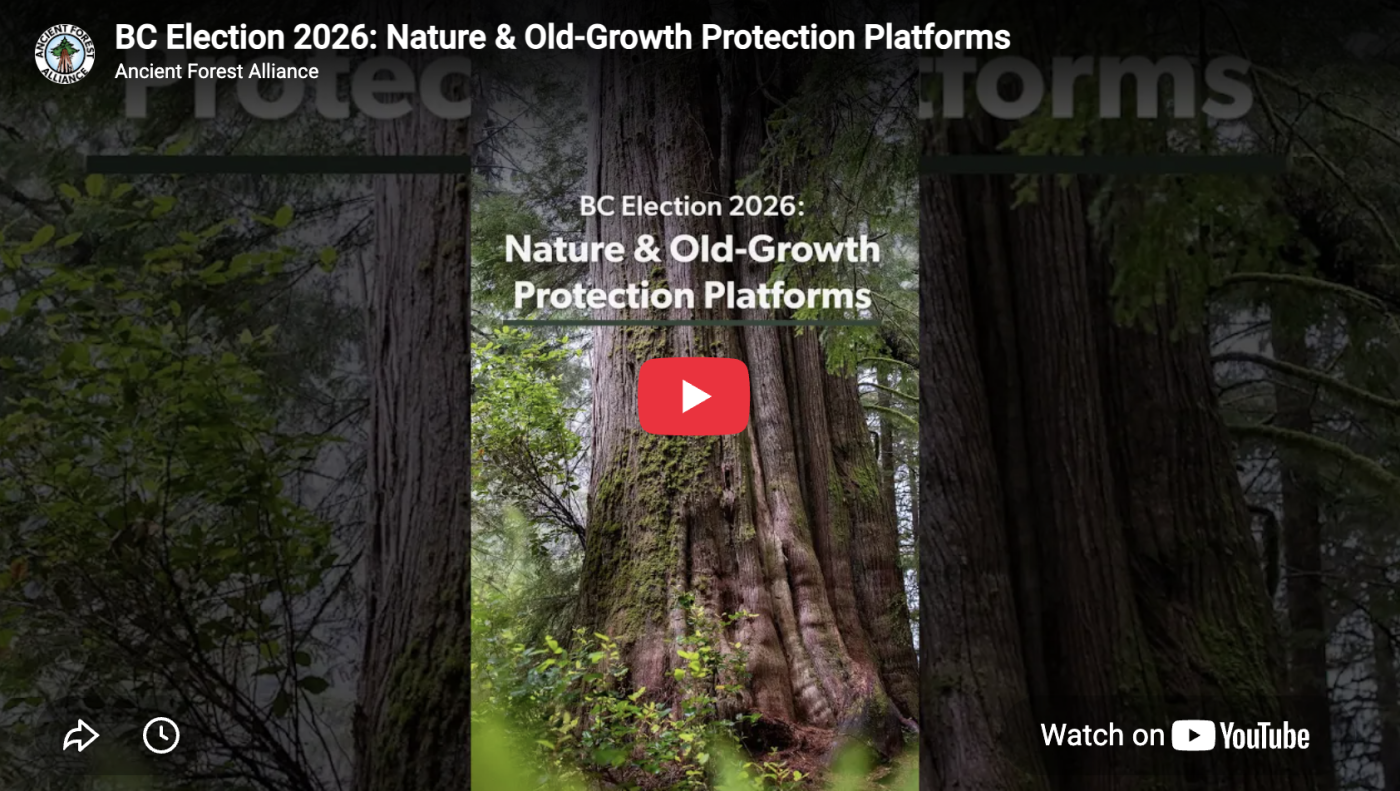
TJ Watt2026-10-22 16:54:062026-10-22 16:59:41NEW Video: BC Election 2026: Nature & Old-Growth Protection
https://ancientforestalliance.org/wp-content/uploads/2026/10/Screenshot-2026-10-22-at-4.54.32-PM.png
952
1684
TJ Watt
https://ancientforestalliance.org/wp-content/uploads/2026/05/Ancient-Forest-Alliance-logo.svg
TJ Watt2026-10-22 16:54:062026-10-22 16:59:41NEW Video: BC Election 2026: Nature & Old-Growth ProtectionRelated Posts
https://ancientforestalliance.org/wp-content/uploads/2026/10/Screenshot-2026-10-22-at-4.54.32-PM.png
952
1684
TJ Watt
https://ancientforestalliance.org/wp-content/uploads/2026/05/Ancient-Forest-Alliance-logo.svg
TJ Watt2026-10-22 16:54:062026-10-22 16:59:41NEW Video: BC Election 2026: Nature & Old-Growth Protection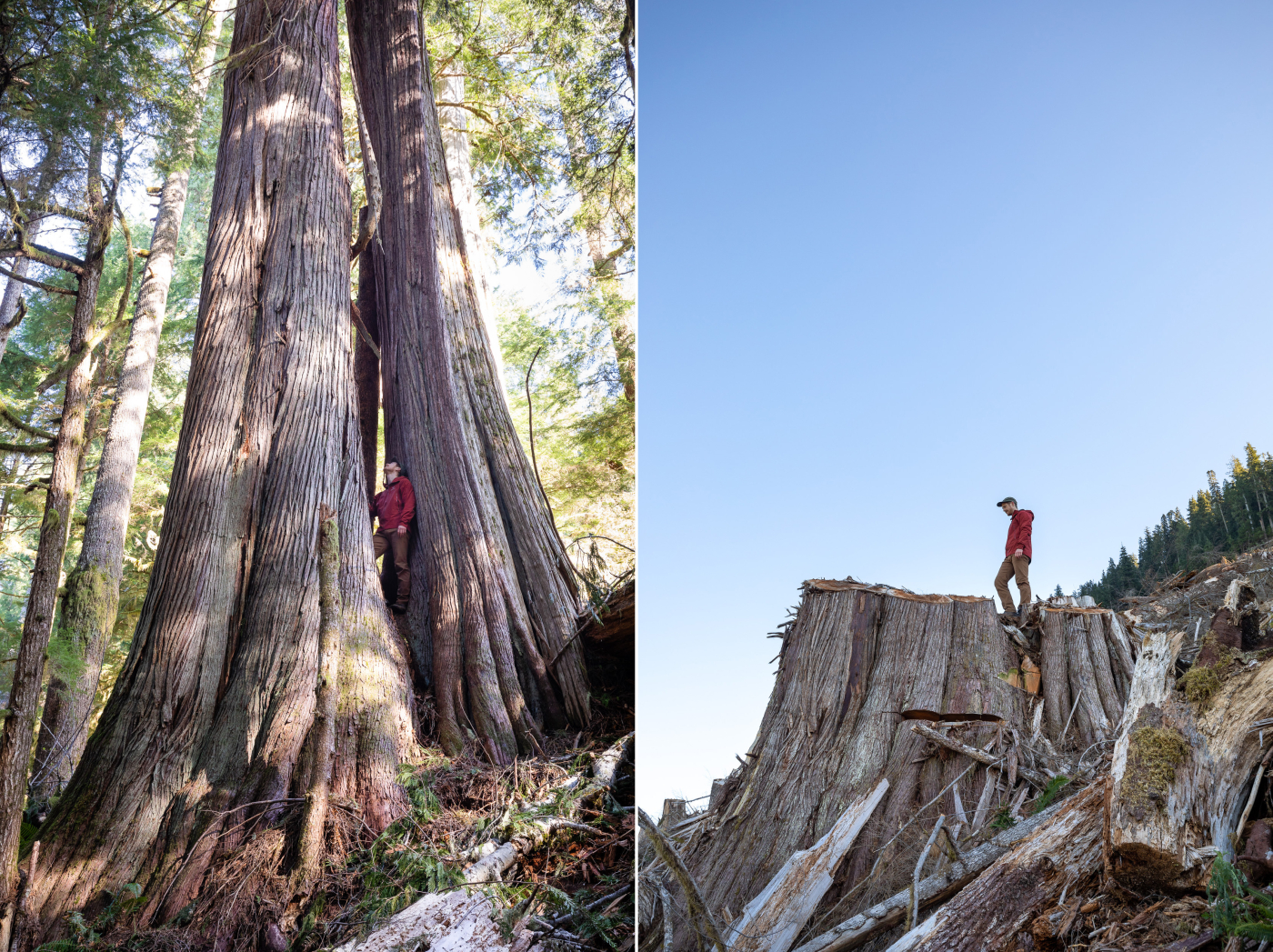 https://ancientforestalliance.org/wp-content/uploads/2026/10/Before-After-Caycuse-TJ-Watt-4-scaled.jpg
1915
2560
TJ Watt
https://ancientforestalliance.org/wp-content/uploads/2026/05/Ancient-Forest-Alliance-logo.svg
TJ Watt2026-10-16 17:36:002026-10-21 13:40:23BC Election 2026: Where do Parties Stand on Nature & Old-Growth?
https://ancientforestalliance.org/wp-content/uploads/2026/10/Before-After-Caycuse-TJ-Watt-4-scaled.jpg
1915
2560
TJ Watt
https://ancientforestalliance.org/wp-content/uploads/2026/05/Ancient-Forest-Alliance-logo.svg
TJ Watt2026-10-16 17:36:002026-10-21 13:40:23BC Election 2026: Where do Parties Stand on Nature & Old-Growth? https://ancientforestalliance.org/wp-content/uploads/2026/10/BC-Election-2026-Banner-1-1-scaled.jpg
1439
2560
TJ Watt
https://ancientforestalliance.org/wp-content/uploads/2026/05/Ancient-Forest-Alliance-logo.svg
TJ Watt2026-10-09 18:16:372026-10-16 17:44:41Where do BC’s Major Political Parties Stand on Nature Protection?
https://ancientforestalliance.org/wp-content/uploads/2026/10/BC-Election-2026-Banner-1-1-scaled.jpg
1439
2560
TJ Watt
https://ancientforestalliance.org/wp-content/uploads/2026/05/Ancient-Forest-Alliance-logo.svg
TJ Watt2026-10-09 18:16:372026-10-16 17:44:41Where do BC’s Major Political Parties Stand on Nature Protection?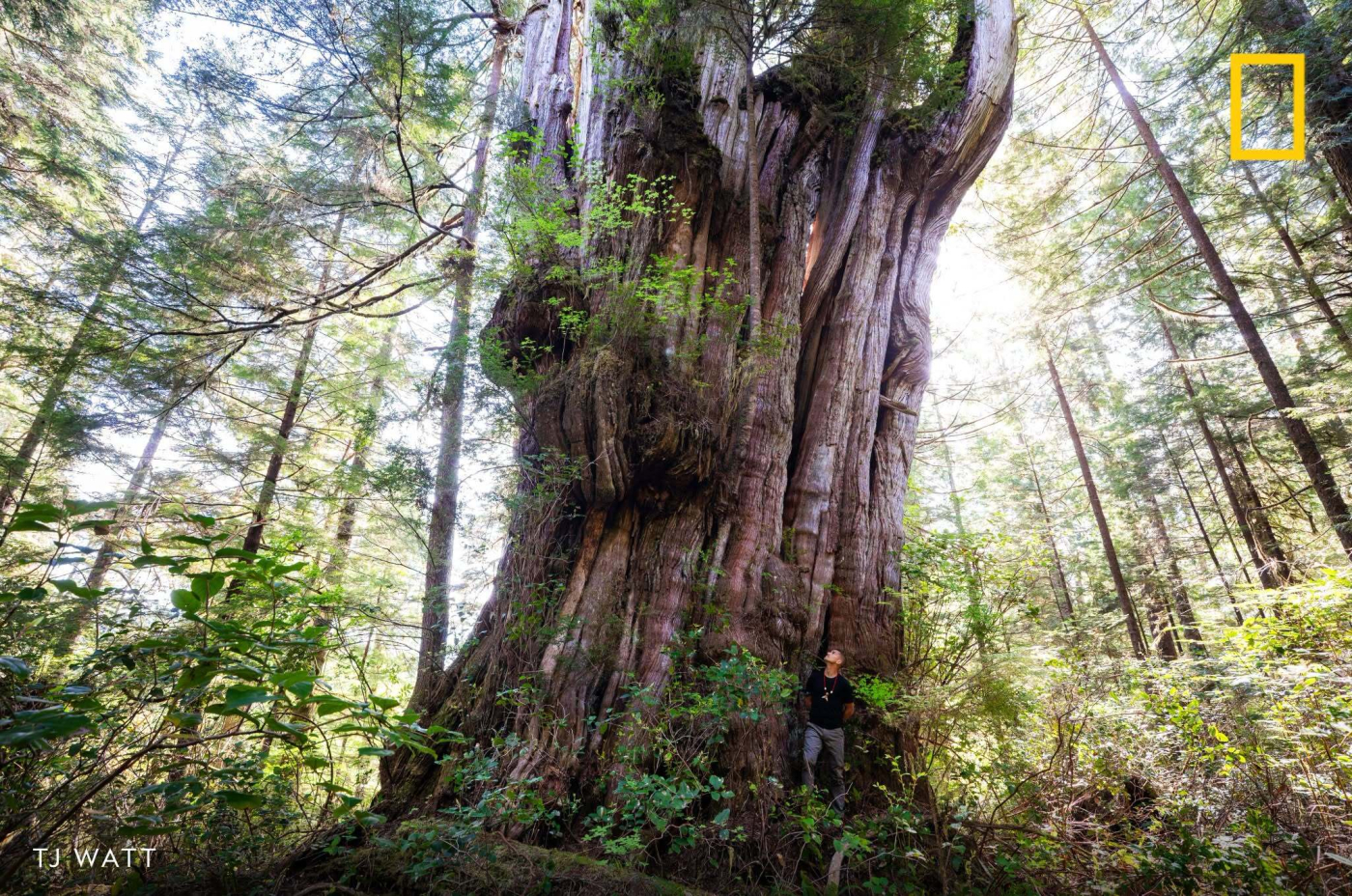 https://ancientforestalliance.org/wp-content/uploads/2026/10/Nat-Geo-Travel-Flores-Cedar.jpg
1357
2048
TJ Watt
https://ancientforestalliance.org/wp-content/uploads/2026/05/Ancient-Forest-Alliance-logo.svg
TJ Watt2026-10-02 13:38:152026-10-02 13:38:15Nat Geo Travel Features TJ Watt’s Photo of Flores Cedar
https://ancientforestalliance.org/wp-content/uploads/2026/10/Nat-Geo-Travel-Flores-Cedar.jpg
1357
2048
TJ Watt
https://ancientforestalliance.org/wp-content/uploads/2026/05/Ancient-Forest-Alliance-logo.svg
TJ Watt2026-10-02 13:38:152026-10-02 13:38:15Nat Geo Travel Features TJ Watt’s Photo of Flores CedarTake Action
 Donate
Support the Ancient Forest Alliance with a one-time or monthly donation. Send a Message
Send an instant message to key provincial decision-makers.
Permission to build Avatar Grove boardwalk requested by the Ancient Forest Alliance from the BC Ministry of Forests
/in AnnouncementsFor Immediate Release
May 8, 2012
Permission to build Avatar Grove boardwalk requested by the Ancient Forest Alliance from the BC Ministry of Forests
Port Renfrew, BC – Yesterday the Ancient Forest Alliance submitted a request to BC’s Ministry of Forests to build an official trail and boardwalk in the famed “Avatar Grove,” a monumental stand of old-growth redcedars and Douglas firs that was recently protected near the town of Port Renfrew on Vancouver Island. The proposal has the backing of the local Chamber of Commerce of Port Renfrew, who have sent in a letter of support for the project to the Ministry.
“A boardwalk is vital to increase visitor safety and to protect the Avatar Grove’s ecology by minimizing impacts to the understory vegetation and tree roots,” stated TJ Watt, the Ancient Forest Alliance campaigner who found the Avatar Grove over 2 years ago. “The Avatar Grove is a heavily visited old-growth forest and has quickly become like BC’s second Cathedral Grove. Already large numbers of tourists have been visiting the Grove this spring. We need to get this boardwalk done before the summer rush begins in July and August.”
A heavily used and well-worn “unofficial” trail already exists as a result of thousands of tourists who have hiked the Avatar Grove over the past two years. The Ancient Forest Alliance is requesting permission to build a boardwalk and steps in limited sections (ie. wet areas, steep areas, and at the base of the most popular trees) and erect some signs telling visitors to stay on the official trail and to pack out all litter to minimize damage to the area’s ecology. The estimated combined distance of the trail and boardwalk in the Upper and Lower Avatar Groves is estimated to be approximately 1 kilometer.
“An Avatar Grove boardwalk will help to bring more tourists into Port Renfrew, whose economy is diversifying and increasingly relying on ‘big tree tourism’ as an important revenue stream for local businesses,” stated Rose Betsworth, President of the Port Renfrew Chamber of Commerce. “Visitor access and safety will increase significantly with a boardwalk and steps in the most difficult sections, such as the steep entry points into the Upper and Lower Avatar Grove from the road.”
The boardwalk will be engineered by qualified experts to match the safety standards of other heavily used ancient forest boardwalks on Crown lands, such as the Meares Island Big Trees Trail where tens of thousands of tourists hike each year and the boardwalk along the Wildside Trail on Flores Island which was partly funded by the Ministry of Forests.
The Avatar Grove was protected by the BC government in a 59 hectare Old-Growth Management Area in February after an extended 2 year campaign spearheaded by the Ancient Forest Alliance and the Port Renfrew Chamber of Commerce. Under the Forest and Range Practices Act, it is illegal to build trails on Crown lands without permission from the Forest Service.
See PHOTOS of the Avatar Grove at: www.ancientforestalliance.org/photos.php?gID=6
See an earlier Youtube clip at: www.youtube.com/watch?v=l_uPkAWsvVw
Protect the Cameron Valley’s Endangered Forests!
/in Take ActionProtect the Cameron Valley’s Endangered Forests!
Save Labour Day Lake, Cameron Valley Firebreak, Cameron Valley Canyon, and Cathedral Grove from Island Timberlands’ logging!
Located near the town of Port Alberni, the Cameron River Valley is home to some of the most significant remnant old-growth stands left on southern Vancouver Island, where almost 90% of the productive old-growth forests have already been logged. These ancient forests in the Cameron Valley are currently threatened by Island Timberland’s logging.
Starting from the headwaters of the subalpine Labour Day Lake, surrounded by endangered ancient yellow cedars and mountain hemlocks in an area heavily used by local recreationists, the waters of the Cameron River start flowing downstream.
In the middle Cameron Valley lies the “Cameron Valley Firebreak”, a 150 hectare remnant tract of mountain-top to valley-bottom old-growth forest – the last of its kind in the valley – that was formerly intended for protection as winter range for Roosevelt elk and deer until the BC Liberal government removed the Tree Farm License in 2004. This exceptional ancient forest, filled with dense stands of enormous coastal Douglas firs and redcedars and with Culturally Modified Trees, has just started being logged by Island Timberlands as of April, 2012.
See: [Original article no longer available]
and https://ancientforestalliance.org/news-item.php?ID=427
Farther downstream, also in the middle Cameron Valley, are old-growth forests in and around the Cameron Valley Canyon, also called the Cathedral Grove Canyon, about 5 kilometers or so from the world-famous Cathedral Grove in MacMillan Provincial Park. This spectacular canyon – a national treasure (see images at https://ancientforestalliance.org/protecting-old-growth-rainforests-to-the-economic-benefit-of-tourism-based-communities/4) – was the center of a public uproar in 2006 when local conservaitonists found the canyon’s largest Douglas firs and cedar trees marked and surveyed by Island Timberlands, and the company later declared that they would not log the area for the time being. Around the canyon farther upstream and downstream, and along adjacent slopes are also major tracts of endangered ancient forests, some of which Island Timberlands have started to log as of April, 2012. Many of these areas are heavily used by black-tailed deer and Roosevelt elk for their winter range.
Finally, in the Lower Cameron Valley is the spectacular Cathedral Grove, the most famous old-growth forest in North America after the California redwoods. Part of Cathedral Grove is protected in MacMillan Provincial Park, where visitors meander among the finest ancient Douglas fir stand on Earth – however, unprotected groves of ancient Douglas firs stretch alongside the highway and up adjacent slopes for a couple kilometers west of the park boundary, which Island Timberlands had planned to log in 2008 until a public uproar staved off their intentions (see https://www.canada.com/vancouversun/news/westcoastnews/story.html?id=a8e02d65-8d2e-401a-8359-12c8d7345e17). These currently unprotected parts of Cathedral Grove also constitute a buffer to the park’s trees, many of which blew down in ferocious winter storms several years ago in part due to increasing exposure to strong winds as a result of nearby clearcuts.
Make YOUR Voice Heard!
Please WRITE a LETTER to the BC Liberal government to:
Write to Minister of Environment Terry Lake at: terry.lake.mla@leg.bc.ca or phone him at 250 387-1187
SUPPORT the local conservationists in Port Alberni at the Watershed-Forest Alliance, who are spearheading efforts to protect ancient forests in the Cameron Valley, to ensure clean water, and to push for sustainable forestry jobs. Contact Jane Morden at: watershedforestalliance@gmail.com
SUPPORT Annette Tanner of the Wilderness Committee’s Mid-Island chapter to also help protect all of Cathedral Grove and the Cathedral Grove Canyon at: wcwcqb@shaw.ca
Sunshine Coast and Vancouver Island Forests under Threat by Island Timberlands! *NEW Photo Galleries*
/in AnnouncementsForests across the Sunshine Coast and Vancouver Island are currently under threat by logging giant Island Timberlands, the second largest private land owner in BC. Local activists in nearby communities are doing everything they can to hold off the company from logging nearby endangered forests until the lands can be purchased for protection. They need your help! The Ancient Forest Alliance has recently been touring and photographing these endangered areas to help bolster their campaigns. See the beautiful photo galleries below, learn what makes each area special, and find out who to link up with to help protect them!
Stillwater Bluffs
New Photo Gallery: https://ancientforestalliance.org/photos-media/stillwater-bluffs/
Local Activists: Friends of Stillwater Bluffs. Email: friendsofstillwaterbluffs@gmail.com Web: https://fosb.blogspot.ca/
This 48 hectare dry maritime forest south of Powell River contains an exceptionally scenic, dramatic stretch of coastline as well as enormous old-growth veteran Douglas-fir and redcedar trees. It is accessible to the public and offers hiking trails, rock climbing, and important wildlife habitat that is perfect for a potential nature park. Local citizens are pushing the Powell River Regional District and the provincial government to assist in funding the area’s purchase, while Island Timberlands in 2012 continues to move forward towards logging this precious area in the near future .
Powell River Peak news articles: Bluffs receive high-profile focus, Hike raises awareness of bluffs
Lower Sunshine Coast
Day Road Forest
New Photo Gallery: https://ancientforestalliance.org/photos-media/day-road-forest/
Local Activists: Elphinstone Logging Focus in Roberts Creek. Email: loggingfocus@gmail.com Web: www.loggingfocus.org
This beautiful second-growth forest includes important stands of old-growth veteran Douglas-firs and redcedars, a gorgeous waterfall, a beautiful box canyon, and extensive mature Douglas-fir stands. Cougars, deer, bears, red-legged frogs, and ensatina salamanders roam the forest. The area is heavily used by local hikers, equestrians, and mountain bikers, and as an area for environmental education for local children and youth. Island Timberlands owns these lands and is planning to log the area’s recovering mature forests, to the chagrin of local citizens and property owners.
Wilson Creek Forest (*note – this area is not on Island Timberlands’ private land but is on unprotected Crown lands)
New Photo Gallery: https://ancientforestalliance.org/elphinstone-logging-focus-wilson-creek-forest-under-threat/
Local Activists: Elphinstone Logging Focus in Roberts Creek. Email: loggingfocus@gmail.com Web: www.loggingfocus.org
This beautiful old-growth and mature forest near Roberts Creek on the Lower Sunshine Coast is proposed by local residents for protection in an expanded Mount Elphinstone Provincial Park. This area has never been logged. A forest fire swept through the area over a century ago, but significant stands of old-growth trees survived the fire and still grow throughout the forest. The area is on Crown lands and is one of the only low elevation ancient forests remaining on the Sunshine Coast and is home to cougars, bears, deer, and the threatened red-legged frog. The Wilson Creek Forest is threatened to be logged by the local Community Forest, which unfortunately at this time lacks a strong conservation vision which in a Community Forest in particular should include protection of the highest conservation-value lands like the Wilson Creek Forest.
Vancouver Island
Cameron Valley Firebreak
New Photo Gallery: https://ancientforestalliance.org/photos-media/cameron-valley-firebreak/
Local Activists: Port Alberni-based Watershed-Forest Alliance. watershedforestalliance@gmail.com
The Cameron Valley Firebreak is a beautiful 150 hectare old-growth forest on Vancouver Island that is a 20 minute drive from the town of Port Alberni, and several kilometres upstream from the world-famous Cathedral Grove. In late April, 2012, Island Timberlands began logging this ancient forest of extremely high recreation and ecological value – filled with ancient coastal Douglas-firs (99% of which have been logged), wintering elk and deer, and Culturally Modified Trees. The area is heavily used by Roosevelt elk and was formerly intended for protection as an Ungulate Winter Range by the BC government for elk – until the land was removed from the Tree Farm License in 2004, and planned protections were never implemented.
Ancient Forest Alliance: Press release
Alberni Valley Times: Groups make appeal to save forest
Times Colonist: Environmental groups decry logging near Cathedral Grove
Some Other Forests Threatened by Island Timberlands
Cathedral Grove Canyon: https://ancientforestalliance.org/photos-media/cathedral-grove-canyon/
McLaughlin Ridge: https://ancientforestalliance.org/our-work/old-growth-campaigns/mclaughlin-ridge/
Cortes Island: https://ancientforestalliance.org/the-ancient-forests-of-cortes-island-2-the-carrington-bay-childrens-forest/
TAKE ACTION
Here are a few things you can do right now as the campaign snowballs to protect the endangered forests on Island Timberlands lands:
1. WRITE A LETTER TO ENVIRONMENT MINISTER TERRY LAKE:
5 minutes is all it takes to write a short letter requesting that the provincial government establish a BC Park Acquisition Fund of at least $40 million per year, raising $400 million over 10 years, to purchase old-growth forests and other endangered ecosystems on private lands across the province.
Send your letter to: terry.lake.mla@leg.bc.ca (*Be sure to include your full name and address so you they know you’re a real person!)
or phone him at: 1.250.387.1187
or ask him on Twitter: @terrylakemla
2. SIGN AND CIRCULATE OUR ONLINE PETITION TO SAVE BC’S ANCIENT FORESTS AND FORESTRY JOBS:
ancientforestalliance.org/ways-to-take-action-for-forests/petition/
Also sign the Friends of Stillwater Bluffs petition at: https://www.change.org/petitions/island-timberlands-ltd-of-nanaimo-five-year-moratorium-on-any-logging-of-stillwater-bluffs
3. SUPPORT THE LOCAL ACTIVISTS WORKING TO PROTECT FORESTS THREATENED by ISLAND TIMBERLANDS:
Stillwater Bluffs
Friends of Stillwater Bluffs near Powell River: friendsofstillwaterbluffs@gmail.com Website: https://fosb.blogspot.ca/
Lower Sunshine Coast
Elphinstone Logging Focus in Roberts Creek: loggingfocus@gmail.com Website: www.loggingfocus.org
Cameron Valley Firebreak, McLaughlin Ridge
Jane Morden of the Watershed-Forest Alliance in Port Alberni: watershedforestalliance@gmail.com
Cathedral Grove, Cathedral Grove Canyon
Annette Tanner, Wilderness Committee Mid-Island Chapter in Qualicum Beach: wcwcqb@shaw.ca
Cortes Island
Zoe Miles or Sabina Leader-Mense of Wildstands at: wildstands@gmail.com Website: wildstands.wordpress.com