 https://ancientforestalliance.org/wp-content/uploads/2026/10/Screenshot-2026-10-22-at-4.54.32-PM.png
952
1684
TJ Watt
https://ancientforestalliance.org/wp-content/uploads/2026/05/Ancient-Forest-Alliance-logo.svg
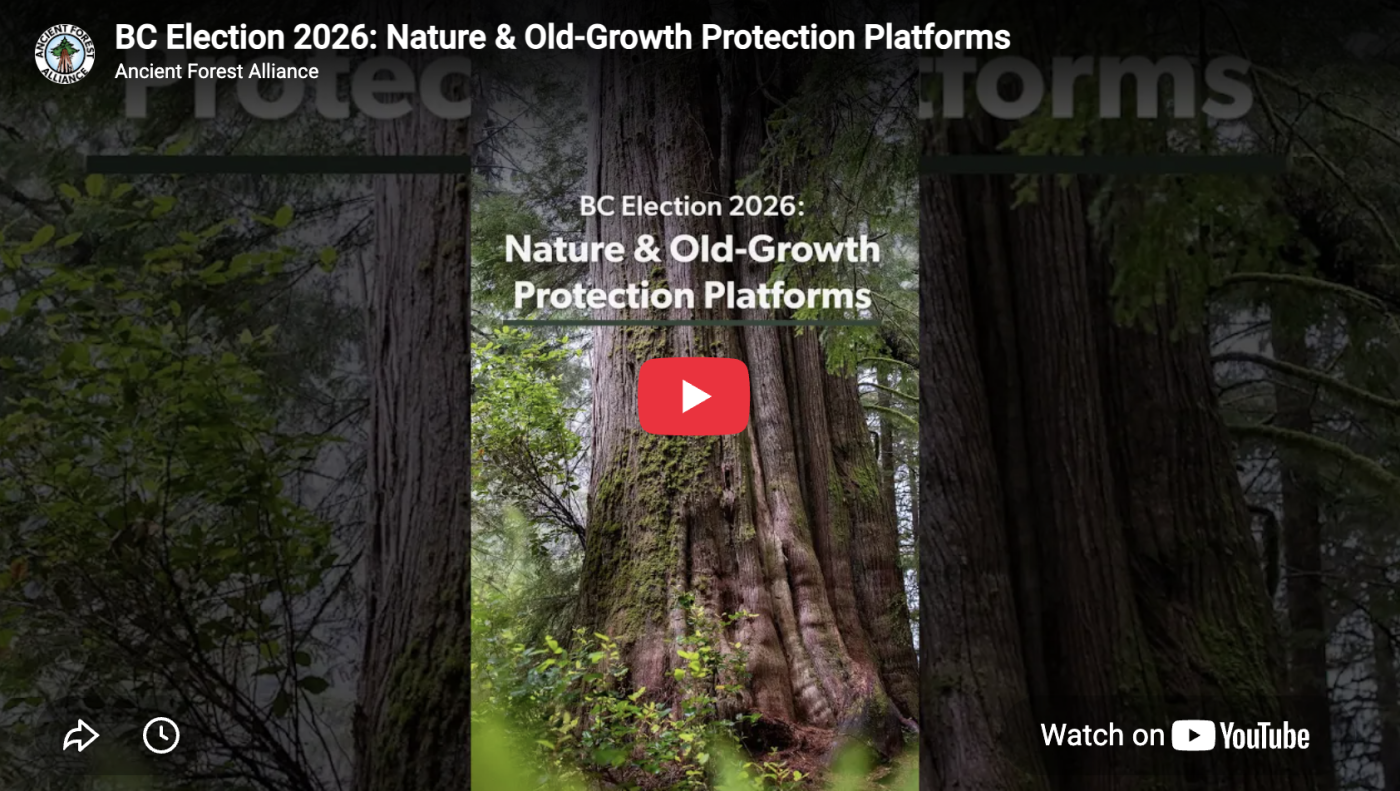
TJ Watt2026-10-22 16:54:062026-10-22 16:59:41NEW Video: BC Election 2026: Nature & Old-Growth Protection
https://ancientforestalliance.org/wp-content/uploads/2026/10/Screenshot-2026-10-22-at-4.54.32-PM.png
952
1684
TJ Watt
https://ancientforestalliance.org/wp-content/uploads/2026/05/Ancient-Forest-Alliance-logo.svg
TJ Watt2026-10-22 16:54:062026-10-22 16:59:41NEW Video: BC Election 2026: Nature & Old-Growth ProtectionRelated Posts
https://ancientforestalliance.org/wp-content/uploads/2026/10/Screenshot-2026-10-22-at-4.54.32-PM.png
952
1684
TJ Watt
https://ancientforestalliance.org/wp-content/uploads/2026/05/Ancient-Forest-Alliance-logo.svg
TJ Watt2026-10-22 16:54:062026-10-22 16:59:41NEW Video: BC Election 2026: Nature & Old-Growth Protection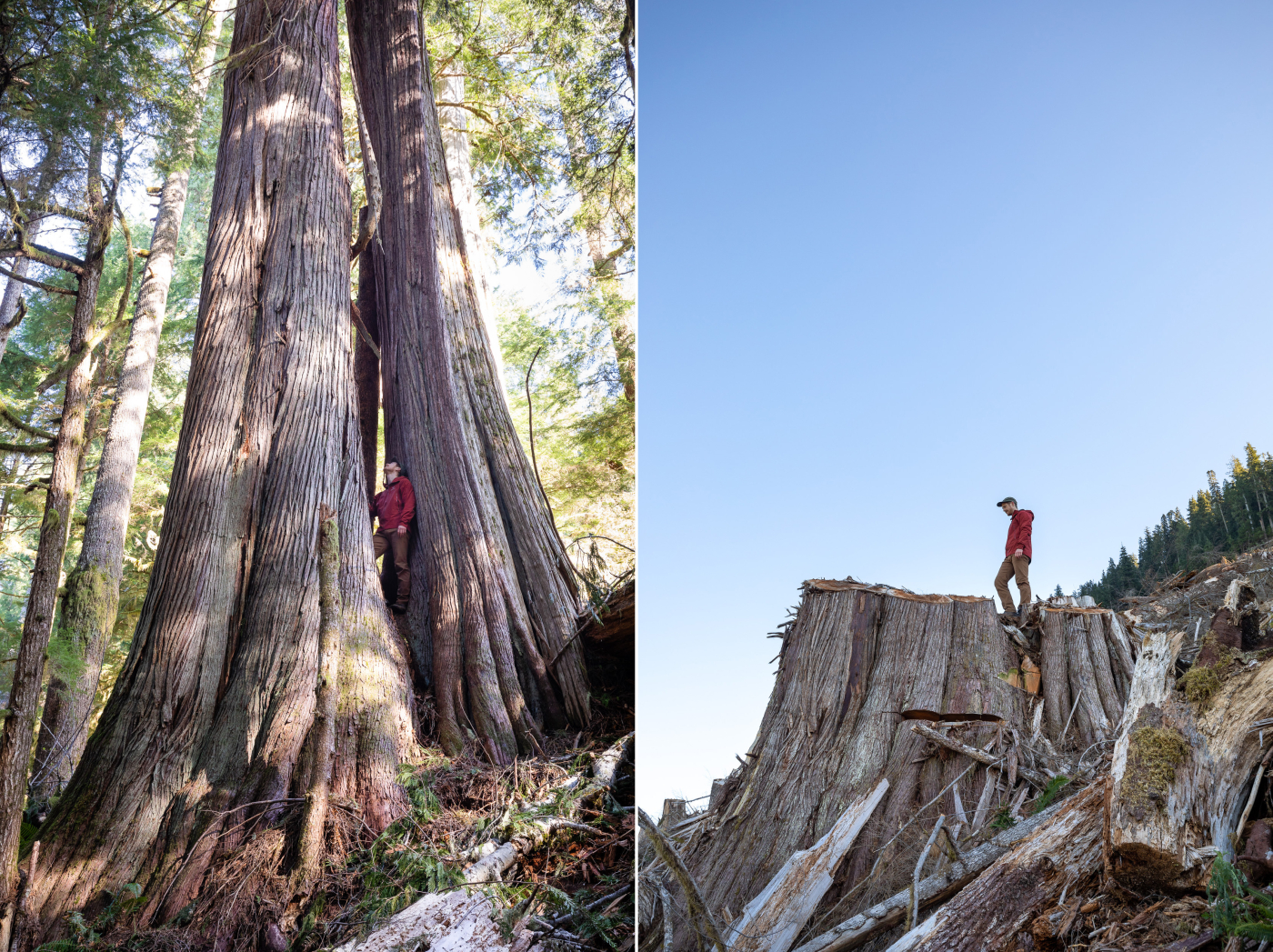 https://ancientforestalliance.org/wp-content/uploads/2026/10/Before-After-Caycuse-TJ-Watt-4-scaled.jpg
1915
2560
TJ Watt
https://ancientforestalliance.org/wp-content/uploads/2026/05/Ancient-Forest-Alliance-logo.svg
TJ Watt2026-10-16 17:36:002026-10-21 13:40:23BC Election 2026: Where do Parties Stand on Nature & Old-Growth?
https://ancientforestalliance.org/wp-content/uploads/2026/10/Before-After-Caycuse-TJ-Watt-4-scaled.jpg
1915
2560
TJ Watt
https://ancientforestalliance.org/wp-content/uploads/2026/05/Ancient-Forest-Alliance-logo.svg
TJ Watt2026-10-16 17:36:002026-10-21 13:40:23BC Election 2026: Where do Parties Stand on Nature & Old-Growth? https://ancientforestalliance.org/wp-content/uploads/2026/10/BC-Election-2026-Banner-1-1-scaled.jpg
1439
2560
TJ Watt
https://ancientforestalliance.org/wp-content/uploads/2026/05/Ancient-Forest-Alliance-logo.svg
TJ Watt2026-10-09 18:16:372026-10-16 17:44:41Where do BC’s Major Political Parties Stand on Nature Protection?
https://ancientforestalliance.org/wp-content/uploads/2026/10/BC-Election-2026-Banner-1-1-scaled.jpg
1439
2560
TJ Watt
https://ancientforestalliance.org/wp-content/uploads/2026/05/Ancient-Forest-Alliance-logo.svg
TJ Watt2026-10-09 18:16:372026-10-16 17:44:41Where do BC’s Major Political Parties Stand on Nature Protection?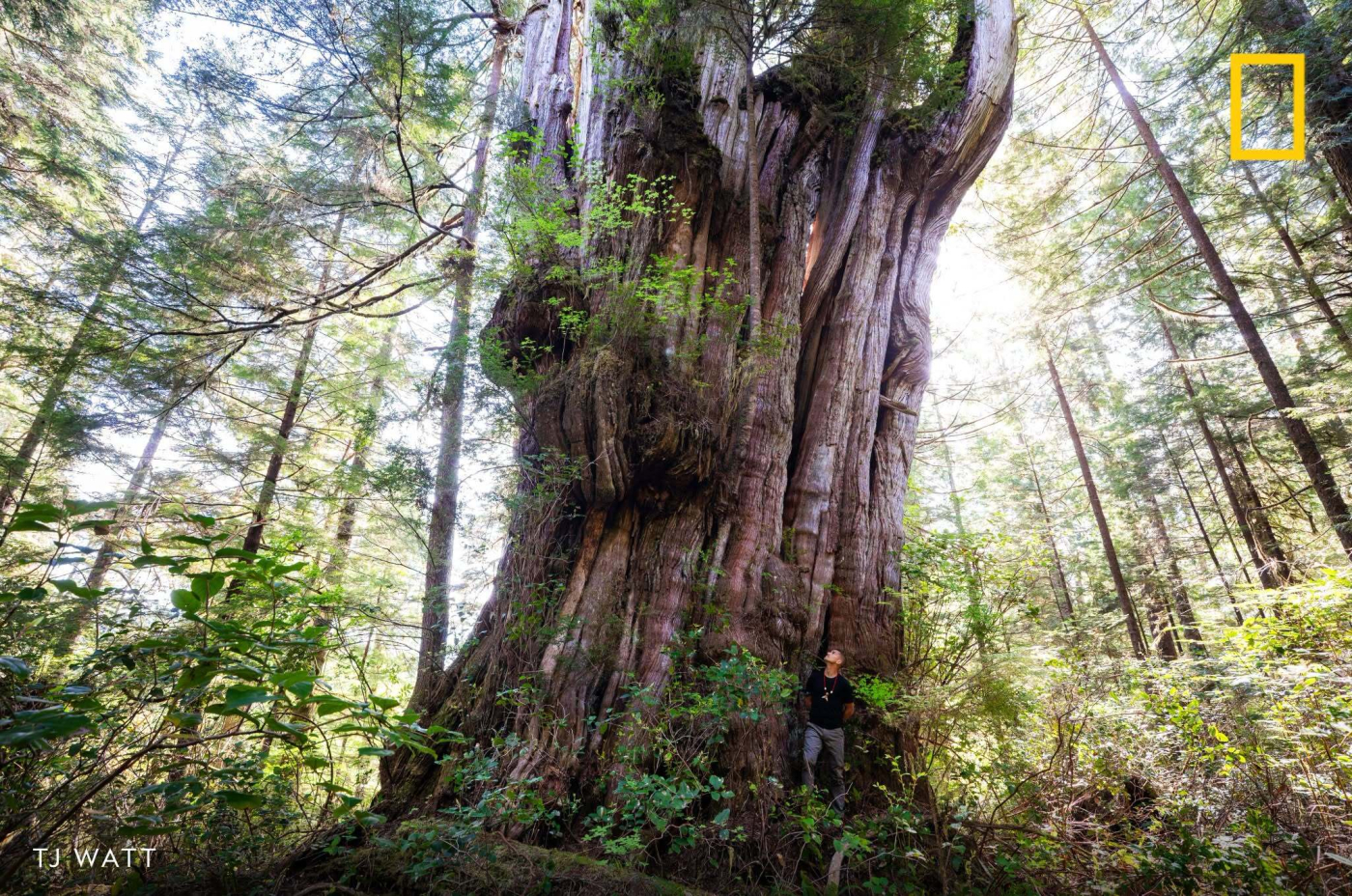 https://ancientforestalliance.org/wp-content/uploads/2026/10/Nat-Geo-Travel-Flores-Cedar.jpg
1357
2048
TJ Watt
https://ancientforestalliance.org/wp-content/uploads/2026/05/Ancient-Forest-Alliance-logo.svg
TJ Watt2026-10-02 13:38:152026-10-02 13:38:15Nat Geo Travel Features TJ Watt’s Photo of Flores Cedar
https://ancientforestalliance.org/wp-content/uploads/2026/10/Nat-Geo-Travel-Flores-Cedar.jpg
1357
2048
TJ Watt
https://ancientforestalliance.org/wp-content/uploads/2026/05/Ancient-Forest-Alliance-logo.svg
TJ Watt2026-10-02 13:38:152026-10-02 13:38:15Nat Geo Travel Features TJ Watt’s Photo of Flores CedarTake Action
 Donate
Support the Ancient Forest Alliance with a one-time or monthly donation. Send a Message
Send an instant message to key provincial decision-makers.
Protect McLaughlin Ridge! Please take 5 minutes to write a quick email!
/in Take ActionCritics insist logging harms wildlife
/in News CoverageEnvironmentalists are raising the alarm about the logging of old-growth Douglas firs taking place near Port Alberni.
They are calling on the provincial government to protect a 500hectare tract of old-growth forest they say biologists have classified as critical habitat for wintering deer and nesting endangered Queen Charlotte goshawks.
Island Timberlands owns the area in question on McLaughlin Ridge, southeast of the city.
Two local groups are asking the government to purchase the land from IT in order to protect it.
Members of the Ancient Forest Alliance and Friends of McLaughlin Ridge say the land was formerly protected as a winter feeding area for black-tailed deer and as a known nesting area for the endangered goshawk.
In 2004, the B.C. government removed 88,000 hectares of land now owned by Island Timberlands from their Tree Farm Licenses.
Of the 500-hectare tract, the groups say 100 hectares have already been logged, but the core portion of the stand remains intact.
Ancient Forest Alliance spokesperson Ken Wu said he hopes the logging has stopped for the winter, to buy some time to try to save what remains.
He added 99% of the coastal old-growth Douglas firs have already been logged on Vancouver Island.
“It’s pretty crazy we have to fight over the last 1%,” Wu said. He explained the area is covered in lichens, which are a vital winter food source for deer. The trees also provide shelter, he added. Bed Bath and Beyond Wedding Registry
This concerns environmentalists because they say the black-tailed deer population is in decline, in large part due to the destruction of their winter habitat.
Less deer, Wu said, means less food for wolves, cougars, bears and subsistence hunters.
The Queen Charlotte goshawk, a bird of prey, is “red” – listed and considered endangered, with only about 300 nesting pairs known to exist, he said.
McLaughlin Ridge is a known nesting area for these birds.
Wu said any recovery plan for this species should include protection of one of their few remaining known nesting areas. The groups contend Victoria created “this mess” by largely deregulating these forest lands.
“We will be asking Island Timberlands to show good will to the community by putting their logging plans for McLaughlin Ridge on hold until funds are put forward to protect this critical old-growth habitat,” said Jane Morden, coordinator of the Port Alberni-based Friends of McLaughlin Ridge.
IT spokesperson Morgan Kennah could not confirm whether logging in the area will continue this winter, although she said IT does have harvest plans across that general area, and has completed some “clear-cutting with variable retention levels” there.
“IT has not received a formal proposal to purchase that area and actions will not be stalled indefinitely for a proposal that may or may not come to fruition,” she said.
Kennah acknowledged the area is considered suitable habitat for deer and the Queen Charlotte goshawk, and IT does alter its helilogging when young of the latter species are hatching to reduce the noise impact.
“Wildlife procedures are in place that dictate modified practices,” she said, adding that logging in areas identified as wildlife habitat are planned in consultation with a registered biologist.
As for IT’s critics, Kennah said residents can learn more about the company’s logging plans by attending the next West Island Woodland Advisory Group meetings on Dec. 8 at the AlberniClayoquot Regional District office.
Direct link to Alberni Valley Times article: https://www2.canada.com/albernivalleytimes/news/story.html?id=d7fe1099-d963-4e1a-b9ef-d878c7eefeef
Deadline to Submit Avatar Grove Protection Comments this Wednesday, Nov. 9th!
/in Take ActionPlease WRITE a QUICK EMAIL to PROTECT the AVATAR GROVE and ALL of BC’s Endangered Old-Growth Forests.
After almost two years of intense public pressure led by the Ancient Forest Alliance and the Port Renfrew Chamber of Commerce, the BC government is looking to officially declare Avatar Grove off-limits to logging. They are proposing to include the Avatar Grove within 59 hectares of new Old-Growth Management Areas (OGMA’s), pending the completion of public input that closes this Wednesday, November 9.
This is a great step forward for the most spectacular, easily accessible stand of unprotected old-growth cedars and Douglas-firs on southern Vancouver Island. The Avatar Grove is extremely rare, valley-bottom ancient forest, about 95% of which has been logged on the South Island.
However, the logging company will be compensated with 57 hectares of forest (27 hectares of old-growth, 30 hectares of second-growth), while thousands of hectares of old-growth forests are logged each year across Vancouver Island, tens of thousands of hectares across BC, and millions of hectares of BC’s old-growth forests remain in jeopardy. Already 75% of the original, productive old-growth forests have been logged on Vancouver Island.
PLEASE TAKE 3 minutes to WRITE a quick EMAIL by this Wednesday, November 9 to the BC government at:
Ministry of Forests: RenfrewOGMA@gov.bc.ca
BC Forest Minister Steve Thomson: steve.thomson.mla@leg.bc.ca
Premier Christy Clark: premier@gov.bc.ca
***BE SURE to include your FULL NAME and ADDRESS so they know you are a real person!
***Please reference: Renfrew Amendments 2011
TELL THEM that you:
– Support the protection of Avatar Grove as an Old-Growth Management Area (OGMA) in the Renfrew 2011 Amendment and ultimately as a conservancy or park.
– Want ALL of BC’s endangered old-growth forests protected through a Provincial Old-Growth Strategy.
– Want the BC government to ensure the sustainable logging of second-growth forests and to ban the export of raw logs to foreign mills.