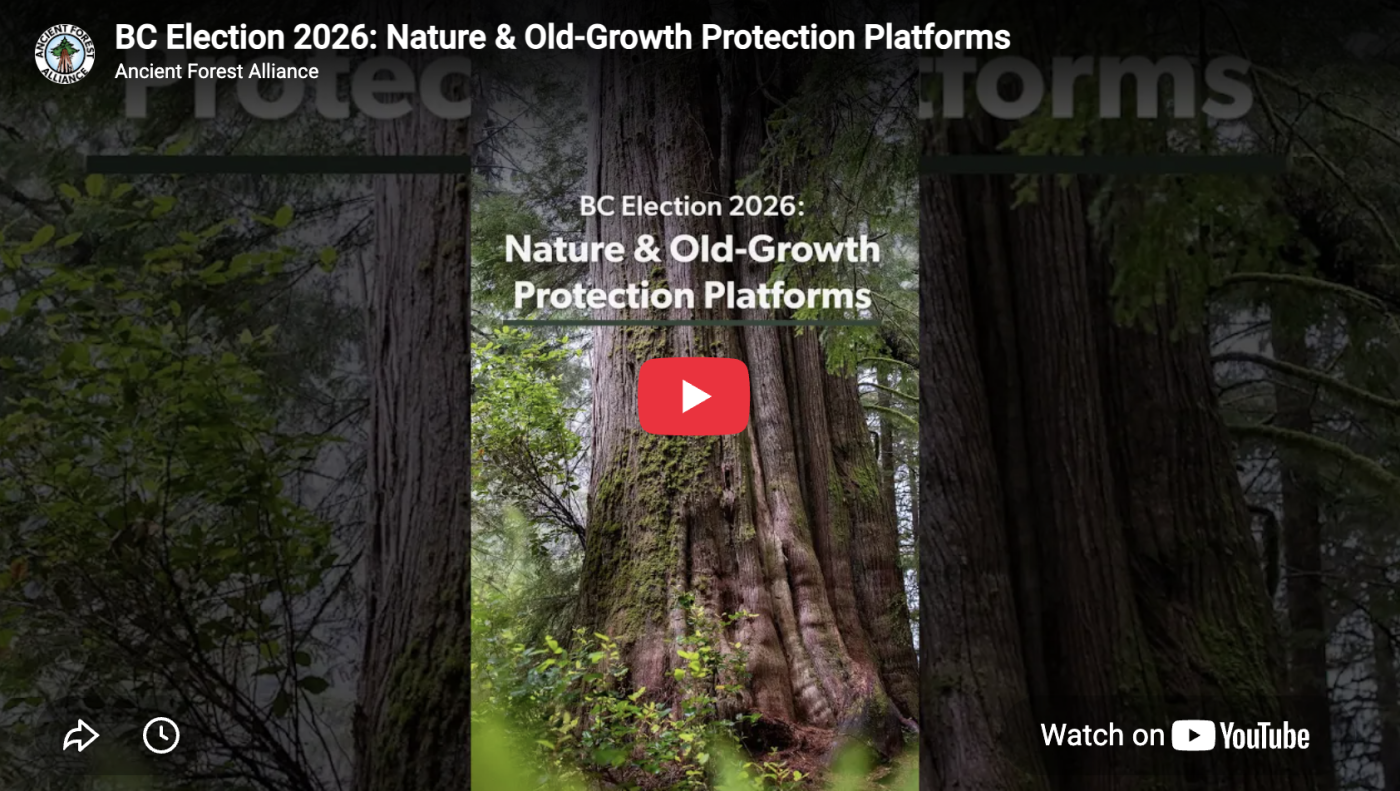
 https://ancientforestalliance.org/wp-content/uploads/2026/10/Screenshot-2026-10-22-at-4.54.32-PM.png
952
1684
TJ Watt
https://ancientforestalliance.org/wp-content/uploads/2026/05/Ancient-Forest-Alliance-logo.svg
TJ Watt2026-10-22 16:54:062026-10-22 16:59:41NEW Video: BC Election 2026: Nature & Old-Growth Protection
https://ancientforestalliance.org/wp-content/uploads/2026/10/Screenshot-2026-10-22-at-4.54.32-PM.png
952
1684
TJ Watt
https://ancientforestalliance.org/wp-content/uploads/2026/05/Ancient-Forest-Alliance-logo.svg
TJ Watt2026-10-22 16:54:062026-10-22 16:59:41NEW Video: BC Election 2026: Nature & Old-Growth ProtectionRelated Posts
https://ancientforestalliance.org/wp-content/uploads/2026/10/Screenshot-2026-10-22-at-4.54.32-PM.png
952
1684
TJ Watt
https://ancientforestalliance.org/wp-content/uploads/2026/05/Ancient-Forest-Alliance-logo.svg
TJ Watt2026-10-22 16:54:062026-10-22 16:59:41NEW Video: BC Election 2026: Nature & Old-Growth Protection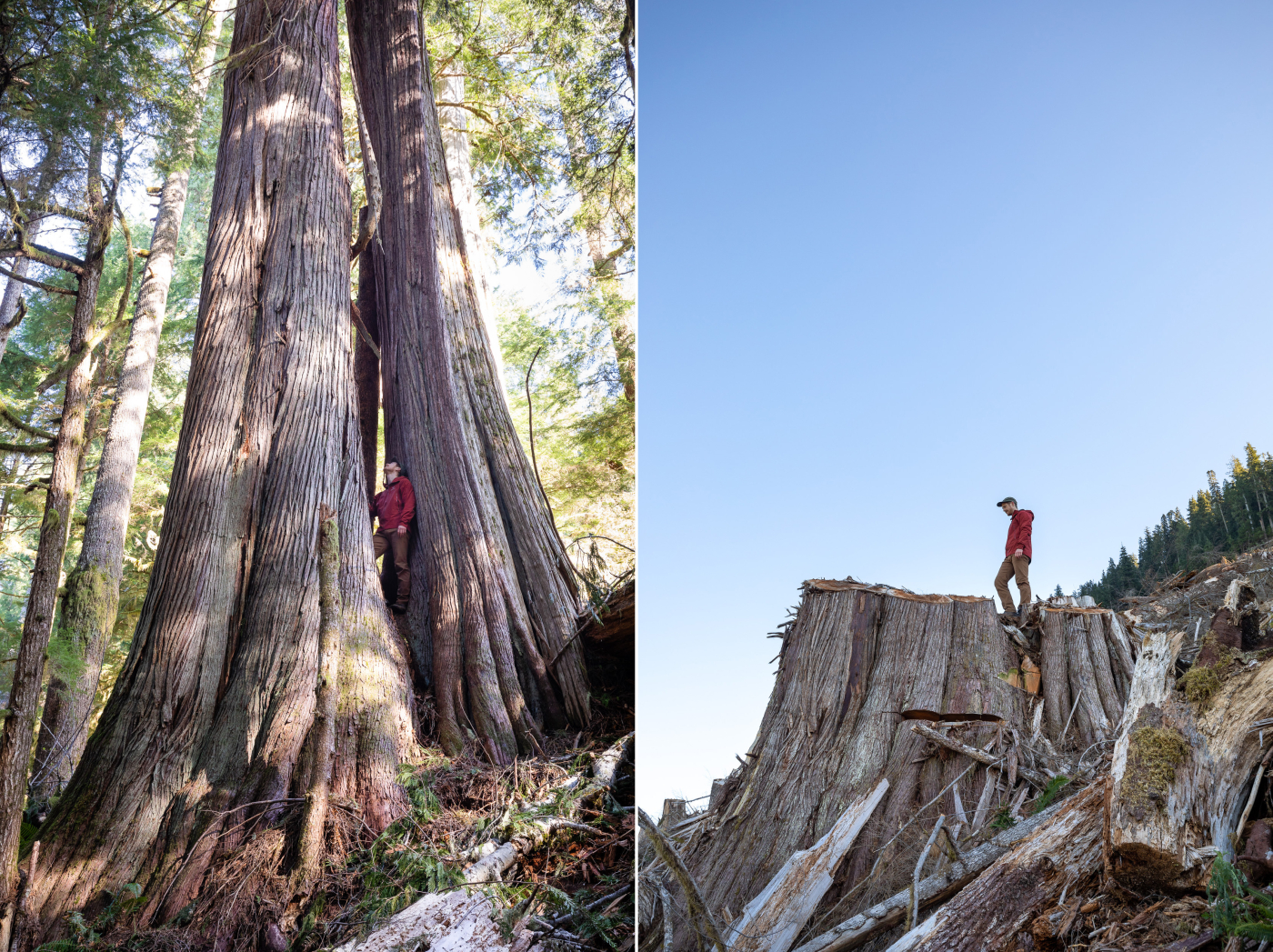 https://ancientforestalliance.org/wp-content/uploads/2026/10/Before-After-Caycuse-TJ-Watt-4-scaled.jpg
1915
2560
TJ Watt
https://ancientforestalliance.org/wp-content/uploads/2026/05/Ancient-Forest-Alliance-logo.svg
TJ Watt2026-10-16 17:36:002026-10-21 13:40:23BC Election 2026: Where do Parties Stand on Nature & Old-Growth?
https://ancientforestalliance.org/wp-content/uploads/2026/10/Before-After-Caycuse-TJ-Watt-4-scaled.jpg
1915
2560
TJ Watt
https://ancientforestalliance.org/wp-content/uploads/2026/05/Ancient-Forest-Alliance-logo.svg
TJ Watt2026-10-16 17:36:002026-10-21 13:40:23BC Election 2026: Where do Parties Stand on Nature & Old-Growth? https://ancientforestalliance.org/wp-content/uploads/2026/10/BC-Election-2026-Banner-1-1-scaled.jpg
1439
2560
TJ Watt
https://ancientforestalliance.org/wp-content/uploads/2026/05/Ancient-Forest-Alliance-logo.svg
TJ Watt2026-10-09 18:16:372026-10-16 17:44:41Where do BC’s Major Political Parties Stand on Nature Protection?
https://ancientforestalliance.org/wp-content/uploads/2026/10/BC-Election-2026-Banner-1-1-scaled.jpg
1439
2560
TJ Watt
https://ancientforestalliance.org/wp-content/uploads/2026/05/Ancient-Forest-Alliance-logo.svg
TJ Watt2026-10-09 18:16:372026-10-16 17:44:41Where do BC’s Major Political Parties Stand on Nature Protection?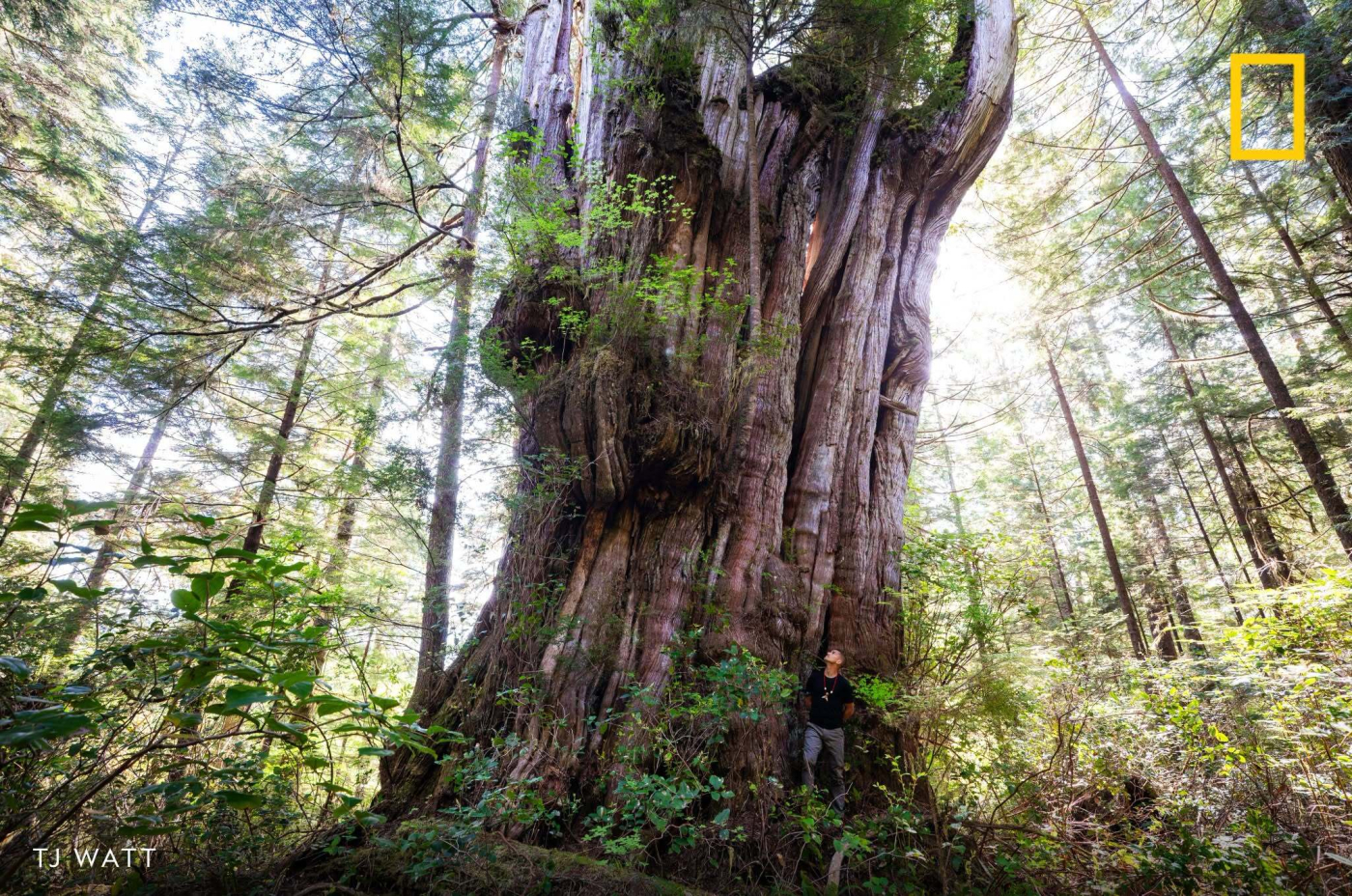 https://ancientforestalliance.org/wp-content/uploads/2026/10/Nat-Geo-Travel-Flores-Cedar.jpg
1357
2048
TJ Watt
https://ancientforestalliance.org/wp-content/uploads/2026/05/Ancient-Forest-Alliance-logo.svg
TJ Watt2026-10-02 13:38:152026-10-02 13:38:15Nat Geo Travel Features TJ Watt’s Photo of Flores Cedar
https://ancientforestalliance.org/wp-content/uploads/2026/10/Nat-Geo-Travel-Flores-Cedar.jpg
1357
2048
TJ Watt
https://ancientforestalliance.org/wp-content/uploads/2026/05/Ancient-Forest-Alliance-logo.svg
TJ Watt2026-10-02 13:38:152026-10-02 13:38:15Nat Geo Travel Features TJ Watt’s Photo of Flores CedarTake Action
 Donate
Support the Ancient Forest Alliance with a one-time or monthly donation. Send a Message
Send an instant message to key provincial decision-makers.
THANK YOU to all those involved with the ancient forest rally!
/in Thank You– Local musician Vince Vaccaro
– The great speakers and presenters;
Gisele Martin – Tlaoquiaht cultural educator and tourism operator
Robert Morales – Hul’qumi’num Chief Treaty Negotiator
Judith Sayers – Hupacasath member and UVic adjunct professor
Jens Wieting – Sierra Club of BC campaigner
Arnold Bercov – Pulp, Paper, and Woodworkers of Canada president (local 8)
Norm Macdonald – MLA for Columbia River-Revelstoke and Opposition Critic for Forestry
Ken Wu & TJ Watt– Ancient Forest Alliance co-founders
– Kim Old from Kold Design for creating the awesome event poster!
– James at PosterLoop Media for displaying our rally poster around town.
– Metropol Print Shop for donating their time to get our hardcopy posters up on all the poster poles in Victoria.
– And all of the volunteers who phoned and invited our supporters, put posters up all over town, and helped setup the night of the event!
THANK YOU ALL!!!
RALLY for ANCIENT FORESTS and BC FORESTRY JOBS! Thursday, Oct. 20th
/in Take ActionYOUR participation will send an undeniable message to Christy Clark’s BC Liberal government that they MUST act during the next 18 months before a BC election to protect British Columbia’s ancient forests and ensure sustainable forestry jobs!
Date: Thursday, October 20, 2011
Time: 7:00-8:30 pm
Location: Alix Goolden Hall, 907 Pandora St., Victoria
Join a diverse range of speakers on the need to protect British Columbia’s ancient forests and ensure sustainable forestry jobs.
Speakers include:
Ken Wu & TJ Watt– Ancient Forest Alliance co-founders
Robert Morales – Hul’qumi’num Chief Treaty Negotiator
Gisele Martin – Tlaoquiaht cultural educator and tourism operator
Judith Sayers – Hupacasath member and UVic adjunct professor
Jens Wieting – Sierra Club of BC campaigner
Arnold Bercov – Pulp, Paper, and Woodworkers of Canada president (local 8)
Annette Tanner – WCWC Mid-Island Chair
British Columbia’s old-growth forests are highly endangered by industrial logging, with tens of thousands of hectares being clearcut each year. See “before” and “after” maps of Vancouver Island at:
https://ancientforestalliance.org/ancient-forests/before-after-old-growth-maps/
The decline in coastal forestry employment has been fundamentally driven in recent decades by the depletion of the biggest, best old-growth stands in the valley bottoms and lower elevations, resulting in diminishing returns as trees get smaller and more expensive to reach.
Meanwhile the BC government has done nothing to ensure that forest companies retool coastal sawmills to handle smaller second-growth logs, let alone invest in value-added manufacturing facilities. Instead, while mills close, the BC government has been allowing a mass exodus of raw logs to leave for foreign mills – including over 1.1 million cubic meters of raw logs to China last year despite earlier assurances that “lumber, not logs” would be exported.
The unsustainable depletion of old-growth forests has not only resulted in the loss of forestry jobs, but also increasing numbers of endangered species, collapsing wild salmon stocks, the massive release of carbon into the atmosphere, and the steady erosion of many First Nations cultures which evolved in and are supported by old-growth forests.
Support the call for protection of old-growth forests, sustainable second-growth forestry, an end to raw log exports, and the implementation of First Nations land use plans.
YOUR participation is VITAL!
Please forward far and wide!
Also please confirm how many people you’re bringing to help us get a sense of our numbers by emailing us at info@ancientforestalliance.org
Or visit our Facebook Event page and click attend:
https://www.facebook.com/#!/event.php?eid=288068437869909
For more info contact: info@ancientforestalliance.org
*** NOTE: If you haven’t recently, PLEASE WRITE a LETTER to the BC government and your local BC Liberal or NDP Member of the Legislative Assembly (MLA) calling on the BC government to devise a plan to:
– Immediately protect BC’s most endangered forests, such as valley bottom ancient rainforests like the Avatar Grove, our Coastal Douglas fir forests, and Inland Old-Growth Rainforests.
-Undertake a comprehensive Provincial Old-Growth Strategy that will inventory and ban and quickly phase-out logging of endangered old-growth forests through the province.
– Ensure the sustainable logging of second-growth forests.
– Ban the export of raw logs to foreign mills.
– Implement new land use plans to expand protected areas based on First Nations land use plans, conservation biology-based scientific assessments, and climate change mitigation strategies.
Write to:
Premier Christy Clark (premier@gov.bc.ca)
Steve Thomson, Minister of Forests, Lands and Natural Resource Operations (for.minister@gov.bc.ca)
Find your local MLA’s address at [Original article no longer available]
Or use our online Letter-Writing Form at:
https://ancientforestalliance.org/write-letter.php
And please sign and forward our online petition at: ancientforestalliance.org/ways-to-take-action-for-forests/petition/
Slideshow: Saving our Spectacular Ancient Forests! Wed, Oct. 12th
/in AnnouncementsWednesday, October 12th, 7pm-8:30pm
Room 7000, SFU Harbour Centre (515 W Hastings, Vancouver)
Join Ken Wu, TJ Watt, and Hannah Carpendale of the Ancient Forest Alliance for a slideshow tour through Vancouver Island’s spectacular ancient rainforests, featuring several of the newest images by photographer TJ Watt. Learn about the ecology and politics of BC’s endangered ancient forests, and find out how to get involved in the campaign to save them as the organization embarks on a fall mobilization for ancient forests and to end raw log exports.
Visit our Facebook Events page and click to attend:
https://www.facebook.com/event.php?eid=240986749285512
For more info, please contact hannah@15.222.255.145
Feel free to print our posters and pass on to anyone who might be interested!
Hope to see you there!