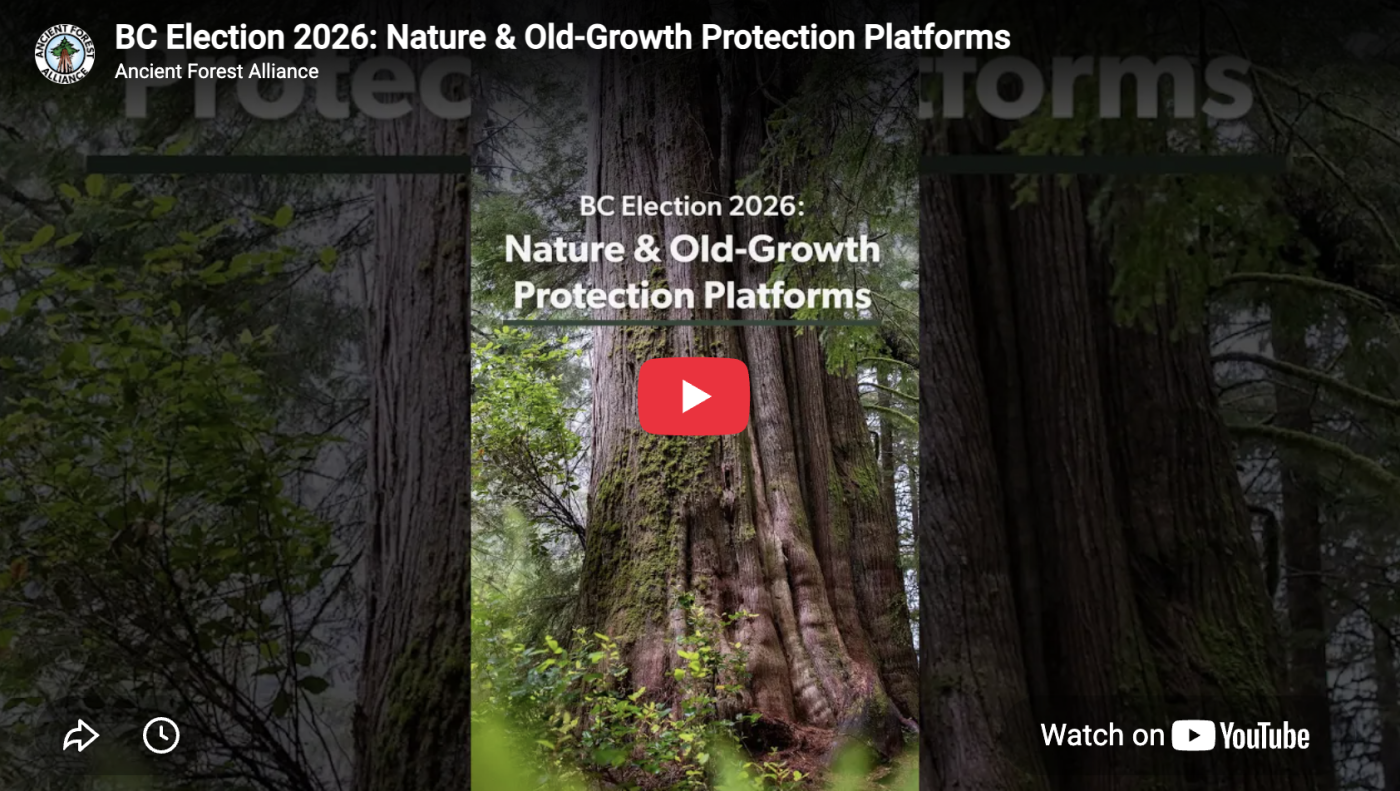
 https://ancientforestalliance.org/wp-content/uploads/2026/10/Screenshot-2026-10-22-at-4.54.32-PM.png
952
1684
TJ Watt
https://ancientforestalliance.org/wp-content/uploads/2026/05/Ancient-Forest-Alliance-logo.svg
TJ Watt2026-10-22 16:54:062026-10-22 16:59:41NEW Video: BC Election 2026: Nature & Old-Growth Protection
https://ancientforestalliance.org/wp-content/uploads/2026/10/Screenshot-2026-10-22-at-4.54.32-PM.png
952
1684
TJ Watt
https://ancientforestalliance.org/wp-content/uploads/2026/05/Ancient-Forest-Alliance-logo.svg
TJ Watt2026-10-22 16:54:062026-10-22 16:59:41NEW Video: BC Election 2026: Nature & Old-Growth ProtectionRelated Posts
https://ancientforestalliance.org/wp-content/uploads/2026/10/Screenshot-2026-10-22-at-4.54.32-PM.png
952
1684
TJ Watt
https://ancientforestalliance.org/wp-content/uploads/2026/05/Ancient-Forest-Alliance-logo.svg
TJ Watt2026-10-22 16:54:062026-10-22 16:59:41NEW Video: BC Election 2026: Nature & Old-Growth Protection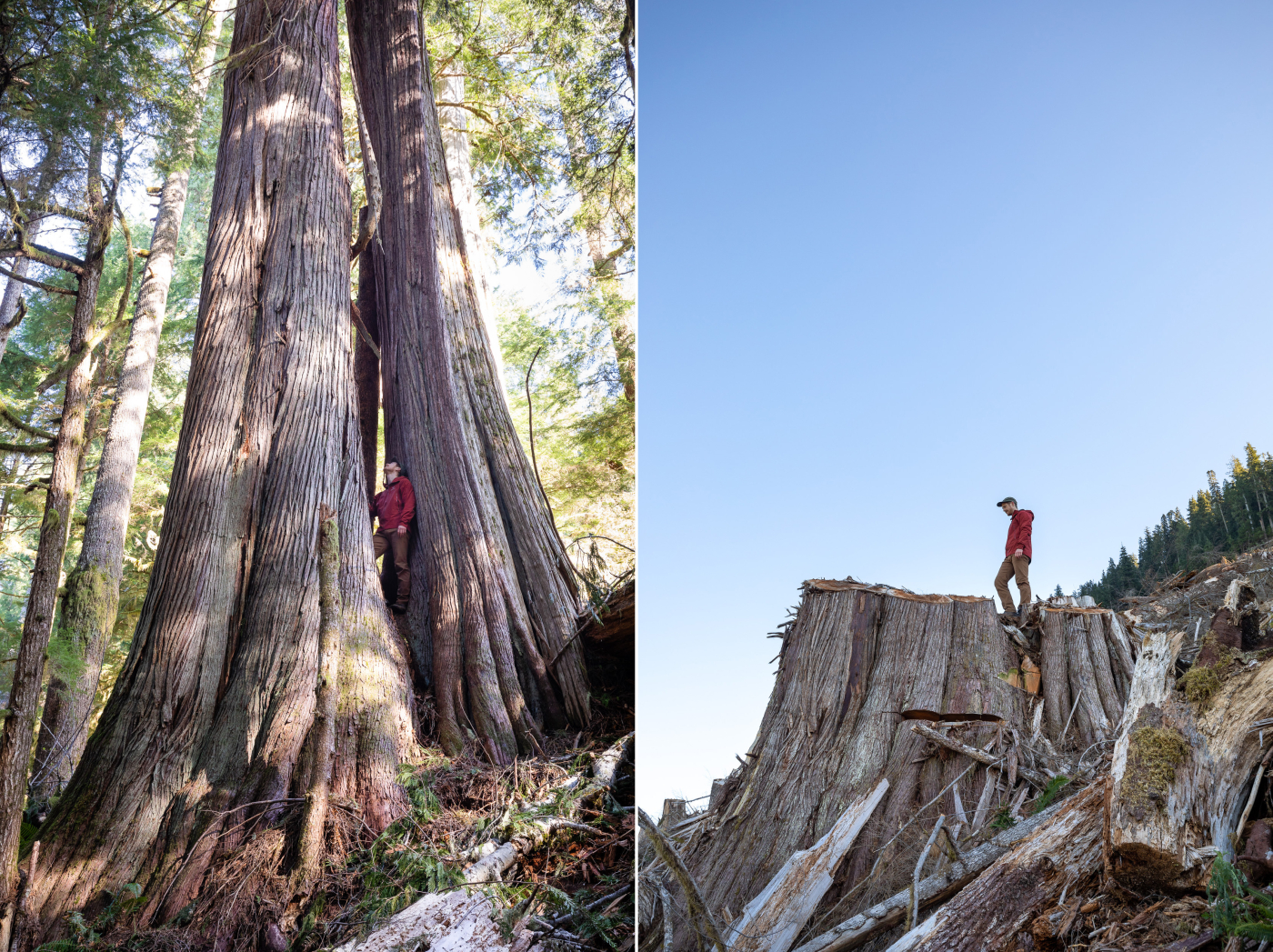 https://ancientforestalliance.org/wp-content/uploads/2026/10/Before-After-Caycuse-TJ-Watt-4-scaled.jpg
1915
2560
TJ Watt
https://ancientforestalliance.org/wp-content/uploads/2026/05/Ancient-Forest-Alliance-logo.svg
TJ Watt2026-10-16 17:36:002026-10-21 13:40:23BC Election 2026: Where do Parties Stand on Nature & Old-Growth?
https://ancientforestalliance.org/wp-content/uploads/2026/10/Before-After-Caycuse-TJ-Watt-4-scaled.jpg
1915
2560
TJ Watt
https://ancientforestalliance.org/wp-content/uploads/2026/05/Ancient-Forest-Alliance-logo.svg
TJ Watt2026-10-16 17:36:002026-10-21 13:40:23BC Election 2026: Where do Parties Stand on Nature & Old-Growth? https://ancientforestalliance.org/wp-content/uploads/2026/10/BC-Election-2026-Banner-1-1-scaled.jpg
1439
2560
TJ Watt
https://ancientforestalliance.org/wp-content/uploads/2026/05/Ancient-Forest-Alliance-logo.svg
TJ Watt2026-10-09 18:16:372026-10-16 17:44:41Where do BC’s Major Political Parties Stand on Nature Protection?
https://ancientforestalliance.org/wp-content/uploads/2026/10/BC-Election-2026-Banner-1-1-scaled.jpg
1439
2560
TJ Watt
https://ancientforestalliance.org/wp-content/uploads/2026/05/Ancient-Forest-Alliance-logo.svg
TJ Watt2026-10-09 18:16:372026-10-16 17:44:41Where do BC’s Major Political Parties Stand on Nature Protection?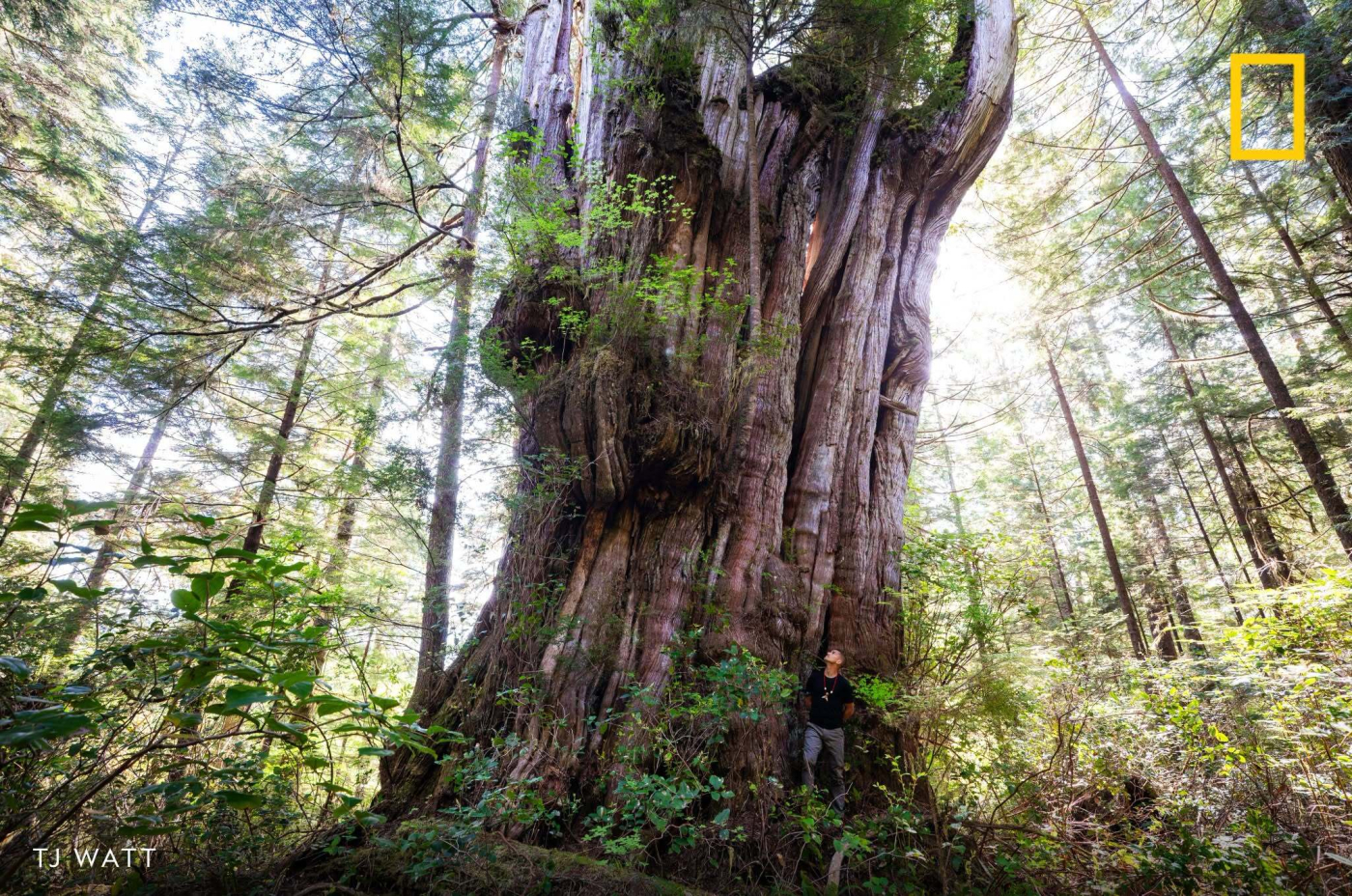 https://ancientforestalliance.org/wp-content/uploads/2026/10/Nat-Geo-Travel-Flores-Cedar.jpg
1357
2048
TJ Watt
https://ancientforestalliance.org/wp-content/uploads/2026/05/Ancient-Forest-Alliance-logo.svg
TJ Watt2026-10-02 13:38:152026-10-02 13:38:15Nat Geo Travel Features TJ Watt’s Photo of Flores Cedar
https://ancientforestalliance.org/wp-content/uploads/2026/10/Nat-Geo-Travel-Flores-Cedar.jpg
1357
2048
TJ Watt
https://ancientforestalliance.org/wp-content/uploads/2026/05/Ancient-Forest-Alliance-logo.svg
TJ Watt2026-10-02 13:38:152026-10-02 13:38:15Nat Geo Travel Features TJ Watt’s Photo of Flores CedarTake Action
 Donate
Support the Ancient Forest Alliance with a one-time or monthly donation. Send a Message
Send an instant message to key provincial decision-makers.
VOTE for the ANCIENT FOREST ALLIANCE in the Phillips Benefit Brew contest!
/in AnnouncementsVOTE for the ANCIENT FOREST ALLIANCE to receive up to $10,000 from local Victoria beer company Phillips Beer. $10,000 would be a HUGE sum for us – worth about 25% of our entire funding so far this year!
https://phillipsbeer.com/benefitbrew
Eco-cyclists on cross-country trek
/in News CoverageTweet
Finding a cause you really believe in can be hard, but one Victoria native and one Aussie are making tough activist work look easy.
Jaime Hall and Nigel Jackett are so committed to supporting the Ancient Forest Alliance, they’ve dedicated six months of their lives and $10,000 of personal funds to cycle 7,500 kilometres across Canada to raise awareness for the AFA’s Vancouver Island cause. Last May, the two flew from their home in Australia to start the trip in St. John’s, N.L., and they’re set on raising $10,000 by the time they cycle into Victoria this fall.
Cycling across Canada “has been a dream of mine for a long time, but we just needed to find the right reason to do it,” says Hall, 25, a musician who grew up here. “There are so many issues out west that a lot of the country doesn’t know about, even though it affects us all. This has been a wonderful way to spread that knowledge.”
The two are linking their adventures with the audience through their blog, tilthelasttree.com, and have requested pledges every time they spot a new species of bird. When Monday first talked to the pair, they had spotted 168 species and had raised $1,300 — and they’d only reached New Brunswick. Now, they’ve counted 240 different birds, and have topped $2,140 in Ontario.
“Ken Wu and the Ancient Forest Alliance have put such a lot of work into this really great, passionate organization, and we thought that donating our cause to them was a perfect fit,” says Jackett, 27, a bird biologist from Australia who studied and surveyed for the B.C. government on Vancouver Island.
Ken Wu, founder of the AFA, says the organization is thrilled with the committed support, as well as the way Hall and Jackett are working to raise awareness to issues that can be hidden from the rest of the country. Hall met Wu about five years ago, and the two have conversed on wilderness and eco-awareness matters ever since.
“Their goal is to raise $10,000 for us, which would be huge, as in 2010 we ran the whole organization on just over $50,000,” says Wu. “We’re totally grateful to have as informed and dedicated supporters as Jaime and Nigel helping to raise funds and awareness for our campaign.”
This year, the AFA has been focused on working with the Hul’qumi’num Treaty Group, a First Nations band between Shawnigan Lake and Nanaimo, in their bid to stop large-scale clearcutting of the former TimberWest lands — lands which were sold to two public sector pension funds without consultation of local First Nations. The AFA has also kept up awareness hikes for Avatar Grove, the Port Renfrew forest that largely put the group in public radar, and has been planning a major rally for September.
To make a donation or download Hall’s by-donation songs, visit tilthelasttree.com.
Link to original article: https://www.mondaymag.com/articles/entry/eco-cyclists-on-cross-country-trek/news/
’Til the Last Tree duo going the extra mile for B.C.’s old growth forest
/in News CoverageTweet
While most cross-Canada cyclists are wrapping up their journeys right about now, the curious duo of a musician and a wildlife biologist find themselves smack in the centre of the country, shivering in an uncharacteristically chilly early September evening.
If simple distance were the aim of Nigel Jackett and Jaime Hall, the 8,000 kilometres they’ve already travelled since April would have already have delivered them to the coast of British Columbia. On a mission to sight as many bird species as possible in their travels as way to raise money and awareness for The Ancient Forest Alliance, they expect to travel 11,000 kilometres before they’re finished.
Jackett, a wildlife biologist from Western Australia and his partner Hall, originally from B.C. are young, fit and passionate advocates of preserving B.C.’s remaining old growth rainforest habitat and advocating for sustainable logging practices in those areas.
“We’re the first people to ever ride across Canada bird-watching,” said Jackett. “Most people are finished in three months or less. We’ve already been going for four months.”
“You have to get into all sorts of habitat in order to get your bird list,” adds Hall.
So far the list consists of 239 species, the most recent of which, a black-billed magpie, was spotted near Wabigoon. They say they hope to reach 400 species before finishing their journey.
“We still can if we get to B.C. before a lot of the birds that summer over there head south in the fall migration,” said Jackett. “Manitoba holds a lot of different birds, so it’s conceivable that we can get to 400.”
While in northern Ontario, Jackett says they are ever on the lookout for a Great Grey Owl and the American Three-Toed Woodpecker.
A singer-songwriter, music has been helpful in helping Hall communicate their mission to others.
“We did a living room concert in Thunder Bay, which was really cool,” said Hall. “We got to talk to people about what we’re doing. They played a bit of one of my tunes on CBC (radio). There’s sprinklings of it here and there, but my music is definitely not the focus of the ride.”
Hall has put some of her songs on the duo’s website, offering downloads for donations.
Check out Nigell Jackett and Jaime Hall’s website, or donate to their cause at www.tilthelasttree.com.
Link to original article: https://thedrydenobserver.ca/2011/09/7308/