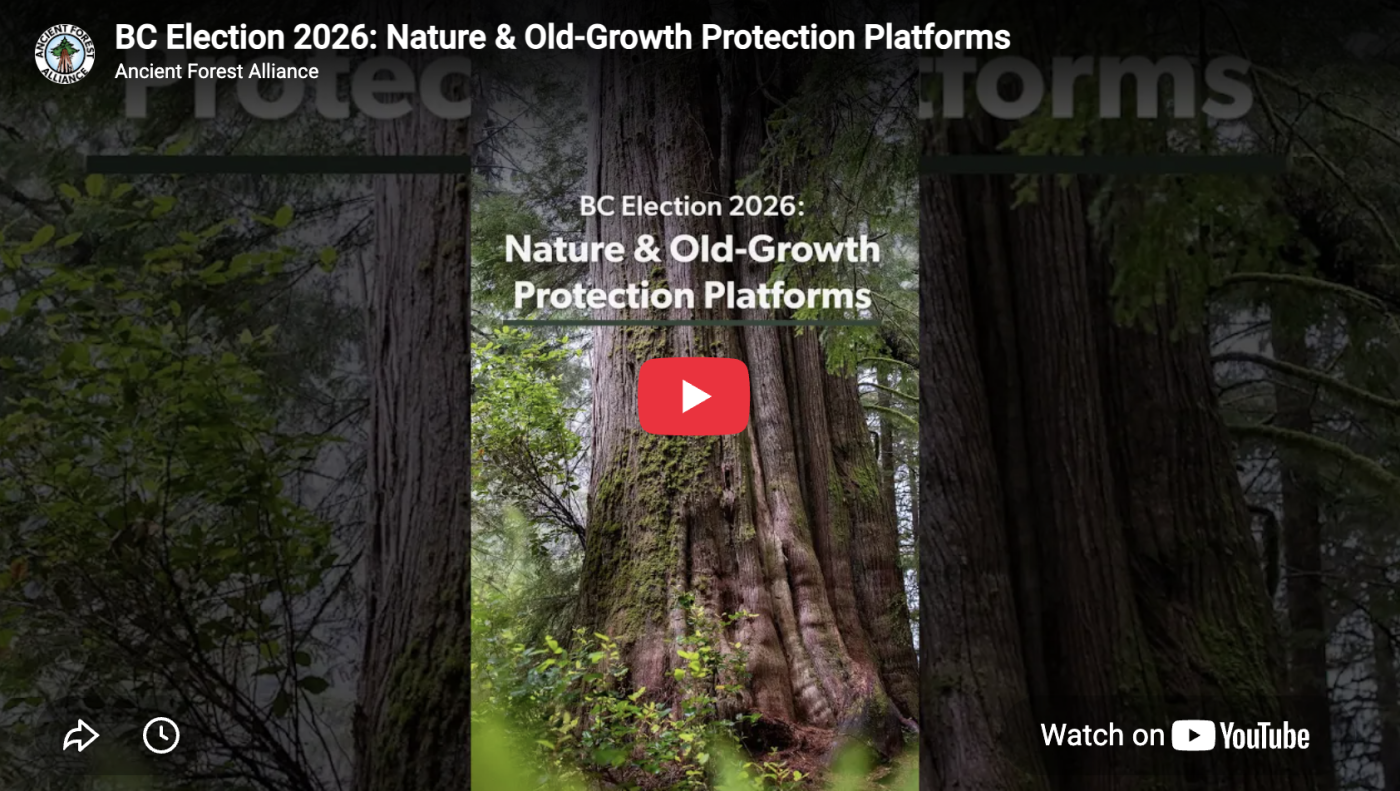
 https://ancientforestalliance.org/wp-content/uploads/2026/10/Screenshot-2026-10-22-at-4.54.32-PM.png
952
1684
TJ Watt
https://ancientforestalliance.org/wp-content/uploads/2026/05/Ancient-Forest-Alliance-logo.svg
TJ Watt2026-10-22 16:54:062026-10-22 16:59:41NEW Video: BC Election 2026: Nature & Old-Growth Protection
https://ancientforestalliance.org/wp-content/uploads/2026/10/Screenshot-2026-10-22-at-4.54.32-PM.png
952
1684
TJ Watt
https://ancientforestalliance.org/wp-content/uploads/2026/05/Ancient-Forest-Alliance-logo.svg
TJ Watt2026-10-22 16:54:062026-10-22 16:59:41NEW Video: BC Election 2026: Nature & Old-Growth ProtectionRelated Posts
https://ancientforestalliance.org/wp-content/uploads/2026/10/Screenshot-2026-10-22-at-4.54.32-PM.png
952
1684
TJ Watt
https://ancientforestalliance.org/wp-content/uploads/2026/05/Ancient-Forest-Alliance-logo.svg
TJ Watt2026-10-22 16:54:062026-10-22 16:59:41NEW Video: BC Election 2026: Nature & Old-Growth Protection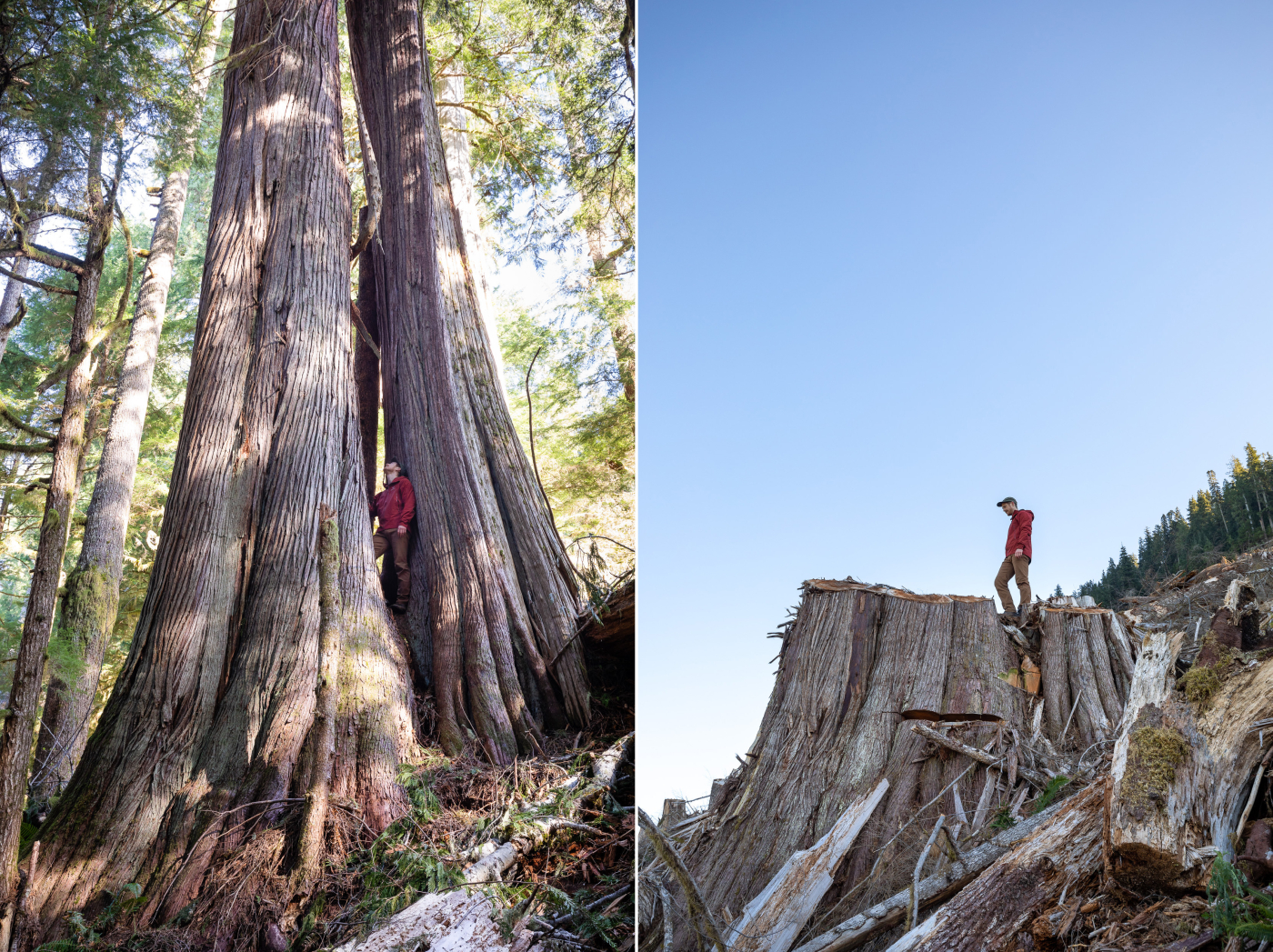 https://ancientforestalliance.org/wp-content/uploads/2026/10/Before-After-Caycuse-TJ-Watt-4-scaled.jpg
1915
2560
TJ Watt
https://ancientforestalliance.org/wp-content/uploads/2026/05/Ancient-Forest-Alliance-logo.svg
TJ Watt2026-10-16 17:36:002026-10-21 13:40:23BC Election 2026: Where do Parties Stand on Nature & Old-Growth?
https://ancientforestalliance.org/wp-content/uploads/2026/10/Before-After-Caycuse-TJ-Watt-4-scaled.jpg
1915
2560
TJ Watt
https://ancientforestalliance.org/wp-content/uploads/2026/05/Ancient-Forest-Alliance-logo.svg
TJ Watt2026-10-16 17:36:002026-10-21 13:40:23BC Election 2026: Where do Parties Stand on Nature & Old-Growth? https://ancientforestalliance.org/wp-content/uploads/2026/10/BC-Election-2026-Banner-1-1-scaled.jpg
1439
2560
TJ Watt
https://ancientforestalliance.org/wp-content/uploads/2026/05/Ancient-Forest-Alliance-logo.svg
TJ Watt2026-10-09 18:16:372026-10-16 17:44:41Where do BC’s Major Political Parties Stand on Nature Protection?
https://ancientforestalliance.org/wp-content/uploads/2026/10/BC-Election-2026-Banner-1-1-scaled.jpg
1439
2560
TJ Watt
https://ancientforestalliance.org/wp-content/uploads/2026/05/Ancient-Forest-Alliance-logo.svg
TJ Watt2026-10-09 18:16:372026-10-16 17:44:41Where do BC’s Major Political Parties Stand on Nature Protection?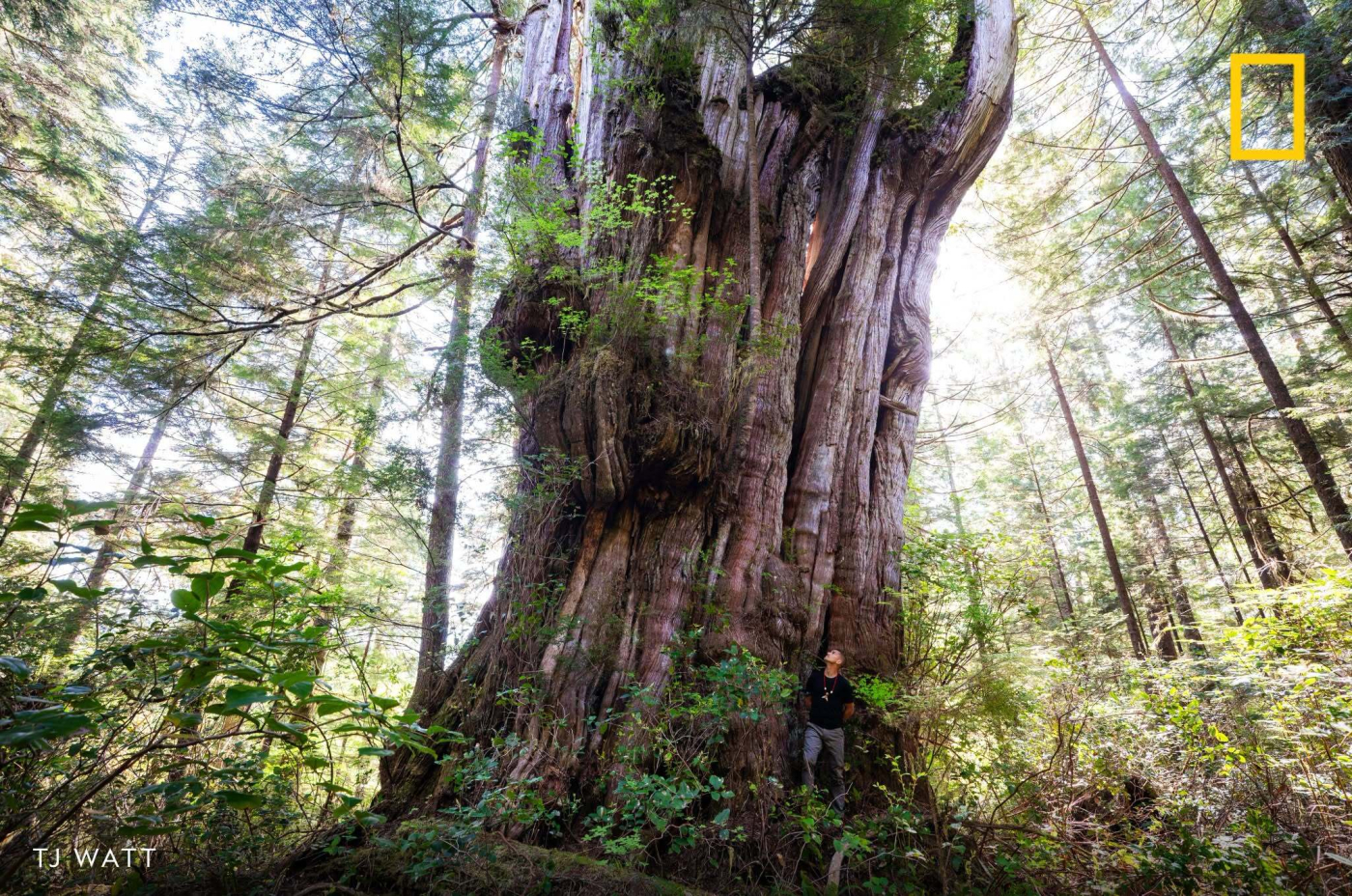 https://ancientforestalliance.org/wp-content/uploads/2026/10/Nat-Geo-Travel-Flores-Cedar.jpg
1357
2048
TJ Watt
https://ancientforestalliance.org/wp-content/uploads/2026/05/Ancient-Forest-Alliance-logo.svg
TJ Watt2026-10-02 13:38:152026-10-02 13:38:15Nat Geo Travel Features TJ Watt’s Photo of Flores Cedar
https://ancientforestalliance.org/wp-content/uploads/2026/10/Nat-Geo-Travel-Flores-Cedar.jpg
1357
2048
TJ Watt
https://ancientforestalliance.org/wp-content/uploads/2026/05/Ancient-Forest-Alliance-logo.svg
TJ Watt2026-10-02 13:38:152026-10-02 13:38:15Nat Geo Travel Features TJ Watt’s Photo of Flores CedarTake Action
 Donate
Support the Ancient Forest Alliance with a one-time or monthly donation. Send a Message
Send an instant message to key provincial decision-makers.
THANK YOU to Bikram Yoga Saanich
/in Thank YouTHANK YOU to Bikram Yoga Saanich and Abbey and David Boon for their generous support from holding Karma classes to benefit the Ancient Forest Alliance. Check out their website if you need yoga classes!
https://www.bikramyogasaanich.com/
Justifying environmental destruction
/in AnnouncementsIt’s profit first environment last for the Teal Jones Group.
The company’s internet website is nothing more than a cutting and pasting of whatever out-of-context facts can be best used to justify the damage they continue to do to the environment (see Page 17).
But don’t take my word for it. Peruse their website to develop your own opinion of Teal Jones Group. The page [link to page unavailable] is their most insulting read.
One of the more interesting “facts” is that there’s an abundance of old growth trees in British Columbia. They even go as far as to say that old growth trees are damaging to the environment (old growth trees contribute to global warming). Related to this, they state that “There are more trees now in Canada than there were 100 years ago.” Although this is true, it’s also true that the greatest diversity is found in the old growth forests Teal Jones Group does not like. Therefore, it’s more of a quantity than quality situation, with these more abundant younger trees home to a lesser ecosystem of animals, plants, and organisms than old growth forests, which are by no means abundant.
On their fact or fiction page, “Clear-cutting is bad for the environment” is listed as a fiction. This is so laughably stupid an opinion that it’s not worth commenting on any further than simply pointing it out.
It’s a similar such twisting of facts that has led some people, despite scientific evidence to the contrary, to not believe in global warming.
Let the government know how you feel by petitioning for more old growth forest to become protected.
AVATAR GROVE HIKE – Thursday, Aug. 25th
/in AnnouncementsDate: Thursday, Aug 25th
Time: 12:00-3:00pm
Location: Meet AFA’s TJ Watt at the Coastal Kitchen Cafe in Port Renfrew.***NOTE – Please park along the side street opposite the Cafe to save the limited parking spaces for customers***
Cost: By Donation
PLEASE READ THE IMPORTANT INFORMATION BELOW
***Only those comfortable with hiking on rugged terrain with fallen
logs, tree roots, and no official trail, and with a firm sense of
balance, can come on the hike. All participants will be required to
sign a waiver form.
***Participants must also bring their own lunch & snacks, water, rain
gear, warm clothing, hiking boots and wonderful attitude!
***No dogs. They can disturb wildlife including bears, elk, deer,
cougars, wolves, raccoons, and Sasquatch in the area.
***Be sure to support the local community by buying food and other
items in the Tourist Info Centre, Coastal Kitchen Cafe, Real Goods Market, Port Renfrew General Store, and Clint’s Catering Food Stand (by the General Store).
Directions and a Google map to the Avatar Grove from Port Renfrew can
be found at: https://ancientforestalliance.org/ancient-forests/directions-to-avatar-grove/
Please let us know if you’re coming and how many people you’ll be bringing,
so we can get a sense of our numbers. You can email us at info@ancientforestalliance.org