 https://ancientforestalliance.org/wp-content/uploads/2026/10/Screenshot-2026-10-22-at-4.54.32-PM.png
952
1684
TJ Watt
https://ancientforestalliance.org/wp-content/uploads/2026/05/Ancient-Forest-Alliance-logo.svg
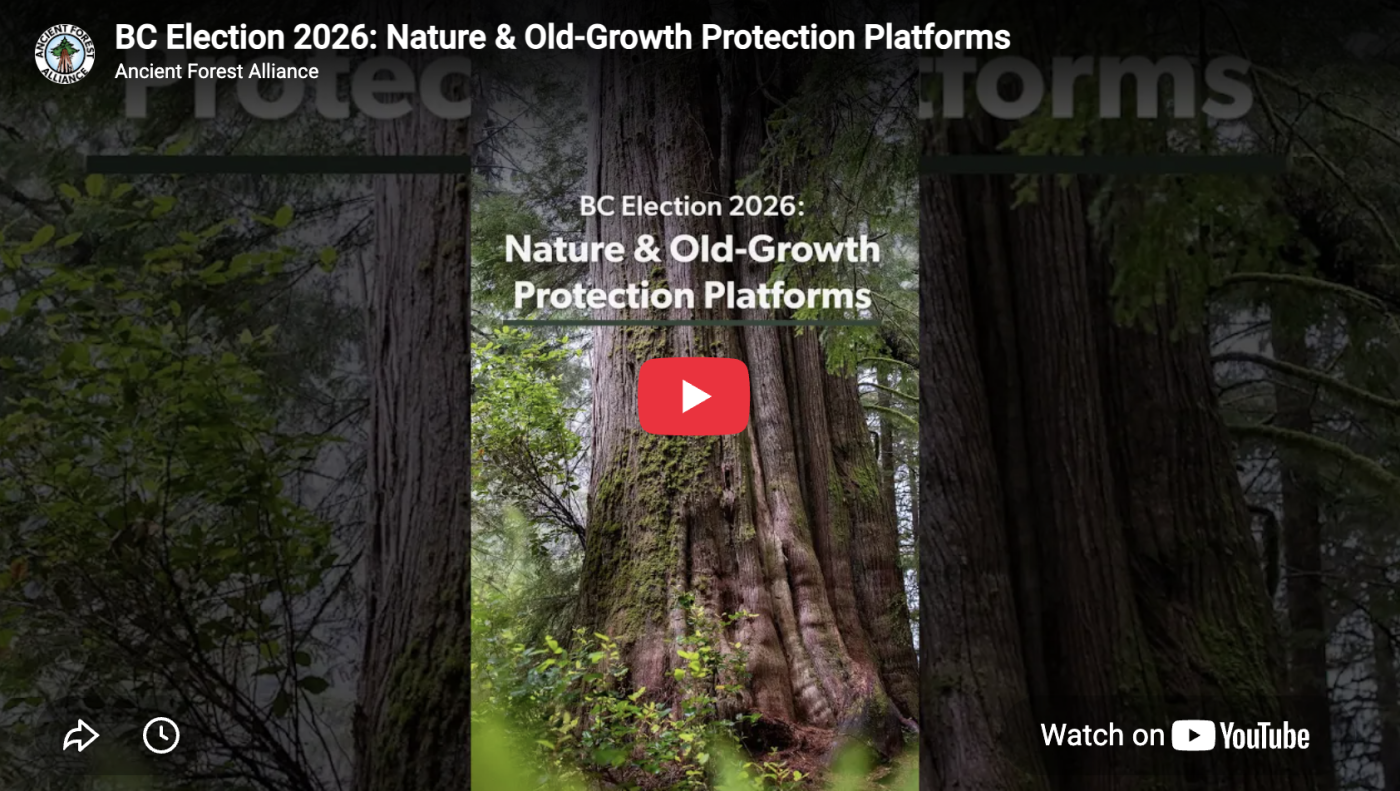
TJ Watt2026-10-22 16:54:062026-10-22 16:59:41NEW Video: BC Election 2026: Nature & Old-Growth Protection
https://ancientforestalliance.org/wp-content/uploads/2026/10/Screenshot-2026-10-22-at-4.54.32-PM.png
952
1684
TJ Watt
https://ancientforestalliance.org/wp-content/uploads/2026/05/Ancient-Forest-Alliance-logo.svg
TJ Watt2026-10-22 16:54:062026-10-22 16:59:41NEW Video: BC Election 2026: Nature & Old-Growth ProtectionRelated Posts
https://ancientforestalliance.org/wp-content/uploads/2026/10/Screenshot-2026-10-22-at-4.54.32-PM.png
952
1684
TJ Watt
https://ancientforestalliance.org/wp-content/uploads/2026/05/Ancient-Forest-Alliance-logo.svg
TJ Watt2026-10-22 16:54:062026-10-22 16:59:41NEW Video: BC Election 2026: Nature & Old-Growth Protection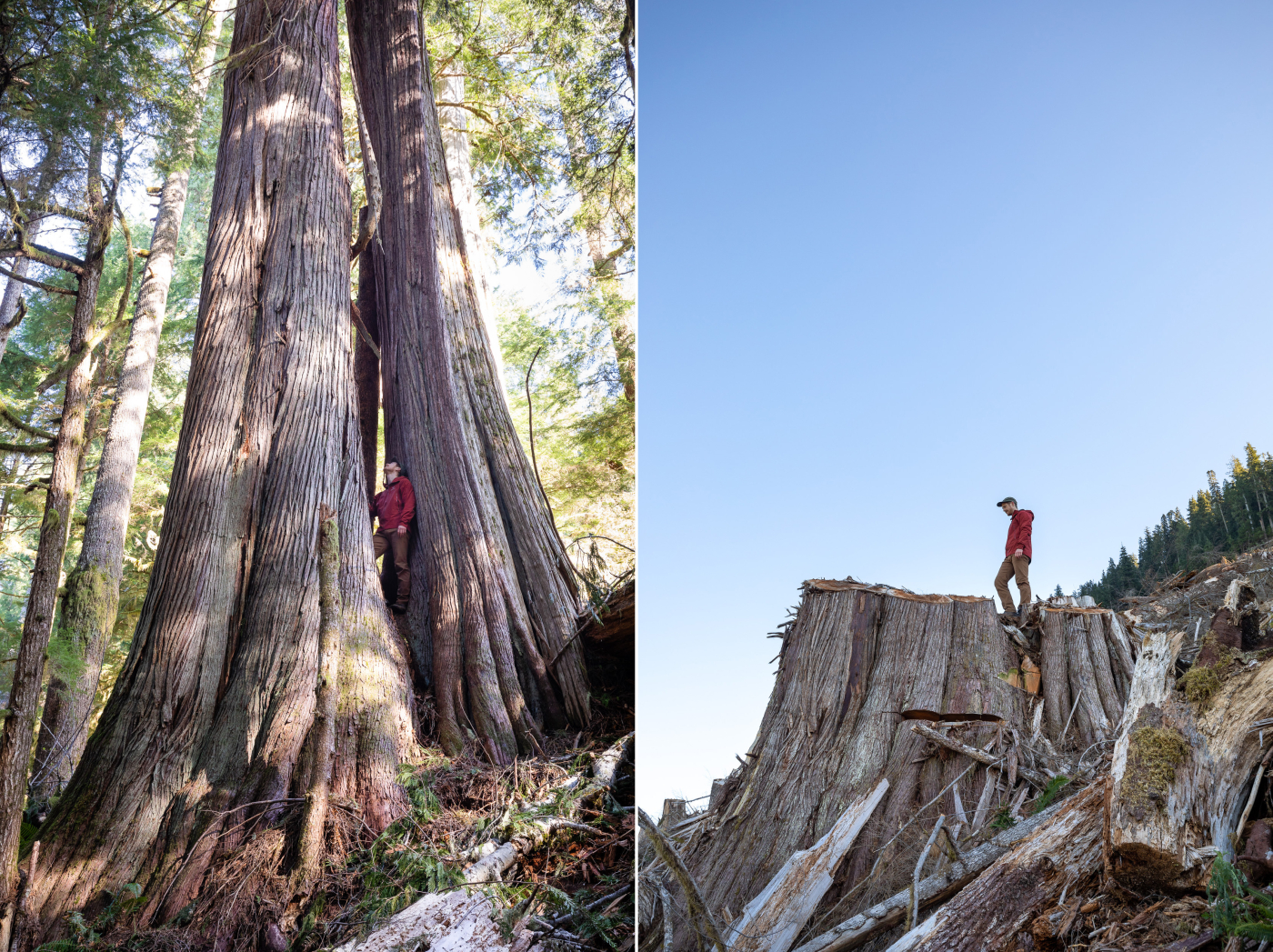 https://ancientforestalliance.org/wp-content/uploads/2026/10/Before-After-Caycuse-TJ-Watt-4-scaled.jpg
1915
2560
TJ Watt
https://ancientforestalliance.org/wp-content/uploads/2026/05/Ancient-Forest-Alliance-logo.svg
TJ Watt2026-10-16 17:36:002026-10-21 13:40:23BC Election 2026: Where do Parties Stand on Nature & Old-Growth?
https://ancientforestalliance.org/wp-content/uploads/2026/10/Before-After-Caycuse-TJ-Watt-4-scaled.jpg
1915
2560
TJ Watt
https://ancientforestalliance.org/wp-content/uploads/2026/05/Ancient-Forest-Alliance-logo.svg
TJ Watt2026-10-16 17:36:002026-10-21 13:40:23BC Election 2026: Where do Parties Stand on Nature & Old-Growth? https://ancientforestalliance.org/wp-content/uploads/2026/10/BC-Election-2026-Banner-1-1-scaled.jpg
1439
2560
TJ Watt
https://ancientforestalliance.org/wp-content/uploads/2026/05/Ancient-Forest-Alliance-logo.svg
TJ Watt2026-10-09 18:16:372026-10-16 17:44:41Where do BC’s Major Political Parties Stand on Nature Protection?
https://ancientforestalliance.org/wp-content/uploads/2026/10/BC-Election-2026-Banner-1-1-scaled.jpg
1439
2560
TJ Watt
https://ancientforestalliance.org/wp-content/uploads/2026/05/Ancient-Forest-Alliance-logo.svg
TJ Watt2026-10-09 18:16:372026-10-16 17:44:41Where do BC’s Major Political Parties Stand on Nature Protection?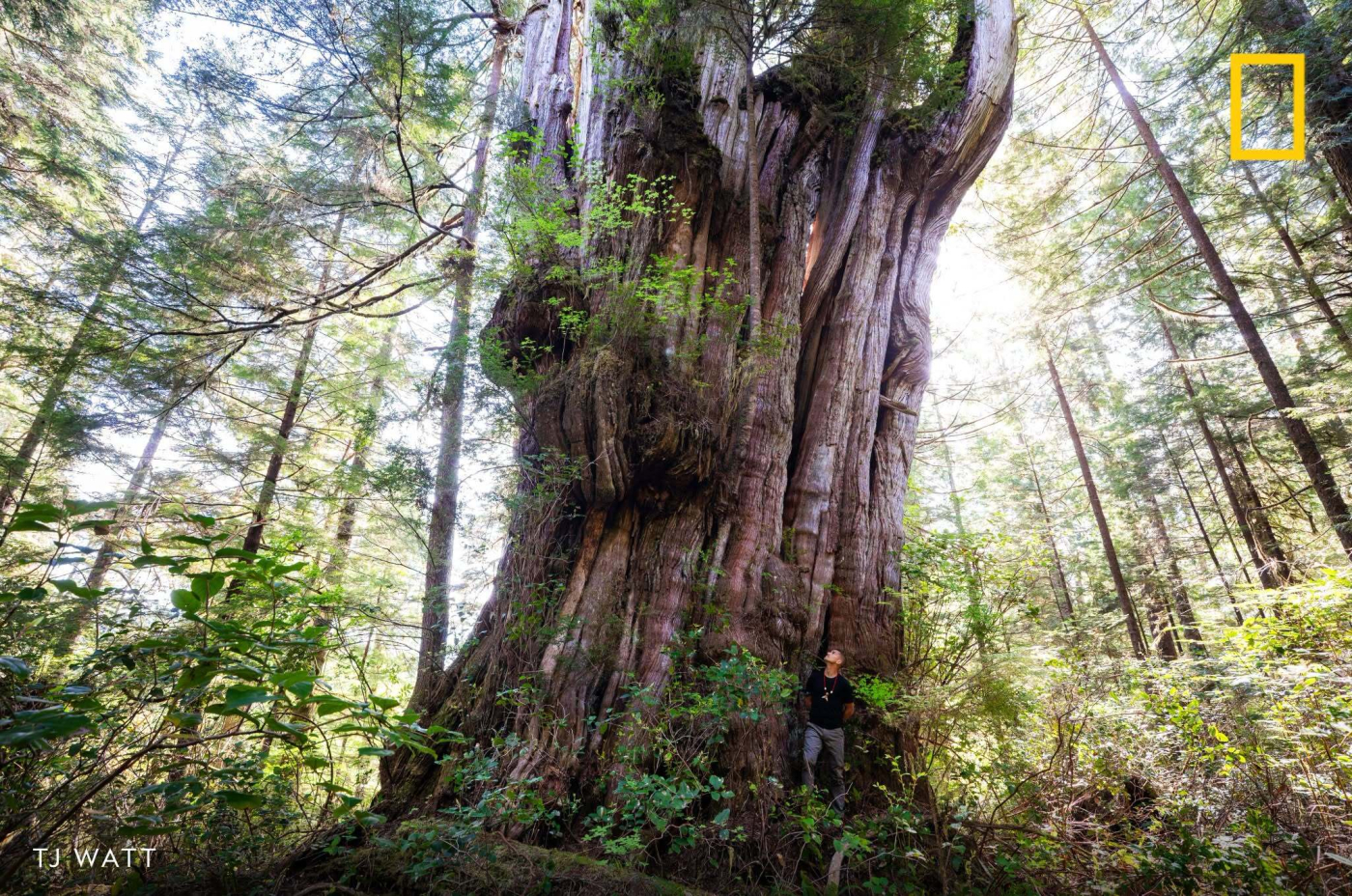 https://ancientforestalliance.org/wp-content/uploads/2026/10/Nat-Geo-Travel-Flores-Cedar.jpg
1357
2048
TJ Watt
https://ancientforestalliance.org/wp-content/uploads/2026/05/Ancient-Forest-Alliance-logo.svg
TJ Watt2026-10-02 13:38:152026-10-02 13:38:15Nat Geo Travel Features TJ Watt’s Photo of Flores Cedar
https://ancientforestalliance.org/wp-content/uploads/2026/10/Nat-Geo-Travel-Flores-Cedar.jpg
1357
2048
TJ Watt
https://ancientforestalliance.org/wp-content/uploads/2026/05/Ancient-Forest-Alliance-logo.svg
TJ Watt2026-10-02 13:38:152026-10-02 13:38:15Nat Geo Travel Features TJ Watt’s Photo of Flores CedarTake Action
 Donate
Support the Ancient Forest Alliance with a one-time or monthly donation. Send a Message
Send an instant message to key provincial decision-makers.
Recent Old-Growth Clearcutting of Deer Wintering Habitat on Vancouver Island Documented and Posted on Youtube
/in Media ReleaseTweet
The Ancient Forest Alliance has released a video clip documenting the recent clearcutting of an extremely rare old-growth Douglas fir forest on Vancouver Island that served as vital wintering habitat for the Island’s diminishing black-tailed deer population.
See the Youtube clip at: https://www.youtube.com/watch?v=LveT-hz-Y2I
(*ignore the swarming blackflies in the clip – apparently they don’t mind logging)
The old-growth stand was clearcut in June and July of this year in the Caycuse Valley south of Cowichan Lake and north of the Walbran Valley. The grove stood on public (Crown) land in Tree Farm License 46. The newly clearcut area is surrounded by an Ungulate Wintering Range (UWR) designated by the Ministry of Forests to sustain deer populations and an Old-Growth Management Area (OGMA) that prohibits logging. Unfortunately an important chunk of the old-growth Douglas firs were left out of protection and have now been clearcut.
“It’s incredible that despite a four-fold drop in Vancouver Island’s deer population in recent decades and despite 99% of our old-growth Douglas firs having already been logged, the BC government is still approving old-growth clearcuts in critical deer wintering habitat,” stated Ken Wu, Ancient Forest Alliance co-founder. “Clearcutting of old-growth forests not only harms black-tailed deer populations, but also harms the creatures that eat deer – wolves, cougars, bears, First Nations hunters, and non-First Nations hunters.”
Biologists with BC’s Ministry of Environment estimate that Vancouver Island’s deer population has dropped from over 200,000 individuals in the 1970’s to 55,000 individuals by the 2000’s in large part due to the logging of their old-growth wintering habitat. Coastal black-tailed deer populations that live at higher elevations where there is regular snowpack, such as throughout much of Vancouver Island’s interior, spend the winter months in old-growth forests where they find food and shelter. Much of their winter diet consists of lichens that grow in greatest abundance in old-growth forests, hanging on tree branches and falling onto the ground during winter storms. Large, fallen logs and dense thickets of shrubs and young trees in the understories of old-growth forests provide hiding places from predators and shelter during bad weather. Second-growth forests tend to have a scarcity of winter food and shelter.
As old-growth forests diminish in extent from logging, the remaining old-growth patches become unnaturally concentrated with deer in winter seeking food and shelter and which become easy targets for predators. In some instances cougars and wolves will slaughter large numbers of deer due to their natural predatory instincts under such unnatural circumstances – where a century ago stood a vast sea of old-growth forests covering most of Vancouver Island. At least 87% of the productive old-growth forests on Vancouver Island south of Port Alberni and Barkley Sound have already been logged. See “Before” and “After” maps of old-growth forests on Vancouver Island at:
https://ancientforestalliance.org/ancient-forests/before-after-old-growth-maps/
“Now that we’ve released this video clip, I can hear it now: ‘Bah Humbug! Deer don’t need lichens – they eat corn all over the Prairies and have overrun my Gordon Head garden in Victoria!’ loudly proclaim the uninformed. But we’re talking about specific populations of Columbian black-tailed deer that live in regions with regular snowpack, which occurs on about half of Vancouver Island – not any deer species or populations that live anywhere on Vancouver Island or Canada or the world!” remarked an impatient Wu. “More than ever, Christy Clark’s BC Liberal government is morally obliged to enact a comprehensive provincial old-growth strategy that will end the logging of our last endangered ancient forests and ensure sustainable second-growth forestry instead. Why go down to the end of a resource? It’s bad for deer, it’s bad for hunters, it’s bad for the ecosystem, it’s bad for tourism, and it’s ethically wrong. Let’s hope the BC government starts showing some wisdom, foresight, and courage for a better future.”
Previously Ungulate Wintering Ranges and Old-Growth Management Areas have disappeared on Vancouver Island. For example, an important Ungulate Wintering Range for Roosevelt Elk was eliminated north of Sooke in 2007 when the BC government allowed the removal of Western Forest Products’ forest lands from Tree Farm License 25, while ancient forests proposed by local First Nations as Old-Growth Management Areas near Port McNeill were taken off the table from protection with the removal of lands from Tree Farm License 6 at the same time.
The Ancient Forest Alliance is calling on the BC government to protect BC’s endangered old-growth forests through a Provincial Old-Growth Strategy, to ensure sustainable second-growth forestry, and to ban the export of raw logs. Currently the BC government has stated that they will look at developing a new legal tool to protect the largest monumental trees and groves in BC, which if done right would be a welcome initial step forward.
See various photogalleries of old-growth forests and clearcuts on Vancouver Island at:
https://ancientforestalliance.org/photos-media/
(***Note: Media are free to reprint any photos – please give credit to TJ Watt if possible)
See various video clips about Vancouver Island’s largest trees and old-growth forests at:
https://ancientforestalliance.org/photos-media/videos/
Shaw TV: Avatar Grove & Eco-Tourism in Port Renfrew
/in News Coverage, VideoTweet
The Shaw Daily television program heads out to visit the popular Avatar Grove with the AFA and takes a look at how business owners in Port Renfrew are starting to embrace eco-tourism as a new economic driver.
Direct link to video: https://www.youtube.com/watch?v=frFj9xWT8-0&feature=feedf
AVATAR GROVE EXTRAVAGANZA: Biodiversity Hike and Fundraiser! Sunday, August 7th
/in AnnouncementsTweet
Meet 1:00 pm in Port Renfrew at the new Tourist Info Center (right side of the road upon entering town), after which time we’ll drive in a convoy to the Avatar Grove.
Hike 1:30 – 3:30 pm
COST: SLIDING SCALE – $25 to $100 per individual (children are free)
Come out to our Avatar Grove biodiversity hike and fundraiser with large mammal/carnivore specialist Dr. Jason Fisher and lichenologist Stu Crawford. Join these special guests and the Ancient Forest Alliance organizers Ken Wu and TJ Watt on the hike and speak about the biodiversity in Vancouver Island’s temperate rainforests.
You will:
– See some of the largest and strangest looking trees, including “Canada’s Gnarliest Tree” and “Canada’s Second Gnarliest Tree”! Learn to identify some of the common rainforest trees and plants.
– Learn about the large mammals (“charismatic megafauna”), the wolves, cougars, elk, deer, bears, and possibly sasquatch (*sightings not guaranteed) that all inhabit the Avatar Grove.
– Learn to identify some of the varied, interesting lichens (“charismatic microflora”) in our ancient forests. Lichens are cooperative unions of fungi and algae and are often closely associated with old-growth forests.
– Get an update on the Avatar Grove campaign which has huge momentum due to massive public and community support – we need to keep going to ensure victory!
Guest presenter bios:
Jason Fisher is an adjunct professor at the University of Victoria’s School of Environmental Studies. He is a specialist on carnivore conservation and ecology (wolverine, wolves, sea otters, etc.), ungulate ecology (deer, moose, caribou, etc.), species restoration, and landscape ecology. He recently received his doctorate in biology studying under Dr. John Volpe at the University of Victoria.
Stu Crawford is an ecological consultant and one of the handful of lichenologists in BC. He received his masters degree in biology studying under ethnobotanist Dr. Nancy Turner at the University of Victoria on First Nations consumption and use of lichens (yes, you can eat some lichens! learn more on the hike…).
TJ Watt and Ken Wu are co-founders of the Ancient Forest Alliance. TJ Watt graduated from the Western Academy of Photography and Ken Wu from UBC’s Biological Sciences program specializing in Ecology.
***Only those with moderate hiking abilities and who are comfortable on semi-rugged terrain, with a firm sense of balance, can come on this hike. All participants will be required to sign a waiver form.
***Participants must also bring their own water, rain gear, hiking boots and wonderful attitude!
***No dogs. They can disturb wildlife including bears, elk, deer, cougars, wolves, raccoons, and sasquatch in the area.
***Be sure to support the local community by buying food and other items in town!
***This event is a fundraiser for the Ancient Forest Alliance which is in need of funding to continue its vital campaigns to protect BC’s ancient forests and forestry jobs.
If you can, please email us at info@ancientforestalliance.org to let us know how many of you are coming so we can get a sense of our numbers.