 https://ancientforestalliance.org/wp-content/uploads/2026/10/Screenshot-2026-10-22-at-4.54.32-PM.png
952
1684
TJ Watt
https://ancientforestalliance.org/wp-content/uploads/2026/05/Ancient-Forest-Alliance-logo.svg
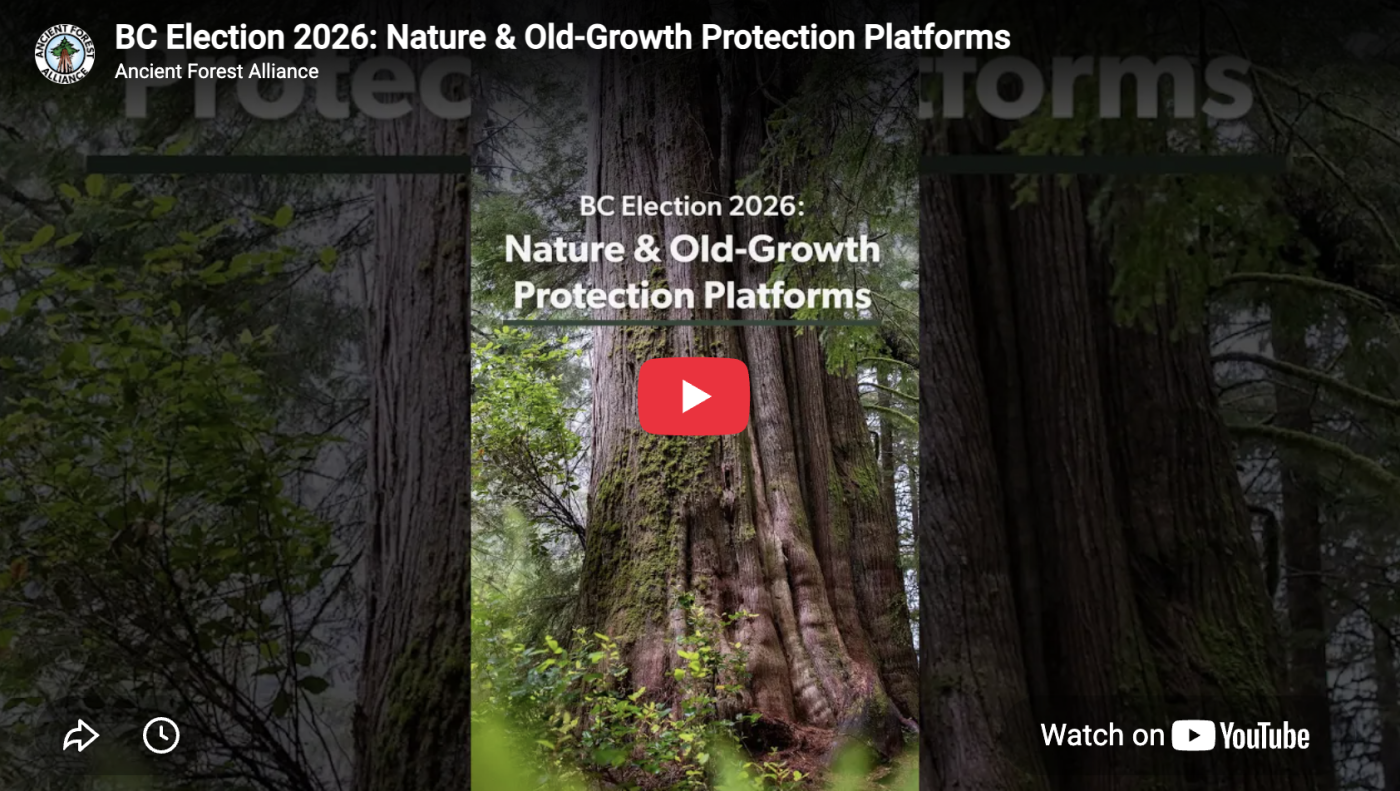
TJ Watt2026-10-22 16:54:062026-10-22 16:59:41NEW Video: BC Election 2026: Nature & Old-Growth Protection
https://ancientforestalliance.org/wp-content/uploads/2026/10/Screenshot-2026-10-22-at-4.54.32-PM.png
952
1684
TJ Watt
https://ancientforestalliance.org/wp-content/uploads/2026/05/Ancient-Forest-Alliance-logo.svg
TJ Watt2026-10-22 16:54:062026-10-22 16:59:41NEW Video: BC Election 2026: Nature & Old-Growth ProtectionRelated Posts
https://ancientforestalliance.org/wp-content/uploads/2026/10/Screenshot-2026-10-22-at-4.54.32-PM.png
952
1684
TJ Watt
https://ancientforestalliance.org/wp-content/uploads/2026/05/Ancient-Forest-Alliance-logo.svg
TJ Watt2026-10-22 16:54:062026-10-22 16:59:41NEW Video: BC Election 2026: Nature & Old-Growth Protection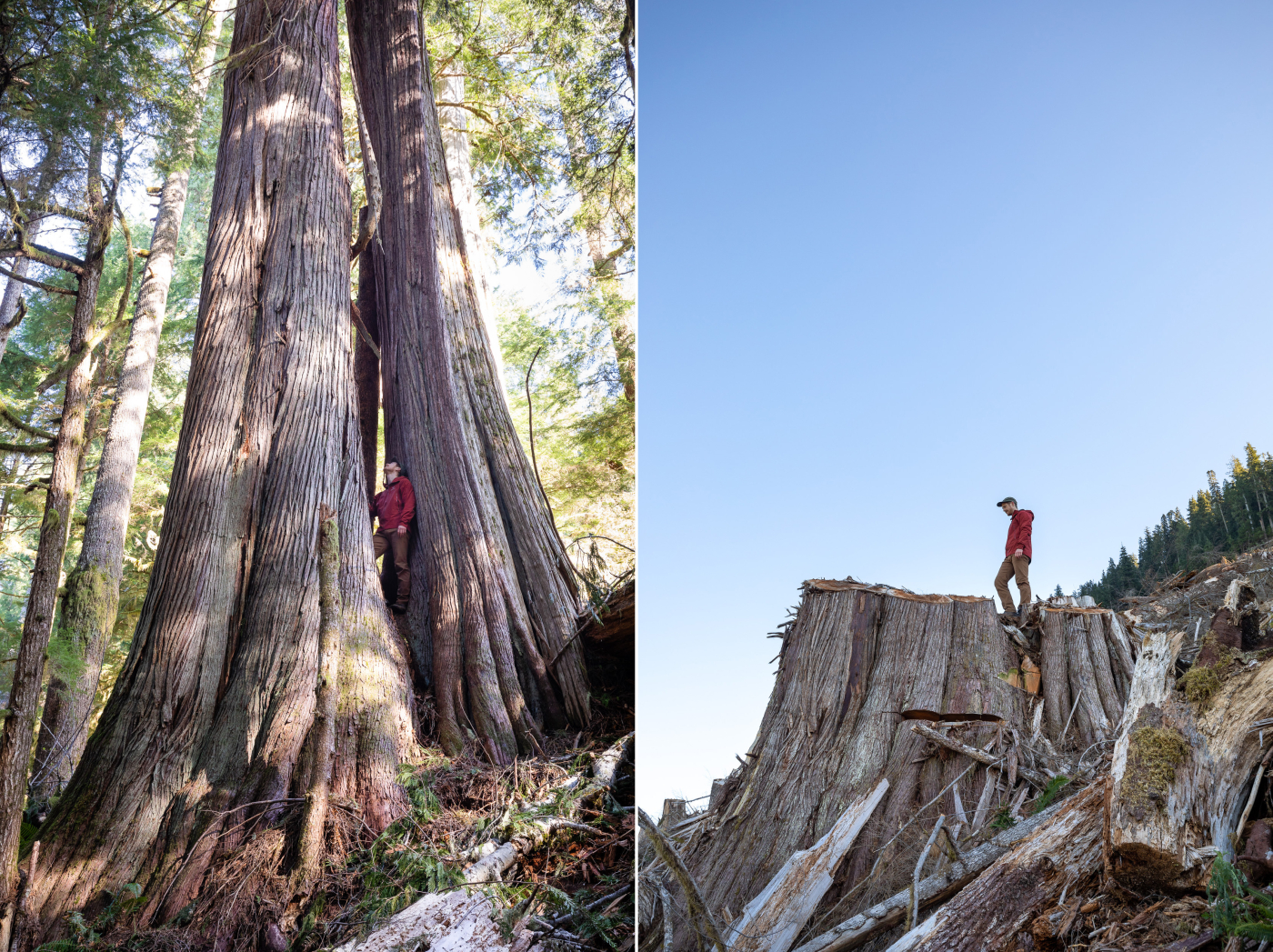 https://ancientforestalliance.org/wp-content/uploads/2026/10/Before-After-Caycuse-TJ-Watt-4-scaled.jpg
1915
2560
TJ Watt
https://ancientforestalliance.org/wp-content/uploads/2026/05/Ancient-Forest-Alliance-logo.svg
TJ Watt2026-10-16 17:36:002026-10-21 13:40:23BC Election 2026: Where do Parties Stand on Nature & Old-Growth?
https://ancientforestalliance.org/wp-content/uploads/2026/10/Before-After-Caycuse-TJ-Watt-4-scaled.jpg
1915
2560
TJ Watt
https://ancientforestalliance.org/wp-content/uploads/2026/05/Ancient-Forest-Alliance-logo.svg
TJ Watt2026-10-16 17:36:002026-10-21 13:40:23BC Election 2026: Where do Parties Stand on Nature & Old-Growth? https://ancientforestalliance.org/wp-content/uploads/2026/10/BC-Election-2026-Banner-1-1-scaled.jpg
1439
2560
TJ Watt
https://ancientforestalliance.org/wp-content/uploads/2026/05/Ancient-Forest-Alliance-logo.svg
TJ Watt2026-10-09 18:16:372026-10-16 17:44:41Where do BC’s Major Political Parties Stand on Nature Protection?
https://ancientforestalliance.org/wp-content/uploads/2026/10/BC-Election-2026-Banner-1-1-scaled.jpg
1439
2560
TJ Watt
https://ancientforestalliance.org/wp-content/uploads/2026/05/Ancient-Forest-Alliance-logo.svg
TJ Watt2026-10-09 18:16:372026-10-16 17:44:41Where do BC’s Major Political Parties Stand on Nature Protection?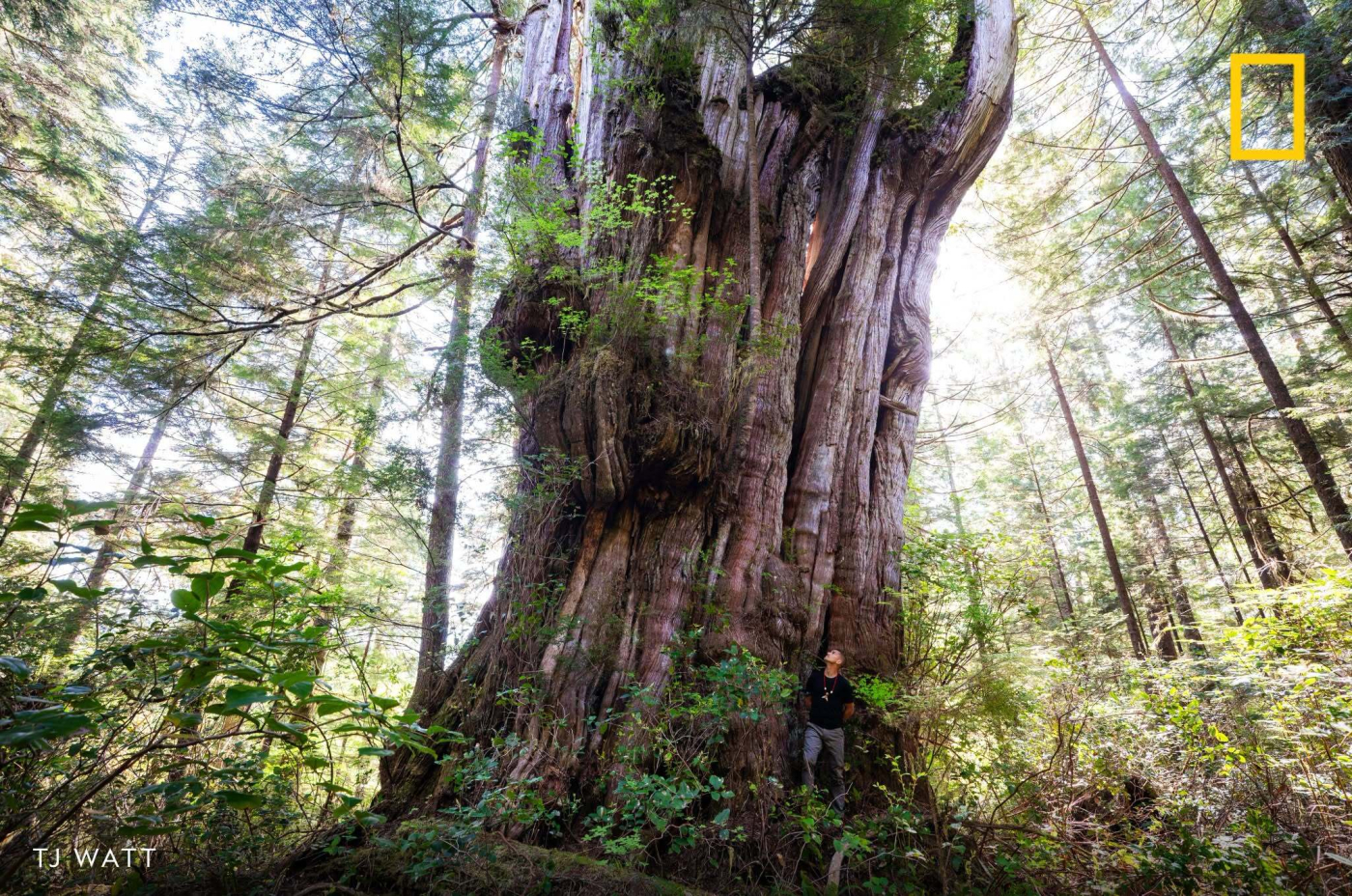 https://ancientforestalliance.org/wp-content/uploads/2026/10/Nat-Geo-Travel-Flores-Cedar.jpg
1357
2048
TJ Watt
https://ancientforestalliance.org/wp-content/uploads/2026/05/Ancient-Forest-Alliance-logo.svg
TJ Watt2026-10-02 13:38:152026-10-02 13:38:15Nat Geo Travel Features TJ Watt’s Photo of Flores Cedar
https://ancientforestalliance.org/wp-content/uploads/2026/10/Nat-Geo-Travel-Flores-Cedar.jpg
1357
2048
TJ Watt
https://ancientforestalliance.org/wp-content/uploads/2026/05/Ancient-Forest-Alliance-logo.svg
TJ Watt2026-10-02 13:38:152026-10-02 13:38:15Nat Geo Travel Features TJ Watt’s Photo of Flores CedarTake Action
 Donate
Support the Ancient Forest Alliance with a one-time or monthly donation. Send a Message
Send an instant message to key provincial decision-makers.
B.C.’s Avatar Grove needs park status, say environmentalists
/in News CoverageTweet
A B.C. environmental group is applauding a decision to save a stand of old growth trees on Vancouver Island nicknamed the Avatar Grove from logging, but says the trees need more permanent protection.
The 50 hectare area grove on the southwest coast of Vancouver Island contains some of the oldest Douglas fir and western red cedars found in any valley on the island, yet it is only a 15 minute drive from the logging town of Port Renfrew.
It was discovered two years ago by an environmentalist who named it after the popular movie by James Cameron in an attempt to draw a connection to the environmental destruction of a fictional ecotopia depicted in the movie.
“It’s hard to believe how far, how fast, the campaign to protect the Avatar Grove has come in just a year and a half ago when I stumbled across this incredible stand of ancient trees,” said photographer TJ Watt who found the Avatar Grove in December, 2009.
Port Renfrew, B.C.”In a short time it has become all the rage for thousands of nature-loving tourists coming from far and wide,” said Watts in a statement.
Ancient Forest Alliance spokesperson Ken Wu says its high profile is one reason the province has decided to designate the area as an Old Growth Management Area and save it from logging.
“I know there’s huge support for the simple reason being it’s a major economic driver for the town. This is not a place where protestors go. It’s a place where tourists of all types go,” said Wu.
Similar groves of old growth trees such as Cathedral Grove near Port Alberni and the Big Tree Trail on Meares Island near Tofino have become popular tourist attractions.
The move to protect the grove has the support of the local chamber of commerce and the logging company that has the cutting rights to the area, but Wu says without park status, there is no guarantee the grove will not be logged in the future.
“An OGM area is sort of like wearing a bear costume while foraging near grizzlies. You’re never totally confident the protection is going to last,” said Wu.
“In the larger picture, of course, we really need an end to all logging of B.C.’s endangered old-growth forests, including an immediate ban on old-growth logging on southern Vancouver Island where almost 90 per cent is gone,” said Wu.
Link to CBC article, photo gallery, and interview audio: https://www.cbc.ca/news/technology/story/2011/07/26/bc-avatar-grove-vancouver-island.html
BC Government Takes Important Step towards Protecting Vancouver Island’s “Avatar Grove”
/in Media ReleaseTweet
July 25, 2011
BC Government Takes Important Step towards Protecting Vancouver Island’s “Avatar Grove”
The BC government has committed to take an important step towards protecting the Avatar Grove near Port Renfrew on Vancouver Island. On Saturday, the Ministry of Forests, Lands, and Natural Resource Operations publicly stated their commitment to designate the entire Avatar Grove off limits to logging through an Old-Growth Management Area (OGMA). The official designation of an OGMA will be pending the outcome of a public review period, the details of which will be announced in the future.
“This is good news and is a great success for our campaign – but it’s not the final victory yet for the Avatar Grove. An Old-Growth Management Area is an important step forward and is essentially an interim protection that keeps away logging for now. It’s sort of like wearing a bear costume while foraging alongside grizzlies – you’re never really confident the protection will last,” stated Ken Wu, Ancient Forest Alliance co-founder. “Ultimately the Avatar Grove will require stronger, more permanent legislated protection as a provincial park or conservancy. In the larger picture, of course, we really need an end to all logging of BC’s endangered old-growth forests, including an immediate ban on old-growth logging on southern Vancouver Island where almost 90% is gone.”
“It’s hard to believe how far, how fast, the campaign to protect the Avatar Grove has come in just a year and a half ago when I stumbled across this incredible stand of ancient trees. In a short time it has become all the rage for thousands of nature-loving tourists coming from far and wide. Avatar Grove has quickly become the ‘Cathedral Grove of Port Renfrew’,” stated TJ Watt, Ancient Forest Alliance campaigner and photographer who found the Avatar Grove in December, 2009. “The Ancient Forest Alliance will continue working with the Port Renfrew Chamber of Commerce and conducting regular public tours until Avatar Grove receives legislated protection.”
Old-Growth Management Areas (OGMA’s) are regulatory protections in a category similar to Riparian Reserves, Wildlife Habitat Areas, and Ungulate (deer) Wintering Ranges and are not true protected areas. For the most part they prohibit logging, with some minor exceptions. They are established by the Ministry of Forests and can be quietly modified or removed by the bureaucracy or minister without any Legislative vote or debate. They do not show up on any highway maps, and are essentially out of sight and out of mind of the BC public. They do serve as important interim measures against old-growth logging when located in productive stands (ie. commercially valuable stands with large trees, as opposed to marginal, stunted old-growth stands where they are often located as well) and as stepping stones towards more permanent legislated protection.
Provincial parks, provincial conservancies, and ecological reserves on the other hand are legislated protected areas and therefore are stronger and more permanent than regulatory protections like OGMA’s. They are created through a majority vote of MLA’s in the Legislative Assembly – and therefore require a majority vote of MLA’s to be eliminated. They also usually exist on provincial highway maps, which fosters major public awareness, tourism, and environmental concern for their well-being. This makes it extremely difficult if not next to impossible to eliminate parks and legislated protected areas in BC these days, especially with today’s high level of environmental awareness.
The Avatar Grove is an exceptional ancient forest for many reasons. It has some of Canada’s largest trees, including scores of giant western redcedars – some over 4 meters (14 feet) wide, including “Canada’s Gnarliest Tree” with its 3 meter (10 feet) wide burl. It is easy to get to, being only a 15 minute drive from Port Renfrew mostly along paved roads. The Grove itself is found on gentle terrain in the valley bottom and lower slopes, most of which have been logged in southern BC. Virtually all other remaining old-growth stands are far along bumpy logging roads, on steep slopes. It is home to Vancouver Island’s largest wildlife species: wolves, cougars, black bears, elk, and deer. Since the Grove was found marked for logging in 2010, thousands of tourists have come to meander among its mossy giants. The local Chamber of Commerce and businesses in Port Renfrew, Sooke, and Victoria are championing the Avatar Grove’s protection.
In March, former Minister of Forests Pat Bell stated that the BC government was considering devising a new legal tool to protect the province’s largest trees and monumental groves. See: https://ancientforestalliance.org/b-c-looking-for-new-ways-to-protect-ancient-trees/
So far no announcement has been made about this designation or which unprotected groves will be protected.
“The BC government should be commended for committing to designate the Avatar Grove off limits to logging and to devise a new legal tool to protect BC’s largest heritage trees and groves. We look forward to the details of their progress on these initiatives,” stated Ken Wu. “However, most importantly, Christy Clark’s BC Liberal government fundamentally has a responsibility to undertake a much more comprehensive Provincial Old-Growth Strategy to end logging BC’s endangered old-growth forests because so little remains – it’s nuts to log until the end of the resource, especially when there is a major second-growth alternative now.”
See spectacular photo galleries of Canada’s largest trees at:
https://ancientforestalliance.org/photos-media/
See “before” and “after” old-growth forest maps of Vancouver Island at: https://ancientforestalliance.org/ancient-forests/before-after-old-growth-maps/
See the AFA’s “Largest Trees” series of 1 minute video clips:
– “Canada’s Largest Tree – the Cheewhat Cedar”: https://youtu.be/Xw2Im8nSOdg
– “Canada’s Gnarliest Tree – Save the Avatar Grove”: https://www.youtube.com/watch?v=l_uPkAWsvVw
– “World’s Largest Douglas Fir – the Red Creek Fir”: https://www.youtube.com/watch?v=XfBWLVj-Xjg
– “Canada’s Largest Spruce – the San Juan Spruce”: https://www.youtube.com/watch?v=Lql9_hWuFLA&NR=1
Hunt for trophy trees yields a treasure trove on Vancouver Island
/in News CoverageTweet
When TJ Watt went into the woods just outside the small West Coast town of Port Renfrew, he didn’t know what he’d find but he was hoping for a big score.
The photographer and member of an environmental non-profit called the Ancient Forest Alliance had been searching across southern Vancouver Island for mega flora – the last, untouched remnants of a 10,000-year-old forest. Wedding Invitations blog
He had found big trees in remote locations before, but nothing that fit the bill for the marketing campaign the group wanted to launch. They needed huge, dramatic, mind-blowing trees that were easily accessible to the public. But that combination is increasingly elusive because logging has removed 90 per cent of the old growth on southern Vancouver Island, and less than 1 per cent of what remains is thought to have trees over 500 years of age.
Just as darkness fell, however, Mr. Watt glimpsed a few grey, weathered spires of wood jutting up through the ragged forest canopy.
“I didn’t think there could possibly be big trees that close to Port Renfrew,” he said. “But those candelabra tops are a sign of really old cedars. So I stopped.”
There, 10 minutes off the road, he stumbled into a grove of giant trees so stunning that it has inspired a town founded by logging to call for the area to be protected. Rose Betsworth, president of the Port Renfrew Chamber of Commerce, said her organization has joined forces with the Ancient Forest Alliance because of the tourism potential in keeping big, old trees standing. The unusual partnership is testament to how far the debate over old-growth forest has come since the bitter War of the Woods drew international attention to logging practices on Vancouver Island two decades ago.
“They are a non-radical environmental group. That’s why I sided with them. They have a nice way of educating people about the old growth. … They bring a lot to the table and are stirring things up,” Ms. Betsworth said. “For decades this was a logging town. … My dad was a logger. But it’s about tourism now.”
As she spoke, a steady stream of vehicles pulled up to the town’s new visitor information centre, which opened this summer after a joint fundraising event with the Ancient Forest Alliance.
The popularity of Avatar Grove, as it was named in a brilliant branding move, has convinced the British Columbia government to protect the area – and it may yet lead to a rethinking of how the province manages its oldest forests.
Mr. Watt, who says hunting for trophy trees is as addictive as searching for gold, knew immediately he’d found something special.
“When we went in there, right away we came across some big cedars and we were running around like kids in a candy story,” he recalled. “Not only were they giants, but they had crazy shapes as well.”
They were just the kind of iconic trees his group needed for a public-relations battle to halt old-growth logging on Vancouver Island. And it didn’t hurt that James Cameron’s blockbuster movie, Avatar, had just come out, sensitizing the masses with a message about the importance of protecting ancient ecosystems. (Mr. Cameron has been invited to visit, but hasn’t responded.) The Avatar Grove trees are estimated at 500 to 1,000 years old, or more. Some were big when Samuel de Champlain began mapping Eastern Canada in 1608, and some may have been growing when Leif Ericson discovered Greenland, in 1003.
Ken Wu, a co-founder of the Ancient Forest Alliance, said he didn’t really believe Mr. Watt when he told him about the find, late in 2009.
“I was skeptical. … You just don’t expect to find big trees like that so close to a logging road,” said Mr. Wu. “But when I walked in there it was like, whoa, this is awesome. … It knocked my socks off.”
Since the discovery, thousands of visitors have arrived, giving weight to demands that the site be set aside as a park.
About 25 per cent of the grove is already protected by three overlapping Old Growth Management Areas, which call for special management practices.
But Calvin Ross, Vancouver Island resource manager for the BC Ministry of Forests, Lands and Natural Resource Operations, said in an interview this week the existing OGMAs will soon be expanded to take in all of Avatar Grove. He said details are still being worked out – but the area will not be logged.
“There is agreement between all the parties,” he said. “It protects it fully.”
John Pichugin, of the Teal Jones Group, said his company supports the decision, which will see an equal amount of timber made available for logging in another location.
“It’s a win-win for everyone,” said Mr. Pichugin, whose company’s subsidiary, Teal Cedar Products Ltd., holds cutting rights to the area.
Mr. Wu said he’s thrilled by news of the agreement, but his group still wants park status. “That’s a big step in the right direction. But OGMA’s only give temporary protection,” he said. “We need permanent protection.”
In addition to park status for the Avatar Grove, the group is calling for a ban on all old-growth logging, saying forest regulations don’t adequately protect ancient trees, which are generally accepted as those 500 or more years old.
To underscore the vulnerability of old growth under current regulations, Mr. Wu and Mr. Watt point to a nearby block of forest logged shortly after Avatar Grove was discovered. There, 20 massive stumps are scattered around a jumble of fresh logging debris covering a five-hectare patch.
“This would have surpassed Avatar Grove in grandeur – had we found it in time,” said Mr. Wu as he climbed on a stump more than four metres across. He estimated the tree was 900 years old when it was cut last year.
An investigation by the BC Forest Practices Board found Teal Cedar had harvested “several ancient trees” on the cut block, but concluded the company had not violated any regulations.
Avatar Grove might well have ended that way too, because shortly after Mr. Watt made his discovery, timber cruisers went through, leaving bright orange logging-boundary tape fluttering from branches.
“We are logging to the end of the resource, and that’s crazy,” said Mr. Wu.
Near Avatar Grove, a dozen vehicles are parked at a path that has been worn through the woods by heavy foot traffic. After being ignored since the retreat of glaciers, the trees have become stars. In the forest shade, cameras flash as people pose with the silent, towering trees.
“I have a degree in forestry. I understand sustainable harvesting. But logging a wonder of nature like this is unthinkable,” said K.T. Pirquet, a retired science teacher from Victoria.
Doug Hennick, a fish and wildlife biologist from Seattle, leaned back to look up at the giant red cedar.
“It’s magnificent and so close to the road. … There are so few of them left and they are so inspiring,” he said, adding they are “too valuable” to log.
Mr. Wu said he and Mr. Watt have continued hunting for big trees, and he promised a new find will be unveiled soon.
Giant tree tourism’s big growth in BC
Big-tree tourism isn’t new in British Columbia.
By the late 1920s, a grove of huge Douglas firs on the road to Port Alberni had become so well known it had drawn the attention of the Governor-General of Canada, Viscount Willingdon, who described it as “Cathedral Grove.” The name stuck, but the area didn’t become a park until 1944, when forest industry giant H.R. MacMillan donated 136 hectares of land to the province.
Cathedral Grove now attracts about one million visitors a year.
Interest in giant trees was revived in the 1980s, when Randy Stoltmann set out to establish a list of the biggest in the province. Before he died in an avalanche in 1994, Mr. Stoltmann had compiled a long list which lives on today as the British Columbia Register of Big Trees, a website maintained by the BC Ministry of Forests. His book, Hiking Guide to the Big Trees of Southwestern British Columbia, is a key reference.
Carmanah Walbran Provincial Park, the Meares Island Big Tree Trail, near Tofino, and Avatar Grove, are among the top destinations for those wanting to see forest giants. Several BC eco-tourism companies also offer guided trips to big trees. The Ancient Forest Alliance has posted a helpful link to finding such trees.
Link to original article not available anymore.