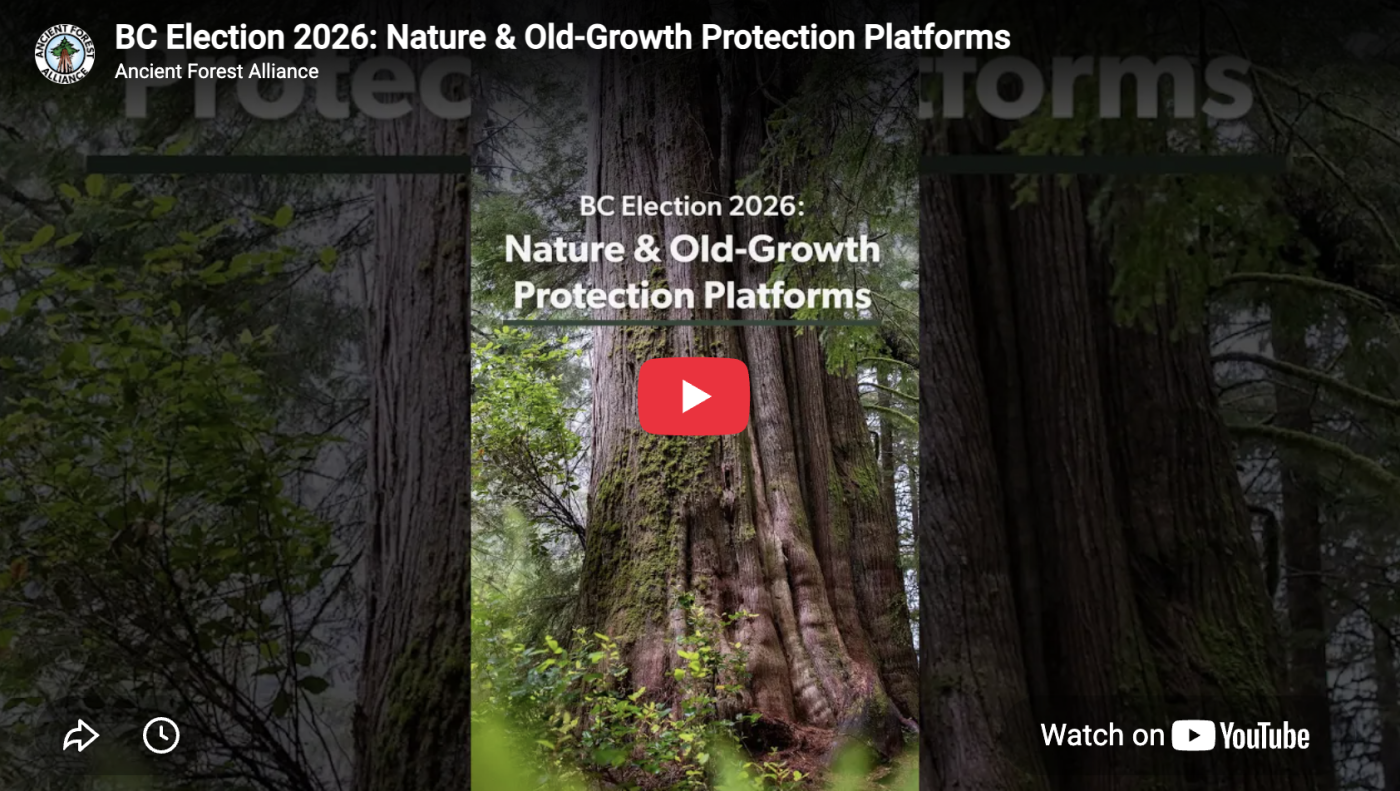
 https://ancientforestalliance.org/wp-content/uploads/2026/10/Screenshot-2026-10-22-at-4.54.32-PM.png
952
1684
TJ Watt
https://ancientforestalliance.org/wp-content/uploads/2026/05/Ancient-Forest-Alliance-logo.svg
TJ Watt2026-10-22 16:54:062026-10-22 16:59:41NEW Video: BC Election 2026: Nature & Old-Growth Protection
https://ancientforestalliance.org/wp-content/uploads/2026/10/Screenshot-2026-10-22-at-4.54.32-PM.png
952
1684
TJ Watt
https://ancientforestalliance.org/wp-content/uploads/2026/05/Ancient-Forest-Alliance-logo.svg
TJ Watt2026-10-22 16:54:062026-10-22 16:59:41NEW Video: BC Election 2026: Nature & Old-Growth ProtectionRelated Posts
https://ancientforestalliance.org/wp-content/uploads/2026/10/Screenshot-2026-10-22-at-4.54.32-PM.png
952
1684
TJ Watt
https://ancientforestalliance.org/wp-content/uploads/2026/05/Ancient-Forest-Alliance-logo.svg
TJ Watt2026-10-22 16:54:062026-10-22 16:59:41NEW Video: BC Election 2026: Nature & Old-Growth Protection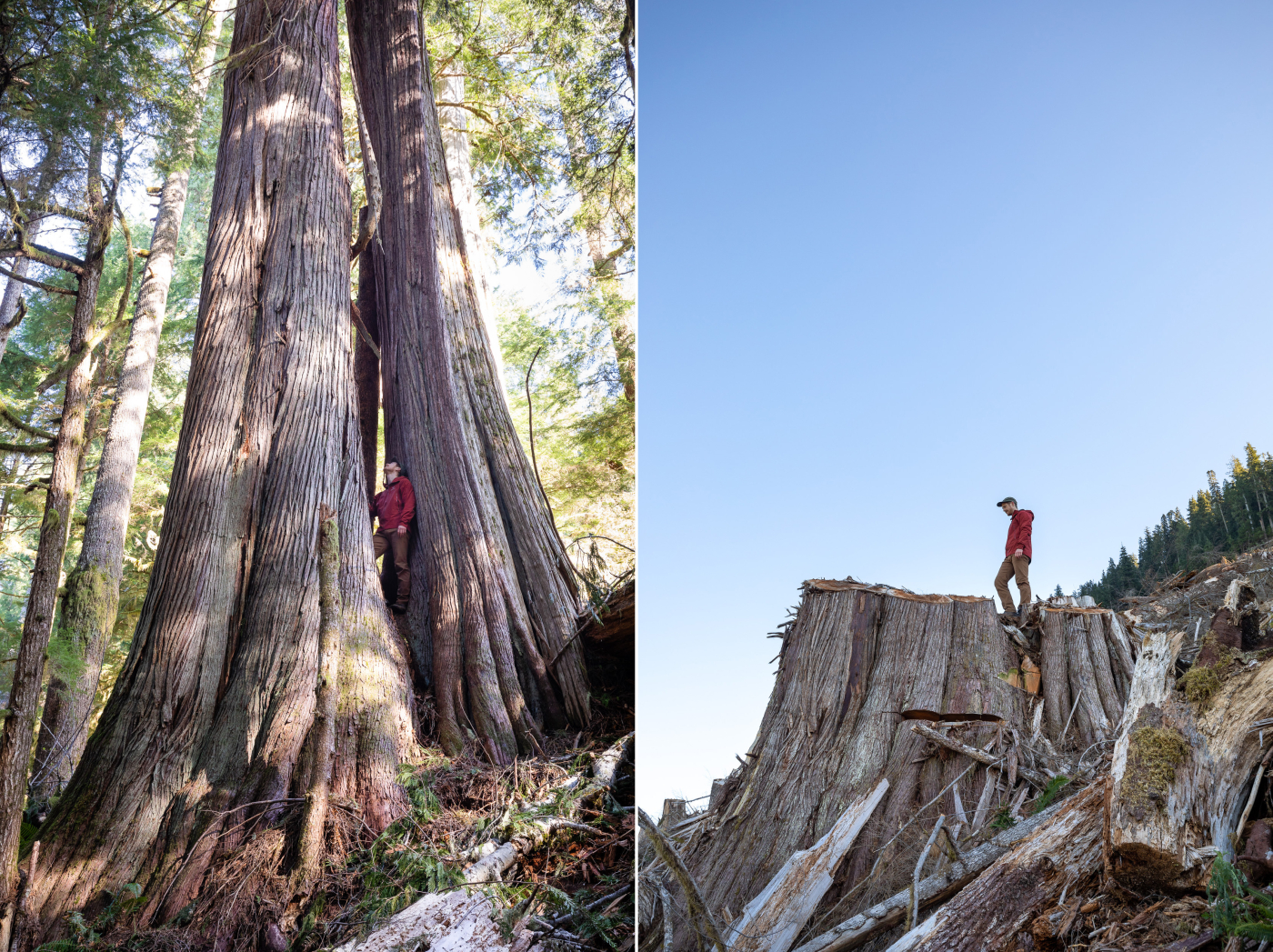 https://ancientforestalliance.org/wp-content/uploads/2026/10/Before-After-Caycuse-TJ-Watt-4-scaled.jpg
1915
2560
TJ Watt
https://ancientforestalliance.org/wp-content/uploads/2026/05/Ancient-Forest-Alliance-logo.svg
TJ Watt2026-10-16 17:36:002026-10-21 13:40:23BC Election 2026: Where do Parties Stand on Nature & Old-Growth?
https://ancientforestalliance.org/wp-content/uploads/2026/10/Before-After-Caycuse-TJ-Watt-4-scaled.jpg
1915
2560
TJ Watt
https://ancientforestalliance.org/wp-content/uploads/2026/05/Ancient-Forest-Alliance-logo.svg
TJ Watt2026-10-16 17:36:002026-10-21 13:40:23BC Election 2026: Where do Parties Stand on Nature & Old-Growth? https://ancientforestalliance.org/wp-content/uploads/2026/10/BC-Election-2026-Banner-1-1-scaled.jpg
1439
2560
TJ Watt
https://ancientforestalliance.org/wp-content/uploads/2026/05/Ancient-Forest-Alliance-logo.svg
TJ Watt2026-10-09 18:16:372026-10-16 17:44:41Where do BC’s Major Political Parties Stand on Nature Protection?
https://ancientforestalliance.org/wp-content/uploads/2026/10/BC-Election-2026-Banner-1-1-scaled.jpg
1439
2560
TJ Watt
https://ancientforestalliance.org/wp-content/uploads/2026/05/Ancient-Forest-Alliance-logo.svg
TJ Watt2026-10-09 18:16:372026-10-16 17:44:41Where do BC’s Major Political Parties Stand on Nature Protection?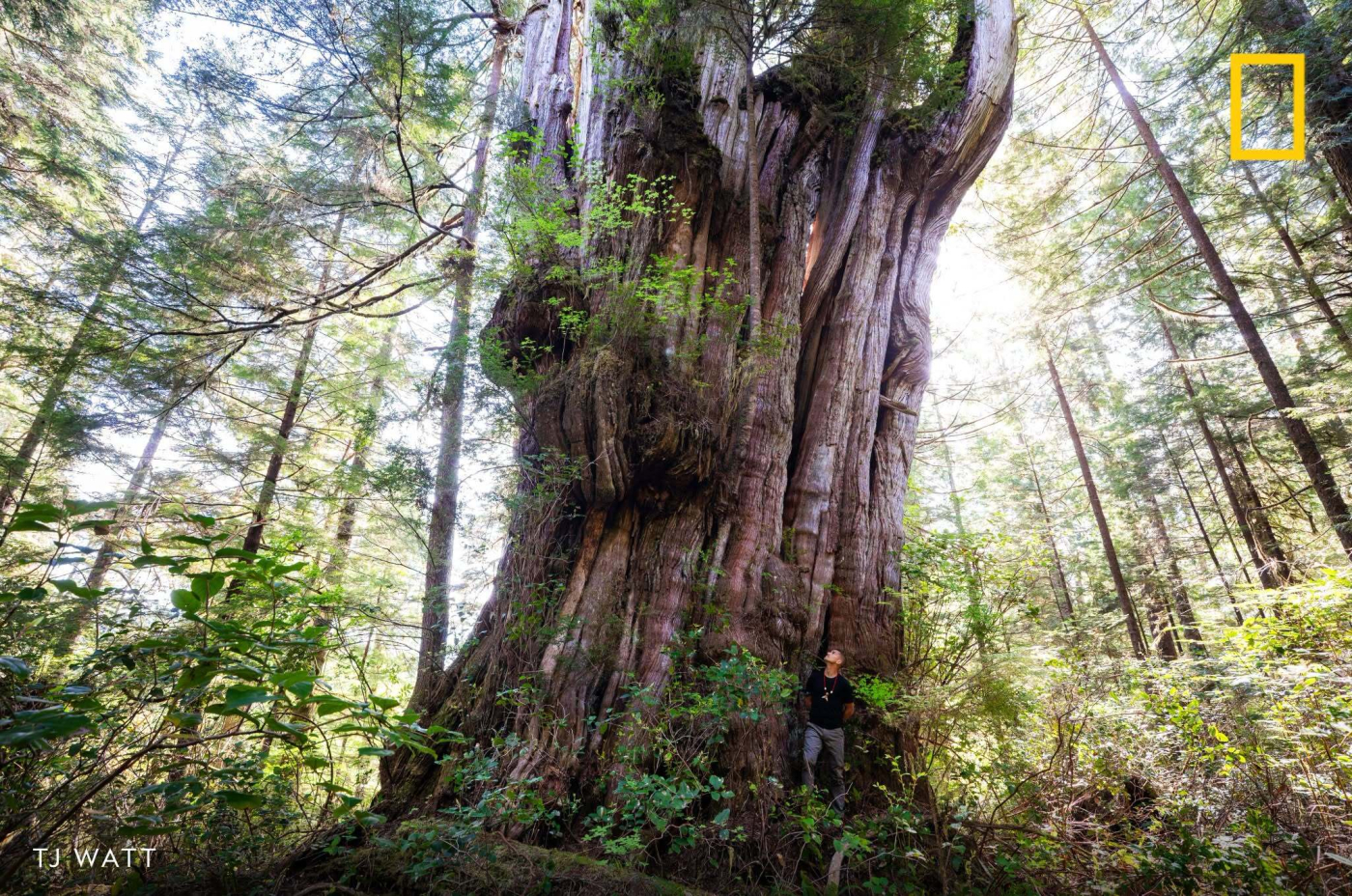 https://ancientforestalliance.org/wp-content/uploads/2026/10/Nat-Geo-Travel-Flores-Cedar.jpg
1357
2048
TJ Watt
https://ancientforestalliance.org/wp-content/uploads/2026/05/Ancient-Forest-Alliance-logo.svg
TJ Watt2026-10-02 13:38:152026-10-02 13:38:15Nat Geo Travel Features TJ Watt’s Photo of Flores Cedar
https://ancientforestalliance.org/wp-content/uploads/2026/10/Nat-Geo-Travel-Flores-Cedar.jpg
1357
2048
TJ Watt
https://ancientforestalliance.org/wp-content/uploads/2026/05/Ancient-Forest-Alliance-logo.svg
TJ Watt2026-10-02 13:38:152026-10-02 13:38:15Nat Geo Travel Features TJ Watt’s Photo of Flores CedarTake Action
 Donate
Support the Ancient Forest Alliance with a one-time or monthly donation. Send a Message
Send an instant message to key provincial decision-makers.
Wade Davis and Andy MacKinnon, BC’s Best Known Botanists, Make Bids for Naming Rights for New Species of Old-Growth Forest Lichens as part of Conservation Fundraiser
/in Media ReleaseTweet
For Immediate Release
Friday, July 22, 2011
Wade Davis and Andy MacKinnon, BC’s Best Known Botanists, Make Bids for Naming Rights for New Species of Old-Growth Forest Lichens as part of Conservation Fundraiser
Two of BC’s best known botanists Wade Davis and Andy MacKinnon have made over $12,000 in total combined bids for the naming rights to two newly discovered species of BC lichens as part of a conservation fundraiser. MacKinnon has bid $3000 while Davis has bid $3200 for each of two new species of lichens found in BC’s inland rainforests: an old-growth forest dependent “horsehair” lichen and a small “crottle” lichen.
Naming rights to the two species will be auctioned-off as fundraisers for two B.C. environmental groups: the Ancient Forest Alliance (AFA) (www.ancientforestalliance.org) working to protect B.C.’s old-growth forests and The Land Conservancy (TLC) of British Columbia (www.conservancy.bc.ca), working to purchase private lands in the Clearwater River Valley adjacent to Wells Gray Provincial Park. Bidding will end on October 2, 2011.
“We’re lucky to have BC’s Rock Star botanists, Wade Davis and Andy MacKinnon, support this ground-breaking conservation fundraiser,” stated Ken Wu, co-founder of the Ancient Forest Alliance. “Wade has a long history as a great conservationist and ethnobotanist, working for decades to protect BC’s wilderness as well as tropical ecosystems and cultures. Andy co-authored ‘Plants of Coastal BC’, which many think of as the ‘Bible of BC Botany’. He is also the foremost authority on old-growth forest ecology in this province.”
“Besides being an important initiative for BC forest conservation, our naming auction could provide a model for similar ‘taxonomic tithing’ fundraisers elsewhere: a wonderful way to raise millions of dollars for conservation around the world as new species are discovered,” stated Barry Booth, TLC Northern Regional Manager. “Wade and Andy’s credibility help to show this is a serious and important initiative.”
Wade Davis is one of the best known and widely read ethnobotanists on Earth, authoring numerous books including the international best-seller, “The Serpent and the Rainbow”, and countless articles for “National Geographic’, “Outside”, ”Conde Naste”, and “Fortune” magazines. He is an Explorer-in-Residence for National Geographic, writing about various regions of the planet while spending much of his time at his Stikine Valley cabin in the Sacred Headwaters region in northern BC.
Andy MacKinnon co-authored the “Plants of Coastal BC” which as has sold more than 300,000 copies since coming out in 1994, making it the highest selling botany field guide in Canadian history. Dog-eared copies can be found in the homes of hundreds of thousands of nature enthusiasts. MacKinnon works as a forest ecologist for the BC government and resides in Metchosin on Vancouver Island.
The two lichen species were discovered in B.C. in recent years by botanical researcher Trevor Goward, who also contributed to “The Plants of Coastal BC”. Since then their identity as undescribed species has been supported by two teams of molecular researchers working in Finland and Spain. According to scientific protocol, the right to give a new species its scientific name goes to the person who describes it. However, an online auction running on each organization’s website into the fall will earn the highest bidders the right to name these lichens – whether after loved ones, themselves, or whomever they choose.
“Having your name linked to a living species is a legacy that lasts,” said Goward. “It has been almost three centuries since the modern system of biological classification was developed by Carolus Linnaeus; and even now the names of people after whom he christened various plants and animals are still with us. With any luck your name will endure as long as our civilization does. Not even Shakespeare could hope for more than that.”
Lichens are small, stationary organisms often mistaken for plants, but better thought of as cooperative (symbiotic) unions of fungi and algae. Instead of invading or scavenging like other fungi, lichen fungi live off sugars from tiny photosynthetic algal cells maintained within the body of the lichen. Lichens are sometimes thought of as fungi that have discovered agriculture: https://www.discovermagazine.com/the-sciences/lichens-fungi-that-have-discovered-agriculture
Many lichens are sensitive to pollution and disturbance and become rare in urbanized and industrialized landscapes. The conversion of old-growth forests to tree plantations is taking a particularly heavy toll on the abundance and diversity of lichens in British Columbia. Some lichens provide critical winter food for animals like mountain caribou in B.C.’s inland rainforests and black-tailed deer in B.C.’s coastal rainforests.
Lichens come in many shapes and sizes. The lichen on loan to the Ancient Forest Alliance is a Bryoria or “Horsehair Lichen”, which forms elegant black tresses on the branches of trees in oldgrowth forests. The Land Conservancy’s lichen is a Parmelia or “Crottle Lichen”, consisting of strap-like lobes pale greyish above and black below. It too inhabits the branches of trees, and grows in the Clearwater Valley, where TLC is working with Goward to create a critical wildlife corridor for southern Wells Gray Park:
https://www.waysofenlichenment.net/wells/corridor
See more fascinating details about the lichens and taxonomic tithing from Trevor Goward at: https://waysofenlichenment.net/tithe/introduction
“We’re extremely grateful to Trevor for his innovative fundraising and awareness raising contribution to help us protect B.C.’s last endangered old-growth forests which sustain endangered species, the climate, tourism, and many First Nations cultures. As a new organization with limited funds, we need all the help we can get,” said Ken Wu, co-founder of the Ancient Forest Alliance.
“In partnership with Trevor, TLC is raising funds to create a permanent wildlife corridor that connects two separate portions of southern Wells Gray Provincial Park. The acquisition will include two significant donations of land by Trevor and his neighbours and the purchase of three further parcels. This naming auction will help support our campaign and we would like to thank Trevor for choosing TLC. Trevor’s passion and commitment to protecting B.C.’s special places is commendable,” said Barry Booth, TLC Northern Regional Manager.
Those who want to make a bid to have one of the new species named after themselves or a loved one should visit the Ancient Forest Alliance’s website www.ancientforestalliance.org or phone 250-896-4007 or contact The Land Conservancy at www.conservancy.bc.ca/ or phone 1-877-485-2422.
Naming rights to new lichen species up for sale
/in News CoverageTweet
The naming rights to two lichen species discovered near Clearwater, B.C., are up for grabs — for a price.
Naturalist Trevor Goward made the discovery and according to scientific protocol it’s up to him to name them — but Goward has taken the unusual step of auctioning off the naming rights to the highest bidder.
“It seems to me that people enjoy putting names on things. We name one another, we name our dogs, we name our cats, I mean that’s what we do,” he said. “So it seemed to me that this might be a way of actually raising some money.”
Goward hopes to raise about $350,000 through the auction.
The money will go to two conservation projects — to help the Ancient Forest Alliance protect B.C.’s old growth forests, and help the Land Conservancy buy private lands in the Clearwater Valley to expand Wells Gray Provincial park.
“Anybody who looks at a map of British Columbia soon realizes that there are lots of large protected areas in the province, but very few are in the southern part of British Columbia, or of Canada for that matter. Most of it is in the north,” Goward said.
“But Wells Gray is just this enormous valley … and as a protected area, it’s internationally significant.”
Bids are being accepted through the Ancient Forest Alliance or the Land Conservancy until Oct. 2.
To make a bid on the AFA’s lichen visit this page: https://ancientforestalliance.org/news-item.php?ID=233
Link to CBC News article: https://www.cbc.ca/news/canada/british-columbia/story/2011/07/26/bc-lichen-naming.html
Likin’ a lichen? Why not put your name on it forever?
/in News CoverageTweet
Land conservationists hoping to preserve a critical wildlife corridor in central B.C. have come up with a unique fundraising method.
Barry Booth, a manager with The Land Conservancy of B.C., said naming rights for two newly discovered species of forest lichen will be auctioned off.
“It’s a wonderful way to raise millions of dollars for conservation as new species are discovered,” he said in a press release on Friday.
The lichens are small, stationary organisms often mistaken for plants, but are actually co-operative unions of fungi and algae.
Some lichens provide critical winter food for animals like B.C.’s mountain caribou.
Highest bidders will earn the right to name the lichens after loved ones, themselves or someone else.
The auction has already attracted bids from two prominent B.C. botanists.
National Geographic explorer Wade Davis, who lives in the Stikine Valley in northern B.C., has made a $3,000 bid.
And Andy MacKinnon, a noted author who works as a forest ecologist for the B.C. government, has offered $3,200.
“We’re lucky to have B.C.’s rock star botanists support this groundbreaking conservation fundraiser,” said Ken Wu, co-founder of the Ancient Forest Alliance.
Botanical researcher Trevor Goward, who discovered the lichens, said having your name linked to a living species is “a legacy that lasts.”
“With any luck, your name will endure as long as civilization lasts. Not even Shakespeare could hope for more than that,” Goward said.
The funds will be used to purchase private lands in the Clearwater Valley adjacent to Wells Gray Provincial Park.
Conservationists say the corridor is needed to connect two separate portions of southern Wells Gray.
The bidding is being held at an online auction running at www.conservancy.bc.ca and www.ancientforestalliance.org until Oct. 2.
Read more: https://www.theprovince.com/technology/Likin+lichen+your+name+forever/5145079/story.html#ixzz1TAwSYtIW