 https://ancientforestalliance.org/wp-content/uploads/2026/10/Screenshot-2026-10-22-at-4.54.32-PM.png
952
1684
TJ Watt
https://ancientforestalliance.org/wp-content/uploads/2026/05/Ancient-Forest-Alliance-logo.svg
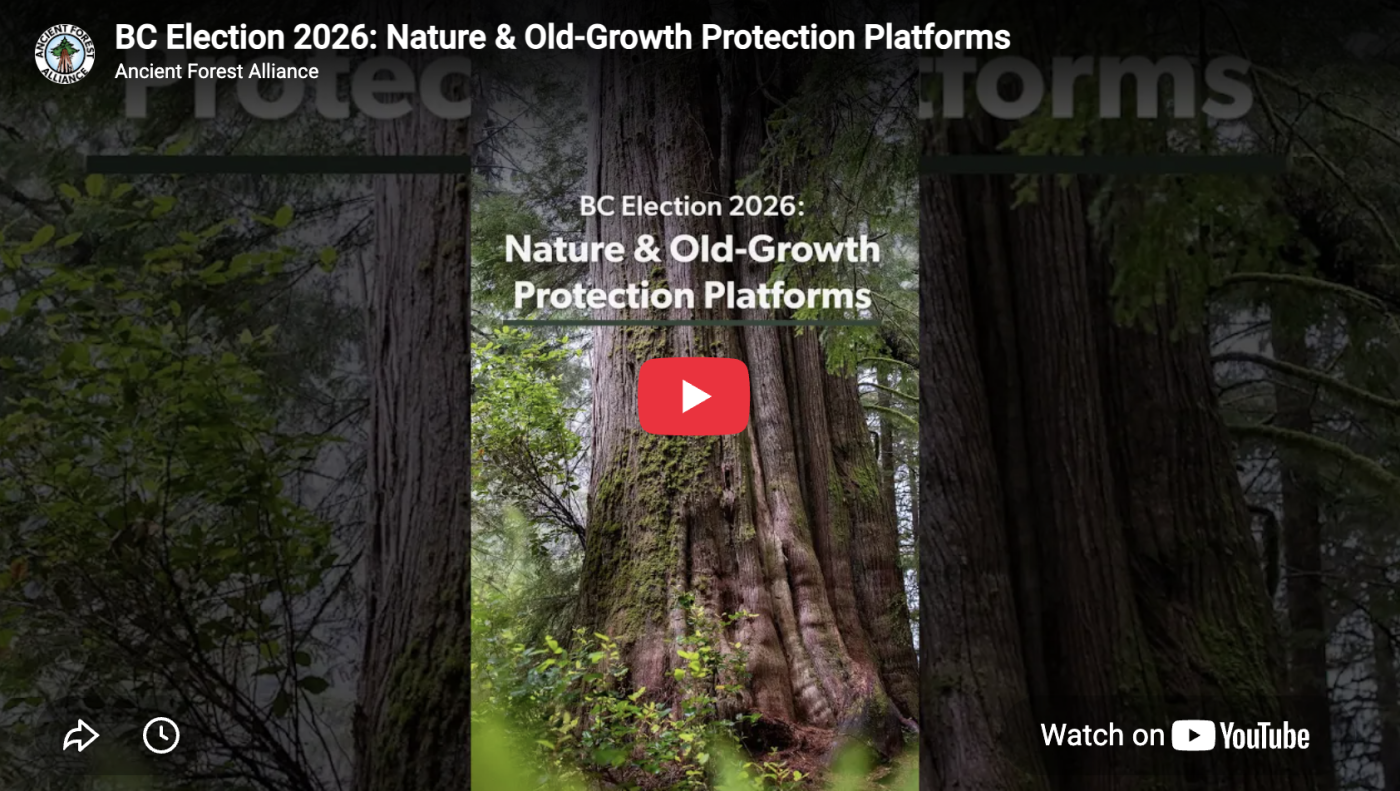
TJ Watt2026-10-22 16:54:062026-10-22 16:59:41NEW Video: BC Election 2026: Nature & Old-Growth Protection
https://ancientforestalliance.org/wp-content/uploads/2026/10/Screenshot-2026-10-22-at-4.54.32-PM.png
952
1684
TJ Watt
https://ancientforestalliance.org/wp-content/uploads/2026/05/Ancient-Forest-Alliance-logo.svg
TJ Watt2026-10-22 16:54:062026-10-22 16:59:41NEW Video: BC Election 2026: Nature & Old-Growth ProtectionRelated Posts
https://ancientforestalliance.org/wp-content/uploads/2026/10/Screenshot-2026-10-22-at-4.54.32-PM.png
952
1684
TJ Watt
https://ancientforestalliance.org/wp-content/uploads/2026/05/Ancient-Forest-Alliance-logo.svg
TJ Watt2026-10-22 16:54:062026-10-22 16:59:41NEW Video: BC Election 2026: Nature & Old-Growth Protection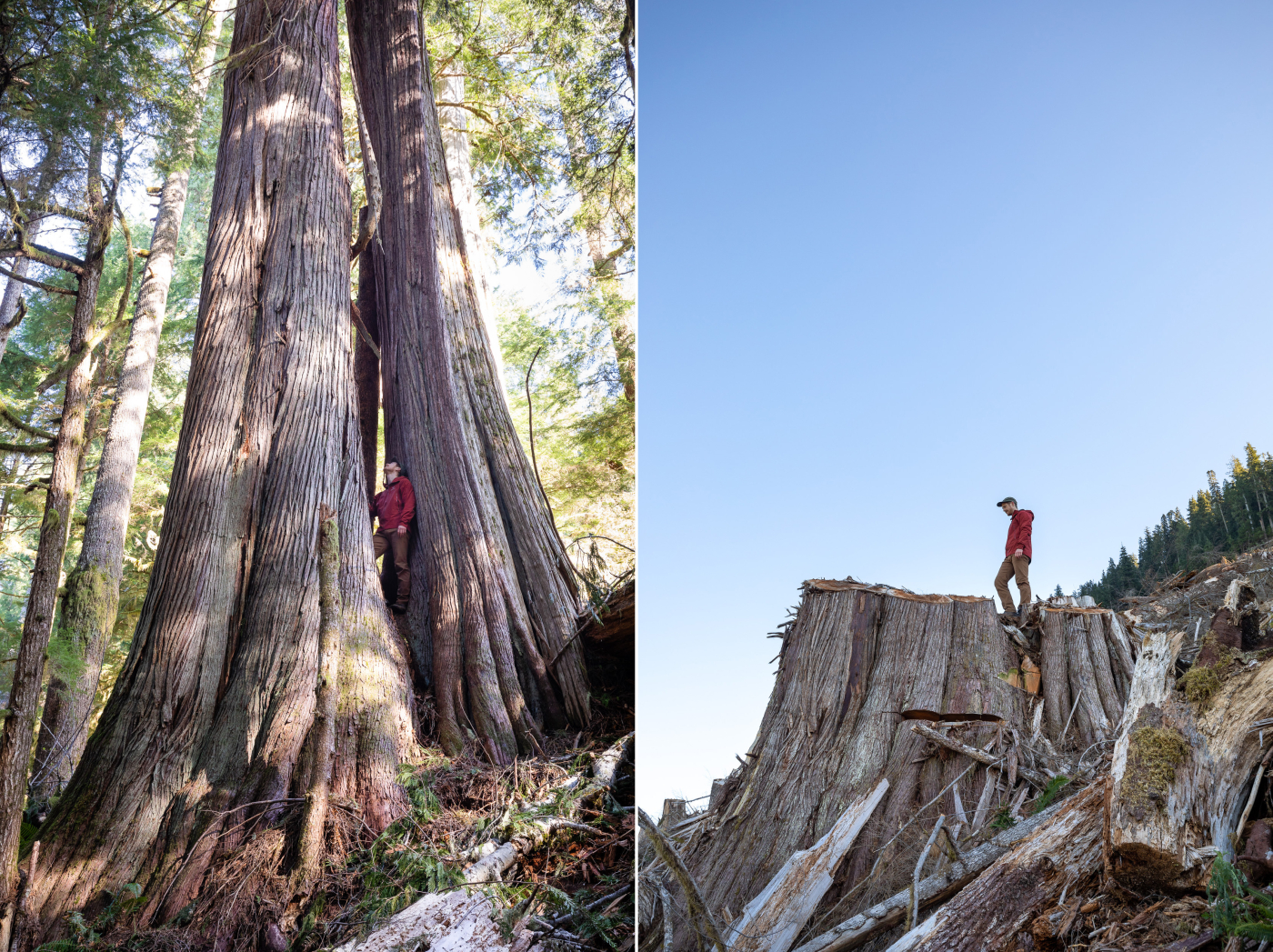 https://ancientforestalliance.org/wp-content/uploads/2026/10/Before-After-Caycuse-TJ-Watt-4-scaled.jpg
1915
2560
TJ Watt
https://ancientforestalliance.org/wp-content/uploads/2026/05/Ancient-Forest-Alliance-logo.svg
TJ Watt2026-10-16 17:36:002026-10-21 13:40:23BC Election 2026: Where do Parties Stand on Nature & Old-Growth?
https://ancientforestalliance.org/wp-content/uploads/2026/10/Before-After-Caycuse-TJ-Watt-4-scaled.jpg
1915
2560
TJ Watt
https://ancientforestalliance.org/wp-content/uploads/2026/05/Ancient-Forest-Alliance-logo.svg
TJ Watt2026-10-16 17:36:002026-10-21 13:40:23BC Election 2026: Where do Parties Stand on Nature & Old-Growth? https://ancientforestalliance.org/wp-content/uploads/2026/10/BC-Election-2026-Banner-1-1-scaled.jpg
1439
2560
TJ Watt
https://ancientforestalliance.org/wp-content/uploads/2026/05/Ancient-Forest-Alliance-logo.svg
TJ Watt2026-10-09 18:16:372026-10-16 17:44:41Where do BC’s Major Political Parties Stand on Nature Protection?
https://ancientforestalliance.org/wp-content/uploads/2026/10/BC-Election-2026-Banner-1-1-scaled.jpg
1439
2560
TJ Watt
https://ancientforestalliance.org/wp-content/uploads/2026/05/Ancient-Forest-Alliance-logo.svg
TJ Watt2026-10-09 18:16:372026-10-16 17:44:41Where do BC’s Major Political Parties Stand on Nature Protection?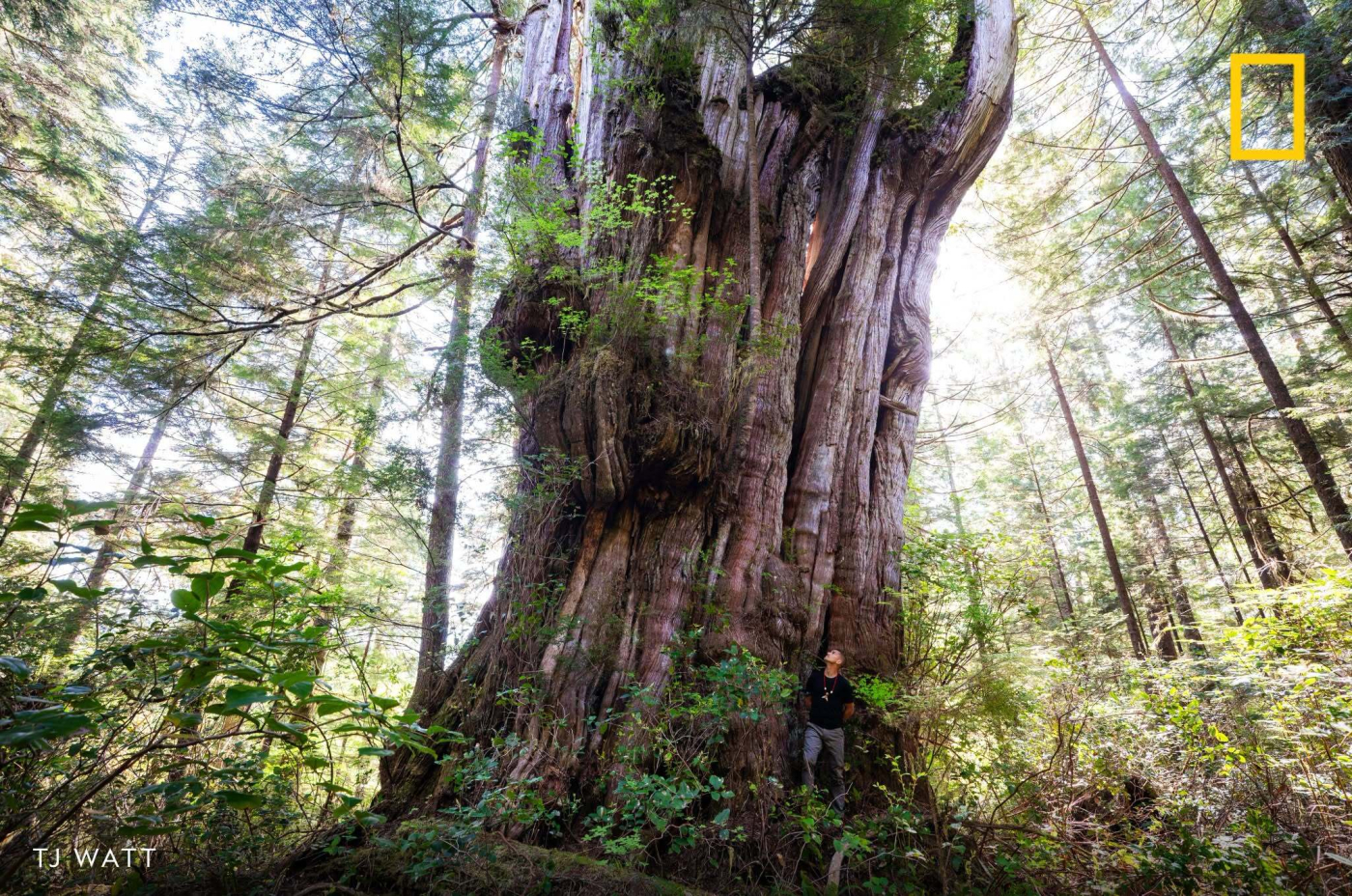 https://ancientforestalliance.org/wp-content/uploads/2026/10/Nat-Geo-Travel-Flores-Cedar.jpg
1357
2048
TJ Watt
https://ancientforestalliance.org/wp-content/uploads/2026/05/Ancient-Forest-Alliance-logo.svg
TJ Watt2026-10-02 13:38:152026-10-02 13:38:15Nat Geo Travel Features TJ Watt’s Photo of Flores Cedar
https://ancientforestalliance.org/wp-content/uploads/2026/10/Nat-Geo-Travel-Flores-Cedar.jpg
1357
2048
TJ Watt
https://ancientforestalliance.org/wp-content/uploads/2026/05/Ancient-Forest-Alliance-logo.svg
TJ Watt2026-10-02 13:38:152026-10-02 13:38:15Nat Geo Travel Features TJ Watt’s Photo of Flores CedarTake Action
 Donate
Support the Ancient Forest Alliance with a one-time or monthly donation. Send a Message
Send an instant message to key provincial decision-makers.
Avatar Grove must get saved
/in AnnouncementsThere’s a lot of nonsense and inaccuracies in Greg Klem’s confused letter (April 13) about the Ancient Forest Alliance and Port Renfrew Chamber of Commerce’s cooperative efforts to protect the Avatar Grove.
Avatar Grove is particularly valuable because it is the easiest to access monumental stand of ancient trees near Port Renfrew. Other old-growth stands are farther away along rough logging roads, on steep slopes.
The thousands of visitors who’ve been there know it’s filled with majestic red cedars and Douglas firs, along with smaller hemlocks. The largest trees in Avatar Grove are about 14 feet in diameter, wider than my living room. You can see photos at https://ancientforestalliance.org/photos-media/
A recent Forest Practices Board report notes that just one per cent of the Gordon Valley landscape unit consists of protected monumental trees over 400 years old. In addition, only about one-fourth or 4,000 hectares of the Gordon River’s 17,000 hectares is still old-growth, of which only half or 2,000 hectares are protected in Old-Growth Management Areas (OGMA’s).
Most of the Avatar Grove’s biggest trees were marked with “Falling Boundary” and “Road Location” ribbons for logging when we started to popularize the area last year. Only 24 per cent of Avatar Grove is within an OGMA, according to Forests Ministry statements.
Similarly, TimberWest flagged their private lands for logging right next to the old-growth fringe around the Red Creek Fir last year, but backed off when we made noise. That was followed by BC Timber Sales logging about 500 metres away. The sign for the Red Creek Fir has never been replaced by the government after being destroyed.
Our old-growth forests have much greater value still alive for tourism, wildlife, and the climate. Let’s sustainably log second-growth and protect the last bits of old-growth like the Avatar Grove.
We’re proud to work with the many forward-thinking local business owners including the Port Renfrew Chamber of Commerce who see a future in keeping the largest trees in Canada standing.
Old trees find new value in historic logging town
/in News CoverageThe historic logging boomtown of Port Renfrew is redefining its relationship with old trees.
Nestled on the southwest coast of Vancouver Island, the town’s livelihood and identity grew out of logging old-growth forests for most of the 20th century. Mechanization of the logging industry in the 1980s led to significant job loss, which forced the town to find new ways to thrive.
The community of less than 300 residents now relies on tourist dollars attracted partly by the allure of its remaining tall trees.
“We’re calling ourselves ‘a tall tree town’ now because I think it works,” said Rose Betsworth, president of the Port Renfrew Chamber of Commerce.
The chamber forged a new partnership with the Ancient Forest Alliance in 2009 after the Victoria based environmental group discovered an old-growth forest 15 minutes north of Port Renfrew.
Together they are pushing for full legislative protection of the 40 hectares of ancient forest, which the alliance named Avatar Grove in reference to the blockbuster movie with the conservationist tilt.
“We’re edging very close to protection status for Avatar Grove,” said Betsworth. “And if that happens it means all these other old growth have a chance. We want to showcase Port Renfrew and our old growth.”
Betsworth explains that the site of the future tourist information centre is a beautiful spot.
A joint fundraiser between the chamber and the AFA raised more than $6,000 for a new tourist centre in Port Renfrew scheduled to open in May.
“We’re a tourist community. We rely on tourist dollars,” Betsworth said. “We’ve forgotten about the logging part of it now.”
The value of old wood
Old-growth forests, with towering trees typically 250 to a 1,000 years old, provide homes for unique ecosystems.
More than 73 per cent of productive old-growth forests on Vancouver Island have been logged, according to the AFA website.
Worth more than $100,000 per log in the 1990s, old-growth trees fueled profits for British Columbia’s forest industry.
The industry continues to target old, large trees because they tend to be stronger than younger, smaller trees.
The coastal old-growth forests of B.C. absorb large amounts of water. That enables them to resist pests and forest fires and to grow up to 70 metres high. Their slow growth produces tighter growth rings and a higher quality of wood less susceptible to warping.
Dan Kuzman, a longtime resident of Port Renfrew, said that these old durable trees are important in the manufacturing of wood products.
This red cedar, at least 250 years old, was cut down less than one kilometre away from Avatar Grove.
“Normally you wouldn’t see an old-growth tree made into two-by-fours and two-by-sixes,” Kuzman said. “It would be large beams or good plywood…Window sills, door jams, that kind of stuff. It’s all old-growth.”
Specialty items such as guitars and marine lumber are often by-products of the ancient giants, said Kuzman.
Preservation of some of the old forests is important, he said, but he questioned to what extent.
“I don’t see why you can’t keep some of them,” Kuzman said. “But saving them for the sake of saving them is not enough.
“Having the province, or the people of the province, not being able to benefit from [old-growth] from the economic part of it is probably wrong, more wrong than taking it from the people who are looking at it.”
The value of old forests
Mark Haddock, an attorney with the Environmental Law Centre at the University of Victoria, said that B.C. has predominantly valued old-growth forests for their economic value.
“We’ve tended to view it historically just as a resource for lumber extraction, not really seeing the connections between the sorts of ecosystems that are represented by those forests and the animals that depend on them,” he said.
Species such as Roosevelt elk and northern spotted owls rely on the mix of new, old and decaying trees found in old-growth forests for food and shelter. The logging of B.C.’s pristine forests endangers these species as clear cutting continues.
Keeping old forests intact also does more to mitigate climate change than planting new trees. More carbon can be stored in the soil of an undisturbed ancient forest.
“I think the conservation biology is pretty sound,” Haddock said. “I think it makes a pretty persuasive case to me as a British Columbian that there’s real merit in protecting old-growth forests. Now that we are aware of these ecological values, how do we act?”
Current provincial protection for old growth forests is a matter of discretion by the government, Haddock said.
“There are rules that can and do protect old-growth,” Haddock said. “It’s just that the amount of old-growth, that is protected is not stated in any mandatory way. It’s a discretionary decision by the government.”
Watt overlooks clear cuts surrounding Port Renfrew.
The discovery of Avatar Grove by TJ Watt, cofounder of the alliance, and the subsequent barrage of media coverage triggered a public outcry to protect the remaining old-growth forests on the south of Vancouver Island.
Former Vancouver Island MP Keith Martin recently called for the creation of a national park reserve that would encompass the southern portion of the island and include Avatar Grove, which is only 25 per cent protected.
Companies continue to log giant cedars a kilometre away from the grove, Watt said, questioning how long the logging of old-growth forests can last.
“If they don’t have a plan and it’s not considered, what are they gonna do in a couple decades when they finish it?” he said.
“It’s not if, it’s when.”
Click here to view the original article
Secrets of Clayoquot Event – Tuesday, April 5th, 7:30-9:00pm, Ambrosia Event Centre, Victoria, BC.
/in AnnouncementsThe Ancient Forest Alliance is excited to host an important event presented by the Friends of Clayoquot Sound this coming Tuesday, April 5th from 7:30-9:00 PM at the Ambrosia Event Centre, 638 Fisgard Street, Victoria, BC.
Facebook event page: https://www.facebook.com/home.php#!/event.php?eid=175550509158893
Join sea kayakers Dan Lewis and Bonny Glambeck of Tofino for an unforgettable slideshow journey through the natural beauty and splendor of Clayoquot Sound.
Learn about the ecology of the region’s globally significant ancient rainforests, and how industrial activity threatens this UNESCO Biosphere reserve.
The couple are seasoned naturalists and expedition sea kayakers who have paddled most of the BC coast. They will share stories about their many adventures at home in Clayoquot Sound, and show images from some of BC’s leading outdoor photographers.
Don’t miss this entertaining, informative and inspiring evening!
This BC-wide tour brought to you by the Friends of Clayoquot Sound and Mountain Equipment Co-op
Admission by donation $5-$10 https://clayoquot.tumblr.co
Please CONFIRM your attendence, INVITE your family/friends and SHARE this event via Facebook, Twitter, E-Mail, etc!
Facebook event page: https://www.facebook.com/home.php#!/event.php?eid=175550509158893