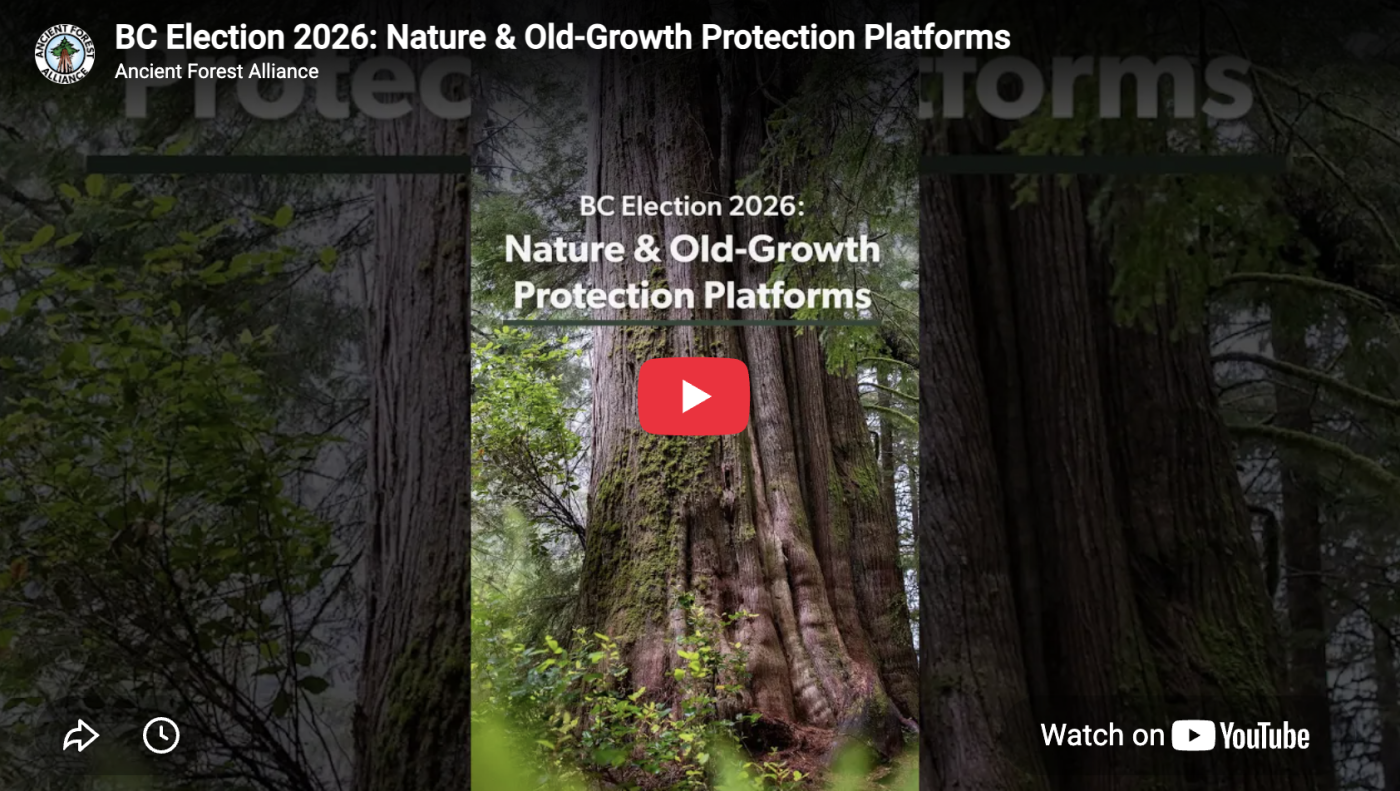
 https://ancientforestalliance.org/wp-content/uploads/2026/10/Screenshot-2026-10-22-at-4.54.32-PM.png
952
1684
TJ Watt
https://ancientforestalliance.org/wp-content/uploads/2026/05/Ancient-Forest-Alliance-logo.svg
TJ Watt2026-10-22 16:54:062026-10-22 16:59:41NEW Video: BC Election 2026: Nature & Old-Growth Protection
https://ancientforestalliance.org/wp-content/uploads/2026/10/Screenshot-2026-10-22-at-4.54.32-PM.png
952
1684
TJ Watt
https://ancientforestalliance.org/wp-content/uploads/2026/05/Ancient-Forest-Alliance-logo.svg
TJ Watt2026-10-22 16:54:062026-10-22 16:59:41NEW Video: BC Election 2026: Nature & Old-Growth ProtectionRelated Posts
https://ancientforestalliance.org/wp-content/uploads/2026/10/Screenshot-2026-10-22-at-4.54.32-PM.png
952
1684
TJ Watt
https://ancientforestalliance.org/wp-content/uploads/2026/05/Ancient-Forest-Alliance-logo.svg
TJ Watt2026-10-22 16:54:062026-10-22 16:59:41NEW Video: BC Election 2026: Nature & Old-Growth Protection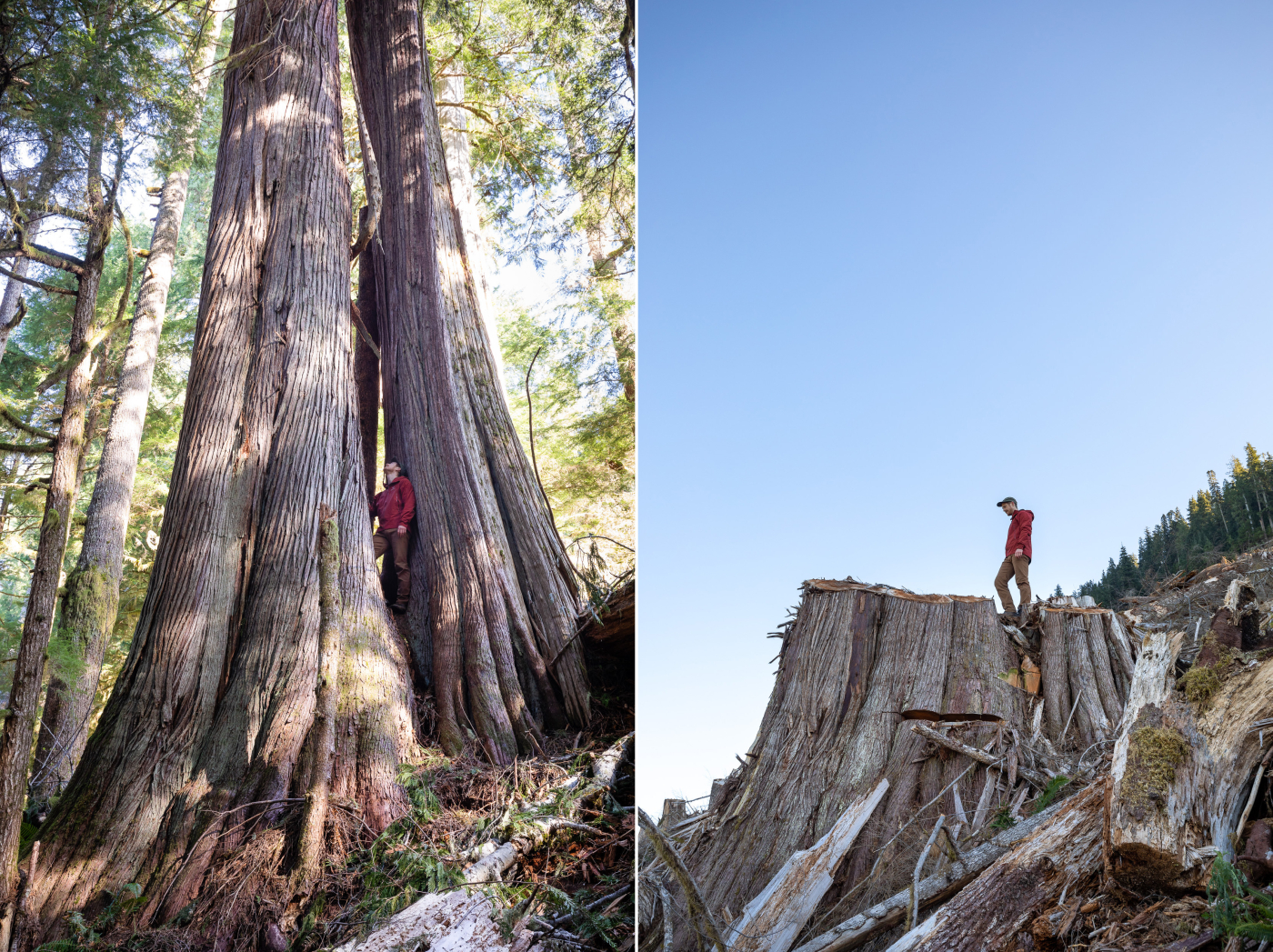 https://ancientforestalliance.org/wp-content/uploads/2026/10/Before-After-Caycuse-TJ-Watt-4-scaled.jpg
1915
2560
TJ Watt
https://ancientforestalliance.org/wp-content/uploads/2026/05/Ancient-Forest-Alliance-logo.svg
TJ Watt2026-10-16 17:36:002026-10-21 13:40:23BC Election 2026: Where do Parties Stand on Nature & Old-Growth?
https://ancientforestalliance.org/wp-content/uploads/2026/10/Before-After-Caycuse-TJ-Watt-4-scaled.jpg
1915
2560
TJ Watt
https://ancientforestalliance.org/wp-content/uploads/2026/05/Ancient-Forest-Alliance-logo.svg
TJ Watt2026-10-16 17:36:002026-10-21 13:40:23BC Election 2026: Where do Parties Stand on Nature & Old-Growth? https://ancientforestalliance.org/wp-content/uploads/2026/10/BC-Election-2026-Banner-1-1-scaled.jpg
1439
2560
TJ Watt
https://ancientforestalliance.org/wp-content/uploads/2026/05/Ancient-Forest-Alliance-logo.svg
TJ Watt2026-10-09 18:16:372026-10-16 17:44:41Where do BC’s Major Political Parties Stand on Nature Protection?
https://ancientforestalliance.org/wp-content/uploads/2026/10/BC-Election-2026-Banner-1-1-scaled.jpg
1439
2560
TJ Watt
https://ancientforestalliance.org/wp-content/uploads/2026/05/Ancient-Forest-Alliance-logo.svg
TJ Watt2026-10-09 18:16:372026-10-16 17:44:41Where do BC’s Major Political Parties Stand on Nature Protection?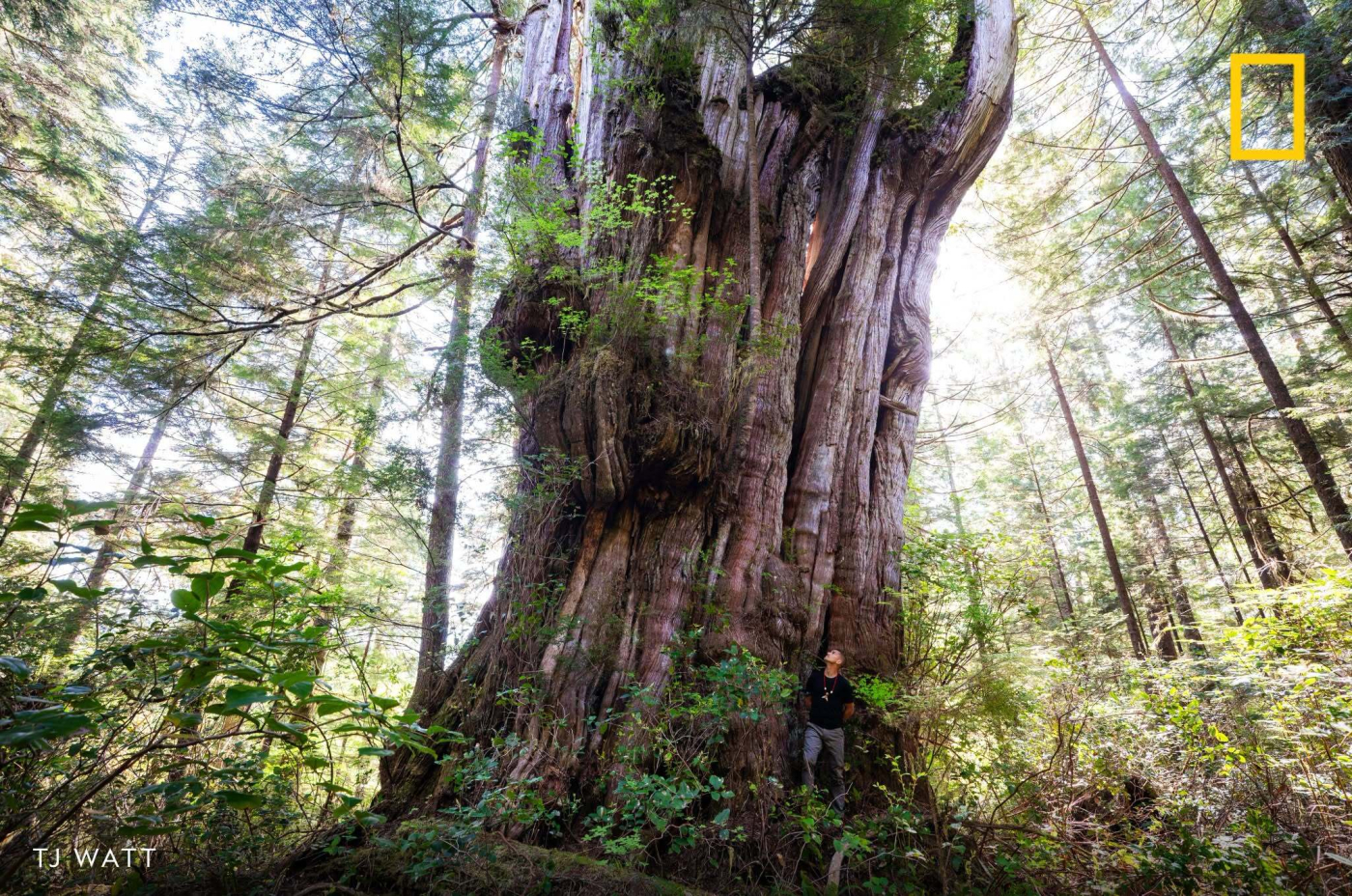 https://ancientforestalliance.org/wp-content/uploads/2026/10/Nat-Geo-Travel-Flores-Cedar.jpg
1357
2048
TJ Watt
https://ancientforestalliance.org/wp-content/uploads/2026/05/Ancient-Forest-Alliance-logo.svg
TJ Watt2026-10-02 13:38:152026-10-02 13:38:15Nat Geo Travel Features TJ Watt’s Photo of Flores Cedar
https://ancientforestalliance.org/wp-content/uploads/2026/10/Nat-Geo-Travel-Flores-Cedar.jpg
1357
2048
TJ Watt
https://ancientforestalliance.org/wp-content/uploads/2026/05/Ancient-Forest-Alliance-logo.svg
TJ Watt2026-10-02 13:38:152026-10-02 13:38:15Nat Geo Travel Features TJ Watt’s Photo of Flores CedarTake Action
 Donate
Support the Ancient Forest Alliance with a one-time or monthly donation. Send a Message
Send an instant message to key provincial decision-makers.
Avatar Grove to be featured on Al Jazeera News Network
/in News CoverageTweet
A Vancouver Island ecological landmark will be featured on Al Jazeera, a major Arabic and English language news network
The Ancient Forest Alliance says Al Jazeera film crews came to the island last week, to get shots of the Avatar Grove, an area of old growth forest near Port Renfrew which has been flagged for logging
Speaking on CFAX 1070 with Dave Dickson Thursday, the Alliance’s spokesperson Ken Wu explains how the network found out about Avatar Grove
“it was their Qatar-based headquarters that noticed there was a torrent of articles coming out in Canada about the Avatar Grove. That was about 2 weeks ago, you might remember there was a flurry of articles when the minister of forests Pat Bell said ‘ok we are going to look into saving this Avatar Grove place possibly, and protecting our biggest trees’ and that, you know triggered a whole series of articles in Canada and they noticed it, so they told their crew to come and check it out and do a story as part of the international news pieces”
Wu says the piece will be aired on the network this weekend.
The Alliance is hoping to save Avatar Grove from logging. They say while some of the trees in the grove have been flagged for logging, no cutting permits have been issued yet by the Ministry of Forests
original article
Al Jazeera to report from front lines of B.C.’s old-growth logging issue
/in News CoverageTweet
B.C.’s old-growth logging issues, which have long been the focus of North American and European media, are about to reach a far broader audience.
A film crew from the Toronto office of Al Jazeera visited southwestern Vancouver Island recently to report on old-growth logging issues for the English version of the Arabic news network.
“This will be the biggest international news hit for the old-growth campaign in a long time,” Ken Wu of the Ancient Forest Alliance said Thursday. “There is a strong international market for environmental issues, particularly one that is very charismatic.”
The Al Jazeera crew recently visited the so-called Avatar Grove, a stand of about 100 old-growth cedars andDouglas firs near Port Renfrew named after Canadian James Cameron’s blockbuster movie. They also visited nearby the San Juan Spruce — largest of its species in Canada
“They were blown away,” Wu said. “International audiences will be stunned to see not just trees with trunks as wide as living rooms … but that the government endorses logging of these endangered stands.”
One particularly gnarly cedar at Avatar Grove measures 11 metres in circumference near the base of its trunk, its distorted look attributed to a non-lethal fungal infection.
Forests minister Pat Bell has asked the province’s chief forester to review existing regulations for protecting trees that, because of their age, have values that make them worth preserving.
The alliance is fighting to save not just the grove, but remaining old-growth stands onVancouver Island and the Lower Mainland region. “This is one of the few jurisdictions where it’s still the norm to cut down centuries-old trees.” said Wu, noting the Al Jazeera report will broadcast on Saturday.
Click here to view the original article
Al Jazeera Covers Ancient Forest Alliance’s Campaign to Save British Columbia’s Endangered Old-Growth Forests and the Avatar Grove
/in Media ReleaseTweet
Victoria, Canada – Al Jazeera, one of the world’s largest international TV news networks, will be featuring a news story this Saturday about the Ancient Forest Alliance’s campaign to protect British Columbia’s endangered old-growth forests and the “Avatar Grove” on Vancouver Island. An Al-Jazeera news crew toured the endangered Avatar Grove, the San Juan Spruce (Canada’s largest spruce tree), and clearcuts near the town of Port Renfrew on southern Vancouver Island last week with Ancient Forest Alliance activists Ken Wu and TJ Watt, and subsequently interviewed BC’s Forests Minister Pat Bell. See Al-Jazeera’s website at: https://english.aljazeera.net/ The news clip is expected to be posted online on Saturday.
“This will definitely be the largest news hit we’ve had in many years – I think the last time was sometime in the 1990’s when the campaign to protect Vancouver Island’s old-growth forests was featured in the international TV news media,” stated Ken Wu, Ancient Forest Alliance executive director. “International audiences will be astounded to see that British Columbia still has thousand year old trees with trunks as wide living rooms and that tower as tall as downtown skyscrapers – and horrified to know that our government still sanctions regularly cutting them down. We desperately need a government plan to save our endangered old-growth forests, to log second-growth forests sustainably, and to end the export of our raw, unprocessed logs to foreign mills in order to sustain Canadian forestry jobs.”
Al Jazeera English broadcasts to more than 220 million households in more than 100 countries, and is one of the largest and most esteemed international TV news networks, along with the BBC and CNN. It is the only international news network to have a permanent bureau in Canada in Toronto. The network’s North American viewership has dramatically grown in recent weeks due to its extensive coverage of the recent uprisings in Egypt, Libya, and throughout the Middle East.
75% of Vancouver Island’s ancient forests have already been logged, including 90% of the largest trees that grow in the valley bottoms, according to satellite photos. See “before” and “after” maps at: https://ancientforestalliance.org/ancient-forests/before-after-old-growth-maps/
A couple weeks ago Minister of Forests, Mines, and Lands Pat Bell announced that the British Columbia (BC) government is looking into the possibility of protecting the endangered Avatar Grove near Port Renfrew, and is also looking at developing new legal tools to increase protection of exceptionally grand heritage trees and groves. See the Minister’s comments in the Vancouver Sun at: [Original article no longer available]
“We commend the BC government for considering protection of the Avatar Grove and our province’s largest heritage trees – let’s hope they make good on this. However, much as we need to protect our largest trees, more importantly we need to protect our remaining old-growth forest ecosystems by saving what’s left of them across whole regions, such as on Vancouver Island, because so much has already been logged,” stated TJ Watt, Ancient Forest Alliance photographer and campaigner. “This is particularly important if we’re going to sustain our wildlife, water quality, wild salmon, scenery, and wilderness tourism experiences, and to counteract climate change.”
The Avatar Grove is the most easily accessible, endangered monumental stand of ancient redcedars and Douglas firs in a wilderness setting on southern Vancouver Island. It also includes what is dubbed “Canada’s Gnarliest Tree”, a giant redcedar with a 3 meter wide burl growing out of its side. It can be accessed not far past the end of a paved road, on relatively gentle terrain, only a 15 minute drive from the town of Port Renfrew. It is home to cougars, wolves, bears, elk, and deer. Ancient Forest Alliance campaigner and photographer TJ Watt came across the Avatar Grove in December, 2009, while on an exploratory expedition in the Gordon River Valley. Support for protecting the Avatar Grove is extensive, and includes the Port Renfrew Chamber of Commerce, the Sooke Regional Tourism Association, and local, elected political representatives at the federal, provincial, and regional levels. See a video clip about the Avatar Grove at:
https://www.youtube.com/watch?v=l_uPkAWsvVw
The Ancient Forest Alliance is calling on the BC Liberal government to:
– Enact a Provincial Old-Growth Strategy to inventory old-growth forests across BC and to protect them where they have been severely depleted by logging, such as on Vancouver Island.
– Ensure the sustainable logging of second-growth forests (60 to 100 year old stands), rather than the dwindling old-growth stands (140 to 2000 years old trees)
– End the export of raw, unprocessed logs from BC to foreign mills in order to sustain the jobs of millworkers in BC. If we are going to leave more trees standing for conservation while sustaining forestry employment levels at the same time, we must do more with the second-growth trees that we log by processing them and creating jobs in the province rather than exporting them to foreign mills.
Old-growth forests are important for sustaining endangered species, tourism, the climate, clean water, and many First Nations cultures. See SPECTACULAR photos of Canada’s largest trees and stumps at:
https://ancientforestalliance.org/photos-media/
The Ancient Forest Alliance (www.ancientforestalliance.org) is a new grassroots environmental organization, based in Victoria, British Columbia, working to protect BC’s endangered old-growth forests and forestry jobs. The group, founded in January of 2010, now has 20,000 supporters on its supporters lists and Facebook pages. It organizes expeditions to document endangered forests with photography and video, public hiking and camping trips, petition drives (ancientforestalliance.org/ways-to-take-action-for-forests/petition/), letter-writing campaigns, slideshows, and rallies to pressure the BC government to enact new sustainable policies.
“This is the first time in years that the BC government has considered developing new legal tools to protect old-growth forests, however limited. They’ve opened the door to expanding protections of our old-growth forests, while recognizing there is a strong public will to see them saved, and that’s good. Now we need a provincial plan to protect our old-growth forests in whole regions where they are endangered,” stated Ken Wu. “The rest of the industrialized world is logging second, third, and fourth-growth trees – very few jurisdictions still have the type of spectacular old-growth forests that we have in British Columbia, and fewer still consider it acceptable to log the last of them.”