 https://ancientforestalliance.org/wp-content/uploads/2026/10/Screenshot-2026-10-22-at-4.54.32-PM.png
952
1684
TJ Watt
https://ancientforestalliance.org/wp-content/uploads/2026/05/Ancient-Forest-Alliance-logo.svg
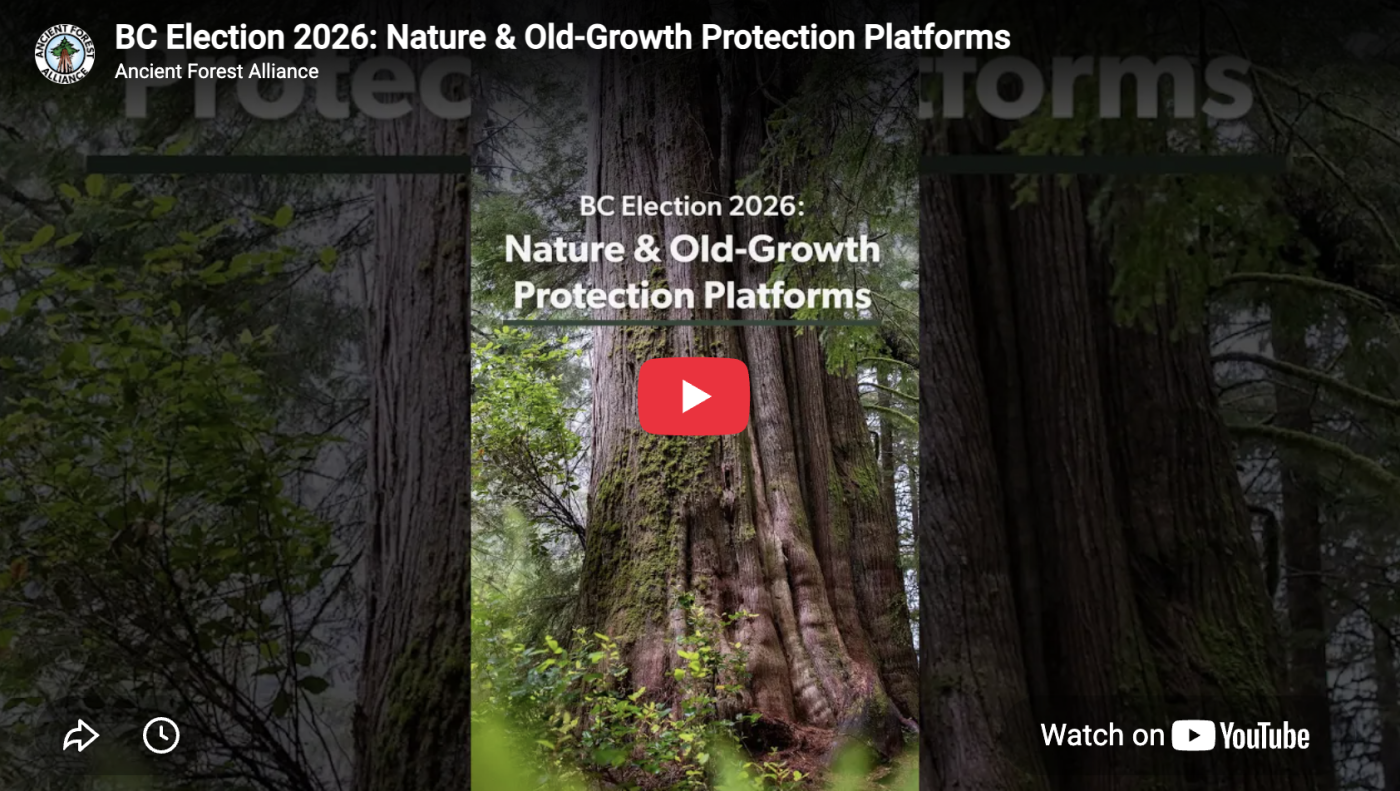
TJ Watt2026-10-22 16:54:062026-10-22 16:59:41NEW Video: BC Election 2026: Nature & Old-Growth Protection
https://ancientforestalliance.org/wp-content/uploads/2026/10/Screenshot-2026-10-22-at-4.54.32-PM.png
952
1684
TJ Watt
https://ancientforestalliance.org/wp-content/uploads/2026/05/Ancient-Forest-Alliance-logo.svg
TJ Watt2026-10-22 16:54:062026-10-22 16:59:41NEW Video: BC Election 2026: Nature & Old-Growth ProtectionRelated Posts
https://ancientforestalliance.org/wp-content/uploads/2026/10/Screenshot-2026-10-22-at-4.54.32-PM.png
952
1684
TJ Watt
https://ancientforestalliance.org/wp-content/uploads/2026/05/Ancient-Forest-Alliance-logo.svg
TJ Watt2026-10-22 16:54:062026-10-22 16:59:41NEW Video: BC Election 2026: Nature & Old-Growth Protection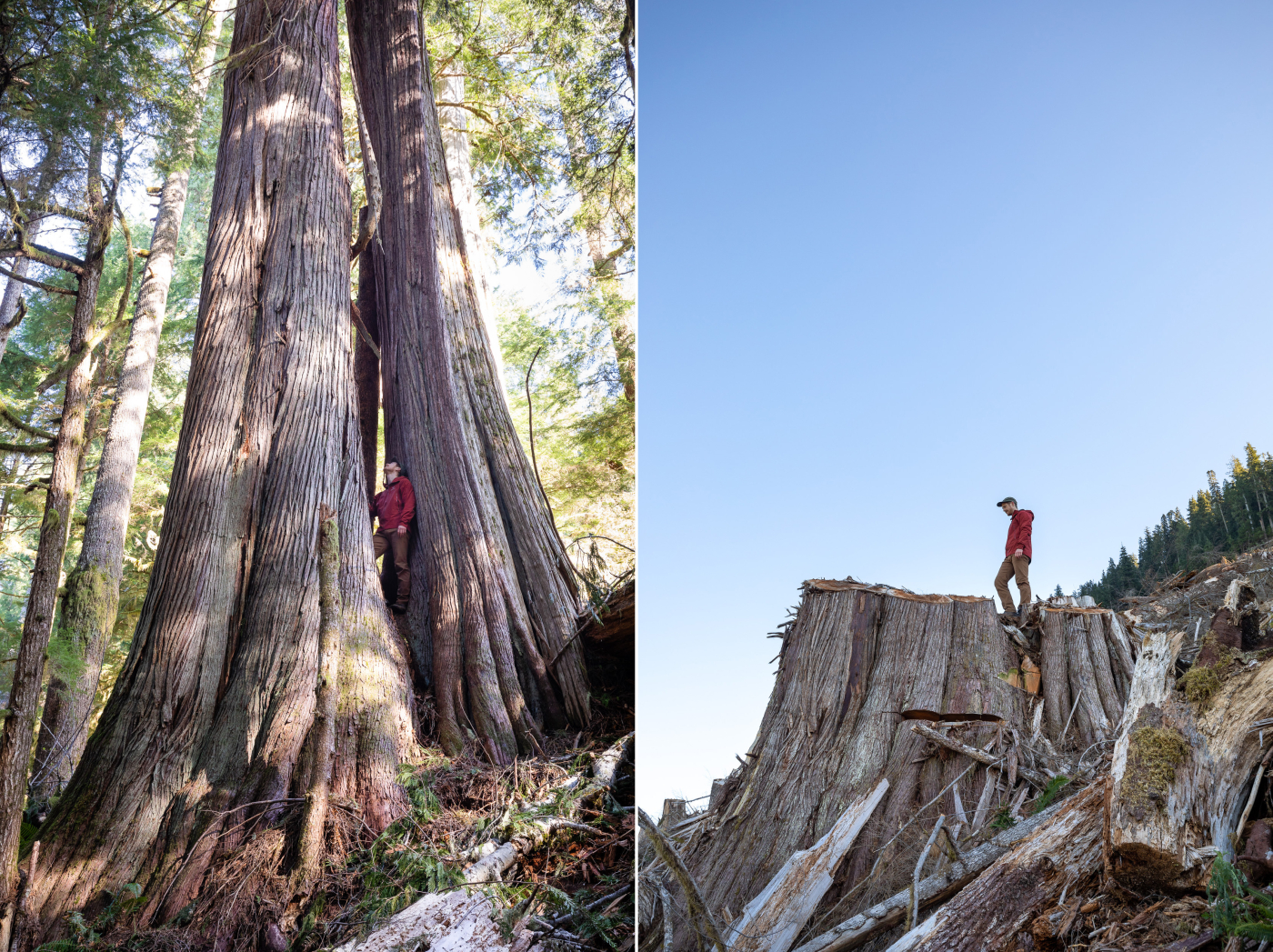 https://ancientforestalliance.org/wp-content/uploads/2026/10/Before-After-Caycuse-TJ-Watt-4-scaled.jpg
1915
2560
TJ Watt
https://ancientforestalliance.org/wp-content/uploads/2026/05/Ancient-Forest-Alliance-logo.svg
TJ Watt2026-10-16 17:36:002026-10-21 13:40:23BC Election 2026: Where do Parties Stand on Nature & Old-Growth?
https://ancientforestalliance.org/wp-content/uploads/2026/10/Before-After-Caycuse-TJ-Watt-4-scaled.jpg
1915
2560
TJ Watt
https://ancientforestalliance.org/wp-content/uploads/2026/05/Ancient-Forest-Alliance-logo.svg
TJ Watt2026-10-16 17:36:002026-10-21 13:40:23BC Election 2026: Where do Parties Stand on Nature & Old-Growth? https://ancientforestalliance.org/wp-content/uploads/2026/10/BC-Election-2026-Banner-1-1-scaled.jpg
1439
2560
TJ Watt
https://ancientforestalliance.org/wp-content/uploads/2026/05/Ancient-Forest-Alliance-logo.svg
TJ Watt2026-10-09 18:16:372026-10-16 17:44:41Where do BC’s Major Political Parties Stand on Nature Protection?
https://ancientforestalliance.org/wp-content/uploads/2026/10/BC-Election-2026-Banner-1-1-scaled.jpg
1439
2560
TJ Watt
https://ancientforestalliance.org/wp-content/uploads/2026/05/Ancient-Forest-Alliance-logo.svg
TJ Watt2026-10-09 18:16:372026-10-16 17:44:41Where do BC’s Major Political Parties Stand on Nature Protection?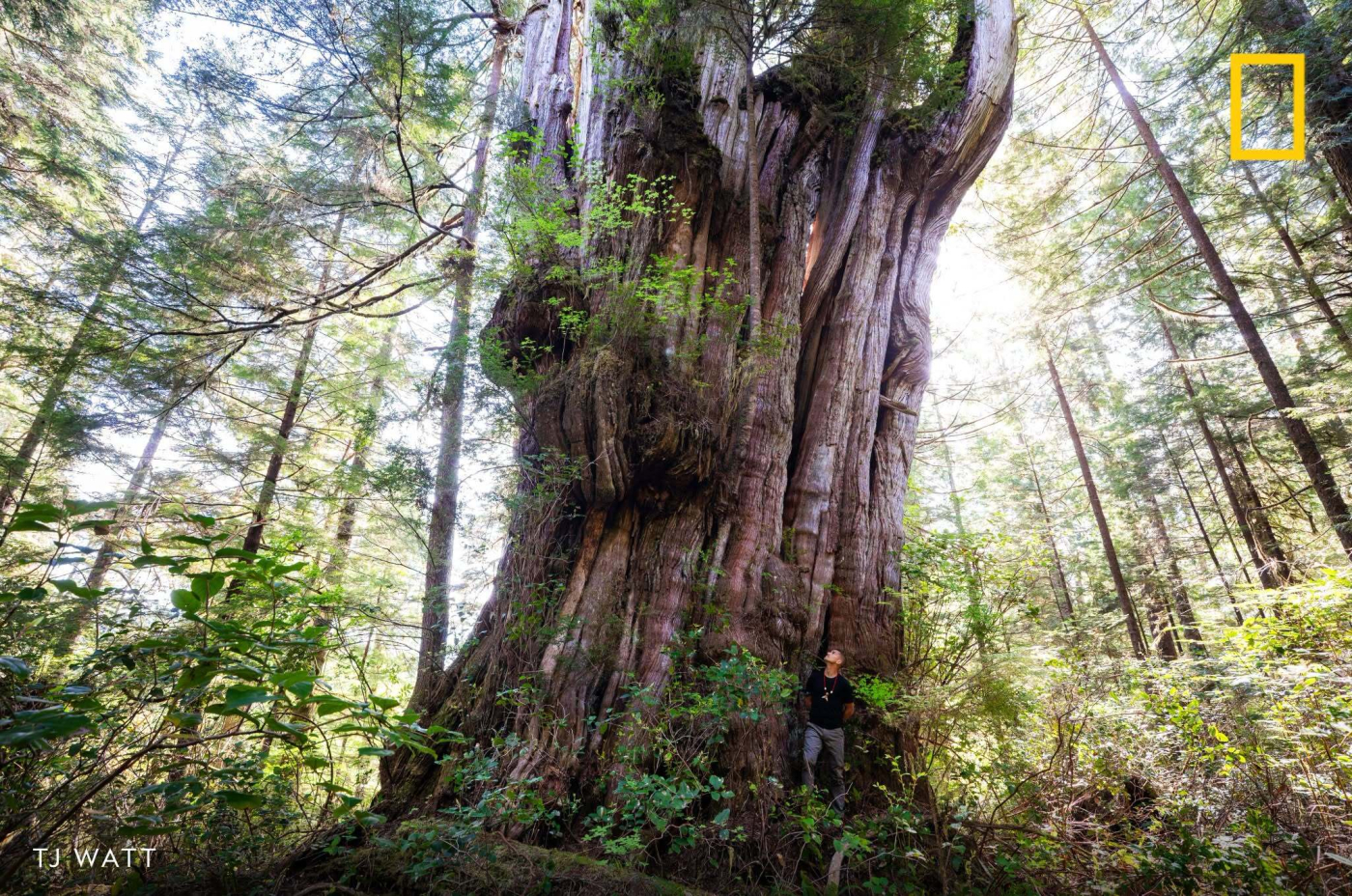 https://ancientforestalliance.org/wp-content/uploads/2026/10/Nat-Geo-Travel-Flores-Cedar.jpg
1357
2048
TJ Watt
https://ancientforestalliance.org/wp-content/uploads/2026/05/Ancient-Forest-Alliance-logo.svg
TJ Watt2026-10-02 13:38:152026-10-02 13:38:15Nat Geo Travel Features TJ Watt’s Photo of Flores Cedar
https://ancientforestalliance.org/wp-content/uploads/2026/10/Nat-Geo-Travel-Flores-Cedar.jpg
1357
2048
TJ Watt
https://ancientforestalliance.org/wp-content/uploads/2026/05/Ancient-Forest-Alliance-logo.svg
TJ Watt2026-10-02 13:38:152026-10-02 13:38:15Nat Geo Travel Features TJ Watt’s Photo of Flores CedarTake Action
 Donate
Support the Ancient Forest Alliance with a one-time or monthly donation. Send a Message
Send an instant message to key provincial decision-makers.
B.C. looking for new ways to protect ancient trees
/in Media ReleaseVICTORIA — The province is looking at new ways to safeguard ancient trees or groves of forest giants in response to the wishes of British Columbians, says Forest Minister Pat Bell.
In the wake of a report from the Forest Practices Board last week that said creative ways should be found to protect giant trees, Bell has asked the province’s chief forester to look into the matter.
Bell, who has previously emphasized that B.C. has ample protection for old-growth trees, said the change is driven by the public mood.
“For me, what has changed is not whether or not there’s protection for the 10 largest trees or for unique situations such as Avatar Grove. There’s just a public desire to see something stronger than what already exists,” he said.
Any tweaking of existing rules or new protection tools will be “surgical” in nature, allowing the ministry to protect unique individual trees or specific patches of forest around them, Bell said.
A complaint about giant trees cut adjacent to a stand of massive trees nicknamed Avatar Grove, near Port Renfrew, sparked the Forest Practices Board report. Bell said Avatar Grove could be considered a unique circumstance.
“It is certainly one of the areas which could fall within a measure of this sort,” he said.
However, realistically, there was little chance Avatar Grove would have been logged because of the quality of the wood, said Bell, who has been in contact with the Teal-Jones Group, which holds the cutting licence.
“I have had a chat with them and they are quite interested in working with us on it,” he said.
Rick Jeffery, Coast Forest Products Association president, said he is looking forward to hearing what rule changes might be proposed, but the vast majority of monumental trees and groves are already protected by existing regulations.
“Every once in awhile you run across something like Avatar Grove that hasn’t been captured by those rules and it brings all sort of controversy,” Jeffery said.
“But something like that is by far and away the exception, not the rule.”
Regulations for operating in B.C.’s forests are stringent and the 3.5 million hectares set aside for parks and conservancies contain old-growth and monumental trees, Jeffery said.
“The forest industry operates on only 2.5 million hectares and, in any given year, we are cutting about one per cent of that,” he said.
Bell’s apparent change of heart has surprised Ken Wu of the Ancient Forest Alliance, who has campaigned for protection of old-growth ecosystems.
“I have to admit this was an unexpected surprise considering the rocky relationship the B.C. government has had with our campaign for so long,” Wu said.
“If this is genuine, minister Bell should be commended for taking the first steps toward positive change here. Let’s see if this pans out.”
He argued there is an urgent need to protect old-growth ecosystems on a larger scale.
But Bell said any new protection for special trees will not include a ban on logging old-growth or a new old-growth strategy.
“B.C. has more old-growth today than we ever have had,” Bell said.
“We are not running out of old growth on Vancouver Island or in B.C. They are maturing at a level that exceeds any harvest that is taking place.”
Click here to view original article
B.C. needs endangered species legislation
/in News CoverageTweet
As a conservation biologist, I am charged with the responsibility of maintaining the genetic tapestry of life on our planet. And as a science communicator my job is to explain why nature and a healthy environment are crucial to the well-being of corporations, governments and children.
Super, naturalBritish Columbia California
Currently, B.C. is without endangered species legislation and 1,900 species are at risk from local extinction or extirpation. This is unacceptable for a number of reasons.
Over the past quarter of a century biologists have learned a lot about the web of life with rainforests, grasslands and all B.C. ecosystems.
It turns out that old-growth coastal rainforests are incredibly rich ecosystems that act as massive carbon warehouses offering all life a buffer against rising greenhouse gases and global warming. The caveat, however, is that these rainforests need to remain intact and undisturbed by human development. Moreover, their very health and well-being depend upon the presence of myriad critters, which in turn require habitat provided by these ancient temperate rainforests.
For instance, in order for Sitka spruce, Canada’s tallest trees, to grow in excess of 95 metres -the equivalent of a 31-storey skyscraper -they require a microscopic soil fungus to help their roots extract nutrients and vitamins from the nutrient-poor rainforest soils and protect them from summertime droughts. In return, theSitka
In order for the fungus to spread in the ancient rainforest it relies upon the nocturnal flying squirrel to eat its mushroom or fruit bodies in the late summer and poop the spores or seeds in perfect self-contained fertilizer packs throughout the forest. Flying squirrels are the main prey for endangered spotted owls. A breeding pair of spotted owls requires 3,400 hectares of old-growth rainforest in order to survive.
Some of my colleagues have spent their lifetimes observing and understanding how big trees in oldgrowth rainforests get so tall. It’s not just the microscopic relationships in soils; rather, it’s a combination of factors, including the presence of canopy lichens, half fungus and half algae, which require forests to be at least 150 to 200 years old before they can begin to farm atmospheric nitrogen into nitrates -a form Sitka spruce can use because these ancient rainforests severely lack nitrogen.
Old-growth rainforests are still being felled in B.C. In fact, thousand-yearold western red cedars are slated to be logged in the inland rainforest’sRobson Valley Rocky Mountains where grizzly bears still feed on wild oceangoing salmon.
Habitat destruction is the leading cause of species extinction on our planet.
Global warming is also exerting additional pressures on B.C. forests.
Since 1998, mountain pine beetle outbreaks have killed an estimated 700 million cubic metres of pine, mostly lodgepole, in B.C. -in excess of half of the province’s commercial pine. Warmer winters, a long fire-suppression policy and stressed pines have all collided in the perfect feeding frenzy.
The bark beetle infestations will continue until they run out of lodgepole in the next couple of years. In the meantime, these forests -which once absorbed rising levels of CO2 -have now become a source of CO2 as they begin to decompose. Over the next 10 years, the beetle-killed forests will emit 250 million tonnes of CO2 or the equivalent of five years of car and light truck emissions inCanada
B.C.’s Crown merchantable forest has shrunk, dramatically. The worldwide recession has exacerbated the weak demand for B.C. timber and thousands of B.C. forest workers have lost their jobs.
It’s time to protect the remaining old-growth forests, animals and plants (some with potent medicinal value) and all ecosystems with science-based endangered species legislation. Accelerating the harvest of ancient coastal and inland rainforests will impoverish our children by dismantling the tapestry of life and hasten the loss of species diversity throughout the province. Moreover, tourism is poised to take over as the leading revenue-bearing industry in B.C. Eco-tourism alone is set to add more than 13,000 new jobs by 2015.
British Columbians are very fortunate because each voter has a stake in the Crown lands, which make up 95 per cent of the province, including the ancient rainforests. The value of all ecosystems and their interconnected webs of life are priceless in the 21st century and they require endangered species legislation to protect them -now!
Dr. Reese Halter is a conservation biologist atCalifornia Lutheran University in Thousand Oaks
Click here to view original article
BC Government considers protecting "Avatar Grove"
/in News CoverageThe BC government announced Friday that it is looking into the possibility of protecting the old growth trees in the “Avatar Grove” near Port Renfrew.
Forests minister Pat Bell said in an interview Friday that he has asked the province’s chief forester to review existing regulations for protecting trees that, because of their age, have values that make them worth preserving. [Original article no longer available]
“Certainly we have been hearing the message for some time from different organizations that we should be considering some tools, perhaps new tools that we could use when particularly unique trees are identified. They may be individual tees or small areas like the Avatar Grove that provide incremental value over and above the timber resource value,” Bell said.
The Avatar Grove is an easily accessible stand of red cedars and Douglas firs on southern Vancouver Island, a 15-minute drive from Port Renfrew.
Tweet