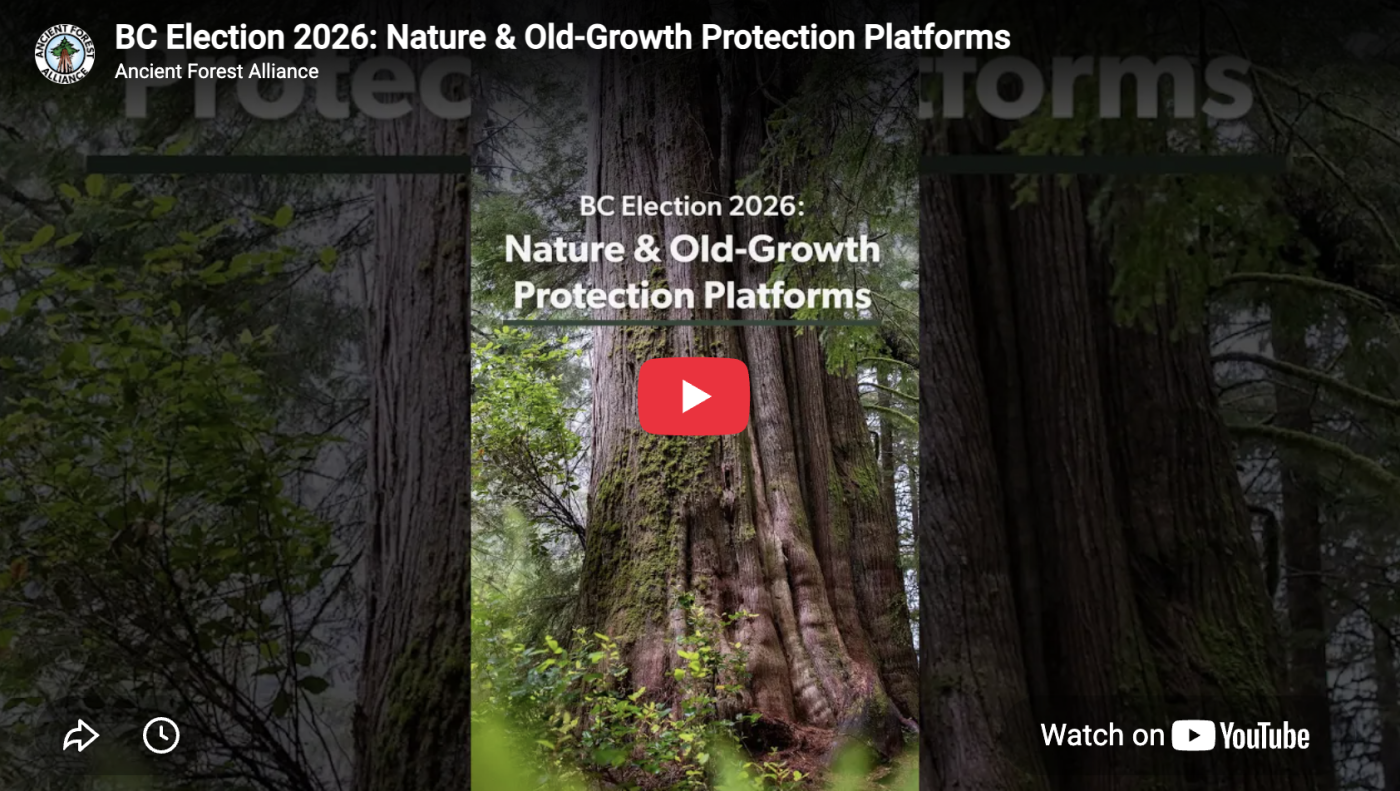
 https://ancientforestalliance.org/wp-content/uploads/2026/10/Screenshot-2026-10-22-at-4.54.32-PM.png
952
1684
TJ Watt
https://ancientforestalliance.org/wp-content/uploads/2026/05/Ancient-Forest-Alliance-logo.svg
TJ Watt2026-10-22 16:54:062026-10-22 16:59:41NEW Video: BC Election 2026: Nature & Old-Growth Protection
https://ancientforestalliance.org/wp-content/uploads/2026/10/Screenshot-2026-10-22-at-4.54.32-PM.png
952
1684
TJ Watt
https://ancientforestalliance.org/wp-content/uploads/2026/05/Ancient-Forest-Alliance-logo.svg
TJ Watt2026-10-22 16:54:062026-10-22 16:59:41NEW Video: BC Election 2026: Nature & Old-Growth ProtectionRelated Posts
https://ancientforestalliance.org/wp-content/uploads/2026/10/Screenshot-2026-10-22-at-4.54.32-PM.png
952
1684
TJ Watt
https://ancientforestalliance.org/wp-content/uploads/2026/05/Ancient-Forest-Alliance-logo.svg
TJ Watt2026-10-22 16:54:062026-10-22 16:59:41NEW Video: BC Election 2026: Nature & Old-Growth Protection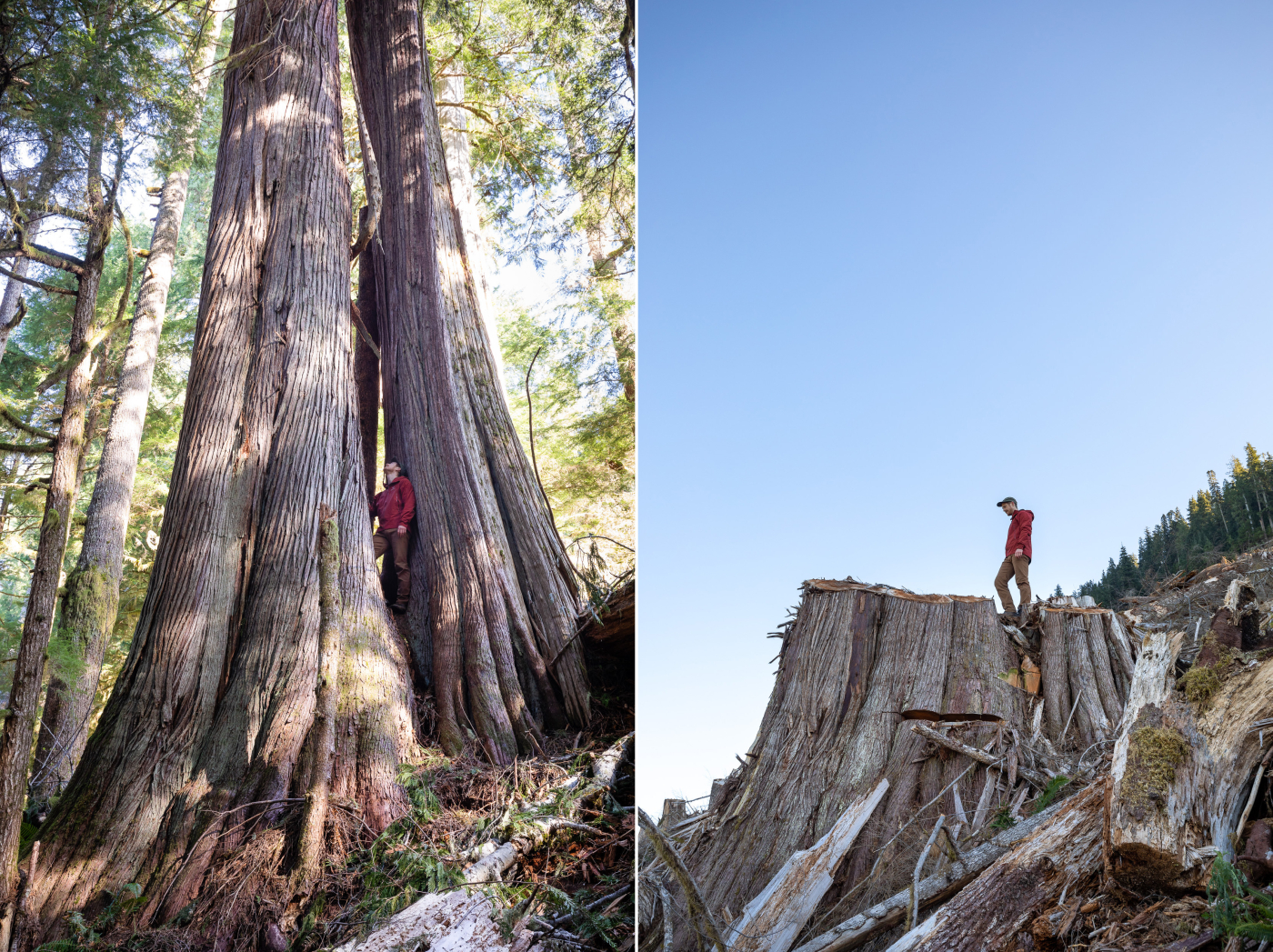 https://ancientforestalliance.org/wp-content/uploads/2026/10/Before-After-Caycuse-TJ-Watt-4-scaled.jpg
1915
2560
TJ Watt
https://ancientforestalliance.org/wp-content/uploads/2026/05/Ancient-Forest-Alliance-logo.svg
TJ Watt2026-10-16 17:36:002026-10-21 13:40:23BC Election 2026: Where do Parties Stand on Nature & Old-Growth?
https://ancientforestalliance.org/wp-content/uploads/2026/10/Before-After-Caycuse-TJ-Watt-4-scaled.jpg
1915
2560
TJ Watt
https://ancientforestalliance.org/wp-content/uploads/2026/05/Ancient-Forest-Alliance-logo.svg
TJ Watt2026-10-16 17:36:002026-10-21 13:40:23BC Election 2026: Where do Parties Stand on Nature & Old-Growth? https://ancientforestalliance.org/wp-content/uploads/2026/10/BC-Election-2026-Banner-1-1-scaled.jpg
1439
2560
TJ Watt
https://ancientforestalliance.org/wp-content/uploads/2026/05/Ancient-Forest-Alliance-logo.svg
TJ Watt2026-10-09 18:16:372026-10-16 17:44:41Where do BC’s Major Political Parties Stand on Nature Protection?
https://ancientforestalliance.org/wp-content/uploads/2026/10/BC-Election-2026-Banner-1-1-scaled.jpg
1439
2560
TJ Watt
https://ancientforestalliance.org/wp-content/uploads/2026/05/Ancient-Forest-Alliance-logo.svg
TJ Watt2026-10-09 18:16:372026-10-16 17:44:41Where do BC’s Major Political Parties Stand on Nature Protection?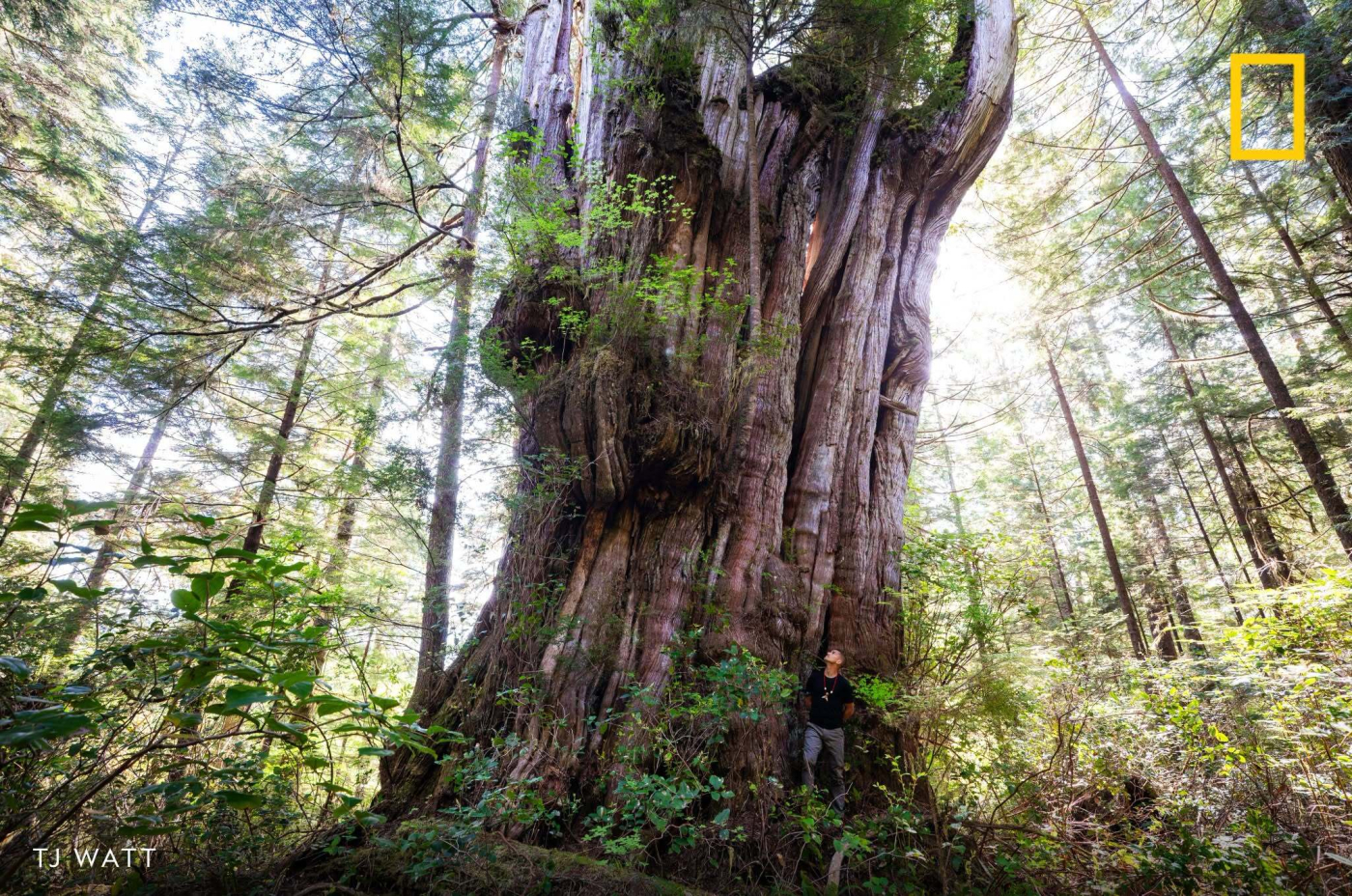 https://ancientforestalliance.org/wp-content/uploads/2026/10/Nat-Geo-Travel-Flores-Cedar.jpg
1357
2048
TJ Watt
https://ancientforestalliance.org/wp-content/uploads/2026/05/Ancient-Forest-Alliance-logo.svg
TJ Watt2026-10-02 13:38:152026-10-02 13:38:15Nat Geo Travel Features TJ Watt’s Photo of Flores Cedar
https://ancientforestalliance.org/wp-content/uploads/2026/10/Nat-Geo-Travel-Flores-Cedar.jpg
1357
2048
TJ Watt
https://ancientforestalliance.org/wp-content/uploads/2026/05/Ancient-Forest-Alliance-logo.svg
TJ Watt2026-10-02 13:38:152026-10-02 13:38:15Nat Geo Travel Features TJ Watt’s Photo of Flores CedarTake Action
 Donate
Support the Ancient Forest Alliance with a one-time or monthly donation. Send a Message
Send an instant message to key provincial decision-makers.
Ancient Forest Alliance Stands in Solidarity with Forestry Workers
/in Media ReleaseFriday, September 17th, 2010
Environmental Group’s Forest Campaigner, TJ Watt, speaks to hundreds-strong forestry union rally
Nanaimo, BC, Canada – In a seemingly unlikely event, the Ancient Forest Alliance stood in solidarity with members of the Pulp, Paper and Woodworkers of Canada and the United Steelworkers union in Nanaimo yesterday as part of the ongoing fight to ban raw log exports in BC. AFA forest campaigner TJ Watt spoke alongside union officials, Nanaimo MLA Leonard Krog, and Nanaimo-North Cowichan MLA Doug Routley to the hundreds of workers in attendance, denouncing the export of raw logs and calling for the protection of BC’s threatened forestry jobs.
“Under Gordon Campbell’s BC Liberals we have seen over 60 mills shut down across the province since 2003 while raw log exports have nearly doubled” said Watt. “It’s time to ban raw log exports in BC, to rejuvenate local mills, and to once again provide secure jobs for the thousands upon thousands of forestry workers who have been kicked aside by this backwards policy”. Simply put – “Exported logs = exported jobs”.
The AFA believes there can be a solution that works for both our ancient forests and our forestry workers. “The BC Liberal government needs to stimulate investment in the retooling of old-growth sawmills so they can handle second-growth trees. With 90% of the most productive lands on Vancouver Island having already been logged, the future of this industry is in sustainable second-growth forestry,” says Brendan Harry, communications director of the Ancient Forest Alliance. “They also need to establish incentives for the creation of value-added facilities where we will see more refined products made here in BC and even more jobs created. This should be a no brainer.”
It is inevitable that there will be a transition to logging of only second-growth forests in the not so distant future as the remaining old-growth forests are logged out on Vancouver Island and the Southern Mainland . The Ancient Forest Alliance calls on the BC Liberal government to make this transition happen now, in a planned, rational way, allowing for the protection what little endangered old-growth ecosystems are left and ensuring a smooth shift to sustainable second-growth logging instead.
With so little of our ancient forests remaining, the Ancient Forest Alliance is calling on the BC Liberal government to:
· Immediately protect the most at-risk old-growth forests – such as those on the South Island where only 12% remains and on eastern Vancouver Island where only 1% remains.
· Undertake a Provincial Old-Growth Strategy that will inventory the old-growth forests across the province and protect them where they are scarce through legislated time lines to quickly phase-out old-growth logging in those regions (ie. Vancouver Island, Lower Mainland, southern Interior, etc.).
· Ensure that second-growth forests are logged at a sustainable rate of cut
· End the export of raw logs in order to create guaranteed log supplies for local milling and value-added industries.
· Assist in the retooling and development of mills and value-added facilities to handle second-growth logs.
· Undertake new land-use planning initiatives based on First Nations land-use plans, ecosystem-based scientific assessments, and climate mitigation strategies involving forest protection.
“If the industry does not adjust in order process second-growth trees, what happens down the road when that’s basically all that’s available? Where are the forestry jobs going to be?” Watt wonders. “The rest of most the world is logging second, third, fourth growth and making it work. We need to be moving up the value chain, not down it. In the end, it’s about the long term sustainability of a resource and an industry, and right now we’re moving in completely the wrong direction.”
Cantelon Worker Deflects Heat
/in News CoverageParksville-Qualicum MLA Ron Cantelon took heat after a staff member used an environmental group’s name to defend government logging policies, but his constituency assistant says her actions were taken out of context.
Ancient Forest Alliance campaigners took issue after a Cantelon’s constituency assistant included an AFA website hyperlink in an e-mail to a Nanoose Bay woman asking government to save coastal Douglas fir forests.
Helga Schmitt is urging Cantelon to convince the province to abandon plans to allow Snaw-naw-as First Nation to log District Lot 33, since the land is rare, mature coastal Douglas fir forest. The AFA too opposes logging DL 33, but did applaud government for setting aside other CDF forests on the Island.
Cantelon is on vacation and can’t be reached.
Cantelon’s assistant, Caroline Waters responded to Schmitt’s email with a message containing an AFA website link, as evidence the province is protecting CDF forests.
AFA forest campaigner Ken Wu, said Cantelon is using the group’s name “to insinuate that we somehow support logging” in DL 33. Waters said the link was only in response “to her letter saying please protect coastal Douglas fir.”
Schmitt said she’s glad CDF forests are being protected, “but it’s miniscule, that’s not enough.’
Click here to view original article.
AFA denounces MLA office
/in News CoverageAn environmental group working to protect old-growth forests in B.C. is condemning local MLA Ron Cantelon’s office for insinuating they support the logging of a parcel of Coastal Douglas Fir forest in Nanoose Bay.
“It’s a sleazy tactic to try and link us in their responses to concerend citizens when they write letters back as somehow insinuating that we are supporting the Nanoose Bay ancient forest logging,” said Ken Wu, one of the founders of the Ancient Forest Alliance (AFA) in Victoria.
Wu said he found out Cantelon’s office was sending out links to an article on his organization’s website from local citizens who received e-mail responses to their concerns about DL33 in Nanoose Bay.
He said although AFA is supportive of the government’s recent announcement to protect 1600 hectares of CDF — and thanks them in the linked article — the government needs to do more, and specifically protect DL33.
“(The government’s recent announcement) is a good thing and we have to say thank you and give credit where credit is due,” said Wu, “but at the same time we’ve got to put up a fight every time the government takes a backwards stance and right now, overall, their stance is very backwards and destructive when it comes to the rest of our old growth forests.”
The letter Wu is speaking of is an e-mail that came from Caroline Waters, constituency assistant for Ron Cantelon, in response to an e-mail from Helga Schmitt, a local resident who has been active in the fight to save DL 33.
Waters said she was simply sending out a link to try and explain that positive things have happened with CDF land.
“I’m just sending back a response to the neighbour. She doesn’t want the lot next door cleared and I certainly appreciate that,” said Waters.
“I’m sure every person in Parksville who had something going on in the next lot would be in the same exact situation … they would approve of it if it were happening next to somebody else but not so much when it’s right there where they are,” she said.
Waters went on to say her office recommends that all residents that oppose logging on this site should meet with the Nanoose First Nations, who “have been completley open to holding and meeting groups up there.”
Wu said perhaps Cantelon’s office thought citizens would only read the beginning of the linked document that commends the government.
“If you look at what we wrote we actually made it clear that we’re actually against it,” he said, “but maybe they thought that people don’t necessarily read the whole text.”
Wu said he likes the analogy that just because someone gives you a rain jacket doesn’t mean you’re going to be thanking them when they dump a bucket of cold water on your head.
Waters said she just took a quote showing the environmental group was pleased with the amount of land Minister Penner announced for protection, even though it states they would like more.
“It seems I’m just going to be damned no matter what I do,” she said.