 https://ancientforestalliance.org/wp-content/uploads/2026/10/Screenshot-2026-10-22-at-4.54.32-PM.png
952
1684
TJ Watt
https://ancientforestalliance.org/wp-content/uploads/2026/05/Ancient-Forest-Alliance-logo.svg
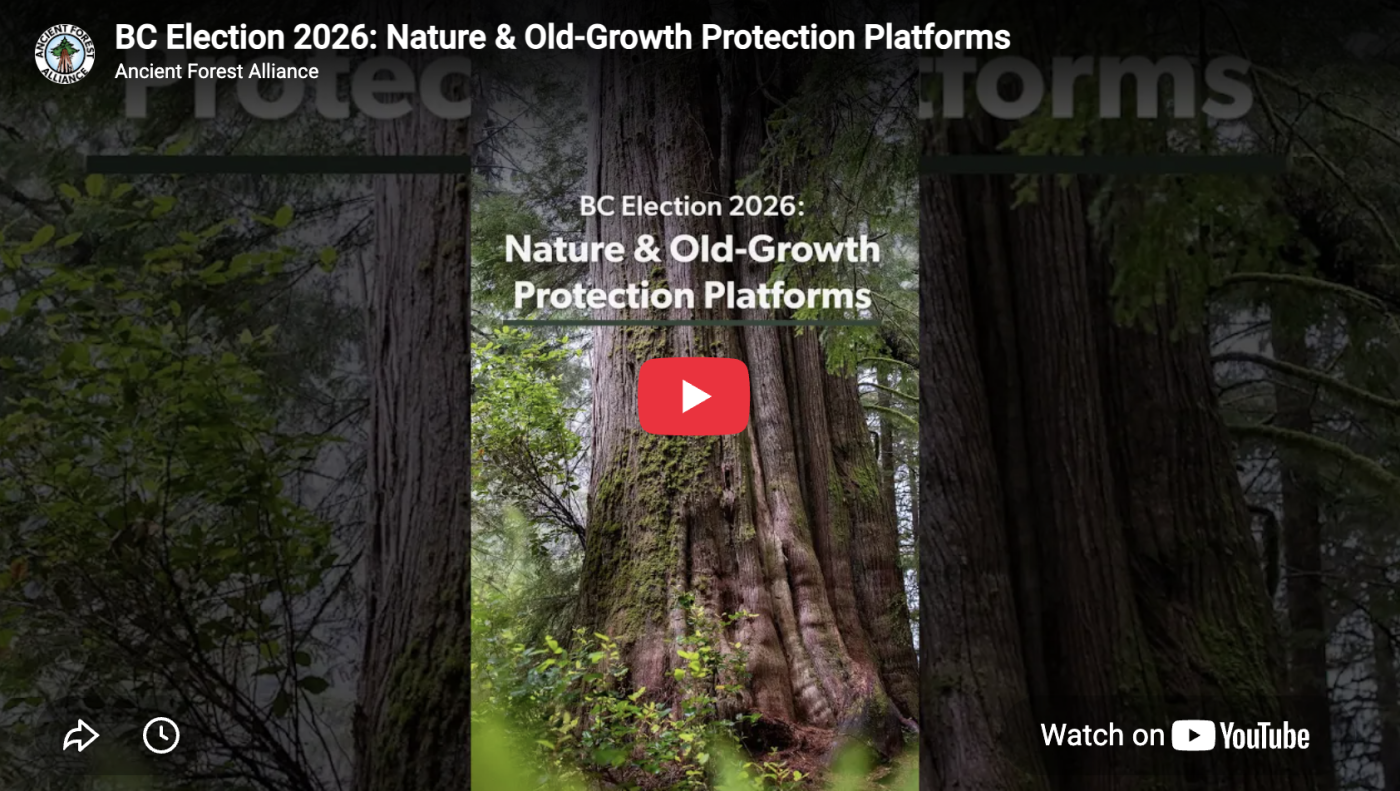
TJ Watt2026-10-22 16:54:062026-10-22 16:59:41NEW Video: BC Election 2026: Nature & Old-Growth Protection
https://ancientforestalliance.org/wp-content/uploads/2026/10/Screenshot-2026-10-22-at-4.54.32-PM.png
952
1684
TJ Watt
https://ancientforestalliance.org/wp-content/uploads/2026/05/Ancient-Forest-Alliance-logo.svg
TJ Watt2026-10-22 16:54:062026-10-22 16:59:41NEW Video: BC Election 2026: Nature & Old-Growth ProtectionRelated Posts
https://ancientforestalliance.org/wp-content/uploads/2026/10/Screenshot-2026-10-22-at-4.54.32-PM.png
952
1684
TJ Watt
https://ancientforestalliance.org/wp-content/uploads/2026/05/Ancient-Forest-Alliance-logo.svg
TJ Watt2026-10-22 16:54:062026-10-22 16:59:41NEW Video: BC Election 2026: Nature & Old-Growth Protection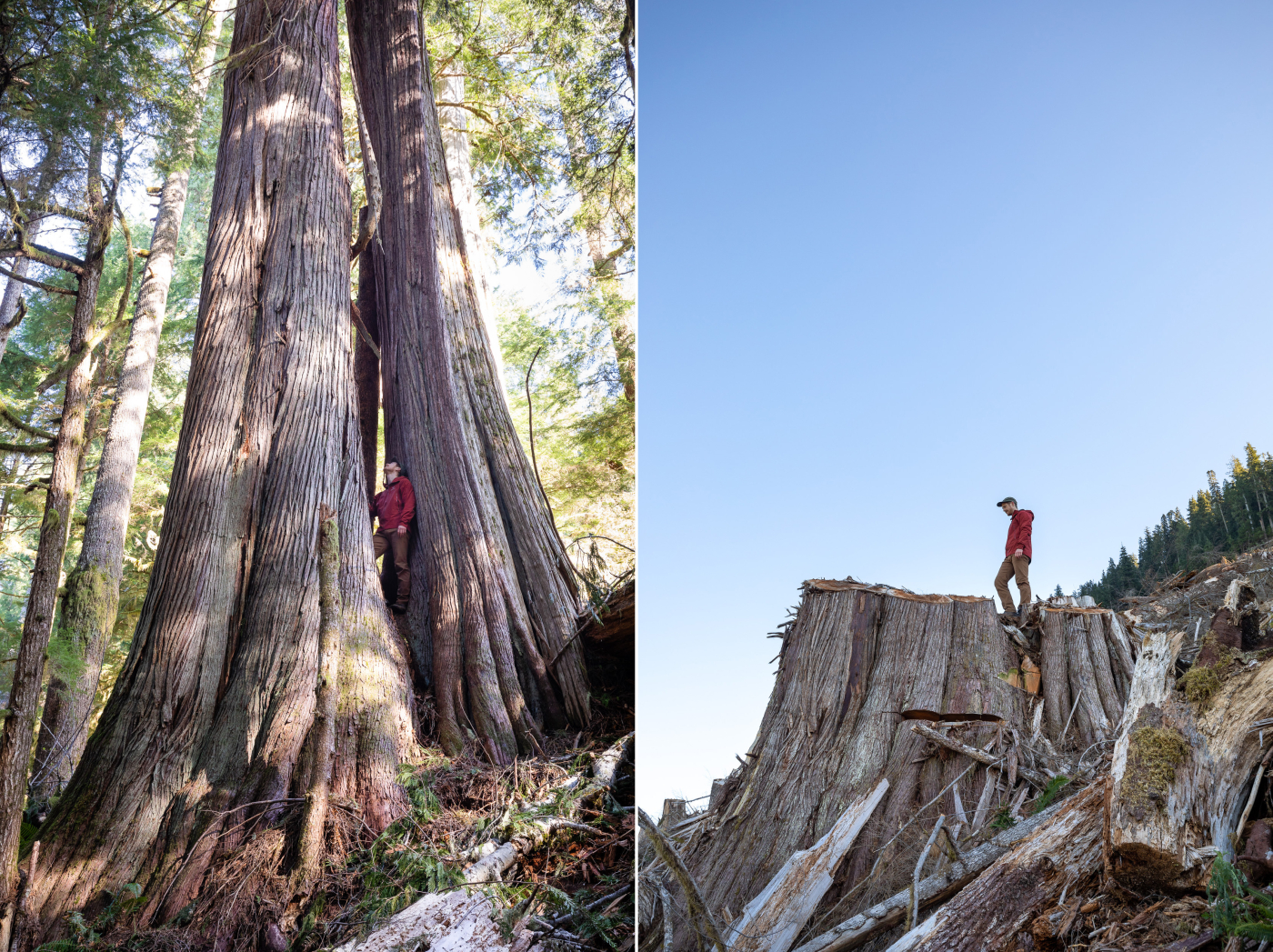 https://ancientforestalliance.org/wp-content/uploads/2026/10/Before-After-Caycuse-TJ-Watt-4-scaled.jpg
1915
2560
TJ Watt
https://ancientforestalliance.org/wp-content/uploads/2026/05/Ancient-Forest-Alliance-logo.svg
TJ Watt2026-10-16 17:36:002026-10-21 13:40:23BC Election 2026: Where do Parties Stand on Nature & Old-Growth?
https://ancientforestalliance.org/wp-content/uploads/2026/10/Before-After-Caycuse-TJ-Watt-4-scaled.jpg
1915
2560
TJ Watt
https://ancientforestalliance.org/wp-content/uploads/2026/05/Ancient-Forest-Alliance-logo.svg
TJ Watt2026-10-16 17:36:002026-10-21 13:40:23BC Election 2026: Where do Parties Stand on Nature & Old-Growth? https://ancientforestalliance.org/wp-content/uploads/2026/10/BC-Election-2026-Banner-1-1-scaled.jpg
1439
2560
TJ Watt
https://ancientforestalliance.org/wp-content/uploads/2026/05/Ancient-Forest-Alliance-logo.svg
TJ Watt2026-10-09 18:16:372026-10-16 17:44:41Where do BC’s Major Political Parties Stand on Nature Protection?
https://ancientforestalliance.org/wp-content/uploads/2026/10/BC-Election-2026-Banner-1-1-scaled.jpg
1439
2560
TJ Watt
https://ancientforestalliance.org/wp-content/uploads/2026/05/Ancient-Forest-Alliance-logo.svg
TJ Watt2026-10-09 18:16:372026-10-16 17:44:41Where do BC’s Major Political Parties Stand on Nature Protection?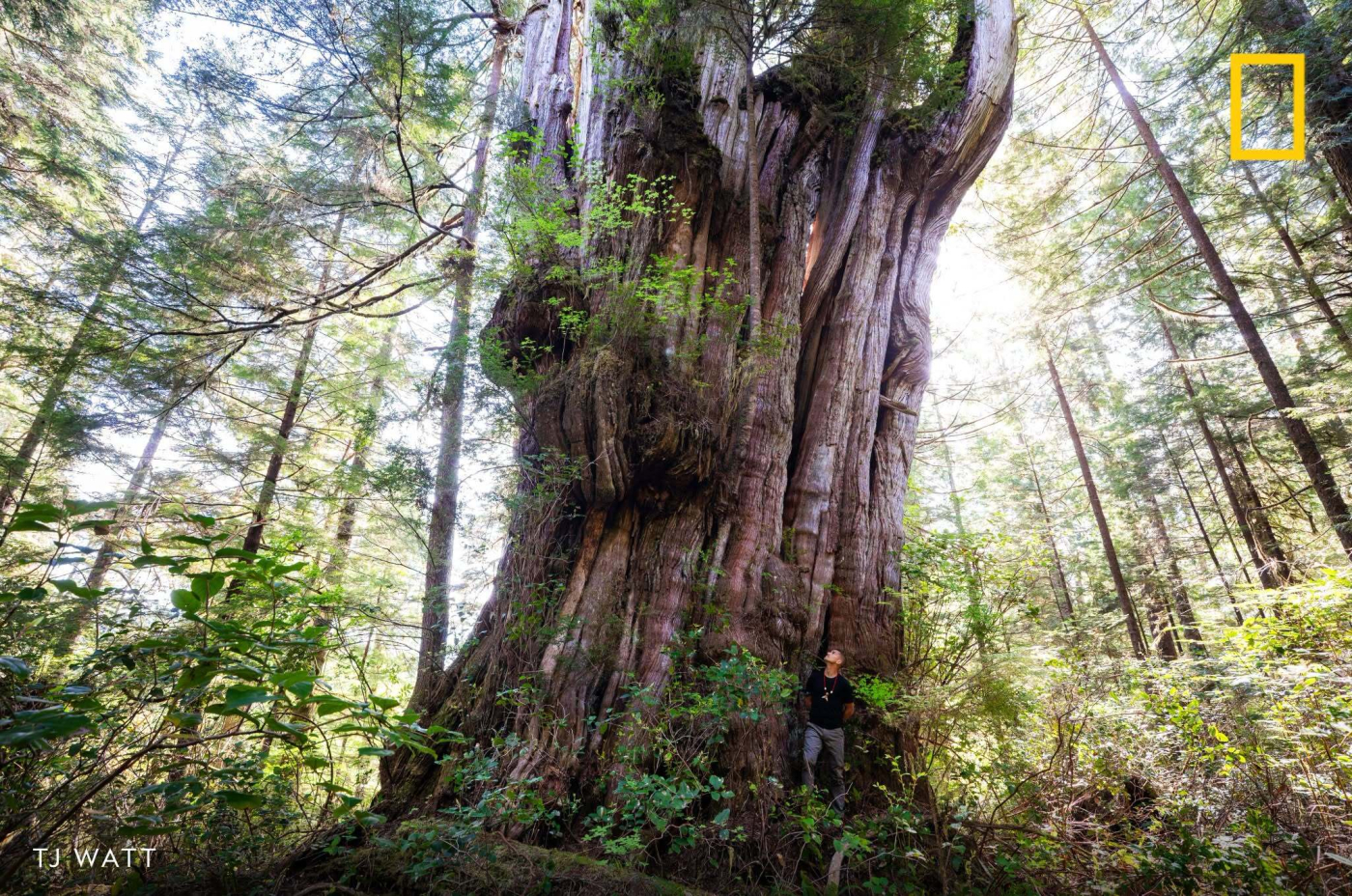 https://ancientforestalliance.org/wp-content/uploads/2026/10/Nat-Geo-Travel-Flores-Cedar.jpg
1357
2048
TJ Watt
https://ancientforestalliance.org/wp-content/uploads/2026/05/Ancient-Forest-Alliance-logo.svg
TJ Watt2026-10-02 13:38:152026-10-02 13:38:15Nat Geo Travel Features TJ Watt’s Photo of Flores Cedar
https://ancientforestalliance.org/wp-content/uploads/2026/10/Nat-Geo-Travel-Flores-Cedar.jpg
1357
2048
TJ Watt
https://ancientforestalliance.org/wp-content/uploads/2026/05/Ancient-Forest-Alliance-logo.svg
TJ Watt2026-10-02 13:38:152026-10-02 13:38:15Nat Geo Travel Features TJ Watt’s Photo of Flores CedarTake Action
 Donate
Support the Ancient Forest Alliance with a one-time or monthly donation. Send a Message
Send an instant message to key provincial decision-makers.
Member of Parliament (MP) Keith Martin’s Excellent Article to Protect the Avatar Grove and Expand Pacific Rim National Park Reserve
/in News CoverageFollowing a trip to visit Avatar Grove and nearby clearcuts in the Gordon River Valley with Ancient Forest Alliance campaigners TJ Watt and Brendan Harry, Esquimalt-Juan de Fuca federal Liberal MP Dr. Keith Martin wrote to the Times Colonist to express his ardent support for the protection of the old-growth forests on southern Vancouver Island. Martin has proposed the expansion of the boundaries of Pacific Rim National Park Reserve to include much of the remaining unprotected old growth stands on the South Island.
Read Keith Martin’s article here: https://ancientforestalliance.org/news-item.php?ID=107
***Please WRITE a LETTER to Keith Martin to give him GREAT THANKS for his support for ancient forest protection and for his excellent proposal! Contact: Honourable Keith Martin, MP for Esquimalt-Juan de Fuca: MartiK1A@parl.gc.ca
In addition, please WRITE to your own MP (https://www.215pledge.ca/write-a-letter/) asking them to support Martin’s proposal.
***Be sure to include your home mailing address so they know you are a real person!
The Week, August 12-18
/in News CoverageDespite the presence of ancient Red cedars and evidence of karst formations under the forest floor, the provincial forest ministry appears to see no need to protect the stand of trees north of Port Renfrew dubbed Avatar Grove.
The ministry recently rejected a proposal by the Port Renfrew Chamber of Commerce and the Sooke Regional Tourism Association to protect the grove in its entirety, arguing that 24 percent of the grove is in an old-growth management area, and that is sufficient protection.
In response, the Ancient Forest Alliance sent out a communique that reads in part, “The Avatar Grove is like the Cathedral Grove of Port Renfrew . . . If the Avatar Grove falls, Port Renfrew and southern Vancouver Island won’t get another chance like this for another thousand years.”
Meanwhile, the Vancouver Island Community Forest Action Network—which has recently mapped the Baird Creek area where the grove stands and claims existence of karst formations—appears to be hatching an action plan.
“In light of the statements by your staff, we will . . . discuss our potential response if the ministry should issue a permit to log Avatar Grove,” the group says.
B.C. environmentalists fight to preserve Avatar Grove
/in News CoverageWhen two forest activists were rooting around for ancient trees along southwest Vancouver Island’s logging roads in December, the pair made an unexpected discovery.
Just a five-minute walk from the road, centuries-old hemlocks, red cedars, firs and an identified evergreen that’s been dubbed Canada’s “gnarliest tree,” stood untouched in a 10-hectare setting, about a 15-minute drive from the village of Port Renfrew.
“How did this get missed?” wondered Ken Wu, who happened upon the site with photographer TJ Watt.
Stunned that the area hadn’t been logged, within a few weeks Mr. Wu, along with other environmentalists, founded the Victoria-based Ancient Forest Alliance, today numbering 8,000 members.
Soon after, Avatar Grove was born.
The Grove has rapidly become the AFA’s “poster child” for old-growth preservation, said AFA campaigner Brendan Harry.
Choosing the name Avatar Grove was a deliberate move to engage the masses that had seen Avatar, one of most-viewed movies in history.
“We use what’s in the culture to reach people,” said Mr. Wu, 36, whose activism began two decades ago in high school.
A previous “save the forest” campaign piggybacked on The Lord of the Rings movies, he said.
As for Avatar, it’s pretty bang-on about respecting the diversity of the natural world, Mr. Wu said.
“The film is a hugely popular expression to save old growth. In the movie, they blow up the forest. Here they cut them down.”
About two months ago, Mr. Wu sent Avatar director, Canadian James Cameron, an invitation to visit Avatar Grove. He hasn’t responded.
Attempts to reach Mr. Cameron (travelling outside North America) via his Hollywood agent Beth Swofford were unsuccessful.
Avatar, in fact, has become the go-to word activated by activists around the world who protest against environmental degradation.
In Toronto on Aug. 13, activists assembled to protest against possible logging of old growth trees on Cortes Island, off mainland B.C.’s west coast.
The name of the forest? Avatar Woods.
Beyond media attention, the AFA wants B.C.’s Ministry of Forests to establish a land-use order to make Avatar Grove and the surrounding 90 hectares, off limits to logging. It’s also calling for the protection of all endangered old-growth on the Island, the Lower Mainland and the Southern Interior, Mr. Harry said.
According to Ministry of Forests spokeswoman Cheekwan Ho, one quarter of Avatar Grove sits in an Old Growth Management Area, which means that portion is protected.
A professional forester with Surrey-based logging company Teal-Jones Group, which owns Avatar Grove, part of its 60,000-hectare Tree Farm Licence 46, said environmental movements don’t seem to mind naming things that aren’t their property.
“It’s their way of identifying a grove of trees in order to get the public interested,” said John Pichugin.
Teal-Jones has not decided whether Avatar Grove will be logged. While the area has been flagged and surveyed, applications have not been made for permits to cut, Mr. Pichugin said.
A wilderness-tour operator maintains that Avatar Grove doesn’t need saving.
“It’s mainly diseased hemlocks in a piece of shit forest,” said Greg Klem.
He has produced the Avafraud Fact Sheet, which he distributes around Port Renfrew.
“People want to save a postage-stamp-size grove. Why save that? I’m all for saving old-growth trees but let’s save something decent. Not this rat’s nest,” said Mr. Klem, who after 15 years of living in Port Renfrew has intimate knowledge of area forests.
Using the phrase Avatar Grove is a marketing scheme, Mr. Klem said. There are far better examples of non-diseased, old-growth forest nearby that would drop the jaws of visitors.
The Port Renfrew Chamber of Commerce and Mr. Klem, who is the vice-president, are at loggerheads.
The rest of the chamber favours the promotion and protection of Avatar Grove because it has been good for local businesses.
“There’s been a substantial increase in tourist traffic,” said Tim Cash, co-owner of Soule Creek Lodge and a Chamber director.
He attributes at least 20 recent stays at his lodge by people coming specifically to see Avatar Grove. The transplanted Torontonian also anticipates visitors will continue treks to Avatar Grove year-round, beneficial to businesses that typically suffer seasonal dry spells.
One seven-person group of guests from the Netherlands and Germany intend to write the province to ask that Avatar Grove not be logged, Mr. Cash said.
Teal-Jones is open to alternate strategies, such as a land swap, to save the old-growth specimens, Mr. Pichugin said.
In the Port Renfrew area, 19,000 hectares of forest are protected, part of 438,000 hectares on Vancouver Island that are in protected areas or parks. Another 38,779 hectares on the Island were identified for possible protection in July, according to ministry spokeswoman Ms. Ho.