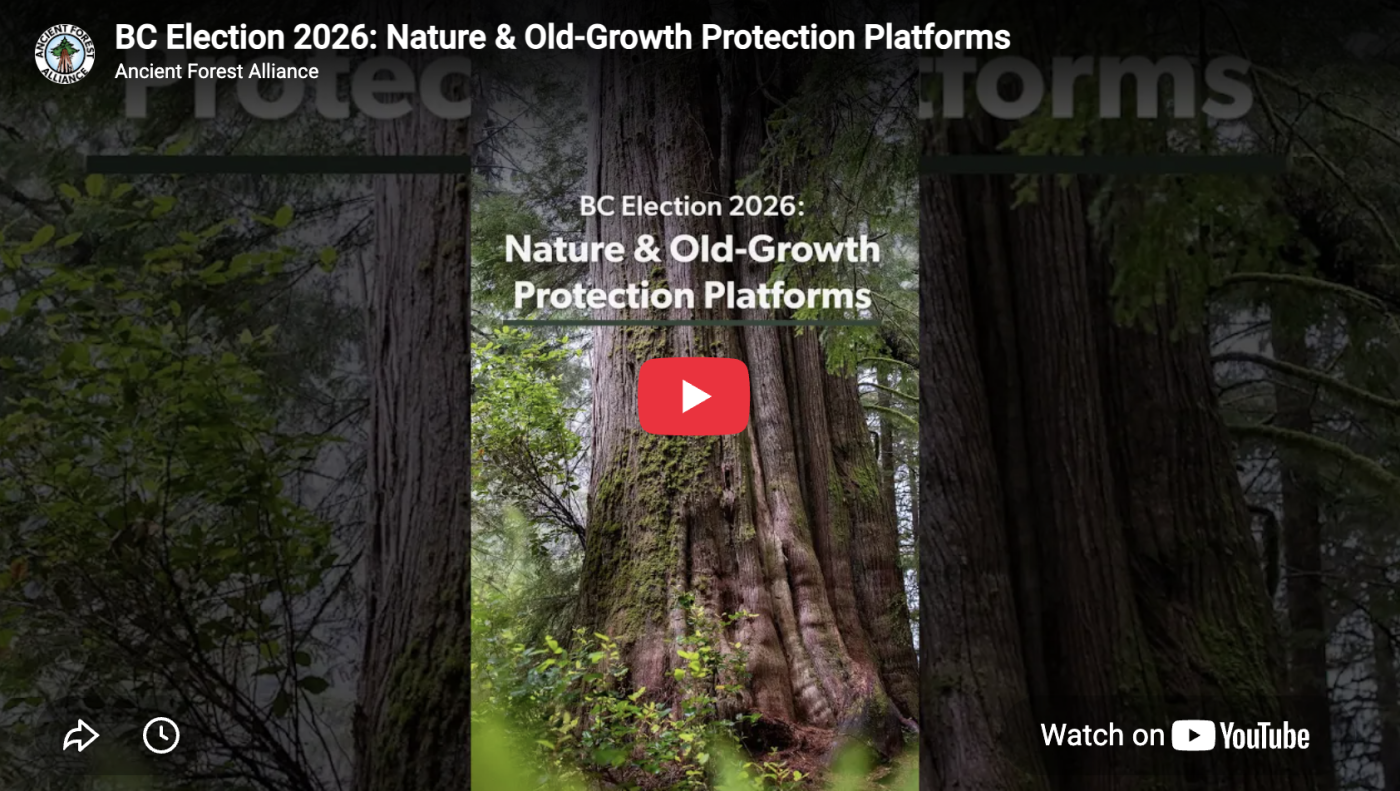
 https://ancientforestalliance.org/wp-content/uploads/2026/10/Screenshot-2026-10-22-at-4.54.32-PM.png
952
1684
TJ Watt
https://ancientforestalliance.org/wp-content/uploads/2026/05/Ancient-Forest-Alliance-logo.svg
TJ Watt2026-10-22 16:54:062026-10-22 16:59:41NEW Video: BC Election 2026: Nature & Old-Growth Protection
https://ancientforestalliance.org/wp-content/uploads/2026/10/Screenshot-2026-10-22-at-4.54.32-PM.png
952
1684
TJ Watt
https://ancientforestalliance.org/wp-content/uploads/2026/05/Ancient-Forest-Alliance-logo.svg
TJ Watt2026-10-22 16:54:062026-10-22 16:59:41NEW Video: BC Election 2026: Nature & Old-Growth ProtectionRelated Posts
https://ancientforestalliance.org/wp-content/uploads/2026/10/Screenshot-2026-10-22-at-4.54.32-PM.png
952
1684
TJ Watt
https://ancientforestalliance.org/wp-content/uploads/2026/05/Ancient-Forest-Alliance-logo.svg
TJ Watt2026-10-22 16:54:062026-10-22 16:59:41NEW Video: BC Election 2026: Nature & Old-Growth Protection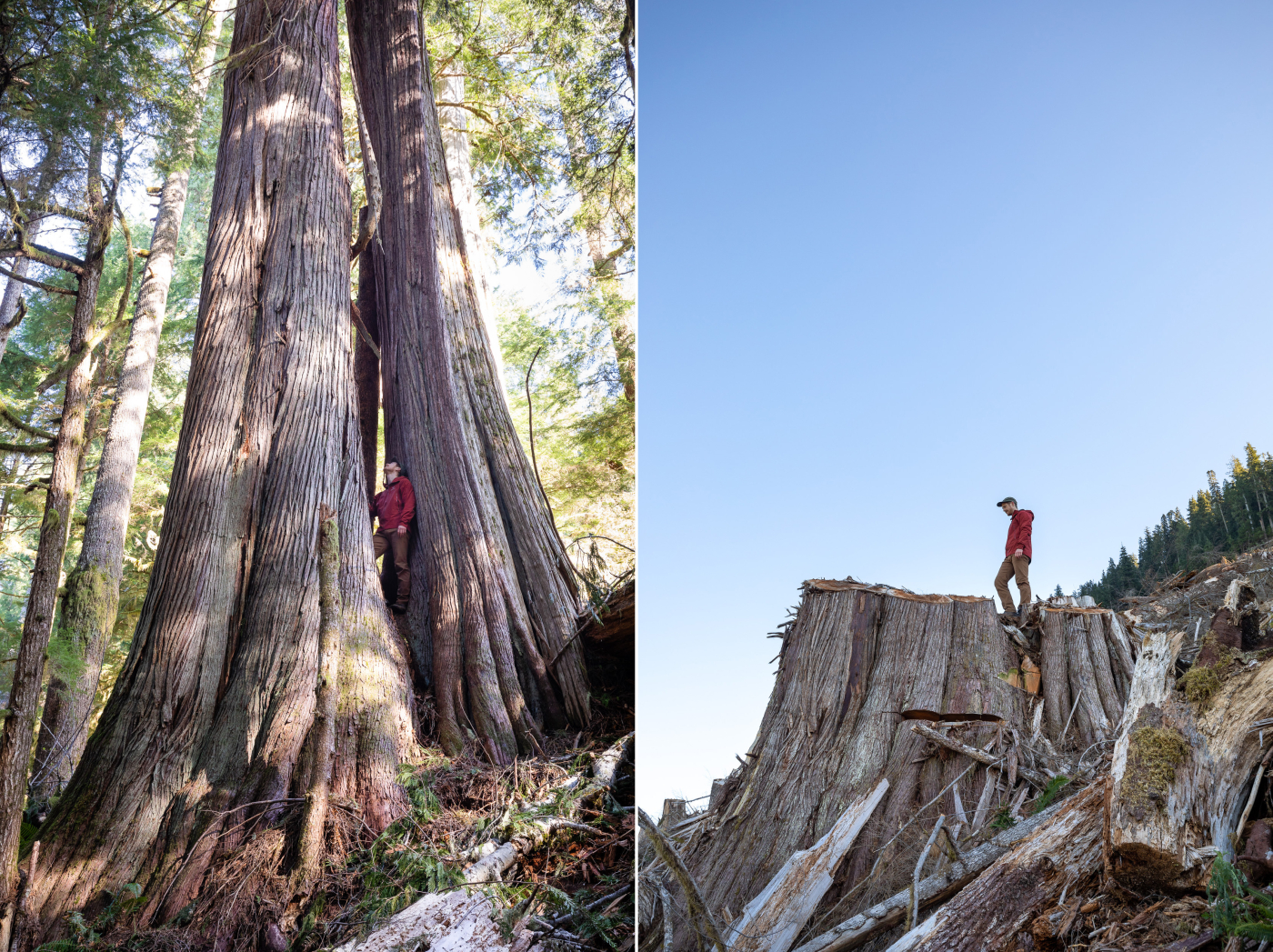 https://ancientforestalliance.org/wp-content/uploads/2026/10/Before-After-Caycuse-TJ-Watt-4-scaled.jpg
1915
2560
TJ Watt
https://ancientforestalliance.org/wp-content/uploads/2026/05/Ancient-Forest-Alliance-logo.svg
TJ Watt2026-10-16 17:36:002026-10-21 13:40:23BC Election 2026: Where do Parties Stand on Nature & Old-Growth?
https://ancientforestalliance.org/wp-content/uploads/2026/10/Before-After-Caycuse-TJ-Watt-4-scaled.jpg
1915
2560
TJ Watt
https://ancientforestalliance.org/wp-content/uploads/2026/05/Ancient-Forest-Alliance-logo.svg
TJ Watt2026-10-16 17:36:002026-10-21 13:40:23BC Election 2026: Where do Parties Stand on Nature & Old-Growth? https://ancientforestalliance.org/wp-content/uploads/2026/10/BC-Election-2026-Banner-1-1-scaled.jpg
1439
2560
TJ Watt
https://ancientforestalliance.org/wp-content/uploads/2026/05/Ancient-Forest-Alliance-logo.svg
TJ Watt2026-10-09 18:16:372026-10-16 17:44:41Where do BC’s Major Political Parties Stand on Nature Protection?
https://ancientforestalliance.org/wp-content/uploads/2026/10/BC-Election-2026-Banner-1-1-scaled.jpg
1439
2560
TJ Watt
https://ancientforestalliance.org/wp-content/uploads/2026/05/Ancient-Forest-Alliance-logo.svg
TJ Watt2026-10-09 18:16:372026-10-16 17:44:41Where do BC’s Major Political Parties Stand on Nature Protection?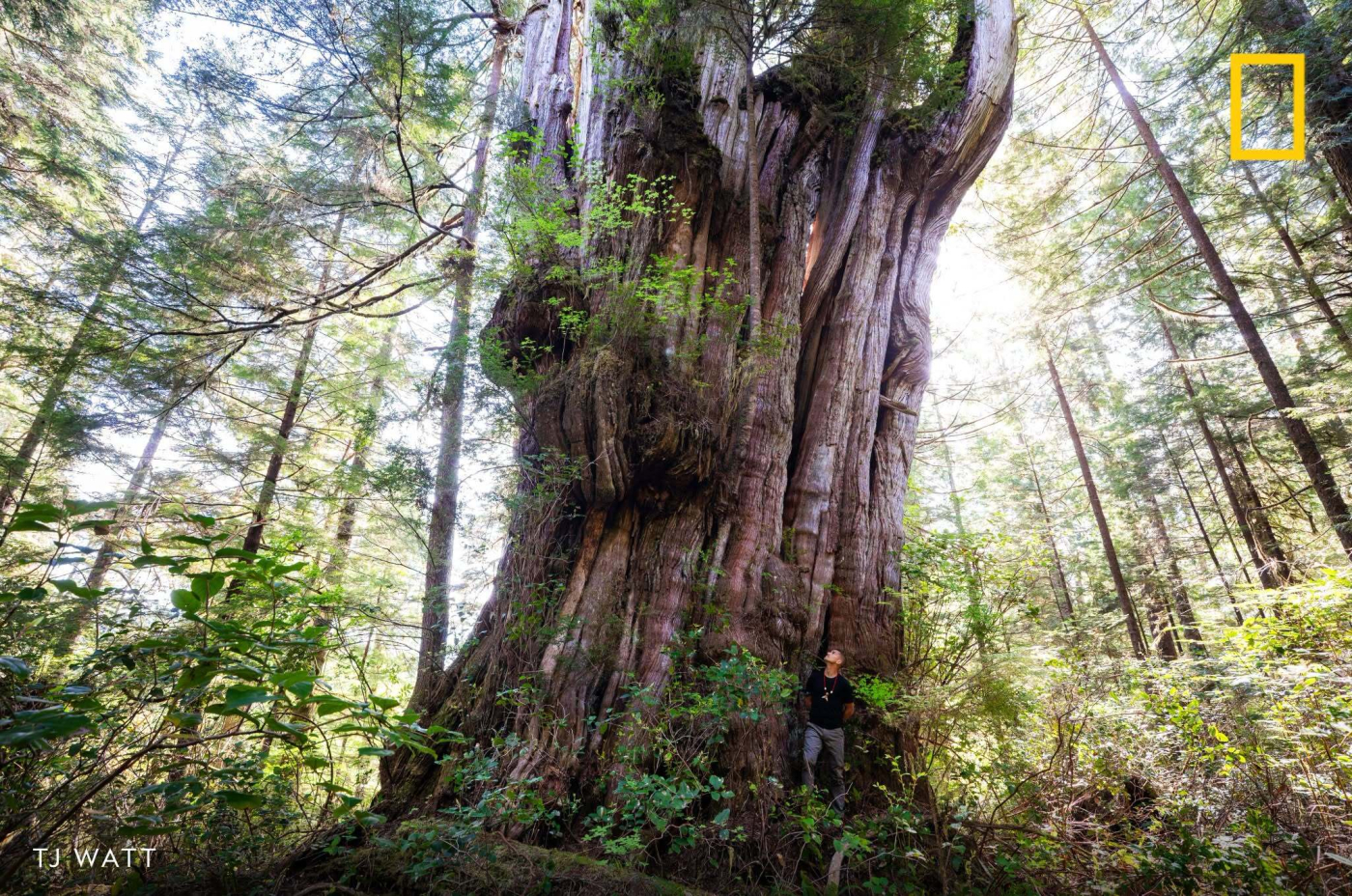 https://ancientforestalliance.org/wp-content/uploads/2026/10/Nat-Geo-Travel-Flores-Cedar.jpg
1357
2048
TJ Watt
https://ancientforestalliance.org/wp-content/uploads/2026/05/Ancient-Forest-Alliance-logo.svg
TJ Watt2026-10-02 13:38:152026-10-02 13:38:15Nat Geo Travel Features TJ Watt’s Photo of Flores Cedar
https://ancientforestalliance.org/wp-content/uploads/2026/10/Nat-Geo-Travel-Flores-Cedar.jpg
1357
2048
TJ Watt
https://ancientforestalliance.org/wp-content/uploads/2026/05/Ancient-Forest-Alliance-logo.svg
TJ Watt2026-10-02 13:38:152026-10-02 13:38:15Nat Geo Travel Features TJ Watt’s Photo of Flores CedarTake Action
 Donate
Support the Ancient Forest Alliance with a one-time or monthly donation. Send a Message
Send an instant message to key provincial decision-makers.
Ancient Forest Alliance Applauds CRD Parks for Considering Public Input
/in News CoverageA group who’s mission is to save the island’s old growth forests is giving CRD Parks a pat on the back, for hosting a number of public input meetings over the past two weeks.
Co-founder of the Ancient Forest Alliance Ken Wu says Vancouver Island has the finest and largest old growth forests and largest trees in the country, and this gave the public a chance to help protect them:
“the CRD right now is soliciting public input to determine candidate protected areas, and the overall strategic direction of regional parks and trails. Because we are focused on protecting old growth forests, this is a first rate opportunity to save old growth forests in the CRD.”
Wu says this move by the CRD follows another they applaud, the commitment to help fund the purchase of the Western Forest Products lands.
Peace in the forest an elusive goal in B.C.
/in News CoverageYou have to wonder if Ken Wu doesn’t feel like one starving man watching another starving man eat a meal.
Across northern Canada, environmentalists are high-fiving one another over Tuesday’s landmark declaration of peace in the woods. No more logging in an Italy-sized swath of boreal forest stretching from coast to coast. The war is over. Hooray.
Meanwhile, Wu watches Vancouver Island’s old growth disappear like Gordon Campbell during the HST debate.
Envious? Gosh no, says Wu, the Ancient Forest Alliance co-founder who has, seemingly, been fighting to preserve Island old growth since the Carmanah Giant was a sapling. He says the boreal forest deal just sets a template, an expectation that a similar agreement can be reached here.
Good luck. Forests Minister Pat Bell was quoted in these pages the other day as saying Vancouver Island has plenty of old growth, including 900,000 hectares of the 1.9 million hectares of Crown land.
That’s technically true, but needs context, the critics contend. High-altitude bonsai scrub and massive valley-bottom trees might both qualify as old growth, but only in the same way that some fourth-line hack and Sidney Crosby are both hockey players.
“We’ve lost 90 per cent of the valley bottoms where the big trees grow,” Wu says. “All you have to do is fly over the Island to see it. The old growth is tattered and in tiny patches on the Island.”
Anyway, the Ancient Forest Alliance has now turned to what it hopes is a more sympathetic ear — the Capital Regional District, which is just wrapping up hearings that will shape its parks strategy. The Alliance wants parks protection extended to individual stands of trees.
“In the CRD, we’ve got the biggest trees in the country,” Wu says. “People don’t realize that.”
Among the candidates, the Alliance would like CRD Parks to preserve:
– The world’s largest Douglas fir, the Red Creek Fir, which sits on public land 15 kilometres east of Port Renfrew.
– The San Juan spruce — the biggest Sitka spruce in Canada and second-largest in the world — on Crown land in the same area.
– “Canada’s gnarliest tree,” which sits in what Wu refers to as the Avatar Grove (though nobody called it by that name before the movie) on public land 10 kilometres north of Port Renfrew.
It’s an interesting approach, the Alliance recognizing the environment to be a higher political priority on the south Island than elsewhere. (“This area has the greatest density of tree-huggers in the world,” Wu says proudly.)
Which means the CRD is much greener in attitude than is the provincial government. The legislature walls have proven impervious to the enviros who regularly show up to protest on the front lawn, each tsunami of dissent crashing noisily, yet harmlessly, against the Belleville breakwater. The CRD, on the other hand, has been aggressive in protecting our leafy bits.
After the Liberals created a storm of controversy by freeing up Western Forest Products land west of Victoria for development, the CRD countered in March by agreeing to buy back 2,300 hectares of it, including the Jordan River surfing beach, 3.5 kilometres of shoreline along Sandcut Beach, and land next to the Sooke Potholes
Regional Park. The CRD will pay 65 per cent of the $18.8-million purchase price, while the province will toss in $2 million.
That wouldn’t appear to leave CRD Parks with much money to spend for the private land on the Ancient Forest Alliance’s wish list, but presumably transfers of Crown land from the province to the regional government would be easier to work out.
Old-Growth Forest Slideshow Comes to Saltspring Island on Thursday, May 27
/in AnnouncementsAn informative and spectacular slideshow presentation of the largest trees in Canada including the Red Creek Fir, San Juan Spruce, Cheewhat Cedar and the newly-discovered Avatar Grove, and the politics and ecology of BC’s old-growth forests and forestry jobs, will be presented on Thursday, May 27 (7:00-8:30 pm, Central Hall on Fulford-Ganges Rd., by donation) by Ken Wu and TJ Watt of the newly formed Ancient Forest Alliance (AFA).
“We’re grateful for the local support of Jonathan and Karen Clemson on Saltspring Island in hosting this event. Saltspring Island may very well have the highest population density of tree-huggers in North America. It’s a key place for us to build support to expand the campaign to save BC’s last ancient forests and to ban raw log exports to foreign mills,” states Ken Wu, AFA campaign director.
To date, about 75% of Vancouver Island’s productive old growth forest has been logged according to satellite photos, including 90% of the flat valley bottoms, while only 6% of its original, productive old-growth forests are protected in parks. Meanwhile thousands of forestry jobs are being lost as millions of cubic meters of raw logs are exported each year to foreign mills.
Old-growth forests are important for sustaining species at risk, tourism, clean water, and First Nations traditional cultures.
With so little of our ancient forests remaining, the Ancient Forest Alliance is calling on the BC Liberal government to:
– Undertake a Provincial Old-Growth Strategy that will inventory and protect old-growth forests where they are scarce (egs. Vancouver Island, Gulf Islands, Lower Mainland, southern Interior, etc.).
– Ensure the sustainable logging of second-growth forests, which now constitute the vast majority of southern BC’s forests.
– End the export of raw logs in order to ensure guaranteed log supplies for local milling and value-added industries.
– Assist in the retooling and development of mills and value-added facilities to handle second-growth logs.
– Undertake new land-use planning initiatives based on First Nations land-use plans, ecosystem-based scientific assessments, and climate mitigation strategies involving forest protection.
“How many jurisdictions on Earth have trees with trunks as wide as living rooms and that grow as tall as downtown skyscrapers? We’re so lucky to have such exceptionally magnificent forests on Vancouver Island. Unfortunately 90% of the valley bottoms where the largest trees grow have already been cut here, yet the BC Liberal government still contends that it’s fine for the industry finish off the last of the unprotected stands,” states TJ Watt, campaigner and photographer with the Ancient Forest Alliance.