 https://ancientforestalliance.org/wp-content/uploads/2026/10/Screenshot-2026-10-22-at-4.54.32-PM.png
952
1684
TJ Watt
https://ancientforestalliance.org/wp-content/uploads/2026/05/Ancient-Forest-Alliance-logo.svg
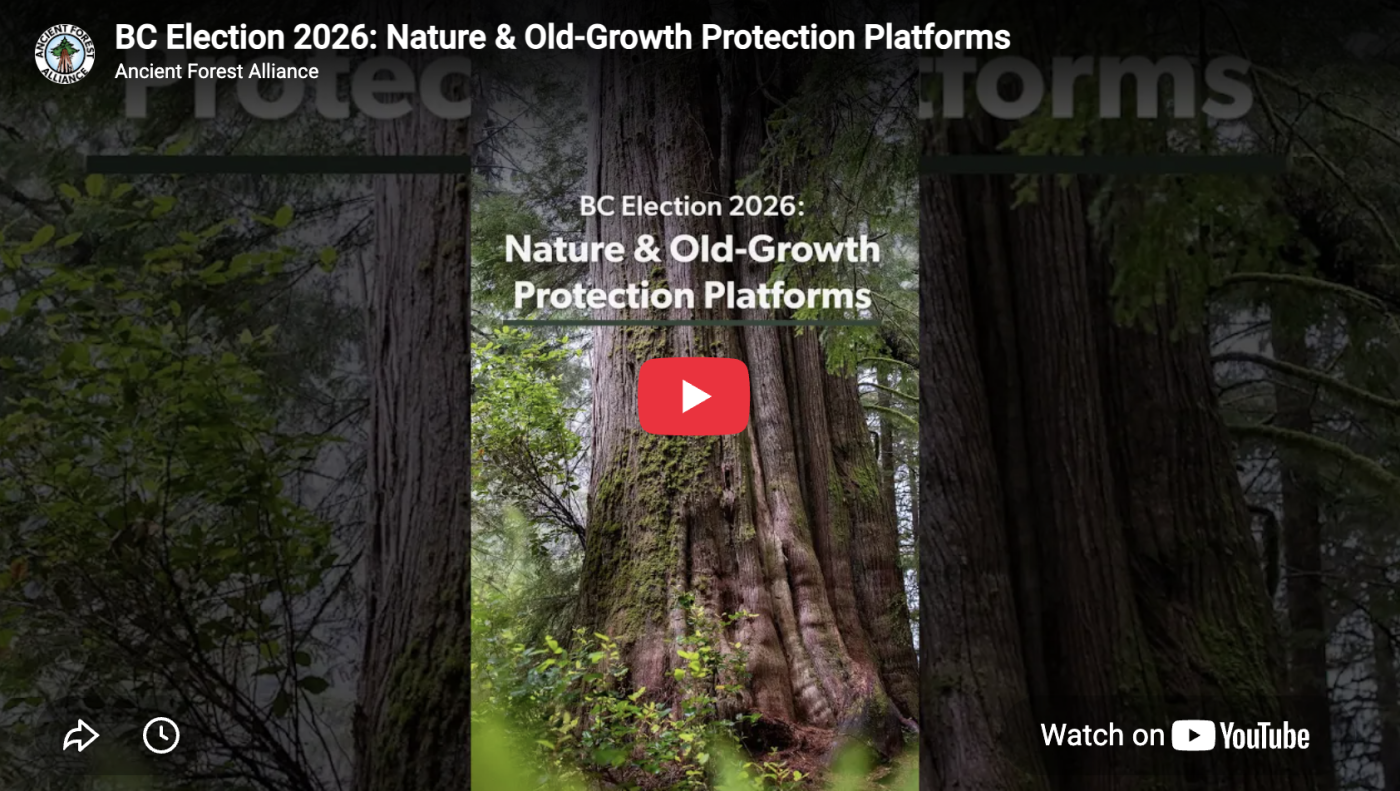
TJ Watt2026-10-22 16:54:062026-10-22 16:59:41NEW Video: BC Election 2026: Nature & Old-Growth Protection
https://ancientforestalliance.org/wp-content/uploads/2026/10/Screenshot-2026-10-22-at-4.54.32-PM.png
952
1684
TJ Watt
https://ancientforestalliance.org/wp-content/uploads/2026/05/Ancient-Forest-Alliance-logo.svg
TJ Watt2026-10-22 16:54:062026-10-22 16:59:41NEW Video: BC Election 2026: Nature & Old-Growth ProtectionRelated Posts
https://ancientforestalliance.org/wp-content/uploads/2026/10/Screenshot-2026-10-22-at-4.54.32-PM.png
952
1684
TJ Watt
https://ancientforestalliance.org/wp-content/uploads/2026/05/Ancient-Forest-Alliance-logo.svg
TJ Watt2026-10-22 16:54:062026-10-22 16:59:41NEW Video: BC Election 2026: Nature & Old-Growth Protection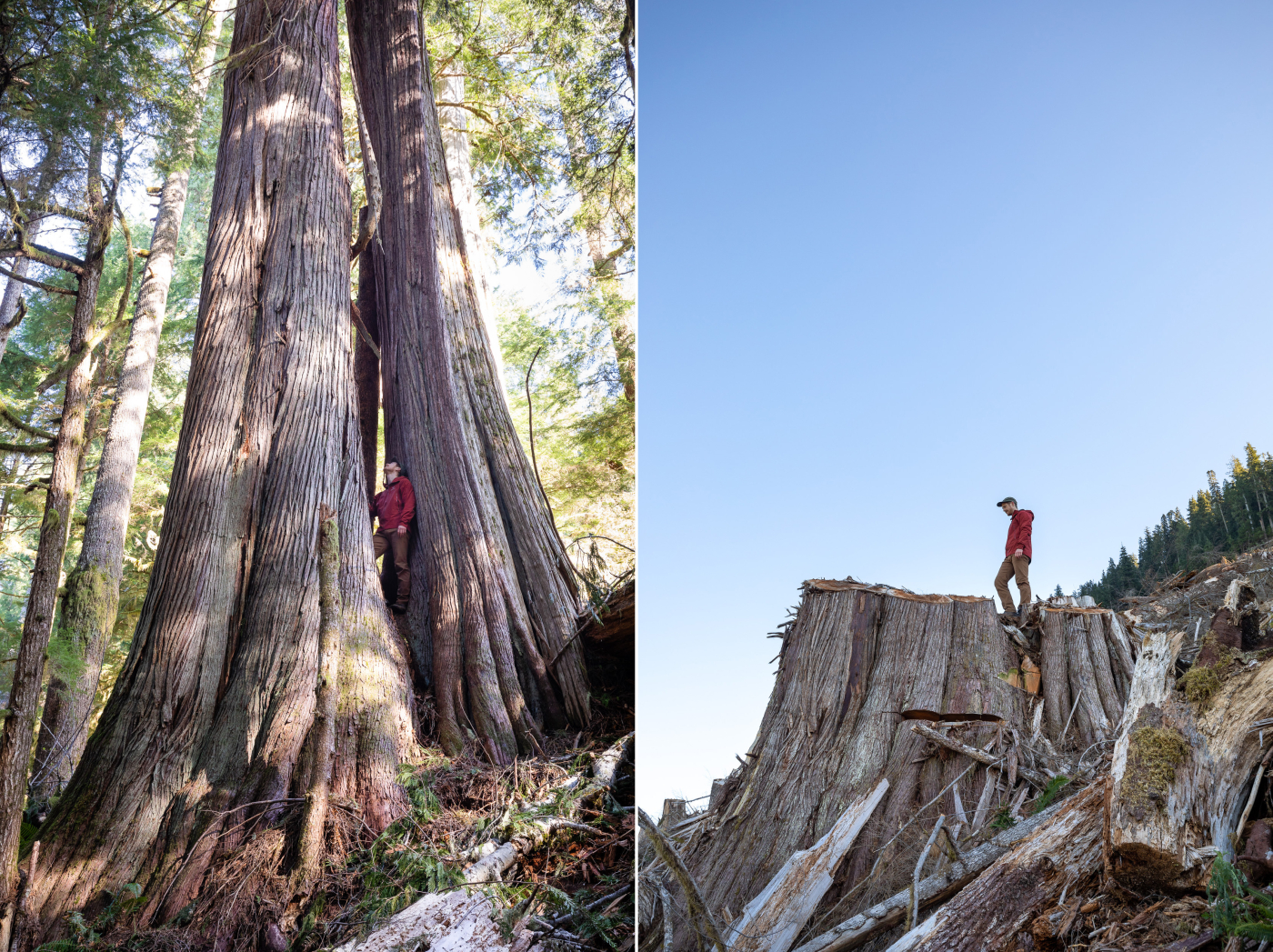 https://ancientforestalliance.org/wp-content/uploads/2026/10/Before-After-Caycuse-TJ-Watt-4-scaled.jpg
1915
2560
TJ Watt
https://ancientforestalliance.org/wp-content/uploads/2026/05/Ancient-Forest-Alliance-logo.svg
TJ Watt2026-10-16 17:36:002026-10-21 13:40:23BC Election 2026: Where do Parties Stand on Nature & Old-Growth?
https://ancientforestalliance.org/wp-content/uploads/2026/10/Before-After-Caycuse-TJ-Watt-4-scaled.jpg
1915
2560
TJ Watt
https://ancientforestalliance.org/wp-content/uploads/2026/05/Ancient-Forest-Alliance-logo.svg
TJ Watt2026-10-16 17:36:002026-10-21 13:40:23BC Election 2026: Where do Parties Stand on Nature & Old-Growth? https://ancientforestalliance.org/wp-content/uploads/2026/10/BC-Election-2026-Banner-1-1-scaled.jpg
1439
2560
TJ Watt
https://ancientforestalliance.org/wp-content/uploads/2026/05/Ancient-Forest-Alliance-logo.svg
TJ Watt2026-10-09 18:16:372026-10-16 17:44:41Where do BC’s Major Political Parties Stand on Nature Protection?
https://ancientforestalliance.org/wp-content/uploads/2026/10/BC-Election-2026-Banner-1-1-scaled.jpg
1439
2560
TJ Watt
https://ancientforestalliance.org/wp-content/uploads/2026/05/Ancient-Forest-Alliance-logo.svg
TJ Watt2026-10-09 18:16:372026-10-16 17:44:41Where do BC’s Major Political Parties Stand on Nature Protection?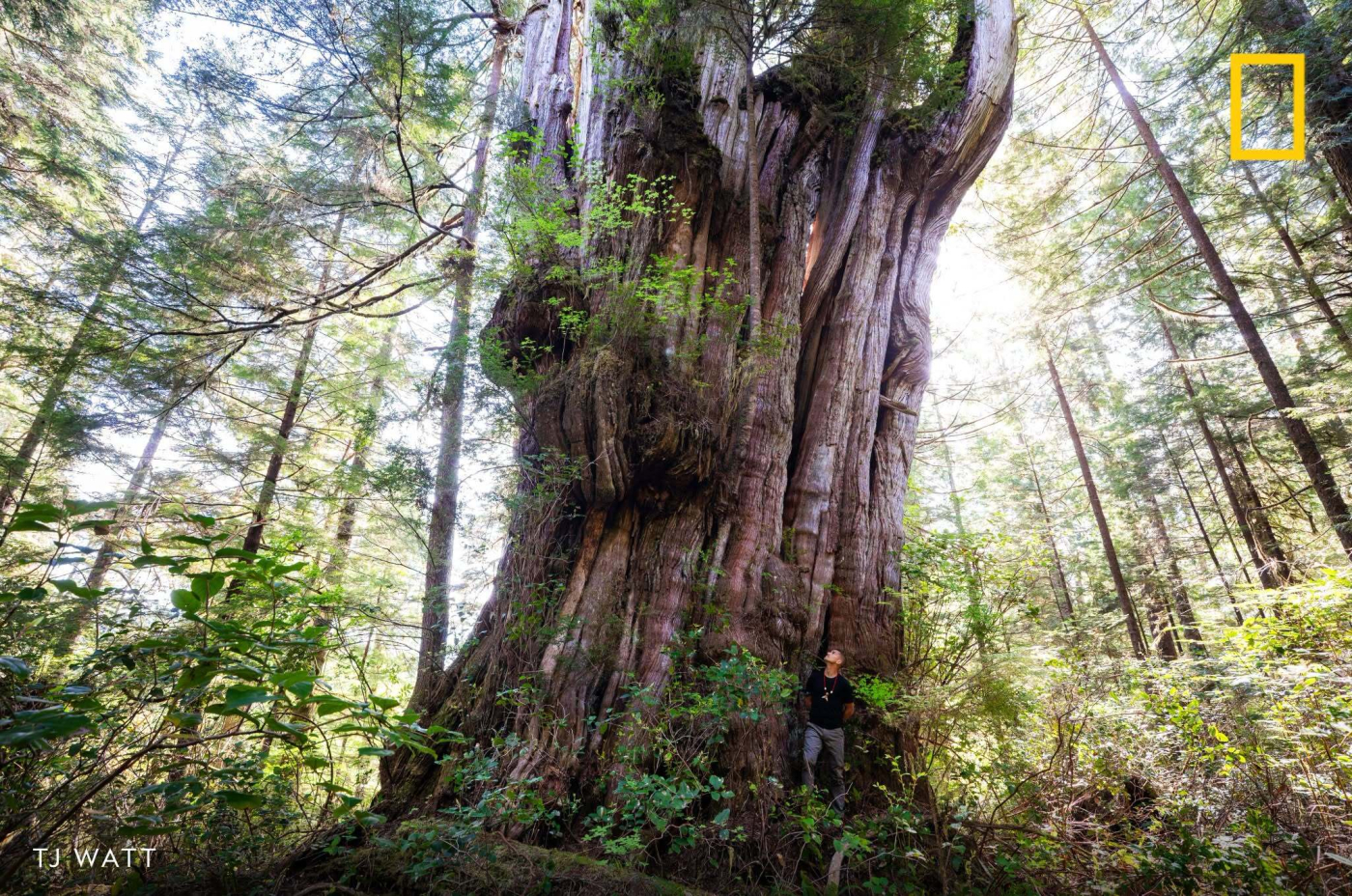 https://ancientforestalliance.org/wp-content/uploads/2026/10/Nat-Geo-Travel-Flores-Cedar.jpg
1357
2048
TJ Watt
https://ancientforestalliance.org/wp-content/uploads/2026/05/Ancient-Forest-Alliance-logo.svg
TJ Watt2026-10-02 13:38:152026-10-02 13:38:15Nat Geo Travel Features TJ Watt’s Photo of Flores Cedar
https://ancientforestalliance.org/wp-content/uploads/2026/10/Nat-Geo-Travel-Flores-Cedar.jpg
1357
2048
TJ Watt
https://ancientforestalliance.org/wp-content/uploads/2026/05/Ancient-Forest-Alliance-logo.svg
TJ Watt2026-10-02 13:38:152026-10-02 13:38:15Nat Geo Travel Features TJ Watt’s Photo of Flores CedarTake Action
 Donate
Support the Ancient Forest Alliance with a one-time or monthly donation. Send a Message
Send an instant message to key provincial decision-makers.
Old-growth forest worth preserving
/in News CoverageI had the pleasure last Sunday to experience the small grove of old-growth trees near Port Renfrew known informally as the Avatar Grove.
This amazingly rare site, which comprises approximately10 hectares, holds some of the oldest and largest trees remaining on Vancouver Island, some of which are 10 or more metres around and stand 30 metres or more tall, many 500 to 800 years old. I was shocked and deeply saddened to see survey tape surrounding the grove, including tape that indicated a proposed new logging road, as well as cut lines.
It is extremely important that this small grove of trees is preserved, as it is one of the last such stands of ancient old-growth trees on the Island. With the recent decline in fishing, Port Renfrew is in serious need of additional sites that will attract tourism, and the Avatar Grove would be an ideal addition to what they offer the travelling public. Acquiring this grove of trees would be a win for all concerned, especially our children — who we are forcing to live in a world greatly diminished in natural wonders such as these magnificent cedar, spruce and Douglas fir trees, which are among the oldest living things on Earth.
Old growth forest for sale in Cape Scott Provincial Park
/in News CoverageOld growth forest for sale in Cape Scott Provincial Park
But you will have to move fast, according to real estate broker NIHO Land & Cattle Inc., given the pristine location on the emerald tip of north-western Vancouver Island, and the fact that both properties are thick with merchantable old growth trees.
The properties are just two of a number of privately-owned parcels that exist in Cape Scott Park, remnants of lands originally settled by Scandinavian settlers in the 19th century. Most of the pioneer lands were abandoned long ago, and gradually bought up by the province. But not all of the land.
News of the property sales came as a surprise to the Regional District of Mount Waddington, the regional municipality on the northern tip of Vancouver Island. Mount Waddington’s Planner Jeff Long later confirmed that there is nothing the municipality can do to protect the old growth forests on either parcels, or to restrict any development plans on the parcels.
Recognizing the value of the old growth timber on the waterfront property in particular, the broker has hired a private company to do an “aerial overview,” estimating on its website that there is almost 30,000 cubic metres of merchantable timber up for grabs on that one site alone.
“Almost all of the property is covered in old growth timber which consists of cedar, hemlock, balsam, spruce, pine and cypress,” says the NIHO website. “There some big diameter trees on the property.”
Suntanu Dalal, a spokesman for the B.C. Ministry of Environment says the government is aware that the Cape Scott Park “in-holdings” are for sale, adding that there are at least 14 separate private pieces in Cape Scott Park covering about 150 hectares of land.
Dalal described the forests on the lands as “low-quality trees for harvesting,” an assessment at odds with both NIHO and their forestry surveyor.
Will the province consider buying this land to maintain the integrity of the park and Cape Scott Trail?
“The lands are on the Ministry’s regional acquisition list,” says Dalal. “But there are no immediate plans to purchase them.”
Link to article: https://thetyee.ca/Blogs/TheHook/Environment/2010/03/31/Old-growth-forest-for-sale-in-Cape-Scott-Provincial-Park/
B.C.’s old-growth forests have support of the Na’vi
/in News CoverageDowntown Vancouver was visited by Na’vi from the extraterrestrial moon Pandora at a small rally for B.C.’s ancient rainforests Saturday afternoon.
Led by a carnival band in green costumes, about 100 supporters of the Ancient Forest Alliance borrowed from images from the blockbuster hit Avatar in their protest against the logging of old-growth forests and marched to the Vancouver Art Gallery with its message that the provincial government needs to take more action to protect those scarce landscapes.
“Avatar’s world under attack! What do we do? We fight back,” shouted one activist on a bullhorn.
Many of the activists wore face paint resembling the fictional Na’vi humanoids from Avatar, which has an environmental theme of humans wreaking havoc on the ancient forests of Pandora in the quest for the mineral unobtanium.
“We’re here to promote awareness and support to protect the last of our ancient forests because there aren’t many left, and we can support the forest industry with second growth,” said 28 year-old nursing student Jennifer Chow, who painted her entire body in blue.
“The theme of the movie was focused on protecting their forests so it’s a good way to promote awareness to the general public. I camp every year, I love using the forest – so I feel really connected to it,” explained Chow.
Playing more to the movie the alliance has recently dubbed an area near Port Renfrew as ‘Avatar grove’ because of its untouched, newly discovered old-growth forest within a tree-farm license.
According to the alliance old-growth forests need protection because they support biodiversity, counteract climate change, provide clean water for people and wildlife, are culturally significant, and are important for tourism.
“We want to phase out old-growth logging. We want a provincial old-growth strategy that inventories the remaining old-growth and protects it where it’s scarce,” alliance spokeswoman Michelle Connolly. “We want the [provincial government] to get a good understanding of where the last old-growth forests are.”
She said there is nothing wrong with logging, and one of her organization’s goals is to have sustainable jobs in forestry.
She said there are enough trees in the second-growth forests of B.C. to sustain the industry, however, the export of raw logs to foreign mills needs to end in order to ensure a guaranteed log supply for B.C. mills and value-added processing facilities.
Connolly’s group also believes there needs to be more tax incentives for mills to accommodate smaller diametre logs from second-growth forests.
“We don’t have enough mills to accommodate those logs. …There are a lot of jobs lost because of that,” said Connolly.
Connolly warns if nothing is done to identify and protect these forest they will be gone forever sooner than later.
The alliance also called on the government to “undertake new, democratic land-use planning processes to protect endangered forests based on new First Nations land-use plans, ecosystem-based scientific assessments, and climate mitigation strategies through forest protection.”