 https://ancientforestalliance.org/wp-content/uploads/2026/09/NorthernSpottedOwls.jpg
900
1200
TJ Watt
https://ancientforestalliance.org/wp-content/uploads/2026/05/Ancient-Forest-Alliance-logo.svg
TJ Watt2026-09-03 09:47:312026-09-03 09:47:31BC Has an Extinction Problem. Scientists Say There’s a Fix
https://ancientforestalliance.org/wp-content/uploads/2026/09/NorthernSpottedOwls.jpg
900
1200
TJ Watt
https://ancientforestalliance.org/wp-content/uploads/2026/05/Ancient-Forest-Alliance-logo.svg
TJ Watt2026-09-03 09:47:312026-09-03 09:47:31BC Has an Extinction Problem. Scientists Say There’s a FixRelated Posts
https://ancientforestalliance.org/wp-content/uploads/2026/09/NorthernSpottedOwls.jpg
900
1200
TJ Watt
https://ancientforestalliance.org/wp-content/uploads/2026/05/Ancient-Forest-Alliance-logo.svg
TJ Watt2026-09-03 09:47:312026-09-03 09:47:31BC Has an Extinction Problem. Scientists Say There’s a Fix https://ancientforestalliance.org/wp-content/uploads/2026/08/Canoe-Creek-Cedar-Tree-262.jpg
800
1200
TJ Watt
https://ancientforestalliance.org/wp-content/uploads/2026/05/Ancient-Forest-Alliance-logo.svg
TJ Watt2026-08-04 17:15:512026-08-04 17:15:51Thank you to our monthly business donors!
https://ancientforestalliance.org/wp-content/uploads/2026/08/Canoe-Creek-Cedar-Tree-262.jpg
800
1200
TJ Watt
https://ancientforestalliance.org/wp-content/uploads/2026/05/Ancient-Forest-Alliance-logo.svg
TJ Watt2026-08-04 17:15:512026-08-04 17:15:51Thank you to our monthly business donors! https://ancientforestalliance.org/wp-content/uploads/2026/07/Kaska-Territory.-Credit-Johnny-Mikes-CPAWS-BC-scaled-1.jpg
1707
2560
TJ Watt
https://ancientforestalliance.org/wp-content/uploads/2026/05/Ancient-Forest-Alliance-logo.svg
TJ Watt2026-07-24 15:34:372026-07-28 11:05:22Speak up for Three Major New Protected Areas in Northern BC
https://ancientforestalliance.org/wp-content/uploads/2026/07/Kaska-Territory.-Credit-Johnny-Mikes-CPAWS-BC-scaled-1.jpg
1707
2560
TJ Watt
https://ancientforestalliance.org/wp-content/uploads/2026/05/Ancient-Forest-Alliance-logo.svg
TJ Watt2026-07-24 15:34:372026-07-28 11:05:22Speak up for Three Major New Protected Areas in Northern BC https://ancientforestalliance.org/wp-content/uploads/2026/06/tahsish-river-old-growth-karst-forest-285-1.jpg
1366
2048
TJ Watt
https://ancientforestalliance.org/wp-content/uploads/2026/05/Ancient-Forest-Alliance-logo.svg
TJ Watt2026-07-20 10:46:412026-07-20 12:16:45Victoria Buzz: Old growth advocates call for protection of at-risk Vancouver Island forest
https://ancientforestalliance.org/wp-content/uploads/2026/06/tahsish-river-old-growth-karst-forest-285-1.jpg
1366
2048
TJ Watt
https://ancientforestalliance.org/wp-content/uploads/2026/05/Ancient-Forest-Alliance-logo.svg
TJ Watt2026-07-20 10:46:412026-07-20 12:16:45Victoria Buzz: Old growth advocates call for protection of at-risk Vancouver Island forestTake Action
 Donate
Support the Ancient Forest Alliance with a one-time or monthly donation. Send a Message
Send an instant message to key provincial decision-makers.
Budget 2026 Shortchanges Nature Protection and Sustainable Forestry Transition At a Critical Time for British Columbia
/in Media ReleaseFOR IMMEDIATE RELEASE
Budget 2026 Shortchanges Nature Protection and Sustainable Forestry Transition At a Critical Time for British Columbia
February 19, 2026
BC’s Budget 2026, released on Tuesday, fails to provide the funding needed to secure lasting protection for endangered ecosystems and at-risk old-growth forests in the province, while prioritizing industrial resource extraction.
To deliver the protection of ecosystems and the expansion of sustainable businesses and jobs British Columbians need, this budget should have strengthened investments that reduce risk and support durable, locally rooted jobs through conservation financing and a rapid transition toward a sustainable, value-added, second-growth forest sector in BC, away from our economic dependency on old-growth logging.
Key Gaps in Budget 2026:
What Budget 2026 Should Have Included:
Without practical transition funding, both for First Nations old-growth logging deferrals and for value-added, second-growth manufacturing modernization, BC remains stuck in a model that accelerates the loss of the remaining at-risk old-growth forests and endangered ecosystems. Budget 2026 is a missed opportunity to deliver transformative solutions.
A clearcut in the Klanawa Valley.
Welcome, Zeinab, our new Vancouver Canvass Director!
/in AnnouncementsWe’re excited to welcome Zeinab Salenhiankia, our new Vancouver Canvass Director, to the Ancient Forest Alliance team!
Zeinab was born and raised in Tehran, Iran, where her love for nature began during weekends spent in villages outside the city, climbing fruit trees, playing outdoors, and forming a deep connection with the land. That early curiosity led her to study Biology and pursue a lifelong path in environmental protection.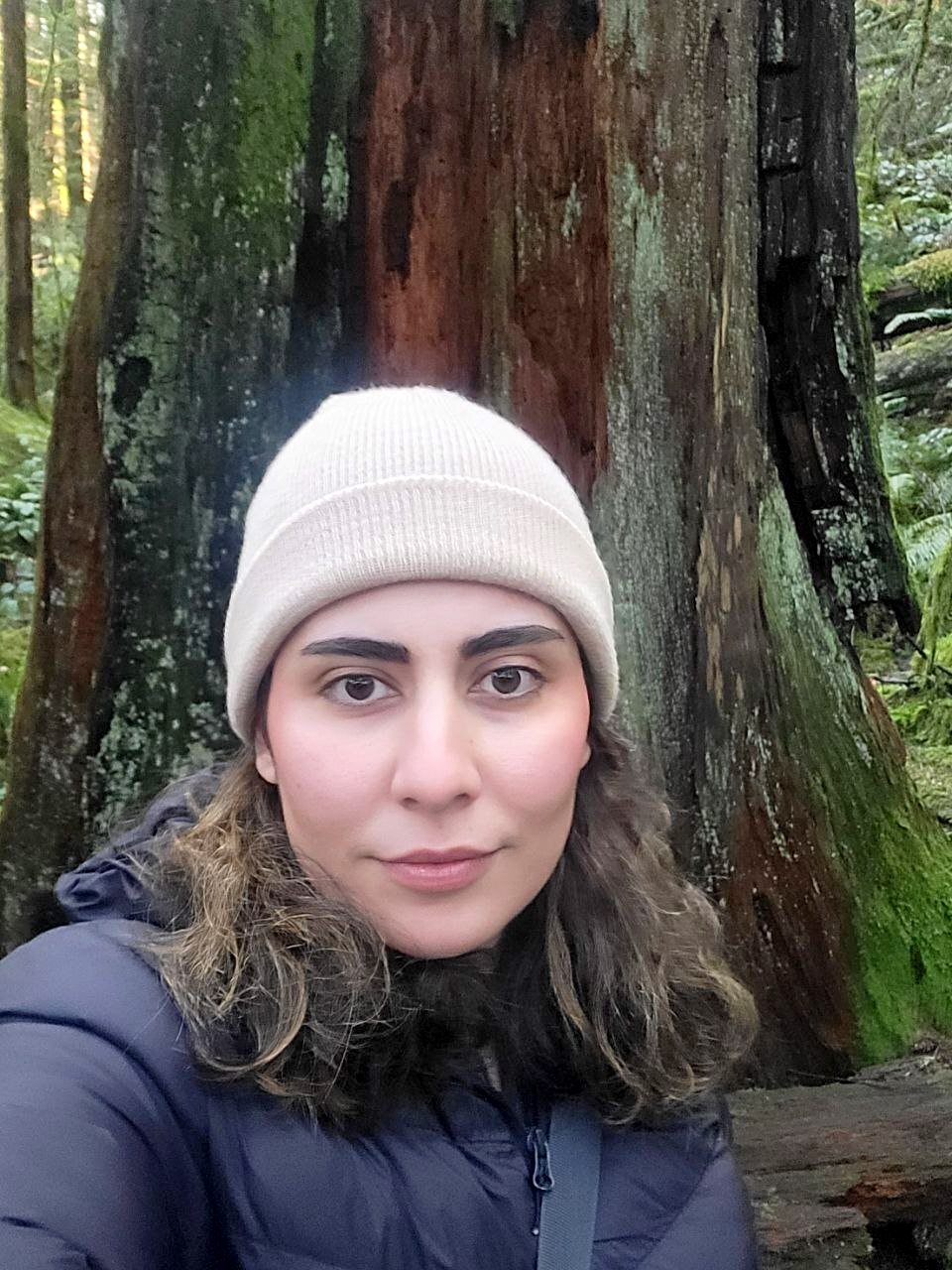
Zeinab later lived in Naples, Italy, exploring southern coastlines and learning from different cultures and landscapes. She went on to earn a Master’s degree in Environmental Science in St. John’s, Newfoundland and Labrador, where her work focused on GIS mapping and nature-based solutions to address climate change. Living on the eastern edge of North America deepened her appreciation for rugged ecosystems and community-led environmental action. During this time, she learned from Indigenous cultures, including the Mi’kmaq people, and contributed to leading Canadian environmental non-profits, strengthening community engagement and supporting just transitions to clean energy.
Now based in Vancouver, BC, Zeinab is the Vancouver Canvass Director with the AFA. A people-person at heart, she believes strong, grassroots movements are essential to protecting old-growth forests and safeguarding our shared natural heritage.
In her free time, she enjoys exploring forests, hiking local trails, and listening to people’s stories.
Sky Gardens
/in EducationalHigh in the canopy of the old-growth temperate rainforests of BC, one can find “sky gardens”: a collection of epiphytes (plants that grow on other plants) growing on the enormous limbs of ancient trees.
These complex, little-understood reservoirs of biodiversity can host creatures found nowhere else on Earth. Researchers have identified more than 1,000 distinct species of invertebrates living in the canopies of old-growth forests. This includes hundreds of species entirely new to science, found in suspended soils that can be over a foot deep, as they develop over centuries through the decomposition of organic matter such as leaves and twigs.
Sprouting from the thick moss mats, you will often see licorice ferns, various shrubs, and even small trees, creating layered ecosystems high above the forest floor.
Other unique inhabitants of the old-growth canopy include marbled murrelets, which are tiny seabirds that nest only on the moss mats of old-growth trees.
Next time you’re walking through an ancient forest, be sure to look up and watch for these gardens in the sky.