 https://ancientforestalliance.org/wp-content/uploads/2026/10/Screenshot-2026-10-22-at-4.54.32-PM.png
952
1684
TJ Watt
https://ancientforestalliance.org/wp-content/uploads/2026/05/Ancient-Forest-Alliance-logo.svg
TJ Watt2026-10-22 16:54:062026-10-22 16:59:41NEW Video: BC Election 2026: Nature & Old-Growth Protection
https://ancientforestalliance.org/wp-content/uploads/2026/10/Screenshot-2026-10-22-at-4.54.32-PM.png
952
1684
TJ Watt
https://ancientforestalliance.org/wp-content/uploads/2026/05/Ancient-Forest-Alliance-logo.svg
TJ Watt2026-10-22 16:54:062026-10-22 16:59:41NEW Video: BC Election 2026: Nature & Old-Growth ProtectionRelated Posts
https://ancientforestalliance.org/wp-content/uploads/2026/10/Screenshot-2026-10-22-at-4.54.32-PM.png
952
1684
TJ Watt
https://ancientforestalliance.org/wp-content/uploads/2026/05/Ancient-Forest-Alliance-logo.svg
TJ Watt2026-10-22 16:54:062026-10-22 16:59:41NEW Video: BC Election 2026: Nature & Old-Growth Protection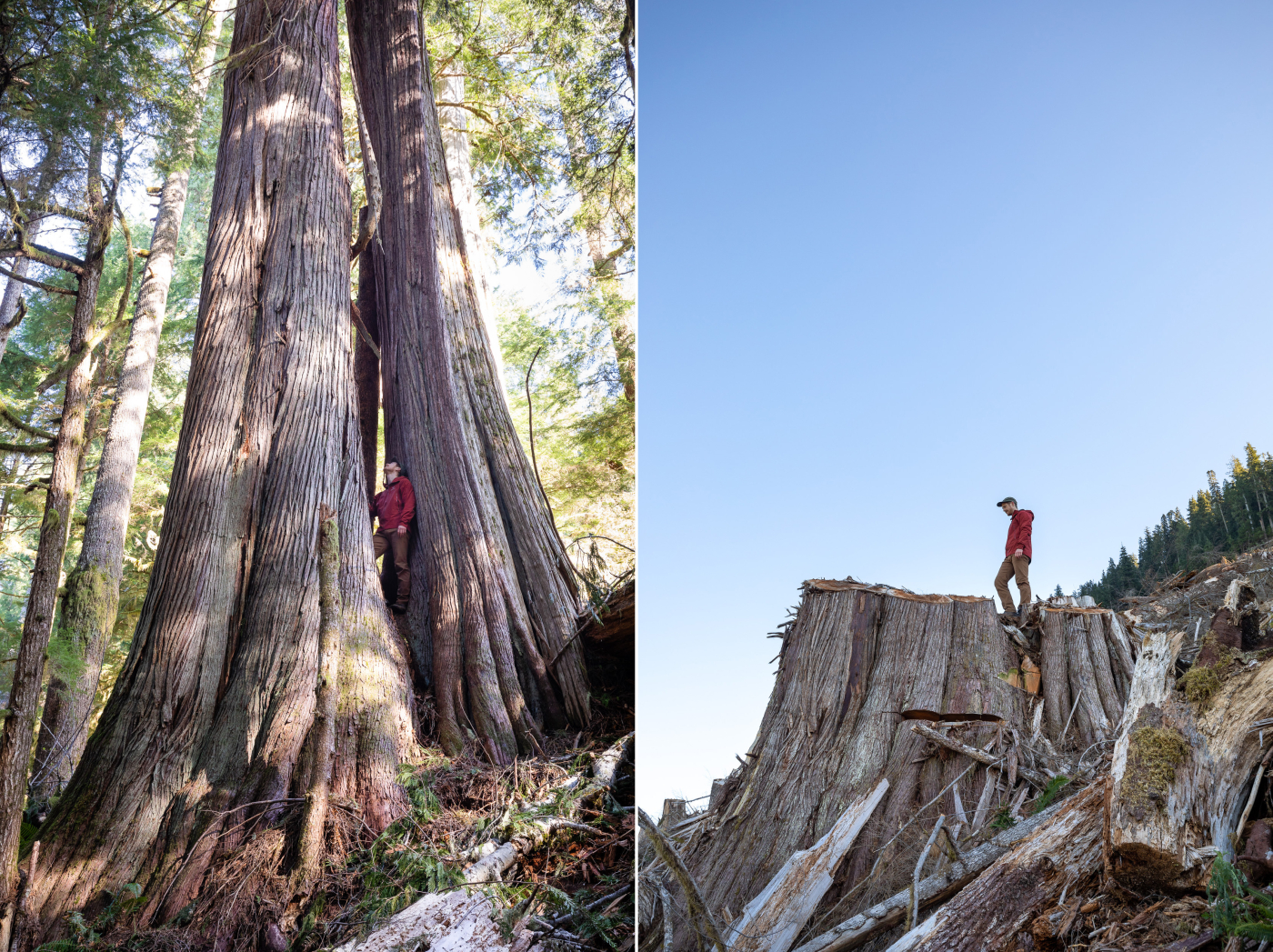 https://ancientforestalliance.org/wp-content/uploads/2026/10/Before-After-Caycuse-TJ-Watt-4-scaled.jpg
1915
2560
TJ Watt
https://ancientforestalliance.org/wp-content/uploads/2026/05/Ancient-Forest-Alliance-logo.svg
TJ Watt2026-10-16 17:36:002026-10-21 13:40:23BC Election 2026: Where do Parties Stand on Nature & Old-Growth?
https://ancientforestalliance.org/wp-content/uploads/2026/10/Before-After-Caycuse-TJ-Watt-4-scaled.jpg
1915
2560
TJ Watt
https://ancientforestalliance.org/wp-content/uploads/2026/05/Ancient-Forest-Alliance-logo.svg
TJ Watt2026-10-16 17:36:002026-10-21 13:40:23BC Election 2026: Where do Parties Stand on Nature & Old-Growth? https://ancientforestalliance.org/wp-content/uploads/2026/10/BC-Election-2026-Banner-1-1-scaled.jpg
1439
2560
TJ Watt
https://ancientforestalliance.org/wp-content/uploads/2026/05/Ancient-Forest-Alliance-logo.svg
TJ Watt2026-10-09 18:16:372026-10-16 17:44:41Where do BC’s Major Political Parties Stand on Nature Protection?
https://ancientforestalliance.org/wp-content/uploads/2026/10/BC-Election-2026-Banner-1-1-scaled.jpg
1439
2560
TJ Watt
https://ancientforestalliance.org/wp-content/uploads/2026/05/Ancient-Forest-Alliance-logo.svg
TJ Watt2026-10-09 18:16:372026-10-16 17:44:41Where do BC’s Major Political Parties Stand on Nature Protection?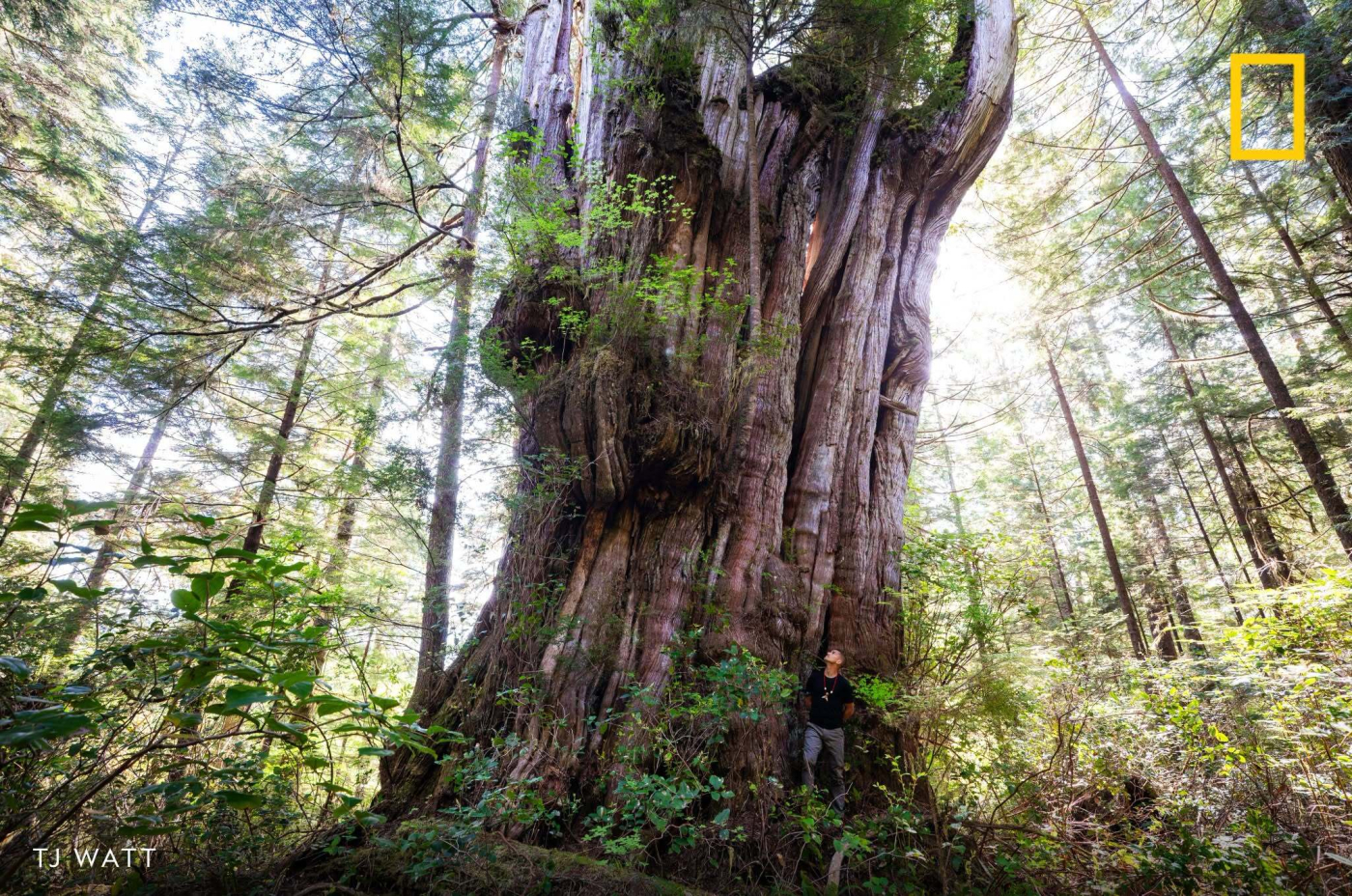 https://ancientforestalliance.org/wp-content/uploads/2026/10/Nat-Geo-Travel-Flores-Cedar.jpg
1357
2048
TJ Watt
https://ancientforestalliance.org/wp-content/uploads/2026/05/Ancient-Forest-Alliance-logo.svg
TJ Watt2026-10-02 13:38:152026-10-02 13:38:15Nat Geo Travel Features TJ Watt’s Photo of Flores Cedar
https://ancientforestalliance.org/wp-content/uploads/2026/10/Nat-Geo-Travel-Flores-Cedar.jpg
1357
2048
TJ Watt
https://ancientforestalliance.org/wp-content/uploads/2026/05/Ancient-Forest-Alliance-logo.svg
TJ Watt2026-10-02 13:38:152026-10-02 13:38:15Nat Geo Travel Features TJ Watt’s Photo of Flores CedarTake Action
 Donate
Support the Ancient Forest Alliance with a one-time or monthly donation. Send a Message
Send an instant message to key provincial decision-makers.
Protecting the Clearwater Valley would help mountain caribou recovery
/in News CoverageIF WE CAN’T maintain a viable mountain caribou herd in a vast protected area like Wells Gray Provincial Park, then what hope is there of doing so elsewhere?
That’s my question for Canfor, the corporate giant now ramping up to “salvage log” hundreds of hectares of mature and old-growth forest near the southern and western boundaries of Wells Gray, two hours north of Kamloops.
Clearcut logging in the Clearwater Valley will inevitably create winter forage favourable to deer and moose. As these animals increase in numbers, so will their main predators, cougars and especially wolves. This is hardly good news for the mountain caribou that make their home in the park’s high-elevation old-growth forests a few kilometres distant.
Government biologists are well aware that past logging just outside the park is largely to blame for a recent collapse of the south Wells Gray herd. Ten years ago this herd numbered about 325 animals. Today only about 200 are left, down by about one-third.
Clearcut logging exposes the mountain caribou to levels of predation they did not evolve with and are unable to adapt to. Compounding the problem is a low reproductive rate, a mature cow caribou giving birth to only one calf every two years. Clearly it doesn’t take much to tip these animals toward extinction.
The flow of cause and effect could hardly be more straightforward: clearcuts support more moose and deer, more moose and deer support more top predators, more top predators roam in greater numbers into nearby protected areas, and then mountain caribou decline. Or to simplify, the more adjacent clearcuts we create, the more rapidly the mountain caribou disappears.
Clearly this is not the time to lobby the B.C. government for management decisions certain to bolster predator populations in Wells Gray area. Canfor’s Vavenby planner Dave Dobi acknowledged as much at a public meeting about a year ago, but is proceeding with his plans nonetheless. At the same meeting he also made clear his company’s intention eventually to log the entire Clearwater Valley. Whatever timber Canfor has a legal right to log, it will log.
Such a statement is hard to reconcile with sentiments recently expressed by Canfor CEO and president Don Kayne, who in a letter to the Vancouver Sun asserted that Canfor “will not support actions that impact parks or critical habitat for species at risk”. One can’t help feeling that Kayne would be appalled if he knew what his Vavenby planner was up. To be implicated in the decline of a nationally threatened animal like the mountain caribou surely can’t be good for business.
In 2002, the mountain caribou was designated as nationally threatened. Its global range lies almost exclusively within British Columbia. Decisions being made in B.C. today will have long-term implications for its future viability. Already the province’s southern herds are blinking out—sustained entirely by predator culls and other costly, dubiously effective forms of life support.
Best science identifies Wells Gray Park as one of only two regions where the mountain caribou might reasonably be expected to persist into the long term, in a human-dominated world. (The other area is the Hart Ranges in the far north of the range.) This makes it imperative that the Wells Gray herd receive special attention now, before it’s too late.
This returns me to my opening question: If we can’t maintain a viable mountain caribou herd in a vast wilderness park like Wells Gray, then what hope is there of doing so elsewhere?
In its Mountain Caribou Recovery Implementation Plan, announced in 2008, the B.C. government placed 2.2 million hectares of prime high-elevation winter caribou habitat off limits to logging. Clearly this isn’t working; it’s not enough. For recovery to take place, we also need to refrain from creating additional pressure from predators by logging at lower elevations just outside their key habitat. Areas like the Clearwater Valley.
The Wells Gray World Heritage Committee (WHC) recently challenged the B.C. government to help make Wells Gray Park ecologically self-sustaining by adjusting its boundaries southward. This has been done twice in the past: once in the mid ’50s, and again in the mid ’90s.
The habitat needs of mountain caribou played a major role in both decisions. Protecting a small area adjacent to the park would be a huge step to recovery for the Wells Gray herd.
As an interim measure, WHC is also calling upon B.C. minister of environment Terry Lake to establish a moratorium on industrial logging in the Clearwater Valley. For more information, or to help, please visit the WHC website.
Link to online article: https://www.straight.com/news/351556/trevor-goward-protecting-clearwater-valley-would-help-mountain-caribou-recovery
Forest policy must change, forum hears
/in News CoverageB.C. forests are in crisis for a multitude of reasons and politicians of all parties must be held to account in the spring election, a union-led forest forum heard Wednesday night.
“We’re all here tonight because we care about the future of our forests,” said Brenda Brown, a vice-president of the BCGEU and a resident of Quesnel, hit hard by the industry difficulties of the past decade. “We care about the future of our families and about the future of our communities.”
Brown said logging trucks leave the community filled with raw logs for export.
“We’re tired of being told that everything is great in the forest while logs are shipped overseas.”
Jointly organized by the B.C. Federation of Labour, BCGEU, United Steelworkers and CEP, the forum stopped in Kamloops as part of an eight-community tour.
“We’re working with all politicians, all candidates, all parties, to address the issues,” said BCGEU co-ordinator Carol Adams.
All candidates were invited, but only NDP nominees Tom Friedman and Kathy Kendall attended, along with about 30 others, including mill workers and retired forest service employees. They were shown a short video about Mackenzie, a northern town that has suffered greatest losses through the crisis. A panel then sought to put the issues into local perspectives.
Policy analyst Eric Hamilton-Smith said there is growing pressure to log marginal forest — including old growth — to compensate for the shortfall due to mountain pine beetle. He also pointed to increased volumes of waste wood, policies absolving companies from having to build mills in communities and a draft policy to convert forest licences into tree farm licences.
If government were serious about developing secondary manufacturing in the sector, it could create tens of thousands of jobs, he said.
Rick Turner of the Council of Canadians said he saw life sucked out of Barriere due to forest policy changes when he lived there. Students used to skip class to work a shift at a mill.
“Policies have change and, in effect, one-third of those guys aren’t there anymore.”
Biodiversity should be a priority and the general public needs to stand together with First Nations to demand sounder forest management, said Skeetchestn Chief Ron Ignace.
“I call upon you and I implore you not to fear us but to stand with us,” Ignace said.
A Domtar worker, Charlie Fraser, said he watched the Mission Flats sawmill dismantled and shipped overseas a few years ago. Now the pulp mill’s about to let go of another 107 workers.
“We’ve been in discussions with the employer, who could care less about people,” he said. “All they care about is the bottom line.”
Participants broke up into tables to come up with three priorities for change.
“It goes round and round,” said Bob Gray, a semi-retired forest service employee. “Everything’s been tried.” Yet he feels government must be made responsible again for reforestation.
“By virtue of you not having that obligation to reforest, that tells me you’re not managing.”
There was also agreement about a need to restore community input in forest management decisions.
online article: https://www.kamloopsnews.ca/article/20130214/KAMLOOPS0101/130219937/-1/kamloops01/forest-policy-must-change-forum-hears
AFA Slideshow Presentation this Friday at UVic! FREE PIZZA!
/in AnnouncementsJoin the UVic Ancient Forest Committee and Ken Wu of the Ancient Forest Alliance for a spectacular slideshow on the ecology, wildlife, biggest trees, and politics surrounding BC’s old-growth forests including at Echo Lake east of Vancouver, and the Upper Walbran Valley, Avatar Grove, Mossy Maple Grove (Fangorn Forest), and Clayoquot Sound on Vancouver Island.
3:30 pm – Clearhue Building a202 UVic
Find out how YOU can help to ensure the protection of our ancient forests and a sustainable second-growth forest industry.
An yes …. stuff yourself with pizza as well!
Invite your friends on Facebook: https://www.facebook.com/events/237142573089266/