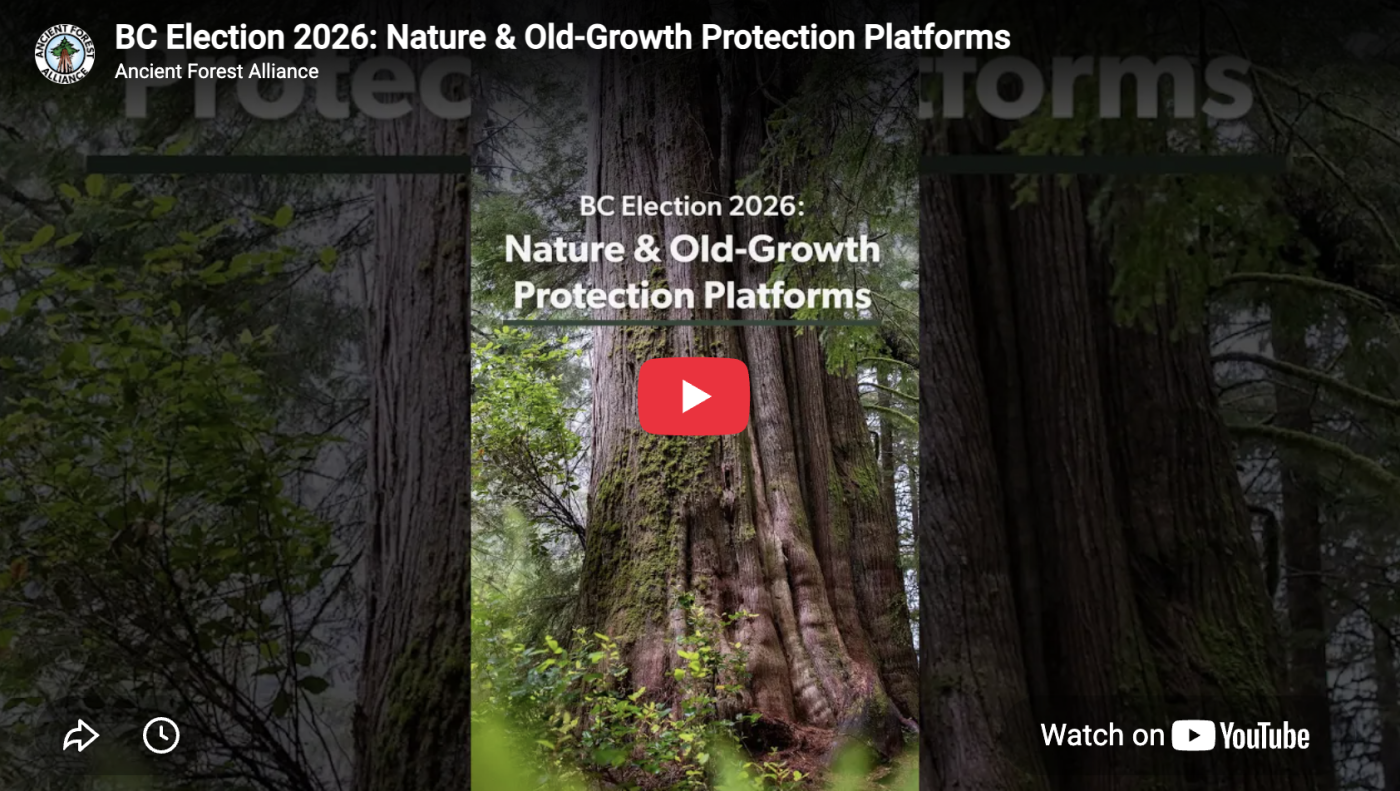
 https://ancientforestalliance.org/wp-content/uploads/2026/10/Screenshot-2026-10-22-at-4.54.32-PM.png
952
1684
TJ Watt
https://ancientforestalliance.org/wp-content/uploads/2026/05/Ancient-Forest-Alliance-logo.svg
TJ Watt2026-10-22 16:54:062026-10-22 16:59:41NEW Video: BC Election 2026: Nature & Old-Growth Protection
https://ancientforestalliance.org/wp-content/uploads/2026/10/Screenshot-2026-10-22-at-4.54.32-PM.png
952
1684
TJ Watt
https://ancientforestalliance.org/wp-content/uploads/2026/05/Ancient-Forest-Alliance-logo.svg
TJ Watt2026-10-22 16:54:062026-10-22 16:59:41NEW Video: BC Election 2026: Nature & Old-Growth ProtectionRelated Posts
https://ancientforestalliance.org/wp-content/uploads/2026/10/Screenshot-2026-10-22-at-4.54.32-PM.png
952
1684
TJ Watt
https://ancientforestalliance.org/wp-content/uploads/2026/05/Ancient-Forest-Alliance-logo.svg
TJ Watt2026-10-22 16:54:062026-10-22 16:59:41NEW Video: BC Election 2026: Nature & Old-Growth Protection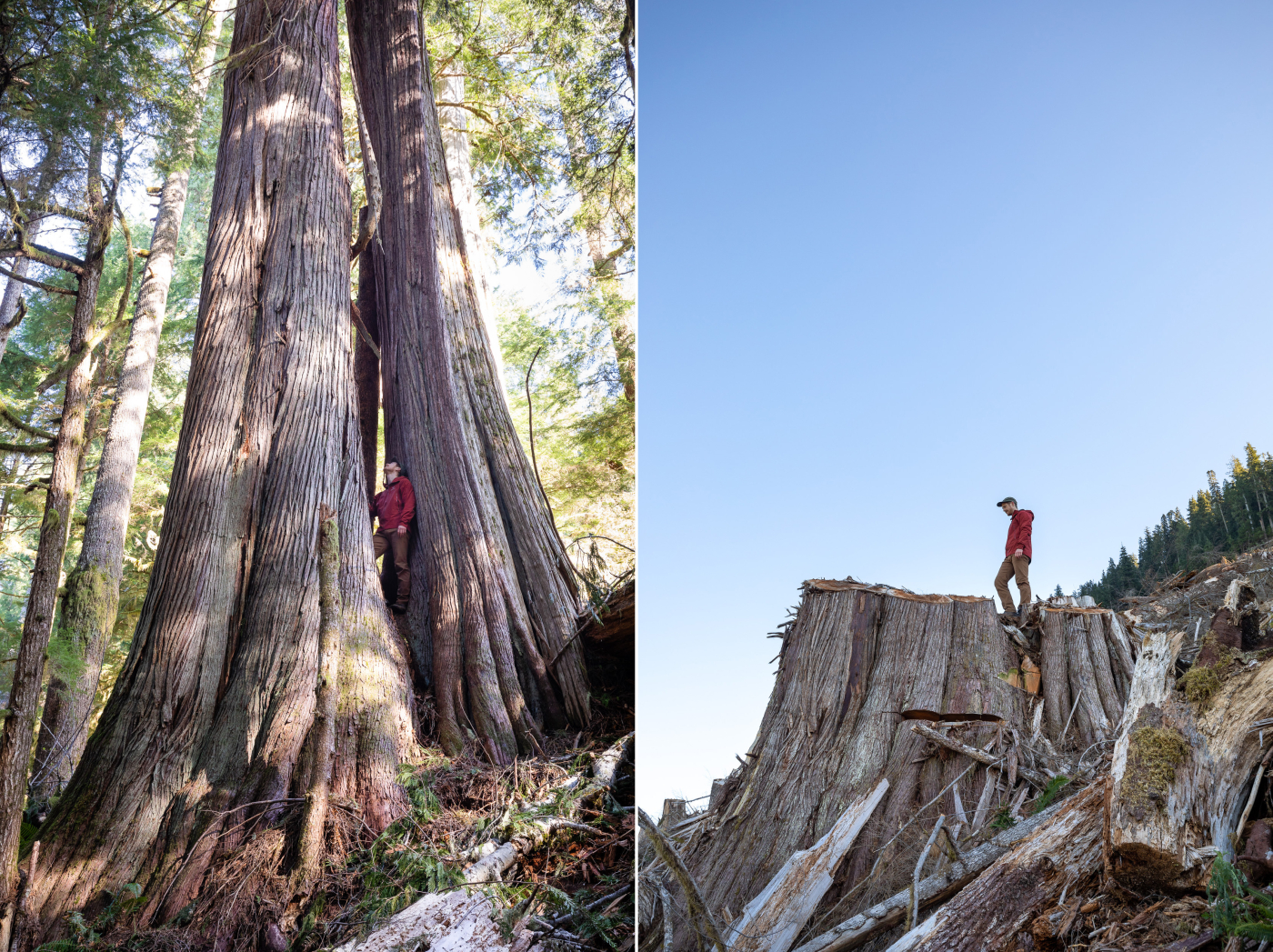 https://ancientforestalliance.org/wp-content/uploads/2026/10/Before-After-Caycuse-TJ-Watt-4-scaled.jpg
1915
2560
TJ Watt
https://ancientforestalliance.org/wp-content/uploads/2026/05/Ancient-Forest-Alliance-logo.svg
TJ Watt2026-10-16 17:36:002026-10-21 13:40:23BC Election 2026: Where do Parties Stand on Nature & Old-Growth?
https://ancientforestalliance.org/wp-content/uploads/2026/10/Before-After-Caycuse-TJ-Watt-4-scaled.jpg
1915
2560
TJ Watt
https://ancientforestalliance.org/wp-content/uploads/2026/05/Ancient-Forest-Alliance-logo.svg
TJ Watt2026-10-16 17:36:002026-10-21 13:40:23BC Election 2026: Where do Parties Stand on Nature & Old-Growth? https://ancientforestalliance.org/wp-content/uploads/2026/10/BC-Election-2026-Banner-1-1-scaled.jpg
1439
2560
TJ Watt
https://ancientforestalliance.org/wp-content/uploads/2026/05/Ancient-Forest-Alliance-logo.svg
TJ Watt2026-10-09 18:16:372026-10-16 17:44:41Where do BC’s Major Political Parties Stand on Nature Protection?
https://ancientforestalliance.org/wp-content/uploads/2026/10/BC-Election-2026-Banner-1-1-scaled.jpg
1439
2560
TJ Watt
https://ancientforestalliance.org/wp-content/uploads/2026/05/Ancient-Forest-Alliance-logo.svg
TJ Watt2026-10-09 18:16:372026-10-16 17:44:41Where do BC’s Major Political Parties Stand on Nature Protection?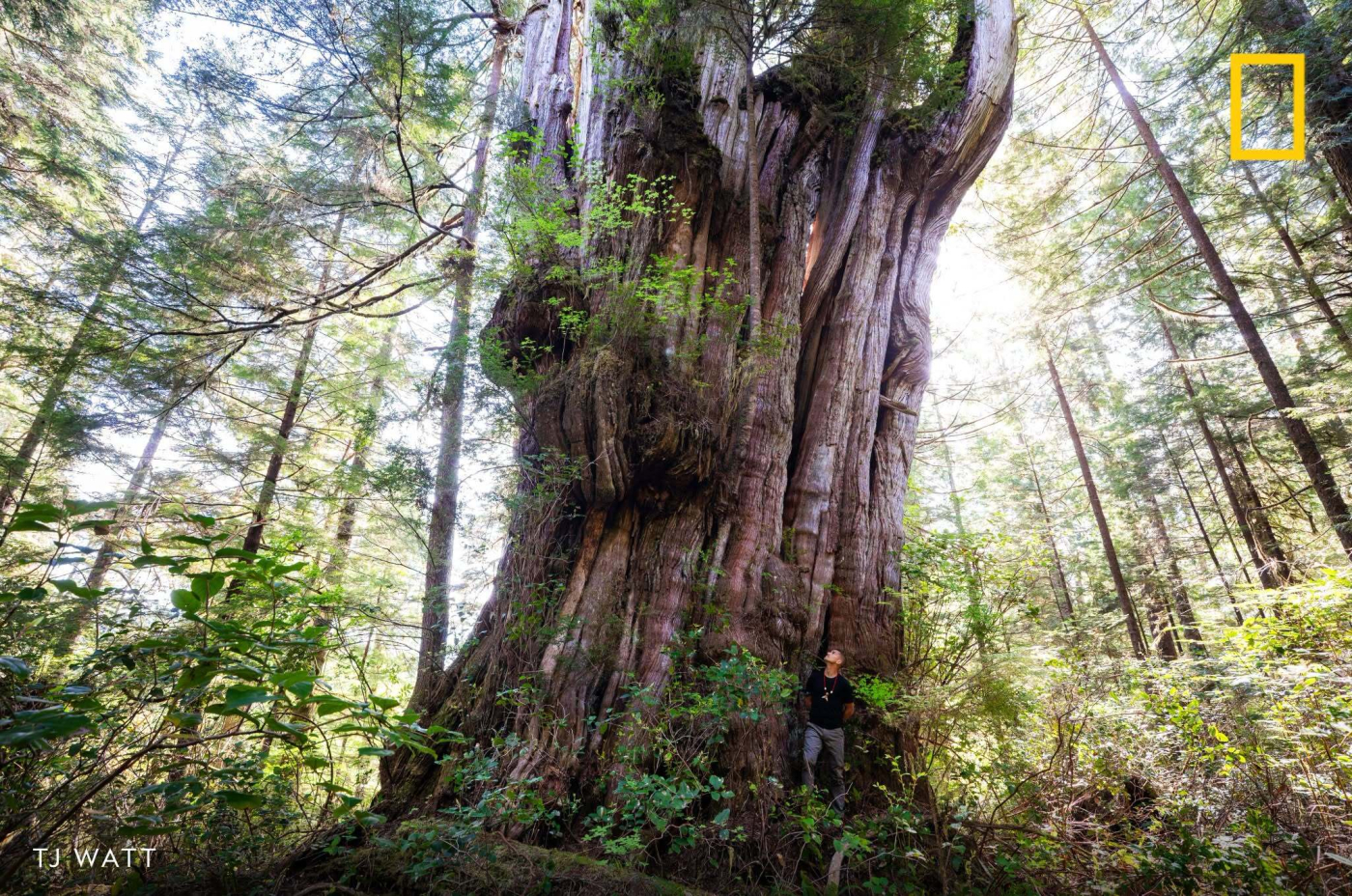 https://ancientforestalliance.org/wp-content/uploads/2026/10/Nat-Geo-Travel-Flores-Cedar.jpg
1357
2048
TJ Watt
https://ancientforestalliance.org/wp-content/uploads/2026/05/Ancient-Forest-Alliance-logo.svg
TJ Watt2026-10-02 13:38:152026-10-02 13:38:15Nat Geo Travel Features TJ Watt’s Photo of Flores Cedar
https://ancientforestalliance.org/wp-content/uploads/2026/10/Nat-Geo-Travel-Flores-Cedar.jpg
1357
2048
TJ Watt
https://ancientforestalliance.org/wp-content/uploads/2026/05/Ancient-Forest-Alliance-logo.svg
TJ Watt2026-10-02 13:38:152026-10-02 13:38:15Nat Geo Travel Features TJ Watt’s Photo of Flores CedarTake Action
 Donate
Support the Ancient Forest Alliance with a one-time or monthly donation. Send a Message
Send an instant message to key provincial decision-makers.
Forest Practices Board Report – BC’s Ancient Forests Need More Protection
/in Announcements(direct link to video: https://youtu.be/CLbVbn2iIc0 )
In response to a complaint filed about ancient redcedars up to 16ft in diameter being logged near Port Renfrew, BC, the Forest Practices Board, a third party government-appointed watchdog, has concluded that there is ‘strong public interest’ in seeing giant trees and unique stands of old-growth forest protected and that the BC government has the tools to do so.
The report also states in regards to the endangered Avatar Grove (see photo gallery here: https://ancientforestalliance.org/… 75% of which is open for logging (25% is protected within Old-Growth Management Areas or “OGMA’s”), that “current options to protect the unprotected part of the area include creation of a new park or other reserve, or expansion of the existing OGMAs” and that “If further protection is warranted for Avatar Grove, government has available policy and procedures to guide potential amendment of its land-use objective” to protect the area.
______________________
Please SIGN the PETITION at https://ancientforestalliance.org/ways-to-take-action-for-forests/petition/ to help SAVE BC’s ANCIENT FORESTS!
BREAKING NEWS: AVATAR GROVE might get SAVED – Please WRITE a LETTER now!!
/in Announcements, Take ActionTweet
Yesterday BC’s Forests Minister Pat Bell announced that he is considering protecting the endangered Avatar Grove near Port Renfrew, and is also looking at developing new legal tools to increase protection of exceptional ancient trees and old-growth stands in BC. This would be an important step forward!
Click here for the Vancouver Sun article. [Original article no longer available]
The Avatar Grove is a truly exceptional and easy to access stand of ancient trees which the Ancient Forest Alliance has been campaigning hard to protect for over a year – and we may get there soon if you SPEAK UP NOW!
See our new Youtube clip (1 minute) on the Avatar Grove at: https://www.youtube.com/watch?v=l_uPkAWsvVw
We need progress for saving endangered ancient forests at all spatial scales – monumental trees, whole stands (like the Avatar Grove), and landscape level old-growth protections like valleys and regions. Starting with trees and stands is certainly a welcome beginning. Let’s make this happen!!
This will take just 5 MINUTES! Your letter counts!
PLEASE WRITE to Pat Bell, Minister of Forests, Lands, and Mines at pat.bell.mla@leg.bc.ca
Let him know that you:
– Support him moving forward to protect the Avatar Grove near Port Renfrew. Let him know if you have visited the area.
– Support the protection of monumental ancient trees and stands of ancient trees.
– Want all old-growth protections to be legally-binding, not voluntary.
– Encourage him to also undertake a much larger Provincial Old-Growth Strategy to protect endangered old-growth forests across regions where they are scarce, such as on Vancouver Island, the Lower Mainland, southern Interior, etc. and to ensure sustainable second-growth forestry instead.
Be sure to include your home mailing address so he knows you are a real person!
Also please SIGN our PETITION and get as many of your friends and family to as well at:
https://ancientforestalliance.org/ways-to-take-action-for-forests/petition//index.php#sign
***MORE BACKGROUND INFORMATION
Forests Minister Pat Bell’s statements comes on the heels of a new Forest Practices Board (FPB) report released on Thursday that calls on the BC government and industry to seek “creative ways” to save ancient trees, that the land-use policy framework exists for the BC government to readily protect the Avatar Grove, and that there is a “strong public interest in seeing more ancient trees and forest stands preserved to live out their natural lives and functions, and managed as a social, economic and ecological asset to the public and surrounding communities.” See the report at: https://www.fpb.gov.bc.ca/IRC174_NEWS_RELEASE_Complaint_highlights_public_value_of_ancient_trees.htm
and recent news articles about the FPB report on our website at: https://ancientforestalliance.org/
The Ancient Forest Alliance is calling on the BC government to undertake a Provincial Old-Growth Strategy that will inventory and protect old-growth forests in regions where they are scarce, such as on Vancouver Island, the Lower Mainland, southern Interior, etc. The AFA is also calling for the sustainable logging of second-growth forests (which now constitute most of the forests in southern BC) and for a ban on raw log exports to foreign mills.
An effective BC Old-Growth Strategy would necessarily entail legally-binding (not voluntary) old-growth protections at various spatial scales, including on the level of individual trees, stands, and landscapes:
Individual Trees – This is particularly important in regions where scattered “veteran” old-growth trees left behind by the original logging now constitute much of the remaining old-growth remnants, such as in the Coastal Douglas Fir zone on eastern Vancouver Island and the Sunshine Coast, and around some of the Lower Mainland. This would also be important for saving ancient trees of exceptional size and importance for environmental, tourism, historic, and cultural purposes. Individual old-growth trees also provide sources of lichens and arthropods to colonize surrounding second-growth stands and are often “wildlife trees” for birds, bats, salamanders, bears, small mammals, and invertebrates as they age and die. Protected old-growth veterans should have a significant buffer of protected trees around them.
Stands – Much of southern Vancouver Island consists of scattered “pockets” of old-growth stands dozens to hundreds of hectares in size in the sea of surrounding clearcuts and second-growth tree plantations, such as the 50 hectare Avatar Grove near Port Renfrew. Old-growth stands are important as refugia for both small and larger wildlife (eg. deer wintering range), and can provide high quality nature experiences for tourists and for environmental education and research initiatives. The Cathedral Grove near Port Alberni is perhaps the most famous old-growth stand of high tourism and ecological value in North America.
Landscapes – Protecting the larger and more contiguous tracts of old-growth forests is the most important priority from an ecological perspective. Larger old-growth tracts, such as whole valleys and clusters of valleys, where they still exist are better able to sustain species over time (especially wider ranging creatures like wolves and cougars), store large amounts of carbon, provide clean water for fisheries and as drinking watersheds, provide wilderness tourism experiences, and have greater resilience in the face of climate change. The Upper Walbran Valley, Nahmint Valley, East Creek Valley, and Clayoqout Sound with its scores of intact valleys and islands are examples of larger tracts of ancient forests that need protection on Vancouver Island.
Old-growth forests are important to sustain endangered species, the climate, tourism, clean water, and First Nations cultures. 75% of the original, productive old-growth forests have been logged on Vancouver Island, including 90% of the valley bottoms where the largest trees grow and most biodiversity resides. See “before and after” maps at: https://ancientforestalliance.org/ancient-forests/before-after-old-growth-maps/
The Avatar Grove is the most easily accessible, monumental stand of endangered ancient redcedars and Douglas firs on southern Vancouver Island. Most of the route to the Avatar Grove is paved, it exists on relatively gentle terrain, and is only a 15 minute drive from Port Renfrew. Ancient Forest Alliance campaigner and photographer TJ Watt came across the Avatar Grove in December, 2009, while on an exploratory expedition in the Gordon River Valley. Support for protecting the Avatar Grove includes the Port Renfrew Chamber of Commerce, the Sooke Region Tourism Association, and elected political representatives at three levels, including federal Liberal MP Keith Martin, provincial NDP MLA John Horgan, and Regional Director Mike Hicks. See spectacular photos at: https://ancientforestalliance.org/photos-media/
See the new Youtube clip “Canada’s Gnarliest Tree – Save the Avatar Grove” at:
https://www.youtube.com/watch?v=l_uPkAWsvVw
Grove Saved?
/in News CoverageTweet
Speaking of those pesky environmental issues, Port Renfrew’s beloved Avatar Grove may have made some exciting headway with the BC Liberals this past week, when Minister of Forests, Mines and Lands Pat Bell announced that he is considering protecting the endangered area.
“Certainly we have been hearing the message . . . that we should be considering some tools, perhaps new tools that we could use when particularly unique trees are identified. They may be individual trees or small areas like the Avatar Grove that provide incremental value over and above the timber resource value,” Bell told media.
Ken Wu, long-time environmental and grove advocate with the Ancient Forest Alliance, says that credit must be given to Bell’s advancements, but that B.C. still has a long way to go yet.
“There’s the real possibility of policy change right now with B.C. being leaderless,” Wu says. “Bell is saying he may open some doors, but we’re going to have to wait and see.”
Wu says the province is still in need of protection on three levels: individual trees, groups (like Avatar Grove) and large forested areas.
“We did bust our asses on this campaign, but the grove speaks for itself . . . when you get business affiliates — like the Port Renfrew Chamber of Commerce — calling for its support, that’s when you see the BC Liberals listen.”
Click here to view original article