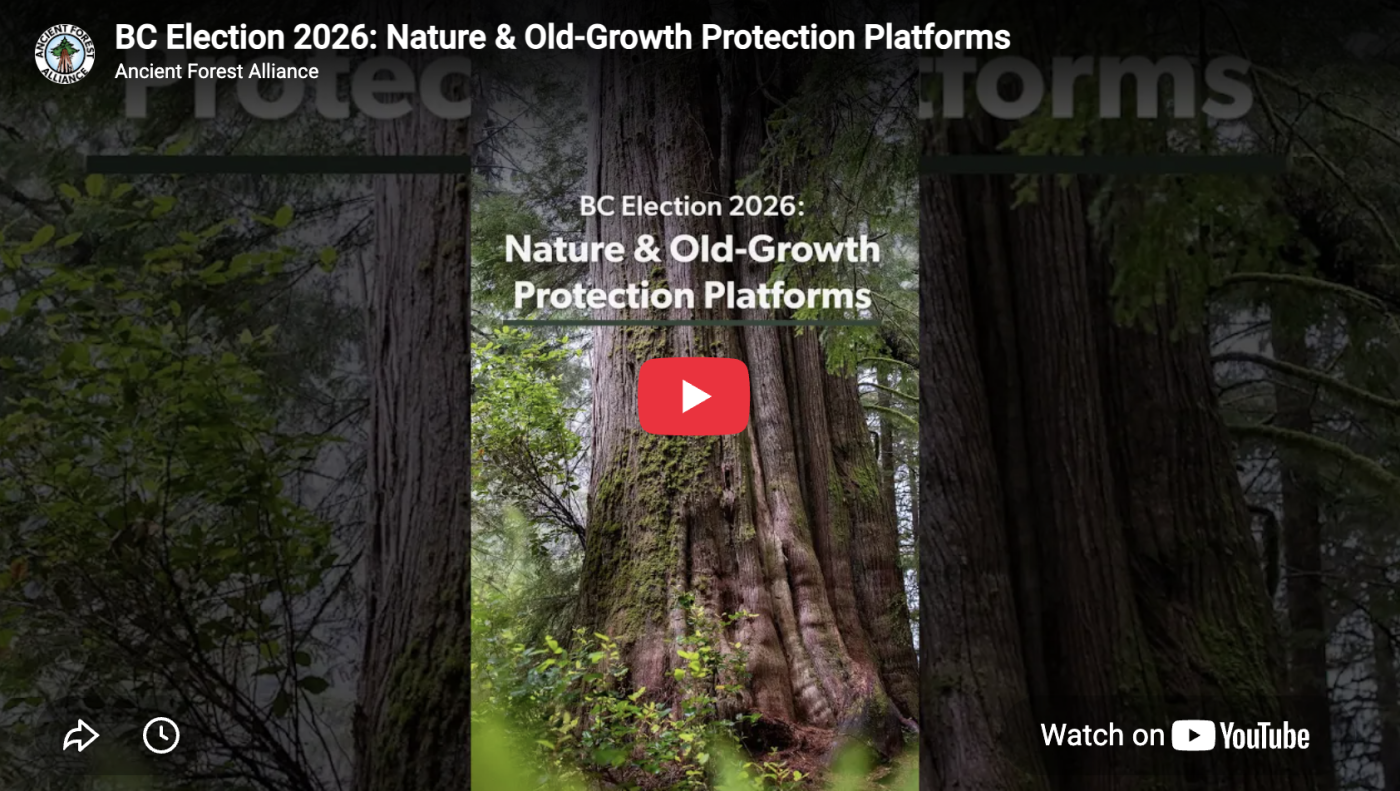
 https://ancientforestalliance.org/wp-content/uploads/2026/10/Screenshot-2026-10-22-at-4.54.32-PM.png
952
1684
TJ Watt
https://ancientforestalliance.org/wp-content/uploads/2026/05/Ancient-Forest-Alliance-logo.svg
TJ Watt2026-10-22 16:54:062026-10-22 16:59:41NEW Video: BC Election 2026: Nature & Old-Growth Protection
https://ancientforestalliance.org/wp-content/uploads/2026/10/Screenshot-2026-10-22-at-4.54.32-PM.png
952
1684
TJ Watt
https://ancientforestalliance.org/wp-content/uploads/2026/05/Ancient-Forest-Alliance-logo.svg
TJ Watt2026-10-22 16:54:062026-10-22 16:59:41NEW Video: BC Election 2026: Nature & Old-Growth ProtectionRelated Posts
https://ancientforestalliance.org/wp-content/uploads/2026/10/Screenshot-2026-10-22-at-4.54.32-PM.png
952
1684
TJ Watt
https://ancientforestalliance.org/wp-content/uploads/2026/05/Ancient-Forest-Alliance-logo.svg
TJ Watt2026-10-22 16:54:062026-10-22 16:59:41NEW Video: BC Election 2026: Nature & Old-Growth Protection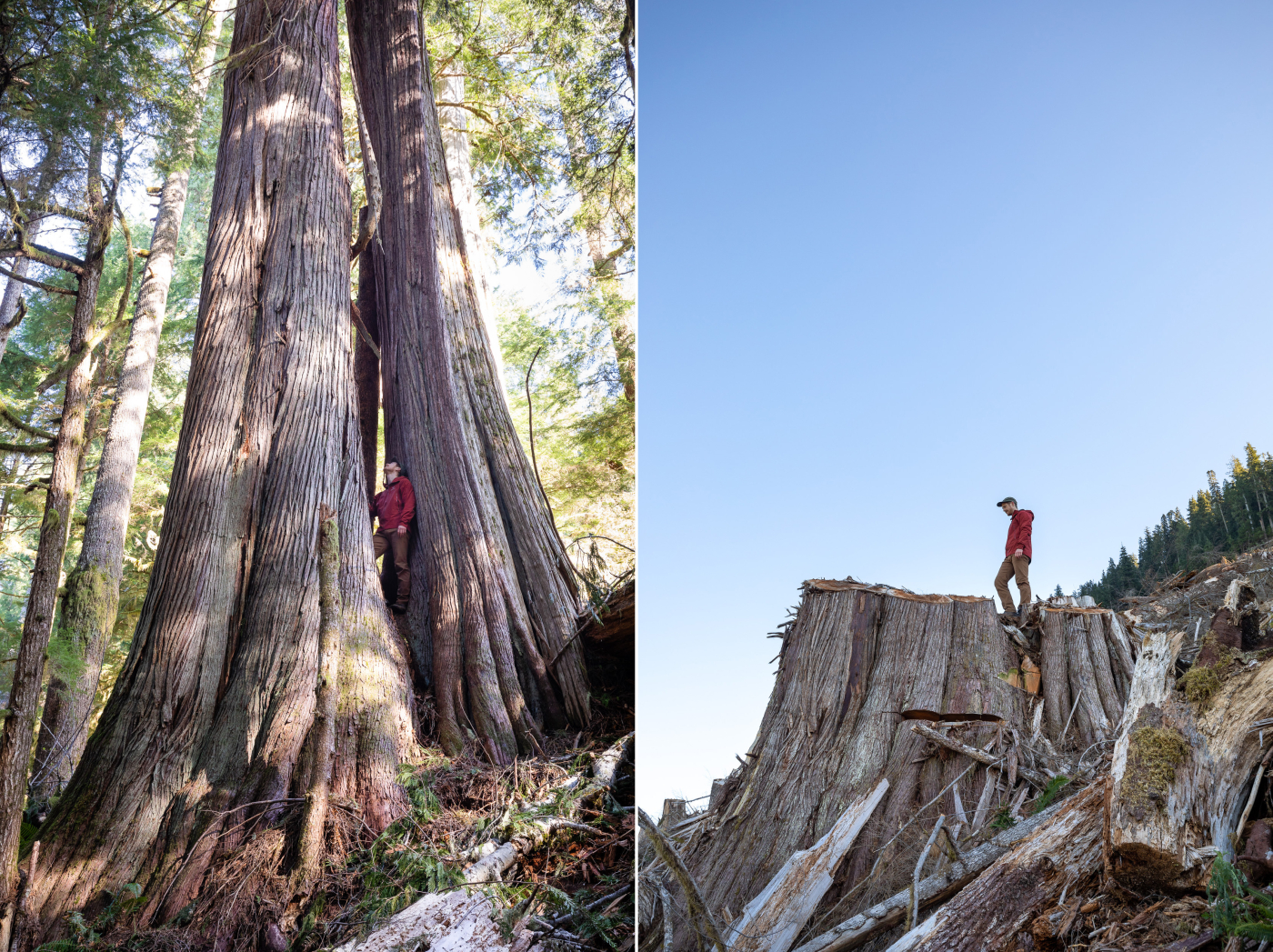 https://ancientforestalliance.org/wp-content/uploads/2026/10/Before-After-Caycuse-TJ-Watt-4-scaled.jpg
1915
2560
TJ Watt
https://ancientforestalliance.org/wp-content/uploads/2026/05/Ancient-Forest-Alliance-logo.svg
TJ Watt2026-10-16 17:36:002026-10-21 13:40:23BC Election 2026: Where do Parties Stand on Nature & Old-Growth?
https://ancientforestalliance.org/wp-content/uploads/2026/10/Before-After-Caycuse-TJ-Watt-4-scaled.jpg
1915
2560
TJ Watt
https://ancientforestalliance.org/wp-content/uploads/2026/05/Ancient-Forest-Alliance-logo.svg
TJ Watt2026-10-16 17:36:002026-10-21 13:40:23BC Election 2026: Where do Parties Stand on Nature & Old-Growth? https://ancientforestalliance.org/wp-content/uploads/2026/10/BC-Election-2026-Banner-1-1-scaled.jpg
1439
2560
TJ Watt
https://ancientforestalliance.org/wp-content/uploads/2026/05/Ancient-Forest-Alliance-logo.svg
TJ Watt2026-10-09 18:16:372026-10-16 17:44:41Where do BC’s Major Political Parties Stand on Nature Protection?
https://ancientforestalliance.org/wp-content/uploads/2026/10/BC-Election-2026-Banner-1-1-scaled.jpg
1439
2560
TJ Watt
https://ancientforestalliance.org/wp-content/uploads/2026/05/Ancient-Forest-Alliance-logo.svg
TJ Watt2026-10-09 18:16:372026-10-16 17:44:41Where do BC’s Major Political Parties Stand on Nature Protection?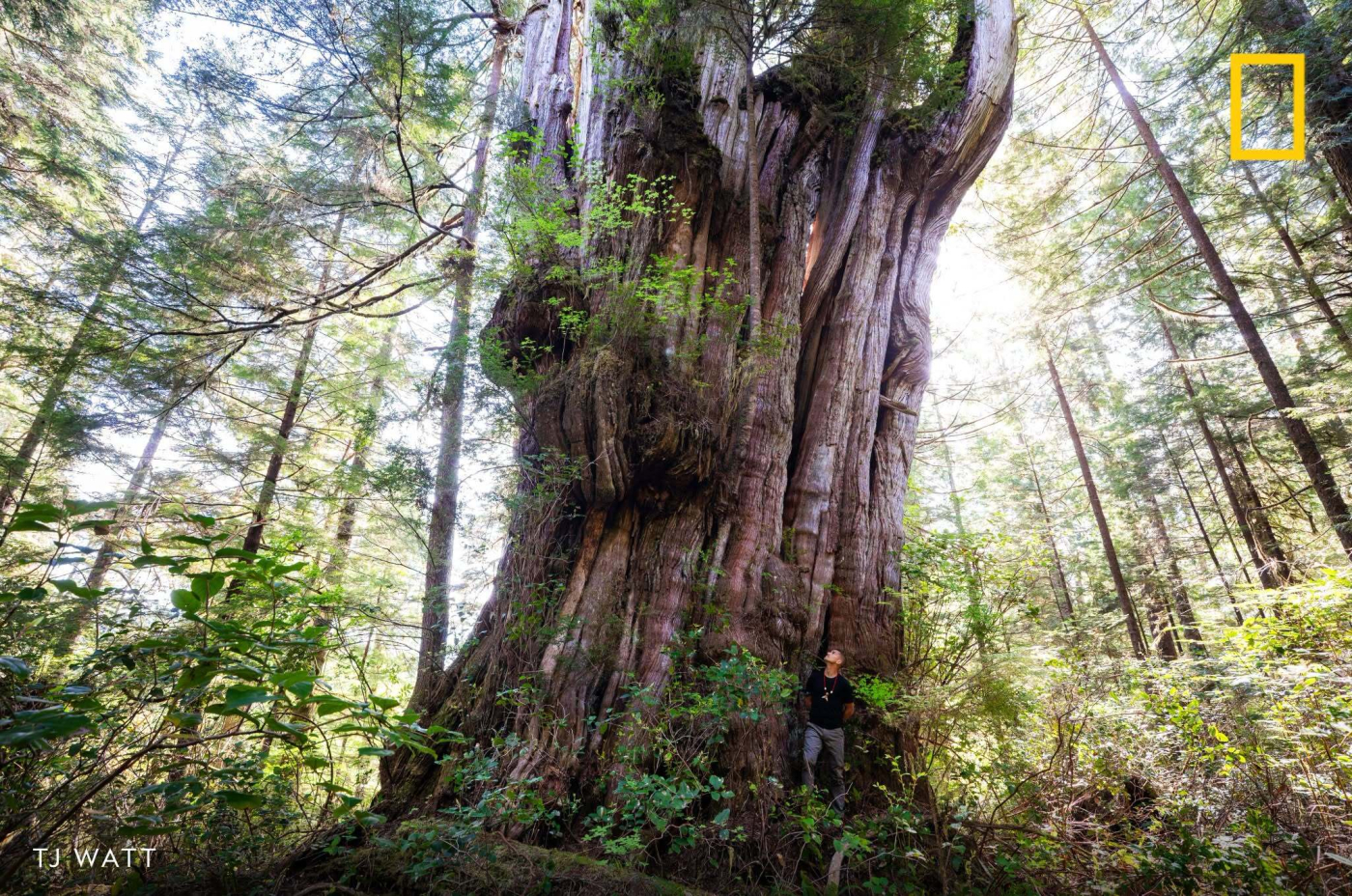 https://ancientforestalliance.org/wp-content/uploads/2026/10/Nat-Geo-Travel-Flores-Cedar.jpg
1357
2048
TJ Watt
https://ancientforestalliance.org/wp-content/uploads/2026/05/Ancient-Forest-Alliance-logo.svg
TJ Watt2026-10-02 13:38:152026-10-02 13:38:15Nat Geo Travel Features TJ Watt’s Photo of Flores Cedar
https://ancientforestalliance.org/wp-content/uploads/2026/10/Nat-Geo-Travel-Flores-Cedar.jpg
1357
2048
TJ Watt
https://ancientforestalliance.org/wp-content/uploads/2026/05/Ancient-Forest-Alliance-logo.svg
TJ Watt2026-10-02 13:38:152026-10-02 13:38:15Nat Geo Travel Features TJ Watt’s Photo of Flores CedarTake Action
 Donate
Support the Ancient Forest Alliance with a one-time or monthly donation. Send a Message
Send an instant message to key provincial decision-makers.
The Death Of A Sawmill
/in Announcements, News CoverageTweet
The tenth anniversary of closure of Timberwest’s Youbou sawmill — and its economic and family fallout — will be discussed during tomorrow’s Eye-Opener Film Series in Duncan.
The Cowichan Citizens’ Coalition will screen the documentaries Stump To Dump, and Raw Log Exports made by Lake Cowichan Secondary School students.
Discussion will involve Youbou Timberless Society members, plus Ken Wu and T.J. Watt of the Ancient Forest Alliance.
YTS, the Tree-Huggers and Tree-Cutters Alliance, and the Citizens’ Coalition were formed after protests about the mill’s demise on Jan. 26, 2001.
It was allowed shut by Victoria after then-forests minister, Dave Zirnhelt, signed a document that removed Clause 7 linking Timberwest’s annual allowable cut to keeping the mill open.
The mill’s closure tossed some 220 workers out of jobs, sparking seven years of failed court challenges by the YTS.
Bitterness of the closure still simmers among YTS members and local families.
In the 2006 24-minute Ban Raw Log Exports, filmmakers Brent Rayner and buddies Travis Stock, Reece Docherty and Cody Lawson express their anger about what they see as corporate mismanagement of Crown timber, and raw-log exports allowed by Victoria while wood-manufacturing jobs go begging.
“The Liberals aren’t listening,” said Rayner. “They’re after the money and we’re all just numbers.”
The selective-logging fan said the 2007 disappearance of his unemployed Youbou mill-worker father, Darreld, isn’t linked to the operation’s closure.
“He wouldn’t have done that to our family.”
Stock — whose dad, Ken, works for Island Pacific Logging — said raw-log exports make no sense.
“I hope people see how our logs are sent to the states when we have families here to be employed processing those logs.”
Your ticket
What: Youbou mill closure films and discussion
When: Jan. 20, 7 p.m.
Where: Duncan United Church, Ingram Street
Tickets: By donation. Call 250-701-1682
The closure of the Youbou Sawmill, 10 years later
/in News CoverageTweet
The closure of the Youbou sawmill 10 years ago and the resulting formation of the historically important environmentalist and forestry workers alliance, the Tree-Huggers and Tree-Cutters Alliance are being commemorated by activists this week.
The Youbou TimberLess Society (YTS) will be hosting a film screening of their documentary videos Stump to Dump, and Log Exports, produced by Lake Cowichan Secondary School students, at the Duncan United Church Hall, Jan 20, at 7 p.m.
A discussion with YTS members and Ken Wu and TJ Watt of the Ancient Forest Alliance will follow.
“The closure of the Youbou sawmill in 2001 because TimberWest wanted to export raw logs instead of processing them in the community set the stage for a historically important alliance between the workers and environmentalists, who both opposed the mill’s closure and the export of raw logs to foreign mills,” states Ken James, President of the Youbou TimberLess Society.
“Who knew it would have set the stage for a much larger cooperation between environmentalists and forestry workers?”
“Ken James, Roger Wiles, Darreld Rayner, and the whole Youbou TimberLess Society crew are seriously historically important figures for the betterment of this province,” states Ken Wu, Ancient Forest Alliance executive director. “Prior to them coming on board, environmentalists and forestry workers were typically pitted against each other, often in extreme conflicts, while the forest companies went laughing to the bank with profits from liquidating our endangered ancient forests and eliminating BC milling jobs.”
On January 26, 2001, TimberWest closed its Youbou sawmill on the shores of Lake Cowichan.
This move threw 220 workers into unemployment.
The company claimed the mill was unprofitable; a claim contested by many, and upon its closure subsequently continued to log at breakneck speeds while exporting the unprocessed logs to US and Asian sawmills. TimberWest is the largest exporter of raw logs from BC.
A few months before the mill’s closure, sawmill worker Ken James and environmentalist Ken Wu (at the time the executive director of the Western Canada Wilderness Committee’s- WCWC- Victoria chapter, now with the Ancient Forest Alliance) were invited to speak together at a forum at the BC Government Employees Union building in downtown Victoria to an audience of a hundred forestry workers and environmentalists.
The two groups found much in common in their perspectives to end raw log exports and to ensure a sustainable second-growth forest industry.
Subsequently, the two groups started to attend and speak at each other’s rallies and events.
The cooperation between the Youbou TimberLess Society and the Victoria WCWC paved the way for further cooperation between environmentalists and the Pulp, Paper, and Woodworkers of Canada (PPWC) union in Nanaimo and Crofton on Vancouver Island, led by Arnie Bercov, and forestry workers with the Save Our Valley Alliance (SOVA) in Port Alberni.
Environmentalists also started to work on specific projects and speak at events with the United Steelworkers (USW) union, BC’s main logging union, which took over the International Woodworkers of America IWA union around the same time, and with the Communications, Energy, and Paperworkers (CEP) union, against increasing raw log exports and the deregulation of the forest industry through the so-called Forestry Revitalization Act in 2004.
“The cooperation between environmentalists and forestry workers that we pioneered has dismantled much of the ‘jobs versus the environment’ framing of BC’s forestry debate,” states Ken James.
“Today, the vast majority of people support saving jobs and the environment by protecting our last old-growth forests on Vancouver Island, ensuring sustainable second-growth forestry, and ending the export of raw logs to foreign mills.
The only problem is the BC government still doesn’t get it. But they will have to, not long from now,” states Ken Wu.
Link to original article: https://www.bclocalnews.com/vancouver_island_central/lakecowichangazette/business/113969939.html
VIDEO: Victoria Community TV Presents: Face to Face with Avatar Grove
/in News CoverageWe are joined by Ken Wu and TJ Watt from The Ancient Forest Alliance, along with some great images of this magnificent old growth forest.
We also talk about ‘the big picture’ of saving what is left of BC’s old growth forests, and the threats that still face it today.
You can watch the video on cable television as well:
On Channel 11 – In Victoria and Saltspring Island
Saturday, Jan. 15 at 11AM and 11:30PM
Sunday Jan 16 at 10AM and 9PM
Unfortunately, the link to the video from ICTV Victoria on Vimeo doesn’t exist anymore.